

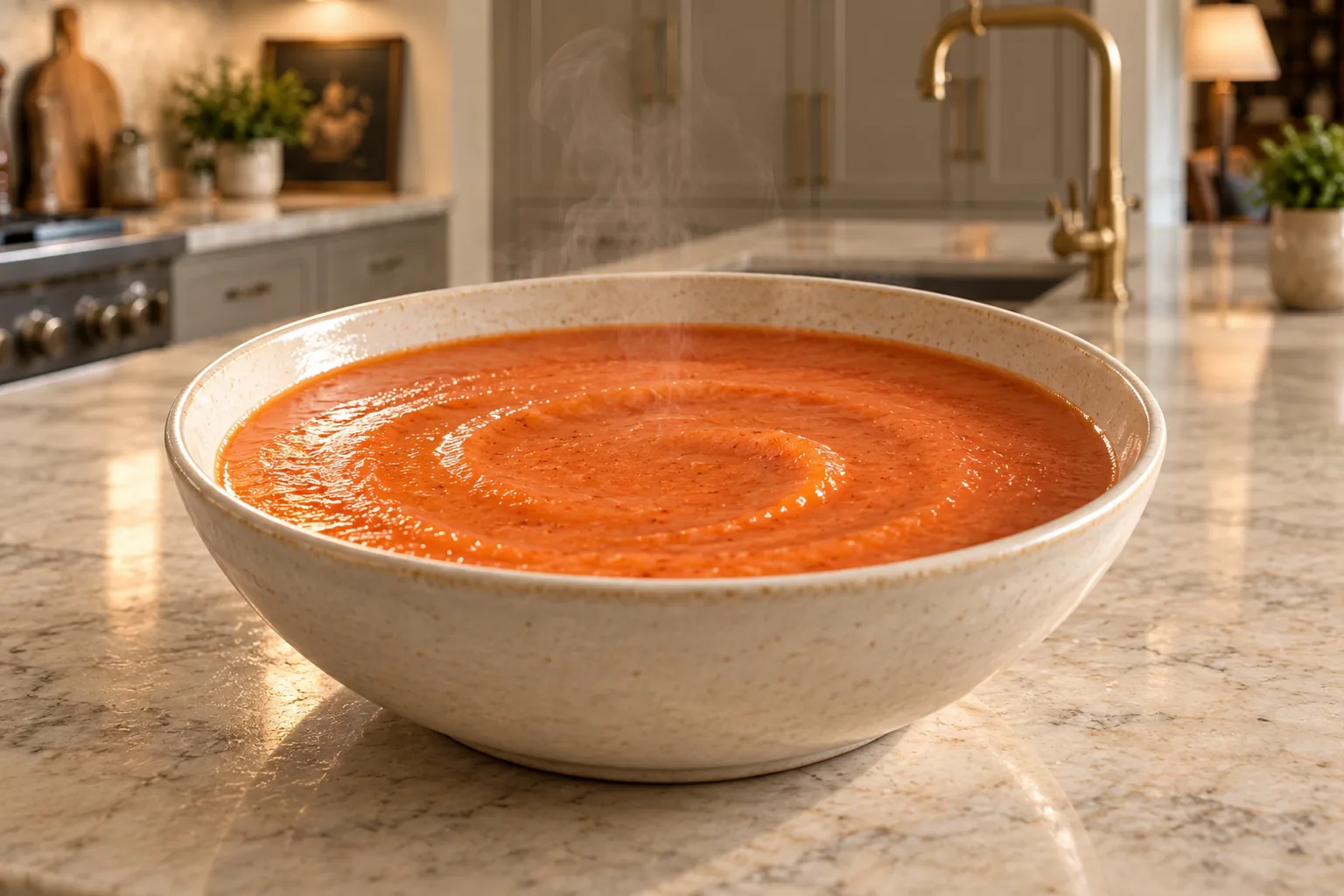
This nightshade-free nomato soup uses ripe nectarines or peaches and four cherries to build the sweet-tart base that tomatoes usually provide. Onion, garlic, oregano, homemade meat stock, natural cooking fat, sea salt, and fresh lemon pull that fruit toward a savory, smooth soup instead of a dessert.
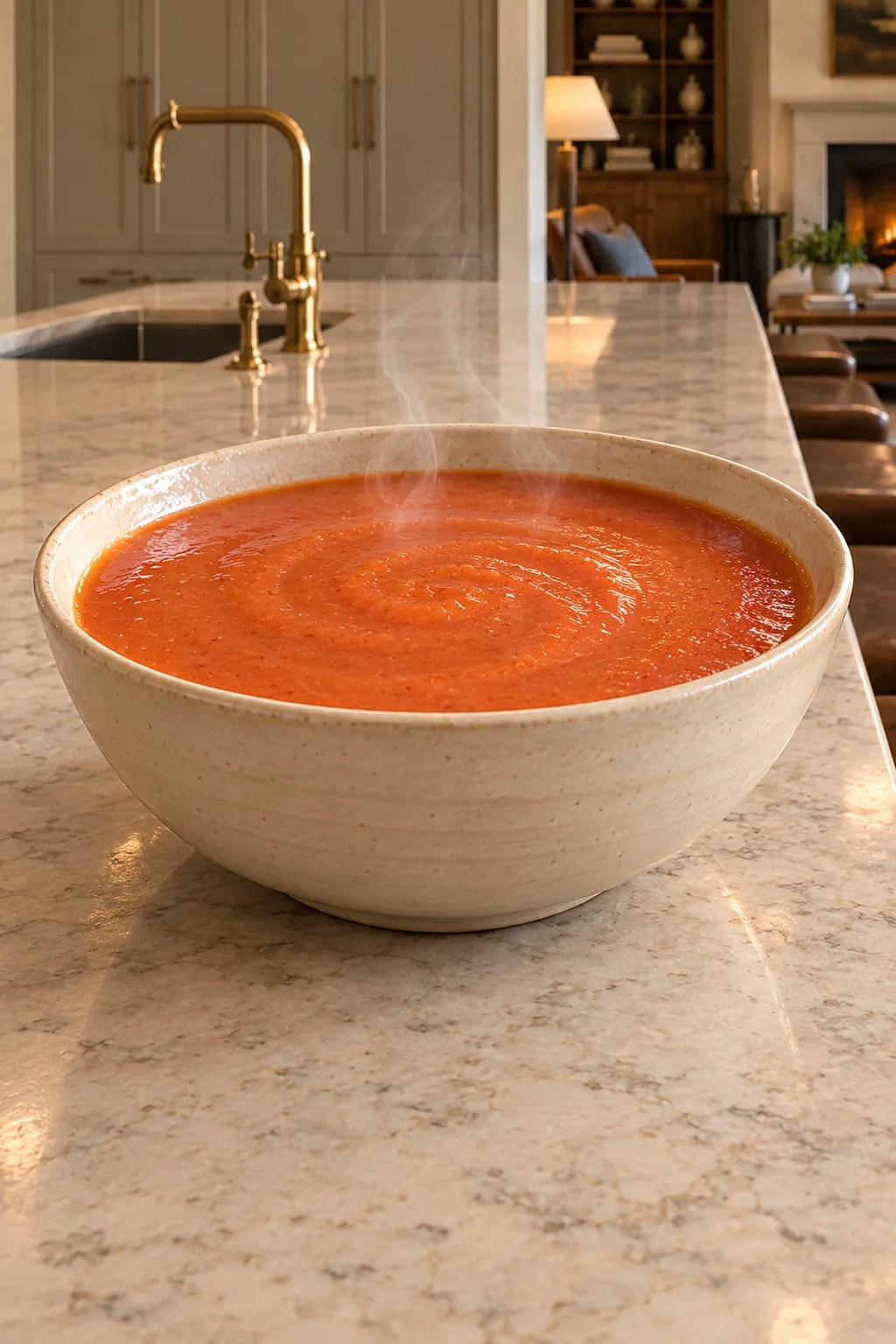
The result is a warm coral-orange bisque with no tomato, pepper, paprika, beet, carrot, starch, or commercial broth. It will not taste exactly like canned tomato soup, and it should not. It gives you the same kind of smooth, gently tangy bowl while keeping the formula honest about what is actually in it.
In a working, homeschooling household of eight, I look for recipes that can be prepared in a clear sequence instead of demanding constant attention. This soup gives you short stovetop stages, a real twenty-minute cooling break, and a quick blend in the Ninja. The final batch serves three, so it is easy to double when you need more.
Why Nectarines And Cherries Work Here
Tomatoes bring sweetness, acidity, color, and body to an ordinary tomato soup. This formula divides those jobs among two orange-fleshed nectarines or peaches, four cherries, and fresh lemon juice.
The orange fruit provides most of the volume and a soft golden-orange color. The cherries deepen the color and add a sharper fruit note. Onion, garlic, oregano, salt, fat, and meat stock keep the bowl savory.
The finished soup should be completely smooth, with only tiny seasoning flecks. It should coat a spoon and flow back into the bowl rather than sit like a thick sauce. If it stands in a mound, it has been reduced too far or blended with too little of the measured stock.
Where It Fits On GAPS
This is a Full GAPS recipe for the point when ripe, peeled cooked fruit is already tolerated. Cooked fruit comes before raw fruit in the GAPS progression, and fruit remains an occasional part of Full GAPS rather than the center of the daily diet.
Use this as an occasional cooked-fruit soup, not as a replacement for the meat-stock, meat, vegetable, and fermented foods that make up the daily foundation. If cooked nectarines, peaches, or cherries are new for you, introduce them according to your existing food-introduction pattern before making a full bowl.
The soup is nightshade-free by design. There are no tomatoes, peppers, paprika, eggplant, or commercial seasoning blends hiding in the ingredient list.
Choose Ripe Orange-Fleshed Fruit
Use two ripe nectarines or peaches. GAPS specifies ripe fruit because unripe fruit contains more starch. The fruit should smell fresh and yield slightly, without leaking, collapsing, or showing mold.
Orange-fleshed fruit gives the soup a warmer, more tomato-like color than white nectarines or white peaches. Peel both fruits completely, cut the flesh away from the pits, and chop it into pieces that will soften evenly.
Use exactly four fresh cherries. Cut each one in half and remove the pit, leaving eight clean halves. Check every cavity before the cherries go into the skillet; a hidden pit can damage the blender and ruin the texture of the finished soup.
Choose Chicken Or Beef Meat Stock
Use one cup homemade raw-meaty meat stock. GAPS Chicken Meat Stock gives the lightest flavor and lets the fruit and oregano stay forward. GAPS Beef Meat Stock makes a deeper, darker bowl. Both work; choose the one that fits the rest of the meal.
Use meat stock made from raw meaty joints, cartilage, connective tissue, fat, and meat. Bare-bone broth and boxed broth are different preparations and are not swapped into this measured Full GAPS version.
For the two tablespoons cooking fat, choose ghee, natural non-hydrogenated coconut oil, or rendered animal fat. For a dairy-free bowl, use coconut oil or rendered animal fat. Keep cold-pressed olive oil raw for finished food rather than heating it in the sauté pan.
Soften The Onion Before Adding Fruit
Heat the Le Creuset Signature Artichaut skillet over medium-high. Add the measured fat, roughly chopped onion, and one-half teaspoon sea salt. Cook for five minutes, stirring enough to prevent scorching.
Turn the heat down to medium-low and cook for five minutes more. The onion should become flexible, glossy, and translucent at the edges. A few pale-gold spots are fine, but hard dark-brown edges will pull the delicate fruit flavor toward bitterness.
Sauté The Fruit, Garlic, And Oregano
Add the peeled chopped nectarines or peaches, all eight cherry halves, and two sliced garlic cloves. Cook over medium-low heat for five minutes. The orange fruit should begin to soften at the corners, the cherries should release a little color, and the garlic should smell rounded rather than raw.
Stir in one teaspoon pure dried oregano and cook five minutes more. The pan should smell savory and herbal even though the fruit pieces are still visible. There should not be a pool of water or stock in the skillet yet.
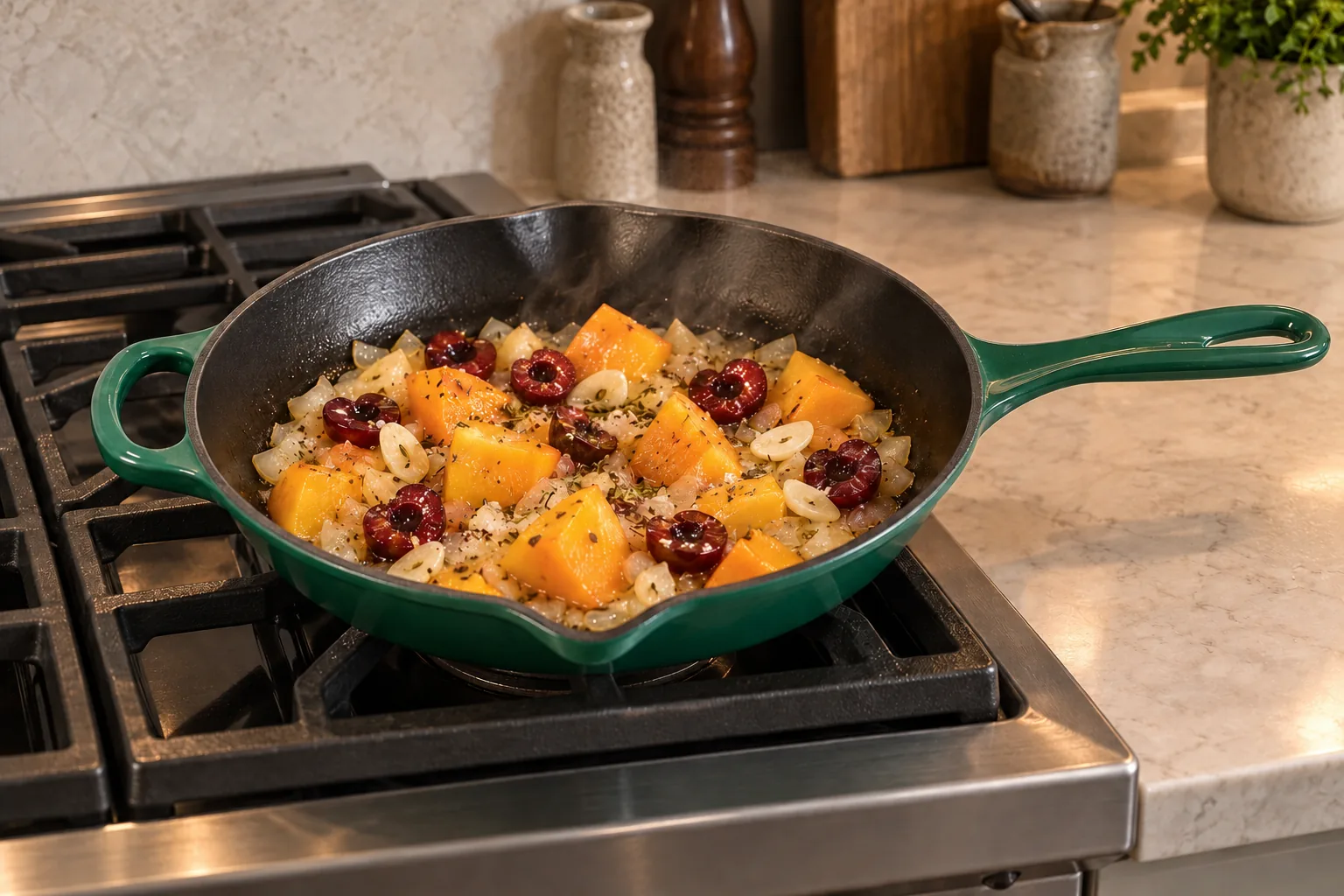
Count the cherries in halves if you are checking the pan: four cherries become eight halves. The nectarine or peach chunks should show bare orange flesh with no peel left on them.
Simmer With The Meat Stock
Pour in one cup meat stock and raise the heat to medium-high. Watch for small bubbles breaking steadily across the surface rather than waiting for a hard boil.
As soon as the soup reaches that simmer, turn the heat to low and cover the pan. Simmer for ten minutes. The fruit and onion should become very soft, and the liquid should take on a warmer orange-red color.
Remove the pan from the heat, uncover it, and let it cool for twenty minutes. This cooling time is part of the measured method. Do not move actively simmering soup straight into the blender.
Blend In The Ninja BN801
Transfer the cooled mixture to the Ninja Professional Plus Kitchen System BN801 pitcher. Add one tablespoon fresh lemon juice, secure the lid, and seat the pitcher fully on the base.
Blend on medium for about thirty seconds. Stop the machine and look through the pitcher from several sides. The soup is ready when no onion, fruit, cherry, or garlic pieces remain and the mixture moves as one smooth coral-orange purée.
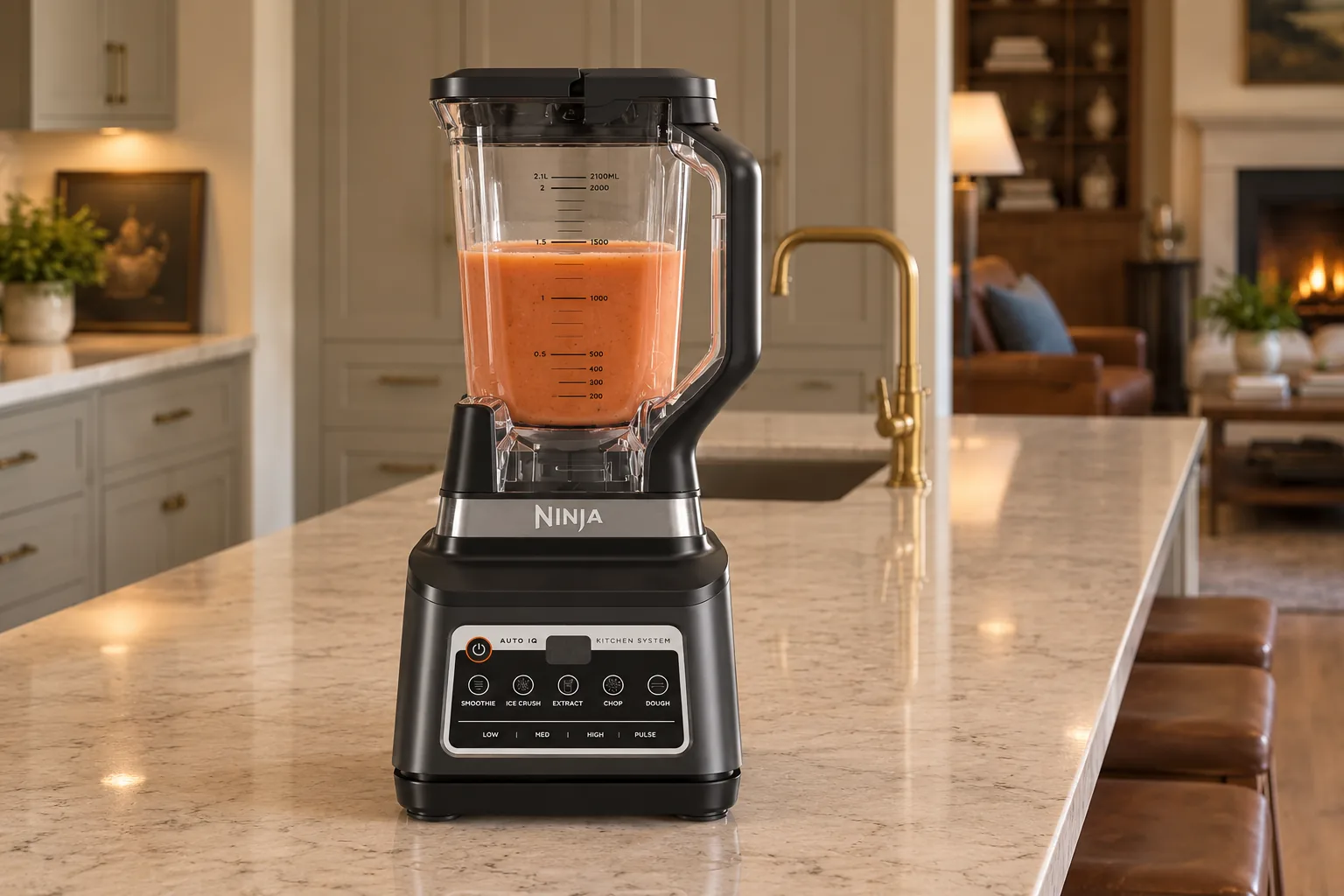
Fine oregano specks can remain. Large pale onion streaks, fruit pieces, a separate fat layer, or liquid sloshing around a thick center mean the texture is not finished.
Reheat Without Simmering Again
Pour the blended soup into a Le Creuset stainless-steel saucepan. Reheat it over low to medium-low heat until steam rises steadily and the whole pot is hot.
Do not bring it back to a simmer. The fresh lemon went in after cooling, and the measured finishing step warms the purée without another boil.
Stir from the bottom while reheating. The finished soup should stay uniform, smooth, and pourable, with no scorched layer at the bottom of the saucepan.
How To Serve It
Serve the soup warm in small bowls as a light lunch, first course, or occasional Full GAPS snack. Its fruit base makes it different from the hearty meat-and-vegetable soups that carry most everyday meals.
If homemade cultured dairy is already in your diet, offer a small spoonful of Luvele 24-Hour Sour Cream at the table. Keep it optional so the measured soup itself remains dairy-free when coconut oil or rendered animal fat is used.
A simple cooked vegetable plate can sit beside it. Avoid commercial bread, grilled cheese, crackers, or packaged sausage suggestions that would move the meal outside Full GAPS.
If You Need A Nomato Sauce Instead
This soup is not a thin version of the existing WFLI nomato sauces. Its nectarines, cherries, one cup of stock, and smooth soup texture make it a separate formula.
For a thicker sauce built from carrots, beets, and onion, use Stovetop Nomato Sauce for Full GAPS or the separate Pressure Cooker Nomato Sauce for Full GAPS. For a savory soup without fruit, try Zucchini Ginger Bisque for Full GAPS.
Full GAPS Variations
For dairy-free Full GAPS, choose coconut oil or rendered animal fat and leave cultured sour cream off the table. For regular Full GAPS with introduced dairy, ghee may be used in the measured two-tablespoon fat position.
This fruit-forward formula does not fit No-Plant GAPS. It also is not converted into Ketogenic GAPS simply by reducing the fruit; removing or sharply changing the nectarines and cherries would create another soup.
For a less fruit-forward bowl, choose the linked zucchini ginger bisque rather than changing this formula until it no longer has its measured balance.
Storage And Make-Ahead Notes
The twenty-minute cooling period is part of the method and gives the mixture time to cool before blending. If you are preparing the soup ahead, blend it, transfer it to a covered glass container, and refrigerate it promptly.
There is no tested leftover-storage window for this soup, so keep it cold and use it promptly. Reheat only the portion you plan to serve, bringing it to steady steam without simmering.
Use a clean spoon each time. Discard the soup if it develops mold, active bubbling, a fermented smell, or another clear sign of spoilage.
Recommended Equipment
- Le Creuset Signature skillet in Artichaut
- Wooden spatula or spoon for the sauté stages
- Sharp stainless knife and wooden cutting board
- Measuring cups and spoons
- Ninja BN801 Professional Plus Kitchen System
- Le Creuset stainless-steel saucepan for reheating
- Covered glass container for refrigeration
The BN801 is the blender used for this full batch. Its large pitcher gives the warm mixture room below the fill line and produces the smooth endpoint without substituting an unowned generic appliance.
Frequently Asked Questions
Does This Taste Exactly Like Tomato Soup?
No. It is a nightshade-free stand-in with a similar smooth, sweet-tart, savory shape. Nectarines or peaches and cherries have their own flavor.
Can I Use Peaches Instead Of Nectarines?
Yes. Use two ripe peeled peaches in place of the two ripe peeled nectarines. Orange-fleshed fruit gives the warmest color.
Why Must The Fruit Be Ripe?
GAPS specifies ripe fruit because unripe fruit contains more starch. Choose fruit that yields slightly and smells fresh without being bruised or spoiled.
Can I Use White Nectarines?
The measured formula allows nectarines, but white fruit produces a paler soup. Orange-fleshed nectarines or peaches create the warmer color shown here.
Can I Heat Olive Oil For The Onion?
No. Use ghee, natural non-hydrogenated coconut oil, or rendered animal fat in the measured two-tablespoon position. Keep cold-pressed olive oil for finished food.
Can I Use Bone Broth?
Use one cup homemade raw-meaty meat stock. Bare-bone broth is a different preparation and comes much later for many people on GAPS.
Why Does The Soup Cool Before Blending?
The measured method removes the pan from the heat and cools it uncovered for twenty minutes before transfer to the blender. Do not skip that interval.
Why Shouldn’t I Simmer It After Blending?
The lemon juice is added during blending. The final step reheats the soup until steaming without returning it to a simmer.
Can I Double The Recipe?
Yes. Double every measured ingredient and cook in batches if the skillet becomes crowded. Keep the same visual cues and twenty-minute cooling interval.
Is This An Intro GAPS Soup?
No. It is Full GAPS after ripe peeled cooked fruit is already tolerated.
Nightshade-Free Nomato Soup Recipe
Nightshade-Free Nomato Soup with Nectarines and Cherries
Ingredients
Equipment
Method
- Peel the scaled nectarines or peaches completely, cut the flesh away from every pit, and chop it. Halve and pit the scaled cherries. Roughly chop the onion and slice the garlic.
- Heat the scaled cooking fat in the Artichaut skillet over medium-high. Add the scaled onion and sea salt and cook 5 minutes, stirring to prevent scorching.
- Reduce the heat to medium-low and cook the onion 5 minutes more, until flexible, glossy, and translucent at the edges without hard dark browning.
- Add the scaled peeled nectarines or peaches, all scaled cherry halves, and garlic. Cook over medium-low heat 5 minutes, until the orange fruit softens at the corners and the cherries release a little color.
- Stir in the scaled oregano and cook 5 minutes more. The fruit, onion, and garlic should be glossy and softened but still identifiable, with no stock in the pan yet.

- Pour in the scaled meat stock and raise the heat until small bubbles break steadily at the surface. Reduce to low, cover, and simmer 10 minutes.
- Remove the skillet from the heat, uncover, and cool for 20 minutes.
- Transfer the cooled mixture to the Ninja BN801 pitcher, add the scaled fresh lemon juice, secure the lid, and blend on medium until completely smooth, about 30 seconds. No fruit, onion, cherry, or garlic pieces should remain.
- Pour the smooth soup into the stainless-steel saucepan and reheat over low to medium-low until steam rises steadily. Stir from the bottom and do not return the soup to a simmer. Serve warm.
Notes
Tried this recipe?
Let us know how it was!Keep A Reliable Soup Rotation
The planned Soups & Stews Cookbook brings stage-labeled soups, stews, and casseroles together so you can choose the right kind of bowl without sorting through unrelated recipes. Find current resources and upcoming releases in the WFLI shop.

Leave a comment