

The Full GAPS diet opens your kitchen back up. Once you move past the six stages of Intro, you get a much wider list of vegetables, fruit, eggs, dairy, nuts, and seeds to actually cook with. The wider menu includes roast dinners alongside suitable soups and egg dishes already introduced during Intro.[1][3]
“Full” can sound like every food is back on the table. It isn’t. It means the fuller GAPS menu, not that you’ve finished the diet. Grains, refined sugar, and the rest of GAPS’s standard exclusions still apply.[3]
We started with Intro and worked through it slowly. That was largely around our child’s eczema, and you can read that fuller story in Our GAPS Journey. Here I want to show you what Full GAPS diet foods actually look like on a plate, so you can picture real meals instead of staring at a list of allowed foods.
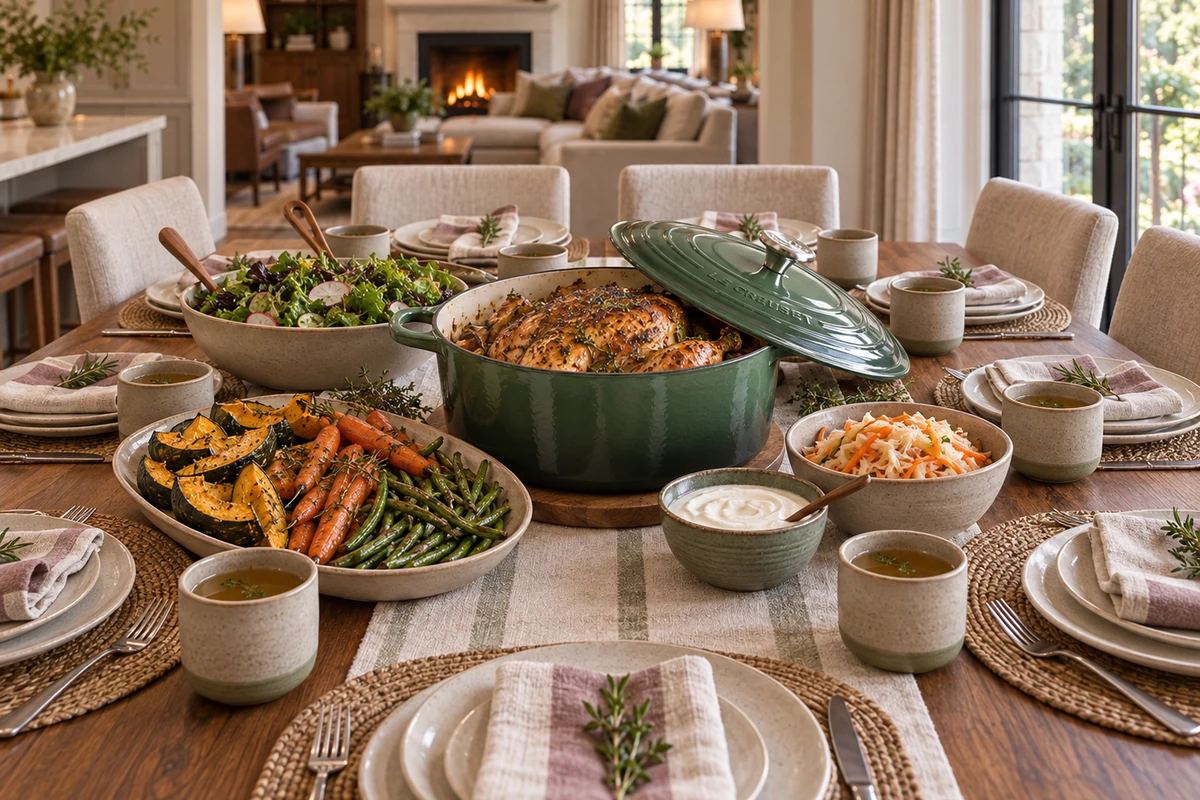
What the Full GAPS Diet Looks Like Day to Day
Some people reach Full GAPS after working through all six Intro stages. Others start there and do Intro later, if at all. GAPS materials describe both as valid entry points, and starting on Full can buy a family time to learn the cooking and fit it around work, school, and everything else.[4]
GAPS doesn’t lay out six numbered stages for Full the way it does for Intro. That doesn’t mean you dump every allowed food onto your plate on day one. When someone starts directly on Full GAPS, Dr. Natasha Campbell-McBride’s 2020 Gut and Physiology Syndrome says to keep baking and fruit out for a few weeks, then introduce them slowly and gradually while watching symptoms. What you’ve already introduced, what you tolerate, and your own needs still matter here, especially with dairy, nuts, and fermented foods.[1]
GAPS gives chronic constipation as one reason to start on Full and attempt Intro later. Its pregnancy guidance says someone already pregnant should follow Full, with a specific severe-colitis exception described separately. Its nursing guidance says Full can be followed while nursing a newborn, with Intro considered later once the baby is eating solids and breast milk is only topping up.[4][5] For the bigger picture, compare the GAPS basics guide with Intro GAPS versus Full GAPS.
Coming off GAPS entirely is a separate, later process. That’s reintroducing foods that sit outside GAPS altogether, not the jump from Intro into Full.[4]
An Example Full GAPS Day
Here’s one possible day for someone established on Full GAPS, using foods they’ve already introduced and tolerated.
| Meal | Example |
|---|---|
| Breakfast | Eggs with cooked spinach and tomato, plus a suitable drink |
| Lunch | Chicken-and-vegetable soup, with a fermented food on the side |
| Dinner | Slow-cooker pot roast with turnips and carrots |
| Snack (if needed) | Fruit, cultured dairy, or another food already on this person’s plan |
You can swap the actual dishes without changing the shape of the day. Fish can stand in for the pot roast. A different soup can use whatever vegetables are already in the fridge.
Appetite, nutritional needs, allergies, and what someone can currently manage all shape the amount and selection. Build each meal generously enough to satisfy the person eating it, using more of the foods already tolerated rather than narrowing the menu further.
One Dinner, Two Meals
The linked pot roast recipe yields six servings. In a four-diner example, serve four portions for dinner and reserve two before the meal for next-day lunches. This is portion planning, not a change to the recipe.
| Plan | Use the Recipe As Written |
|---|---|
| Shop for one batch | Two large onions; one 3- to 4-pound well-marbled roast; four large turnips; eight carrots; two teaspoons mineral salt; three-quarters teaspoon black pepper |
| Cook | Follow the recipe’s full slow-cooker method and eight-hour cooking time |
| Dinner | Four servings in this illustrative household-size example |
| Lunch | Reserve the remaining two servings before dinner; follow the recipe’s storage guidance |
Turning the Full GAPS Food List Into Meals
The Full GAPS food list describes the program foods used to build different meals.[3] It’s not meant to turn every plate into a stand-in for bread, pasta, or cereal. Keep the WFLI food-list reference open while you build the meals.
| Food Group | Examples | Ways to Use Them |
|---|---|---|
| Meat and poultry | Chicken, beef, lamb, turkey, duck, pork, game | Roasts, soups, stews |
| Fish and eggs | Plain fish, suitable shellfish, eggs | Fish with vegetables, egg dishes, baking |
| Vegetables | Carrots, squash, zucchini, cauliflower, broccoli, cabbage, greens | Cooked sides, soup, salads, ferments |
| Fruit | Apples, berries, pears, peaches, citrus, ripe bananas | Fruit portions, cooked fruit, recipes |
| Nuts and seeds | Properly prepared nuts and seeds, their butters, and fermented flours | Baking and sauces after the required preparation and tolerance checks |
| Dairy | Specific cheeses, homemade cultured foods | Individual choices after dairy intro |
Plan with the exact stage in front of you. Get the Intro and Full GAPS Food List before you turn this table into a shopping list.
This is a starting collection of GAPS diet foods, not a shopping list to fill in full. I’d choose the meals first, then buy what they call for. That way what comes home actually gets used instead of sitting in the fridge as one more unrelated possibility.
Build Meals First, Then Add Variety
GAPS puts the weight on real meals: animal foods, vegetables, stock, fats, and fermented foods when they’re tolerated. Fruit and baking add variety. GAPS describes its own target balance as roughly 85 percent of daily food coming from those main-meal foods, with a smaller share from fruit and baked goods. Treat that as GAPS’s description of emphasis, not a calorie count to calculate at every meal.[1][3]
An egg-and-vegetable breakfast does a different job than three sweet muffins. A soup with real meat and vegetables in it is not the same as sipping a mug of stock and calling that lunch. Enough food matters here, especially once familiar staples like bread and cereal are gone.
A workable menu can still be one you look forward to. There’s room for seasoning, texture, and variety. The point is meals you actually want to eat, without losing the foundation underneath them.
Meat Stock and Fermented Foods Stay in the Rotation
Moving to Full GAPS doesn’t retire meat stock and fermented foods. GAPS keeps them in the rotation while the rest of the menu widens.[1]
Meat stock works in soup, in a stew, or served straight alongside a meal. One batch gives you two things: the liquid for cooking, and the meat and other edible bits left over. Know how you’ll use both before you start, and it helps with shopping and cuts down on waste.
Long-cooked bone broth and shorter-cooked meat stock aren’t the same preparation. GAPS uses meat stock through at least the first year of the protocol, and sometimes for several years, before introducing bone broth.[2] A carton labeled “broth” at the store isn’t automatically the stock method GAPS calls for.
Fermented foods vary just as much. Sauerkraut, 24-hour yogurt, and kefir use different ingredients and methods. Introduce them in the GAPS sequence and increase them gradually.[1] For vegetable ferments, use the salt level specified by the recipe, keep the vegetables submerged, and use aroma, appearance, texture, and taste to follow their progress.[6]
Vegetables in Full GAPS Meals
Vegetables can be a side, the base of a soup, part of an egg dish, a salad, or a fermented addition. That gives you several ways to use one purchase across a week.
Carrots can go into soup one day and sit next to a roast the next. Half a cabbage gets cooked for dinner while the other half goes into a different recipe later. A big squash splits across two or three meals instead of demanding a brand-new vegetable every night.
Full GAPS gives you more room for cooked, raw, and fermented vegetables.[1][3] That doesn’t mean every person is ready for all three at once. If you’re coming over from Intro, the preparations you already know are usually the easiest place to keep expanding from.
Pay attention to the actual names, too. Potatoes and sweet potatoes sit outside standard Full GAPS. Carrots and squash are included. “Root vegetables” and “starchy vegetables” aren’t precise enough to stand in for the real food list.[3]
Fruit, Nuts, and Baking on Full GAPS
These foods open things up, but the form of the ingredient still matters. Ripe fruit, dried fruit with added syrup, whole nuts, nut butter, and nut flour are different purchases. They behave differently in cooking, too.
GAPS specifies ripe bananas with brown spots, not green ones.[3] Dried fruit needs a label check for added sweeteners. Nut butters can carry added oils or sugar you didn’t ask for. A simple-sounding product name doesn’t tell you what’s actually in the jar.
The book requires nuts and oily seeds to be properly prepared before eating or baking with them. The Full GAPS chapter calls for baking flours to be fermented and directs readers to Chapter 21, “Baking at Home,” pages 268–273. That section gives different complete methods for ground nuts, whole nuts, precooked cashews and sprouted seeds. Follow the method for the exact ingredient and form, including the book’s specific preparation exceptions; soaking and grinding alone is not a general shortcut for all baking. Nut and seed butters also need attention to preparation. These steps do not replace the separate food-introduction and diarrhea limits.[12]
For baking, work from a complete GAPS recipe. Nut flour and nut butter don’t swap for each other cup for cup, and a commercial gluten-free flour blend may lean on rice flour, potato starch, or other ingredients that sit outside GAPS entirely.
One detail to check before baking: GAPS excludes baking powder and commercial raising blends, but pure bicarbonate of soda is permitted in GAPS recipes.[9][10] Check the ingredient label and use the amount called for in the complete recipe.
You can make room for a bread or pancake recipe because it’s genuinely useful. My stage-by-stage Intro guide shows where bread-style recipes begin during Intro. You don’t need a GAPS-safe stand-in for every food you used to buy. I’d start with a small collection that covers real meals, then add recipes as there’s time to learn them.
Dairy and Fats
Dairy takes more care than grabbing everything from the dairy aisle. Ghee, butter, yogurt, kefir, and cheese are different preparations. For the complete sequence, use Dr. Natasha Campbell-McBride’s Dairy Introduction Structure, also in Chapter 14 of Gut and Physiology Syndrome, pages 179–183. It applies to Full-first starts and to people who could not introduce dairy during Intro. Follow its order and response conditions for that route; already introduced and tolerated dairy does not automatically need restarting.[1][7]
Someone starting straight on Full GAPS may not have gone through the same dairy introductions as someone arriving from Intro. GAPS says some people with severe dairy allergy cannot tolerate even ghee, and that an anaphylactic-type dairy allergy requires dairy avoidance.[1]
GAPS yogurt instructions call for at least a twenty-four-hour ferment. GAPS prefers raw organic milk from healthy animals. When raw organic milk is unavailable, the book directs readers to pasteurized organic milk from natural breeds of cow or goat and provides the corresponding pasteurized-milk yogurt steps. Use the milk specified for the recipe, keep the incubation temperature steady, and allow the full fermenting time.[1]
Fats like tallow, lard, poultry fat, ghee, and coconut oil show up throughout GAPS cooking, since GAPS reserves actual cooking heat for animal fats, coconut oil, and ghee. Cold-pressed olive oil is another option, but GAPS treats it as a raw finishing oil added after cooking, not something to heat.[1] Buy the fat your recipe actually calls for, and store it the way it needs to be stored.
Pantry Details That Change a Dish
Prepared sauces, marinades, seasoning mixes, nut butters, dried fruit, and baking ingredients deserve a closer look. Use the foods-to-avoid and label-trap guide for the exact exclusions and common hidden ingredients. They can change a whole dish even when the main ingredient is technically fine.
Plain chicken and chicken marinated in something sweet are not the same shopping decision. A tomato purée with a short, simple ingredient list is different from a jarred sauce loaded with starch and sugar. “Gluten-free,” “paleo,” and “natural” on a label don’t settle any of that for you.
Beans have a short, specific place on the list. Properly prepared white navy or haricot beans are an Intro alternative when nuts or seeds cannot be tolerated, while lentils, split peas, and lima beans belong on Full GAPS; string beans are used in both. That’s a defined list, not an invitation to treat every dried bean the same way.[9] These stage labels are not unconditional permission: the controlling GAPS book says beans, lentils, and peas wait until enough healing has happened and diarrhea and other digestive symptoms have cleared completely. For many people, that means avoiding them for a year or longer.[1] The same book separately allows a broader mixture of beans, lentils or dried peas with its complete double-fermentation preparation after enough digestive healing; this is a preparation-specific exception, not permission to use any ordinary bean dish.[1] The author’s FAQ, Diet/Food question 70, also excludes coconut sugar crystals as a honey substitute in baking, even though it starts from a natural source. If a sweetener or bean isn’t one GAPS specifically names, don’t assume it’s fine because it seems similar.[8]
Drinks have their own details, too. GAPS lists water, meat or fish stock, and freshly pressed raw juice. For adults, it also allows weak, freshly made tea or coffee without milk, which is different from an instant mix or a heavily sweetened coffee drink.[1]
The GAPS Milkshake
The Full GAPS chapter also includes the GAPS shake: freshly pressed juice whisked with 1 to 2 raw eggs, yolk and white, and 2 tablespoons of homemade raw sour cream, coconut oil, or another homemade animal fat that has been melted and cooled. The source places it on a fairly empty stomach, first thing in the morning or in the middle of the afternoon, and says it can replace a meal when someone is in a hurry.[11]
The book presents the shake particularly for people who have difficulty digesting fat because of impaired bile flow or gallstones. It attributes the shake to gently helping the liver clear stones and improving fat digestion over time.[11]
The broader recipe starts with only 1 to 2 tablespoons per day, or 1 to 2 teaspoons for a child, then increases gradually as tolerated. Once a glass is established, the source builds toward two glasses between meals.[11]
Our household version is a carrot-based fresh juice with a little celery, spinach, or ginger, 1 to 2 raw egg yolks or whole raw eggs, 1 to 4 tablespoons of cultured cream or coconut oil, and a small drizzle of raw honey if it needs sweetness. Everyone in our family has one once a day. Honey stays out of any version for a baby under 12 months.[13]
A Menu You Can Repeat
I’d build a small rotation around a handful of breakfasts, a few dinners, and lunches planned for on purpose. Leftovers only help when they actually exist and got set aside before anyone eats them twice.
If dinner is supposed to become tomorrow’s lunch, reserve that portion before the meal starts. If a soup needs cooked chicken, make sure the earlier batch will actually supply it, or the food you were counting on disappears before the second meal shows up.
Shared ingredients make shopping simpler without forcing identical meals every day. The same vegetable can be cooked a different way, paired with a different main, or seasoned for a different recipe. Add unfamiliar recipes at whatever pace works for your kitchen. One new dish alongside meals you already know beats a week of recipes you’ve never made, and that flexibility is what actually survives a week with work and school on the calendar.
Moving From Intro to Full GAPS
If you’re arriving from Intro, hang onto the meals and preparations that have already been working while you expand your choices. You don’t have to replace your whole menu the moment the phase changes.
Food introductions are still individual once you’re on Full GAPS. A new fruit, a new dairy food, or a bigger serving of nuts can each need its own attention. Change several things at once, and it gets a lot harder to tell what actually caused a reaction if one shows up.
If a newly introduced food brings old symptoms back, remove that addition and slow down. For diarrhea, the 2020 book says to return to Stage 1 or Stage 2 for a few days until it clears, then reintroduce raw vegetables one at a time after stools have been normal for several days, followed gradually by nuts, oily seeds, and fruit.[1]
For the majority of people, GAPS says to follow the strict diet for at least two years and have at least six months of normal digestion before introducing foods outside GAPS. Some people need much longer, and for some Full GAPS becomes permanent.[1] Moving beyond it depends on the person and their own progress, not a deadline borrowed from someone else’s story or a number pulled from a general article.
Full GAPS Meals With Other People
Full GAPS gives you more room for shared meals and food away from home. A suitable main dish can often be shared at the table, with different sides served alongside it. Not everyone needs an identical plate for a meal to feel normal.
At a gathering or a restaurant, ask about the details that actually matter: sauces, coatings, cooking fats, and any added starches or sweeteners. “Healthy” or “gluten-free” on a menu doesn’t answer those questions. Allergies still need the person’s own established safety plan on top of all of it.
Use the food list to choose complete meals and plan the portions you need.
Full GAPS Diet FAQ
Is Full GAPS the Same as Finishing the GAPS Diet?
No. Full GAPS is a phase within the diet with a wider food list than Intro. Coming off GAPS entirely, by reintroducing foods that sit outside the protocol, is a separate step that happens later.
Can You Start the GAPS Diet on Full Instead of Doing Intro First?
Yes. GAPS materials describe both routes. GAPS recommends Full first for chronic constipation. Its pregnancy guidance directs someone already pregnant to Full, with a specific severe-colitis exception, and its nursing guidance permits Full while nursing a newborn before Intro is considered later. Others move through all six Intro stages first and expand into Full afterward.[4][5]
How Long Do You Stay on Full GAPS?
For the majority, the source-defined threshold is at least two years on the strict GAPS Diet plus at least six months of normal digestion before foods outside GAPS are introduced. Some people need longer, and for some Full GAPS becomes permanent.[1]
Can You Eat Potatoes on Full GAPS?
Standard Full GAPS doesn’t include potatoes or sweet potatoes, even though other vegetables like carrots and squash are allowed. “Root vegetable” isn’t specific enough to answer this on its own, so check the actual GAPS diet foods list rather than guessing by category.
One Thing to Do Today
Use the six-serving slow-cooker pot roast and the two-meal example above. Check your pantry against the recipe’s quantities, decide how many portions dinner needs, and reserve the planned lunch servings before dinner reaches the table.
References
- Campbell-McBride, N. Gut and Physiology Syndrome (2020), “To Summarise” and “Foods to Eat” (beans, legumes, lactose, dairy, and drinks); Chapter 14, “The Full GAPS Diet” and “Dairy Introduction Structure”; “Coming Off the GAPS Diet”; and Chapter 21, “Instructions for Making Yogurt,” “Fermented Legumes” and “Double-Fermented Beans.”
- Campbell-McBride, N. Gut and Physiology Syndrome (2020), Chapter 21, “What We Shall Eat and Why, With Some Recipes,” section “1. Meat Stock and Soups.”
- GAPS Diet. “Full GAPS Diet: Recommended Food List and Foods to Avoid List.”
- Campbell-McBride, N. “GAPS Diet: Full Spectrum of the GAPS Diet,” sections “Who Should Start From the Full GAPS Diet?” and “The Full GAPS Diet.”
- Campbell-McBride, N. GAPS FAQs, “Baby,” question 2; “Pregnancy,” question 12.
- Katz, S. E. The Art of Fermentation, Chapter 5, “Fermenting Vegetables (and Some Fruits Too),” sections “Salt,” “Pack,” “How Long to Ferment?” and “Surface Molds and Yeasts.”
- GAPS Diet. “Dairy Introduction Structure.”
- Campbell-McBride, N. GAPS FAQs, “Diet/Food,” question 70.
- Corrado, M. The Complete Cooking Techniques for the GAPS Diet, 2nd ed., Section X, chapter 7, “Let’s Talk About Beans and Legumes in the GAPS Diet,” pp. 187–190.
- Campbell-McBride, N. Gut and Physiology Syndrome (2020), “Foods to Avoid,” baking powder and raising agents entry: “Baking powder and raising agents of all kind, apart from pure bicarbonate of soda.”
- Campbell-McBride, N. Gut and Physiology Syndrome (2020), “The Full GAPS Diet” and “Liver and Lungs,” GAPS shake instructions.
- Campbell-McBride, N. Gut and Physiology Syndrome (2020), “Nuts and Seeds,” pp. 151–152; Chapter 14, “The Full GAPS Diet,” p. 177; and Chapter 21, “Baking at Home,” pp. 268–273, nut, seed, flour and butter preparation methods.
- CDC. “Foods and Drinks to Avoid or Limit,” April 14, 2026, “Honey Before 12 Months.” Infant-honey food-safety boundary.

Leave a comment