

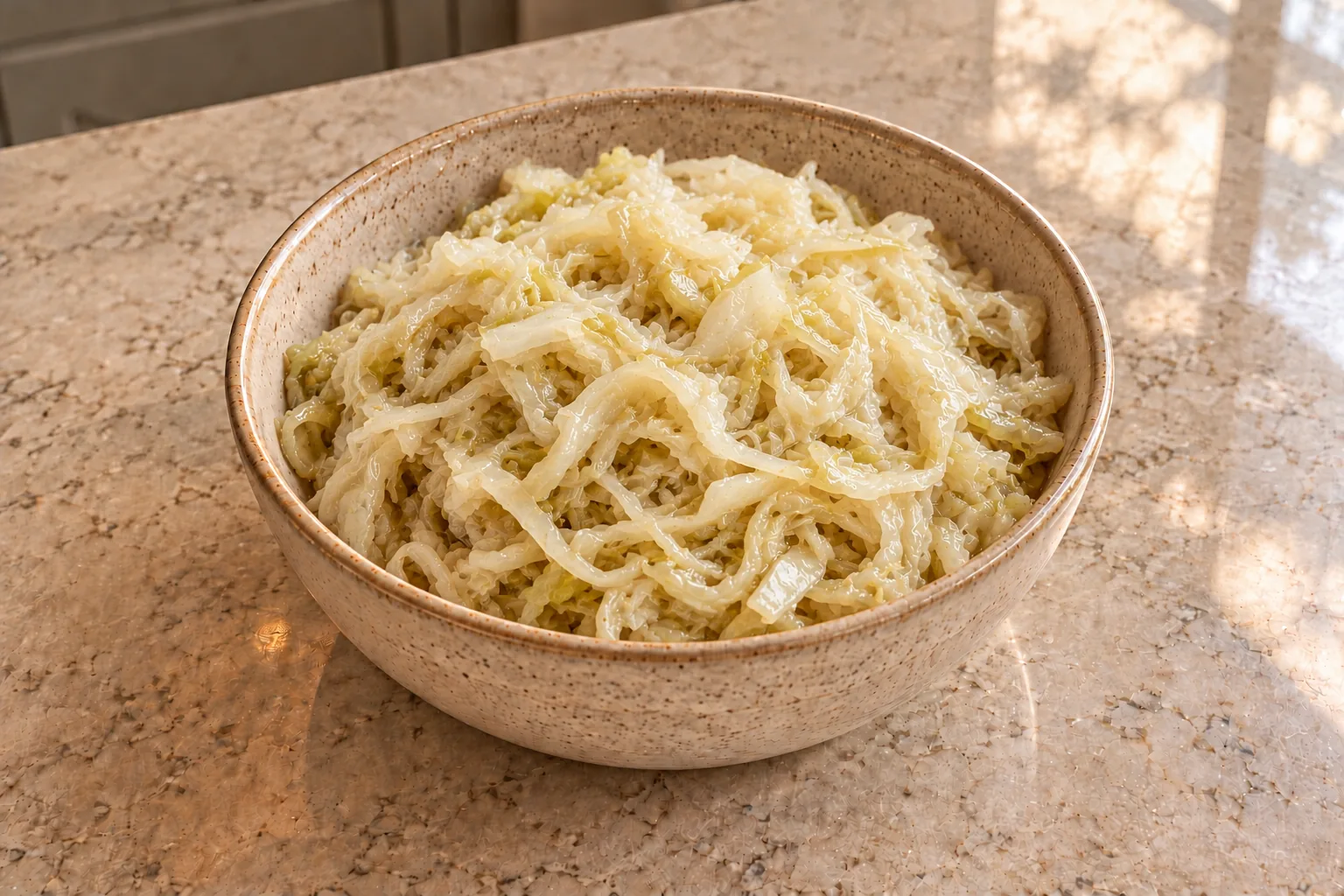
This no-pound sauerkraut uses one medium cabbage, half a tablespoon of sea salt, and a quarter cup of brine from a finished jar of plain sauerkraut. You stir the mixture, give it two thirty-minute rests, then pack it into glass jars. There is no pounding or kneading in this version.
It is a useful recipe when you already have a completed ferment in the fridge and want to use a little of its liquid in your next batch. The finished cabbage is sour and juicy. Mature brine can give it a softer texture than a salt-only ferment. The bowl rests help the cabbage release juice before packing, and the new batch then completes its fermentation.
Our family has followed GAPS since July 2024, and sauerkraut and kimchi are two ferments I make at home. Learning what belongs in each jar has been part of making the diet usable in our kitchen. With this recipe, the useful starting question is simple: do you already have a finished plain cabbage ferment to take the brine from?
If this is your first jar, start with the salt-only no-pound sauerkraut. That recipe uses one full tablespoon of salt and no leftover brine. Here, the half tablespoon and quarter cup belong together. Keeping the two recipes separate makes it easier to follow the right measurements when you are working at the counter.
Choose The Cabbage And Finished Brine
Choose a fresh, firm medium head of green cabbage. Remove damaged outer leaves and save a clean whole leaf to cover the small shreds in the jar. Quarter the head, cut away the hard core, and slice the leaves into thin pieces. A sharp knife is enough. A food processor also works if you stop while the cabbage is still recognizable as shreds.
Take the measured brine from completed plain green sauerkraut. You need its liquid, not a quarter cup of packed cabbage. Let the juice drain into a small glass measuring cup and keep the remaining vegetables covered with their brine. Use clean utensils for both jars.
For the Intro Stage 3 version, keep that previous ferment plain. A jar containing ginger, garlic, carrots, or other additions brings those ingredients into the liquid too. Plain cabbage brine keeps this recipe straightforward when you are choosing foods by stage. The larger ginger carrot sauerkraut with caraway has its own Full GAPS recipe and seasoning notes.
Measure one-half tablespoon of natural sea salt and one-quarter cup of brine. Half a tablespoon is one and a half teaspoons if that is easier with your measuring spoons. There is salt in the brine, too. The half tablespoon here is the amount you add to this new bowl. Keep it with the measured quarter cup of brine.
Have The Bowl And Jars Ready
Use a large glass mixing bowl with room to stir the shredded head without spilling it. Set out a clean tea towel, your tablespoon measure, a quarter-cup measure, and wide-mouth glass jars. One quart jar is the starting estimate for the batch. Have a smaller second jar available rather than forcing all the cabbage into the headspace.
You will also need a glass fermentation weight that fits the opening. The cover leaf holds the smaller pieces together, and the weight helps keep them below the liquid. Stand the jars on a tray to catch brine that escapes during active fermentation. Choose either an airlock or another pressure-releasing fermentation lid, or use the ordinary screw-lid routine in the directions.
Mix, Rest, And Pack The Cabbage
Stir In The Salt And Brine
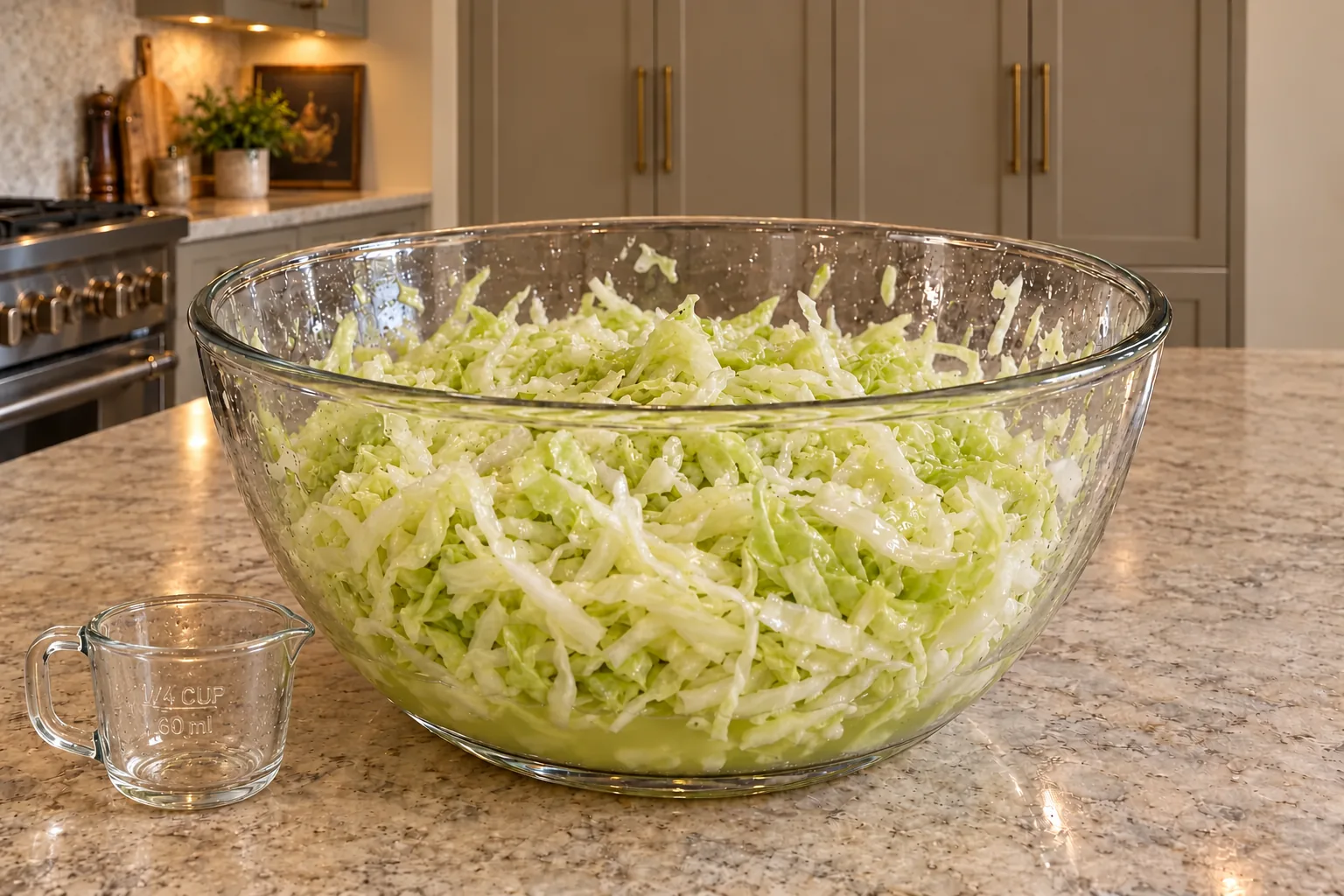
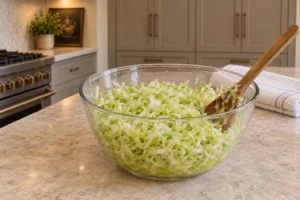
Put the shredded cabbage in the glass bowl. Sprinkle over the half tablespoon of sea salt and add the quarter cup of mature brine. Toss through the whole bowl, bringing the lower cabbage up through the liquid. The small amount of brine wets some of the shreds immediately, but the cabbage is still raw and firm at this point.
Scrape the measured brine into the bowl so it stays with the batch. There is no need to squeeze the cabbage with your hands or pound it with a tool. Sandor Katz describes mature vegetable brine as an optional starter; fresh cabbage can also ferment without one. In this recipe, the brine is part of the specific measured preparation.
Give It Two Separate Bowl Rests
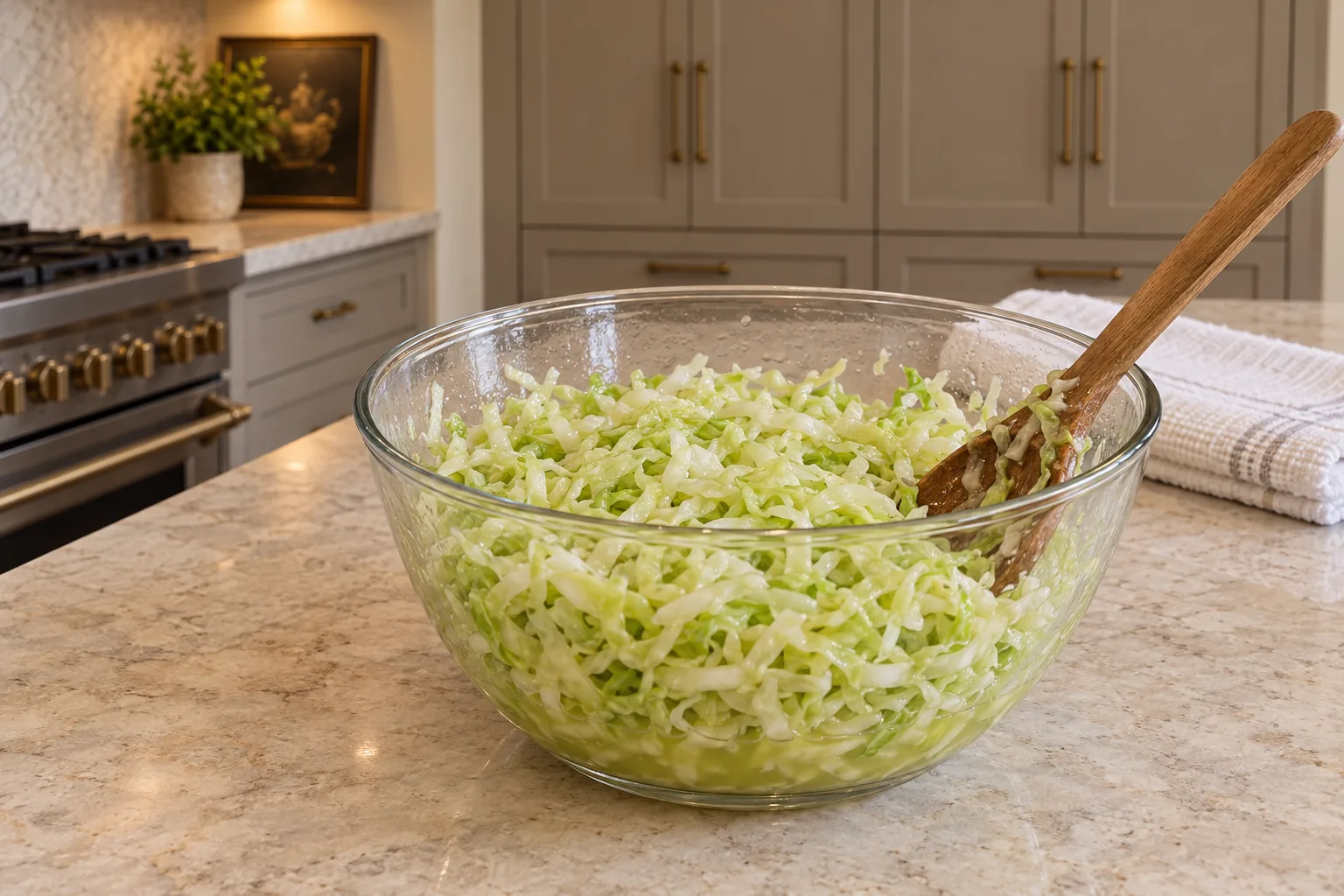
Cover the bowl with the clean tea towel and set a timer for thirty minutes. Remove the towel and stir well, keeping all the juice with the cabbage. Re-cover and give it another thirty minutes. Stir again after the second rest. The total covered resting time is one hour.
Look for shreds that have become wet and more flexible, with cabbage juice collecting around the bottom of the bowl. They should still be recognizable pieces of raw cabbage. This is the salt-and-rest preparation before packing. The sour liquid you added at the start does not mean the new cabbage has completed its fermentation.
Press It Into The Jar
Add the cabbage to a clean wide-mouth jar a little at a time. Press each addition firmly and pour in the liquid from the bowl. Look through the glass for large gaps between the shreds, then press again where needed. The juice should rise around the packed cabbage as those spaces close.
Fold the reserved whole leaf over the small shreds and add the fitting glass weight. Keep the cabbage, cover leaf, and weight below the liquid. Leave about two inches of empty space beneath the rim for expansion. Use another jar if needed. If the vegetables still cannot stay covered after firm packing, add only a little filtered water for submersion, as allowed in Dr. Natasha Campbell-McBride’s sauerkraut preparation.
Let The New Batch Finish Fermenting
Fit the lid and leave the jar around 70°F, out of direct sunlight. For an ordinary screw lid, briefly loosen it daily during the first few days to release built-up gas, then close it again. Keep checking as activity slows. For an airlock, follow its setup and operating directions. During the first twenty-four hours, check a few times that the cabbage stays beneath its liquid and press it down with a clean utensil if needed.
For GAPS, the finishing cues are a sharply acidic taste and no more gas coming from the ferment. Allow roughly one week to a month, depending on the room temperature. Mature brine may change how the batch develops, but it does not replace those checks. Refrigerate the completed sauerkraut with its brine.
GAPS Stage And Serving Notes
Plain sauerkraut solids begin gradually at Intro Stage 3 and continue through later Intro stages and Full GAPS. Start with a small amount and increase gradually toward one to two tablespoons with meals. Using brine from a plain finished cabbage jar keeps this version free of dairy, eggs, nuts, and added spices.
Earlier Intro uses juice from the completed ferment before cabbage solids. Add the juice to a portion of homemade chicken meat stock or soup once it is no longer very hot. No-Plant GAPS treats fermented vegetable juice separately and excludes the cabbage solids. Those are serving distinctions, rather than changes to the quantities in this jar.
Serving And Refrigerating Your Sauerkraut
Take out a small portion with a clean utensil and serve it beside the meal. Its sourness works well with plain meat and vegetables. If you want less liquid on the plate, let the spoonful drain over the jar and leave that brine with the stored cabbage. Stir it into a portion after cooking when you are serving it with soup.
Keep the completed jar refrigerated. After taking a serving, press the remaining cabbage beneath its brine before closing the lid. Cold storage slows fermentation, and texture and flavor can continue changing. Keep the juice with the vegetables instead of draining the whole jar to save it for another batch.
Frequently Asked Questions
Can I Use Brine From A Vinegar Pickle?
Use liquid from completed fermented sauerkraut for this recipe. A vinegar pickle is a different preparation. The plain green sauerkraut linked above gives you the fermented cabbage liquid specified here.
Can I Leave Out The Half Tablespoon Of Salt?
Keep it in. This version uses both the half tablespoon of fresh salt and quarter cup of mature brine. If you do not have finished brine, follow the salt-only no-pound recipe and its full tablespoon measurement instead.
Will The Starter Brine Make It Ready Faster?
It may affect the fermentation, but there is no fixed faster finish promised here. Katz describes using mature brine without a dramatic change in speed or quality, and notes that it can produce softer kraut. For GAPS, wait for the sharp acidic taste and stopped gas in the new batch.
What If One Medium Cabbage Does Not Fit?
Use another jar and keep the headspace in both. Cabbage heads, trimming, and packing change the finished volume. The card scales one batch, with about a quart as the estimate. Keep every bit of juice with the vegetables as you divide them.
How Do I Make A Double Batch?
Use two medium cabbage heads, one tablespoon sea salt, and one-half cup completed plain sauerkraut brine. Give the mixture the same two thirty-minute rests and have more jars ready. Neither resting nor fermentation time doubles simply because you have more cabbage.
Ferments For Family Meals
The planned Kid-Friendly Ferments Recipe Card Deck is a useful companion when you want more fermented foods to rotate through family meals. Browse current and upcoming resources in the WFLI shop. If you prefer a different small-batch preparation, sauerkraut with a four-hour rest gives you another complete method, with its own measurements.
No-Pound Sauerkraut With Leftover Brine for GAPS
Ingredients
Equipment
Method
- Clean the bowl, utensils, jars and glass weights. Remove damaged outer cabbage leaves, reserve a clean whole cover leaf, quarter and core the cabbage, then shred it into thin pieces.
- Put the shredded cabbage in the glass bowl. Add the natural sea salt and brine from completed plain sauerkraut using the amounts in the ingredient list. Toss evenly through the bowl. No pounding or kneading.
- Cover with a clean tea towel and rest thirty minutes. Remove the towel and stir, keeping all released juice in the bowl.
- Re-cover and rest another thirty minutes. Remove the towel and stir again. The cabbage should be wet and flexible, with juice collecting in the bowl. Do not pound or knead.
- Pack firmly into clean wide-mouth glass jars in layers, pressing out large air gaps and adding the juice from the bowl. Fold the reserved cabbage leaf over the shreds and add a fitting glass weight. Keep the vegetables submerged, with about two inches of headspace. Add only a little filtered water if needed for submersion.
- Fit pressure-releasing fermentation lids or ordinary screw lids. With standard lids, briefly loosen daily during the first few days to release gas, then close again. Continue checking as activity slows; follow airlock setup directions if used. Keep around 70°F out of direct sunlight. During the first twenty-four hours check a few times and press the cabbage beneath its liquid with a clean utensil as needed.
- Allow roughly one week to one month, depending on temperature. For GAPS readiness, the cabbage should taste sharply acidic and no more gas should be coming from it. Refrigerate the completed kraut with its brine and use clean utensils to serve.
Notes
Tried this recipe?
Let us know how it was!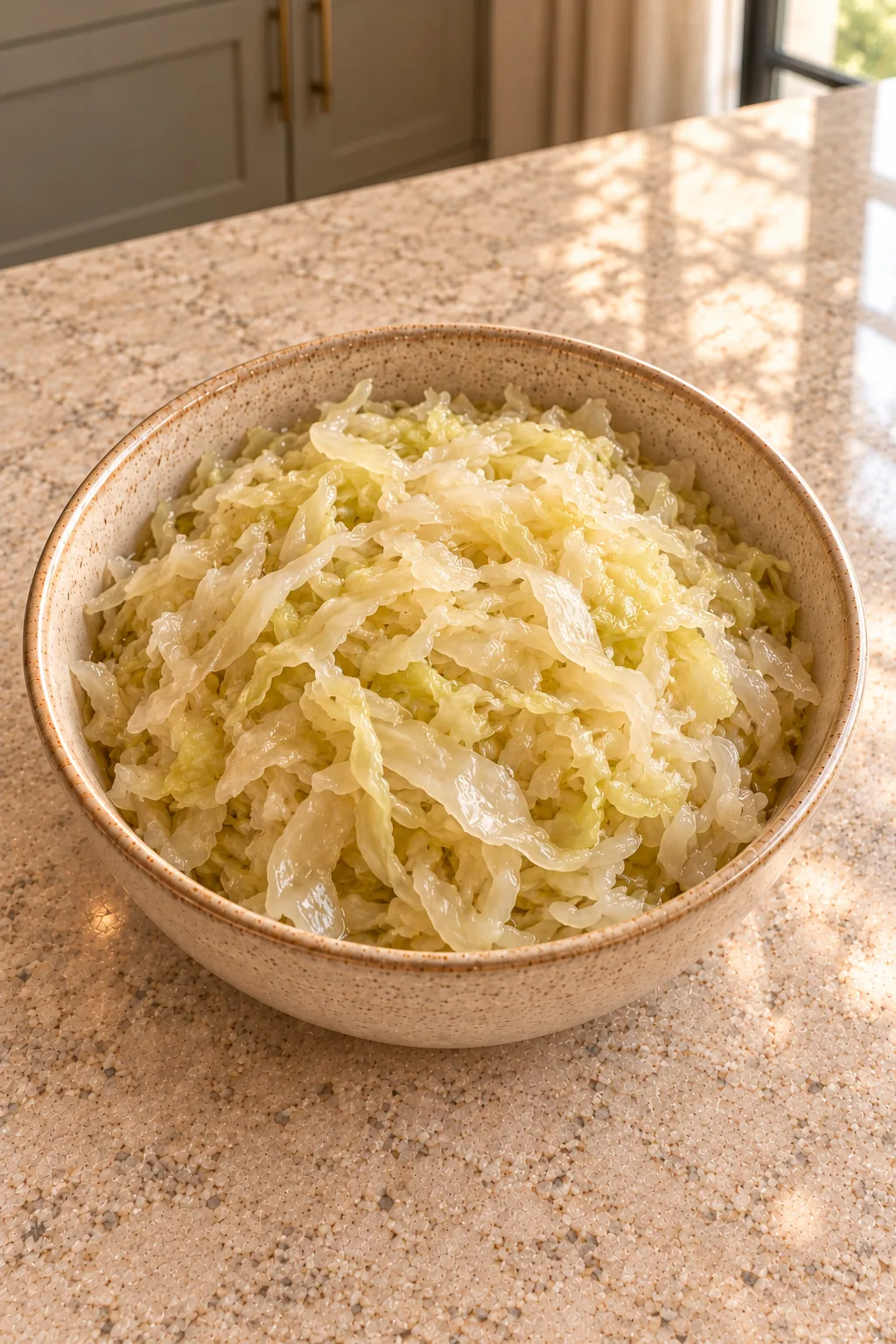

Leave a comment