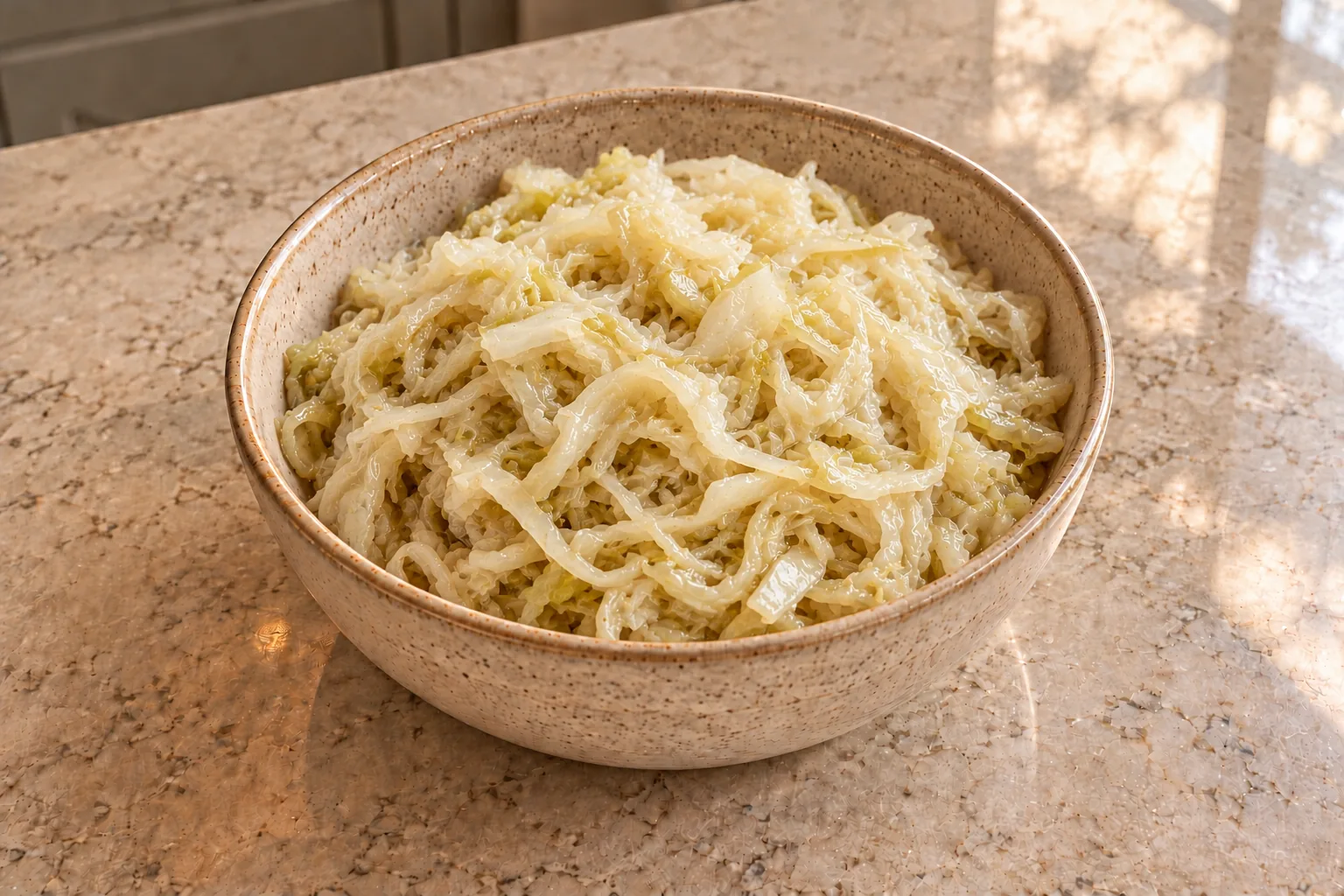
Ingredients
Equipment
Method
- Clean the bowl, utensils, jars and glass weights. Remove damaged outer cabbage leaves, reserve a clean whole cover leaf, quarter and core the cabbage, then shred it into thin pieces.
- Put the shredded cabbage in the glass bowl. Add the natural sea salt and brine from completed plain sauerkraut using the amounts in the ingredient list. Toss evenly through the bowl. No pounding or kneading.
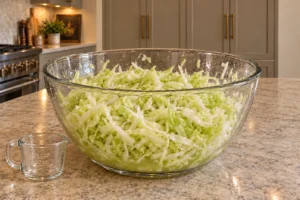
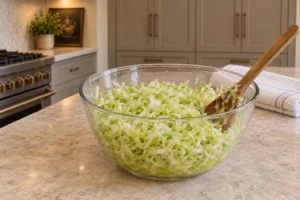
- Cover with a clean tea towel and rest thirty minutes. Remove the towel and stir, keeping all released juice in the bowl.
- Re-cover and rest another thirty minutes. Remove the towel and stir again. The cabbage should be wet and flexible, with juice collecting in the bowl. Do not pound or knead.
- Pack firmly into clean wide-mouth glass jars in layers, pressing out large air gaps and adding the juice from the bowl. Fold the reserved cabbage leaf over the shreds and add a fitting glass weight. Keep the vegetables submerged, with about two inches of headspace. Add only a little filtered water if needed for submersion.
- Fit pressure-releasing fermentation lids or ordinary screw lids. With standard lids, briefly loosen daily during the first few days to release gas, then close again. Continue checking as activity slows; follow airlock setup directions if used. Keep around 70°F out of direct sunlight. During the first twenty-four hours check a few times and press the cabbage beneath its liquid with a clean utensil as needed.
- Allow roughly one week to one month, depending on temperature. For GAPS readiness, the cabbage should taste sharply acidic and no more gas should be coming from it. Refrigerate the completed kraut with its brine and use clean utensils to serve.
Notes
Amounts: Half tablespoon sea salt plus quarter cup completed plain sauerkraut brine per medium cabbage. The brine also contains salt from its first batch.
Rest: Two separate thirty-minute rests, with stirring after each, before packing.
Time: Prep lists the one-hour rest; chopping and packing add unmeasured time. Allow roughly one week to one month for fermentation and use sharp acidity and stopped gas as the GAPS finishing cues.
Yield: About one quart, depending on head size and packing. Leave about two inches headspace and use another jar as needed.
GAPS: Plain cabbage solids start gradually at Intro Stage 3 and continue through Full GAPS. Earlier Intro uses juice from the completed ferment. No-Plant excludes the solids and has a separate juice role.
Storage: Refrigerate completed kraut with its brine, use clean utensils, and keep remaining cabbage submerged.