

No-pound sauerkraut starts with one medium cabbage and a tablespoon of sea salt. You give the salted shreds two thirty-minute rests, stirring between them, before packing the jar. The salt draws out the juice while the bowl stands, so there is no pounding or kneading step.
The finished kraut is sour, juicy, and still has some bite. This is a plain cabbage preparation with no carrots, spices, dairy whey, or added sweetener. It makes a useful small batch for GAPS Intro Stage 3 and Full GAPS. The hour in the bowl is preparation time. The cabbage still needs its full fermentation afterward.
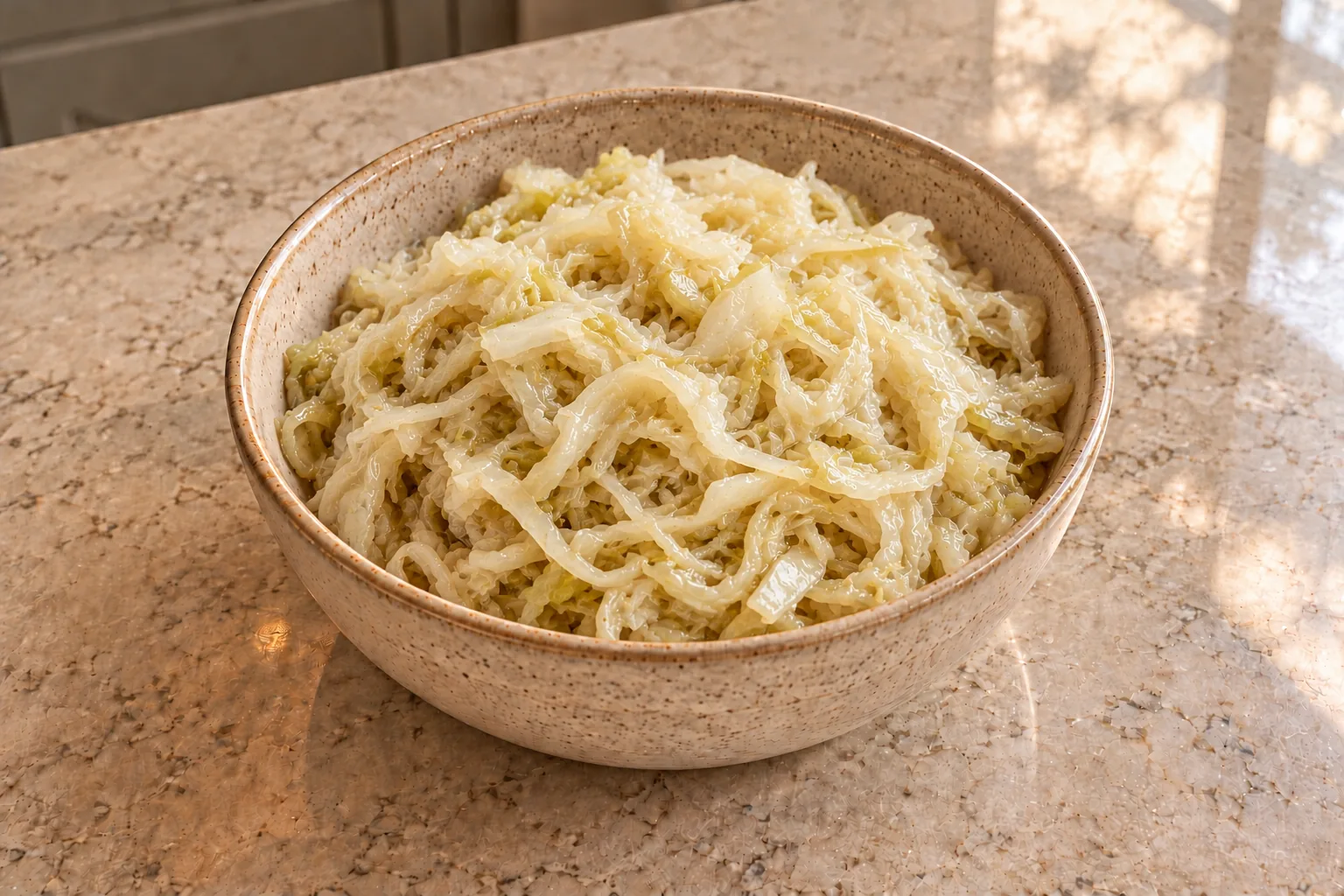
I homeschool and prepare our meals before leaving for second shift. There is already plenty to fit into those mornings, and I appreciate directions that make the pauses clear. This method gives you two separate timers to set before the jars are packed. You can leave the covered bowl during each rest, then come back to stir and check the juice.
Sauerkraut and kimchi are two of the ferments I make at home. A plain jar is especially useful when the rest of a meal already has plenty of seasoning. Keep the batch simple here, then choose another complete recipe when you want ginger, garlic, or a different cabbage cut.
Cabbage And Sea Salt
Choose one fresh, firm medium head of green cabbage. Remove damaged outer leaves and reserve a clean whole leaf for covering the shreds in the jar. Quarter the cabbage, cut away the hard core, and shred the remaining leaves. Thin, irregular strips are easier to press into the jar than thick, stiff chunks.
A sharp knife and a stable board are enough. Work through one quarter at a time so you are not trying to balance the whole round head while cutting it. A food processor is another option if you prefer it, but stop while the cabbage is still recognizable as shreds. Finely mashed cabbage gives you a different texture from this recipe.
Measure one tablespoon of plain natural sea salt for the medium head. Toss it through the whole bowl so the lower layers get salt as well as the top. This preparation uses a tablespoon measure. Keep that amount with its one-head batch rather than borrowing the percentage calculation from the separate ginger-carrot recipe.
Fresh cabbage has moisture to release. An older head with dry, papery outer leaves may give you less juice, even after the two rests. The checks below help you see what the cabbage is doing before you close the jar. Head size and how firmly you pack it also affect the final amount, so about one quart is a useful estimate rather than a guaranteed fill line.
What You Need For The Jar
Have a large glass mixing bowl, a tablespoon measure, a clean tea towel, and clean wide-mouth glass jars ready. A quart jar is the starting size for this batch. Keep an extra smaller jar available in case your cabbage is larger than expected. Leave the same headspace in each jar instead of pressing the final handful into a space that is already full.
A glass fermentation weight helps hold the cover leaf and small shreds below the liquid. Choose one that fits the jar opening. A tray underneath catches any brine that escapes as the cabbage rises during active fermentation. Use a pressure-releasing fermentation lid, such as an airlock, or an ordinary screw lid with the pressure-release routine in the directions.
How To Make No-Pound Sauerkraut
Give The Salted Cabbage Its First Rest
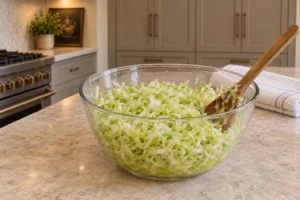
Put the shredded cabbage in the bowl and toss with the measured salt. Cover the bowl with a clean tea towel and set a timer for thirty minutes. You do not need to pound the cabbage while you wait. This pause gives the salt time to draw moisture from the leaves.
When you lift the towel, the cabbage may look slightly lower in the bowl and glossier than it did at the start. Stir it well, bringing the lower shreds up through the mixture. Keep every bit of juice in the bowl. It belongs with the cabbage when you pack the jar.
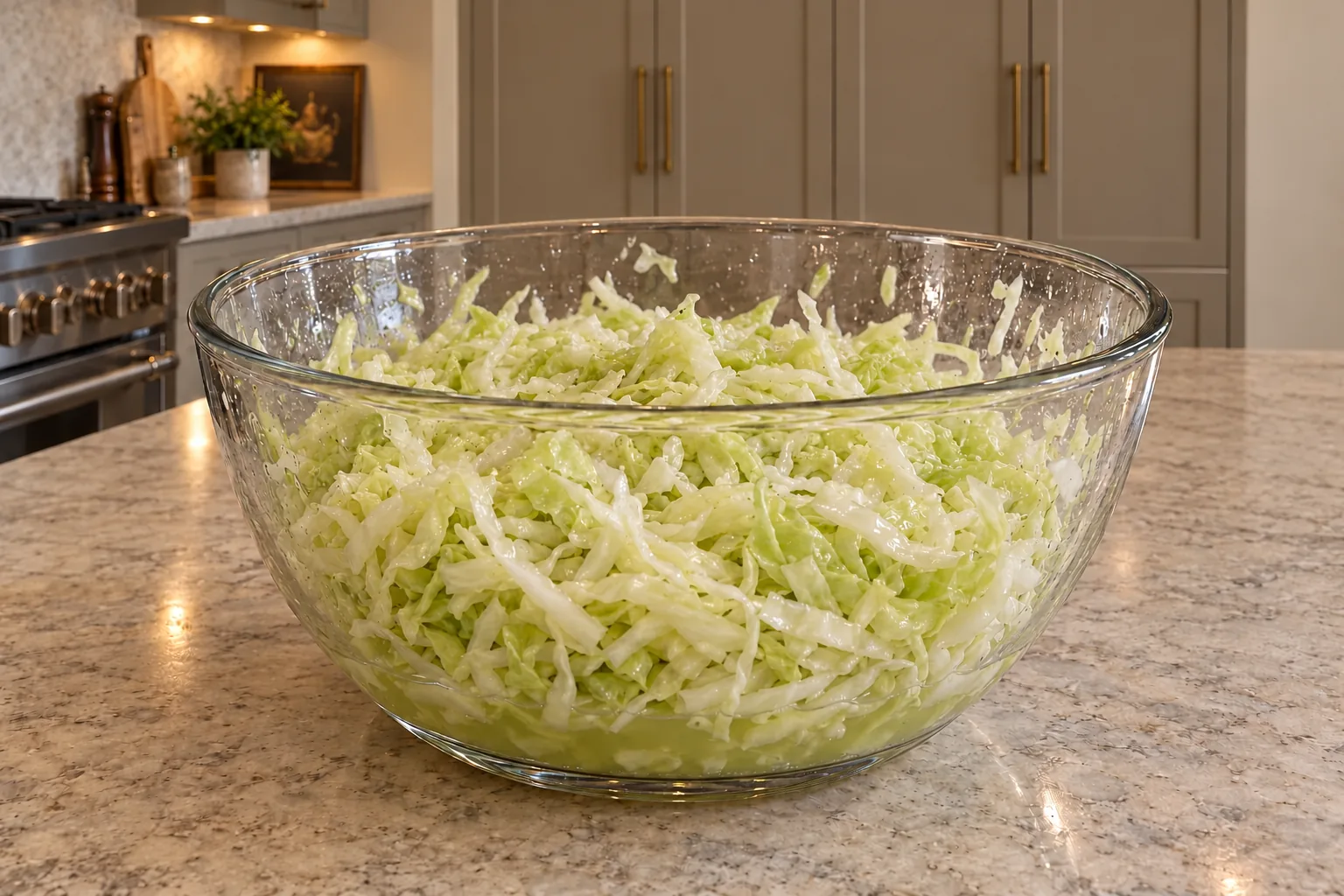
Stir And Rest For Another Thirty Minutes
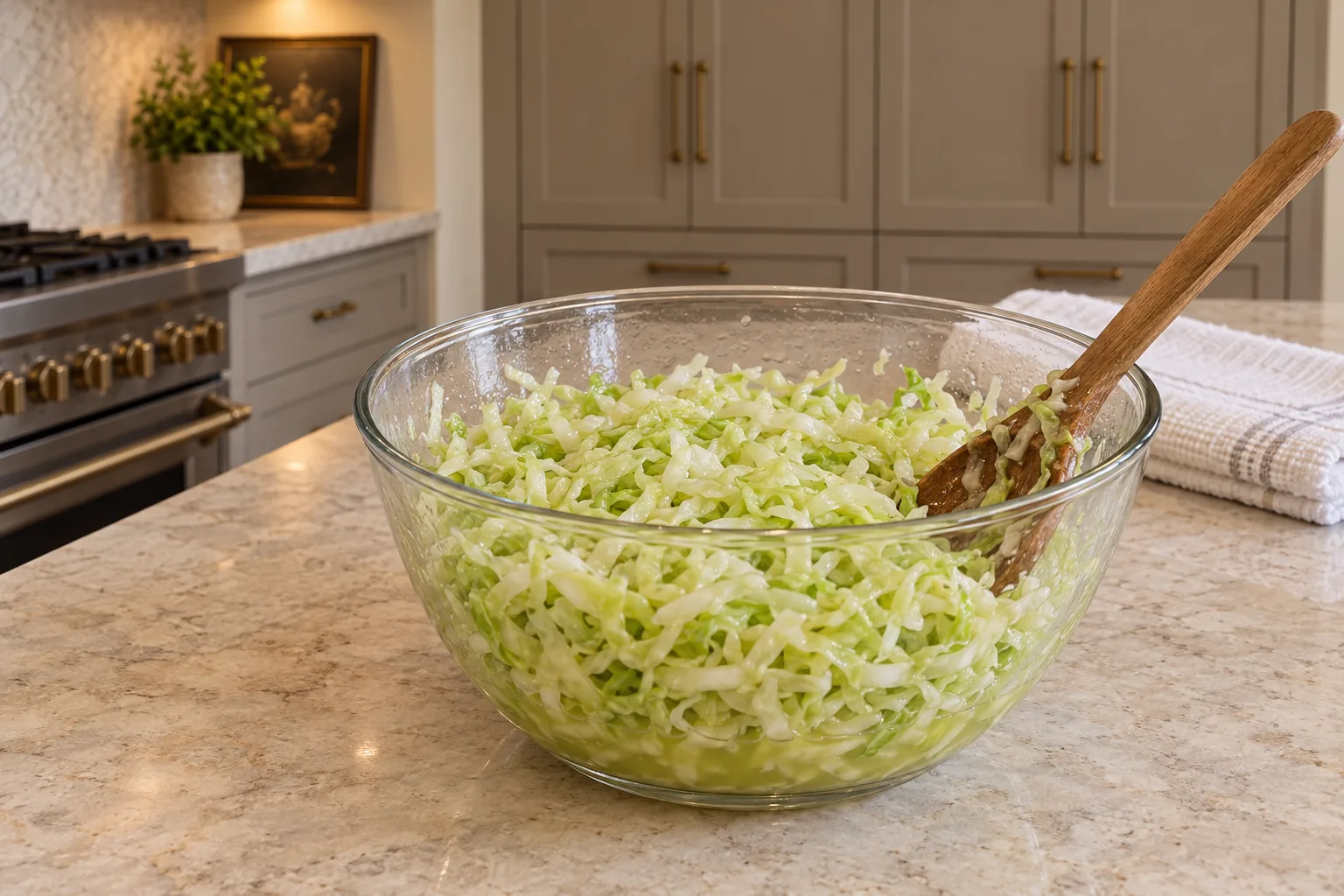
Cover the bowl again and give it another thirty minutes. Remove the towel and stir a second time. The leaves should be more flexible, and juice should be collecting around the bottom and sides of the bowl. You are looking for wet cabbage that can be packed firmly, not leaves cooked until soft.
The two rests are separate steps. Skipping the second one changes the preparation, while kneading between them turns it into a different hands-on method. Sandor Katz’s fermentation guidance emphasizes getting the vegetables beneath their liquid. Here the salted bowl rests prepare the cabbage for that pressing and submersion step.
Pack Firmly And Keep The Cabbage Submerged
Add the wet cabbage to the clean jar in small amounts. Press each addition firmly before adding more, and pour in the juice from the bowl as well. Look through the glass for large gaps between the shreds. Give those pockets another press so the juice rises around the cabbage.
Fold the reserved whole leaf over the small pieces, then add a fitting glass weight. Keep the vegetables and cover leaf beneath their liquid. Leave about two inches of empty space below the rim for expansion during fermentation. If the batch needs another jar, divide it rather than filling the headspace with cabbage.
If the cabbage still cannot stay covered after firm pressing, Dr. Natasha Campbell-McBride’s sauerkraut preparation allows a little filtered water when the vegetables have not released enough juice. Add only what you need for submersion. This plain batch does not use leftover kraut brine; that has its own separately measured preparation.
Release Gas And Watch For Readiness
Fit the lid and stand the jar on its tray at room temperature, around 70°F, out of direct sunlight. With an ordinary screw lid, briefly loosen it daily during the first few days to release gas, then close it again. Continue checking as activity slows. If you choose an airlock, follow its setup and operating directions.
During the first twenty-four hours, check a few times that the cabbage remains below the juice. Press it down with a clean utensil if it has risen. A few escaped shreds around the cover leaf can be tucked underneath. Keep the brine with the vegetables throughout fermentation.
For GAPS, use the finishing cues in Gut and Physiology Syndrome: the sauerkraut should taste sharply acidic and no more gas should be coming from it. Allow roughly one week to a month, depending on room temperature. The first bubbles show that fermentation has started. Neither the one-hour bowl rest nor the first few active days decide when the jar is finished.
Where It Fits On GAPS
The cabbage solids begin gradually at Intro Stage 3 and continue through later Intro stages and Full GAPS. Start with a small amount and increase gradually toward one to two tablespoons with a meal. This plain recipe has no milk, eggs, nuts, honey, or added spices.
Earlier Intro uses juice from the completed ferment before the cabbage solids. Add it to a portion of homemade chicken meat stock or soup after that serving is no longer very hot. Keeping the liquid and solids distinct is useful when the household is working through different stages.
On No-Plant GAPS, the cabbage solids are not the serving route; the 2020 protocol describes gradual use of fermented vegetable juice separately. This plain cabbage preparation also avoids the carrots in the ginger carrot sauerkraut with caraway. That larger, seasoned Full GAPS batch is an option when you want those flavors, rather than a set of additions to fold into this card.
Serving And Storage
Refrigerate the completed sauerkraut with its brine. Take out each serving with a clean utensil, and press the remaining cabbage beneath its liquid before closing the jar. Cold storage slows fermentation, while the sourness and texture can continue developing.
Serve a little kraut with the meal on the plate, or stir it into a portion of food after cooking. Its sourness gives you contrast with plain meat and vegetables. Let a spoonful drain briefly over the jar if you want it less wet for serving, and leave that liquid with the stored batch.
For another small-batch method, sauerkraut with a four-hour rest uses a different salt amount and rests after packing. The chopped Himalayan salt recipe uses smaller leafy pieces and a short kneading step. Those links help you choose the cut and preparation that suit your kitchen, with each recipe’s measurements kept together.
Frequently Asked Questions
Do I Need To Pound It After The Rests?
No. Stir after each thirty-minute rest, then press firmly as you pack the jar. The no-pound method changes how you prepare the cabbage in the bowl. It still needs firm packing so the juice rises and large air pockets close.
Will One Cabbage Always Fit One Quart Jar?
Not every medium head is the same size. Have a second jar available and leave the required headspace. The card scales one batch because the finished volume depends on the cabbage, trimming, and pressing. Do not discard juice just to make the batch fit a particular jar.
What If The Cabbage Looks Dry After An Hour?
Stir through the whole bowl and press firmly when packing. Some heads release less liquid. Use only a little filtered water if it is needed to keep the packed vegetables submerged, then keep checking the liquid level during the first day. Keep the tablespoon of salt with the original medium-head amount.
Is A Jar Ready After Three Days?
For GAPS, sharp acidity and stopped gas are the finishing cues. Plan for roughly one week to a month. A three-day taste or a few bubbles cannot replace those checks. Refrigerate once the completed-ferment cues are present.
Can I Double It?
Yes. Use two medium cabbage heads and two tablespoons sea salt. Work in a larger bowl or divide the preparation into bowls, keeping both thirty-minute rests. Have more jars ready. The rest and fermentation times do not simply double with the number of heads.
Keeping Sauerkraut Ready For Family Meals
The planned Kid-Friendly Ferments Recipe Card Deck is a fit when you want more fermented foods to rotate through family meals. Find current and upcoming resources in the WFLI shop. Date this jar when you pack it, and start another batch ahead of when you will need it.
No-Pound Sauerkraut for GAPS
Ingredients
Equipment
Method
- Clean the bowl, utensils, jars and glass weights. Remove damaged outer cabbage leaves, reserve a clean whole cover leaf, quarter and core the cabbage, then shred it into thin pieces.
- Put the shredded cabbage in a large glass bowl and toss evenly with natural sea salt, using the amount in the ingredient list.
- Cover with a clean tea towel and rest thirty minutes. Remove the towel and stir, keeping all released juice in the bowl.
- Re-cover and rest another thirty minutes. Remove the towel and stir again. The cabbage should be wet and flexible, with juice collecting in the bowl. Do not pound or knead.
- Pack firmly into clean wide-mouth glass jars in layers, pressing out large air gaps and adding the juice from the bowl. Fold the reserved cabbage leaf over the shreds and add a fitting glass weight. Keep the vegetables submerged, with about two inches of headspace. Add only a little filtered water if needed for submersion.
- Fit pressure-releasing fermentation lids or ordinary screw lids. With standard lids, briefly loosen daily during the first few days to release gas, then close again. Continue checking as activity slows; follow airlock setup directions if used. Keep around 70°F out of direct sunlight. During the first twenty-four hours check a few times and press the cabbage beneath its liquid with a clean utensil as needed.
- Allow roughly one week to one month, depending on temperature. For GAPS readiness, the cabbage should taste sharply acidic and no more gas should be coming from it. Refrigerate the completed kraut with its brine and use clean utensils to serve.
Notes
Tried this recipe?
Let us know how it was!

Leave a comment