

Ginger carrot sauerkraut gives you the sharp sourness of fermented cabbage with fine orange carrot shreds, fresh ginger, garlic, and little caraway seeds throughout. It is a useful Full GAPS side when you want more seasoning than plain kraut. The carrots add texture and color; the ginger is noticeable without turning the whole jar into a hot sauce.
This is a generous batch with two to three cabbage heads and six to eight carrots. You will weigh the prepared vegetables and use salt at two percent of that weight. That one calculation keeps the salt in proportion even when the cabbage heads are different sizes. There is no vinegar or sweetener in the cabbage mixture. Its sour flavor develops as it ferments.

Sauerkraut and kimchi are two of the ferments I make at home. In a household with six children, a jar that can be served alongside a meal is useful. I homeschool and prepare meals before leaving for second shift, so clear measurements matter to me. For a larger batch like this, weighing the vegetables is easier to repeat than trying to decide whether every cabbage head looks about the same.
Cabbage, Carrots, And Seasoning
Choose fresh, firm green cabbage for this version. Remove damaged outer leaves and keep clean whole leaves for covering the packed vegetables. Cut away the hard core, then shred the remaining cabbage into small pieces. A sharp knife works, and a food processor is another way to handle the larger quantity. Stop while you still have shreds rather than a puree.
Grate the carrots and the ginger knob, and mince the garlic. Carrot shreds should be fine enough to mix through the cabbage rather than sitting in thick chunks. Ginger can leave long fibers if it is only roughly chopped; grating spreads it through the batch. The garlic is minced for the same reason. You want the seasoning distributed throughout the packed jars.
Caraway has a distinct savory, aromatic flavor. This formula uses two teaspoons for the full batch. Stir the seeds in after the salted vegetables have started releasing juice. The finished kraut should have occasional small seeds among the shreds, not a thick layer sprinkled over the surface. Stirring the seeds into the damp cabbage spreads them through each jar.
How To Weigh The Salt
Weigh the prepared cabbage, carrots, ginger, and garlic together. Leave the reserved cover leaves out of that weight. Place your mixing bowl on a kitchen scale and tare it to zero before adding the vegetables. If the batch is too large for one weighing, weigh portions separately and add those weights together.
Multiply the total vegetable weight in grams by 0.02. For example, 1,000 grams of prepared vegetables needs 20 grams of salt. A 2,500-gram batch would need 50 grams. These examples show the calculation; use the actual weight of your own prepared vegetables for the recipe.
Use plain natural mineral sea salt. Fine and coarse crystals do not weigh the same by the tablespoon, which is why the primary salt amount is weighed. Measure the salt in a separate small bowl, then work it through the vegetables. At two times the recipe, the vegetable weight and salt weight both double. The concentration stays at two percent.
Jars And Kitchen Tools
You will need a large glass mixing bowl, a kitchen scale, a knife and board, a grater, and enough clean wide-mouth glass jars for the actual batch. A food processor is optional. Have a glass fermentation weight that fits each jar opening and a tray to stand the jars on. The tray catches brine if the vegetables rise as gas develops.
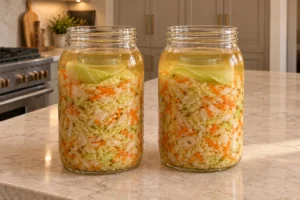
The jars in the packing photo show part of the batch. Their number does not tell you how much cabbage two or three heads will make. Have additional jars ready, and keep about two inches of empty headspace below each rim. Use pressure-releasing lids, such as airlocks, or ordinary lids fitted loosely enough for gas to escape. Follow the setup directions for your particular fermentation lid.
How To Make Ginger Carrot Sauerkraut
Massage Until The Vegetables Release Juice
Clean the jars, weights, bowl, and utensils before you start. Prepare and weigh the vegetables, calculate the salt, then toss everything except the caraway together. Work through the bowl with clean hands, squeezing and turning the shreds so the salt reaches the lower layers as well as the top.
At first the cabbage feels springy and the bowl can look dry. As you massage it, the leaves become more flexible and the mixture looks glossy. Juice begins collecting at the bottom. Sandor Katz describes the bruising cue in The Art of Fermentation as vegetables releasing juice when squeezed. Keep working toward that physical change rather than giving the bowl one quick stir and packing dry shreds.

Add Caraway And Pack The Jars
Stir the measured caraway seeds through the wet vegetables. Add the mixture to the jars a little at a time, pressing each layer firmly before adding another. Look through the glass for large air pockets. Give those spots another press, and divide the juice from the bowl among the packed jars.
Fold a reserved cabbage leaf over the small shreds and set a glass weight on top. Both the vegetables and the cover leaf should be below the liquid. The weight needs to hold the food down rather than simply resting on loose cabbage above the brine. Check around the edges for carrot or cabbage shreds that have floated past the leaf, and tuck them back underneath.
If firm packing still leaves the vegetables exposed, prepare the optional covering brine from the recipe card. Dissolve one and a half tablespoons of sea salt in one quart of boiling filtered water, then let it cool completely before using it. Add only enough to cover the vegetables and weight while preserving the headspace. Pour slowly so you can stop as soon as everything is covered.

Watch The Fermenting Cabbage
Fit the chosen lids and keep the jars out of direct sunlight in a place around 65–75°F. A pressure-releasing lid gives gas a way out. With ordinary canning lids, follow the loosely fitted method rather than sealing the jars tight and leaving the pressure unchecked. The first bubbles and rising liquid show activity, but they do not mean the kraut is finished.
Check after about two days, then every two or three days while the ferment is active. Make sure the cabbage remains submerged. Press it down with a clean utensil if it has risen, and use cooled covering brine only when necessary. You may smell fresh garlic and ginger early on; the sour smell and taste become more noticeable as fermentation develops.
The recipe uses fourteen days as a planning estimate. For GAPS, Dr. Natasha Campbell-McBride describes completed sauerkraut by its sharp acidic taste and stopped gas production. The usual range is roughly one week to a month, depending on room temperature. Around two weeks, check the flavor and activity rather than moving every jar into the fridge simply because the same date has arrived.
Where This Version Fits On GAPS
Use this seasoned vegetable recipe in your Full GAPS rotation. It contains no milk, eggs, nuts, honey, or added vinegar. The ginger, garlic, and caraway give this jar more seasoning than plain cabbage. For a simpler ferment, use one of the complete plain recipes linked below.
For earlier Intro, homemade green sauerkraut gives you a plain cabbage route. The juice from a completed ferment is introduced before the vegetable solids; sauerkraut solids begin gradually at Intro Stage 3. Small pieces or a finely grated carrot do not move a vegetable ferment into an earlier stage. Add completed-ferment juice to a serving of chicken meat stock once it is no longer very hot.
For households choosing a ketogenic GAPS preparation, the linked plain cabbage recipe is an alternative to this carrot-rich batch. Choose its complete measurements rather than treating fermentation as a guarantee that all carbohydrate has disappeared. On No-Plant GAPS, the cabbage and carrot solids are not the serving route. The 2020 protocol describes gradual use of fermented vegetable juice separately from the solids.
Serving And Storage
Serve a small portion beside homemade sausage links for a sour contrast with the warm meat. Let a spoonful drain briefly over its jar when you want it less wet on the plate. Keep the drained liquid with the stored cabbage rather than pouring away the batch brine.
Refrigerate the completed ferment, covered with its brine. Use a clean utensil for each serving and press the remaining vegetables back under the liquid before closing the jar. Cold storage slows fermentation, so the flavor and texture can continue changing. Date the jars so you can keep track of which batch you opened first.
If you would like a different cabbage flavor next time, red cabbage sauerkraut uses its own two-cabbage formula with a measured covering brine. It keeps the preparation simpler and gives you a deep pink finished color. The chopped Himalayan salt version uses small leafy pieces and a thirty-minute salted rest. Pick the texture and batch size that suit the meal.
Frequently Asked Questions
Do I Need A Starter Culture?
This batch does not need a commercial starter or dairy whey. Cabbage, the measured mineral salt, and its released juice begin the vegetable ferment. The optional covering brine supports submersion when the cabbage has not released enough liquid; it does not replace the weighed salt mixed through the vegetables.
What If My Bowl Is Too Small?
Prepare the vegetables in portions. Add their weights together before calculating the salt, then distribute that measured salt evenly while mixing the portions. Pack all the prepared vegetables with their juice. Keep the same headspace in every jar instead of squeezing the final handful into an already full one.
Can I Use A Tablespoon For The Main Salt Amount?
Use the scale for the salt mixed into the vegetables. Different crystal sizes and brands make a spoon measure less consistent. The optional top-up brine has its own measured tablespoon amount in the directions. Weighing the main salt and measuring the optional brine separately keeps both steps clear.
What If Something Grows On The Surface?
Keep the food submerged and check the surface regularly. A thin surface film is different from fuzzy or colored mold. Do not stir unfamiliar growth into the vegetables or assume that every white patch is harmless. If fuzzy mold has taken hold, discard the affected batch and start again with clean jars and better submersion.
Can I Double The Batch?
Yes. Double the cabbage, carrots, ginger, garlic, and caraway. Weigh the full prepared vegetable amount and calculate salt at the same two percent. Use more jars as needed. The fermentation time does not double with the number of jars; watch the same acidity and gas cues.
A Steadier Routine For Your Ferment Jars
Our planned Crock & Jar: Ferments for GAPS Families course is a useful fit if you want more help with jar setup, checking the food, and working ferments into family meals. Find current and upcoming resources in the WFLI shop. Label this batch when you pack it and leave room in your meal plan for it to finish at its own pace.
Ginger Carrot Sauerkraut With Caraway for Full GAPS
Ingredients
Equipment
Method
- Clean the mixing bowl, utensils, jars, and fermentation weights. Reserve clean whole cabbage leaves for covering the jars. Remove the hard core and shred the remaining cabbage into small pieces.
- Grate the carrots and the ginger knob. Mince the garlic. Weigh the combined prepared cabbage, carrots, ginger, and garlic, excluding the reserved cover leaves.
- Multiply the vegetable weight in grams by 0.02 for the salt weight. For example, 1,000 grams vegetables needs 20 grams salt. Weigh that amount of natural mineral sea salt.
- Mix the prepared vegetables with the weighed salt. Massage and squeeze with clean hands, turning the mixture, until the shreds are flexible and wet and juice collects in the bowl. A squeezed handful should release juice.

- Stir in the caraway seeds. Pack into clean wide-mouth glass jars in layers, pressing firmly to close large air pockets. Divide the released juice among the jars.
- Fold reserved cabbage leaves over the shreds and add fitting glass weights. Keep the vegetables, leaves, and weights submerged beneath brine, with about two inches of headspace. If more brine is needed, dissolve 1½ tablespoons sea salt in 1 quart boiling filtered water, cool completely, and add only enough to maintain submersion.
- Fit pressure-releasing fermentation lids or loosely fitted standard canning lids that allow gas to escape. Follow the lid setup directions. Keep around 65–75°F out of direct sunlight; do not seal active fermentation without pressure release.
- Check after about two days, then every two or three days while active. Keep the vegetables submerged and press down with clean utensils as needed. Use cooled covering brine only if necessary.
- Around two weeks, check taste and activity. GAPS readiness is sharply acidic taste and no more gas coming from the kraut, generally one week to one month depending on temperature. Refrigerate completed kraut with its brine and use clean utensils when serving.
Notes
Tried this recipe?
Let us know how it was!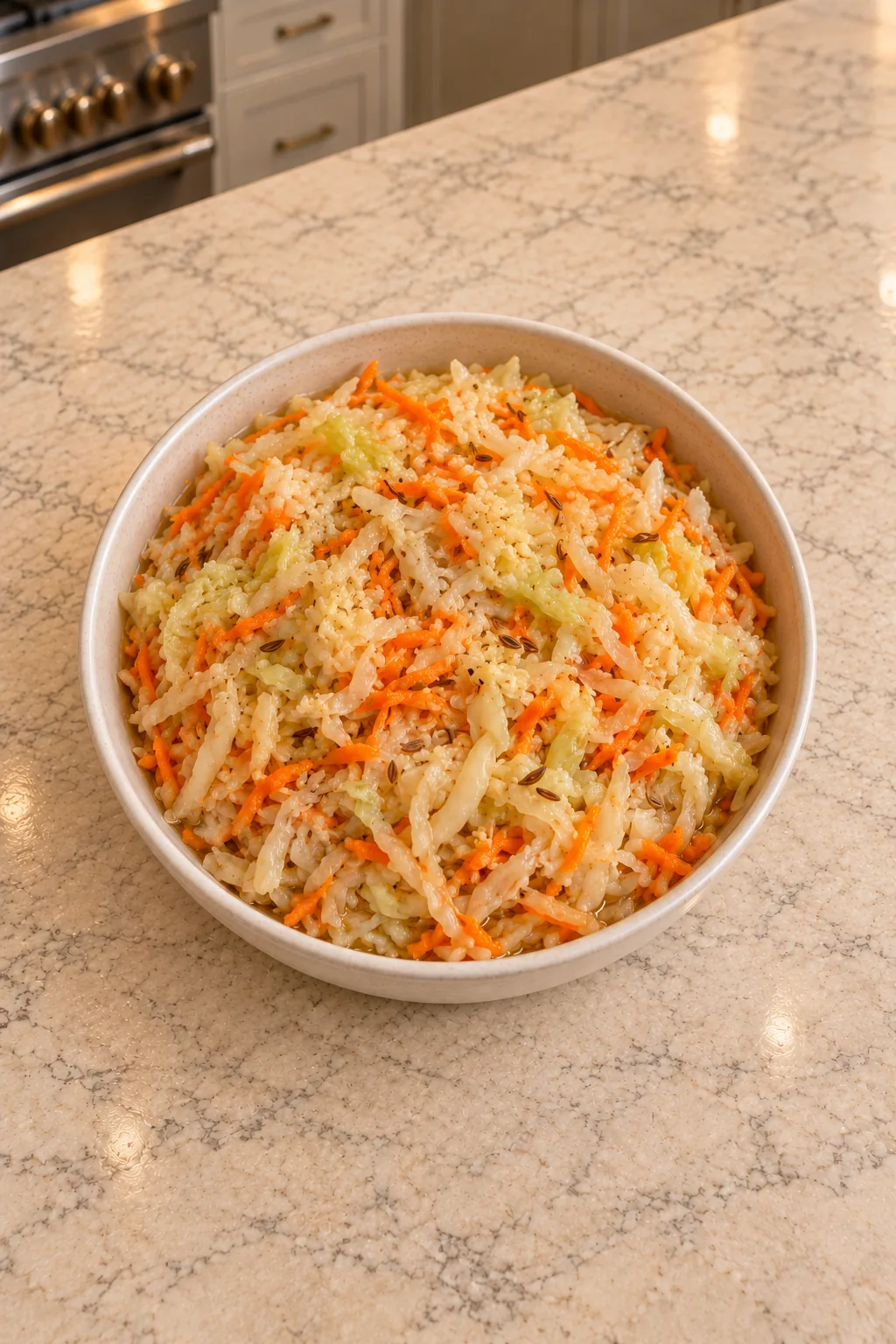

Leave a comment