

Soft fermented nut cheese turns soaked macadamias into a tangy, airy spread with the help of completed fermented vegetables. The olive-oil formula stays soft enough to scoop, spread, or spoon beside a meal. There is no dairy and no dehydrator step in this version.
Ferments are easiest for me to keep up with when the endpoint is something I can actually see. This one does not ask us to trust a clock alone. The purée rises and fills with many small air pockets until it looks sponge-like through the glass. That visible change is far more useful in a busy family kitchen than repeatedly guessing whether a jar is ready.
This post contains one complete formula for the soft olive-oil cheese. The coconut-oil cheeses are separate recipes because their fats, finishing methods, timing, texture, photographs, and cards are materially different.
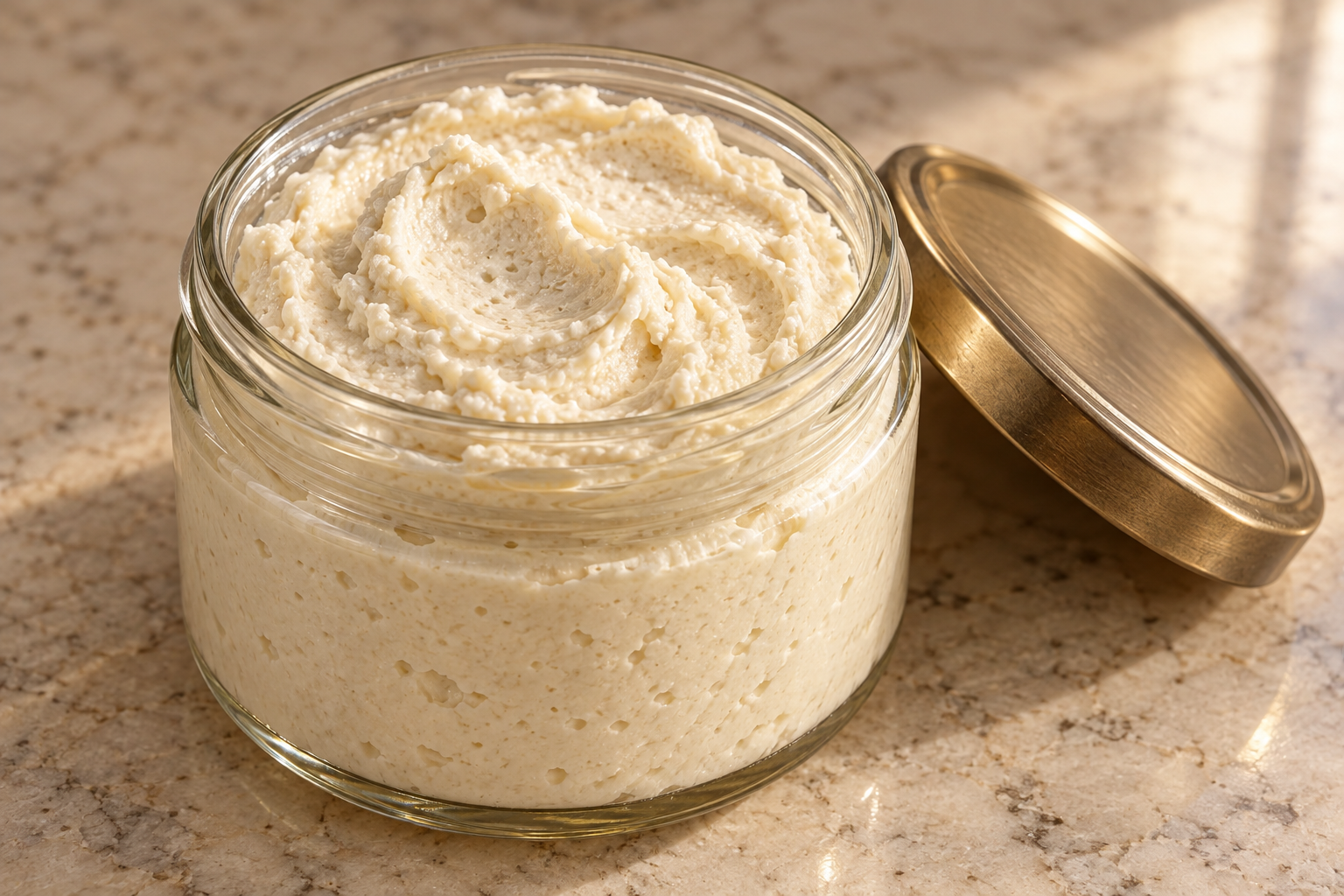
Why This Formula Stays Soft
The source measures one-quarter cup raw extra-virgin olive oil. Olive oil remains fluid when chilled, so the finished cheese firms slightly in the refrigerator but stays spreadable. The firm recipes use coconut oil and additional straining, molding, chilling, or dehydration; those steps do not belong in this card.
The fermented vegetables bring an established living culture and some liquid to the blend. Hulled tahini adds body, while lemon, garlic, and mineral salt round out the flavor. The purée must be smooth enough to rise as one mass rather than remain a bowl of chopped nuts.
Choose Macadamias or Walnuts
Use two cups raw macadamia nuts or raw walnuts. Choose one nut for the batch. The photographed formula uses macadamias, which give the cheese its pale cream color and mild flavor. Walnut cheese will be darker and taste more distinctly nutty.
The source permits another raw nut or seed, but this Full GAPS version keeps the current accepted macadamia-or-walnut routes. A different nut or seed can absorb water, blend, and ferment differently, so it should not be silently substituted into these photographs and cues.
Soak the Nuts Overnight
Put two cups nuts in a clean glass or ceramic bowl. Add one teaspoon mineral salt and enough filtered water to cover the nuts by a full two inches. Stir until the salt dissolves, then leave the nuts to soak overnight.
The source note gives two teaspoons salt for four cups nuts, so one teaspoon is the exact half-scale for this two-cup formula. Keep that measured relationship rather than salting the soak by eye.
After soaking, drain the nuts and rinse them thoroughly. They should feel wet and slightly plumper, without a sour or stale smell. Measure the full two cups soaked, wet nuts into the cheese formula. The recipe does not ask for two dry cups plus an unmeasured extra amount after swelling.
Use Completed Fermented Vegetables
Measure one-half cup completed homemade additive-free fermented vegetables, such as sauerkraut. Use vegetables that have already reached their own correct fermented endpoint. Fresh salted cabbage that has not fermented is not a replacement.
Keep the measured vegetables and their natural liquid together unless the particular batch is extremely dry. The blender may need a small source-permitted addition later, but the starting formula remains one-half cup.
Prepare the Remaining Ingredients
Measure one-quarter cup raw extra-virgin olive oil, two tablespoons hulled tahini made from properly prepared sesame, one tablespoon freshly squeezed lemon juice, one crushed or minced garlic clove, and one-half teaspoon mineral salt.
The olive oil stays raw and unheated. The tahini needs the supported prepared sesame form rather than an opaque product with sweeteners or excluded oils. Use fresh lemon rather than a bottled juice with preservatives.
Blend the Soft Nut Cheese Base
Combine the soaked wet nuts, fermented vegetables, olive oil, tahini, lemon juice, garlic, and salt in a high-power blender with approved glass or stainless-steel food-contact surfaces.
Purée for about 50 seconds. The mixture should move toward the blades and become smooth, pale, and thick. Stop and scrape only if necessary. If the blender cannot turn the purée, add a small amount of filtered water, fermented vegetables, or olive oil as the source permits, then continue only until smooth.
Do not pour in a large unmeasured quantity. A thin purée changes the final texture and can no longer be represented by this card. The finished blender stage should look uniform, with no chunks of nut or strands of cabbage.
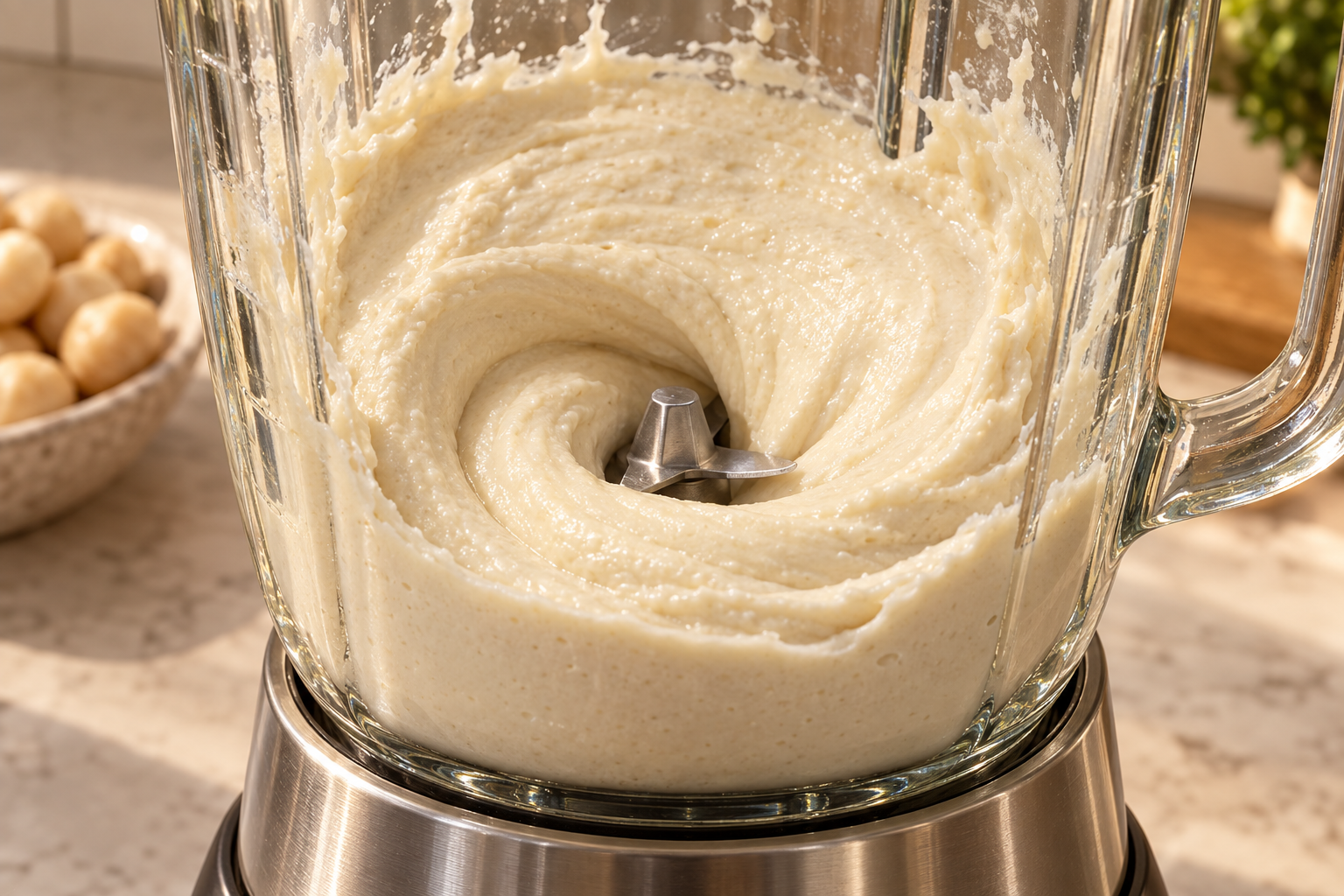
Choose a Vessel With Room to Rise
Transfer the purée to a clean, wide-mouth glass vessel that holds close to twice the volume of the fresh blend. A wide mouth makes it easier to transfer the thick cheese without smearing it up the sides, and the extra capacity gives the ferment room to expand.
Keep the upper walls of the vessel as clean as practical. Use a flexible spatula to settle the purée below the rim. Do not pack the jar to the top at the beginning.
Cover Loosely and Ferment by Observation
Set a clean metal lid on loosely or screw it only loosely so the vessel is covered without trapping pressure. Katz controls this fermentation environment: use a clean nonreactive vessel, allow gas to escape, and observe the ferment rather than treating one room-temperature number as universal.
Place the vessel in a warm room-temperature location away from direct sunlight. The source says about one and one-half days for the first check. A cooler room can take longer. That first check is a time to look, not a command to refrigerate an unchanged purée.
Recognize the Sponge-Like Endpoint
The cheese is ready when the whole purée has risen and many air bubbles appear throughout it. Viewed through the glass, it should look aerated like a sponge rather than dense and flat. The top may dome slightly as the mass expands.
The bubbles must be distributed through the purée, not limited to one stray pocket. The color should remain clean and consistent with the nuts used. This formula does not instruct you to accept colored or fuzzy surface growth as part of the endpoint.
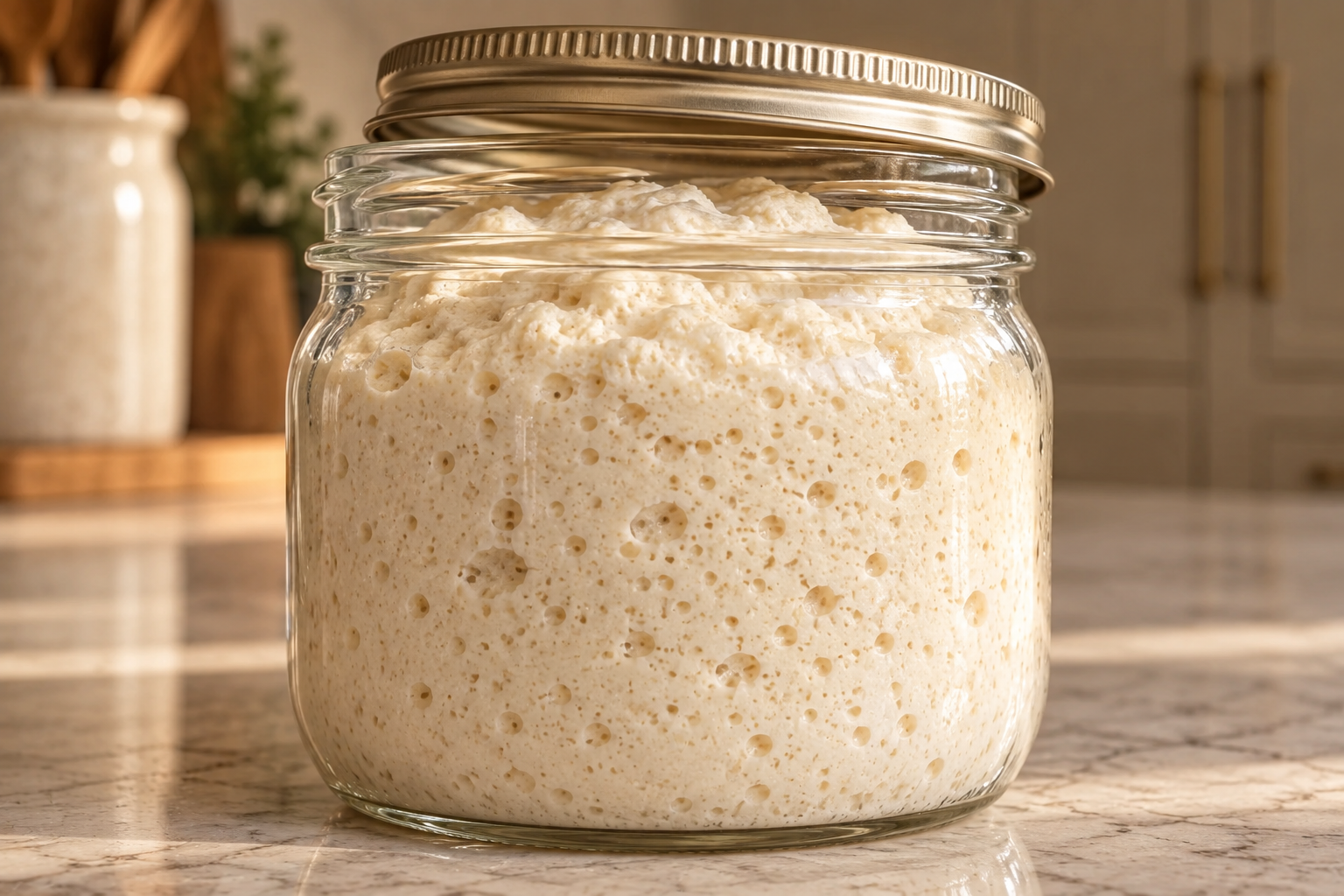
Chill the Finished Soft Cheese
Move the jar to the refrigerator once the risen, bubbly endpoint is present. Chilling slows fermentation and lets the spread firm slightly. This olive-oil version remains soft; do not add an unmeasured thickener or move it into the dehydrator instructions from another formula.
Stir gently before serving if the surface and lower portion have slightly different textures. A spoonful should hold a soft mound while spreading easily across a plate or cooked vegetable.
What the Finished Cheese Should Look and Taste Like
The chilled cheese should be pale cream when made with macadamias and darker beige when made with walnuts. It should look smooth with a fine airy texture, not gritty or watery. The aroma should be pleasantly tangy with garlic and lemon underneath.
The flavor is cultured, savory, and nutty. Olive oil keeps the mouthfeel supple. The result is meant to be a soft spread, not a dairy-cheese imitation with a rind or sliceable center.
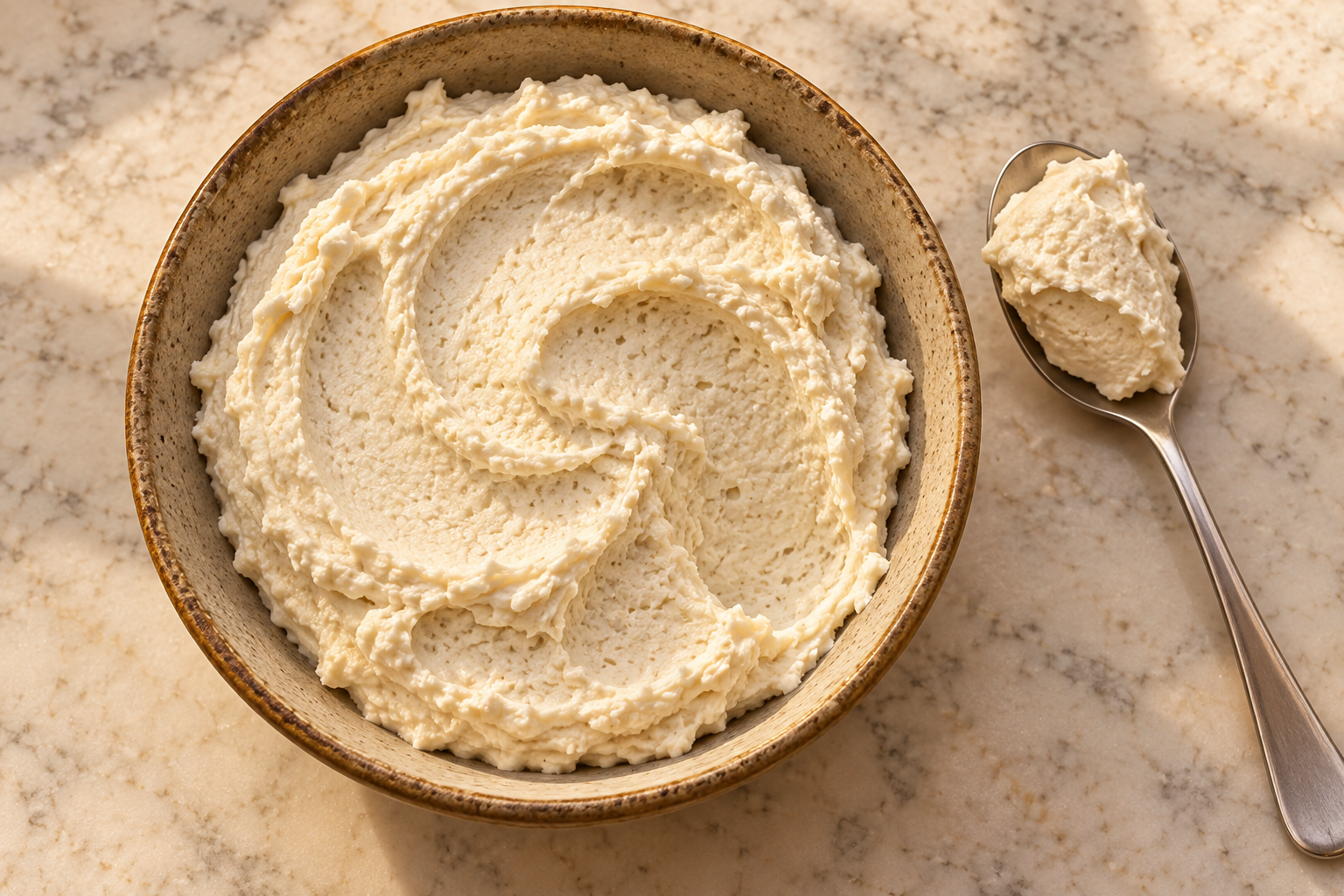
Soft Olive-Oil Fermented Nut Cheese for Full GAPS
Ingredients
Equipment
Method
- Combine the raw nuts, 1 teaspoon mineral salt, and enough filtered water to cover by 2 inches in a clean glass or ceramic bowl. Stir to dissolve and soak overnight.
- Drain and rinse thoroughly in a stainless-steel colander. Measure the full 2 cups soaked, wet nuts into the cheese formula.
- Blend the soaked nuts, fermented vegetables, olive oil, prepared tahini, lemon juice, garlic, and remaining 1/2 teaspoon salt for about 50 seconds, until smooth. If the blender cannot turn, add only a small source-permitted amount of filtered water, fermented vegetables, or olive oil.
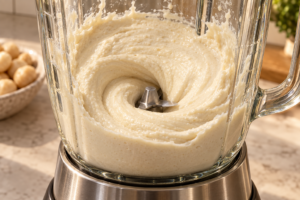
- Transfer the smooth puree to a clean wide-mouth glass vessel that holds close to twice its fresh volume. Keep the upper walls clean and settle the puree below the rim.
- Cover loosely with a clean metal lid without sealing pressure. Hold in a warm room-temperature place away from direct sunlight.
- Begin checking at about 1 1/2 days and allow longer in a cooler room. The endpoint is reached when the whole puree has risen and is filled throughout with many sponge-like air bubbles.
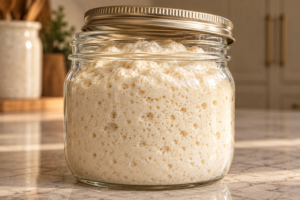
- Refrigerate when the risen bubbly endpoint is present. Chill until cold and slightly firmer, then serve as a soft spread.
Notes
Tried this recipe?
Let us know how it was!Full GAPS Placement
This is a Full GAPS recipe after the chosen nut, properly prepared hulled sesame tahini, completed fermented vegetables, raw olive oil, lemon, garlic, and mineral salt are appropriate and tolerated. Fermentation does not move an ingredient into an earlier stage.
The recipe remains dairy-free and egg-free. It is still a nut recipe, and a walnut or macadamia sensitivity is not changed by soaking and fermentation.
Serving Ideas
Spoon the cheese beside cooked vegetables, spread it on a compatible Full GAPS vegetable preparation, or serve a small amount with meat and cultured vegetables already used in your meals. Keep crackers, breads, garnish, and flavored mix-ins outside this exact card.
The spread also works as a prepared component for a lunch plate. Because it is tangy and concentrated, begin with a modest spoonful and add more according to appetite and established tolerance.
Storage
Keep the finished cheese covered in the refrigerator. Use a clean spoon each time so crumbs and other foods do not enter the jar. Return it to the refrigerator promptly rather than leaving the whole batch warm through a meal.
The source provides the fermentation and chilling method but no exact refrigerated storage duration for this formula. Use sensory observation: discard a batch with an unexpected foul odor, colored or fuzzy growth, or another change inconsistent with the clean tangy cheese you refrigerated.
Recommended Equipment
- A glass or ceramic soaking bowl
- A stainless-steel colander for draining and rinsing
- A high-power blender with glass or stainless food-contact surfaces
- A flexible non-plastic food-contact spatula appropriate to the blender
- A clean wide-mouth glass fermentation vessel with nearly twice the purée capacity
- A loose-fitting metal lid
- Measuring cups and spoons
Frequently Asked Questions
How Long Does the Cheese Ferment?
Begin checking at about one and one-half days. A cooler room may require longer. The endpoint is a risen purée filled with many sponge-like bubbles.
Should the Lid Be Tight?
No. Cover the vessel while allowing gas to escape. Rest a metal lid loosely or screw it on only loosely rather than sealing pressure inside.
Can I Use Cashews?
This accepted Full GAPS formula uses properly prepared macadamias or walnuts. A different nut changes the preparation, absorption, flavor, and photographs and should be developed as its own formula.
Can I Make This Sliceable?
The olive-oil formula is meant to remain soft. Use one of the separate coconut-oil recipes for a dehydrated wheel or strained and chilled cheese.
What If the Blender Will Not Turn?
Add only a small source-permitted amount of filtered water, fermented vegetables, or olive oil, then blend until smooth. Avoid turning the recipe into a thin unmeasured sauce.
Can I Seal the Jar With an Airlock?
This source method calls for a loose cover rather than a sealed pressure system. Keep the exact loose-covered glass-vessel route in this card.
More Ferments for the Family Kitchen
If you want more measured ferments with clear visual endpoints, visit the Well Fed & Lived In shop for the upcoming Ferments Cookbook and practical GAPS kitchen resources.

Leave a comment