

SIBO means an excessive number of bacteria in the small intestine that causes gastrointestinal symptoms.[1] The 2020 Gut and Physiology Syndrome book places low stomach acid, altered small-intestinal flora, damage to the gut wall, poor absorption, and microbial byproducts inside the same SIBO picture.[2] This guide explains that framework, the symptoms it can produce, and how GAPS chooses a starting route.
What SIBO Is
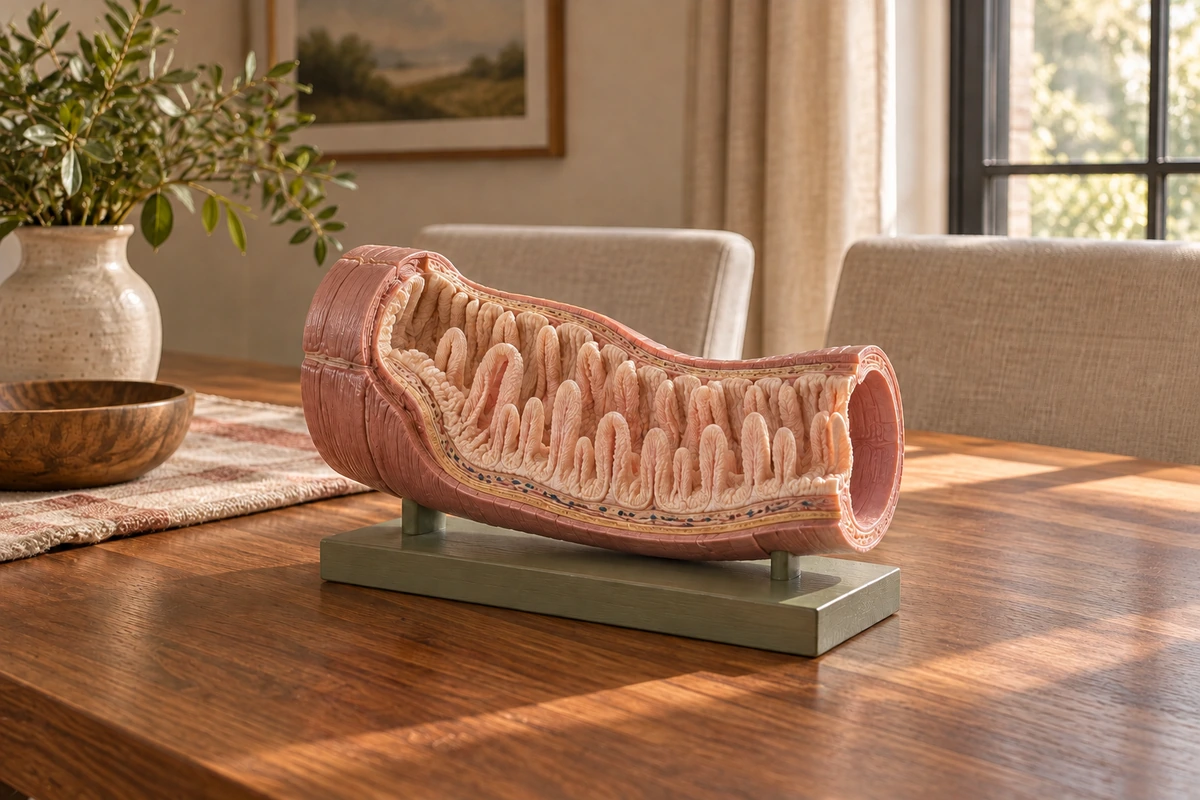
The American College of Gastroenterology defines small intestinal bacterial overgrowth as excessive numbers of bacteria in the small bowel that cause gastrointestinal symptoms.[1] NIDDK describes it as an increase in the number of bacteria or a change in the type of bacteria in the small intestine. Those bacteria can produce extra gas and may also contribute to diarrhea and weight loss.[3]
The GAPS book uses a broader microbial description. Its SIBO entry says bacteria are not the only organisms that may overgrow and includes other microbes and larger organisms in its source model.[2] That broader GAPS explanation should be read as the book’s framework rather than substituted for the clinical definition of SIBO.
The Small Intestine Is Not Sterile
GAPS does not describe a healthy small intestine as empty of microbes. The book says the upper small intestine normally has fewer organisms than the lower sections and that the population becomes richer toward the ileum. The official FAQ makes the same point more plainly: the digestive tract is populated from the mouth to the end, with different organisms favoring different environments.[4][5]
The problem is therefore not the mere presence of microbes. It is a change in their numbers, types, location, or activity that interferes with digestion and produces symptoms.
Why GAPS Puts Stomach Acid Upstream
The 2020 book treats stomach acid as an important barrier. Normal acidity destroys many organisms arriving with food and water and helps control what passes into the small intestine. When acidity is low, the source says a larger population can survive in the stomach and small bowel.[4][6]
That is why the GAPS route does more than remove one fermentable food. It works on the intestinal lining, digestion, the microbial environment, and the stomach-acid barrier together. The SIBO mechanism guide follows that sequence through low acid, overgrowth, diarrhea or constipation, histamine, food reactions, and malnutrition.
What SIBO Can Do in the GAPS Framework
The GAPS SIBO entry describes several connected effects:
- abnormal digestion and absorption, followed by malnutrition and nutrient deficiencies;
- damage to the intestinal wall, making food reactions and allergies more likely in the source model;
- histamine and other biogenic amines produced by overgrown organisms;
- microbial products that slow the intestinal muscles in some people and speed them up in others, creating constipation or diarrhea.[2]
That last branch explains why two people can use the same word, SIBO, while living with opposite bowel patterns. The symptom page keeps those differences visible instead of treating bloating as the only sign.
Symptoms, Testing, and Diagnosis
Bloating, gas, abdominal pain, diarrhea, constipation, and weight changes can appear with SIBO, but those symptoms also occur in other digestive conditions. Breath testing is commonly used as a noninvasive diagnostic tool, and current consensus guidance emphasizes standardized preparation, measurement, symptom recording, and cautious interpretation.[7]
The SIBO symptoms and gut-signs guide helps organize the pattern, but it does not turn a checklist into a diagnosis. GAPS can still address low stomach acid, gut-wall damage, and digestion as protocol issues without using one symptom list to declare that SIBO is present.
Where GAPS Starts
The SIBO entry calls the GAPS Introduction Diet essential and pairs it with fermented foods and temporary support for stomach acid before meals.[8] Intro begins with meat stock, gelatinous meat, natural fat, well-cooked foods, and small amounts of the stage-appropriate probiotic liquids, then widens the food list as digestion settles.
The SIBO food, ferment, and stomach-acid guide covers the actual implementation: Intro stages, fermented-food timing, HCl and pepsin limits, H. pylori, irritation, prebiotics, fat digestion, and the transition into the broader Full GAPS food list.
The Fermented Food Question
The 2020 SIBO entry explicitly directs readers to eat plenty of fermented foods.[8] The official FAQ answers the concern by telling readers to follow the GAPS program so the gut environment, immunity, and nervous system in the gut wall can rebalance.[9]
The form and timing still matter. Intro Stage 1 begins with small amounts of probiotic liquid or fermented dairy as appropriate. Fermented vegetable solids arrive later, after the gut can manage their fiber.[10]
How SIBO Overlaps With Other Gut Problems
The 2020 book notes that people with excess microbes in the small intestine may receive an IBS or SIBO diagnosis.[4] The labels are not interchangeable: SIBO describes excess bacteria in the small bowel, while IBS is a different diagnostic category. They can overlap in symptoms and may sit near the same digestion and motility problems.
Histamine-type reactions, gastritis, poor fat digestion, and nutrient deficiencies can also sit beside the SIBO pattern in the GAPS material. Each branch needs its own evidence and instructions; one symptom should not be used to assign every neighboring condition.
Continue Through the SIBO Guides
- What Causes SIBO in the GAPS Framework explains the acid barrier, overgrowth, motility, histamine, food-reaction, and malnutrition mechanisms.
- GAPS Diet for SIBO: Foods, Ferments, and Stomach Acid covers the Intro route and exact implementation limits.
- SIBO Symptoms and Gut Signs organizes the digestive, low-acid, nutrient, and histamine-type signs without diagnosing from a checklist.
The 90-Day Family Food Diary gives you one place to record meals, ferments, supplements, bowel patterns, reactions, sleep, stress, and stage changes.
Frequently Asked Questions
Is SIBO the Same as IBS?
No. SIBO specifically describes excessive bacteria in the small bowel that cause symptoms.[1] IBS is a separate diagnosis, although symptoms and contributing factors can overlap.
Does Every Person With SIBO Have Diarrhea?
No. The GAPS entry describes diarrhea in some people and constipation in others, depending on how microbial products affect intestinal muscle activity.[2]
Does GAPS Remove Fermented Foods for SIBO?
No. The official FAQ keeps fermented foods inside the protocol, introduced in the stage-appropriate form and amount.[9][10]
References
- Pimentel, M., R. J. Saad, M. D. Long, and S. S. C. Rao. “ACG Clinical Guideline: Small Intestinal Bacterial Overgrowth.” American Journal of Gastroenterology, 2020.
- Campbell-McBride, N. Gut and Physiology Syndrome (2020), “Small intestinal bacterial overgrowth,” pp. 445–446.
- National Institute of Diabetes and Digestive and Kidney Diseases. “Symptoms and Causes of Gas in the Digestive Tract.” Accessed October 7, 2026.
- Campbell-McBride, N. Gut and Physiology Syndrome (2020), “Gut flora of the small intestine,” p. 22.
- Campbell-McBride, N. “Probiotics,” Q4, GAPS FAQs.
- Campbell-McBride, N. Gut and Physiology Syndrome (2020), “Stomach acidity,” pp. 338–340.
- Tsadok Perets, T., et al. “A National Consensus Guideline on Hydrogen- and Methane-Based Breath Tests.” Annals of Gastroenterology, 2026.
- Campbell-McBride, N. Gut and Physiology Syndrome (2020), “Small intestinal bacterial overgrowth,” p. 446.
- Campbell-McBride, N. “Probiotics,” Q5, GAPS FAQs.
- Campbell-McBride, N. Gut and Physiology Syndrome (2020), “GAPS Introduction Diet,” pp. 177–184.

Leave a comment