

In the GAPS framework, SIBO begins upstream of the small intestine. The 2020 book places low stomach acid first, then follows the chain through microbial overgrowth, fermentation, gas, altered motility, gut-wall damage, food reactions, histamine, and poor nutrient absorption.[1][2] This guide explains that source model without turning the mechanism into a diagnosis or a supplement schedule.
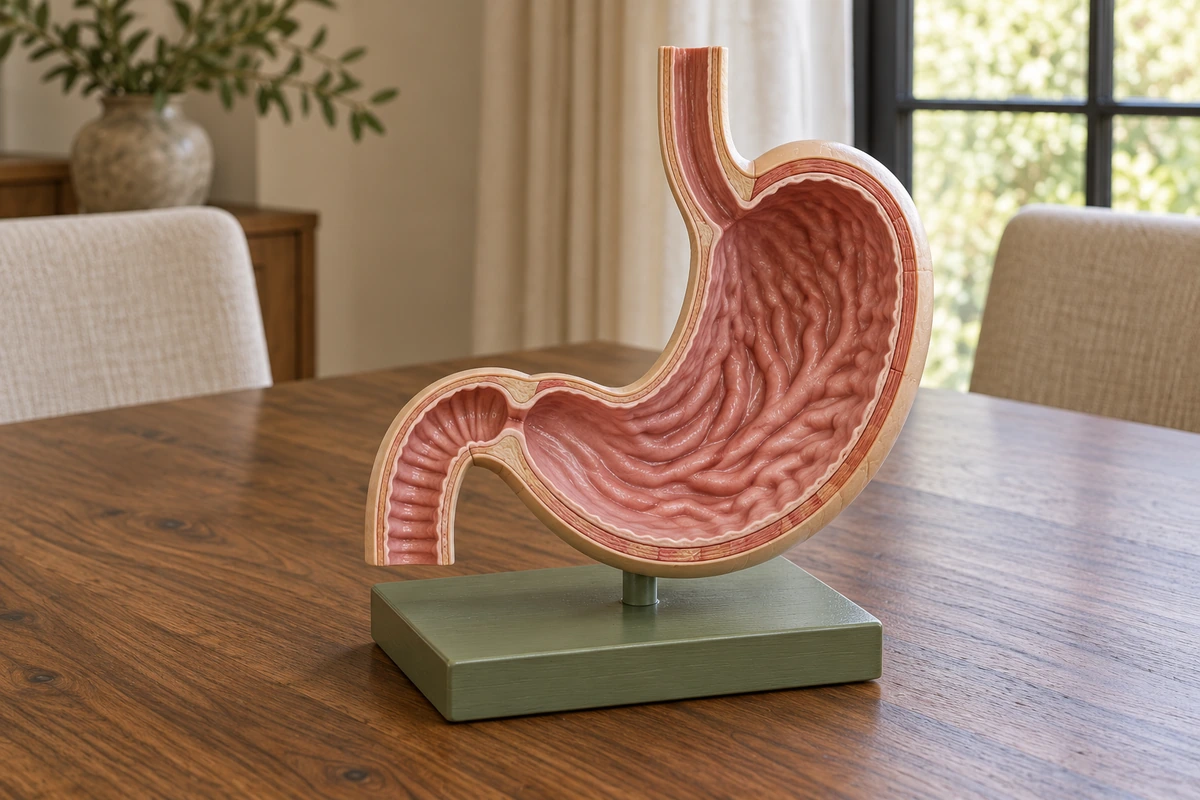
The Acid Barrier
Stomach acid begins protein digestion and helps control organisms arriving with food and water. The GAPS book says normal acidity keeps the stomach and upper small intestine comparatively sparsely populated. When acidity is low, more organisms survive and a larger population can settle farther down the digestive tract.[2][3]
This is the reason GAPS treats low stomach acid as a central SIBO mechanism. The book does not describe acid as the only factor recognized in every clinical case. Its own route is to rebuild digestion and the intestinal wall while temporarily supporting the acid barrier.[1]
The Normal Small-Intestinal Gradient
The small intestine is not sterile. According to the 2020 book, the duodenum normally carries relatively few microbes and the population grows richer toward the ileum, where it starts to resemble the large bowel. Stomach acidity helps maintain that gradient.[2]
Clinical guidance defines SIBO by excessive bacteria in the small bowel together with gastrointestinal symptoms.[4] The GAPS book uses a wider ecological description that includes bacteria, fungi, and other organisms. Keeping those scopes clear matters: the clinical diagnosis and the source’s broader microbial model are related discussions, not interchangeable definitions.
Fermentation, Gas, and Bloating
The GAPS digestive-enzyme chapter says overgrown organisms in a low-acid environment ferment dietary carbohydrates and produce gases and other microbial products.[3] NIDDK likewise notes that excess or altered bacteria in the small intestine can produce extra gas and may contribute to bloating, abdominal pain, diarrhea, and weight loss.[5]
That gives the bloating a mechanical place in the sequence: organisms ferment available substrate, gas accumulates, and the person feels distention or pressure. It does not mean every episode of bloating proves that SIBO is present.
Gut-Wall Damage and Food Reactions
The small intestine is the main site of digestion and nutrient absorption. The GAPS book says abnormal flora on its wall can inflame and damage that tissue, interfere with digestion and absorption, and make the barrier more permeable. Within that framework, partially digested food and microbial products crossing the damaged wall contribute to food reactions and immune activity.[1][2]
That is why GAPS does not use symptom suppression as the whole SIBO plan. Its food route emphasizes foods that are easier to digest while the intestinal lining and broader digestive process are being supported.
One Mechanism, Two Opposite Bowel Patterns
The SIBO entry describes microbial products affecting intestinal muscle in opposite directions. In some people the muscles become sluggish, transit slows, and constipation follows. In others the muscles become overactive, transit speeds up, and diarrhea contributes to further malnutrition.[1]
This source explanation is the reason the WFLI symptom guide includes both bowel patterns. Constipation does not automatically rule out a SIBO discussion, and diarrhea is not required in every person.
The Histamine Branch
The GAPS SIBO entry says many overgrown organisms produce histamine and other biogenic amines.[1] In a separate FAQ answer, Campbell-McBride connects histamine intolerance with particular microbial populations that can produce histamine and interfere with diamine oxidase, the enzyme involved in breaking it down.[6]
The food changes attached to that histamine answer belong in the SIBO food and stomach-acid guide. The mechanism page keeps the reason for the overlap visible without turning every SIBO case into a histamine diagnosis.
Why Malnutrition Belongs in the Mechanism
Poor absorption is not an unrelated side effect when the tissue responsible for absorption is inflamed and its contents are being altered by overgrown organisms. The GAPS entry links that damage with malnutrition and multiple nutrient deficiencies.[1]
That connection also explains why the GAPS route begins with nourishment rather than simply subtracting more foods. The protocol uses Intro foods, meat stock, gelatinous meats, natural fats, eggs, organ meats, and carefully introduced fermented foods to widen what the person can digest over time.
What Can Lower the Acid Barrier
The 2020 book discusses chronic gastritis as one route to low stomach acid. It says an inflamed stomach lining can downregulate acid production and names repeated drug exposure, dietary and environmental chemicals, smoking, excess alcohol, stress, and other irritants in its source account.[7] Those are source-attributed contributors, not a claim that one exposure explains every SIBO case.
How the Mechanism Shapes the GAPS Route
The SIBO entry gives three linked tools: the GAPS Introduction Diet, fermented foods, and temporary acid support before meals while the stomach heals.[8] The exact HCl and pepsin instructions, irritation limits, H. pylori branch, ferments, prebiotic distinction, and poor-fat-digestion route require their own quantities and exceptions. Use the implementation guide for those details.
Continue Through the SIBO Guides
- Return to the complete SIBO and GAPS guide for the clinical definition, source overview, testing boundary, and starting route.
- Use the food, ferment, and stomach-acid guide for implementation.
- Use the SIBO symptoms and gut-signs guide to record the digestive, low-acid, nutrient, and histamine-type pattern without diagnosing from a checklist.
If you want a guided introduction to the wider GAPS approach, my Understanding & Preparing for the GAPS Diet course is in the WFLI shop catalog.
Frequently Asked Questions
Does Low Stomach Acid Prove SIBO?
No. GAPS places low stomach acid upstream in its SIBO framework, but SIBO is a clinical diagnosis involving excessive bacteria in the small bowel and gastrointestinal symptoms.[4]
Can SIBO Cause Constipation or Diarrhea?
Yes. The GAPS entry describes microbial products slowing intestinal muscle in some people and speeding it in others.[1]
Does Every SIBO Case Include Histamine Intolerance?
No. The source describes a mechanism that can overlap with SIBO, not a required symptom in every person.[6]
References
- Campbell-McBride, N. Gut and Physiology Syndrome (2020), “Small intestinal bacterial overgrowth,” pp. 445–446.
- Campbell-McBride, N. Gut and Physiology Syndrome (2020), “Gut flora of the small intestine,” p. 22.
- Campbell-McBride, N. Gut and Physiology Syndrome (2020), “Digestive enzymes,” pp. 338–340.
- Pimentel, M., R. J. Saad, M. D. Long, and S. S. C. Rao. “ACG Clinical Guideline: Small Intestinal Bacterial Overgrowth.” American Journal of Gastroenterology, 2020.
- National Institute of Diabetes and Digestive and Kidney Diseases. “Symptoms and Causes of Gas in the Digestive Tract.” Accessed October 7, 2026.
- Campbell-McBride, N. “Diseases and symptoms,” Q29, GAPS FAQs.
- Campbell-McBride, N. Gut and Physiology Syndrome (2020), “Stomach problems,” pp. 446–447.
- Campbell-McBride, N. Gut and Physiology Syndrome (2020), “Small intestinal bacterial overgrowth,” p. 446.

Leave a comment