

Salted lemon concentrate is the make-ahead branch of this Full GAPS drink series. One cup fresh lemon juice, one-half cup cold filtered water, and one teaspoon natural unprocessed salt make a small jar of concentrated citrus that is diluted before drinking.
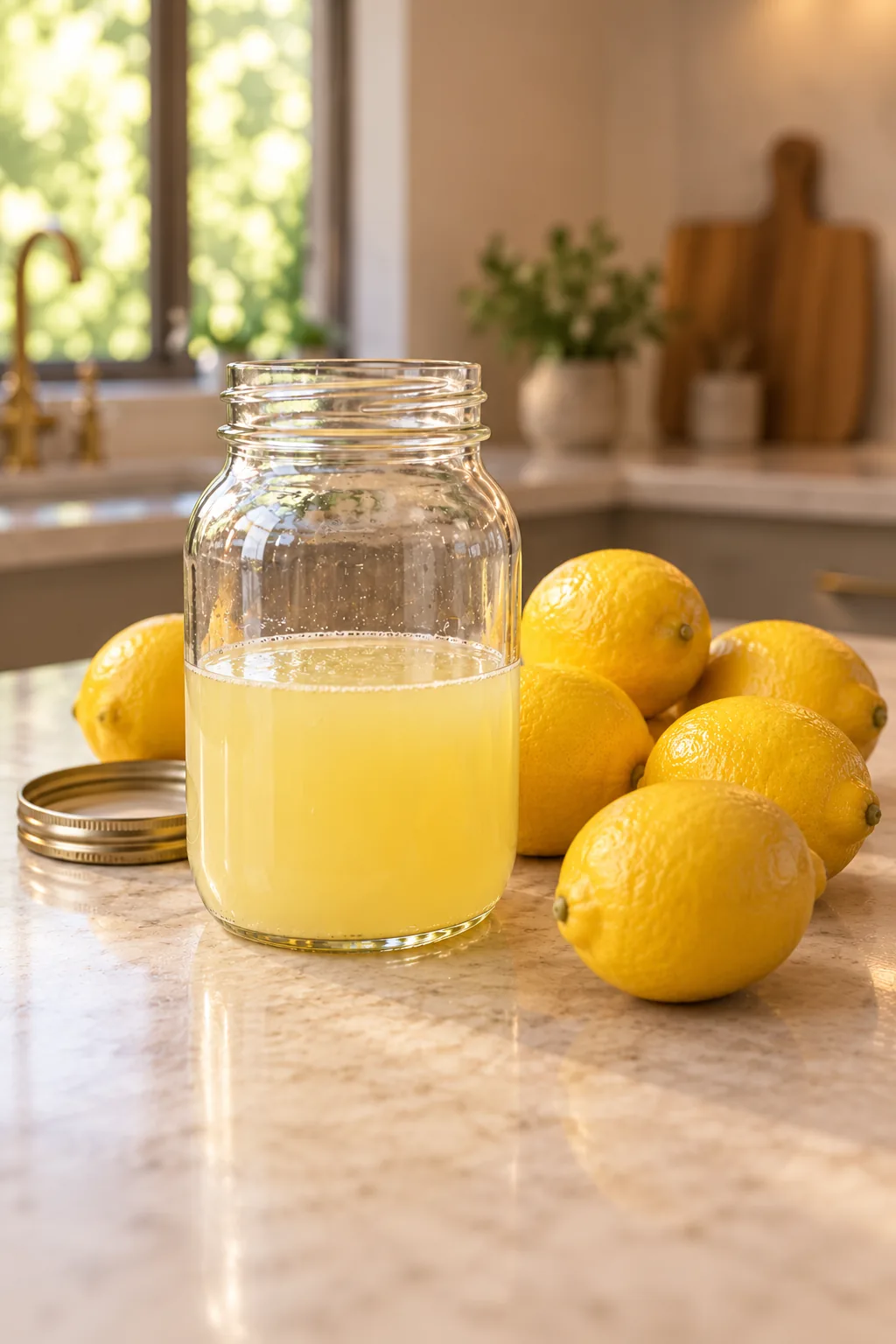
The concentrate should look pale yellow and cloudy, with a clean, sharp lemon smell. It is supposed to taste far too strong by itself. The useful physical cue is at the bottom of the jar: stir until no salt crystals remain before you refrigerate or dilute it.
I like a concentrate when the measurement actually saves time. With six children, homeschooling, and second shift shaping our days, measuring one jar once can be useful. What is not useful is turning that jar into a vague supplement project, so this formula stays with fresh lemon, water, and natural salt.
Why This Is a Full GAPS Concentrate
Fresh lemon, filtered water, and natural unprocessed sea or mineral salt are ordinary Full GAPS ingredients. This concentrate does not contain a commercial electrolyte powder, refined sweetener, bottled juice, magnesium powder, potassium powder, calcium, baking soda, artificial flavoring, or food dye.
The word “concentrate” describes the strength of the lemon-and-salt mixture in the jar. It does not mean the jar has the same mineral profile as a packaged sports drink or the supplement-heavy source variation. Those powders were removed deliberately rather than assigned guessed GAPS substitutions.
Juice Enough Lemons for One Cup
Plan on six to eight medium lemons. Fruit varies, so the measured cup controls the recipe rather than the lemon count. Heavy lemons with taut, bright skin usually hold more juice than light, dry fruit.
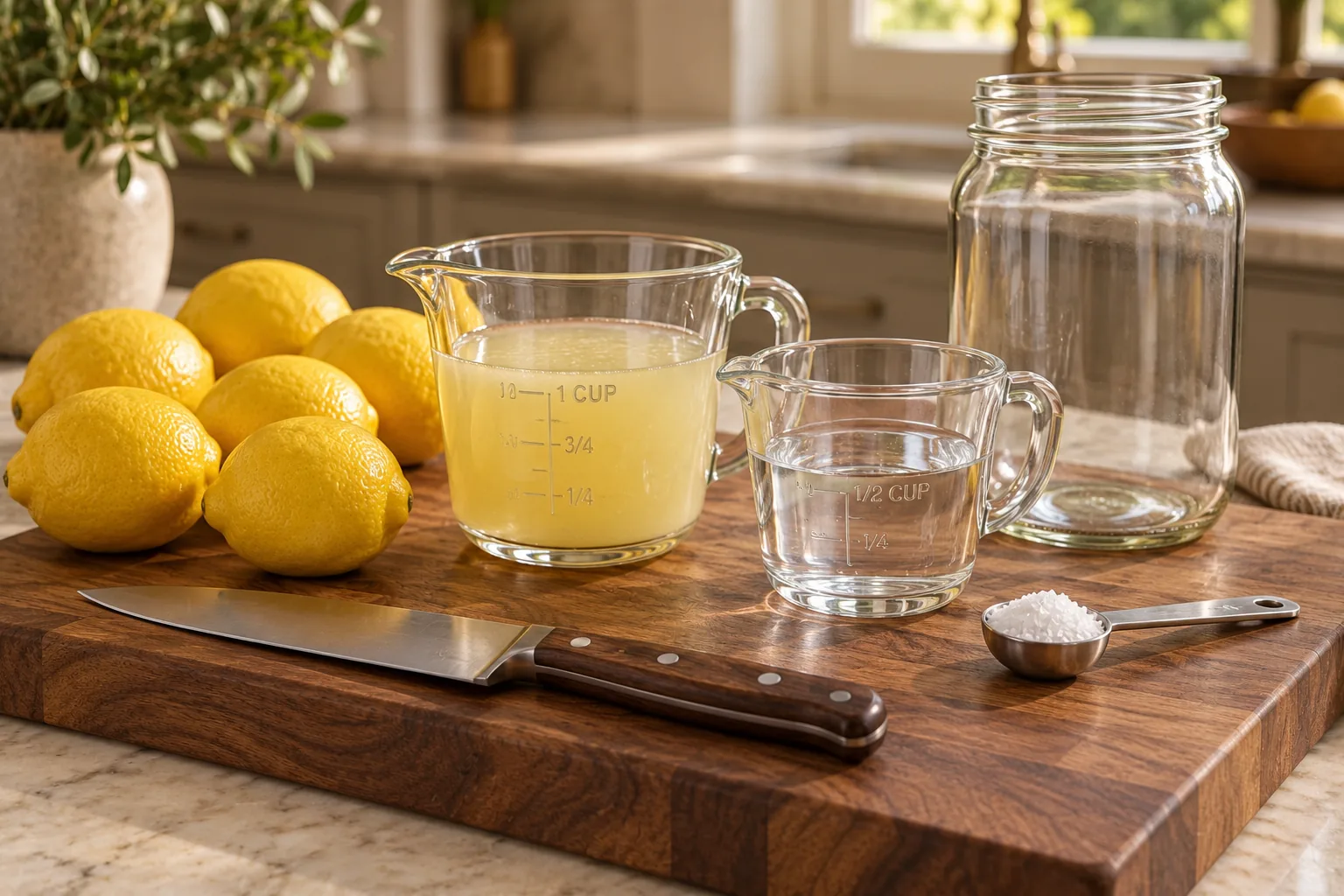
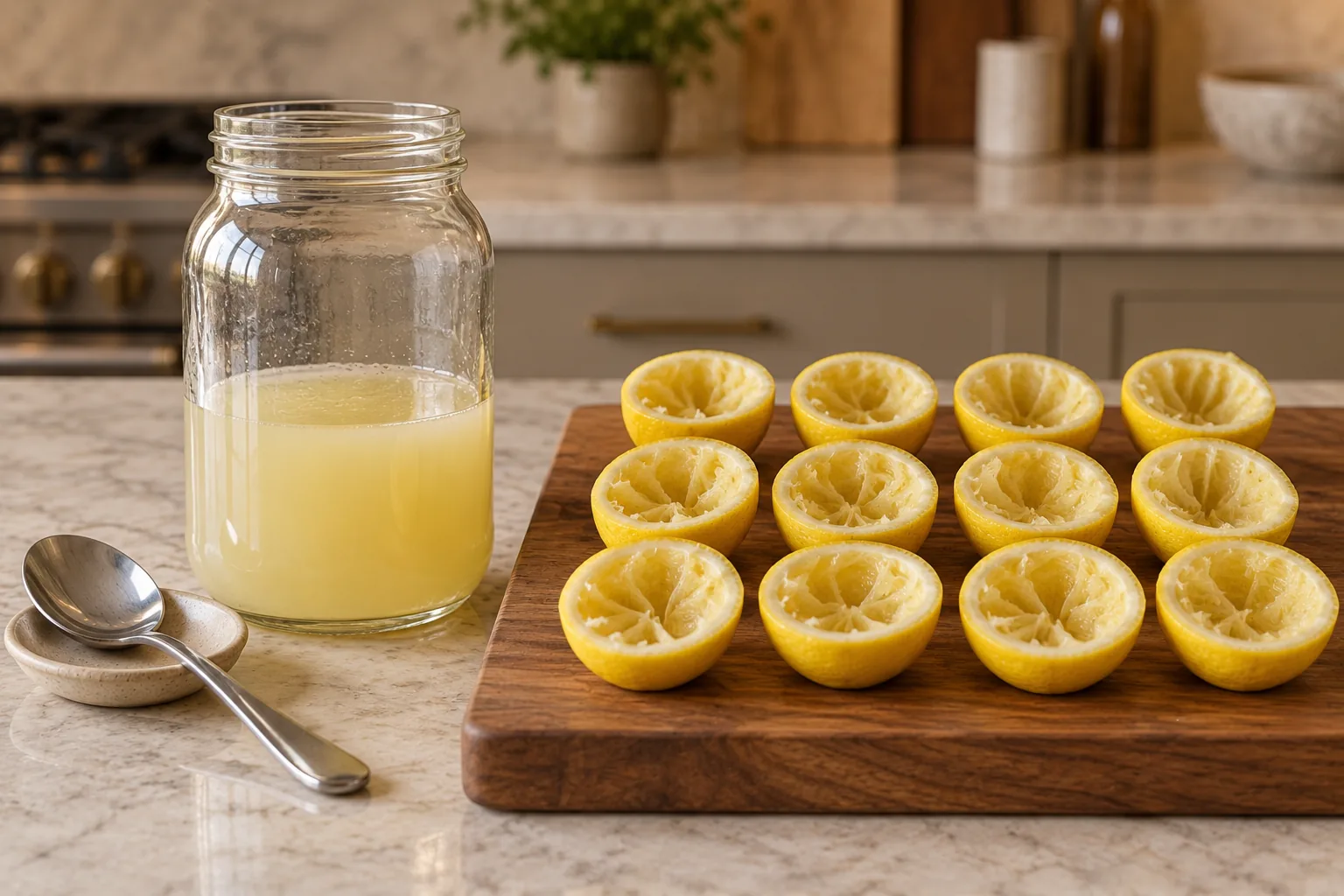
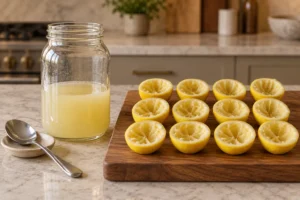
Roll each lemon firmly against a hard counter or approved wooden board until it feels softer inside. Cut it in half and squeeze it. Continue until the glass measuring cup reaches exactly one cup. Catch the seeds; a little pulp is fine and gives the finished concentrate its natural cloudiness.
Measure the Water and Salt
Measure one-half cup cold filtered water. Use filtered water rather than unfiltered tap water. Then measure one level teaspoon natural unprocessed sea or mineral salt.
Do not substitute a vague handful or a heaped spoon. The formula is already concentrated, so a small measuring error will be obvious after dilution. Check the salt label for anticaking agents, flavors, or other additives before it goes into the jar.
Combine in the Correct Order
Pour the one cup fresh lemon juice into a clean quart glass jar. Add the one-half cup cold filtered water, then add the one teaspoon natural salt. The finished concentrate fills only about one and one-half cups of the jar, so a quart jar will remain well below half full.
The extra headroom makes stirring easier and reduces splashing. It also gives you room to shake the covered jar briefly before later servings, although the first mixing step should still be done with a spoon so you can see when the salt dissolves.
Stir Until No Salt Crystals Remain
Stir all the way to the bottom of the jar. Fine natural salt disappears quickly; coarse crystals take longer. Keep moving the spoon across the bottom until you cannot see grains or feel them scraping beneath the spoon.
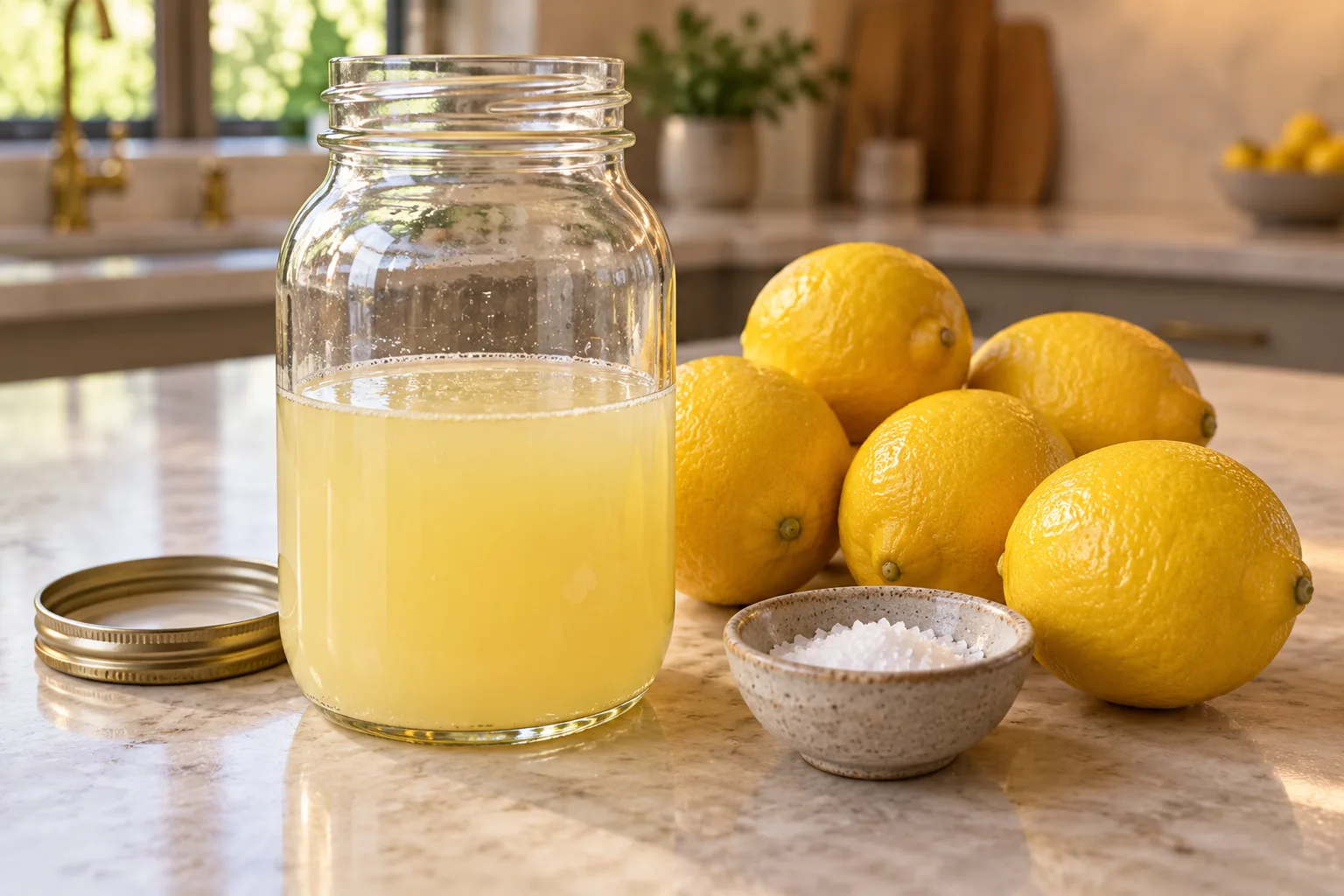
The concentrate should look uniformly pale and cloudy from top to bottom. A visible layer of salt means the jar is not ready. Dissolving it now helps each later portion contain the intended lemon-water-salt ratio.
Salted Lemon Concentrate for Full GAPS
Ingredients
Equipment
Method
- Juice 6 to 8 medium lemons until you have exactly 1 cup fresh lemon juice. Catch seeds; a little pulp is fine.
- Pour the 1 cup fresh lemon juice into a clean quart glass jar. Add 1/2 cup cold filtered water, then add 1 teaspoon natural unprocessed salt.
- Stir all the way to the bottom until no salt crystals remain and the concentrate looks evenly pale and cloudy.
- Cover and refrigerate. To serve, either stir the whole batch into 1 gallon filtered water for the mild route, or measure 1/2 cup concentrate into a glass of filtered water for the stronger route. Stir before drinking.
Notes
Tried this recipe?
Let us know how it was!How to Dilute the Concentrate
The accepted source provides two dilution routes, and they are not equal in strength. For the large-batch route, pour the entire one-and-one-half-cup concentrate into one gallon of filtered water and stir. For the glass route, add one-half cup concentrate to one glass of filtered water.
Because those directions produce different concentrations, treat them as separate serving choices rather than interchangeable equivalents. The gallon route is much milder. The half-cup-per-glass route is sharper and saltier. Start with the gallon route when you want a lightly flavored batch, or add water to a glass portion until it tastes bright and gently mineral rather than harsh.
Do not drink the concentrate straight. Its job is to be diluted with filtered water before serving. Use a clean measuring cup every time so the refrigerated jar stays clean and the serving strength remains repeatable.
For a gallon batch, pour the concentrate into the larger vessel first, add some of the filtered water, stir, then add the rest. That order makes it easier to distribute the cloudy lemon solids and salt evenly. For a glass, measure the concentrate first and add water second so you can watch the color fade as it reaches drinking strength.
The diluted drink should be thin and pour like water. The gallon route will look nearly clear with a faint lemon cast. A stronger glass will remain more visibly cloudy. Neither should have undissolved salt at the bottom after stirring.
When to Serve It
Use the diluted drink between meals. At meals, warm homemade meat stock remains the more useful GAPS companion. That keeps a concentrated citrus drink from replacing the warm stock that belongs with food.
A refrigerated jar can make busy mornings or afternoons simpler. Measure the diluted drink shortly before you need it, keep it cold in glass or stainless steel, and stir before drinking. The concentrate is still a small kitchen shortcut, not a shelf-stable bottled beverage.
Label the jar with the date if several jars are sharing refrigerator space, but keep the label off the photographed serving container. When I am moving between schoolwork, meals, and getting ready for work, a date on the storage jar prevents the familiar question of which batch was made when.
Full GAPS Placement and Adaptations
This concentrate fits Full GAPS after fresh lemon and natural salt are appropriate and tolerated. It is not presented as an Introduction Diet drink. Its exact card contains three ingredients and no optional sweetener.
If you want a fresh one-glass formula instead, use the linked plain-water lemon or lime electrolyte drink. If you want coconut water, use the separate coconut-water electrolyte drink. Those recipes have different measurements and remain separate so the cards scale honestly.
Raw honey is allowed on Full GAPS, but it is not automatically added here. The accepted concentrate formula deliberately removes the original sweetener and supplement powders. Adding honey would require a measured variation rather than an improvised amount hidden in the notes.
What Not to Add
Do not add potassium chloride, magnesium chloride, calcium powder, baking soda, sports-drink powder, refined sugar, maple syrup, artificial sweetener, flavor drops, or food dye. Do not use bottled lemon juice or lemonade in place of fresh lemon juice.
Do not use processed table salt with additives. Do not guess at dilution and then describe the result as equivalent to the source supplement formula. This recipe makes a fresh lemon-and-natural-salt concentrate, and that is all it claims.
Storage
Cover the jar and refrigerate it promptly. Stir or gently shake before measuring because natural lemon solids can settle. Use a clean stainless-steel or glass measure so food and saliva do not enter the storage jar.
The accepted source does not provide a tested long storage period. Make a small batch, keep it cold, and use it while the lemon still smells bright and tastes fresh. Discard it if the aroma becomes stale, the jar develops gas or mold, or the flavor changes unexpectedly.
Troubleshooting the Concentrate
Salt is sitting on the bottom. Stir longer before refrigerating. Coarse crystals may need extra time.
The concentrate looks cloudy. That is normal for fresh lemon juice with some pulp. It should remain thin, not thick or stringy.
The diluted glass tastes too salty. Add more filtered water. Confirm that the concentrate received one level teaspoon, not one tablespoon.
The gallon batch tastes too weak. The gallon route is intentionally much milder than the half-cup-per-glass route. Keep the published ratios distinct rather than quietly changing the concentrate.
The lemon flavor tastes bitter. Avoid pressing or grinding the peel and white pith into the juice. Squeeze the fruit without crushing the rind.
The concentrate separated in the refrigerator. Fresh lemon solids settle naturally. Stir or gently shake the covered jar before measuring.
Recommended Equipment
- Clear quart glass jar with a non-plastic lid
- Glass liquid measuring cups
- Stainless-steel one-teaspoon measure
- Stainless-steel knife
- Walnut or another approved wooden cutting board
- Citrus juicer with approved food-contact material
- Stainless-steel spoon
- Neutral ceramic spoon rest
Frequently Asked Questions
How Many Lemons Make One Cup of Juice?
Plan on about six to eight medium lemons, but measure the juice. Fruit size and juiciness vary too much for the count alone to control the recipe.
Can I Drink the Concentrate Straight?
No. It is written to be diluted before drinking.
Why Are the Two Dilution Routes Different?
They come from the accepted source and produce different strengths. The gallon route is mild; one-half cup concentrate per glass is much stronger. The post states that difference rather than pretending they are equivalent.
Can I Add Raw Honey?
Not to this exact three-ingredient card. A honey-sweetened concentrate needs its own measured variation.
Can I Use Bottled Lemon Juice?
No. Use fresh lemons and measure one cup of juice.
What Kind of Salt Should I Use?
Use natural unprocessed sea or mineral salt with no anticaking agents, flavors, or other additives.
More Full GAPS Drinks
For a fresh single glass, use the Plain-Water Lemon or Lime Electrolyte Drink. For a coconut-water formula, use the Coconut Water Electrolyte Drink.
For more measured everyday beverages, visit the Well Fed & Lived In shop for the upcoming Drinks Cookbook.

Leave a comment