

This spiced honey caramel is thick, glossy, and warm with cinnamon, cloves, and allspice. Raw honey, qualifying coconut cream, and cultured butter cook to the firm-ball stage, then homemade vanilla and the measured spices are stirred in as the caramel cools and begins to hold a slow ribbon.
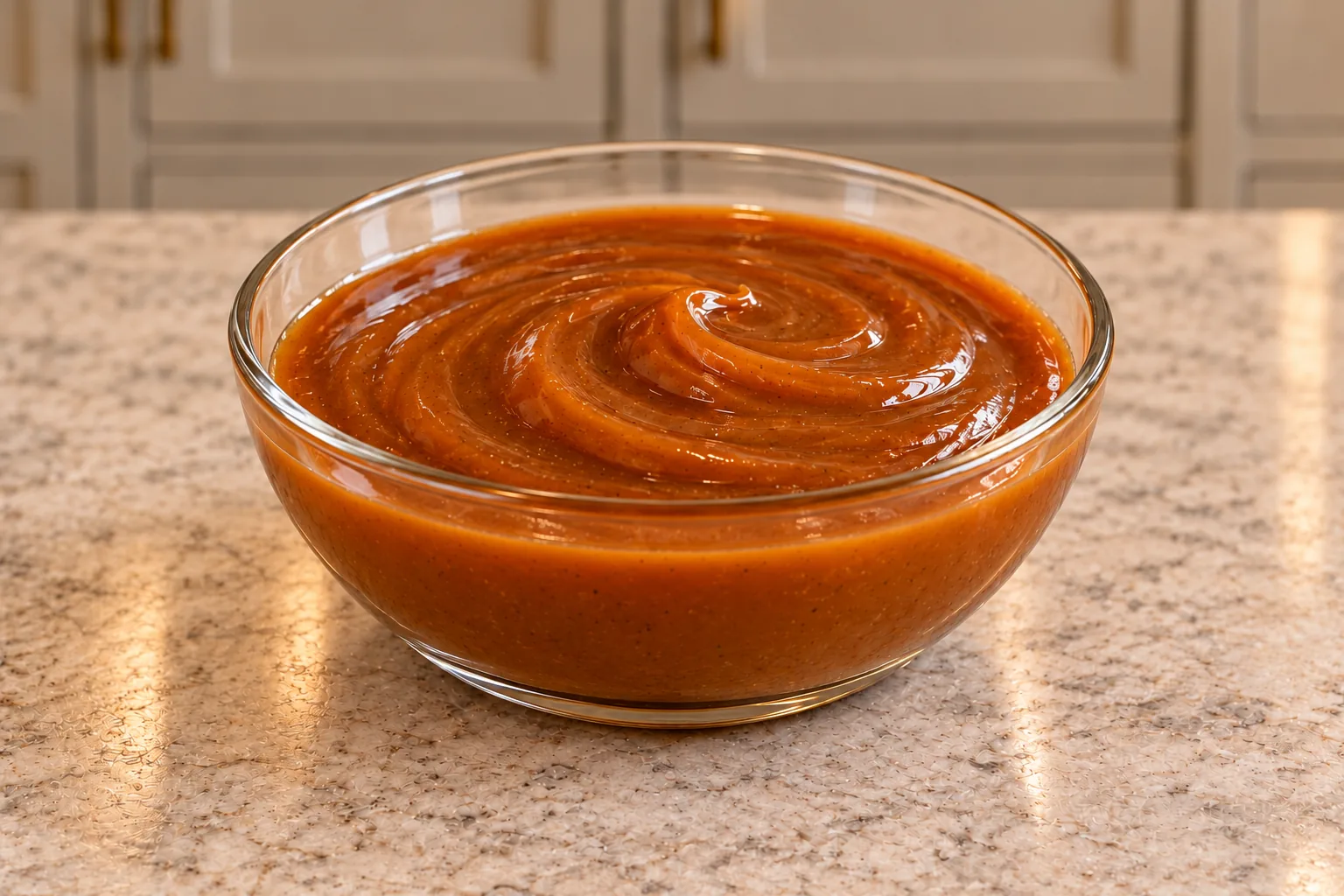
The sauce was designed as both a dip and a topping. It can dress a plain slice of pie, sit beside fresh apple slices, or add a caramel layer to another later Full GAPS dessert. Because it cooks to a candy-stage temperature, the thermometer matters more than a guess about color or minutes.
In a busy family kitchen, candy work is easier when everything is measured before the saucepan reaches the stove. I set the spices and vanilla together, choose the trivet, and prepare the optional ice-water bath before the honey begins to boil. Then the temperature stage gets my full attention.
That preparation matters when cooking is happening around homeschooling, work, and a full household. Caramel is not the place to search for the thermometer after the mixture is already foaming. A clear counter, measured ingredients, and one uninterrupted cooking window make the process calmer.
Why This Caramel Works
Honey supplies the sugar structure, coconut cream supplies concentrated moisture and fat, and cultured butter rounds out the texture. Cooking to 245°F–250°F removes enough water for a firm-ball caramel that thickens noticeably as it cools.
The finished sauce contains no starch, refined sugar, or commercial caramel. The three ground spices create the mulled-cider profile without loose cinnamon sticks or whole cloves. Homemade vanilla is added after the hottest stage, so its aroma remains present instead of boiling away.
This is a true candy-stage sauce rather than a quick honey drizzle. Its texture comes from measured heat and cooling, not starch, commercial syrup, or a thickener. Warm, it moves slowly from a spoon. Cool, it holds folds and makes a sturdy dip. That change is expected and is why the cooking endpoint and cooling cues are both part of the recipe. A warm spoonful and a refrigerated spoonful will not move at the same speed.
Where This Fits On GAPS
This is a later Full GAPS treat after cultured butter has been introduced in the applicable dairy sequence. The source title called it dairy-free, but the measured formula contains two tablespoons of butter, so this version does not repeat that inaccurate label.
Use qualifying organic coconut cream without guar gum, locust bean gum, sugar, flavoring, or other additives. Use homemade vanilla extract with no added sugar or non-GAPS additives. The current vanilla ruling preserves the source’s measured teaspoon and requires the component link.
The concentrated honey and candy-stage method also make this an occasional treat rather than an everyday sauce. Use it after the relevant Full GAPS foods, cultured dairy, and concentrated sweet preparations are already part of the plan. It is not an Introduction Diet recipe.
If cultured butter is not currently tolerated, use the linked dairy-free caramel as its own recipe. Substituting another fat here would change the formula, so this card keeps the source’s butter version intact.
Measure Before Heating
Measure one-half cup raw honey, one-half cup coconut cream, and two tablespoons cultured butter into a small heavy-bottomed stainless saucepan. Keep the one-half teaspoon each allspice, cinnamon, and cloves and the teaspoon of homemade vanilla beside the stove for the finishing step.
Level the spice measures so one flavor does not dominate. Break up any compacted clove or allspice before the caramel starts cooking. Once the sauce thickens, there is less time to stop and correct a dry lump.
Choose a saucepan with enough headroom for the honey mixture to foam. The cold ingredients occupy less space than the boiling caramel. A comfortably sized pan reduces the chance of a boil-over without spreading the shallow batch across an oversized base.
Measure the coconut cream by volume after it is smooth. If it has separated in its container, stir the qualifying cream until even before taking the half-cup measure. Use soft measured butter rather than guessing from a large chunk, and scrape all of the honey into the saucepan so the ratio stays intact.
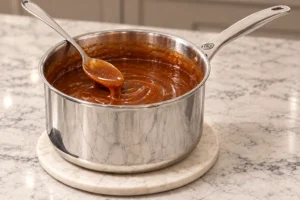
A thin pan creates hot spots and makes temperature control harder. The heavy stainless base spreads heat under the honey mixture, while the reflective interior lets you see the color and bubbling pattern clearly.
Cook To The Firm-Ball Stage
Warm the honey, coconut cream, and butter over medium heat, stirring until the butter melts and the mixture is uniform. Bring it to a boil, then lower the heat enough to maintain a steady simmer instead of a violent climb toward the rim.
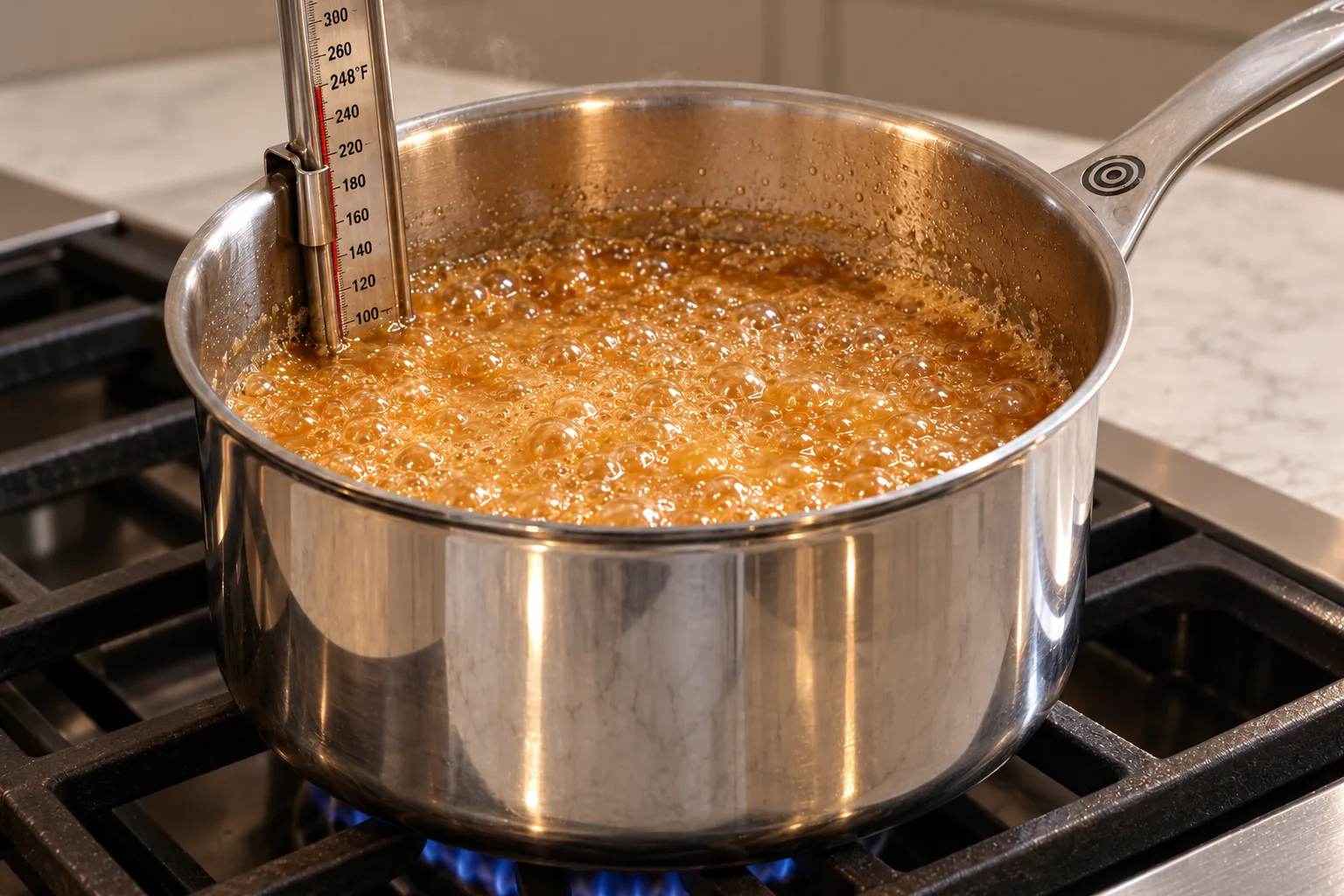
Clip the thermometer so the sensing bulb is immersed without touching the pan bottom. Cook until the reading reaches 245°F–250°F. The source says this takes at least twenty-five minutes, but the temperature is the endpoint.
As it approaches the target, the bubbles become tighter and the mixture deepens from gold toward amber. Stay beside the stove. A few degrees matter at this stage, and residual heat continues working after the pan leaves the burner.
Do not scrape crystallized residue from the upper pan wall back into the caramel. Stir only enough to keep the mixture even and to read its physical state. The bubbles should stay active across the surface rather than collecting only at one hot spot.
If the thermometer stalls, check that the bulb remains immersed in the liquid and suspended above the pan bottom. A bulb touching metal reads the pan rather than the caramel. A bulb sitting above the mixture cannot report the candy stage accurately.
Cool Until It Begins To Thicken
Move the saucepan to a heat-safe trivet. Let the vigorous bubbling stop and watch the surface. The caramel is ready for its flavorings when a spoon leaves a trail that remains briefly instead of closing immediately.
For faster cooling, lower only the bottom of the saucepan into an ice-water bath. Remove it as the caramel thickens, stir, then return it briefly if needed. Keep all water outside the pan; even a small splash changes the candy texture.
Use a wide bowl with only enough ice water to contact the saucepan’s lower exterior. Hold the handle so the pan remains level. Alternate short cooling rests with stirring instead of leaving the saucepan unattended in the bath, because the outer caramel cools before the center.
If you are not using an ice bath, leave the pan on the trivet and stir occasionally. The cooling time will vary with room temperature, pan size, and how deeply the caramel sits in the saucepan. The thickening cue is more useful than inventing a universal number.
Add The Spices And Homemade Vanilla
Add the allspice, cinnamon, cloves, and linked homemade vanilla while the caramel is still warm and workable. Stir until the spices are dispersed and no dry streaks remain along the bottom or sides.
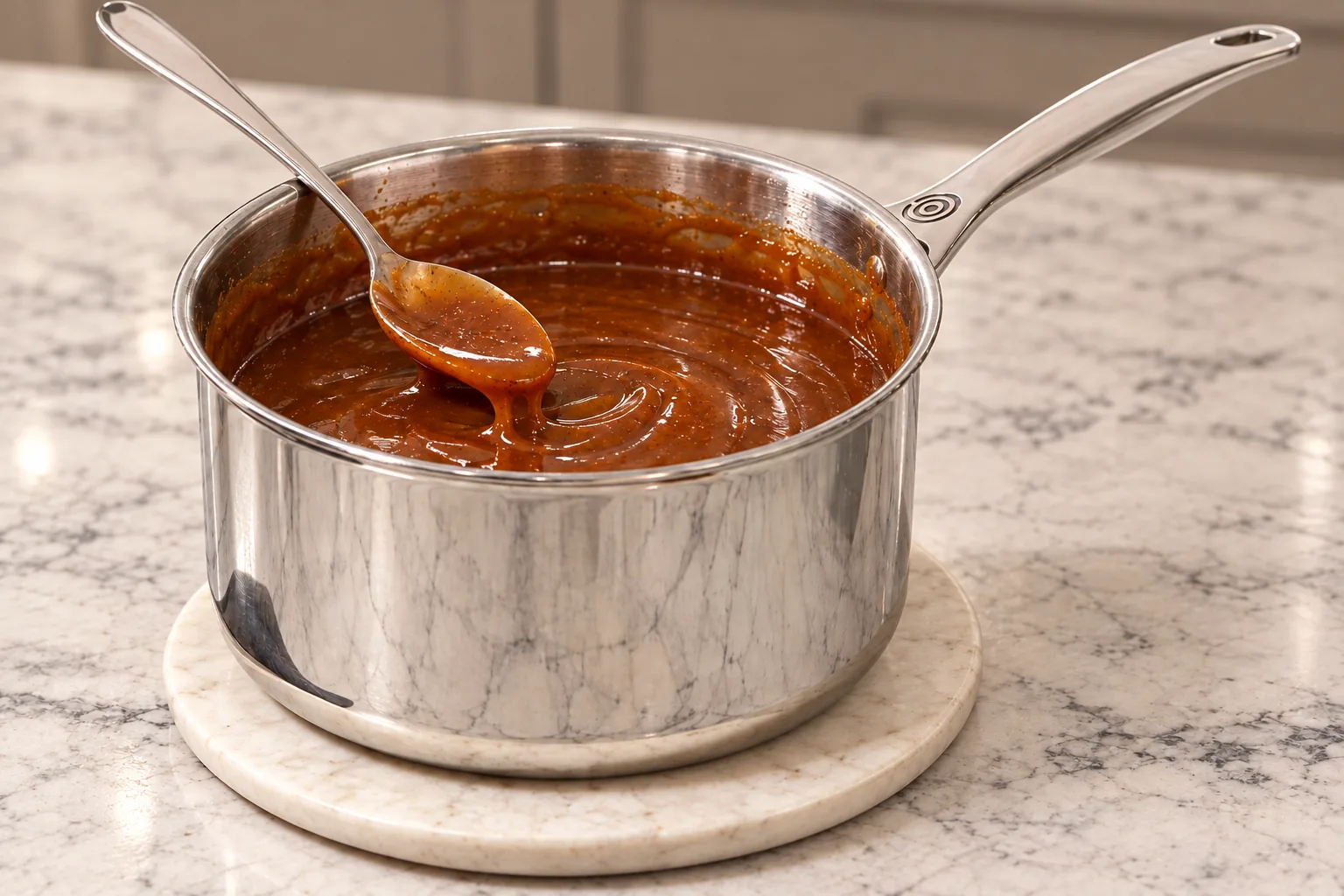
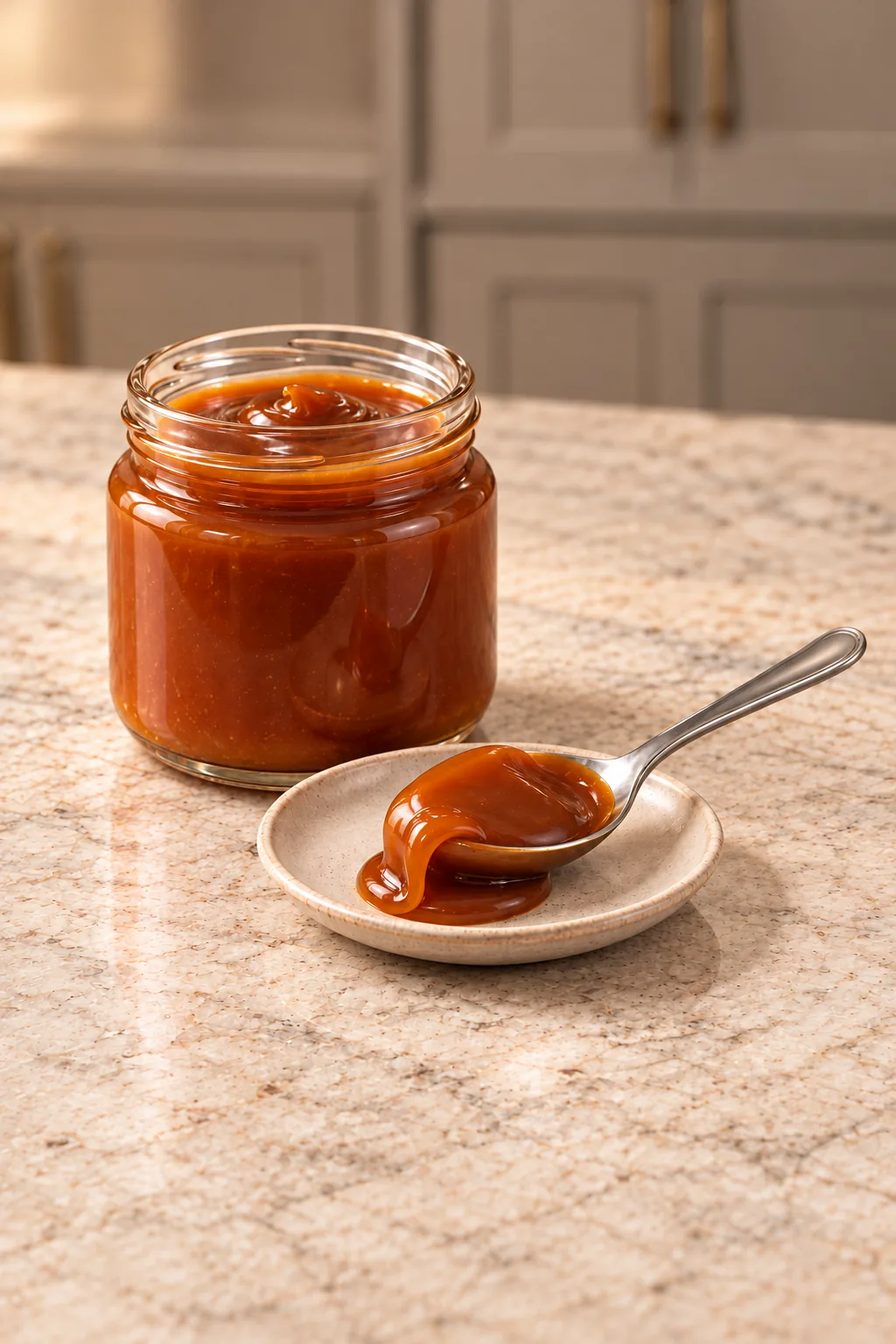
The finished caramel should coat the spoon in a smooth amber layer and fall in a thick ribbon. It continues to firm as it cools, so stop stirring once the surface is even and glossy.
Look closely at the spoon trail. Immediately after the spices are mixed in, the groove should close slowly and leave a soft ridge. If the caramel still runs like hot honey, give it more cooling time before transferring. If it piles into a rigid mound, move it to the serving container before it becomes harder to scrape cleanly.
The aroma should be balanced: honey and caramel first, then cinnamon, clove, allspice, and vanilla. Dry spice dust on the surface means the mixture needs another thorough stir.
Serving And Storage
Use the caramel warm when you want a softer drizzle or let it cool longer for dipping. The source suggests apples, ice cream, cake layers, and pie. Each use benefits from choosing the serving temperature by texture rather than heating the whole jar automatically. On WFLI, it pairs especially well with Deep-Dish Apple Cranberry Pecan Pie.
Transfer fully cooled caramel to a clean covered glass jar. Refrigeration makes it firmer. Warm only the amount you plan to serve gently enough to loosen it; repeated high heat can push the caramel beyond its intended stage.
Frequently Asked Questions
Is This Caramel Dairy-Free?
No. This exact formula contains cultured butter. For a separate dairy-free formula, use the Dairy-Free Coconut Caramel Sauce rather than changing this measured recipe.
Why Do I Need A Thermometer?
Color and simmering time vary with heat level and pan shape. The 245°F–250°F reading confirms the firm-ball endpoint that controls the dip-and-topping texture.
Can I Add The Spices At The Beginning?
Keep the source order. Cook the honey, coconut cream, and butter first, cool until thickening begins, then stir in the spices and vanilla.
Why Is My Caramel Too Firm?
The temperature may have moved past 250°F or the caramel may be very cold. Warm a serving gently. Do not add unmeasured water or cream to the stored batch.
Why Is My Caramel Thin?
It may not have reached the firm-ball range, or it may still be warm. Confirm the endpoint during cooking and allow time for the finished sauce to cool and thicken.
Recommended Equipment
- Le Creuset Signature stainless saucepan
- Clip-on candy thermometer
- Stainless spoon
- Heat-safe trivet
- Large bowl for an optional ice-water bath
- Clean glass storage jar
Spiced Honey Caramel Dip and Topping for Later Full GAPS
Ingredients
Equipment
Method
- Combine the raw honey, coconut cream, and cultured butter in a small heavy-bottomed stainless saucepan. Stir over medium heat until the butter melts and the mixture becomes uniform.
- Bring the mixture to a boil, then lower the heat to maintain a steady simmer. Clip on a candy thermometer and cook until the caramel reaches 245°F to 250°F, the firm-ball stage. This takes at least 25 minutes.
- Remove the saucepan from the heat. Let the caramel cool until the bubbling stops and it begins to thicken. To cool it faster, set the bottom of the saucepan briefly in an ice-water bath, remove it as the caramel thickens, stir, and repeat only as needed.
- When the caramel is still warm but visibly thickening, add the allspice, cinnamon, cloves, and homemade vanilla. Stir until the spices are evenly dispersed and no dry pockets remain.
- Use warm as a dip or topping, or transfer to a clean glass container after cooling. The caramel will continue to firm as it cools.
Notes
Tried this recipe?
Let us know how it was!More Caramel And Pie Toppings
The dairy-free coconut caramel and apple-cranberry pecan pie offer two different ways to use a warm honey-sweetened topping. The planned WFLI treats collection will gather more occasional later Full GAPS sauces and desserts; watch the WFLI shop for its release.

Leave a comment