

Homemade apricot extract captures ripe summer apricot aroma in a small bottle you can reach for after the fresh fruit season ends. This version uses fresh and dehydrated apricots, the cracked pit shells and inner kernels, and plain additive-free vodka for a warm, concentrated fruit flavor.
The finished extract is clear and golden amber rather than thick like syrup or cloudy like juice. It smells distinctly of apricot, with a soft fruit-and-kernel aroma, and it is intended for small culinary amounts in later Full GAPS recipes.
In a household of eight, seasonal fruit can move from abundant to gone very quickly. I like kitchen preparations that preserve one useful flavor without turning it into another sweetened jar. This is a patient cupboard project: the active work is short, and the aroma tells you when the three- to four-week steep is complete.
Counting the ingredients before they go into the jar also makes this recipe easier to repeat. Six fresh apricots become twelve halves. Four dried apricots deepen the fruit character. Each fresh apricot contributes its cracked shell and inner kernel, so nothing in the formula is left vague.
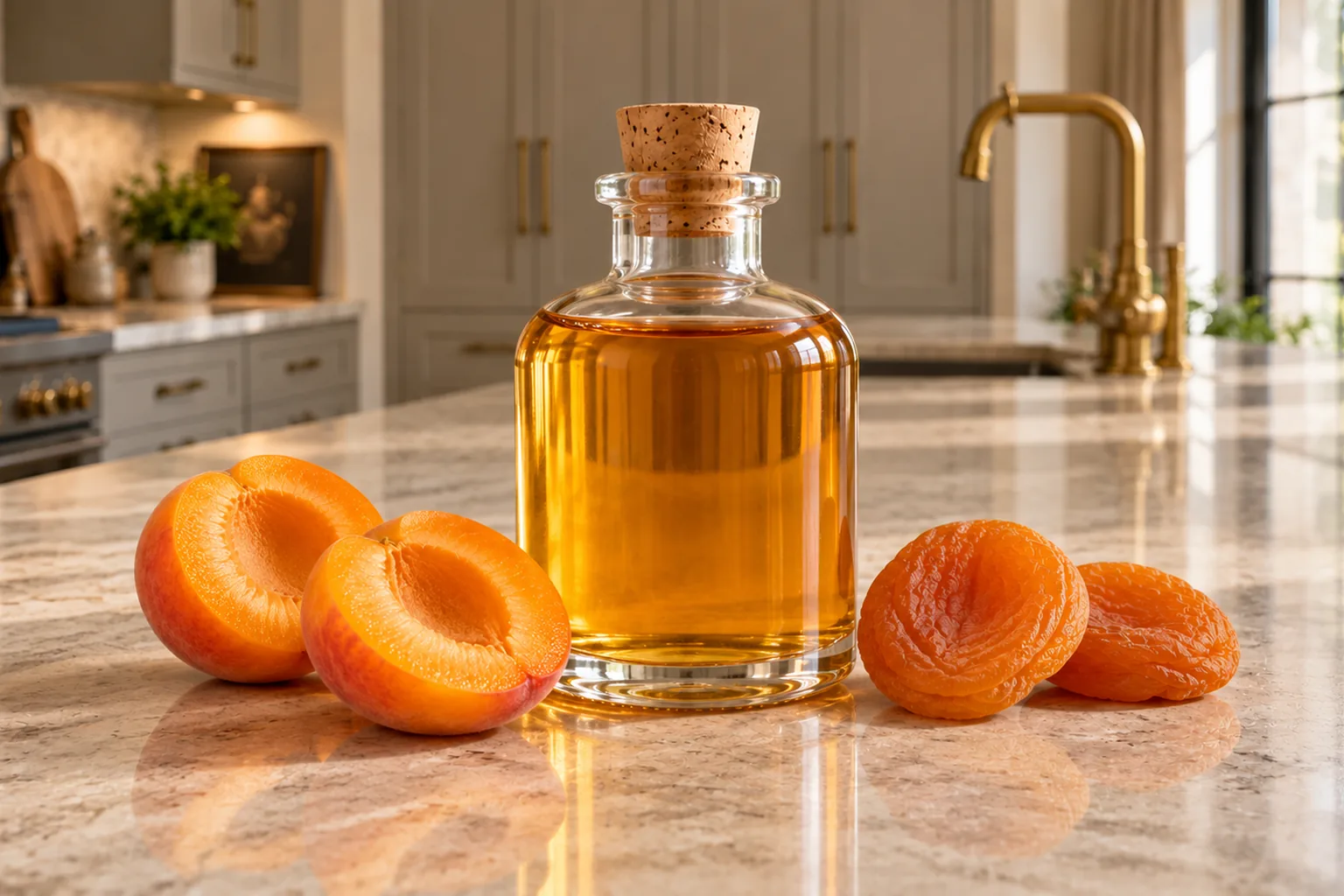
What Homemade Apricot Extract Is Like
The extract begins colorless because plain vodka is clear. Over several weeks, it takes on a transparent golden-apricot color. The fresh halves soften, the dried fruit plumps, and the aroma becomes strong enough to recognize before the bottle reaches your nose.
This is a culinary extract, not an apricot drink. A teaspoon can carry fruit aroma into an ice cream, smoothie, cake, or quick bread without adding chunks of fruit. The formula does not promise that alcohol changes a frozen dessert’s texture, and it does not rely on that claim.
Why Use Fresh And Dried Apricots Together
The fresh apricots contribute ripe fruit aroma and moisture. The dehydrated apricots bring a denser, darker fruit character because some of their water has already been removed. Using both is part of the measured source formula, not an interchangeable suggestion.
The shells and kernels contribute a different apricot note from the flesh. That is why the stones are kept, cracked, and counted rather than discarded after the fruit is halved. The final strain removes every solid piece while keeping the infused aroma in the clear liquid.
This combination also gives the jar three visible readiness changes: the fresh fruit softens, the dried fruit plumps, and the clear vodka turns golden. Those changes support the main endpoint—the strong apricot smell—without replacing it.
Where This Extract Fits On GAPS
Plain additive-free vodka is listed only for very occasional use on Full GAPS. Treat this apricot extract the same way: as a very occasional later Full GAPS flavoring used in small recipe quantities after the named ingredients are established. It is not an Introduction Diet recipe.
Choose plain vodka with no sugar, flavoring, coloring, or other additions. Use additive-free dehydrated apricots without sugar, preservatives, oil, or sulfur dioxide. The fresh apricots should be ripe, fragrant, and free of mold or damaged flesh.
The one-cup vodka measure applies to the whole batch. The extract is then used by the teaspoon in another complete recipe. Keeping those two scales separate makes the very occasional Full GAPS placement clear and prevents the bottle from being presented as a beverage.
Count And Prepare The Apricots
Rinse six fresh apricots and dry them well. Cut each fruit around its natural seam, twist it into two halves, and remove the hard stone. You should have exactly twelve fresh halves and six stones.
Measure four dehydrated apricots separately. They should look matte and naturally wrinkled, not glossy with added oil or coated with sugar. Keeping the fresh halves, dried fruit, stones, jar, and one cup vodka visible before assembly prevents an easy counting mistake.
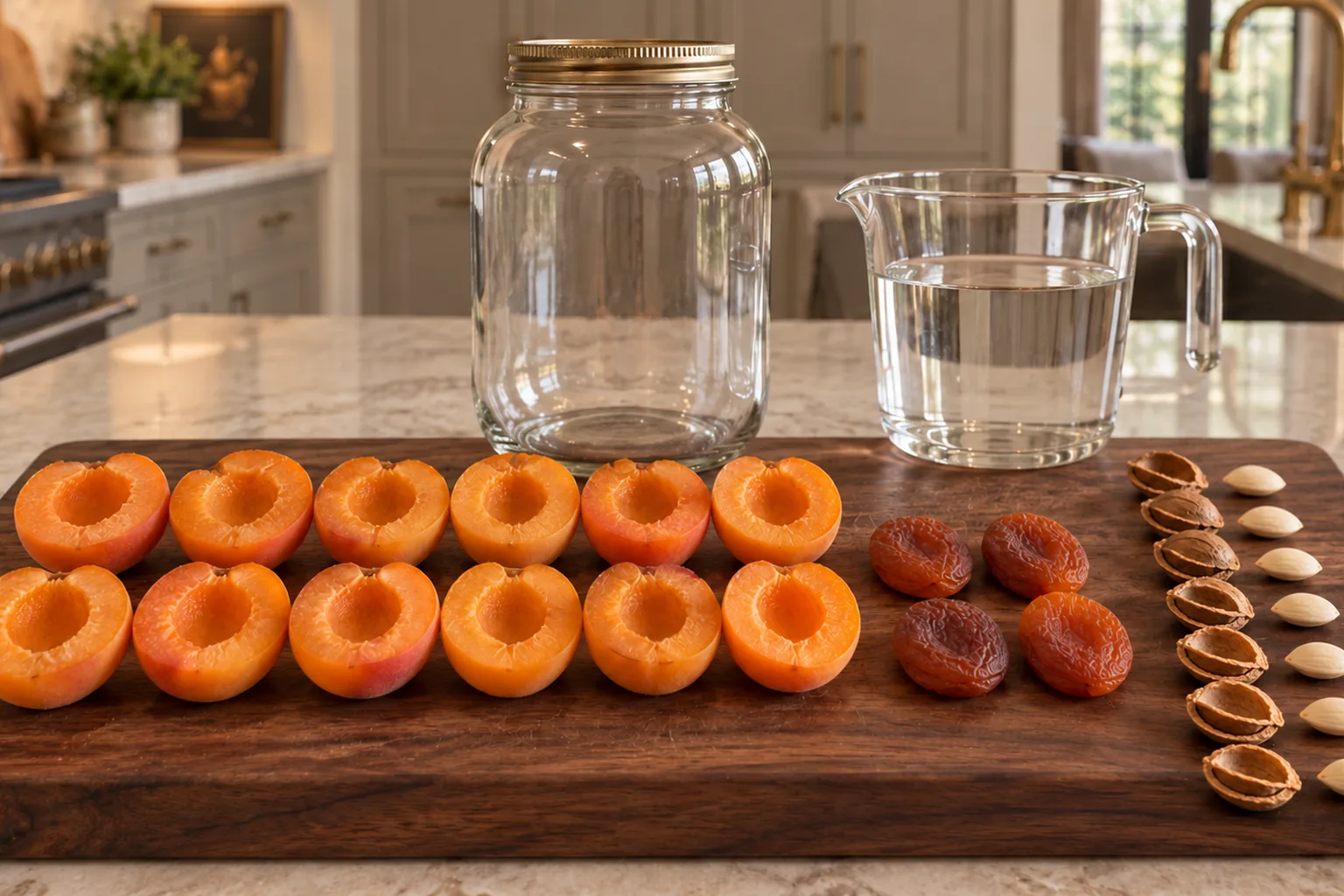
Crack The Pits Without Crushing Them
Wrap one stone at a time in a folded kitchen towel and tap or squeeze it with a sturdy nutcracker until the hard shell opens. The goal is to split the shell and remove the pale inner kernel, not grind either one into fragments.
Keep both parts from every stone. At the end, you should have the cracked shell pieces and six inner kernels. Small natural shell chips are expected, which is why the finished liquid is strained before bottling.
Build The Three-To-Four-Week Steep
Place the twelve fresh apricot halves, four dried apricots, six cracked shell sets, and six inner kernels in a clear glass jar large enough to hold the batch. Pour in one cup plain additive-free vodka, then fit the lid.
The fruit will crowd the jar, and some pieces may press against the glass. The liquid should remain clear at first. Put the covered jar in a dark cupboard at room temperature and leave it for three to four weeks.
The source method does not require daily shaking or another intervention. Keep the lid closed and let time do the work. A dark cupboard protects the infusion from constant light while keeping the jar easy to check when the three-week mark arrives.
Use Aroma As The Readiness Cue
At three weeks, open the jar and smell the liquid. It should smell strongly and unmistakably of apricots rather than only of plain vodka. The liquid will be golden amber, and the fruit will look softened and muted compared with the day it went into the jar.
If the apricot aroma is still faint, close the jar and continue the steep toward four weeks. The calendar gives you the window; the strong apricot smell gives you the endpoint.
Strain And Bottle The Extract
Set a fine-mesh stainless-steel strainer over a clear glass measuring jug or bowl. Pour the entire jar through it and let the golden liquid drain away from the softened fruit, shells, and kernels.
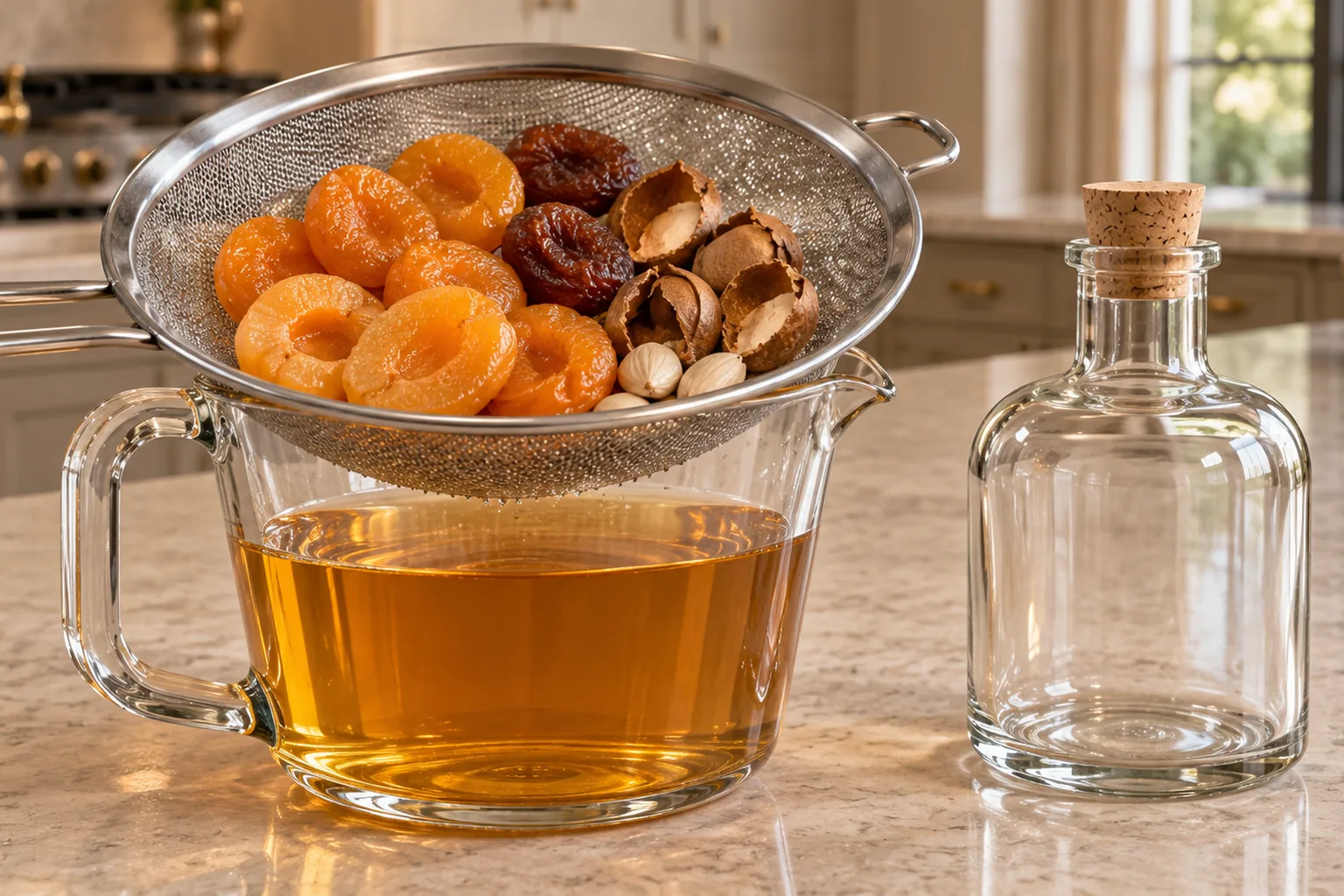
Do not return the spent fruit, shells, or kernels to the finished bottle. Transfer only the strained liquid to a clean glass bottle, cap it, and keep it in a cool dark cupboard. The final volume may be a little less than one cup because the fruit retains some liquid.
The spent fruit is not a second recipe. This post stops at straining and bottling the extract, without claiming that another cooking step removes its alcohol.
Use Apricot Extract In Small Amounts
Begin with one teaspoon in a full recipe and adjust only when the recipe’s formula allows it. The extract can deepen apricot flavor when fresh fruit is mild or provide apricot aroma when the fruit is out of season.
It is especially useful in the egg-free Full GAPS apricot ice cream, where coconut milk, ripe fruit, honey, and lemon form the base. It also pairs with the apricot coconut custard ice cream, which uses egg yolks, homemade coconut milk, honey, gelatin, and a cooked custard.
If you want a more universal flavoring, the separate homemade vanilla extract keeps its own ingredients, steeping method, and recipe card. Linking the two extracts is useful because their jobs overlap, but their measured formulas do not.
Storage And Labeling
Keep the strained extract tightly capped in clean glass in a cool dark cupboard. A small bottle limits excess air space and makes it easier to pour a teaspoon without exposing the whole batch for long.
Label the bottle with the name and the date it was strained. The recipe supplies a three- to four-week steep but does not set an exact finished shelf life, so the label gives you a clear record without inventing one.
Keep Homemade Frozen Treats Organized
The upcoming Frozen Treats Cookbook is the most relevant WFLI companion for this extract because both linked apricot ice creams belong in that collection. It brings the frozen-dessert formulas, preparation cues, and serving ideas into one place. Find current release information in the WFLI shop.
Recommended Equipment
Use a chef’s knife, cutting board, folded kitchen towel, sturdy nutcracker, measuring cup, clear lidded glass steeping jar, fine-mesh stainless-steel strainer, clear glass measuring jug or bowl, small funnel, and clean glass storage bottle with a tight cork or cap.
The clear jar and measuring jug make the color and sediment easy to see. Fine stainless mesh catches small shell fragments without requiring a plastic strainer or an unsupported extra filtration method.
Frequently Asked Questions
Can I Use Flavored Vodka?
No. Use plain additive-free vodka with no sugar, flavoring, coloring, or other additions. The apricots provide the flavor.
Can I Skip The Dried Apricots?
Not in this measured formula. The exact source batch uses six fresh apricots and four additive-free dehydrated apricots.
Can I Make It With Only Dried Apricots?
That would be a different formula. This recipe keeps the accepted combination of fresh halves, dried fruit, cracked shells, and inner kernels.
Do I Keep The Pits Whole?
No. Crack each hard stone, then place both the shell pieces and pale inner kernel into the steeping jar. Strain all solids out at the end.
How Do I Know The Extract Is Ready?
Open it at three weeks and smell. It is ready when the liquid smells strongly of apricots. If the aroma remains faint, continue toward four weeks.
Can I Leave The Fruit And Kernels In The Finished Bottle?
This WFLI route stops at the source’s strain step. Bottle only the clear strained extract and do not keep the spent solids in it indefinitely.
Is This An Introduction Diet Recipe?
No. Plain additive-free vodka is reserved for very occasional Full GAPS use, so this extract is a later Full GAPS culinary flavoring.
Homemade Apricot Extract Recipe
Homemade Apricot Extract for Very Occasional Full GAPS
Ingredients
Equipment
Method
- Rinse and dry the six fresh apricots. Cut each fruit around its seam, twist it into two halves, remove the hard stone, and keep all six stones. You should have exactly 12 fresh apricot halves.
- Wrap one stone at a time in a folded kitchen towel and crack it with a sturdy nutcracker. Keep the split shell pieces and the pale inner kernel from each stone. Count 6 shell sets and 6 kernels.
- Place the 12 fresh apricot halves, 4 dehydrated apricots, 6 cracked shell sets, and 6 inner kernels in a clear glass jar. Pour in 1 cup plain additive-free vodka and fit the lid.
- Put the covered jar in a dark cupboard at room temperature for 3 to 4 weeks. At 3 weeks, open and smell the liquid. It is ready when it smells strongly and unmistakably of apricots; if the aroma is faint, reseal and continue toward 4 weeks.
- Set a fine-mesh stainless-steel strainer over a clear glass measuring jug or bowl. Pour the full jar through it and let the golden liquid drain away from the softened fruit, shells, and kernels. Do not return the solids to the finished bottle.
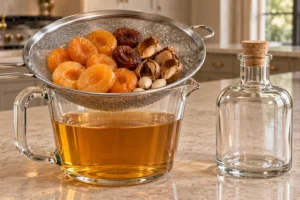
- Transfer only the strained extract through a small funnel into a clean glass bottle. Cap tightly, label with the extract name and strain date, and keep in a cool dark cupboard. The final volume may be slightly less than 1 cup because the fruit retains some liquid.
Notes
Tried this recipe?
Let us know how it was!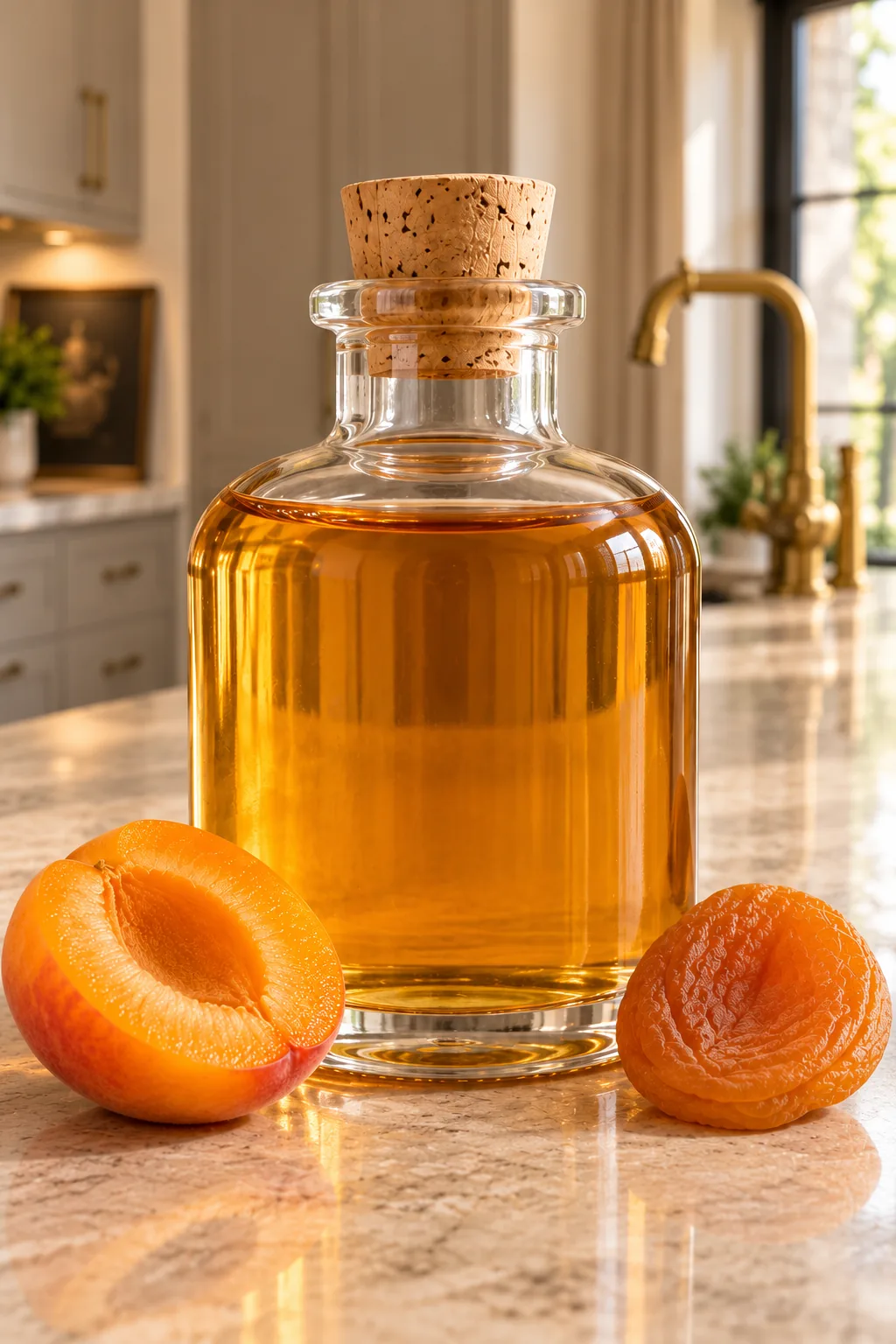

Leave a comment