

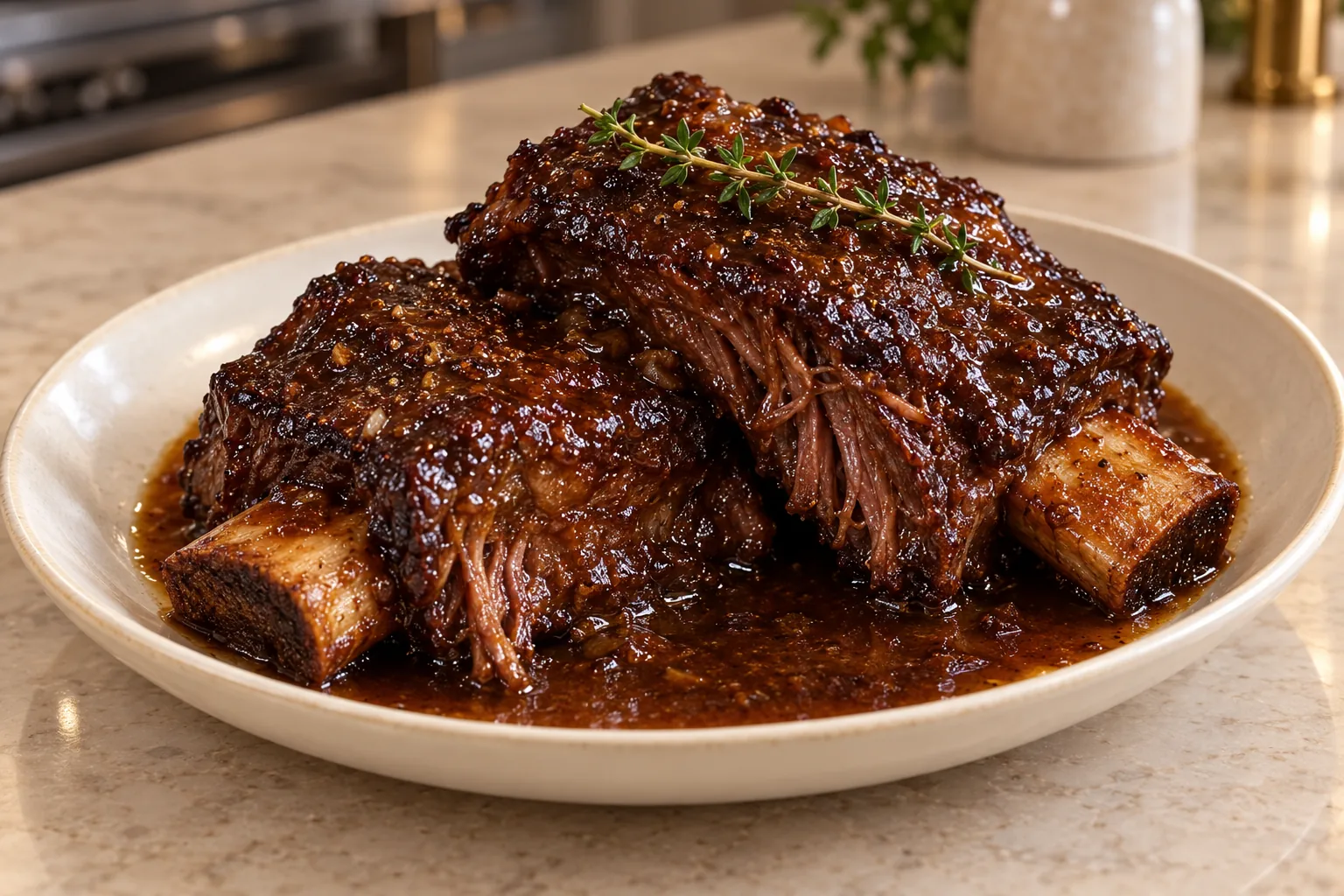
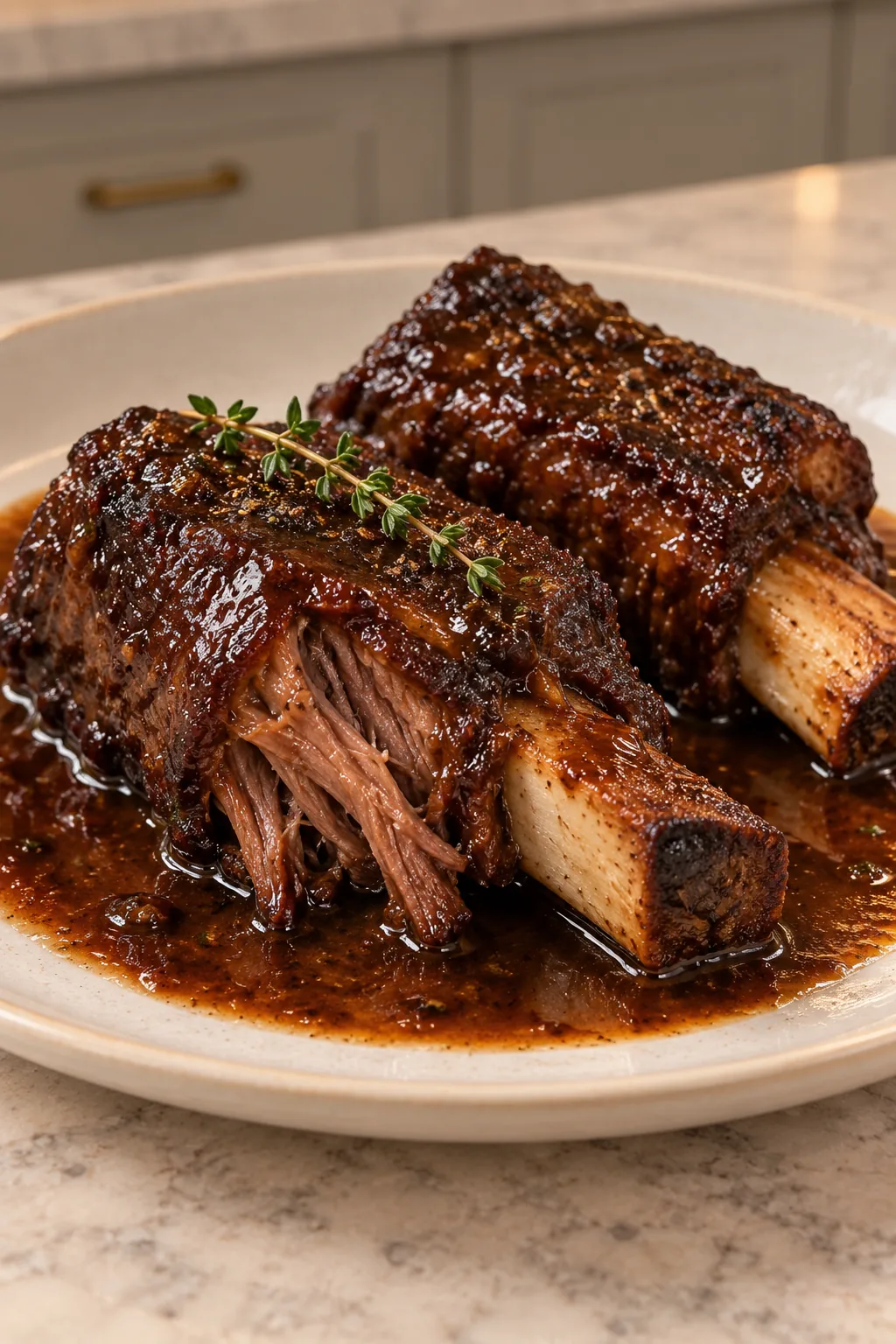
Star-anise braised short ribs are a low, slow Full GAPS dinner built around homemade beef meat stock. The ribs go into the pot tough and heavily marbled. They come out fork-tender, dark mahogany, and coated in a glossy sauce made from their own braising liquid.
The finished meat should pull away from the bone in moist strands but still hold together when lifted. The sauce smells first of beef and browned vegetables, with thyme, bay, peppercorn, garlic, and one warm note of star anise behind them.
This is the kind of dinner I prefer to cook before I need it. The ribs are good the first day and even better after an overnight rest in their sauce. That turns the long oven time into a make-ahead advantage instead of one more thing competing for the last hour before dinner.
Where These Short Ribs Fit On GAPS
This recipe fits Full GAPS after the vegetables and whole spices are introduced and tolerated. Use homemade ghee or tallow for searing and homemade beef meat stock made from raw meaty bones and joints.
The accepted route uses meat stock only. Dry wine appears in the source, but it is not part of this card. Boxed stock, broth cubes, beer, polenta, potatoes, and parsnips are also left out.
After the braise, the liquid is a concentrated sauce for the ribs. It is no longer the everyday meat stock that GAPS asks you to keep drinking and using in soups.
Why The Polenta Component Is Not Included
The source page contains two complete components: braised short ribs and Parmesan polenta. Cornmeal is excluded from GAPS, and the source does not give a measured GAPS purée formula to replace that polenta.
Rather than inventing a second formula, this post keeps the tested short-rib braise and links a separate measured side. Serve it over Roasted Carrot Purée for Full GAPS, or spoon the ribs and sauce into a shallow bowl on their own.
Choose Bone-In Beef Short Ribs
Use three pounds bone-in beef short ribs. Look for thick pieces with visible marbling and meat attached firmly around the bone. Similar-size ribs brown and tenderize more evenly.
Short ribs may be cut English-style into thick single-bone pieces or into another bone-in butcher cut. What matters here is keeping the three-pound measure and arranging the pieces so each one has contact with the pot during searing. Crowding traps steam and leaves the surface gray.
Pat the surfaces dry before seasoning. Moisture turns to steam and delays the dark crust that gives the braise its deeper flavor. Season every side with unrefined salt and black pepper so the seasoning is visible.
Sear The Ribs Dark Brown
Heat the oven to 325°F. Melt homemade ghee or tallow in the exact Le Creuset Classic stainless-steel stockpot over medium-high heat.
Sear the ribs in a single layer, working in batches if necessary. Let each side sit against the pot long enough to become dark brown before turning. Pale gray meat has not developed enough crust.
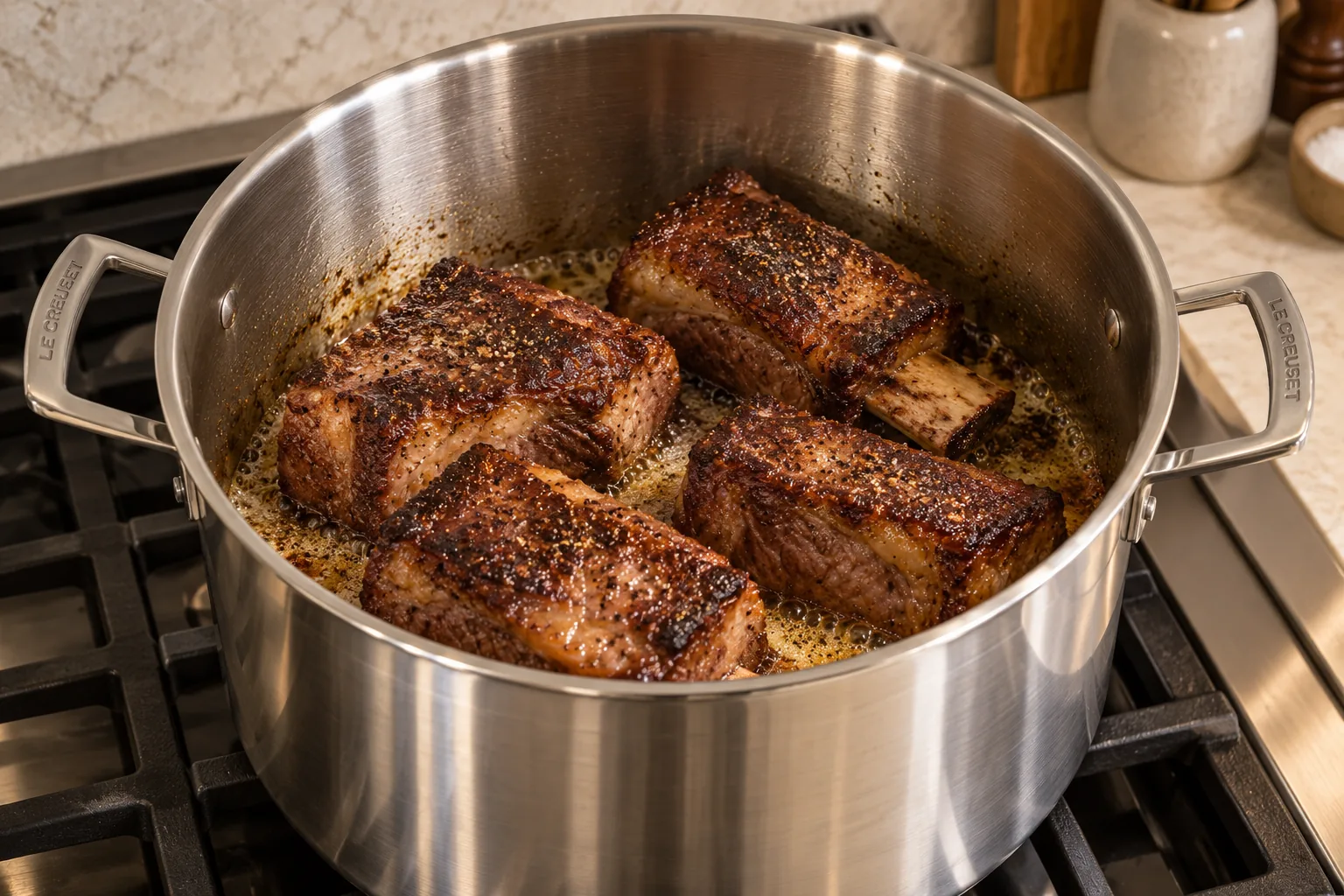
The ribs should smell deeply beefy and roasted without smelling burned. Move them to a plate and keep every browned bit in the pot for the sauce.
Let the pot recover its heat between batches. If the second batch goes into a cooler pot, the ribs release liquid before they brown. Wait until the ghee shimmers again, then add the next pieces without stacking them.
Brown The Aromatic Vegetables
Add two roughly chopped carrots, one roughly chopped yellow onion, and two roughly chopped celery stalks to the same pot and fat. Cook over medium heat until the vegetables pick up golden-brown edges.
Stir often enough to prevent burning while allowing contact with the hot metal. The vegetables should soften slightly but do not need to become tender before the braise.
Deglaze With One Cup Beef Meat Stock
Pour in about one cup homemade beef meat stock. Scrape the bottom with a wooden spoon until the browned bits release into the liquid.
Simmer until that measured cup reduces by half. The bubbles become tighter, the color deepens, and a spoon dragged across the pot briefly exposes the bottom.
Add The Ribs, Herbs, And Spices
Return the short ribs to the pot. Add two teaspoons whole black peppercorns, three thyme sprigs, two bay leaves, three smashed garlic cloves, and exactly one star anise.
One star anise supports the beef without turning the sauce into licorice. Do not add several pods just because the stockpot is large.
Use The Liquid Height As The Measure
Pour in more homemade beef meat stock only until the liquid comes three-quarters of the way up the sides of the ribs. The tops remain visible above the stock.
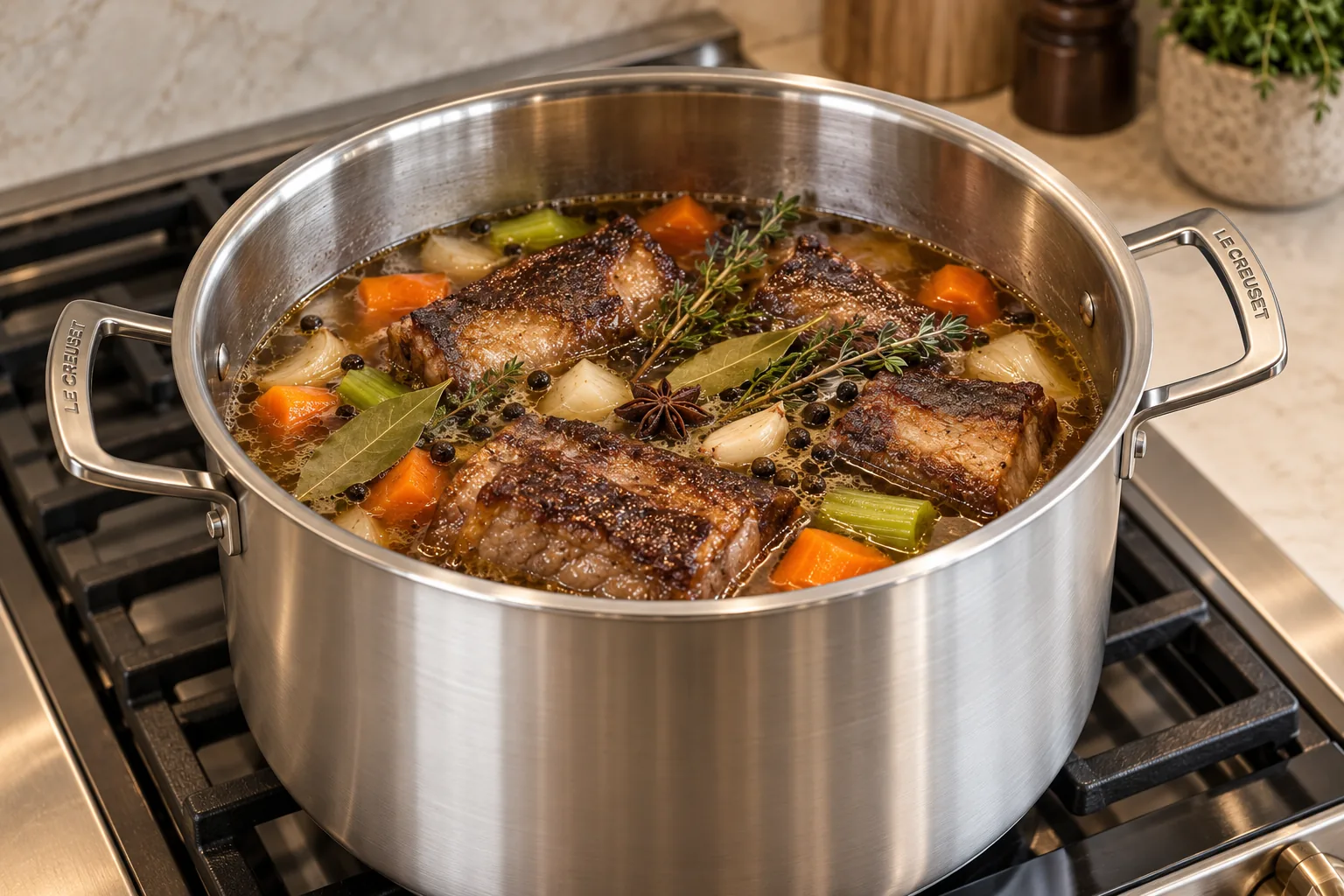
The source gives no fixed total because rib shape and pot geometry change the amount required. The height cue is the controlling measure. A wide pot needs a different volume than a narrow pot.
Use warm meat stock for topping up during the braise. Cold stock drops the pot temperature and interrupts the steady cook. Add it along the side of the pot rather than pouring directly over the browned crust.
Braise Low And Slow
Bring the liquid to a gentle simmer, cover the pot, and move it to the 325°F oven. Braise for two to four hours. Check occasionally, but do not flip or repeatedly disturb the ribs.
If the liquid drops below halfway up the meat, add enough warm meat stock to restore it. Otherwise leave the pot alone. The oven keeps the temperature steadier than constantly adjusting a stovetop burner.
The ribs are done when a fork enters with almost no resistance and the meat is nearly falling from the bone. A rib should lift intact but separate into moist strands with gentle pressure.
Start checking at two hours, especially if the ribs are small. Large thick ribs may need most of the four-hour window. The fork test controls the endpoint; the clock only tells you when to begin looking.
Reduce The Braising Liquid Into Sauce
Lift the ribs out carefully. Remove the bones now if you prefer boneless portions. Simmer the braising liquid on the stove until its volume reduces by half and it begins to thicken slightly.
For a smooth sauce, strain through a fine stainless-steel sieve into a heatproof bowl or saucepan. Do not mash the vegetables through the sieve. Taste only after reduction, then adjust salt and pepper.
The reduced sauce should coat the ribs in a thin glossy layer. If it still runs like the starting stock, keep simmering. If it becomes sticky or intensely salty, whisk in a small amount of unsalted meat stock before returning the ribs to the sauce.
Serve Now Or Rest Overnight
You can serve the ribs immediately with plenty of reduced sauce. For the best make-ahead texture, cool the ribs in their liquid, cover, and refrigerate overnight.
The next day, lift off excess congealed fat. Place the ribs in a shallow glass or ceramic baking dish, cover them with the sauce, put on the lid, and reheat in a 350°F oven until hot throughout.
For faster cooling, divide the ribs and sauce between shallow covered containers instead of putting one deep hot stockpot straight into the refrigerator. Once chilled, the sauce will gel and the fat will firm on top, making it easy to remove only the excess.
Keep the meat covered by sauce during the overnight rest.
Keep the meat covered by sauce while reheating. Long-cooked ribs dry out when warmed uncovered by themselves.
Store And Freeze The Ribs
Cool leftovers promptly and refrigerate the ribs in their sauce for up to four days. Store the sauce with the meat so the surface does not dry.
Freeze meal-size portions in a freezer-safe container with room for expansion. Thaw in the refrigerator, then reheat covered in the oven or gently on the stove.
Recommended Equipment
- Le Creuset Classic Stainless Steel Stockpot, 10 quart, with lid
- Uncoated stainless-steel tongs
- Wooden spoon
- Chef’s knife and cutting board
- Liquid measuring cup
- Fine stainless-steel mesh sieve
- Heatproof bowl or saucepan
- Shallow glass or ceramic baking dish with lid for reheating
Frequently Asked Questions
Why Is There No Wine In This Recipe?
The accepted Full GAPS route uses the source’s beef-stock deglaze and braise branch. It keeps the measured one-cup deglaze and liquid-height cues without making wine part of the formula.
How Much Beef Meat Stock Do I Need?
Use about one cup for deglazing. After that, add only enough to reach three-quarters of the way up the ribs, and restore the level if it falls below halfway.
Can I Use Bone Broth?
Use homemade beef meat stock made from raw meaty parts. Bone broth has a different GAPS timing and is not substituted into this Full GAPS card.
How Do I Know The Ribs Are Done?
A fork should slide into the meat with almost no resistance. The meat nearly falls from the bone but still lifts in one piece.
Can I Use A Slow Cooker?
The source gives a slow-cooker branch after searing and deglazing, but this card locks the oven-braise method so the heat, liquid-height checks, and timing stay together.
What Should I Serve With The Ribs?
Use the linked roasted carrot purée, another measured Full GAPS vegetable side, or simply serve the ribs in a shallow bowl with their sauce.
Star Anise Braised Short Ribs Recipe
Star Anise Braised Short Ribs for Full GAPS
Ingredients
Equipment
Method
- Preheat the oven to 325°F. Pat the short ribs dry and season every side visibly with unrefined salt and black pepper.
- Melt ghee or tallow in the stockpot over medium-high heat. Sear the ribs in one layer, in batches if needed, until every side is dark brown. Transfer them to a plate.
- Add the carrots, onion, and celery to the same pot. Cook over medium heat until the vegetables pick up golden-brown edges.
- Pour in the measured deglazing stock. Scrape the browned bits from the bottom and simmer until that stock reduces by half.
- Return the ribs to the pot. Add the peppercorns, thyme, bay leaves, garlic, and one star anise.
- Add more beef meat stock only until the liquid reaches three-quarters of the way up the ribs. Bring to a gentle simmer, cover, and transfer to the oven.
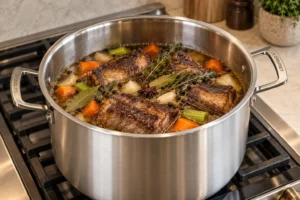
- Braise for 2 to 4 hours, until a fork enters with almost no resistance and the meat nearly falls from the bone. If liquid falls below halfway up the ribs, add enough warm stock to restore it. Do not flip the ribs.
- Lift out the ribs. Simmer the braising liquid until it reduces by half and thickens slightly. Strain for a smooth sauce, then taste and adjust salt or pepper.
- Serve immediately with the sauce, or chill the ribs in their sauce overnight, remove excess fat, and reheat covered at 350°F until hot throughout.
Notes
GAPS placement: Full GAPS after the vegetables and whole spices are introduced and tolerated.
Liquid: Use homemade beef meat stock, not boxed stock, broth cubes, beer, wine, or bone broth.
Measure: The stock total is controlled by liquid height after the measured deglazing stock.
Storage: Refrigerate ribs in their sauce for up to 4 days or freeze in meal-size portions.
Tried this recipe?
Let us know how it was!Make Slow-Cooked Dinners Work Ahead
The upcoming Full GAPS Batch-Cooking Guide maps long braises, stock, cooling, reheating, and component sides into a weekly kitchen rhythm. Find current releases and upcoming additions in the WFLI shop.

Leave a comment