

This spaghetti squash pancake turns two cups of baked squash and one egg into one crisp-edged, golden skillet pancake with a soft, tender center. It is savory enough for lunch or dinner, simple enough for breakfast, and sturdy enough to cut into wedges for two servings.
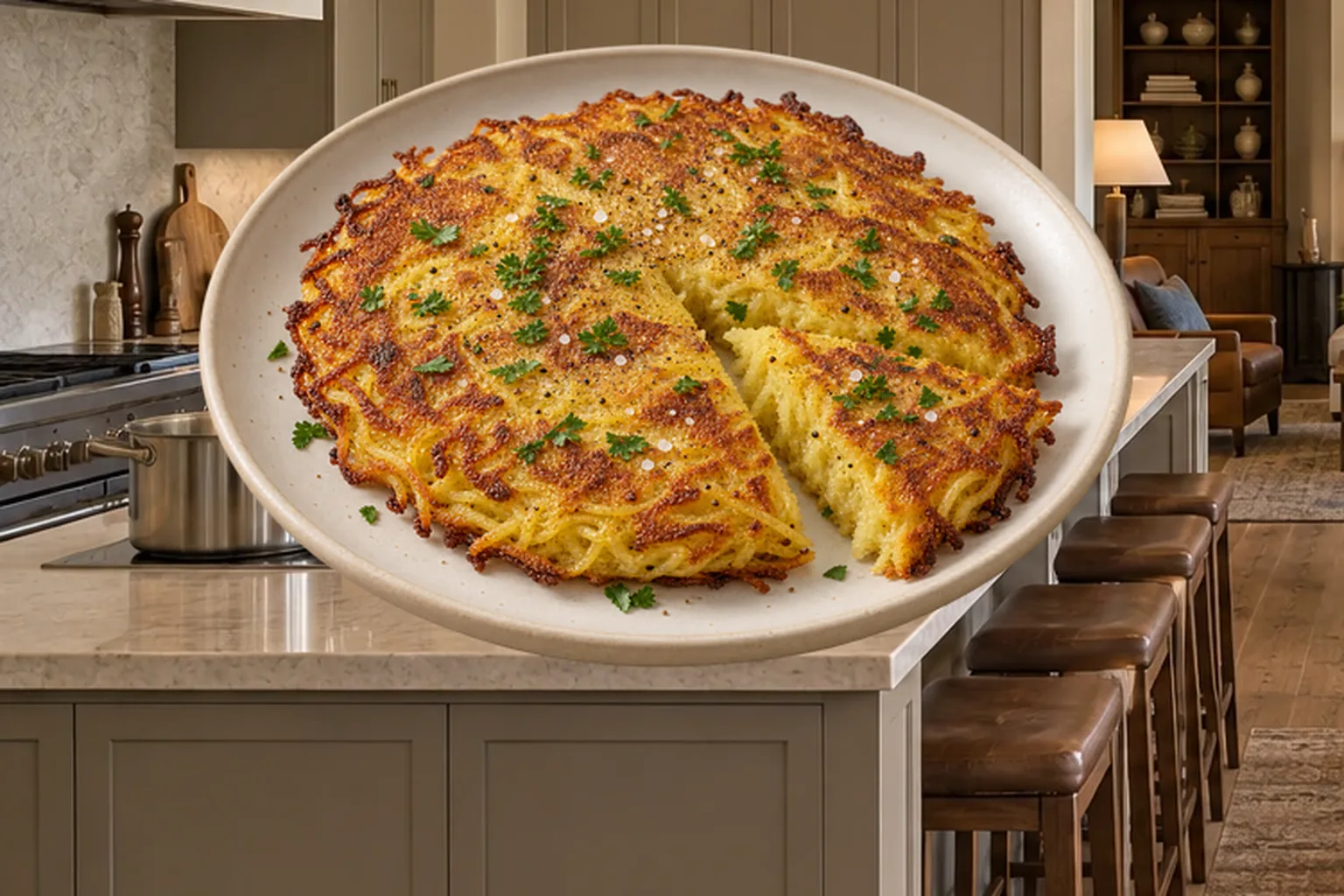
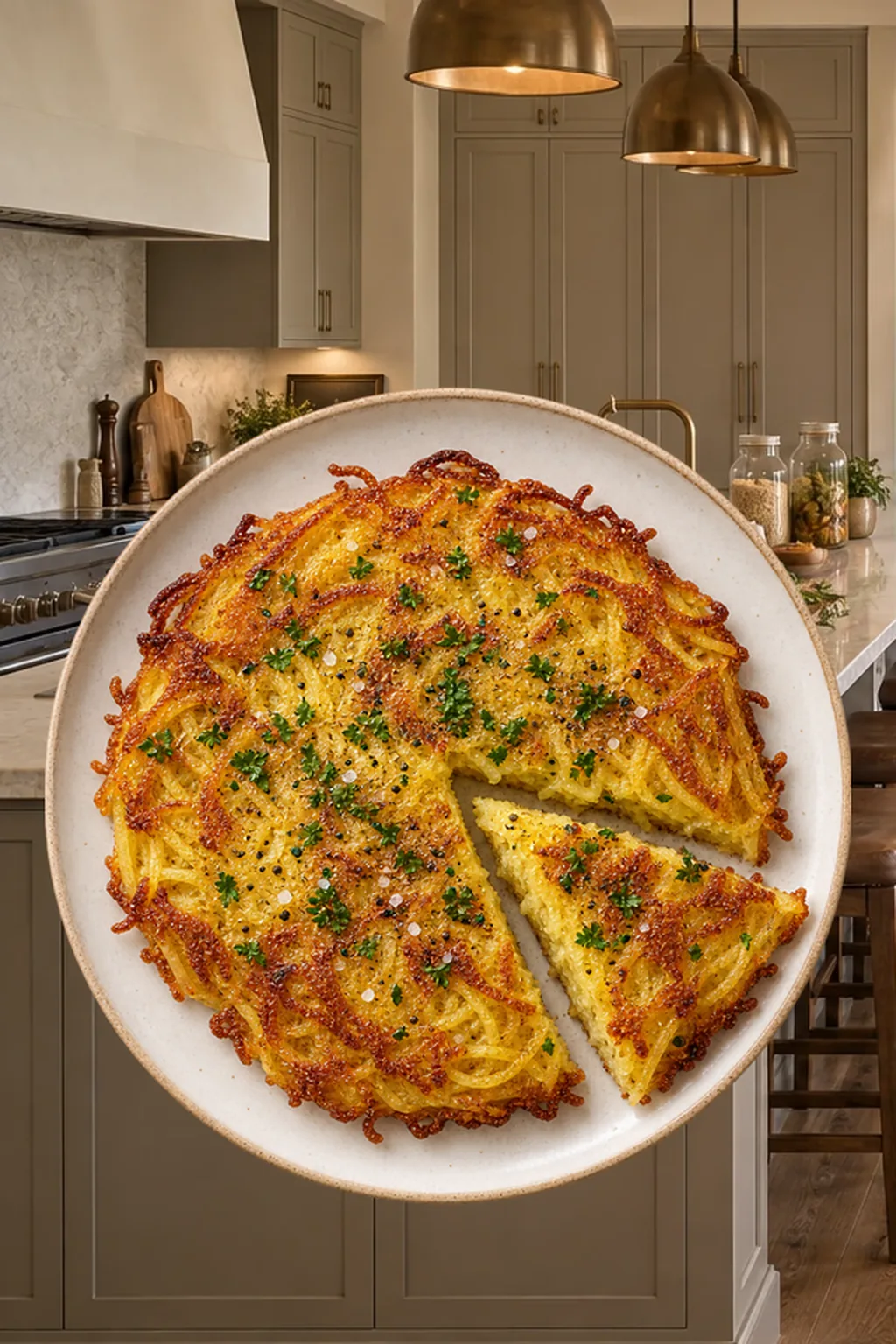
The pancake is thin rather than fluffy. You can see the short spaghetti-squash strands across both browned sides, while the egg binds them into one piece. Covering the first side helps the center set; cooking the second side uncovered lets the edges stay crisp.
When I am cooking around homeschool, our businesses, and second shift, one skillet-sized pancake is much easier to manage than a pan full of small ones. The useful prep happens earlier: bake the spaghetti squash when the oven is already on, keep two cups chilled, and the pancake itself takes about fifteen minutes.
What This Pancake Is Like
This is a vegetable-and-egg pancake, not a bread-style pancake made with flour. It does not rise, and the center should not be cakey. The finished pancake is about five to six inches across, with browned squash strands on the outside and a moist, cohesive center.
The first bite is lightly sweet from the roasted squash, savory from the cooking fat and mineral salt, and fresh when parsley is added. Black pepper is optional. The simple base also works with a permitted savory or sweet topping without changing the measured pancake underneath.
The pancake holds together because the strands are already cooked, the egg is evenly distributed, and the first side stays covered for five minutes. If the squash is waterlogged or the pancake is flipped before the center has begun to set, it is more likely to break.
Full GAPS Ingredients and Stage
This complete recipe is for Full GAPS. It uses baked spaghetti squash, one egg, natural mineral sea salt, and two tablespoons of homemade ghee, coconut oil, lard, or another freshly rendered animal fat. Optional parsley and black pepper stay optional.
This is not the same formula as the small Intro Stage 3 pancake made with nut butter, egg, and blended fresh winter squash. That earlier-stage pancake has a different ingredient ratio, texture, size, and method. Keep the two recipes separate rather than treating this large baked-squash pancake as an Intro substitution.
The source recipe used avocado oil or olive oil. This Full GAPS version routes the skillet cooking to ghee, coconut oil, lard, or freshly rendered animal fat. Olive oil stays for raw use rather than this ten-minute fry, and avocado oil is not part of the accepted formula.
Bake the Spaghetti Squash Ahead
The fifteen-minute recipe-card time begins with cooked squash. To prepare it, heat the oven to 375°F. Halve the squash, remove the seeds, coat the cut surfaces with a permitted cooking fat, and place the halves cut-side down on a greased baking sheet.
Bake until the flesh separates into strands but remains a little al dente, about forty minutes depending on the squash. The best cue is not softness alone. A fork should loosen the flesh easily, the cut edges should be tinged brown, and the strands should still keep their shape instead of collapsing into wet puree.
If the whole squash is difficult to cut safely, bake it whole for twenty to twenty-five minutes first. Remove it carefully with oven mitts, halve and seed it, coat the cut surfaces with fat, then return it to the oven cut-side down until the strands reach the same al dente endpoint.
Cool the squash and refrigerate it promptly. Measure two cups for this pancake. Cold baked strands are easy to measure and help make this a true quick meal instead of a forty-minute baking project at breakfast.
Mix Until Every Strand Is Coated
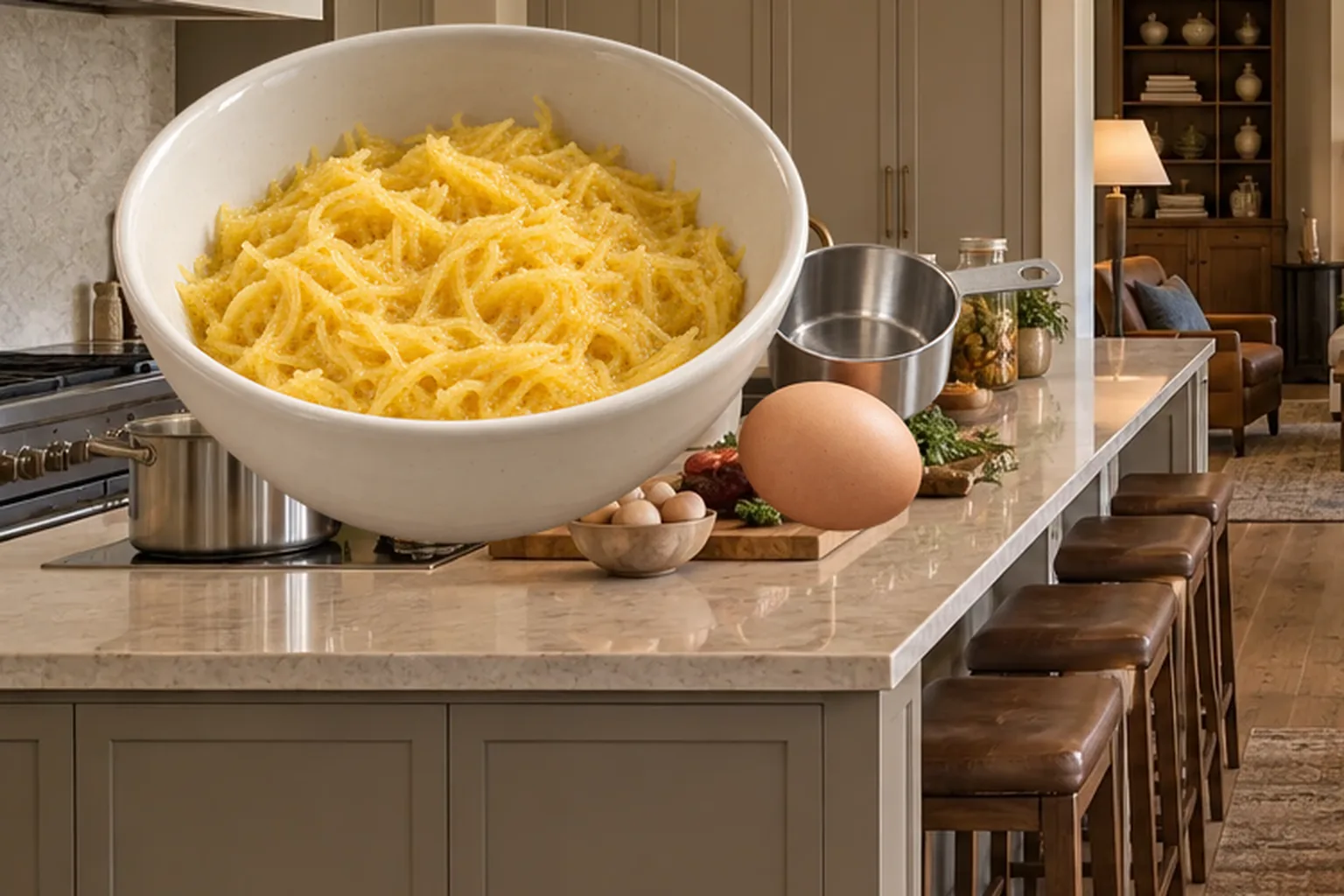
Put two cups of baked spaghetti-squash strands in a medium bowl. Add one lightly beaten egg and fold until the egg is spread evenly through the squash.
The mixture should look moist and glossy, with no puddle of egg at the bottom of the bowl and no dry clump of squash on top. The strands should still be visible. Do not mash them into a smooth batter.
If the mixture looks loose and watery, check the squash before adding another ingredient. Excess water belongs to the squash, not the formula. Drain obvious liquid and keep the measured egg-and-squash ratio unchanged.
Shape and Cover the First Side
Heat the Le Creuset Signature 10.25-inch Artichaut skillet over medium heat and add one tablespoon of the cooking fat. Tilt or spread the melted fat so it coats the area where the pancake will sit.
Add the entire squash mixture and spread it into one pancake about five to six inches across. Keep the thickness even from center to edge. Season lightly with mineral salt and optional black pepper, then add half of the optional chopped parsley.
Cover the skillet and cook over medium heat for five minutes. The lid holds enough heat around the top to help the egg set while the first side browns. Watch the edge: it should look firm and matte rather than wet, and a thin spatula should slide under the pancake without dragging loose strands across the pan.
Flip Once and Finish Uncovered
Pour the remaining tablespoon of cooking fat over and around the pancake. Run a thin stainless-steel spatula around the edge, then work it under the center until the pancake releases as one piece.
Flip once. The newly exposed first side should be golden in irregular patches with crisp strands around the edge. A few darker lacy strands are expected; an evenly black surface means the heat was too high.
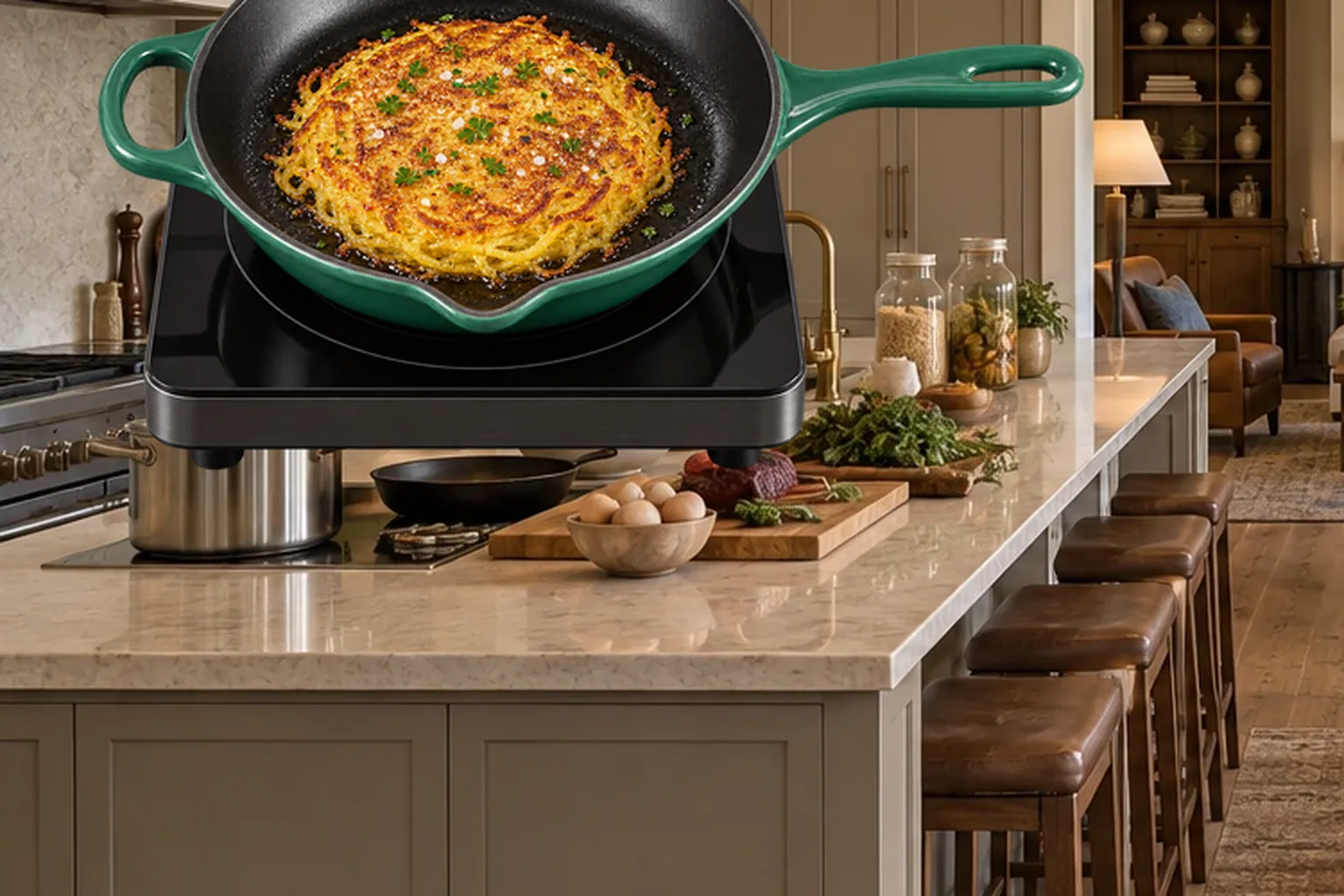
Season the second side lightly and cook uncovered for another five minutes. Leaving the lid off allows steam to escape. The pancake is ready when the second side is golden, the edge is crisp, and the center feels set rather than liquid when pressed gently with the spatula.
Spaghetti Squash Pancake for Full GAPS
Ingredients
Equipment
Method
- Combine the baked spaghetti squash strands and lightly beaten egg in the mixing bowl until the strands are evenly coated.
- Heat the skillet over medium heat and add 1 tablespoon of the cooking fat. Coat the bottom, then add the squash mixture and spread it into one 5- to 6-inch pancake.
- Season lightly with sea salt and optional black pepper, then sprinkle with half the optional parsley. Cover and fry over medium heat for 5 minutes.
- Add the remaining 1 tablespoon cooking fat over the pancake. Loosen the edges and bottom with a thin metal spatula, then flip the pancake in one piece. Season the second side lightly.
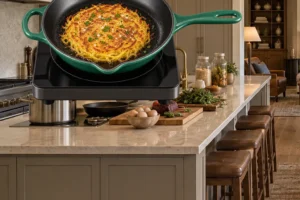
- Cook uncovered for 5 minutes, until the second side is golden, the edges are crisp, and the center is set. Serve with the remaining optional parsley.
Notes
Tried this recipe?
Let us know how it was!Choose a Savory or Sweet Finish
The plain pancake is complete as written. For a more substantial savory meal, add a fried egg or fresh additive-free sausage or bacon. Commercially preserved meat and prosciutto are not part of this formula; check the complete ingredient list or use a homemade meat recipe you already trust.
For a sweet-savory plate on Full GAPS, add a small drizzle of raw honey, raw or properly cultured chèvre after dairy has been introduced and tolerated, and properly prepared walnuts. Those toppings stay on the finished pancake. They do not go into the egg-and-squash mixture.
For another way to use a container of baked spaghetti squash, the spaghetti squash fried rice adds pork, egg, green onions, ginger, garlic, and coconut aminos for a full skillet dinner. The apple spaghetti squash breakfast porridge takes the same vegetable in a softer, spoonable direction with apple, cinnamon, gelatin, and coconut.
Storage and Reheating
Refrigerate the cooked pancake promptly in a covered glass container and use it within three days. Separate wedges with unbleached parchment if you want to remove one serving without tearing the other.
Reheat a wedge in a lightly greased skillet over medium-low heat. Let the first side warm before turning it once. This restores more of the crisp edge than a microwave. Keep sweet or dairy toppings separate until the pancake is hot.
For make-ahead cooking, the better choice is usually to bake the squash ahead and fry the pancake fresh. The mixed raw egg-and-squash batter should not sit at room temperature while you finish other tasks.
Recommended Equipment
- Medium mixing bowl: Wide enough to fold the egg through the squash without crushing the strands.
- Le Creuset Signature 10.25-inch Artichaut skillet: Holds the five- to six-inch pancake with room to reach the edge with a spatula.
- Fitted lid: Traps heat during the first five minutes so the center begins to set before the flip.
- Thin stainless-steel spatula: Slides under the browned surface and supports the center during the single flip.
Frequently Asked Questions
Why Did My Pancake Break?
The squash may have been too wet, the egg may not have been distributed evenly, or the first side may not have cooked for the full covered five minutes. Wait for a firm matte edge and loosen the whole underside before flipping.
Can I Make Several Small Pancakes?
This formula is measured and timed as one five- to six-inch pancake. Several small fritters have a different surface-to-center ratio and need their own tested timing. Keep this one as a single pancake.
Can I Use Another Winter Squash?
Spaghetti squash provides the strands that create this pancake’s structure and crisp lacy edge. A mashed orange-fleshed squash would make a different batter and is not a direct one-for-one substitute here.
Can I Use Olive Oil?
Use ghee, coconut oil, lard, or freshly rendered animal fat for frying. Keep olive oil for raw use rather than the two covered and uncovered skillet stages.
Is This the Intro Stage 3 Pancake?
No. The Intro Stage 3 pancake uses nut butter, egg, and blended fresh winter squash and is made as small pancakes over low heat. This recipe uses pre-baked spaghetti-squash strands and makes one large Full GAPS pancake.
Can I Double the Recipe?
The card scales the ingredients, but fry each pancake separately. A double-thick pancake will not set or flip like the measured version. Keep each batch at two cups squash and one egg.
Keep More Pancake Ideas in One Place
This savory pancake belongs beside the nut-butter, squash, coconut, and other stage-specific pancake and waffle formulas that families rotate through instead of relying on one breakfast every morning. The planned Pancakes & Waffles Cookbook in the WFLI shop is the most useful companion when you want those distinct recipes gathered with their own ratios, stages, and cooking cues.

Leave a comment