

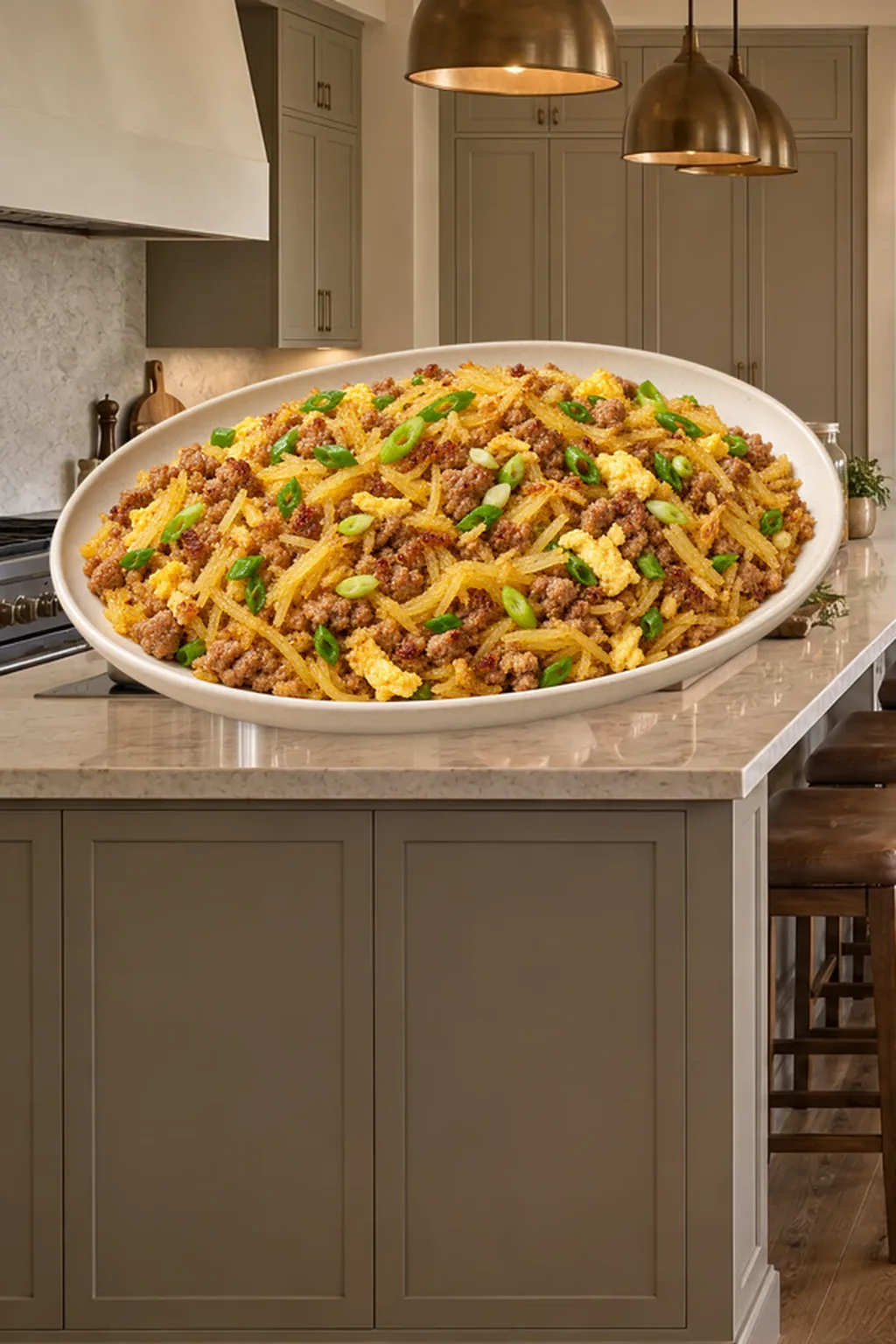
This spaghetti squash fried rice is savory, gingery, and deeply browned in patches, with crumbled pork, soft scrambled egg, and fresh green onion in every serving. The short squash strands take the place of rice while keeping the skillet full and satisfying.
The texture depends on one simple choice: after the baked squash goes into the pan, leave it alone long enough to make real contact with the hot skillet. Constant stirring keeps the strands pale and wet. A quiet five-minute cook, followed by a careful flip and another five minutes, gives you the golden edges that make the dish taste finished.
On homeschool-and-second-shift days, I need dinners that make good use of something already cooked. Baking the spaghetti squash ahead turns this into a practical ten-minute skillet meal. The eggs can be scrambled ahead too, so the active work is mostly browning, folding, and getting everyone to the table while the food is hot.
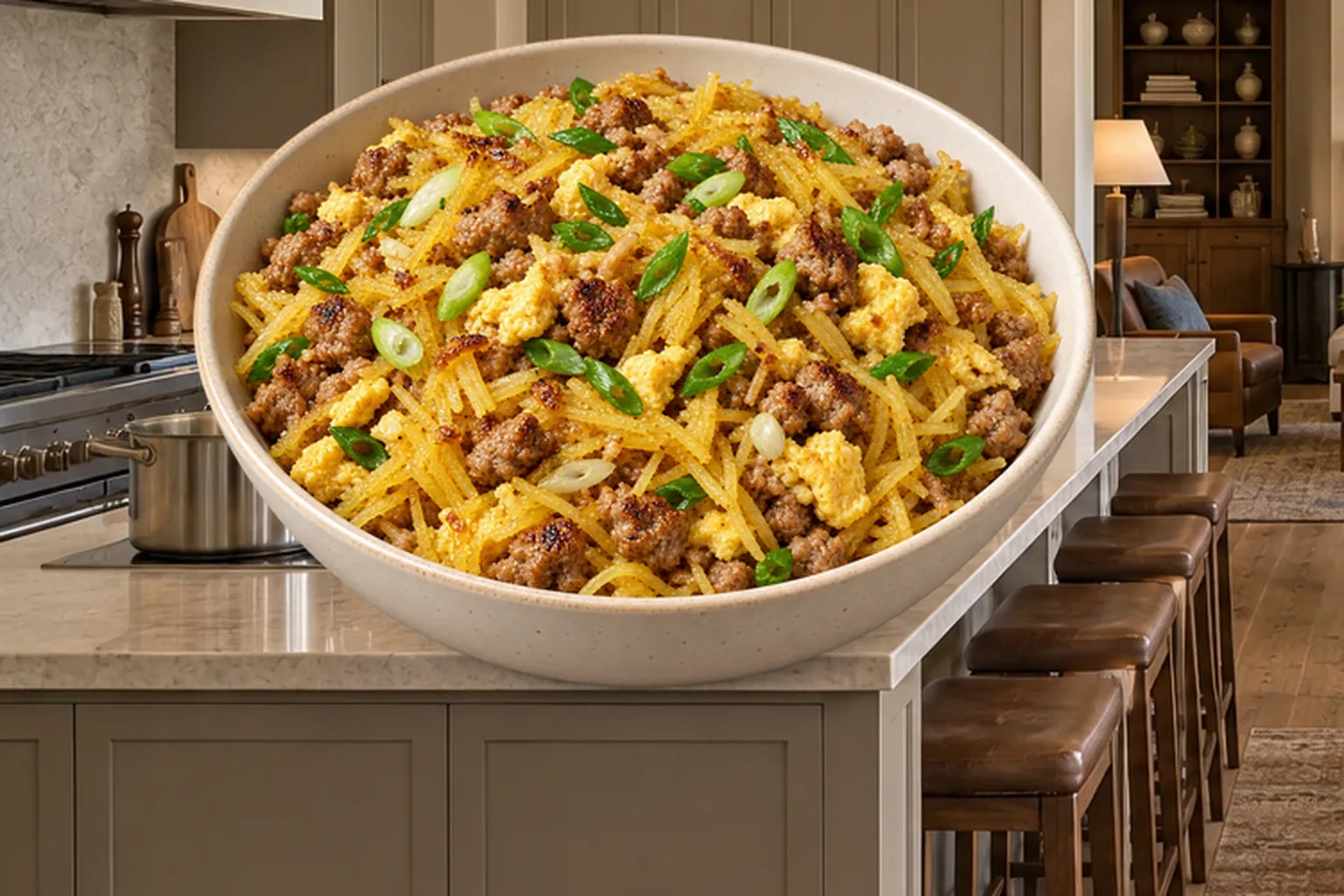
Why Spaghetti Squash Works Here
Spaghetti squash naturally separates into strands, but long strands behave more like noodles than rice. Cutting the baked squash crosswise changes the way it moves in the pan and on the fork. The pieces stay recognizable as squash, yet they mix evenly with the pork, egg, aromatics, and coconut aminos.
The squash should be baked until the flesh pulls apart easily but still feels al dente. If it is cooked until completely soft and watery, the skillet will steam before it browns. Look for strands that separate cleanly and edges that are only lightly tinged brown. Let the squash cool enough to handle before scooping and chopping it.
This is also why the recipe uses a broad skillet. A crowded saucepan holds moisture around the food. A large cooking surface lets more squash touch the hot fat, while the cooked pork is distributed underneath instead of piled in the center.
Full GAPS Ingredients
This recipe is written for Full GAPS. It uses baked winter squash, eggs, fresh pork or fresh additive-free sausage, green onions, fresh ginger, garlic, sea salt, a GAPS cooking fat, and pure additive-free coconut aminos.
For the fat, use homemade ghee, coconut oil, lard, or another rendered animal fat. The full 1/4 cup is intentional. Half starts the pork and aromatics, and the rest goes into the center of the skillet before the squash is flipped. That second addition supports browning instead of leaving the later side dry.
Fresh ground pork is the plainest route. Fresh sausage also works when its complete ingredient list fits Full GAPS and contains no starch, sugar, grain, filler, or unapproved preservative. If you would rather make the seasoning yourself, the homemade sage and thyme beef sausage gives you a separate additive-free sausage formula; its herbs will give this skillet a more savory, breakfast-style flavor.
Use coconut aminos only after checking the complete current label. The bottle needs a simple, permitted ingredient list. Soy sauce and tamari are not substitutes for this Full GAPS formula. The measured two tablespoons season the whole skillet; put additional verified coconut aminos on the table so one person can add more without making every serving too salty.
Bake the Squash Until Al Dente
Bake one medium spaghetti squash at 375°F until a fork can loosen the flesh into strands and the cut edges have begun to color, about 40 minutes. The exact time depends on the size and water content of the squash, so use the physical cue before the clock. The flesh should release without crunching, but it should not collapse into a wet mash.
Cool the squash until you can hold it safely. Scoop the strands onto a large cutting board, then cut across them several times. Aim for short, uneven pieces rather than a puree. The small pieces are what allow the pork, egg, ginger, and green onion to distribute through each bite.
If the squash was baked earlier, refrigerate it after cooling and bring it straight from the refrigerator to the cutting board. Cold strands are often easier to shorten cleanly. Do not add extra liquid when reheating; the skillet fat and coconut aminos provide the moisture the finished dish needs.
Brown the Pork and Aromatics
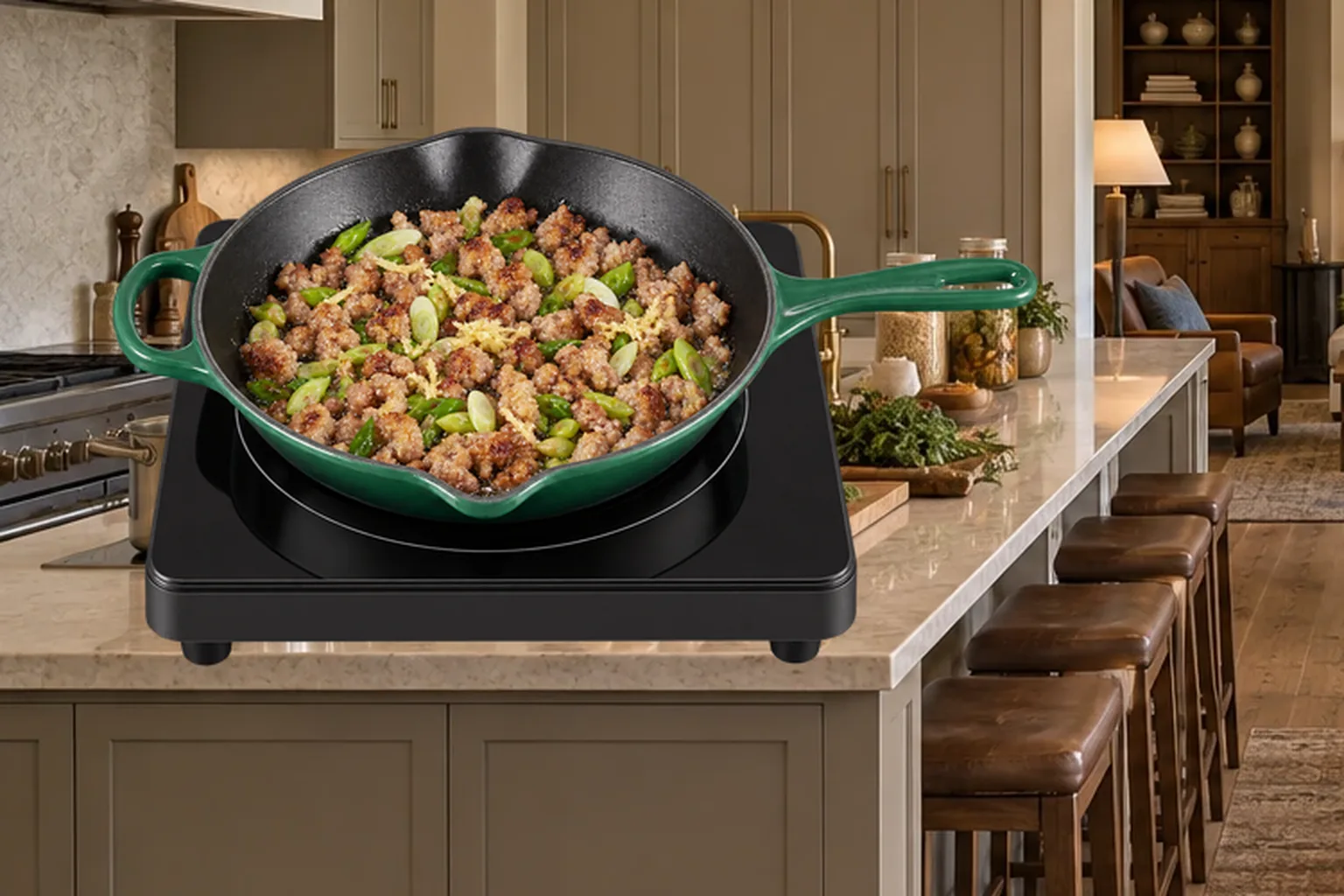
Heat two tablespoons of the cooking fat in a large Le Creuset Artichaut skillet. Add the cooked pork, sliced green onions, and freshly grated ginger. Cook over medium-high heat for two minutes.
At this point, the pork should look hot and lightly glossy, the green onions should begin to soften, and the ginger should smell warm and sharp. The mixture does not need another long cook because the pork is already cooked. This short stage wakes up the aromatics and spreads their flavor through the fat before the squash covers the pan.
Give the Squash Time to Brown
Spread the chopped spaghetti squash evenly over the pork. Sprinkle the sea salt and garlic across the surface, reduce the heat to medium, and leave the pan undisturbed for five minutes. Resist the urge to stir. The bottom needs uninterrupted contact with the skillet.
Watch the edges of the squash instead of lifting it repeatedly. Moisture will steam away, the strands will settle, and a few pieces around the perimeter will begin to look drier and golden. The scent will shift from plainly cooked squash to toasted squash, garlic, and pork.
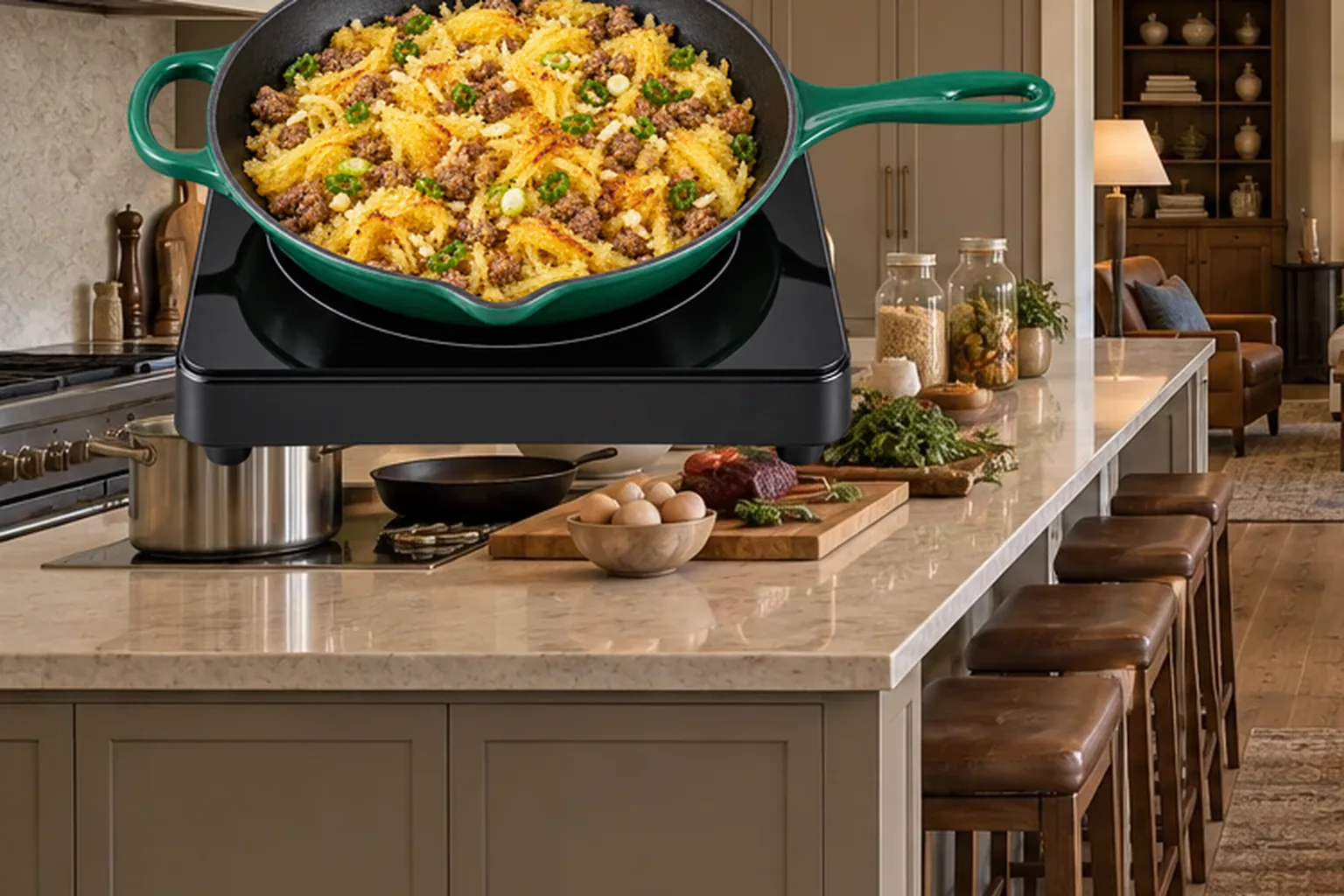
Add the remaining fat near the center of the skillet, where the food is usually driest. Use an offset stainless-steel spatula to lift and turn the squash in sections. Do not churn the whole pan into a soft mixture. Let the newly exposed side fry for another five minutes, until there are golden patches throughout and the garlic smells mellow rather than raw.
Fold in the Egg and Season Off the Heat
Fold in the prepared scrambled eggs and turn off the heat. The eggs are already cooked, so they only need to warm through. Keeping this step brief preserves visible tender pieces instead of breaking the egg down into crumbs.
Add two tablespoons of pure additive-free coconut aminos after the heat is off and stir lightly. Taste one bite that includes pork, squash, and egg before adding anything else. The sea salt seasons the squash during browning, while the coconut aminos give the finished pan its deeper savory note.
Spaghetti Squash Fried Rice for Full GAPS
Ingredients
Equipment
Method
- Bake the spaghetti squash at 375 F until the strands shred easily but remain al dente and the edges are tinged brown, about 40 minutes. Cool enough to handle.
- Scoop each squash half onto a cutting board and cut the strands crosswise into short rice-like pieces.
- Heat 2 tablespoons of the cooking fat in the large skillet. Add the pork, green onions, and ginger and cook over medium-high heat for 2 minutes.
- Spread the chopped spaghetti squash over the pork. Sprinkle the sea salt and garlic evenly over it. Reduce heat to medium and cook without stirring for 5 minutes.

- Add the remaining cooking fat near the center. Flip sections with an offset spatula and fry for another 5 minutes, until golden in patches and fragrant.
- Fold in the prepared scrambled eggs. Turn off the heat.
- Add the 2 tablespoons coconut aminos and stir lightly. Serve with extra verified coconut aminos at the table if desired.
Notes
Tried this recipe?
Let us know how it was!Serving the Fried Rice
Serve this straight from the skillet while the browned patches are still distinct. It makes four dinner servings on its own. For a table with different preferences, set out verified coconut aminos separately rather than adding more to the whole pan.
If you want a different vegetable base with chicken, use the separate chicken and cauliflower fried rice. That recipe has its own formula and texture: cauliflower becomes small tender granules, while this version keeps short strands of spaghetti squash. The two dishes are linked because they solve the same dinner problem in different ways, not because their ingredients are interchangeable.
For another coconut-aminos dinner with a beef base, the Full GAPS Asian beef bowl gives you a separate measured option. It is useful when you want the same savory seasoning profile without baking a squash first.
Storage and Reheating
Cool leftovers promptly and refrigerate them in a covered glass container. Keep them for up to three days. The squash will soften as it sits, but the flavor stays savory and gingery.
For the best reheated texture, warm a small amount of ghee or rendered fat in a skillet and spread the leftovers into a thin layer. Let the bottom heat before turning. A microwave warms the dish, but it will not restore the browned edges.
To prepare ahead, bake and chop the squash, cook the pork, and scramble the eggs separately. Refrigerate each part, then complete the skillet steps when you are ready to eat. This keeps the squash from absorbing coconut aminos overnight and gives you a better chance of browning it at dinner.
Recommended Equipment
- Large Le Creuset Artichaut skillet: The broad surface gives the squash room to brown, and the offset spatula can lift sections without crushing them.
- Large cutting board: Spread out the baked strands before cutting them crosswise into short pieces.
- Large spoon: Use it to spread the squash evenly over the pork and to fold in the scrambled eggs.
- Offset stainless-steel spatula: The thin edge reaches under the browned layer and turns it in sections.
Frequently Asked Questions
Why Is My Spaghetti Squash Fried Rice Watery?
The squash may have been baked too soft, added while very wet, crowded into a small pan, or stirred before moisture could escape. Bake only until the strands are al dente, use a large skillet, spread the squash out, and leave it undisturbed for the full first five-minute browning stage.
Do I Have to Cut the Squash Strands?
Yes. Long strands make a noodle-style skillet and pull away from the pork and egg. Cutting across the strands creates short pieces that distribute through the dish and make the fried-rice presentation work.
Can I Use Raw Pork?
This recipe starts with cooked pork or cooked fresh additive-free sausage. If you are starting with raw meat, cook it fully first, then measure 1 1/2 cups for this formula. Drain only excess liquid that would prevent browning; keep the cooking fat that belongs in the recipe.
Can I Use Soy Sauce or Tamari?
No. Use pure additive-free coconut aminos whose complete current label fits Full GAPS. Soy sauce and tamari are not routed into this recipe.
Is This an Intro Diet Recipe?
This complete fried-rice-style skillet is for Full GAPS. Earlier in Intro, prepare the foods and cooking methods that fit your current stage as their own simple dishes rather than trying to turn this whole skillet into an Intro recipe. The browned method and coconut-aminos finish belong with the Full GAPS version presented here.
Can I Double the Recipe?
The ingredient amounts scale in the recipe card, but a double batch needs enough hot surface area to brown. Use two large skillets or cook the squash in batches. Piling twelve cups of squash into one pan will trap steam and change the result.
Put This Dinner Into Your Weekly Rhythm
The useful part of this meal is the sequence: bake one squash when the oven is already on, cook a simple protein, and save the short skillet finish for the night you need it. The Weekly Kitchen Rhythm Planner in the WFLI shop is the most relevant companion when you want to place those small prep jobs where they will actually save time later in the week.

Leave a comment