

Fresh chuck, sage, thyme, salt, and cayenne make a sausage you can season and grind at home. The food processor handles one pound at a time, so the herbs spread through the beef without turning it into a paste. Shape four logs for slices, or cook the seasoned beef loose in a skillet.
I homeschool and work second shift, so the four separate one-pound raw logs make the cooking schedule easier to plan. Freeze the logs separately using the stated storage route; thaw and cook only the portion needed for a meal.
Prep time: 25 minutes for the logs, including the first 20-minute chill
Yield: Four 1-pound raw sausage logs
Ingredients
- 4 pounds fresh boneless chuck, trimmed and cut into 1-inch cubes
- 2 tablespoons chopped fresh sage
- 2 tablespoons chopped fresh thyme
- 1 1/2 tablespoons coarse natural sea salt
- 1/4 teaspoon pure cayenne pepper
- A small amount of ghee for the skillet, if needed
Fresh chuck is the specified beef cut. Its own fat contributes to skillet texture, while the measured sage and thyme season the four pounds evenly. The small measure of cayenne adds warmth; the ghee remains optional if the skillet needs a little more fat.
Grind and Shape
- Spread the 1-inch beef cubes on a baking sheet and freeze for 20 minutes. The cubes should feel firm and very cold, but still separate easily.
- Mix the sage, thyme, salt, and cayenne in a small bowl.
- Add 1 pound of chilled beef and a heaping tablespoon of seasoning mixture to the food processor. Pulse just until the beef is ground and flecked evenly with herbs. Stop before it becomes a smooth paste.
- Transfer this batch to a large sheet of parchment paper. Roll it into a log and twist the paper ends closed.
- Repeat with the remaining three pounds of beef and the remaining seasoning, working one pound at a time to make four logs.
Slice and Cook
- To make neat rounds, freeze one log for another 30 minutes so it firms enough to hold its shape under a knife. Cut it into 1/4-inch slices.
- If the skillet needs fat, add a small amount of ghee. Heat over medium-high heat, then lay the slices in a single layer.
- Cook until both sides are browned. Check a round with a food thermometer inserted into its center from the side; ground beef sausage is done at 160°F (71°C). Continue cooking if the center has not reached that temperature.
To make crumbled sausage, put the freshly ground, seasoned beef in the skillet instead of shaping or slicing it. Break it apart with a wooden spoon as it browns, and cook until the crumbles reach 160°F (71°C). Use the crumbles in a GAPS-suitable sauce or soup, or beside eggs.
What to Look for
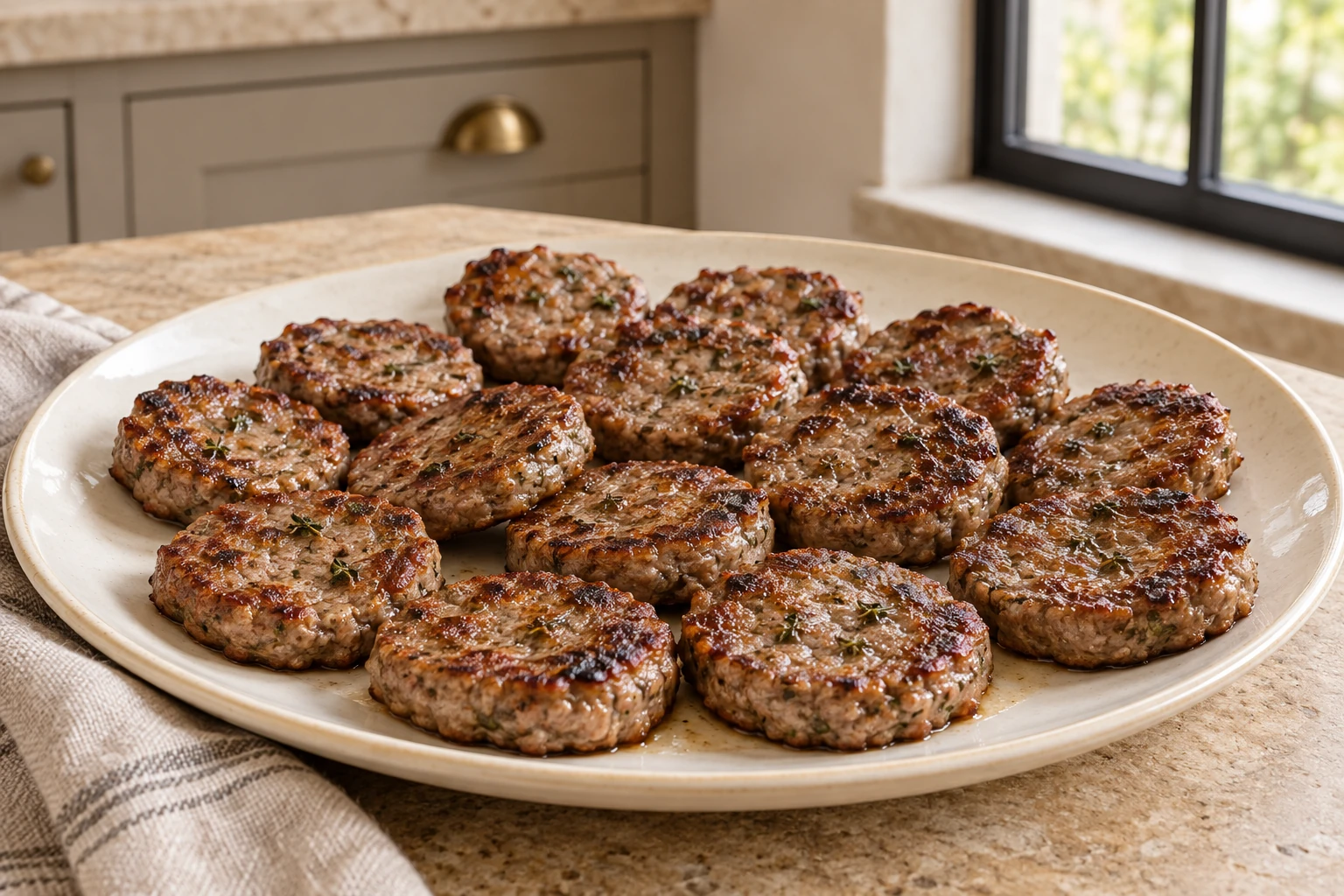
The first 20-minute chill firms the cubes for an even grind. Look for distinct small pieces of beef with green flecks of sage and thyme. If the mixture starts to look smooth or sticky, stop pulsing.
The second 30-minute chill is only for a finished log you want to slice. The rounds should hold together as you cut them. Browning gives the sausage its skillet flavor; the thermometer confirms the center has cooked through.
Storage and Serving
The raw parchment-wrapped logs can be frozen for up to 2 months. Keep the four one-pound logs separate so you can take out only the amount you need.
FAQ
Do I Have to Shape the Beef into Logs?
No. Cook the freshly ground, seasoned beef loose in the skillet instead if you would rather have crumbled sausage than sliced rounds.
Can I Use a Different Cut Instead of Chuck?
This recipe is measured for fresh boneless chuck. A different cut will bring a different fat content, which changes how the sausage cooks and holds together.
Why Does the Beef Go in the Freezer Before Grinding?
The 20-minute chill firms the cubes so the food processor grinds them evenly instead of turning them into a paste.
How Do I Know the Sausage Is Fully Cooked?
Check a round or a crumble with a food thermometer. Ground beef sausage is done once it reaches 160°F (71°C).
Can I Substitute Dried Herbs for Fresh Sage and Thyme?
Use the fresh chopped sage and thyme measured here. Dried herbs are more concentrated and would change the balance of this seasoning.
Ingredients
Method
- Spread the 1-inch beef cubes on a baking sheet and freeze for 20 minutes. The cubes should feel firm and very cold, but still separate easily.
- Mix the sage, thyme, salt, and cayenne in a small bowl.
- Add 1 pound of chilled beef and a heaping tablespoon of seasoning mixture to the food processor. Pulse just until the beef is ground and flecked evenly with herbs. Stop before it becomes a smooth paste.
- Transfer this batch to a large sheet of parchment paper. Roll it into a log and twist the paper ends closed.
- Repeat with the remaining three pounds of beef and the remaining seasoning, working one pound at a time to make four logs.
- To make neat rounds, freeze one log for another 30 minutes so it firms enough to hold its shape under a knife. Cut it into 1/4-inch slices.
- If the skillet needs fat, add a small amount of ghee. Heat over medium-high heat, then lay the slices in a single layer.
- Cook until both sides are browned. Check a round with a food thermometer inserted into its center from the side; ground beef sausage is done at 160°F (71°C). Continue cooking if the center has not reached that temperature.
Notes
Tried this recipe?
Let us know how it was!Related Recipes
Serve slices or crumbles alongside eggs for breakfast, or browse all recipes for more Full GAPS proteins to pair with it.
Recommended Equipment
- A food processor
- A baking sheet for the initial chill
- Parchment paper for shaping the logs
- A skillet
- A food thermometer
Next Steps
The Breakfast Cookbook is coming soon, with more measured Full GAPS breakfasts built around proteins like this one. While it is being prepared, browse all recipes for today’s meal.

Leave a comment