

This Full GAPS yogurt-culture sour cream uses two ingredients: one pint of additive-free cream and one-quarter cup of homemade 24-hour GAPS yogurt. Stir them together, hold the covered jar at 108 to 112°F for about 24 hours, then chill it until the sour cream reaches its final thick texture.
For a larger heated-cream batch with a 70-gram starter ratio, use the one-liter Luvele 24-hour sour cream.
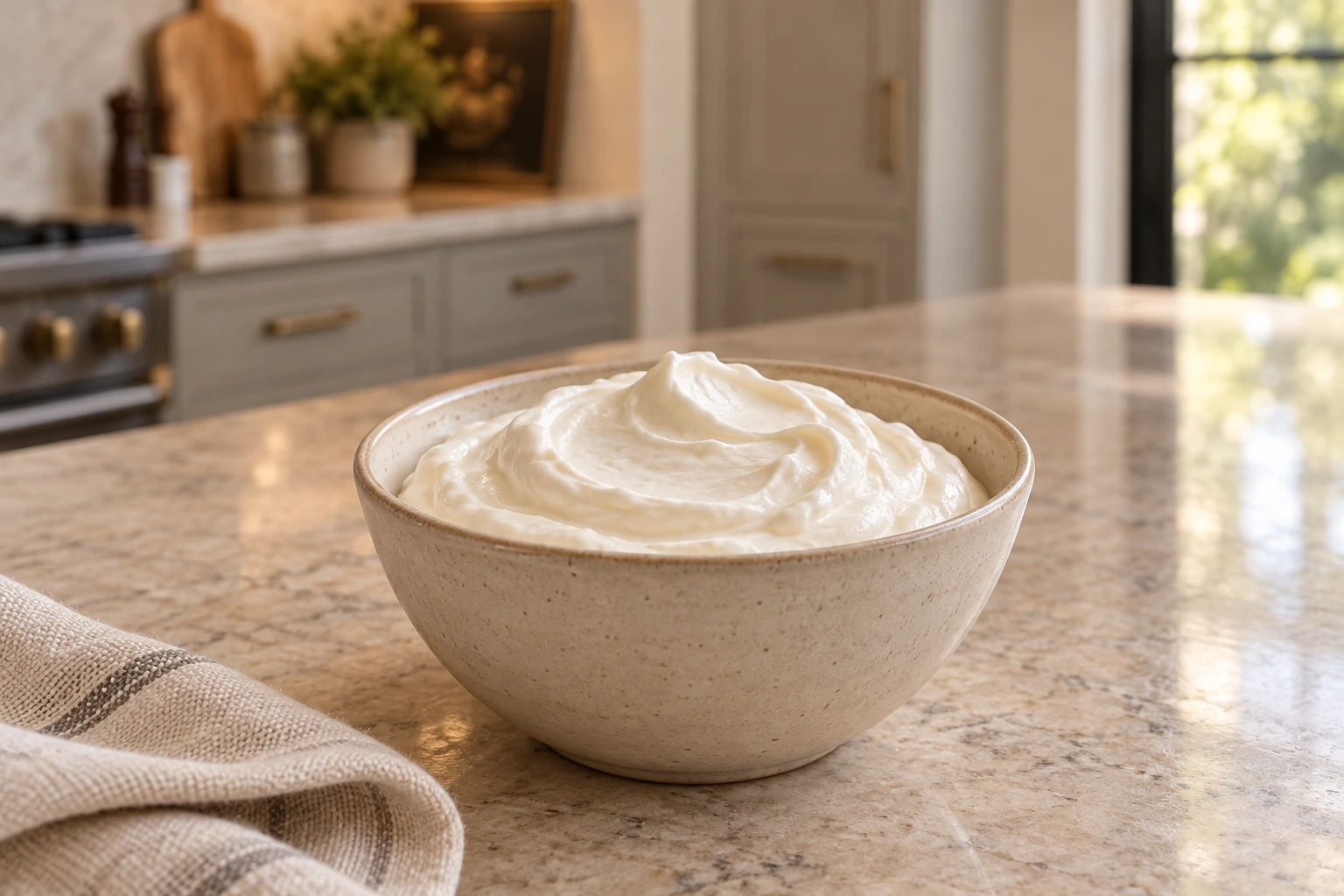
The warm culture should smell clean and distinctly tangy, without the sweet-cream smell it had at the start. It will look set after 24 hours, but it becomes thicker in the refrigerator. The finished sour cream should hold a soft peak and leave a clear scoop mark instead of running back into a flat surface.
GAPS placement: Full GAPS dairy introduction, yogurt-culture step
Active time: 5 minutes
Culture time: About 24 hours
Total before chilling: About 24 hours 5 minutes
Yield: 1 jar
I use my Luvele Pure Plus for long cultured-dairy batches because the glass container and steady temperature remove one more thing to monitor. That matters in a house where I am homeschooling before work and trying to keep several kitchen projects moving without losing track of which jar started when. I still write the start time down. Twenty-four hours is long enough that I will not remember it accurately the next day.
This is the sour cream I want ready before a recipe calls for it. The actual mixing takes only a few minutes, but it cannot become a same-evening substitute when dinner is already on the stove. Start it the day before you plan to use it, then leave enough refrigerator time for the texture to finish setting.
Why This Method Uses Yogurt Culture
The starter determines the method. This recipe uses finished homemade 24-hour yogurt with live cultures, so the cream needs the same controlled warmth used for yogurt. The accepted range is 108 to 112°F for this measured version. Room-temperature culturing belongs to a separate kefir-culture method.
One-quarter cup starter is enough for one pint cream. Stir it through the whole jar so there are no dense pockets of yogurt at the bottom and plain cream at the top. The mixture should look uniform before the breathable cover goes on.
The warm stage builds the tang and begins thickening. Refrigeration finishes the texture. If you judge the batch while it is still warm, it may look softer than the sour cream you expected. Move it to the refrigerator when the 24-hour culture is visibly set, then check the final body only after it is cold.
Where Yogurt-Culture Sour Cream Fits in GAPS
This recipe belongs to the yogurt-culture step of the GAPS Dairy Introduction Structure. The sequence begins with homemade ghee, then raw organic cultured butter. Homemade yogurt and sour cream made with yogurt culture come next. Kefir and kefir-cultured sour cream are a later, separate step.
That placement explains why homemade 24-hour yogurt is the starter here. It is already the culture used at this point in the sequence. The jar is a properly cultured Full GAPS dairy food after the earlier dairy steps have been introduced and this form belongs in your current foods.
The method works with raw cream or additive-free low-temperature-pasteurized cream. Use fresh cream without gums, starches, flavors, or stabilizers. Ultra-pasteurized cream is not substituted into this exact formula.
Ingredients
- 1 pint raw or low-temperature-pasteurized additive-free cream
- ¼ cup homemade 24-hour GAPS yogurt with live cultures
The cream should smell fresh and pour smoothly. The yogurt should already be fully cultured and chilled. Measure a level quarter cup rather than adding a spoonful by eye. This recipe has no lemon juice, vinegar, buttermilk, gelatin, starch, milk powder, or commercial yogurt.
Have the jar clean and dry before the dairy goes in. Water left in the jar changes the starting mixture, and a jar that barely holds one pint leaves no comfortable room for stirring. Use a wide-mouth jar with enough space above the mixture for the spoon to move without spilling.
How to Make Yogurt-Culture Sour Cream
- Measure the two ingredients. Measure 1 pint cream and ¼ cup homemade 24-hour GAPS yogurt. Put the clean, dry glass jar beside them so the whole setup is ready before you begin.
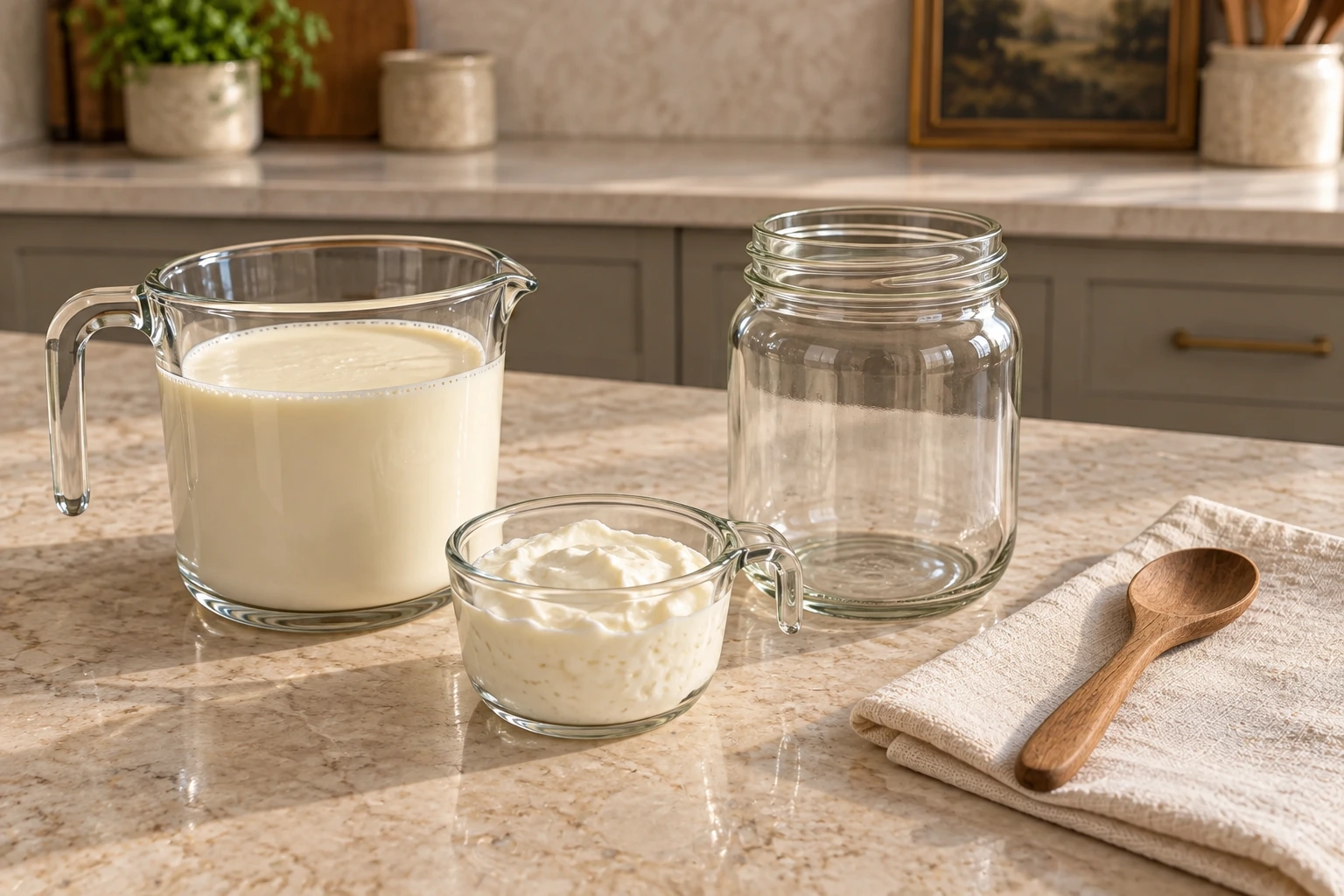
- Combine the cream and yogurt. Pour the cream into the jar. Add the measured yogurt.
- Stir evenly. Use a clean wooden spoon to stir through the bottom, center, and sides of the jar. Stop when the yogurt is fully distributed and the mixture looks even.
- Cover the jar. Place a breathable clean cloth, coffee filter, or paper towel over the opening and secure it with a jar ring or band.
- Hold the temperature. Put the covered jar in a controlled warm environment at 108 to 112°F. Keep the jar steady rather than moving it between warm and cool spots.
- Culture for about 24 hours. At the end of the warm period, remove the cover and look at the surface. The cream should be visibly set and thicker than it was at the start. It should smell tangy and cultured.
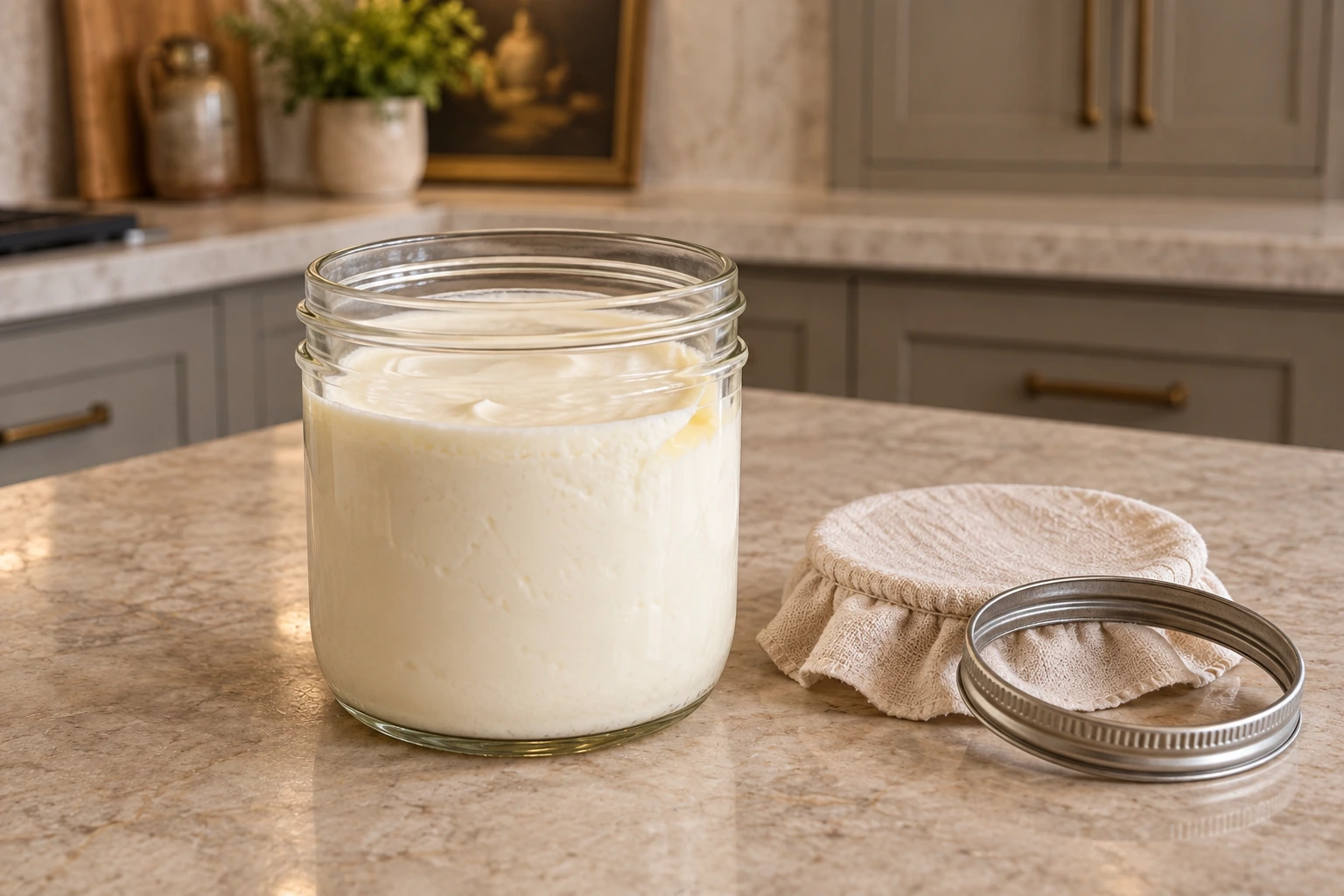
- Chill to finish. Cover the jar and refrigerate it. The sour cream continues to thicken as it gets cold. Evaluate the final texture after chilling, then stir gently only if needed.
The warm jar may show a very thin pale-yellow whey line at one edge. That small amount can be stirred back in after chilling. A large layer of separation means the temperature or starter distribution was uneven, so check those two parts of the process before changing the ingredient ratio.
What the Finished Sour Cream Should Be Like
The chilled sour cream should be thick enough for a spoon to leave a clean crater. It will not have the stiff, stabilized body of a commercial tub made with gums or starch. It should still sit in a mound on cooked vegetables or meat rather than running like plain cream.
The aroma should be clearly sour and dairy-rich. A sweet fresh-cream smell with almost no tang suggests that the culture did not develop fully. The surface should be white to pale cream and uniform. Pink, green, black, or fuzzy growth is not part of a normal batch.
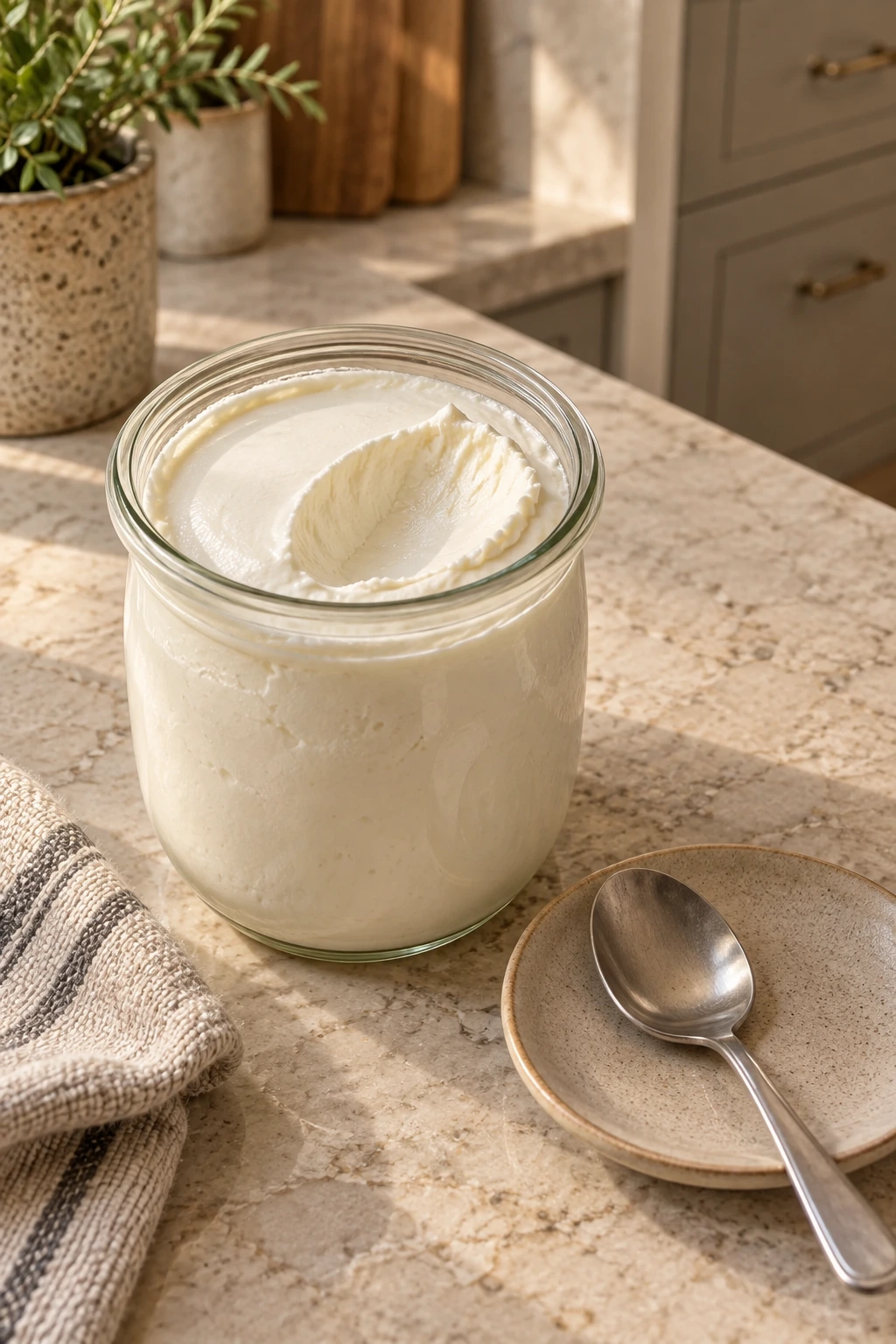
Do not add gelatin or another quarter cup of yogurt just to imitate a commercial texture. The source method expects the refrigerator to supply the final thickening. Keep the two-ingredient ratio intact and let the cold step do its work.
Using Homemade Sour Cream
Spoon it over meat, tender cooked vegetables, soups, and stews after cooking. It can also become the base for a cultured dressing or a measured sauce. Because it is already thick and tangy, it brings both fat and acidity without adding a bottled condiment.
For a hot meal, add the sour cream after the pan or pot comes off the heat. A spoonful should soften around the edges while the center stays creamy. If you stir it into very hot liquid over active heat, the texture can become thin or grainy. For a cold dressing, whisk only until smooth and add the other measured ingredients gradually. That keeps the base thick enough to cling to vegetables instead of settling at the bottom of the bowl.
Use it anywhere a Full GAPS recipe specifically calls for homemade cultured sour cream. Keep it separate from plain cream, yogurt, kefir, and crème fraîche in your recipe notes because each has its own culture and texture.
The Full GAPS Greek beef or lamb bowls use one full cup of this sour cream as their spearmint sauce base. This jar also works as a simple topping without changing the formula.
Storage
Keep the finished sour cream covered in the refrigerator. Label the jar with the date and the words yogurt culture so it is not confused with a kefir-grain batch. Use a clean spoon every time and return the jar to the refrigerator promptly.
This recipe does not assign a fixed multiweek storage promise. Smell and look at the batch when you open it. A clean sour aroma and an even pale surface are expected. Visible mold or an unpleasant spoiled smell means the jar is discarded.
Frequently Asked Questions
Can I Use Raw Cream?
Yes. Use 1 pint fresh raw cream with no additives. The same measured ¼ cup homemade yogurt starter, 108 to 112°F culture, approximately 24-hour timing, and final chill remain in place.
Can I Use Pasteurized Cream?
Use fresh low-temperature-pasteurized cream without stabilizers or other additives. Do not substitute ultra-pasteurized cream into this measured recipe.
Can I Use Store-Bought Yogurt as the Starter?
This Full GAPS version uses ¼ cup homemade 24-hour GAPS yogurt with live cultures. The linked yogurt recipe gives you the starter this jar needs.
Why Is the Sour Cream Still Soft After 24 Hours?
The warm culture is not the final texture. First confirm that the cream is visibly set and smells tangy, then refrigerate it. It thickens further as it chills. Judge the finished consistency only after that cold step.
Is This the Same as Kefir-Grain Sour Cream?
No. Yogurt-culture sour cream uses finished yogurt and controlled 108 to 112°F warmth. Kefir-grain sour cream uses a different starter and a room-temperature method. They remain separate recipes.
Keep the Ferment Schedule Visible
The coming-soon Drinks & Ferments Cookbook will bring the cultured recipes into one place. The Weekly Kitchen Rhythm Planner is useful when the bigger problem is remembering which jar needs to start today so it is ready for tomorrow’s meal. Both will be available through the WFLI shop.
Recommended Equipment
Use a clean wide-mouth glass jar, a glass measuring jug, a quarter-cup measure, a clean wooden spoon, and a breathable cover with a securing ring or band. I use the Luvele Pure Plus glass-container yogurt maker for controlled long cultures. Set any incubator used for this recipe within the measured 108 to 112°F range.
Full GAPS Yogurt-Culture Sour Cream
Ingredients
Equipment
Method
- Measure the two ingredients. Measure 1 pint cream and 1/4 cup homemade 24-hour GAPS yogurt. Put the clean, dry glass jar beside them so the setup is ready before you begin.
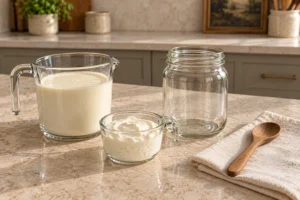
- Combine the cream and yogurt. Pour the cream into the jar. Add the measured yogurt.
- Stir evenly. Use a clean wooden spoon to stir through the bottom, center, and sides of the jar. Stop when the yogurt is fully distributed and the mixture looks even.
- Cover the jar. Place a breathable clean cloth, coffee filter, or paper towel over the opening and secure it with a jar ring or band.
- Hold the temperature. Put the covered jar in a controlled warm environment at 108 to 112°F. Keep the jar steady rather than moving it between warm and cool spots.
- Culture for about 24 hours. At the end of the warm period, remove the cover and look at the surface. The cream should be visibly set and thicker than it was at the start. It should smell tangy and cultured.
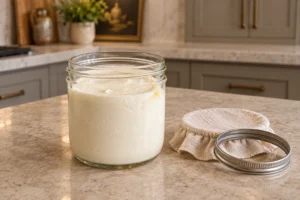
- Chill to finish. Cover the jar and refrigerate it. The sour cream continues to thicken as it gets cold. Evaluate the final texture after chilling, then stir gently only if needed.

Leave a comment