

This Luvele 24-hour sour cream uses one liter of pure cream and 70 grams of homemade 24-hour yogurt as the culture. The cream is heated to 194°F, cooled to culture temperature, and held at 99°F for a full 24 hours before chilling.
The finished sour cream should be thick, smooth, and mildly tangy. It is a larger batch than the existing one-pint version, which makes it useful when sour cream is part of several meals, dressings, or baking projects during the week.
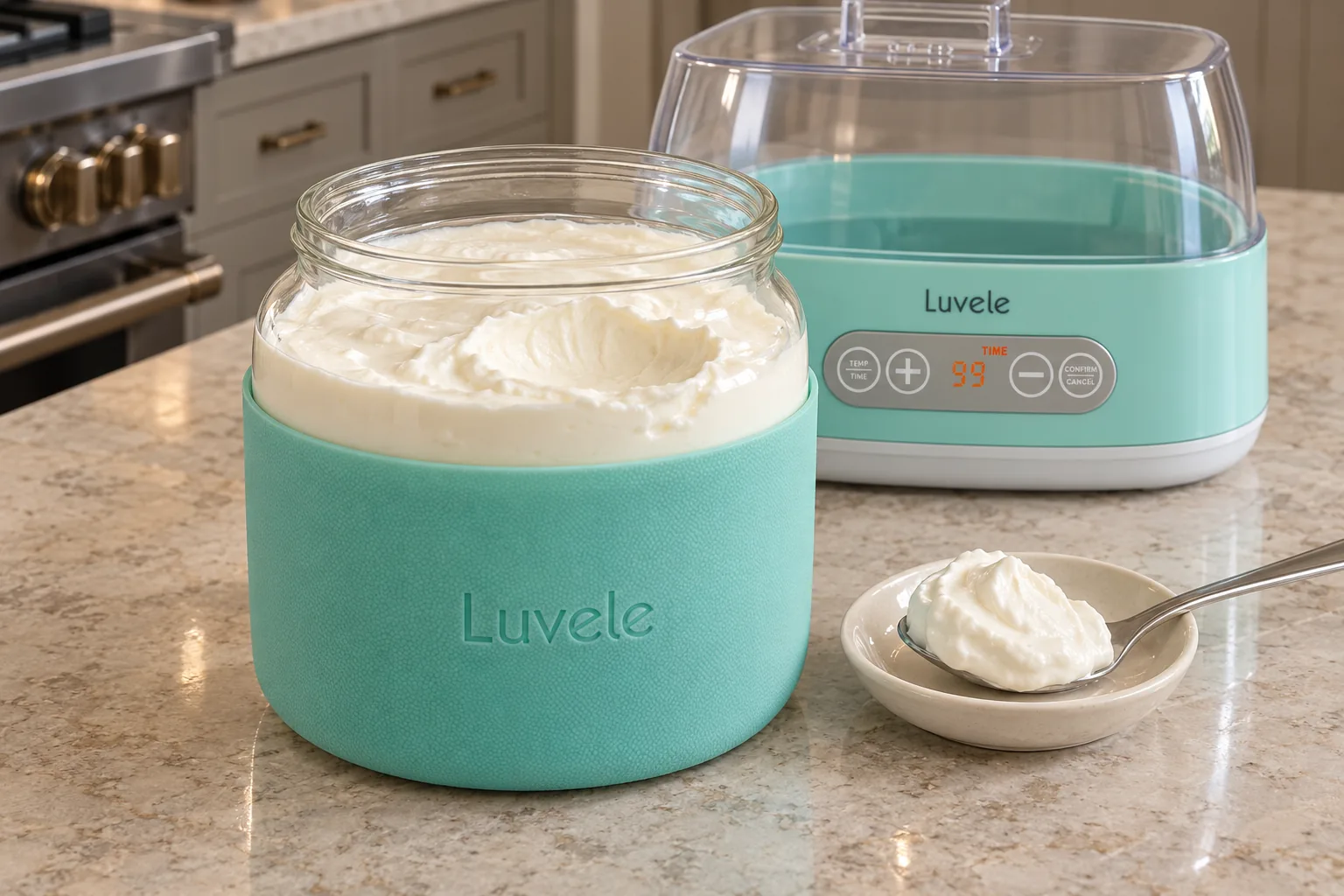
A One-Liter Sour Cream Batch
This is the measured one-liter variation: four cups of additive-free cream and 70 grams of live-culture yogurt starter. The ingredient ratio, 194°F heating point, 99°F culture temperature, and 24-hour fermentation belong together.
If you need a smaller batch, use the separate one-pint Full GAPS yogurt-culture sour cream. Keeping the recipes separate prevents the starter measurements and jar sizes from getting mixed together.
In our kitchen, the Luvele Pure Plus is the practical choice for a full-day ferment because the glass jar, water bath, temperature control, and timer keep the setup in one place.
Where Sour Cream Fits on GAPS
Homemade 24-hour sour cream belongs in the GAPS dairy sequence. People who tolerate dairy and pass the sensitivity test may introduce well-fermented homemade sour cream gradually, including during the Introduction Diet. People who react to dairy follow the separate Dairy Introduction Structure.
Sour cream is introduced alongside yogurt after whey has been tolerated. Start with the amount appropriate to your own dairy introduction instead of treating a four-cup batch as a serving size.
The full 24-hour culture is essential. Commercial sour cream and short-fermented homemade cream do not replace the completed GAPS ferment.
Choose Pure Cream and a Live Starter
Use one liter, or four cups, of pure cream with no gums, starches, carrageenan, preservatives, or flavoring. Organic cream is preferred; raw cream may be handled under its own raw-dairy method rather than automatically heated to 194°F.
This exact version uses 70 grams of plain natural yogurt with live cultures and no fillers. The easiest component is homemade 24-hour GAPS yogurt.
Weigh the starter on a kitchen scale. A volume estimate can vary with the thickness of the yogurt, while 70 grams preserves the measured ratio.
Sterilize and Set Up the Luvele Jar
Use the two-liter glass jar supplied with the Luvele Pure Plus LPPYM300WUSA. Clean and sterilize the jar, lid, wooden spoon, thermometer probe, and any bowl that will touch the cooled cream.
The one-liter batch leaves comfortable headspace in the two-liter jar. For a double batch, use two jars or two separate fermentation runs; two liters of cream plus starter should not be forced into one jar.
Set out the yogurt maker before the cream reaches culture temperature so the transfer can happen without delay.
Heat the Cream to 194°F Without Boiling
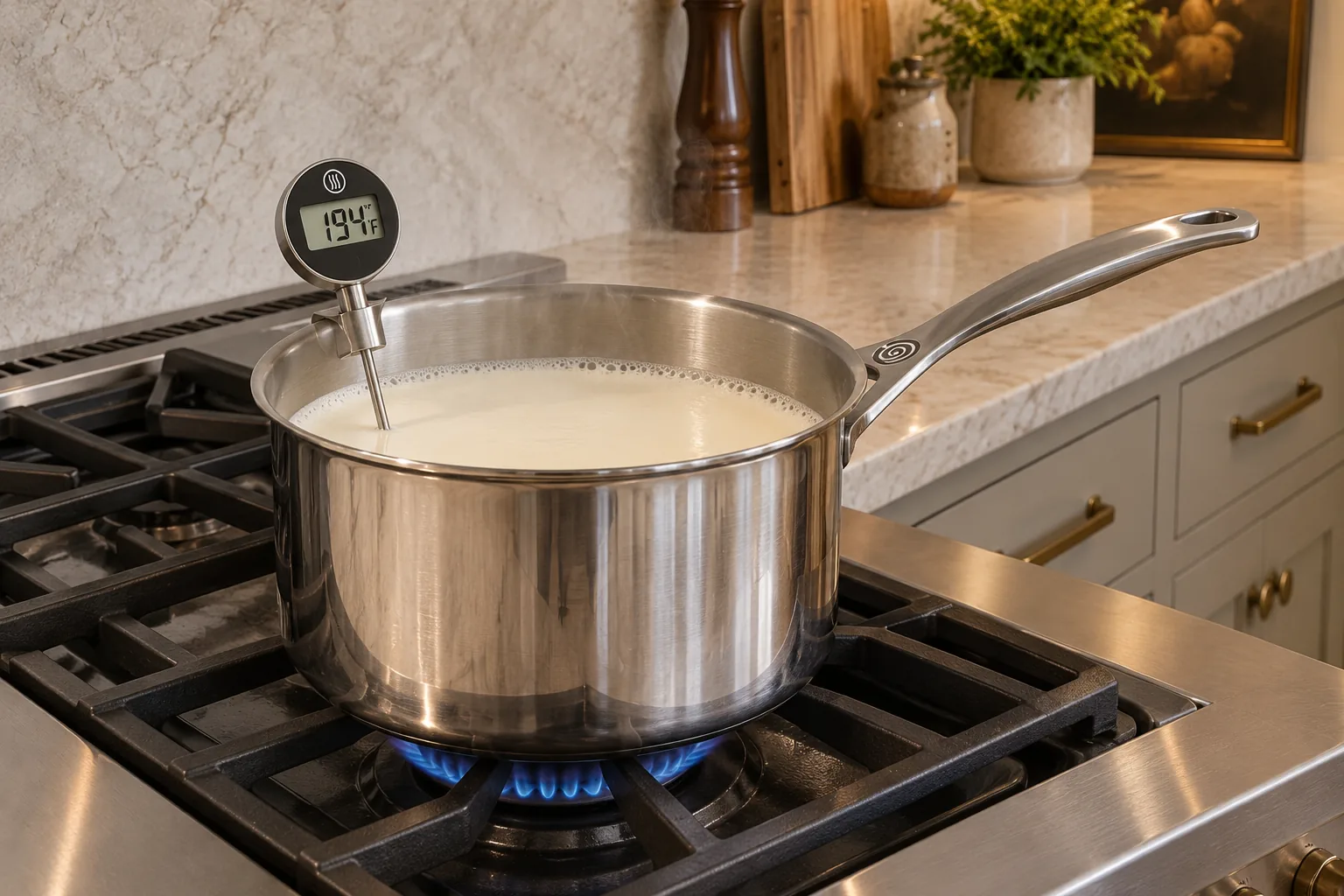
Pour the cream into the Le Creuset Signature stainless-steel saucepan. Warm it over medium-low heat, stirring often so the bottom does not catch.
Use an instant-read thermometer and stop at 194°F, or 90°C. The cream should steam and show small bubbles around the edge, but it should not reach a rolling boil.
If a skin begins to form, stir it back in gently. Keep scraping the bottom and corners with the wooden spoon so no scorched flavor develops.
Cool to 99°F Before Adding the Starter
Take the saucepan off the heat and set it on a sturdy wood trivet. Let the cream cool to 99°F, staying within 98.6°F to 104°F.
Stir occasionally so the temperature is even from top to bottom. Measure in the center of the cream without letting the thermometer touch the pan.
Do not add the live yogurt while the cream is still hot. Wait until the thermometer confirms the culture range.
Mix in the 70-Gram Yogurt Starter
Put the 70 grams of yogurt in a small sterilized bowl and stir in a spoonful of cooled cream. Add another spoonful and mix until smooth, then return the loosened starter to the saucepan.
Stir gently with the sterilized wooden spoon until no streaks or small yogurt clumps remain. Avoid whipping in foam.
Pour the inoculated cream into the sterilized Luvele glass jar and close it with the correct lid.
Culture for 24 Hours at 99°F
Place the jar in the Luvele Pure Plus water bath according to its fill line and fit the clear outer cover. Set the machine to 99°F, or 37°C, for 24 hours.
Leave the jar still for the full fermentation period. Do not open it to stir, taste, or check the texture halfway through.
At the 24-hour mark, the surface should look uniformly set and the cream should smell clearly cultured and mildly tangy. A small amount of clear whey at the edge is normal.

Chill Before Judging the Final Texture
Move the covered jar to the refrigerator as soon as the 24-hour culture is complete. The sour cream becomes thicker as it cools, so do not judge the final body while it is still warm.
When chilled, a spoon should leave a defined crater. The texture should be smooth and spoonable, with a clean cultured aroma rather than a sweet-cream smell.
If a little whey separates, pour it off for another use or stir it back in gently, depending on the thickness you want.
Storage and Freezing
Store the sour cream covered in glass in the refrigerator for up to two weeks. Use a clean spoon every time so the full jar stays fresh.
Freeze portions for up to three months when needed. Thawed sour cream may separate; stir it gently, then refrigerate it before using.
Label frozen portions with the batch date and amount so you can thaw only what a recipe needs.
Ways to Use Homemade Sour Cream
Spoon it over soup, chili, squash, meat, eggs, or a Full GAPS bowl. It also works in dips, dressings, egg bakes, and cultured-cream desserts.
The Full GAPS Greek bowls with beef or lamb use cultured cream in their mint sauce, and the one-liter batch gives you enough for that meal plus several other uses.
Add sour cream to hot food at the table rather than boiling it hard, especially when you want to preserve the live cultured character.
Recommended Equipment
Use the Le Creuset Signature stainless-steel saucepan, Luvele Pure Plus Yogurt Maker LPPYM300WUSA with its two-liter glass jar, instant-read thermometer, digital kitchen scale, sterilized wooden spoon, small sterilized glass bowl, sturdy wood trivet, and covered glass storage jars.
The exact Luvele model used here is available through Ebonie’s Luvele referral link.
Frequently Asked Questions
Can I Use Raw Cream?
Raw cream uses its own low-heat method. Do not automatically heat raw cream to 194°F; this measured version is the heated cream branch.
Can I Use Store-Bought Yogurt as the Starter?
The preferred starter is homemade 24-hour yogurt. If another yogurt is used, it must be plain, live-culture, full-fat, and free of milk solids, starches, gums, sweeteners, and other fillers.
Why Must the Cream Cool Before I Add the Starter?
Hot cream can damage the live culture. Add the yogurt only after the cream reaches 98.6°F to 104°F.
Can I Shorten the Fermentation?
No. Keep the full 24-hour culture for this GAPS sour cream.
Why Is My Sour Cream Thinner While Warm?
The cultured cream thickens during refrigeration. Chill it completely before deciding whether the texture is right.
Can I Double the Recipe?
Use two liters cream and 140 grams yogurt starter, divided between two Luvele jars or two separate batches. Do not overfill one two-liter jar.
Luvele 24-Hour Sour Cream Recipe
Luvele 24-Hour Sour Cream for Full GAPS (1-Liter Batch)
Ingredients
Equipment
Method
- Sterilize the 2-liter Luvele jar, lid, wooden spoon, thermometer probe, and small glass bowl.
- Heat the cream gently in the stainless saucepan over medium-low, stirring often, until it reaches 194°F (90°C). Steam and small edge bubbles are correct; do not boil.
- Set the saucepan on a wood trivet and cool the cream to 98.6°F to 104°F (37°C to 40°C), stirring occasionally for an even temperature.
- Loosen the 70 grams yogurt with two spoonfuls cooled cream in the sterilized bowl, then stir it gently into the remaining cream until no clumps remain.
- Pour the inoculated cream into the sterilized Luvele glass jar and close it with the correct lid.
- Set the jar in the Luvele Pure Plus water bath and culture at 99°F (37°C) for a full 24 hours without opening or stirring.
- Refrigerate the covered jar immediately after fermentation and chill completely before judging the final thickness.
- Store covered for up to 2 weeks, or freeze portions for up to 3 months and stir gently after thawing if separated.
Notes
- GAPS dairy: Introduce homemade sour cream within the dairy sequence that fits your sensitivity test and tolerance.
- Exact ratio: Use 1 liter cream and 70 grams yogurt starter.
- Fermentation: Hold at 99°F for the full 24 hours. Heating, cooling, and chilling are cue-based and not included in the 24-hour timer.
- Storage: Refrigerate up to 2 weeks or freeze up to 3 months.
- Scaling: At 2x, use 2 liters cream and 140 grams starter, divided between two jars or two separate batches.
Tried this recipe?
Let us know how it was!Keep More Ferments in Rotation
The planned Drinks & Ferments Cookbook will bring cultured dairy, vegetable ferments, and family-size drinks into one practical collection with timing and storage cues included. Find current guides and catalog updates in the WFLI shop.


Leave a comment