

This satin honey buttercream frosting turns softened butter, raw honey, gelatin, and water into about two cups of smooth Full GAPS frosting without powdered sugar. Choose the measured cinnamon branch or the linked homemade-vanilla branch, then use it at room temperature on a completely cooled cake.
The key is temperature: the honey-gelatin water must cool before it meets the butter. When both parts are ready, the frosting beats together into a pale, glossy mixture that spreads cleanly and holds piping ridges.
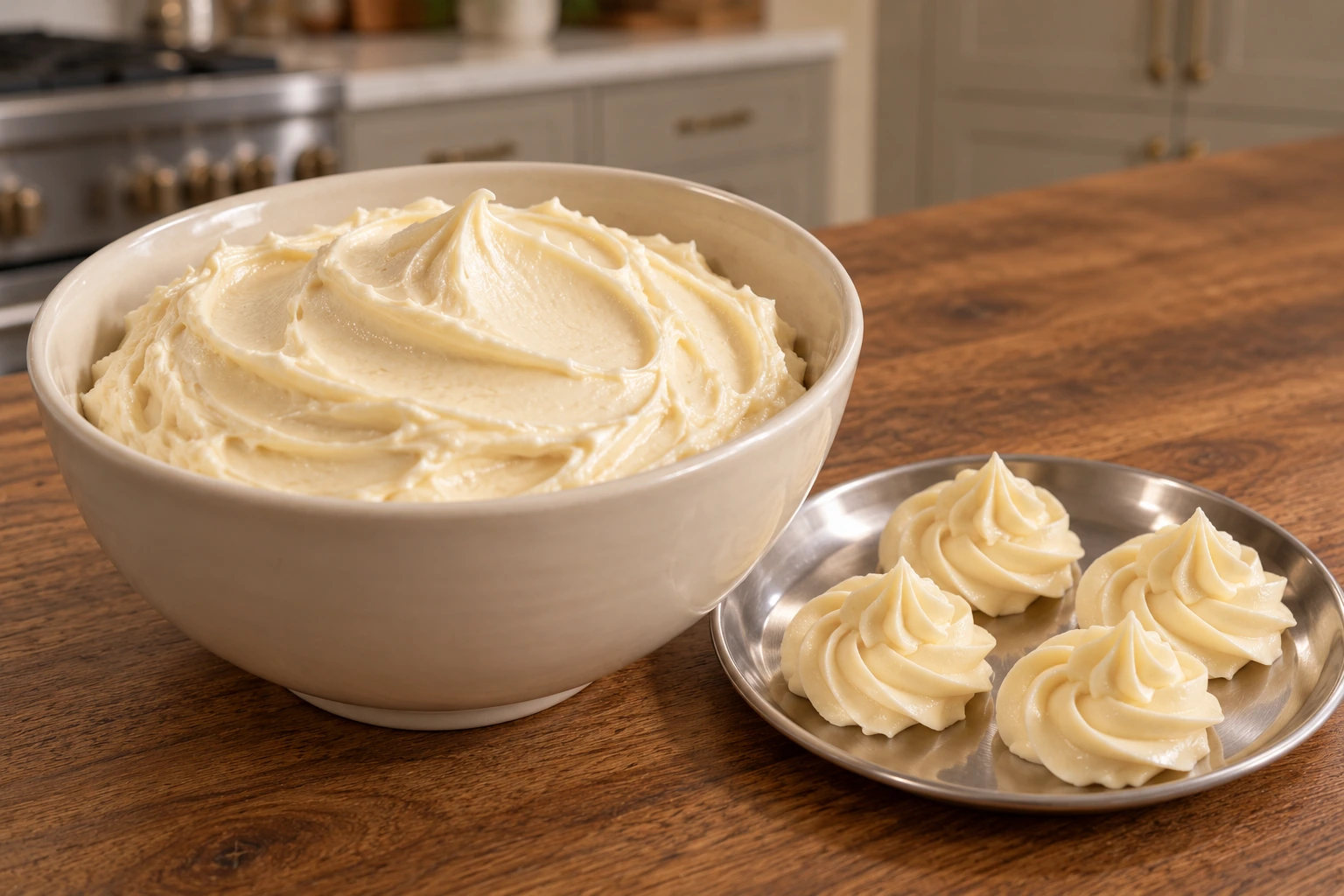
A Honey-Sweetened Buttercream for Full GAPS
This is the butter-based frosting in the pair. The separate pink frosting uses lard, less water, a different cinnamon measure, and beet powder, so it remains its own recipe and card.
For a family dessert, two cups is enough to spread over the top and middle of a modest cooled cake or to pipe a restrained finish. I prefer a measured batch like this because it keeps a sweet treat from turning into a kitchen project on an already busy homeschool-and-work day.
The texture is satin-smooth rather than fluffy with powdered sugar. It is softest at warm room temperature and firms when chilled.
Where This Frosting Fits on GAPS
This frosting fits Full GAPS after qualifying butter has been introduced and tolerated. Use raw honey, pure unflavored gelatin, mineral salt, and either pure cinnamon or qualifying homemade vanilla extract without added sugar.
It is an occasional sweet accompaniment between meals. It is not an Introduction Diet recipe and does not replace a meal.
Keep the measured raw honey. Powdered sugar, maple syrup, and commercial vanilla with added sweetener do not belong in this formula.
Soften the Butter Without Melting It
Set one cup butter at room temperature until a fingertip leaves a shallow dent without making the surface oily. The butter should bend under the mixer beaters but still hold its shape.
Melted butter cannot hold the cooled honey water in the same way. If the butter looks glossy or has a liquid edge, let it firm before continuing.
Bloom and Dissolve the Gelatin
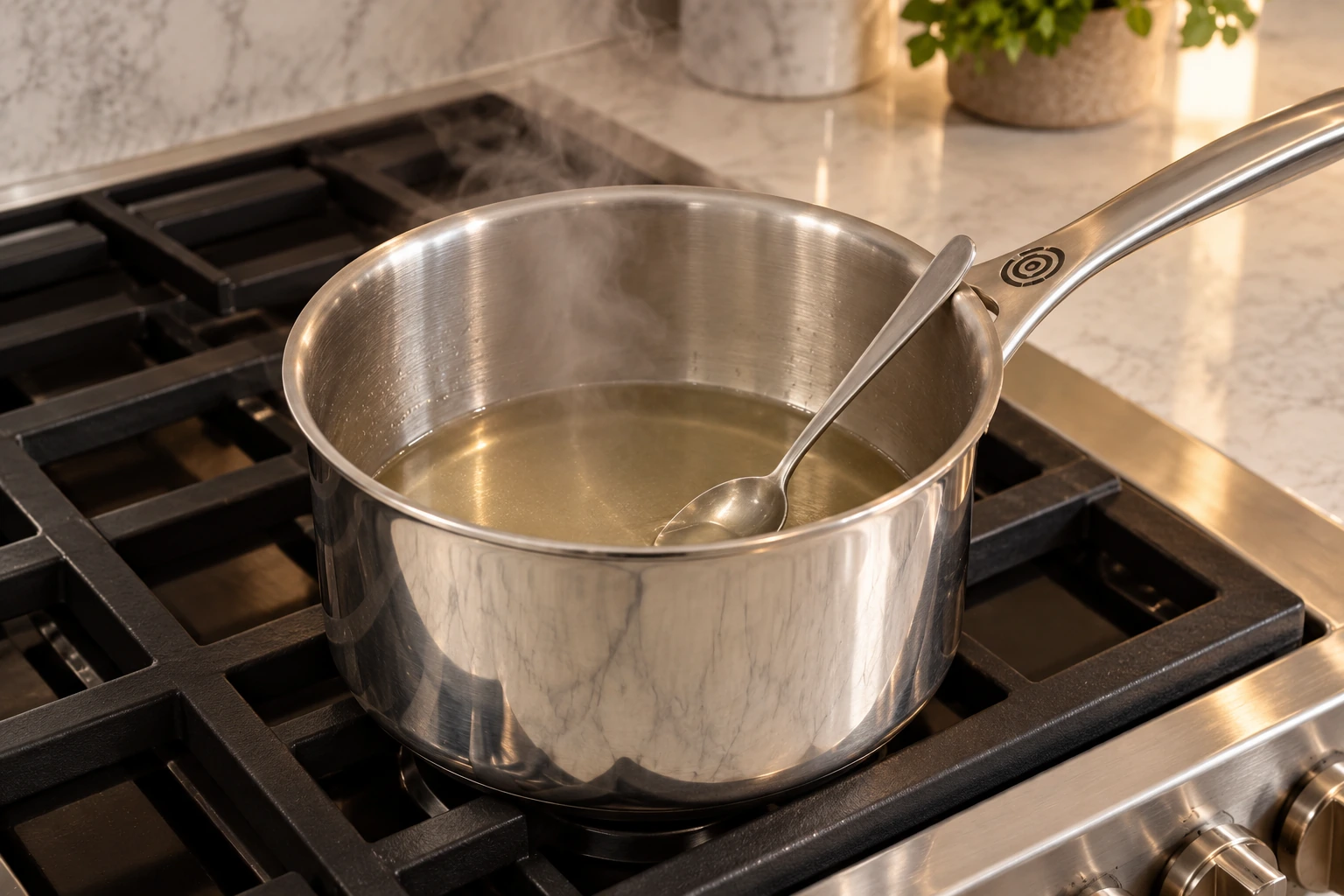
Pour one-half cup filtered water into a small stainless-steel saucepan. Sprinkle one teaspoon pure unflavored gelatin evenly over the surface and leave it for one minute.
Set the saucepan over medium heat and stir. Turn off the heat as soon as the water is steaming and the gelatin has dissolved. The liquid should remain smooth and clear to faintly golden, without granules or simmering bubbles.
Add the Honey Off the Heat
Stir one-quarter cup raw honey into the hot gelatin water after the burner is off. Add the tiny pinch of salt.
For the cinnamon branch, stir in one-eighth teaspoon ground cinnamon now. For the vanilla branch, leave the cinnamon out and wait to beat in one teaspoon homemade vanilla at the end.
Cool the honey-gelatin mixture all the way to room temperature. It must not feel warm against the side of its container before it meets the butter.
Beat the Butter Until Creamy
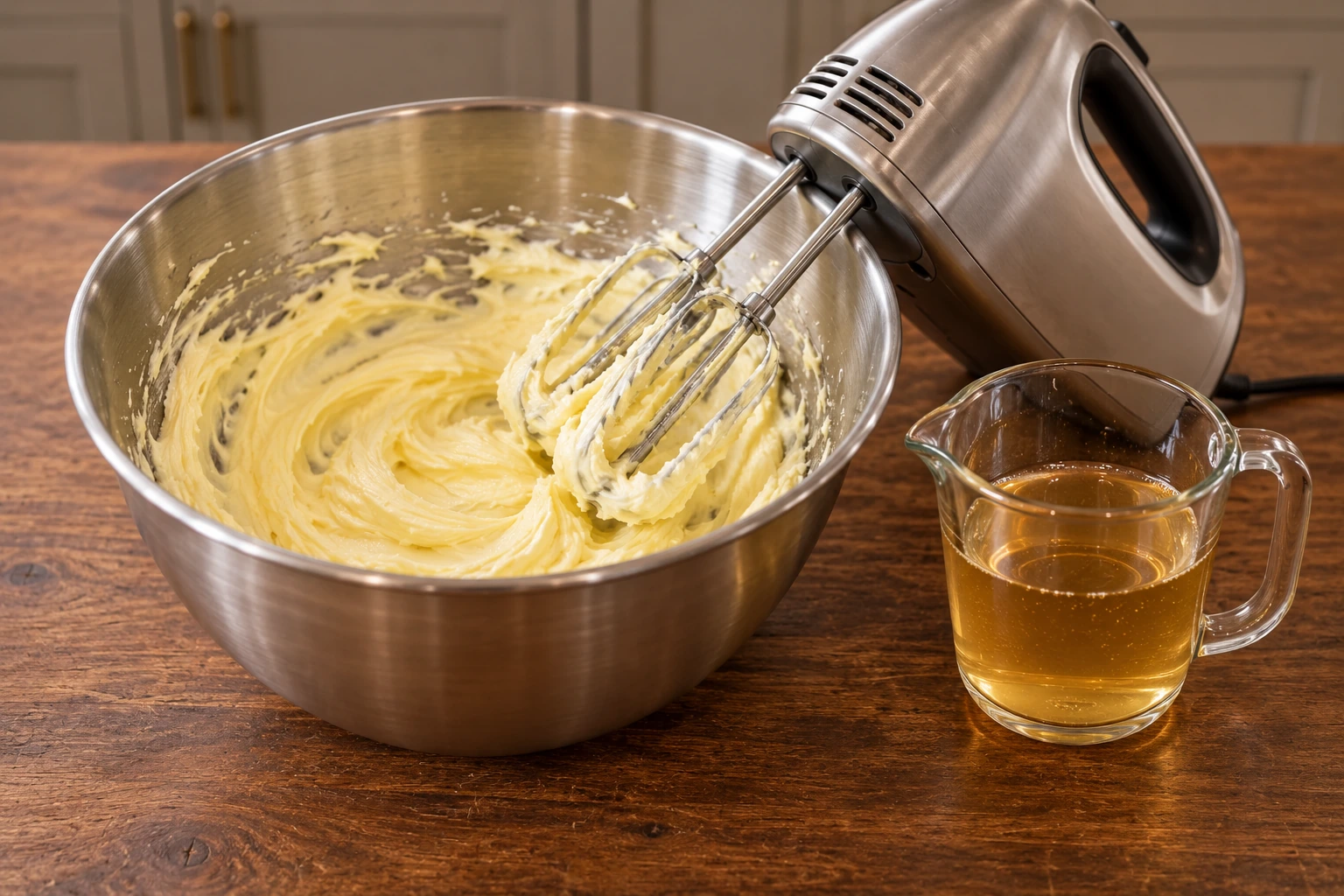
Put the softened butter in a large stainless-steel bowl. Beat with an electric hand mixer until the butter is creamy, uniform, and free of firm lumps.
Set the cooled honey mixture beside the bowl. If it has begun to gel firmly, warm it only enough to make it fluid again, then cool it back to room temperature.
Stream in the Honey Mixture Slowly
Keep the mixer running and add the cooled honey-gelatin water in a slow, thin stream. Pause if liquid begins pooling around the butter.
Continue beating until no clear liquid remains at the bottom and the frosting looks pale, smooth, and glossy. If using homemade vanilla instead of cinnamon, beat in the measured teaspoon now.
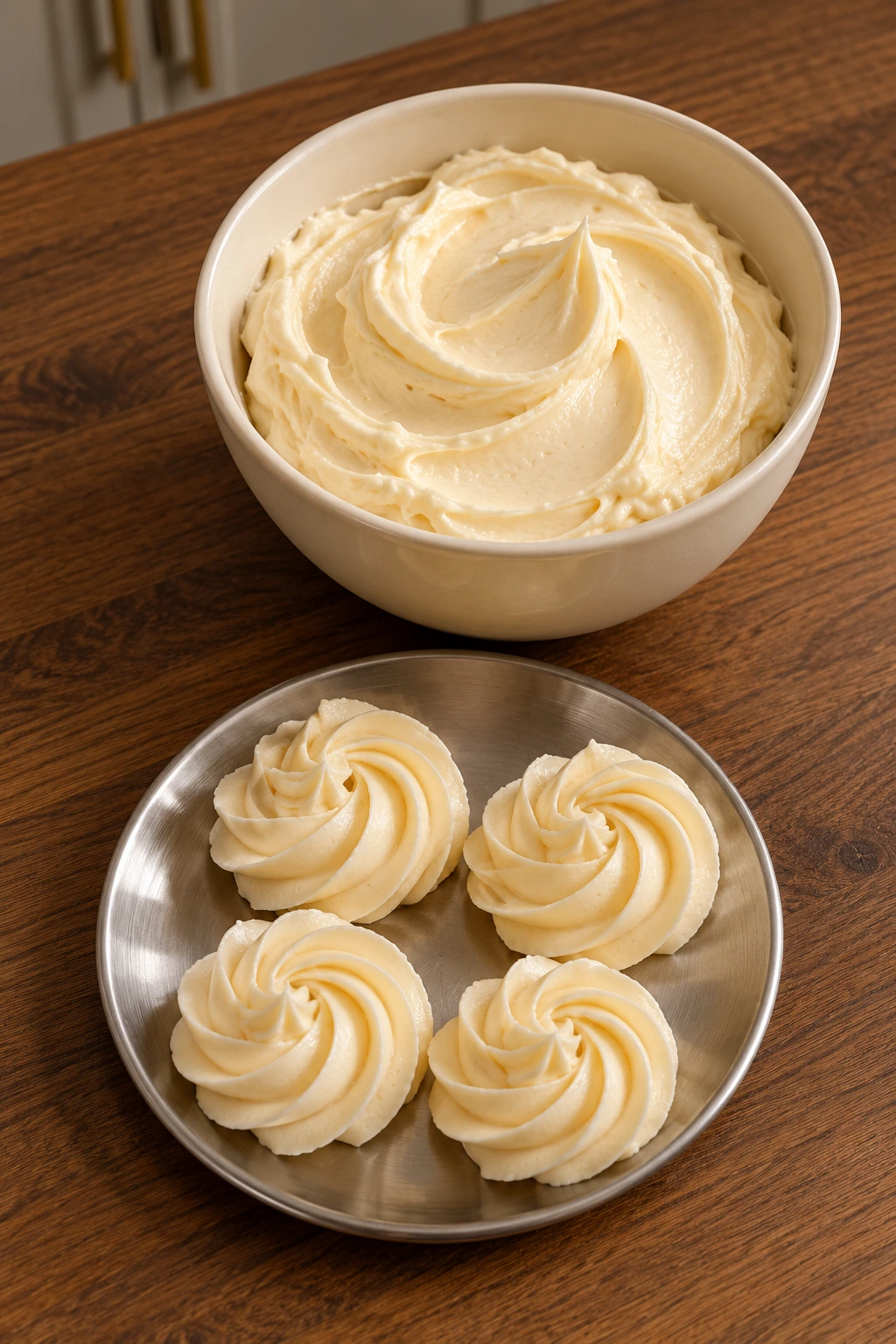
The finished frosting should hold a soft peak and leave a clean ridge when swept with a spatula. If it looks loose, let it stand briefly at a cool room temperature and beat again.
Spread or Pipe at Room Temperature
Use the frosting on a completely cooled cake. Warm cake softens the butter and can make the frosting slide.
At room temperature, the frosting spreads easily and pipes into soft, defined ridges. Chilling makes it much firmer.
Storage and Reworking Chilled Frosting
Refrigerate unused frosting in a covered glass container. Before using it again, let it soften gradually at room temperature and beat briefly until spreadable.
A frosted cake served directly from the refrigerator can lose frosting from the sides as it is cut. Let it stand at room temperature for at least an hour before serving, or frost only the middle and top.
Recommended Equipment
Use the registered Le Creuset Signature Stainless Steel Saucepan, stainless measuring cups and spoons, a large stainless-steel mixing bowl, an electric hand mixer, a small clear pitcher, flexible spatula, piping bag and tip if desired, and a covered glass storage container.
Frequently Asked Questions
Can I Use Maple Syrup?
No. Keep the measured one-quarter cup raw honey for this Full GAPS formula.
Should I Use Cinnamon or Vanilla?
Choose one: one-eighth teaspoon cinnamon in the honey water or one teaspoon qualifying homemade vanilla beaten in at the end.
Can I Add Both Flavors?
The measured formula gives them as alternatives. Use one branch unless you intentionally want a combined flavor.
Why Must the Honey Water Cool?
Warm liquid can soften or melt the butter and prevent the frosting from holding a smooth, stable texture.
Why Did My Frosting Turn Firm in the Refrigerator?
Butter and gelatin both firm when chilled. Let the frosting soften gradually, then beat it briefly.
Is This the Base for Pink Beet Frosting?
No. The pink frosting uses a separate lard base with different water and cinnamon measures.
Satin Honey Buttercream Frosting Recipe
Satin Honey Buttercream Frosting for Full GAPS
Ingredients
Equipment
Method
- Pour the water into a small stainless-steel saucepan. Sprinkle the gelatin evenly over the surface and leave it for 1 minute to soften.
- Set the pan over medium heat and stir until the gelatin dissolves. When the water is steaming but not simmering, turn off the heat.
- Stir in the raw honey until dissolved. Add the cinnamon if using it, plus the salt. Cool the mixture completely to room temperature.
- Put the softened butter in a large stainless-steel bowl and beat with an electric hand mixer until creamy and free of firm lumps.
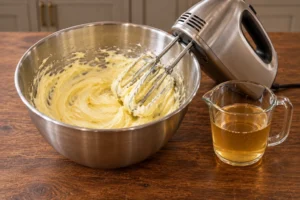
- Add the cooled honey-gelatin mixture in a slow stream while beating. Continue until smooth, glossy, and evenly incorporated. If using homemade vanilla instead of cinnamon, beat it in now.
- Spread or pipe over a completely cooled cake while the frosting is at room temperature.
Notes
- Full GAPS: Use after qualifying butter and every other ingredient have been introduced and tolerated.
- Flavor: Choose 1/8 teaspoon cinnamon or 1 teaspoon qualifying homemade vanilla; do not add both by default.
- Temperature: Cool the honey-gelatin water completely before beating it into the butter.
- Chilled frosting: Let it soften gradually and beat briefly before using.
- Scaling: At 2x, double every measured ingredient for about 4 cups frosting.
Tried this recipe?
Let us know how it was!More Full GAPS Treats
The planned Muffins, Cakes & Cookies collection will pair occasional sweets with exact component recipes and texture cues. Find current guides and catalog updates in the WFLI shop.

Leave a comment