

Poached herb meatballs are tender, simple, and built around the meat stock already working in a Full GAPS kitchen. The meatballs cook gently in finished stock instead of browning in a skillet or oven. That keeps the outside soft, seasons the stock, and gives us both a protein and warm broth from one saucepan.
This two-pound batch is useful on a busy family day because it can become more than one meal. Serve the meatballs and stock together the first night, tuck some over cabbage noodles later, or warm a smaller portion for lunch. The source does not give an exact meatball count, so this recipe preserves the honest yield as one two-pound batch rather than inventing a number.
This post covers the poached method only. The baked meatballs use the same seasoned meat mixture but have different cookware, heat, timing, photographs, and finished texture, so they belong on their own page and card.
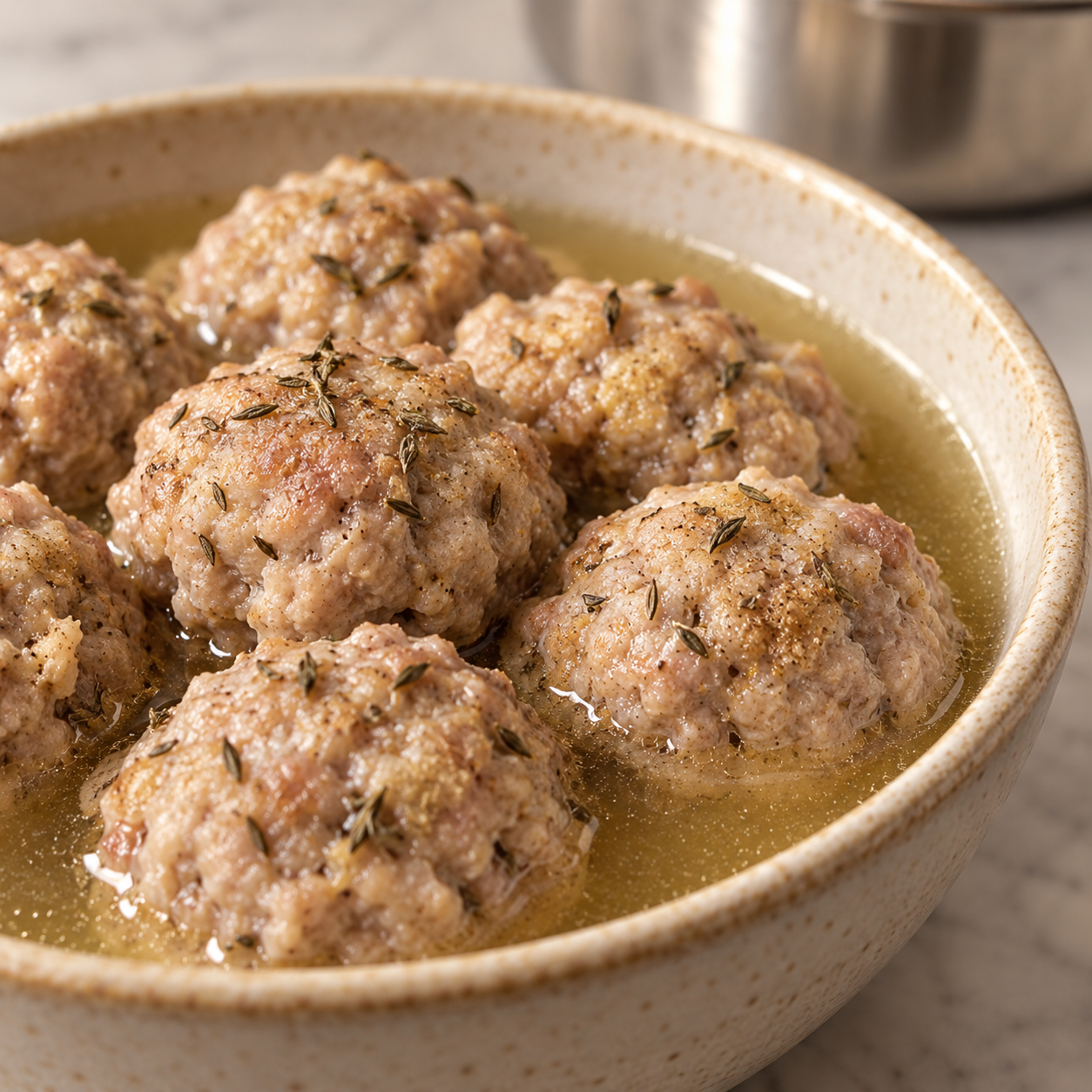
Why Poach Meatballs in Meat Stock
A gentle stock simmer transfers heat evenly without creating a browned crust. The meatballs stay moist and soft, and the stock gains flavor from the meat and dried herbs. This is different from boiling hard: vigorous bubbles can knock the meatballs together, roughen their surfaces, and make the outside cook more aggressively than the center.
The 2020 GAPS authority compares meat cooked in water with roasted or fried meat and supports the water-cooked route. For this formula, use finished homemade raw-meaty meat stock rather than bone broth. The first year of GAPS uses meat stock in place of bone broth, and some people remain with meat stock longer.
This recipe belongs on Full GAPS after the chosen meat, herbs, seasoning, optional coconut aminos, and finished stock are individually appropriate and tolerated. The poaching technique does not move an ingredient into an earlier stage. Keep the formula aligned with the foods already in use for the person eating it.
Choose Fresh Ground Meat
The measured batch starts with two pounds of fresh ground meat. Turkey thigh, pork, beef, or a source-listed combination of two meats can be used. This photographed formula uses ground turkey thigh, so the photographs, temperature cue, and finished color all match that branch.
Turkey thigh has more fat and flavor than very lean breast meat. The raw mixture should be pink and moist without a sour odor or gray, dry edges. Keep it cold until mixing. If you choose pork or beef, use the same two-pound measure and follow the source’s appropriate finished-center temperature noted below.
Seasoning the Meatballs
Use two teaspoons dried thyme, or the source option of a dried sage, rosemary, oregano, and basil blend. Choose one herb route for the batch. This photographed version uses thyme so the small dried leaves visible in the mixture and finished meatballs are expected.
Add one and one-half teaspoons mineral salt and an optional one-quarter teaspoon dried ginger or freshly ground black pepper. Choose ginger for a softer warm note or pepper for a sharper finish.
Two tablespoons coconut aminos are optional. Use only a qualifying product with a label that fits the current GAPS scope. The official GAPS FAQ says coconut aminos should be fine based on manufacturer information, but soy sauce and tamari stay out of this formula. If you omit the coconut aminos, do not replace them with another sauce.
Mix Without Making the Meatballs Tough
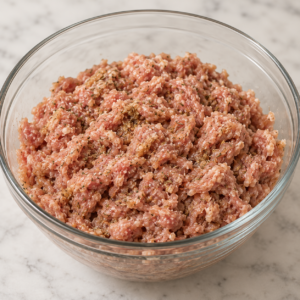
Put the cold ground turkey thigh in a large bowl. Distribute the coconut aminos, if using, across the surface rather than pouring it into one spot. Sprinkle the thyme, salt, and ginger or pepper evenly over the meat.
Mix only until the seasoning is distributed. The mixture should look uniform, with fine herb flecks throughout and no dry seasoning pockets. Stop while it is still loose and slightly tacky. Repeated squeezing and kneading compacts ground meat and can produce a rubbery finished texture.
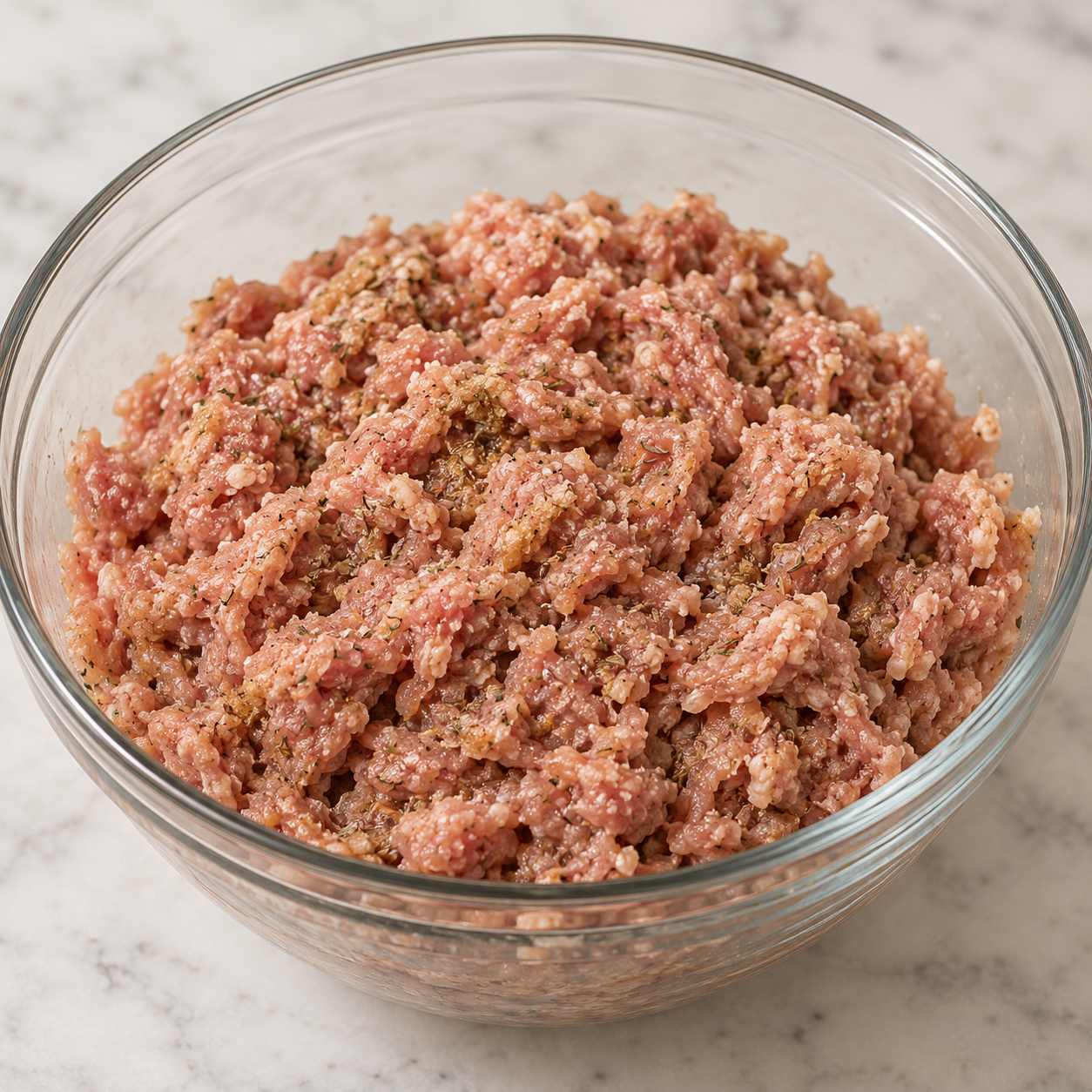
Shape One-Inch-Plus Meatballs
Pinch off portions and roll them lightly into meatballs about one inch or a little larger across. The source does not specify an exact scoop size or count. Keep the meatballs reasonably consistent so their centers finish at about the same time, but do not keep reworking them to make every sphere perfect.
Set the shaped meatballs on a clean plate while the stock comes to a simmer. If the mixture begins sticking heavily, rinse and cool your hands, then continue. Do not add flour, breadcrumbs, egg, or another binder; none belongs to this measured formula.
Use Enough Finished Meat Stock to Submerge Them
Pour finished homemade meat stock into a Le Creuset stainless saucepan or another uncoated stainless pot. The source does not provide a cup quantity because the amount depends on the pot’s width. Use enough for the meatballs to be mostly submerged without filling the pan dangerously high.
A mild chicken meat stock suits turkey and keeps the herb flavor clear. Beef meat stock gives beef meatballs a deeper base. Match the stock to the meat when that makes sense for the meal.
How to Poach Herb Meatballs
Bring the Stock to a Gentle Simmer
Warm the meat stock over medium heat until small bubbles gather at the edges and rise steadily. The surface should move gently without a hard rolling boil.
Lower in the Meatballs
Add the shaped meatballs one at a time with enough space that they are not packed into a solid layer. Keep the heat moderate. The stock temperature will fall briefly, then return to a gentle simmer.
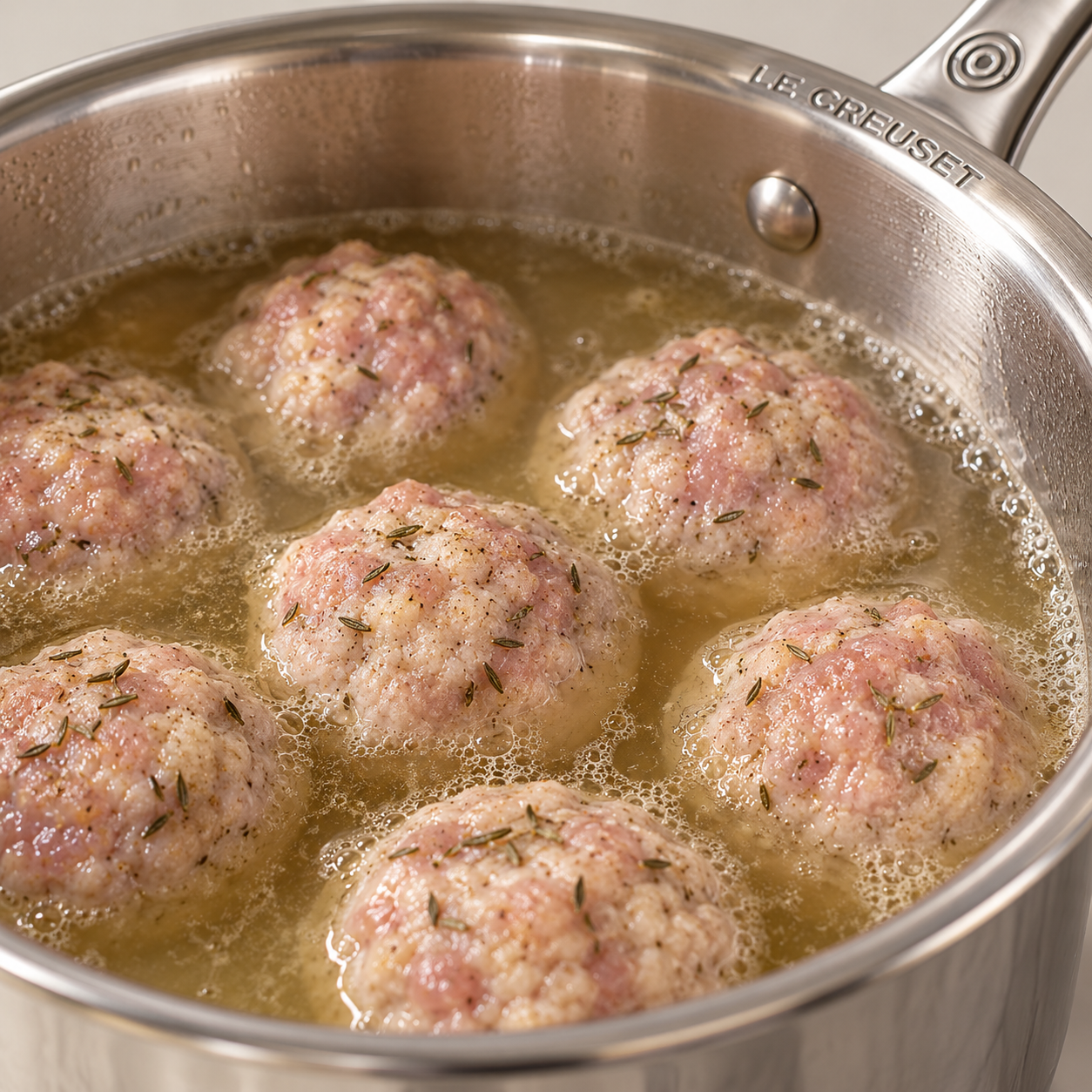
Poach for 15 to 20 Minutes
Maintain the gentle simmer for about 15 to 20 minutes. Do not use floating as the endpoint. A meatball may rise before its center has reached the required temperature. Check one of the largest meatballs in the center of the pot.
Ground turkey should reach 165°F in the center. Ground pork or beef should reach 160°F. The tested meatball should feel springy rather than soft and raw, and the center should be opaque. Continue poaching if it has not reached the temperature for the meat you chose.
Rest Briefly in the Stock
Turn off the heat and let the meatballs stand in the hot stock for about 3 minutes. Serve them with a small ladleful of stock, or lift them out for another Full GAPS plate. The finished surface should be moist and softly set, without a browned crust.
What the Finished Meatballs Should Look and Taste Like
Poached turkey meatballs are pale golden-tan with visible dried-herb flecks. They will look softer than baked or pan-browned meatballs. The surface should hold together when lifted, while the center remains moist and fine-textured.
The flavor is savory and herb-forward, with a mild sweetness if coconut aminos are included. Thyme should smell warm and earthy, not dusty or overpowering. The clear stock around the meatballs will taste richer than it did before poaching.
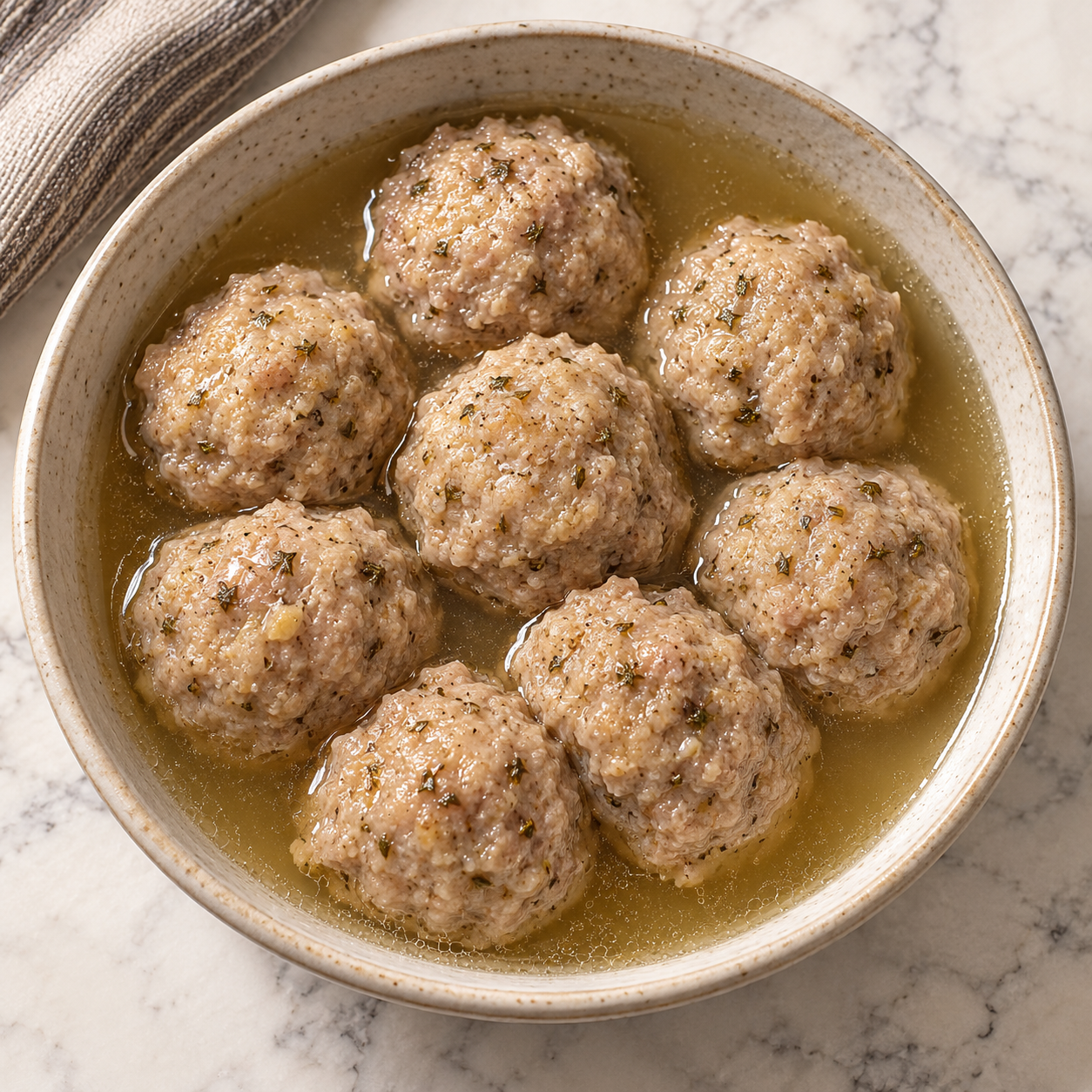
Poached Herb Meatballs for Full GAPS
Ingredients
Equipment
Method
- Put the cold ground turkey thigh in a large bowl. Distribute the optional coconut aminos, dried thyme, mineral salt, and optional ginger or pepper evenly over the surface. Mix only until evenly combined; stop while the mixture remains loose and slightly tacky.
- Shape the mixture gently into meatballs about 1 inch or a little larger across. The source does not specify an exact scoop size or count.
- Pour enough finished chicken meat stock into the saucepan to mostly submerge the meatballs. Bring it to a gentle simmer with small bubbles at the edges, not a rolling boil.
- Lower in the meatballs one at a time without crowding. Let the stock return to a gentle simmer and poach for about 15 to 20 minutes.
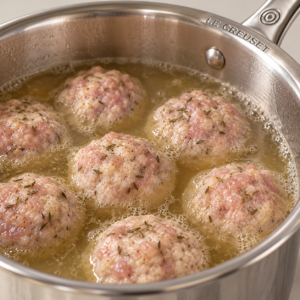
- Check one of the largest center meatballs with an instant-read thermometer. Turkey must reach 165°F. If using ground pork or beef, continue to 160°F. Floating alone is not the endpoint.
- Turn off the heat and rest the meatballs in the hot stock for about 3 minutes. Serve with a small ladleful of stock or lift them out for another Full GAPS dish.
Notes
Tried this recipe?
Let us know how it was!Serving Ideas
Serve the meatballs and stock in a bowl, spoon them over Boiled Cabbage Noodles, or add Stovetop Nomato Sauce after lifting the meatballs from the poaching liquid. Each component keeps its own measured recipe.
The two-pound batch may cover more than one cabbage-noodle meal. Portion what you need, cool the rest promptly, and keep the stock with the stored meatballs so they stay moist.
Storage and Reheating
Cool the meatballs and stock promptly, transfer them to a covered container, and refrigerate. Reheat gently in the stock until the centers are hot. Avoid a hard boil, which can tighten the meat and cloud the stock.
For freezing, cool completely and pack the meatballs with enough stock to cover them. Leave appropriate expansion space in the container. Thaw in the refrigerator and reheat at a gentle simmer.
Recommended Equipment
- A Le Creuset Signature stainless saucepan or another uncoated stainless pot
- A large glass mixing bowl
- A clean plate for shaped meatballs
- A spoon or small ladle for serving
- An instant-read thermometer for the meatball center
- Measuring spoons
Frequently Asked Questions
How Many Meatballs Does This Make?
The source specifies a two-pound batch but does not give an exact count. The number depends on how large you shape each meatball, so the card keeps the honest yield as one two-pound batch.
Can I Use Ground Beef or Pork?
Yes. The source lists turkey thigh, pork, or a two-meat combination. Keep the same two-pound quantity and use 160°F for the center of ground pork or beef. The photographs show turkey thigh and should not be used to judge the color of a beef batch.
Can I Use Bone Broth for Poaching?
Use homemade raw-meaty meat stock. GAPS uses meat stock rather than bone broth for at least the first year, and some people continue meat stock longer.
Why Did My Meatballs Fall Apart?
The stock may have been boiling too hard, the meatballs may have been shaped too loosely, or they may have been crowded and knocked together. Shape gently but completely and maintain a quiet simmer.
Why Are My Meatballs Tough?
The mixture may have been overworked or the stock may have boiled vigorously. Mix only until the seasonings are distributed and keep the poaching liquid at a gentle simmer.
Can I Bake This Same Mixture?
Yes, but baking is a separate cooking method with its own time, equipment, photographs, and finished texture. Follow the dedicated baked herb meatball recipe rather than combining both routes in one card.
More Help With Full GAPS Family Meals
If you need more ways to turn meat stock and simple proteins into meals that fit a busy family week, visit the Well Fed & Lived In shop for the upcoming Dinner Cookbook and practical kitchen-planning resources. These are built for ordinary family meals and repeatable weekly routines.

Leave a comment