

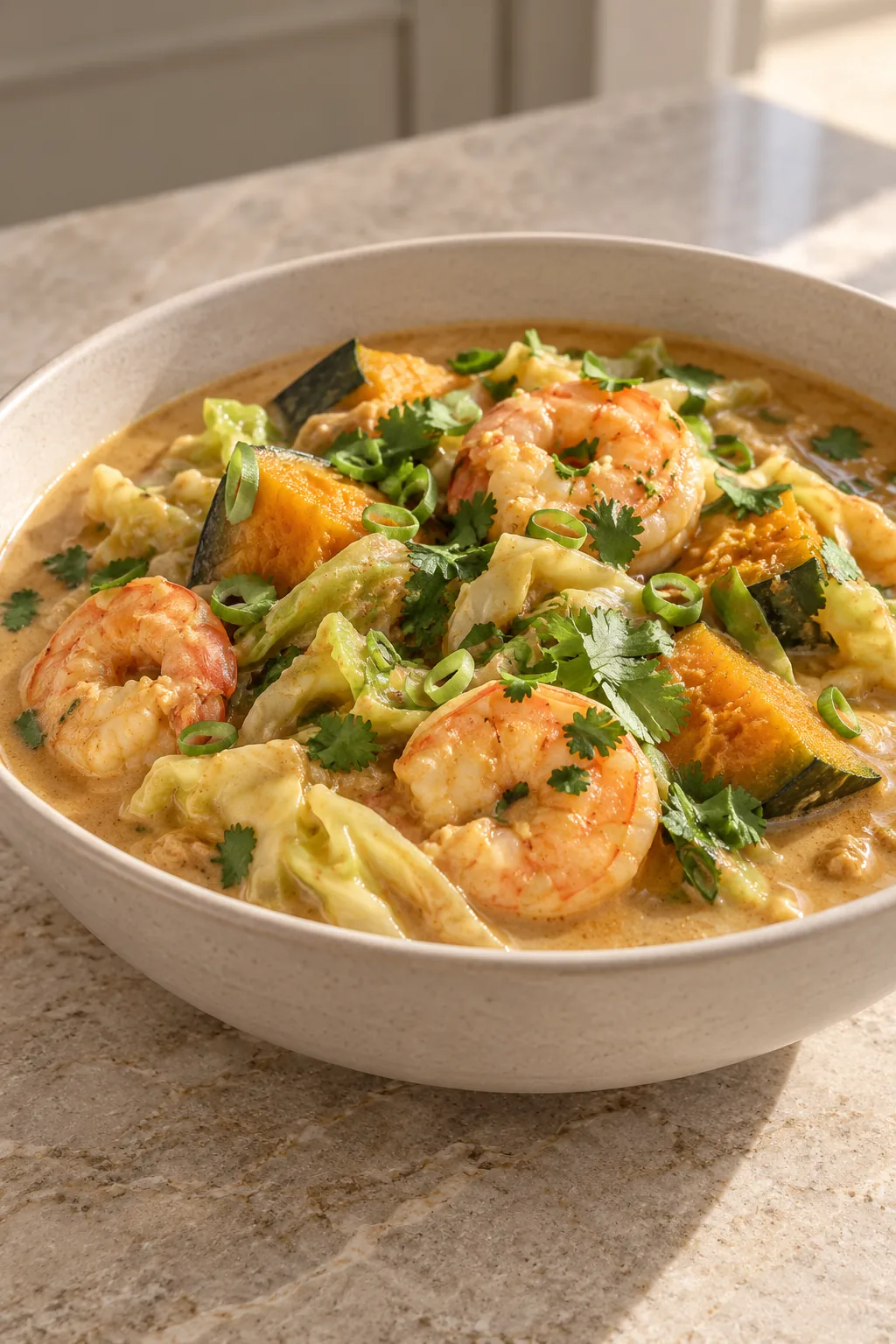
This Indonesian Peanut Butter Stew turns homemade stock, properly prepared peanut butter, winter squash and long ribbons of cabbage into a creamy Full GAPS dinner. The photographed pot uses prawns, kabocha squash and zucchini, but the same measured formula also supports fish, thinly sliced chicken or beef, or already cooked chicken or prawns.
The order matters more than the protein choice. First the peanut butter is smoothed into the stock, then the cabbage wilts, then the selected protein cooks only as long as it needs. Lime, coconut aminos and fermented fish sauce go in after the heat is off, keeping the last spoonful bright instead of flat.
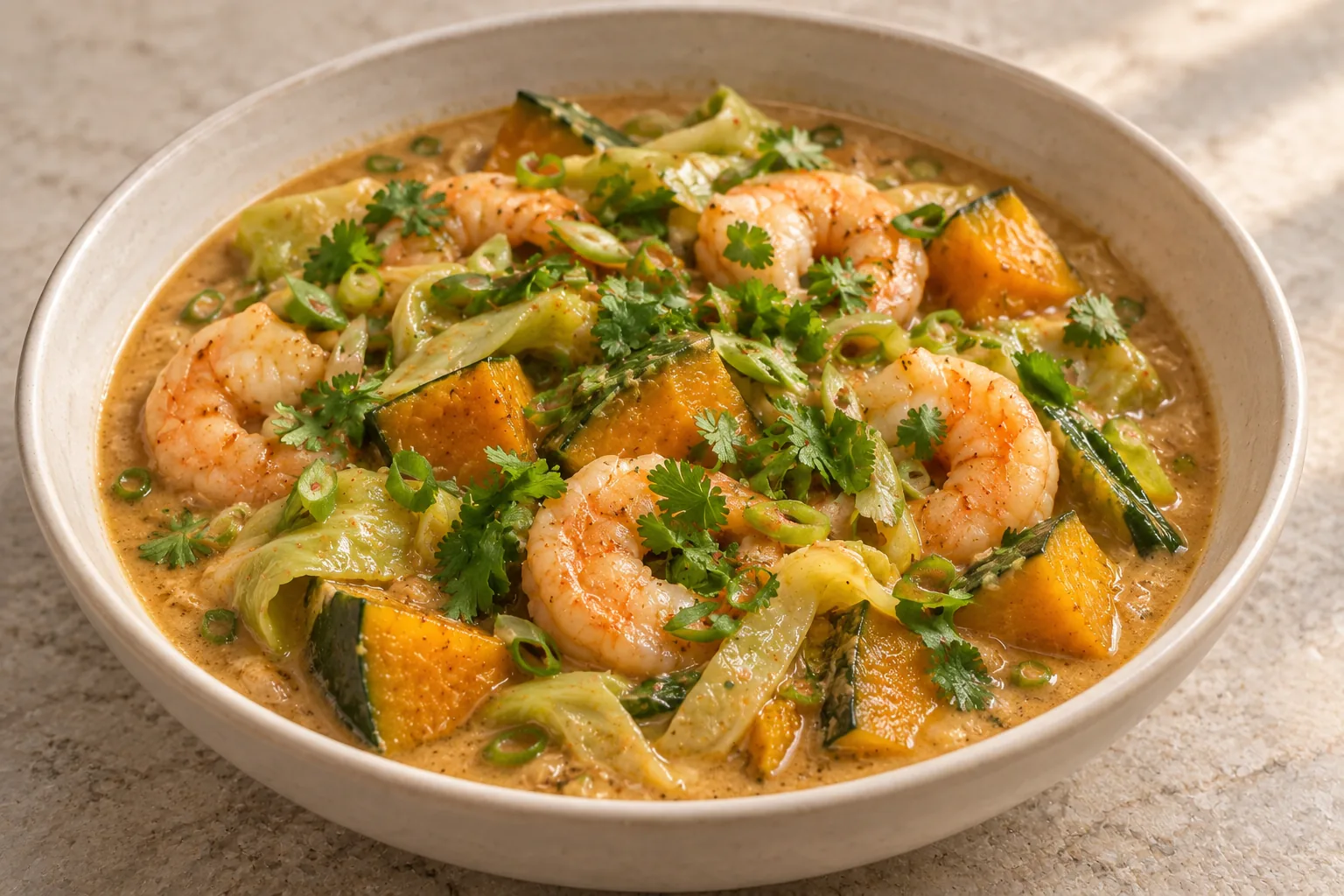
A Flexible Pot for a Full Family Table
At our table of eight, a recipe is more useful when the structure stays reliable even if the protein in the refrigerator changes. This stew gives that flexibility without turning into several vague recipes. The liquid, peanut butter, squash, cabbage and seasoning measures stay fixed. One pound is the protein position, and you choose one of the listed protein choices.
The prawn branch is especially quick because the prawns poach at the end. Thin chicken, beef and fish follow the same late-cooking idea, while cooked chicken or cooked prawns need only enough time to become hot. That distinction prevents tender protein from spending the full forty minutes in the pot.
If you are feeding children who prefer gentler food, leave out the hot pepper and reduce the ginger before cooking. The peanut sauce will still have garlic, lime, fish sauce and the natural sweetness of the winter squash.
Prepare the Peanut Butter and Squash Ahead
The fifty-minute recipe time begins after the peanut butter and squash are ready. Proper peanut preparation is separate work. Use the linked properly prepared fermented peanut butter, or prepare whole peanuts according to the current GAPS method, dry them completely and grind them smooth with salt. Measure one full cup for the stew.
Cook the spaghetti squash, kabocha or butternut squash before you start the pot. Kabocha and butternut should be soft enough to eat while still holding recognizable pieces. Spaghetti squash can be soft or somewhat broken up; it will blend into the sauce differently, but it keeps the same two-cup position.
Having both components ready keeps the stove work straightforward. Ten minutes of vegetable and aromatic cooking lead into the sauce, cabbage and protein stages without a second pan demanding attention.
Choose the Stock for the Protein
Use four cups of homemade meat stock or fish stock. The prawn and fish branches pair naturally with fish stock. The chicken branch can use GAPS chicken meat stock, and the beef branch can use GAPS beef meat stock.
This recipe uses stock rather than bone broth. That keeps the recipe aligned with the GAPS timing distinction between short-cooked meat stock and long-cooked bone broth. The stock also supplies the liquid that loosens the one cup of peanut butter into a spoonable stew.
Whisk the first two cups of stock into the peanut butter before adding the rest. That smaller first addition is what lets you see and break up thick streaks rather than chasing lumps through the full pot.
Build the Aromatic Base Without Browning It
Heat two tablespoons of coconut oil, ghee or rendered animal fat in the stainless stockpot. Add the thinly sliced fresh vegetable choice and half the salt. After five minutes, the vegetables should look glossy and partly softened.
Add the full quarter cup of ginger, five cloves of garlic and the optional minced hot pepper. Lower the heat for this stage. The garlic should smell mellow and savory but should not turn brown. Browning would push the base away from the soft, creamy stew the sauce needs.
Stir in the peanut butter. It will look thick and uneven at first. Once it has loosened around the vegetables, add half the stock and whisk until the sauce is smooth.
Smooth the Peanut Sauce Before Adding Cabbage
Add the remaining stock and the two cups of cooked squash. Bring the pot to a gentle simmer. At this point the sauce should be creamy tan with no separate peanut-butter streaks, and the squash should still be visible.
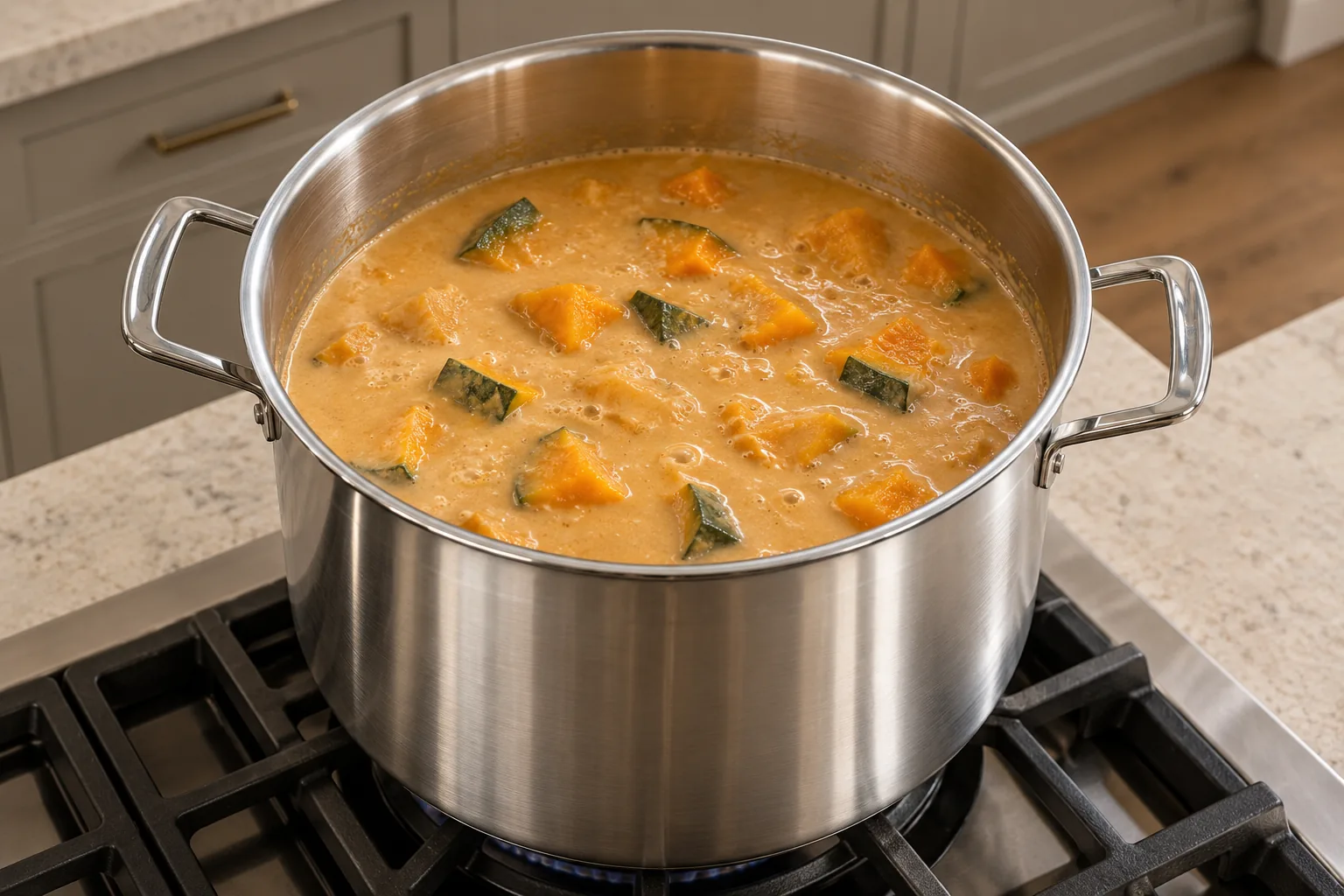
Do not judge the sauce by thickness alone while it is hot. The cabbage still needs to wilt into it, and the selected protein will add its own moisture. The useful cue here is smoothness: no dense lumps, oily islands or dry peanut streaks.
Pile the cabbage ribbons on top, add the remaining salt and cover. The first ten minutes soften the pile. After you fold it into the sauce and cover again, another five minutes should leave the ribbons pliable and easy to bend rather than raw and crunchy.
Cook the Selected Protein by Its Own Cue
Raw protein goes into the simmering stew after the cabbage is soft. Prawns become pink and opaque. Fish should flake when pressed. Thinly sliced chicken cooks until the center reaches 165°F. Thin beef needs to be cooked through to the doneness appropriate for its cut and thickness.
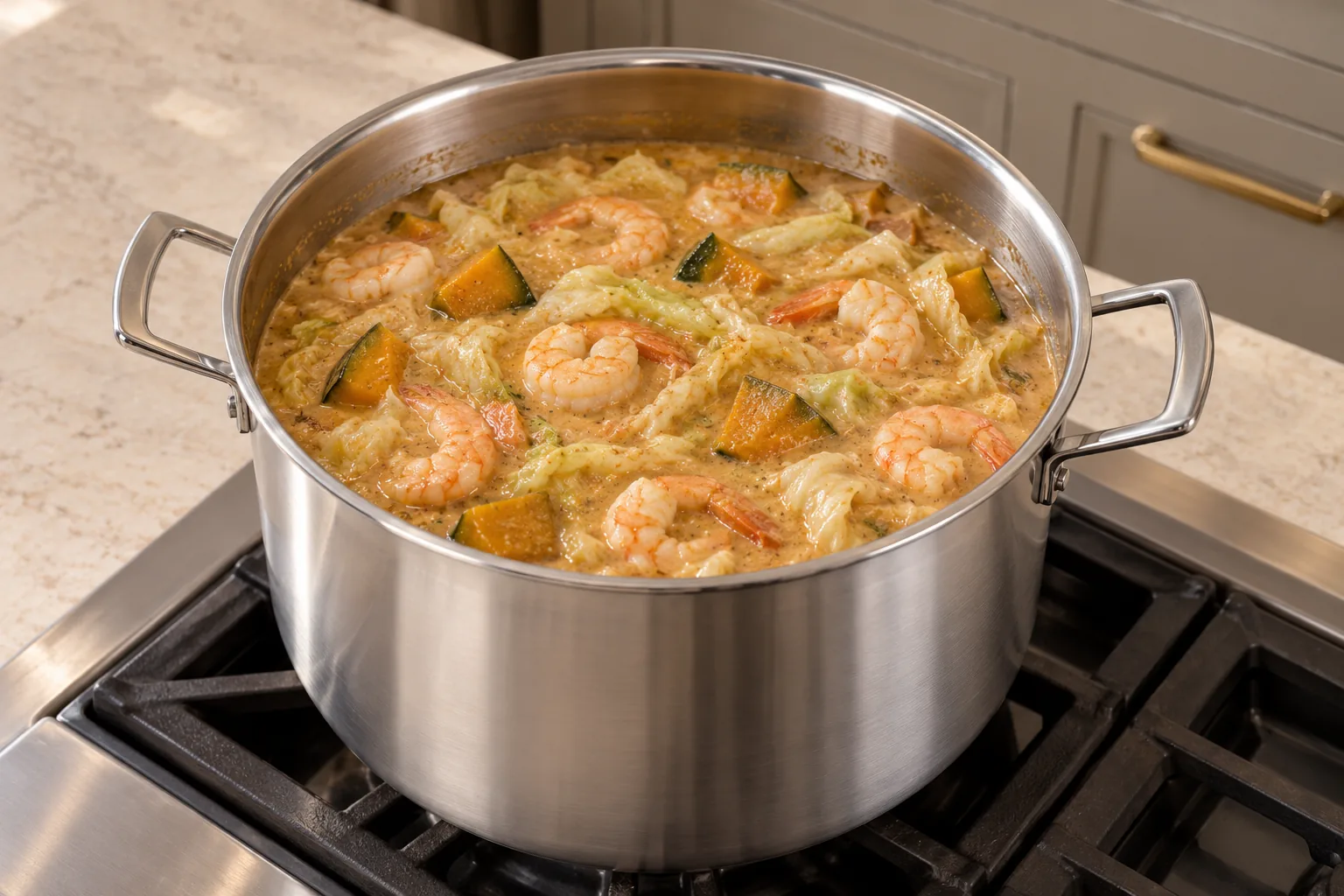
Already cooked shredded chicken or whole cooked prawns are different. Fold them in only to heat through. They do not need another five-minute poach, and holding them at a simmer longer than necessary makes the texture firmer.
Once the protein is ready, turn off the heat. Stir in the coconut aminos, fresh lime juice and traditionally fermented fish sauce. Taste the complete spoonful only after those three ingredients are mixed through.
Where This Stew Fits on GAPS
This is a Full GAPS recipe for the point when properly prepared peanuts have already been introduced and tolerated. It is not an Introduction Diet recipe. Peanut butter is a concentrated legume food, so its placement does not move earlier because the rest of the pot contains stock and cooked vegetables.
Use peanut butter made from properly prepared peanuts. Choose coconut aminos with a qualifying ingredient list and traditionally fermented fish sauce made from fish, salt and water. Soy sauce and tamari are not part of this formula.
Cook the vegetables in coconut oil, ghee or rendered animal fat. Sesame oil stays out of the cooking step. These choices preserve the measured two-tablespoon fat position without carrying over an unsuitable cooking oil from the source.
Scale the Stew Without Crowding the Pot
The 2× card control makes ten servings and doubles every measured ingredient, including two pounds of one selected protein, two cups peanut butter, eight cups stock, four cups cooked squash and six cups cabbage.
Use two stockpots for the doubled batch if one vessel would become crowded. The cabbage needs enough room to collapse under the lid, and the protein needs to sit in the simmering sauce rather than in a packed mound above it.
Keep the protein choice consistent across the doubled batch unless you divide the sauce before step seven. Do not mix raw fish, raw chicken and already cooked prawns into one timing step and expect them to finish together.
Serving and Storage
Ladle the stew into wide bowls so the cabbage ribbons, squash and protein stay visible. Finish with the measured cilantro and green onion. A separate bowl of braised cabbage noodles is an option when you want even more soft cabbage without adding grain.
Cool leftovers promptly and refrigerate them covered. Reheat only the portion you need over gentle heat, stirring from the bottom so the peanut sauce warms evenly. If the sauce has thickened in the refrigerator, loosen it with a small splash of the same stock used in the recipe.
For another peanut-based family dinner, the African Chicken Groundnut Stew uses its own formula and flavor profile. Keep the recipes separate and link between them instead of combining their ingredients.
Recommended Equipment
Use the Le Creuset Classic stainless-steel stockpot, a fitted lid, measuring cups and spoons, a stainless whisk, a cutting board and knife, and a ladle. The full batch needs a stable pot with room for four cups of stock, squash, three cups of cabbage and the selected protein.
The ten-quart stainless stockpot shown in the method photographs is sized for the full batch. Its loop handles, base and burner support remain visible so the paused stages are physically believable.
Frequently Asked Questions
Can I Use Store-Bought Peanut Butter?
The 2020 GAPS book permits peanut butter containing only peanuts and salt when tolerated. This card is measured with properly prepared homemade peanut butter, so use the linked component when you want the same homemade preparation.
Which Protein Should I Choose?
Use one pound of one listed option: raw prawns, cubed fish, thinly sliced chicken or beef, cooked shredded chicken, or cooked whole prawns. Match the stock and doneness cue to that choice.
Can I Use Bone Broth Instead of Meat Stock?
This formula uses homemade meat stock or fish stock. Keep that stock choice when meat-stock timing controls your current GAPS phase.
Can I Make It Less Spicy?
Yes. Omit the hot pepper and reduce the ginger before cooking. The garlic, lime, fish sauce and squash still give the pot a full flavor.
Why Do the Lime and Fermented Sauces Go In Off Heat?
They are the final seasonings in the accepted method. Stirring them in after the heat is off keeps their bright, salty and sour notes clear.
Can I Use Spaghetti Squash?
Yes. Use two cups cooked spaghetti squash in the same measured squash position as kabocha or butternut.
Indonesian Peanut Butter Stew Recipe
Indonesian Peanut Butter Stew for Full GAPS
Ingredients
Equipment
Method
- Heat the coconut oil, ghee or rendered animal fat in a large stainless-steel stockpot over medium heat. Add the sliced fresh vegetables, but not the cabbage, and 1/2 teaspoon of the mineral salt. Cook for 5 minutes, stirring occasionally, until the vegetables soften and look glossy.
- Add the ginger, garlic and optional hot pepper. Lower the heat and cook for 5 minutes. The garlic should soften and smell mellow without browning.
- Add the properly prepared homemade peanut butter. Stir until it loosens and is mostly mixed through the vegetables.
- Pour in 2 cups of the stock and whisk until the sauce is smooth with no peanut-butter streaks. Add the remaining 2 cups stock and the cooked squash. Bring the sauce to a gentle simmer.
- Pile the cabbage strips on top, sprinkle with the remaining 1/2 teaspoon mineral salt and cover. Cook for 10 minutes, until the cabbage has begun to collapse.
- Uncover and fold the cabbage into the sauce. Cover again and cook for 5 minutes, until the cabbage ribbons are soft and pliable rather than crisp.
- For raw prawns, cubed fish, thinly sliced chicken or thinly sliced beef, fold the selected 1-pound protein into the simmering stew. Cover and poach for about 5 minutes, continuing only as needed until cooked through: prawns turn pink and opaque, fish flakes when pressed, and chicken reaches 165°F in the center. If using cooked shredded chicken or cooked whole prawns, fold them in only long enough to heat through.
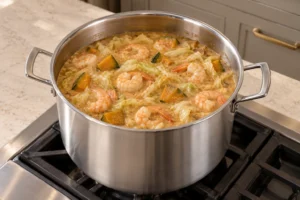
- Turn off the heat. Stir in the coconut aminos, fresh lime juice and fermented fish sauce.
- Ladle into bowls and finish with chopped cilantro and sliced green onion. For a gentler family bowl, omit the hot pepper and reduce the ginger before cooking rather than trying to remove heat at the table.
Notes
Tried this recipe?
Let us know how it was!Make One-Pot GAPS Dinners Easier to Repeat
The planned One-Pot & Sheet Pan Cookbook will gather complete family dinners with measured components and practical timing. Find current resources and release updates in the WFLI shop.

Leave a comment