

This ginger chicken soup is a bright, brothy Full GAPS dinner with tender chicken thighs, sweet carrots, peeled zucchini, fresh ginger, herbs, and lemon. The chicken poaches gently in salted water while the vegetables cook in a separate pan, then everything comes together for a clear golden bowl with plenty of chicken and vegetables in every serving.
The method matters. Cooking the vegetables separately gives the carrots time to brown without leaving the zucchini mushy, and adding the ginger and lemon near the end keeps their flavor fresh. The finished soup should smell clean and gingery, with enough lemon to wake up the broth without making it sharply sour.
GAPS placement: Full GAPS
Time: About 55 minutes
Yield: 8 servings
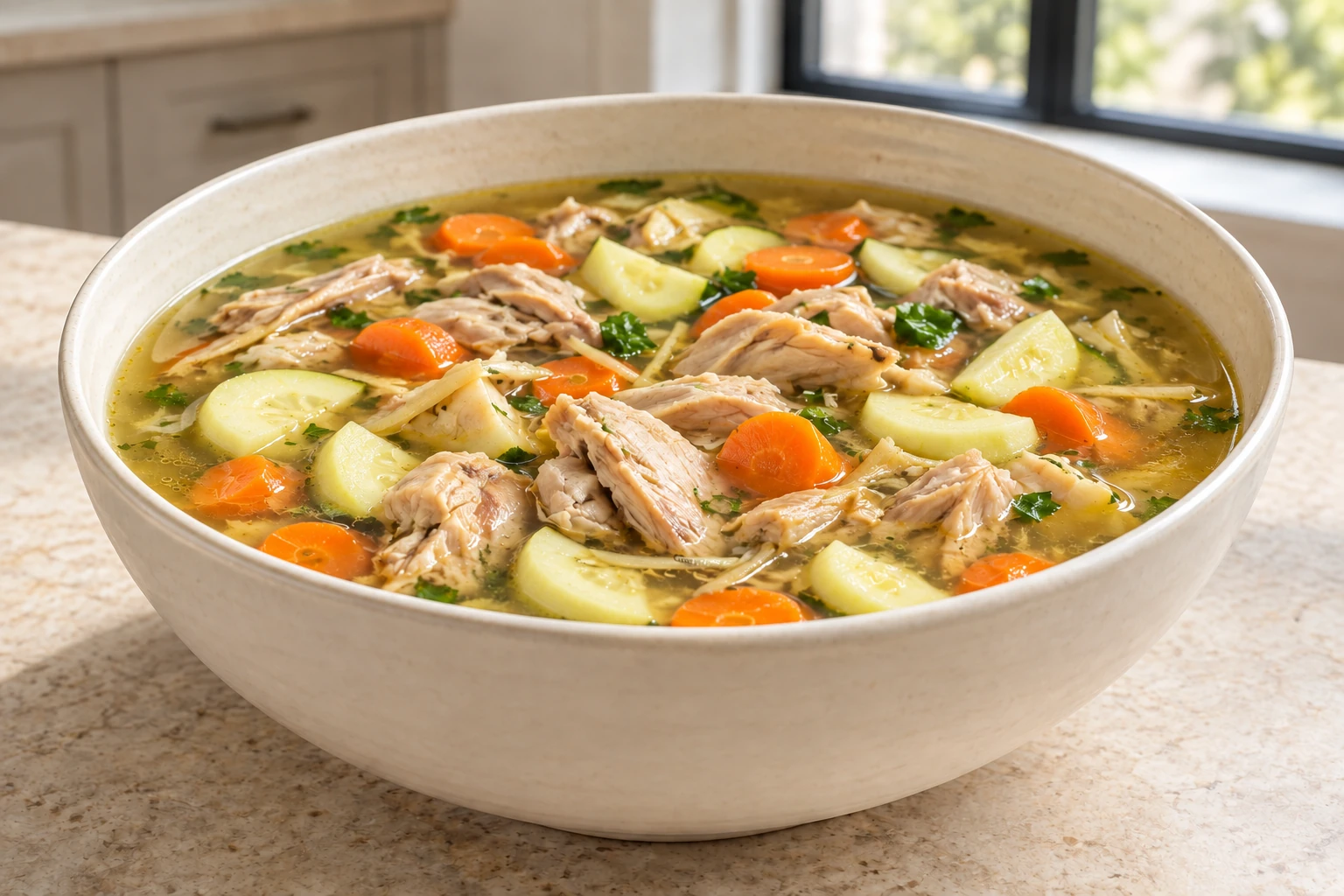
When our family began GAPS, soup stopped being something I made only when someone was sick. It became one of the easiest ways to put a complete meal on the table. In a working, homeschooling household, that matters. A pot that serves eight gives everyone a warm dinner and leaves enough flexibility for different appetites without turning the evening into several separate meals.
This recipe uses its own short chicken poaching liquid, so you do not need a separate batch of stock to make it. That liquid is useful and flavorful, but it is not the raw-meaty, bone-in meat stock used elsewhere in GAPS. Keeping those names clear makes the recipe easier to follow and keeps it from quietly promising a different preparation than the one actually in the pot.
Why the Chicken and Vegetables Cook Separately
Boneless chicken thighs need gentle heat and enough water to stay tender. Carrots need direct contact with the pan if you want a little browning, while zucchini releases water and softens much faster. Putting everything into one pot from the beginning would change both the texture and the timing.
Poach the chicken first under a fitted lid. While it rests, brown the carrots in the cooking fat, then add the peeled zucchini for the second ten-minute stretch. The vegetables should be mostly tender before the chicken and its liquid join them.
The fresh ginger goes in after the separate cooking steps. One-quarter cup sounds generous because it is. Grate or mince it finely so the warmth moves through the whole bowl. Fresh rosemary, fresh mint, or both can be used. Dried dill is optional and goes into the vegetable pan with the zucchini.
Ingredients
- 6 cups water
- 3 to 4 1/2 pounds boneless, skinless chicken thighs
- 1 tablespoon plus 3 teaspoons natural sea salt, divided as directed
- 2 tablespoons ghee, coconut oil, or animal cooking fat
- 5 carrots, thinly sliced
- 4 zucchini, fully peeled, quartered, and sliced
- 2 teaspoons dried dill, optional
- Several sprigs fresh rosemary and/or fresh mint; chop the rosemary and slice the mint
- 1/4 cup fresh ginger root, grated or minced
- 2 to 3 whole lemons, halved for juicing
Use chicken thighs rather than breast meat. The higher fat and connective tissue in thighs help them stay tender during the covered poach. Slice the carrots thinly enough to cook in about ten minutes, and fully peel the zucchini before quartering and slicing it.
The salt is one measured total with three destinations. One tablespoon plus two teaspoons goes into the chicken pot. The carrots receive one-half teaspoon, and the zucchini receives the final one-half teaspoon. Measure it before you begin so the divisions stay clear.
Recommended Equipment
- Large lidded stainless-steel stockpot for poaching the chicken
- Tongs and a stable cutting board
- Instant-read thermometer
- Large Le Creuset Artichaut braiser, low soup pot, or deep sauté pan
- Fine grater or microplane for the ginger
- Handheld citrus juicer
- Ladle and heat-safe serving bowls
The wide Artichaut braiser gives the carrot slices room to touch the cream-colored cooking surface and brown before the zucchini goes in. A deep sauté pan works when it can also hold the six cups of poaching liquid and the chicken at the end. The current cookware and kitchen-tool links are collected in the WFLI shop.
Make the Ginger Chicken Soup
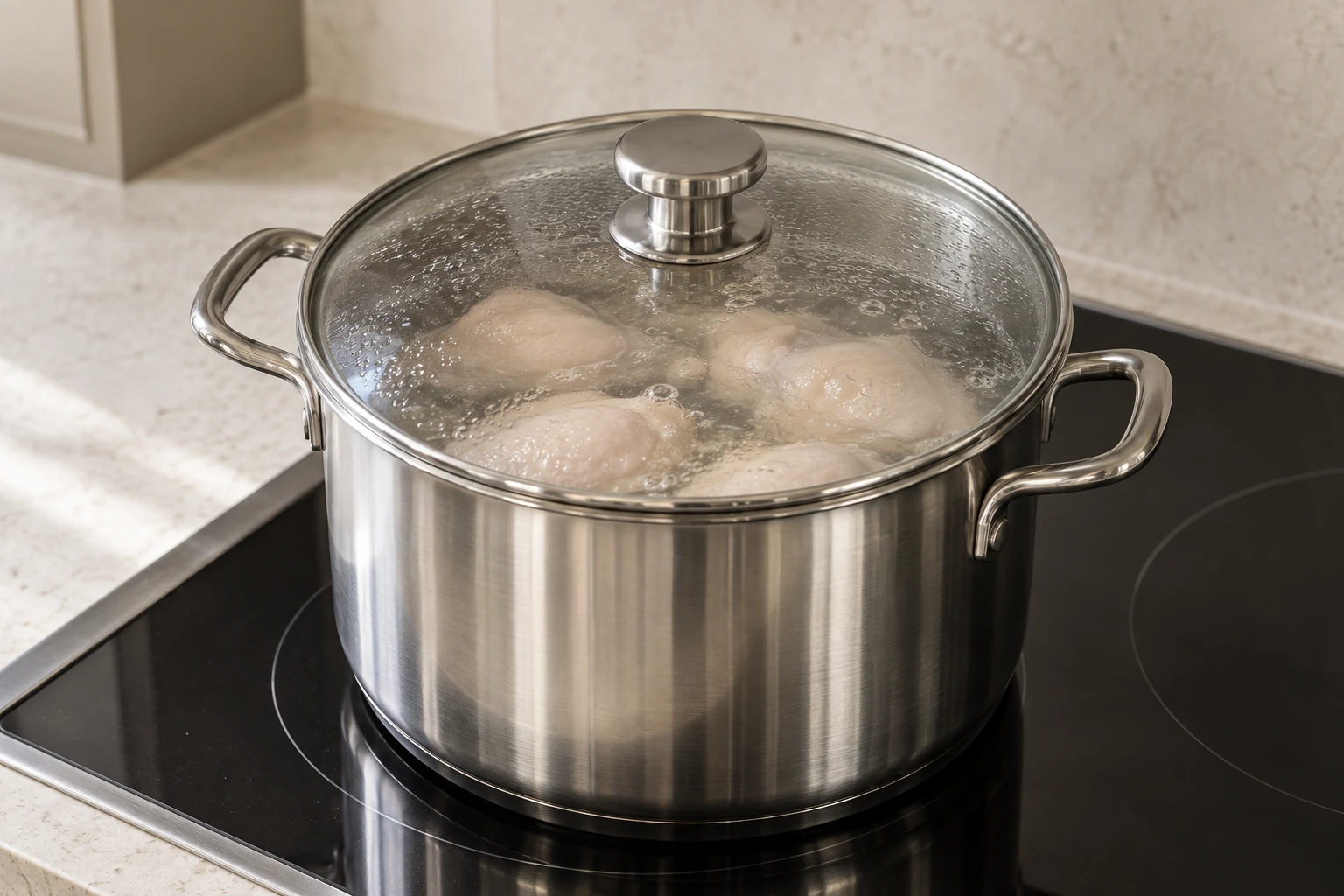
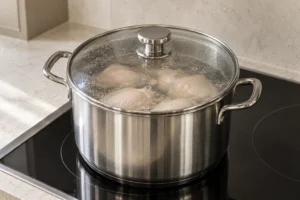
- Poach the chicken. Put the chicken thighs in the lidded stainless-steel pot with six cups water and one tablespoon plus two teaspoons sea salt. Move the pieces so the water covers them as well as possible. Cover, bring to a simmer, then lower the heat to hold a gentle simmer for about 15 minutes. Check that the thickest pieces reach 165°F; continue cooking if needed. Turn off the heat.
- Cut or shred the chicken. Lift the thighs onto the cutting board with tongs. Cut them into bite-size chunks or shred them with two forks. Keep all of the poaching liquid in the pot.
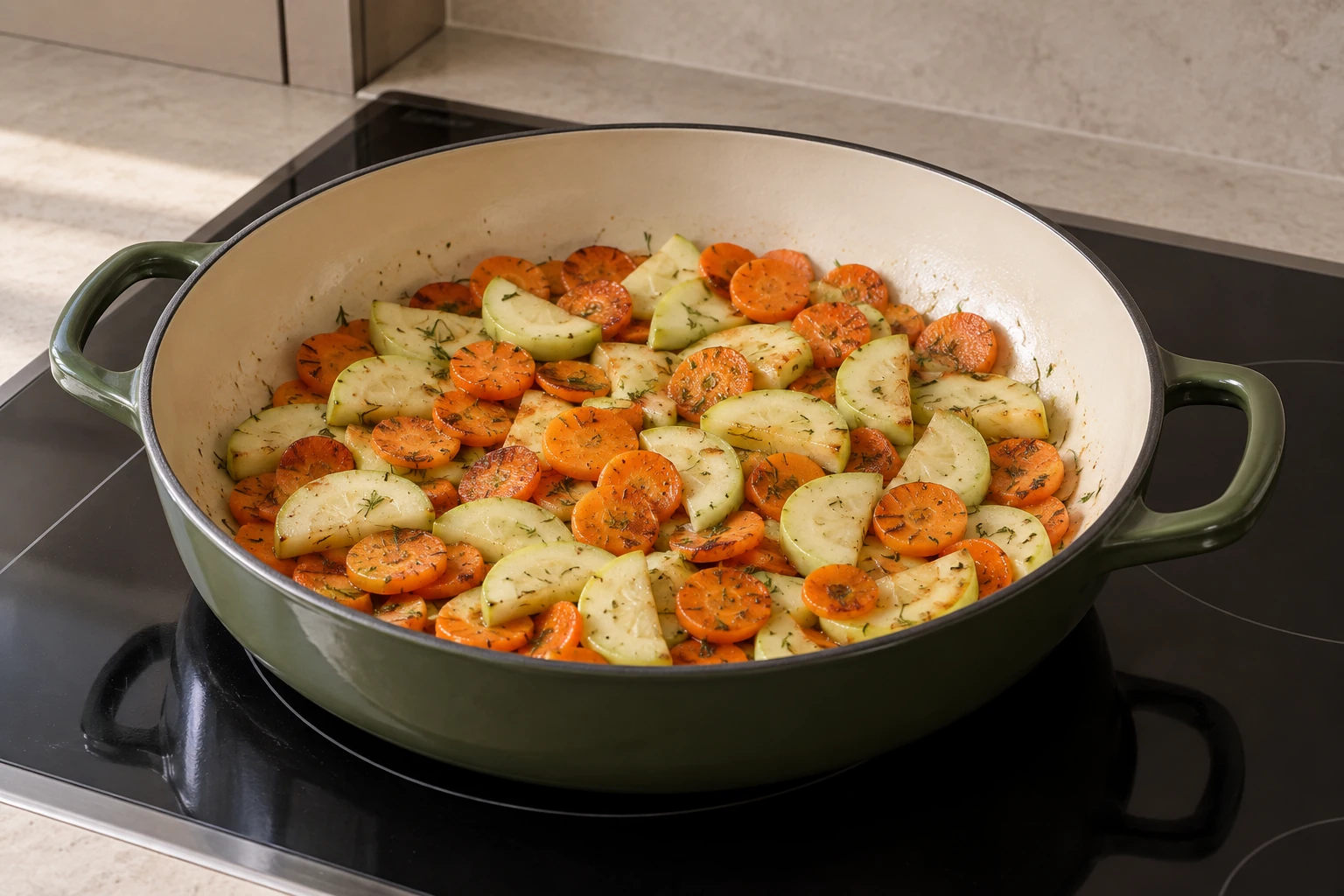
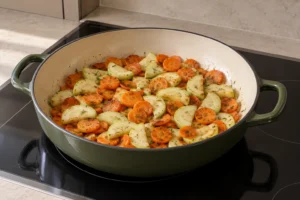
- Brown the carrots. Heat two tablespoons ghee, coconut oil, or animal cooking fat in the Artichaut braiser over medium heat. Add the thinly sliced carrots and one-half teaspoon sea salt. Cook for about 10 minutes, stirring often enough to prevent scorching, until the edges have taken on some color and the centers are mostly tender.
- Cook the zucchini. Add the fully peeled zucchini, optional dried dill, and the final one-half teaspoon sea salt. Cook about 10 minutes more. Lower the heat if the vegetables are coloring faster than they soften.
- Bring the soup together. Pour in the reserved chicken poaching liquid. Add the cooked chicken, fresh rosemary and/or mint, and the grated or minced fresh ginger. Heat until the soup is very hot, stirring gently so the zucchini keeps its shape.
- Finish with lemon. Squeeze in the juice of one lemon and taste. Add more fresh juice from the second or third lemon if you want a brighter bowl. Stir once and serve.
Texture, Smell, and Doneness Cues
The covered chicken pot should hold a gentle simmer rather than a hard boil. Look for steady small bubbles and light condensation under the lid. When the chicken is done, the pieces should be opaque through the center and register 165°F in the thickest part. They should cut or pull apart without feeling rubbery.
The carrots are ready for the zucchini when they have browned spots on their surfaces and are mostly tender but still hold their round shape. After the next ten minutes, the peeled zucchini should look glossy and pale, with softened edges. It should bend easily when pressed with a spoon but should not collapse into the pan.
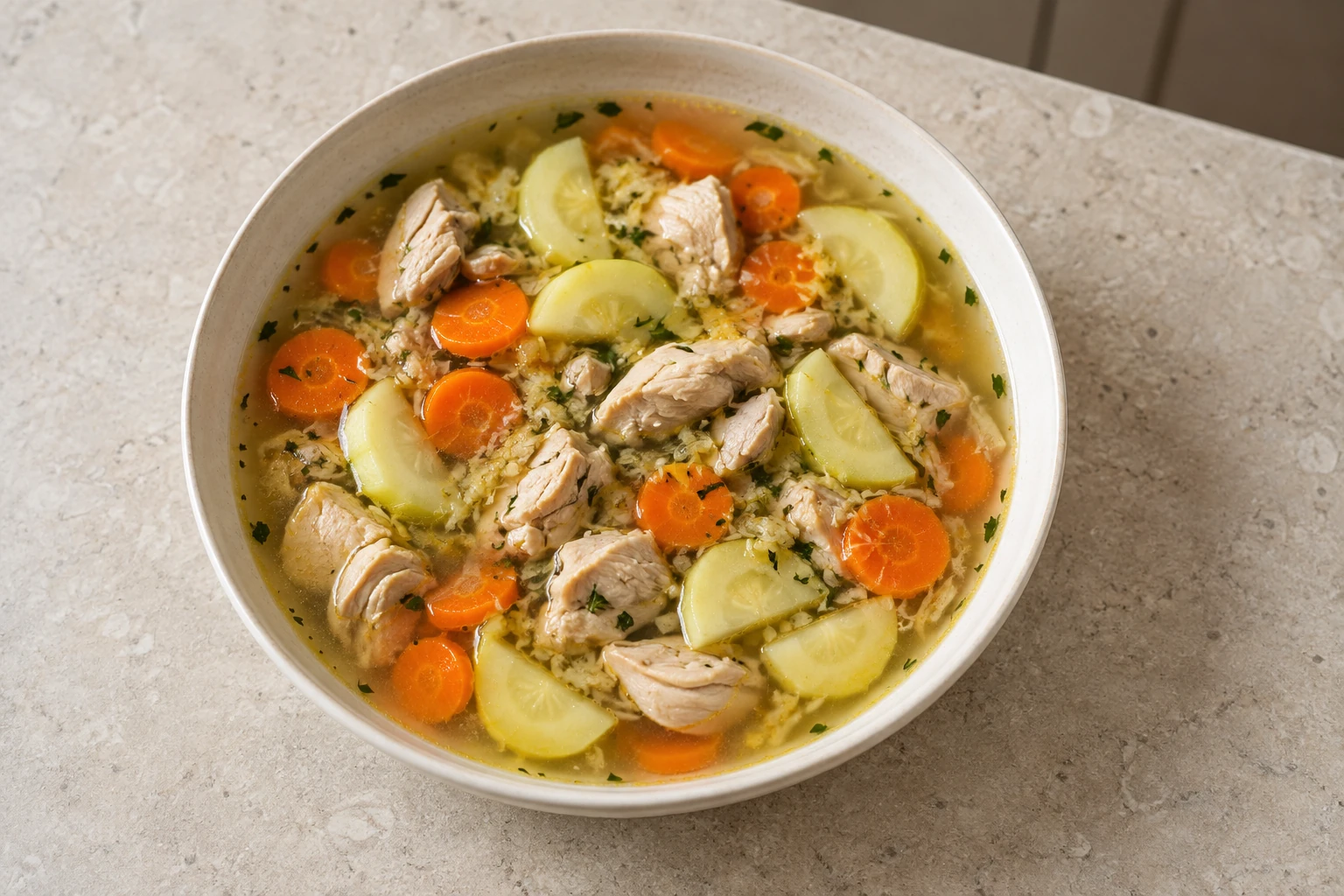
Once everything is combined, the liquid should be clear golden rather than thick or creamy. The aroma should lead with chicken and ginger, with rosemary or mint behind it. Lemon should make the soup smell brighter. Add it a little at a time after the first lemon so you can stop before the broth becomes sour.
Ginger Chicken Soup with Carrots and Zucchini
Ingredients
Equipment
Method
- Put the chicken thighs in a lidded stainless-steel pot with 6 cups water, 1 tablespoon sea salt, and 2 teaspoons sea salt. Move the pieces so the water covers them as well as possible. Cover, bring to a simmer, then lower the heat to maintain a gentle simmer for about 15 minutes. Check that the thickest pieces reach 165°F; continue cooking if needed. Turn off the heat.
- Lift the chicken onto a stable cutting board with tongs. Cut each thigh into bite-size chunks or shred it with two forks. Keep all of the poaching liquid in the pot.
- Heat 2 tablespoons ghee, coconut oil, or animal cooking fat in a large Le Creuset Artichaut braiser, low soup pot, or deep sauté pan over medium heat. Add the carrots and 1/2 teaspoon sea salt. Cook for about 10 minutes, stirring often enough to prevent scorching, until the edges have browned and the centers are mostly tender.
- Add the fully peeled zucchini, optional dried dill, and the final 1/2 teaspoon sea salt. Cook about 10 minutes more. Lower the heat if the vegetables are coloring faster than they soften.
- Pour in the reserved chicken poaching liquid. Add the cooked chicken, fresh rosemary and/or mint, and the grated or minced fresh ginger. Heat until very hot, stirring gently so the zucchini keeps its shape.
- Squeeze in the juice of one lemon and taste. Add more fresh juice from the second or third lemon if you want a brighter bowl. Stir once and serve.
Notes
Tried this recipe?
Let us know how it was!Full GAPS Placement and Variations
This complete formula is for Full GAPS. The measured bowl uses chicken, carrots, fully peeled zucchini, fresh ginger, herbs, lemon, sea salt, water, and an approved heated cooking fat. It does not include pasta, rice, cassava, parsnip, or an invented replacement for those optional additions.
Choose ghee, coconut oil, or animal cooking fat for the measured two tablespoons. If you use ghee, the stovetop ghee recipe gives you a separate homemade component. Keep dried dill optional, and use rosemary, mint, or both according to the accepted formula.
This is not an Introduction Diet soup and the short chicken poaching liquid is not a separate meat-stock recipe. For the raw-meaty, bone-in preparation, use the GAPS Chicken Meat Stock recipe as its own method.
How to Serve It
Ladle the soup into wide bowls so every serving gets chicken, carrots, and zucchini. Pass lemon halves at the table for anyone who wants a brighter finish. The recipe makes eight servings and can stand alone as a Full GAPS dinner.
For another lemon-forward chicken meal, try the Slow-Roasted Garlic and Lemon Chicken. When you want a thicker vegetable-heavy bowl, the Full GAPS Chicken Stew with Butternut Squash and Kale is a separate recipe with a different texture and method.
Make-Ahead and Storage
Slice the carrots, peel and cut the zucchini, grate the ginger, and prepare the herbs ahead of time. Keep each component chilled in its own covered container so the zucchini does not release water onto the carrots and the ginger does not perfume everything around it.
Cool leftover soup in shallow covered containers and refrigerate it promptly. The zucchini softens further as it sits, so reheat only the amount you plan to serve. Warm it gently until hot instead of boiling it for a long time. Add a fresh squeeze of lemon after reheating if the stored soup tastes flatter than the first bowl.
Frequently Asked Questions
Is the Chicken Poaching Liquid Meat Stock?
No. It flavors this soup, but the recipe briefly poaches boneless thighs in water. GAPS meat stock uses raw meaty bone-in pieces with joints and connective tissue and belongs to its own preparation.
Why Do the Vegetables Cook in a Separate Pan?
The carrots need direct pan contact and more time than the zucchini. Cooking them separately from the chicken lets the carrots brown, keeps the zucchini from turning mushy, and preserves the clear poaching liquid.
How Much Ginger Should I Use?
Use one-quarter cup fresh ginger root, grated or minced. Add it when the chicken, vegetables, and poaching liquid come together so its aroma stays fresh.
Do I Have to Use All Three Lemons?
No. Start with the juice of one lemon. Taste the hot soup, then add more juice from the second or third lemon only if you want a brighter finish.
Can I Leave Out the Dill?
Yes. The two teaspoons dried dill are optional. Fresh rosemary, fresh mint, or both still go into the soup with the ginger.
Can I Use Chicken Breast?
Use the measured boneless, skinless chicken thighs. Breast meat changes the accepted formula and can become dry during the covered poach.
Can I Double the Recipe?
Use the 2× control in the recipe card for exact amounts. Split the chicken and vegetables between pots if doubling would crowd either vessel or prevent the chicken from staying mostly covered.
Make Weeknight Soup Easier
The coming-soon Weekly Kitchen Rhythm Planner is designed for meals like this, where chopping vegetables and measuring components ahead can make the actual dinner hour much calmer. Find it with the other WFLI guides in the shop.

Leave a comment