

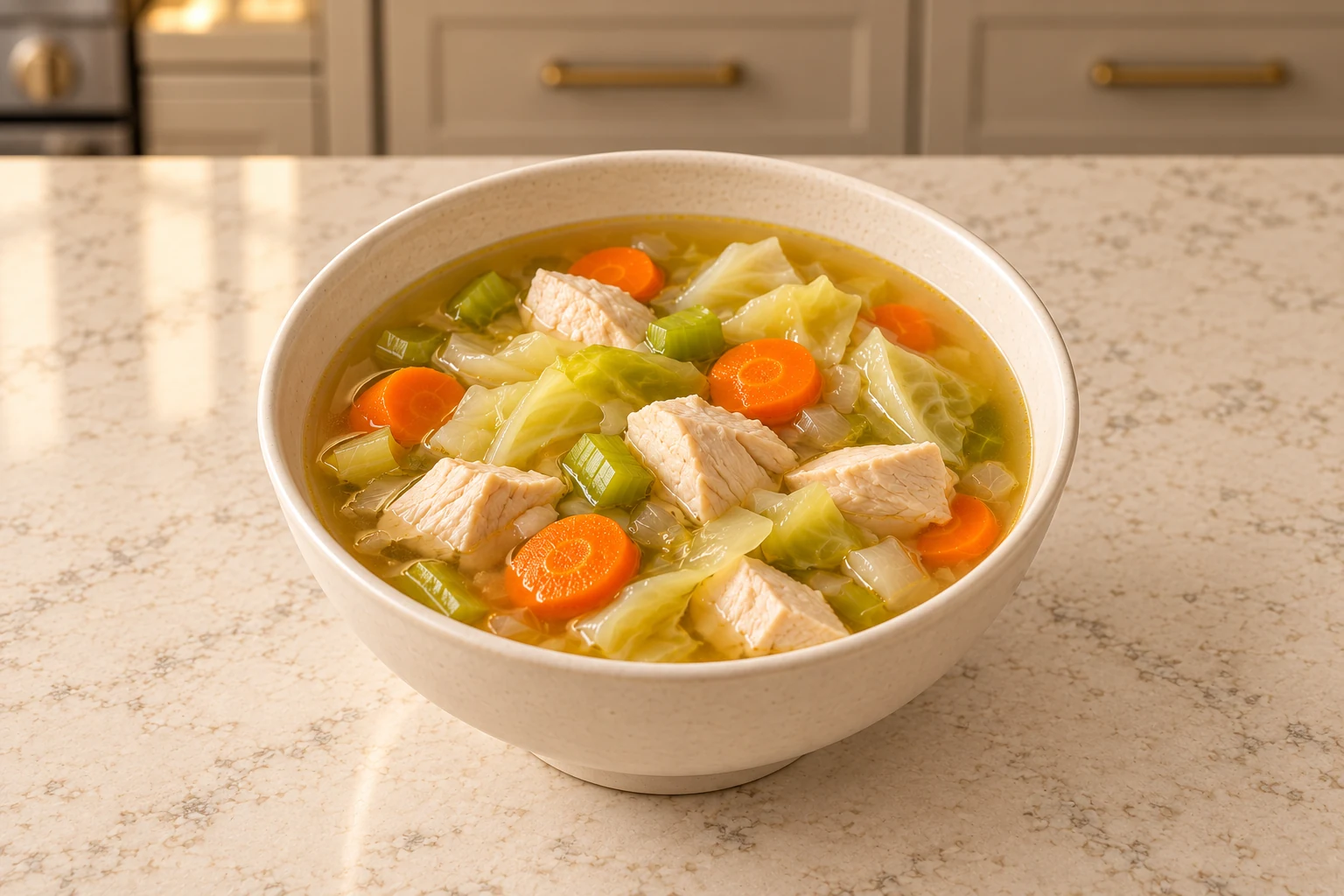
This chicken cabbage vegetable soup is the kind of Full GAPS dinner that works because the two slow parts are already finished: the chicken is cooked, and the chicken meat stock is ready. From there, one pot of onions, celery, garlic, carrots, cabbage, and chicken becomes a warm family meal in about 45 minutes from the first chop to the last bowl.
The broth stays clear and savory rather than creamy or thick. Cabbage softens into silky ribbons, sliced carrots bring sweetness, and diced chicken makes every bowl substantial. The garlic and onion build the aroma at the beginning, while rendered chicken fat or homemade ghee gives the vegetables a rich base without relying on bottled sauces or commercial seasoning mixes.
In our household of eight, this is exactly why I keep measured portions of meat stock and cooked chicken ready. Soup stops feeling like an all-day project when the stock has already been made. I can pull the vegetables together, use the cooked chicken from another meal, and make one pot that reheats well for lunch without asking anyone to eat the same plate twice.
What Makes This Chicken Soup Different
This is a mixed-vegetable Full GAPS soup built from prepared components. It does not begin by simmering a whole raw chicken, and it is not the same formula as a simple Introduction Diet soup. The measured base is four cups of homemade chicken meat stock plus one-half of a previously cooked chicken breast.
The vegetables are also part of its identity. Carrots, celery, onion, cabbage, and garlic are required. One-half zucchini is an exact optional ingredient from the source. Leave it out when you want the cabbage and carrot to lead, or include it when zucchini is established and you want another soft vegetable in the pot.
Worcestershire sauce does not belong in this version. The source page mentions it outside the usable EasyRecipe formula, and commercial versions do not match the recipe’s GAPS ingredient standard. The same page groups several herbs into one ambiguous one-eighth-teaspoon option without a workable measurement for each herb, so this formula keeps the clearly measured ingredients and omits that line.
Where This Soup Fits On Full GAPS
This recipe belongs on Full GAPS after celery, cabbage, garlic, black pepper, and the chosen cooking fat are established. It is not an Introduction Diet recipe. Its combination of fibrous vegetables and black pepper is different from the simpler, very soft vegetable soups used in Intro.
Use homemade chicken meat stock made from raw meaty bones and joints. Do not swap in long-cooked bone broth simply because both are liquid chicken preparations. The linked stock is the correct component for this formula.
Rendered chicken fat is the most direct dairy-free choice. Homemade ghee is the measured cooking-fat alternative when ghee has already been introduced and tolerated. Whichever one you use, measure two tablespoons so the aromatic vegetables have enough fat to soften without scorching.
Prepare Everything Before The Pot Gets Hot
Dice one-half of a previously cooked chicken breast into small spoon-sized pieces. Slice two carrots evenly, chop one-half cup celery and one-half cup onion, and chop one cup cabbage. Dice three garlic cloves. If using the optional zucchini, chop one-half zucchini into pieces close in size to the carrots.
Keeping the vegetables similar in size matters more than making them perfect. Large carrot coins stay firm after the cabbage is tender, while very thin carrots can soften before the rest of the pot is ready. Aim for slices that will sit easily on a soup spoon.
Measure four cups chicken meat stock and keep it beside the stove. The cooked chicken goes into the pot only to heat through and share its flavor with the vegetables; it does not need another long cooking cycle.
If you are preparing this after work or between afternoon activities, finish the chopping earlier in the day and refrigerate each component in a covered container. Keep the stock and cooked chicken cold until cooking time. With that preparation done, the pot moves quickly: soften the aromatic vegetables, add the measured stock and remaining ingredients, then let the gentle simmer finish dinner while you clear the cutting board.
Soften The Garlic, Onion, And Celery
Melt two tablespoons rendered chicken fat or homemade ghee in a soup pot over medium heat. Add the diced garlic, chopped onion, and celery. Stir so every piece receives a light coating of fat.
Watch the onion rather than the clock. It is ready when the pieces look translucent around the edges instead of chalky white. The celery should brighten and begin to bend when pressed with the spoon. The garlic should smell warm and savory, not sharp or browned.
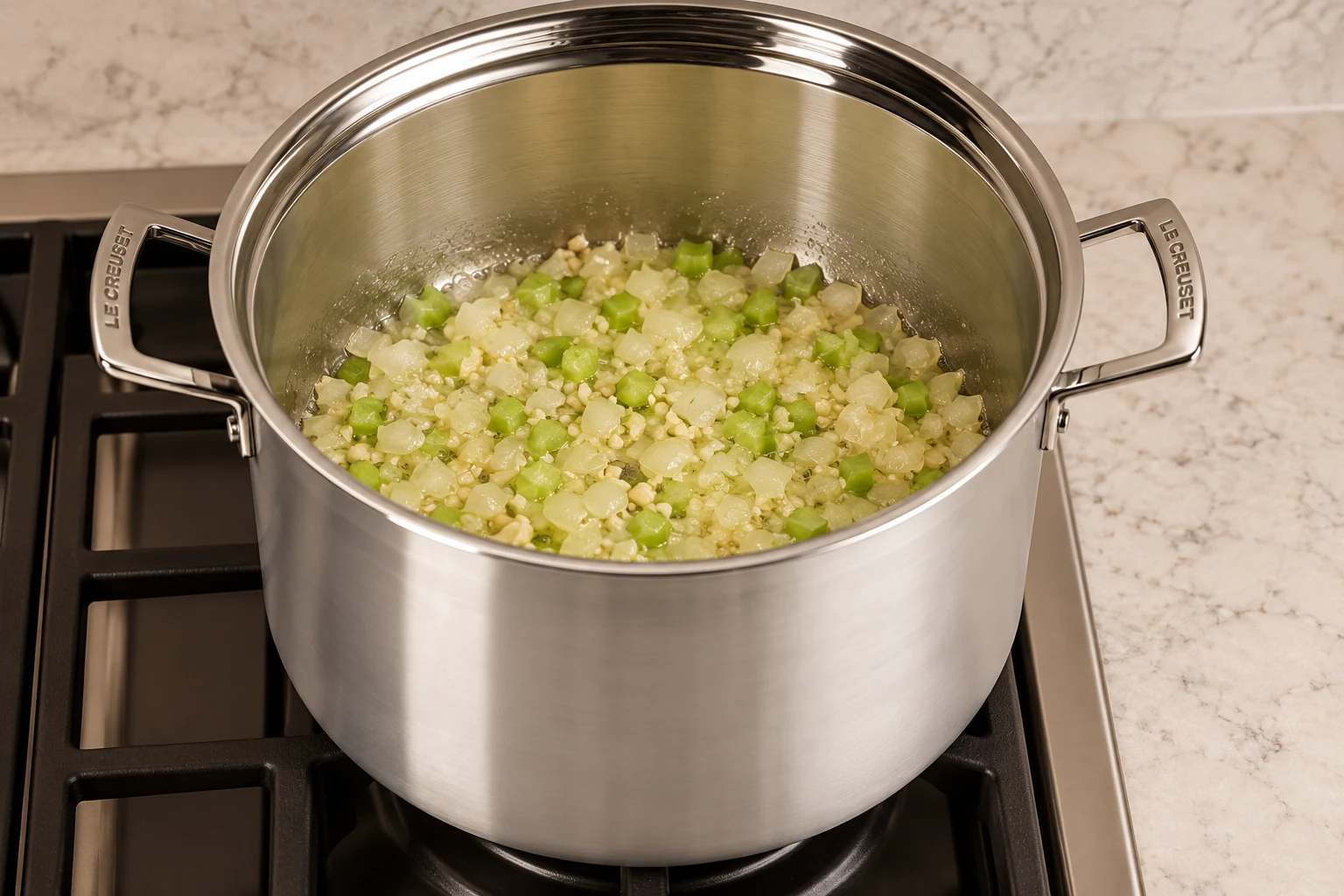
If the garlic starts coloring before the onion turns translucent, lower the heat and keep stirring. Browned garlic can make a simple broth taste bitter, while gently softened garlic disappears into the finished soup.
Build The Soup And Simmer Gently
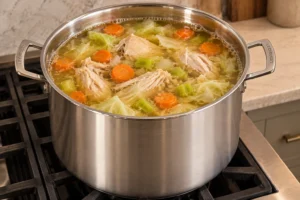
Pour in the four cups of chicken meat stock, then add the diced cooked chicken, sliced carrots, chopped cabbage, and optional zucchini. Stir from the bottom so the softened onion, celery, and garlic move evenly through the broth.
Bring the soup just to a gentle simmer. Look for small steady bubbles around the edge rather than a hard rolling boil. A hard boil can break the cabbage down too quickly and make the cooked chicken stringy.
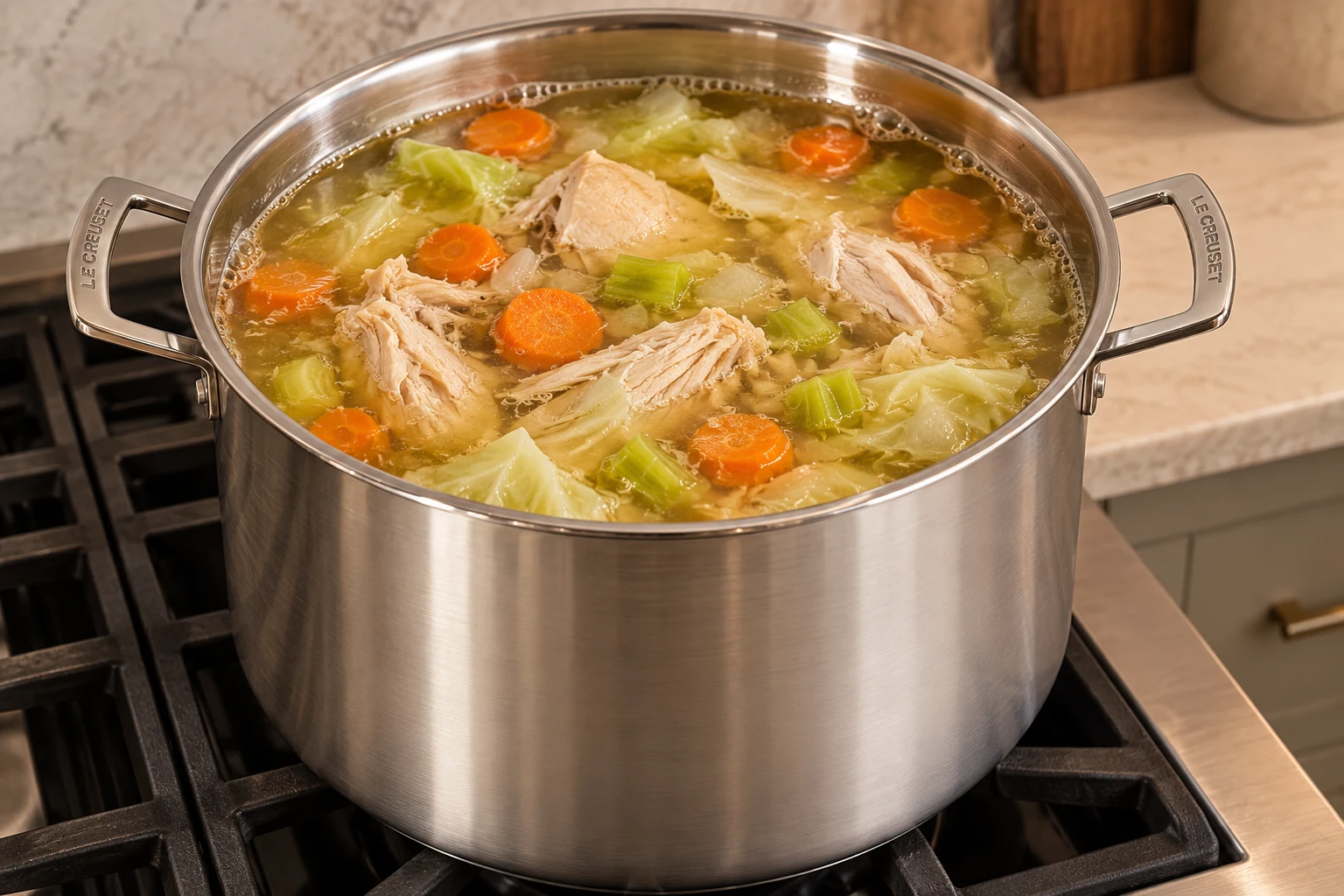
Keep the pot at that gentle simmer until the carrots are tender and the cabbage has relaxed into soft folds. A fork should enter the thickest carrot slice without a hard center. The cabbage should be tender enough to bite cleanly but still recognizable, and the optional zucchini should look translucent at the edges without collapsing into the broth.
The source gives a 30-minute cook time for the complete stovetop process. Use the physical cues to decide when the vegetables are ready within that window. The broth should smell first of chicken, garlic, and sweet onion, with the cabbage becoming gentler as it cooks.
Season The Finished Pot
Taste the soup only after the vegetables are tender and the cooked chicken is hot. Chicken meat stock varies in salt concentration, so seasoning before the simmer can leave the finished pot too salty.
Add natural sea salt and black pepper a little at a time. Stir, wait for the salt to dissolve, and taste again. The finished broth should taste rounded and savory, with clear chicken flavor and a gentle sweetness from the carrots and cabbage.
If the soup tastes flat, check the salt before adding anything else. This formula does not need bottled seasoning sauce, starch, or a commercial bouillon cube to taste complete.
Serving And Storage
Serve the soup hot in wide bowls so each serving receives chicken, carrots, cabbage, celery, and broth. It works as a simple dinner on its own or alongside another established Full GAPS dish when your household needs a larger meal.
Cool leftovers promptly in shallow covered containers and refrigerate. Reheat only the amount you plan to serve, bringing the broth to a gentle simmer without repeatedly boiling the cooked chicken and vegetables.
For another chicken-soup option with a different formula, try Ginger Chicken Soup with Carrots and Zucchini. The two soups share a practical make-ahead rhythm, but this one keeps cabbage at the center and uses previously cooked chicken.
Plan More Full GAPS Dinners
The upcoming Weekly Kitchen Rhythm Planner is the most useful WFLI companion for a soup like this because it helps you plan the stock and cooked chicken before the night you need dinner. It will be available through the WFLI shop.
Recommended Equipment
Use a Le Creuset Classic 10-quart stainless-steel stockpot or another heavy stainless soup pot, a wooden spoon or heat-safe silicone spoon, chef’s knife, cutting board, dry and liquid measuring cups, measuring spoons, ladle, and shallow covered storage containers.
A heavy pot holds a steady gentle simmer and gives the onion, celery, and garlic enough surface area to soften evenly before the stock is added. Use an enamel-safe utensil only when cooking in enameled cookware.
Frequently Asked Questions
Is This An Introduction Diet Soup?
No. This is a Full GAPS mixed-vegetable soup. Use the separate Introduction Diet chicken-soup formula for the earlier stages rather than removing ingredients from this recipe until it becomes a different dish.
Can I Use Bone Broth Instead Of Chicken Meat Stock?
No. The measured component for this formula is homemade raw-meaty chicken meat stock. Keep meat stock and later bone broth in their separate roles.
Can I Leave Out The Zucchini?
Yes. The source lists one-half zucchini as optional. The soup remains complete with chicken, carrots, celery, onion, cabbage, and garlic.
Why Is The Chicken Already Cooked?
Previously cooked chicken is part of this exact source formula. It makes this a useful second-meal soup and keeps the stovetop work focused on softening the vegetables.
What Should The Vegetables Look Like When The Soup Is Done?
The onion should disappear into the broth, the cabbage should form soft recognizable folds, the thickest carrot slice should accept a fork without a hard center, and optional zucchini should be tender without falling apart.
Can I Add Worcestershire Sauce?
No. This GAPS version omits it. The chicken meat stock, rendered fat or homemade ghee, garlic, onion, vegetables, sea salt, and black pepper provide the finished flavor.
Can I Add The Herbs Mentioned On The Source Page?
This formula omits that line because the source groups several herbs into one ambiguous measurement and excludes them from its usable EasyRecipe ingredient list. A separate measured herb variation would need its own tested formula.
Chicken Cabbage Vegetable Soup Recipe
Chicken Cabbage Vegetable Soup for Full GAPS
Ingredients
Equipment
Method
- Dice the previously cooked chicken breast. Slice the carrots evenly. Chop the celery, onion, cabbage, and optional zucchini, and dice the garlic.
- Melt the rendered chicken fat or homemade ghee in a heavy soup pot over medium heat.
- Add the garlic, onion, and celery. Cook, stirring, until the onion looks translucent around the edges, the celery begins to bend, and the garlic smells warm and savory without browning.
- Pour in the chicken meat stock. Add the cooked chicken, carrots, cabbage, and optional zucchini, scraping the softened aromatics from the bottom into the broth.
- Bring just to a gentle simmer with small steady bubbles around the edge. Cook until the thickest carrot slice accepts a fork without a hard center, the cabbage forms soft recognizable folds, and optional zucchini is tender without falling apart, keeping the complete stovetop cook time close to 30 minutes.
- Taste after the vegetables are tender. Add natural sea salt and black pepper a little at a time, stir until dissolved, and taste again.
- Ladle into bowls and serve hot, distributing chicken and vegetables evenly among the bowls.
Notes
Tried this recipe?
Let us know how it was!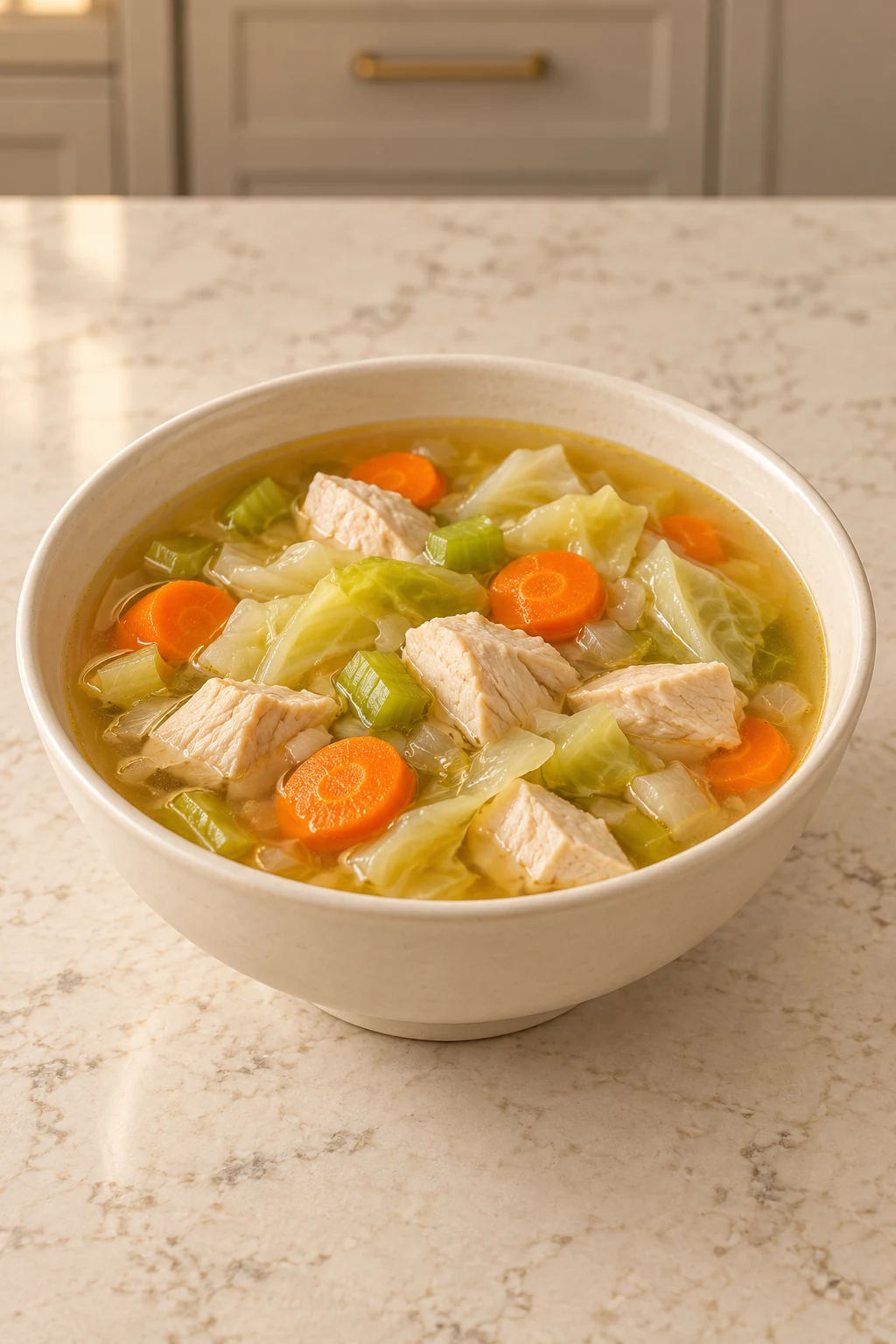

Leave a comment