

The GAPS route for celiac disease is not a standard gluten-free diet with a few extra rules. The 2020 GAPS book directs the reader to the Introduction Diet, keeps all grains and difficult starches out, and uses the No-Plant GAPS Diet when severe diarrhea is too stubborn for standard Intro.[1] This guide puts the foods, stages, trace-exposure questions, testing steps, and later reintroduction in their proper order.
If celiac testing has not been completed, do that before removing gluten. The National Institute of Diabetes and Digestive and Kidney Diseases explains that a gluten-free diet can change diagnostic test results.[2]
Start With the Introduction Diet
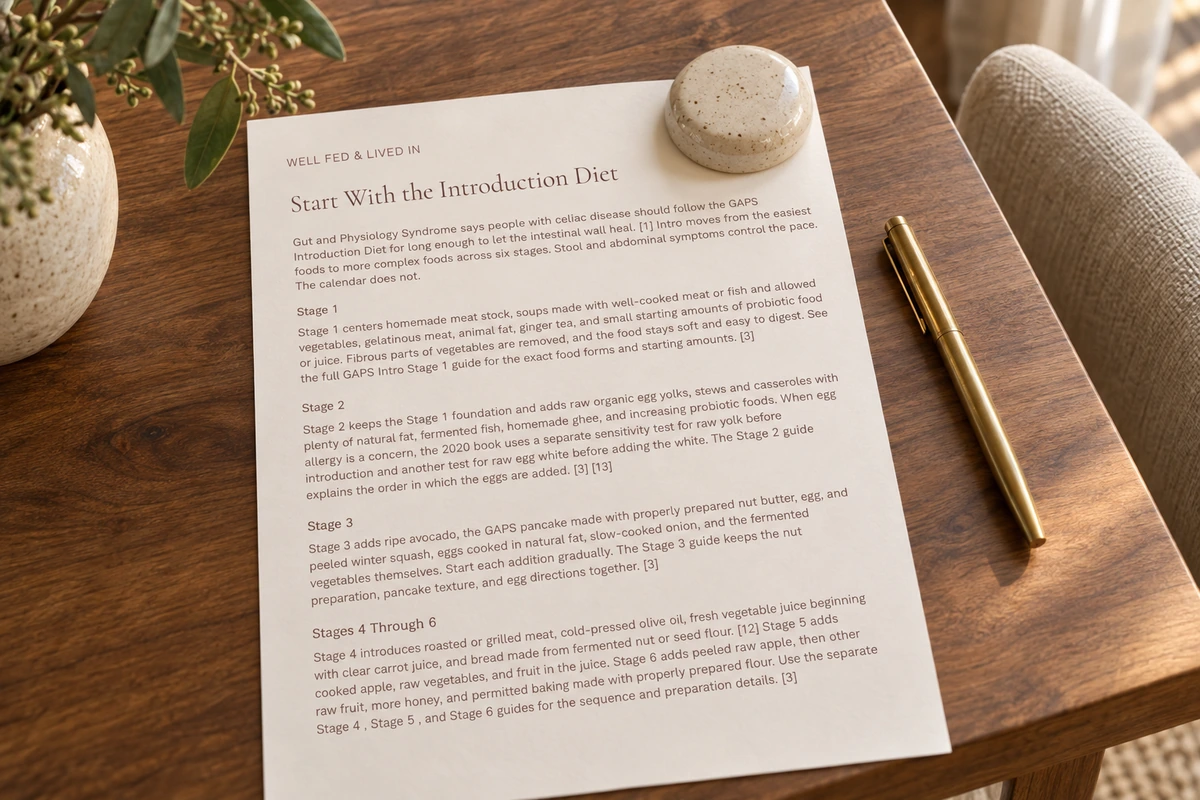
Gut and Physiology Syndrome says people with celiac disease should follow the GAPS Introduction Diet for long enough to let the intestinal wall heal.[1] Intro moves from the easiest foods to more complex foods across six stages. Stool and abdominal symptoms control the pace. The calendar does not.
Stage 1
Stage 1 centers homemade meat stock, soups made with well-cooked meat or fish and allowed vegetables, gelatinous meat, animal fat, ginger tea, and small starting amounts of probiotic food or juice. Fibrous parts of vegetables are removed, and the food stays soft and easy to digest. See the full GAPS Intro Stage 1 guide for the exact food forms and starting amounts.[3]
Stage 2
Stage 2 keeps the Stage 1 foundation and adds raw organic egg yolks, stews and casseroles with plenty of natural fat, fermented fish, homemade ghee, and increasing probiotic foods. When egg allergy is a concern, the 2020 book uses a separate sensitivity test for raw yolk before introduction and another test for raw egg white before adding the white. The Stage 2 guide explains the order in which the eggs are added.[3][13]
Stage 3
Stage 3 adds ripe avocado, the GAPS pancake made with properly prepared nut butter, egg, and peeled winter squash, eggs cooked in natural fat, slow-cooked onion, and the fermented vegetables themselves. Start each addition gradually. The Stage 3 guide keeps the nut preparation, pancake texture, and egg directions together.[3]
Stages 4 Through 6
Stage 4 introduces roasted or grilled meat, cold-pressed olive oil, fresh vegetable juice beginning with clear carrot juice, and bread made from fermented nut or seed flour.[12] Stage 5 adds cooked apple, raw vegetables, and fruit in the juice. Stage 6 adds peeled raw apple, then other raw fruit, more honey, and permitted baking made with properly prepared flour. Use the separate Stage 4, Stage 5, and Stage 6 guides for the sequence and preparation details.[3]
What GAPS Removes
GAPS removes every grain during the protocol, including wheat, rye, barley, oats, rice, corn, sorghum, millet, buckwheat, quinoa, spelt, triticale, and anything made from them. It also removes sugar, starchy vegetables such as potatoes and sweet potatoes, processed foods, processed oils, dairy products that still contain lactose, and legumes outside the named Full GAPS exceptions. Properly prepared dried white or navy beans, haricot beans, string beans, and lima beans remain on the Full GAPS list, while baked beans, black-eyed beans, butter beans, cannellini beans, fava beans, garbanzo beans, and mung beans do not.[4]
That longer list is deliberate. The celiac section of the 2020 book says other grain proteins and cross-reactive plant proteins can trigger the same symptoms as gluten. The official GAPS FAQ gives rice, other grains, and potatoes as examples of foods that can cross-react with gliadin antibodies even though they are gluten-free.[1][5]
A gluten-free label therefore does one job, not two. Under FDA rules, it describes the gluten level in the food. It does not certify that the ingredients fit GAPS, that the food belongs in your current stage, or that a processed starch supports the GAPS route.[6]
What to Build Meals Around
The working foods are fresh meat and poultry, fish and shellfish, eggs, homemade meat stock, soups and stews, natural animal fats, non-starchy vegetables in their stage-appropriate form, fermented foods, and homemade cultured dairy when it is tolerated. Early Intro relies more heavily on boiled and stewed foods. Later stages add roasted meat, raw vegetables, fruit, permitted nut and seed foods, and baking made with properly prepared ingredients.
My GAPS Diet Food List guide puts the six Intro stages and Full GAPS categories in one place. Pair it with the stage guides above so each food is used in the right form and at the right point. The companion Intro and Full GAPS Food List printable is part of the WFLI shop collection.
When Symptoms Are Severe: The No-Plant Route
When severe, stubborn diarrhea continues, the 2020 book says to use the No-Plant GAPS Diet for a period and then return to the Introduction Diet.[1] No-Plant GAPS removes all plant matter. Meals are built from animal foods such as meat stock, gelatinous meat, organs, fish, shellfish, eggs, natural animal fats, and tolerated fermented dairy. Plant foods return carefully when the digestive system is ready.[7]
This branch is not an excuse to skip randomly between versions of GAPS. The 2020 GAPS book uses this route when the digestive system is too damaged to tolerate even the gentle plant foods in Stage 1. When symptoms settle, the next step is a careful return to Intro.
Testing a Food Before Reintroduction
GAPS uses a Skin Sensitivity Test before reintroducing a food that has caused a reaction or raises an allergy concern. Place a drop of the food on the inside of the wrist at bedtime. Mash a solid food with a little water first. Let it dry, then check the area in the morning. A red reaction means waiting a few weeks before testing again. If there is no reaction, introduce a tiny amount and increase gradually.[8]
Trace Gluten and Cross-Contact
Cross-contact is a practical celiac concern. NIDDK explains that gluten-containing food can make contact with gluten-free food during growing, processing, storage, preparation, or serving, making that food unsafe for a person with celiac disease.[9]
The GAPS FAQ separately answers questions about tiny factory traces in coffee and about blue cheese. It distinguishes a true anaphylactic-type gluten allergy, which requires strict avoidance of every trace, from gluten intolerance linked to a damaged gut wall. It also explains that blue cheese is introduced late, after substantial gut healing has usually taken place.[10] Keep that narrow answer in its source context. It does not turn a processed gluten-free food into a GAPS food.
When GAPS Tests Gluten Again
For the full recovery timeline and an explanation of how the timing boundaries fit together, read the complete celiac and GAPS guide. For the food sequence, the immediate rule is simple: wait until digestive symptoms have been completely absent for at least six months before testing homemade sourdough. The official GAPS FAQ starts with a small amount, then watches for four to five days before more is tried.[11]
This is a deliberate test after sustained healing, not a return to ordinary bread because a few good weeks have passed. New foods continue one at a time so you can tell what changed.
Frequently Asked Questions
Does Celiac Disease Require Intro GAPS?
The 2020 book directs people with celiac disease to follow the Introduction Diet long enough to heal. It routes severe, stubborn diarrhea to No-Plant GAPS for a period before returning to Intro.[1]
Are Rice, Corn, or Gluten-Free Oats GAPS Foods?
No. GAPS removes all grains during the protocol, including grains that do not naturally contain gluten. The gluten-free label and the GAPS food list answer different questions.
What If a GAPS Food Still Causes a Reaction?
Hold the food, use the source’s sensitivity test when it applies, and give the digestive system more time before trying again. A food can belong on the GAPS list and still need to wait for your current tolerance or stage.
References
- Campbell-McBride, N. Gut and Physiology Syndrome (2020), “Coeliac (celiac) disease,” pp. 412–413.
- National Institute of Diabetes and Digestive and Kidney Diseases. “Diagnosis of Celiac Disease.” Accessed October 6, 2026.
- Campbell-McBride, N. GAPS Introduction Diet Food List, “Six Stages of GAPS Intro.”
- Campbell-McBride, N. Full GAPS Diet: Foods to Avoid.
- Campbell-McBride, N. “Diet/Food,” Q64, GAPS FAQs.
- U.S. Food and Drug Administration. “Gluten and Food Labeling.” Accessed October 6, 2026.
- Campbell-McBride, N. GAPS Diet: Full Spectrum of the GAPS Diet, “No-Plant GAPS Diet.”
- Campbell-McBride, N. Complete Cooking Techniques for GAPS, 2nd ed., “The Skin Sensitivity Test.”
- National Institute of Diabetes and Digestive and Kidney Diseases. “Eating, Diet, and Nutrition for Celiac Disease.” Accessed October 6, 2026.
- Campbell-McBride, N. “Food reactions, food allergies, leaky gut,” Q16–17, GAPS FAQs.
- Campbell-McBride, N. “Autoimmunity,” Q3, GAPS FAQs.
- Campbell-McBride, N. Gut and Physiology Syndrome (2020), “GAPS Introduction Diet,” Fourth Stage, pp. 174–175.
- Campbell-McBride, N. Gut and Physiology Syndrome (2020), “GAPS Introduction Diet,” Second Stage.

Leave a comment