

Celiac disease is an autoimmune condition of the small intestine. The 2020 Gut and Physiology Syndrome book places it within the GAPS framework because the condition involves much more than a reaction to one food. In that framework, gluten is a major trigger, while damaged gut flora, a compromised intestinal wall, incomplete protein digestion, and cross-reactions with other food proteins are the larger problem GAPS sets out to address.[1][5] This guide shows how those pieces fit together.
Celiac and coeliac refer to the same condition. Coeliac is the British spelling used in parts of the GAPS source material. I use the US spelling here so the wording stays consistent across the site.
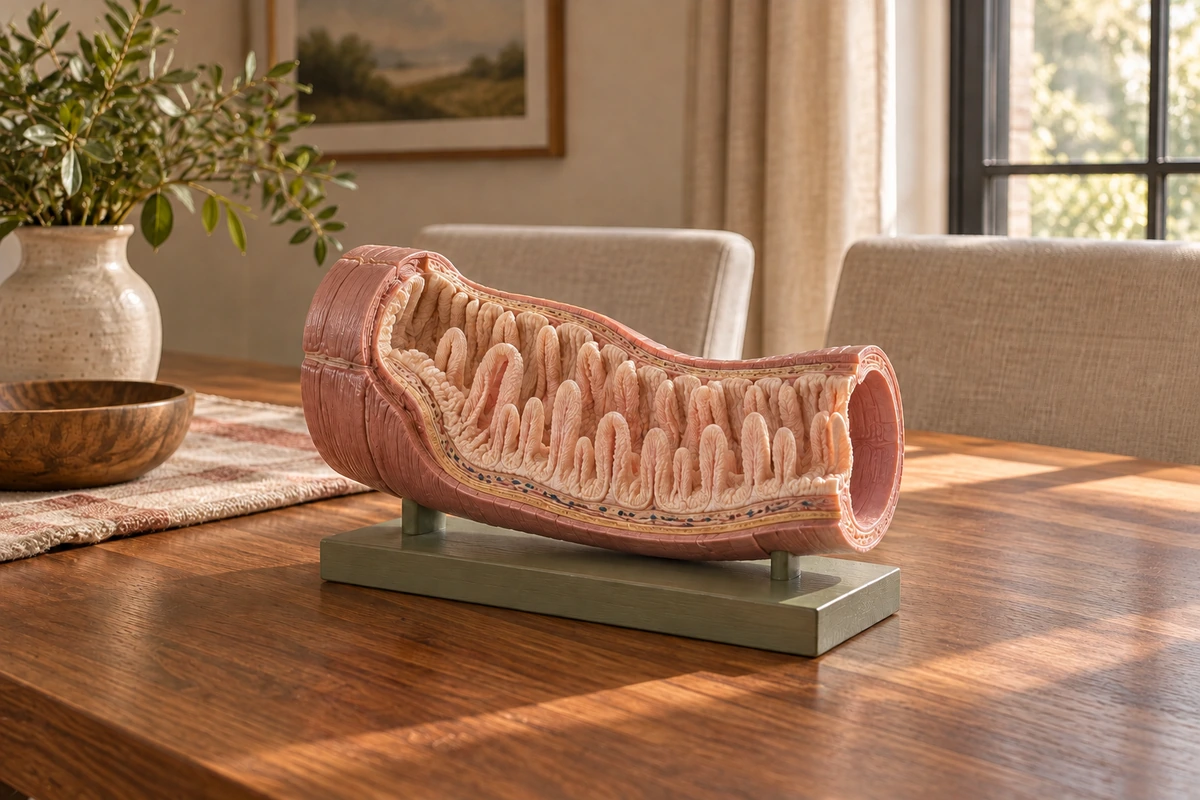
What Celiac Disease Is
Celiac disease is diagnosed through medical history and testing, not from a symptom list alone. The National Institute of Diabetes and Digestive and Kidney Diseases explains that doctors typically use blood tests and biopsies from the small intestine to diagnose or rule it out. It also notes that starting a gluten-free diet before testing can change the results.[2]
When a person with celiac disease eats gluten, the immune response damages the lining of the small intestine.[9] That helps explain why the condition can show up as more than digestive discomfort. Poor absorption can be tied to anemia, weight loss, nutrient deficiencies, difficulty digesting fat, and failure to thrive. My celiac symptoms and gut-signs guide keeps those patterns together in one place.[7][10]
How GAPS Classifies Celiac Disease
Dr. Natasha Campbell-McBride lists celiac disease among the autoimmune conditions included in Gut and Physiology Syndrome.[3] Her explanation begins with abnormal gut flora and a damaged gut wall. Food particles and microbial products cross that damaged barrier, and the immune system responds to what has entered the body. GAPS therefore focuses on rebuilding the gut environment and intestinal wall instead of treating gluten avoidance as the whole job.
Current research also continues to study the relationship between celiac disease and the gut microbiome. A 2024 scoping review found that the microbiome may help explain differences in when the condition appears and how it presents, while documenting the range of celiac microbiome research already available.[4]
Why Removing Gluten Alone Isn’t the Whole GAPS Route
The celiac section in Gut and Physiology Syndrome says gluten is not the only protein involved. It also describes immune responses to other grain proteins and cross-reactions with proteins from other plant foods. That is why GAPS does not replace wheat bread with rice flour, potato starch, or a cart full of processed gluten-free products and call the work finished.[1]
The practical distinction matters. A gluten-free label tells you that a product meets a gluten standard. It does not tell you whether the food fits the GAPS protocol, supports the stage you are on, or is well tolerated by your digestive system. The GAPS foods and stages guide for celiac disease covers the full food route, including trace exposure, testing a food, the severe-diarrhea No-Plant option, and eventual reintroduction.
The Gut Wall and Protein Digestion Piece
GAPS connects celiac disease with the final steps of protein digestion at the intestinal wall. When enterocytes are not finishing that job well, larger peptide fragments can pass through a damaged barrier and meet the immune system in a form it was not meant to see. The 2020 book also discusses grain-protein cross-reactions and microbial transglutaminase as part of its autoimmune model.[5] I keep that detailed sequence, including what the source says about microbial versus human tissue transglutaminase, in the separate guide to what causes celiac disease in the GAPS framework.
How GAPS Approaches Celiac Disease
The 2020 book directs people with celiac disease to follow the GAPS Introduction Diet long enough to give the intestinal wall time to heal. When severe, stubborn diarrhea continues, it routes the person to the No-Plant GAPS Diet for a period before returning to Intro.[1] Those are two different routes for different levels of digestive damage. The food guide walks through all six Intro stages and the No-Plant branch.
If you are sorting the allowed foods before planning meals, my GAPS Diet Food List guide keeps the stages and Full GAPS categories together. Use it alongside this condition-specific food guide, because a generally GAPS-compatible food may still belong to a later stage. The companion Intro and Full GAPS Food List printable is part of the WFLI shop collection.
What GAPS Says About Recovery and Timing
Campbell-McBride states that celiac disease can heal through GAPS rather than only be managed. She describes people who recovered to the point of occasionally eating ordinary pasta or sourdough bread without problems. The same passage gives the important timing boundary: before reaching that point, the GAPS Diet needs to be followed strictly for at least four to five years.[1]
The official GAPS FAQ adds that recovery time is individual. The four-to-five-year treatment period and the later food test describe different parts of the process. Follow the exact test sequence in the celiac foods and stages guide rather than using a date on the calendar to decide that gluten is suitable again.[6]
The Malabsorption Piece
Celiac disease can affect how well the body absorbs far more than gluten. Gut and Physiology Syndrome describes pancreatic problems in many people with celiac disease and connects impaired digestion in the small intestine with nutrient deficiencies, weight loss, anemia, and failure to thrive.[7] That is why the GAPS route includes nutrient-dense foods, digestive support, and work on the whole gut environment. It is not simply a list of ingredients to remove.
Where to Go Next
Choose the page that matches the question you are trying to answer:
- What Causes Celiac Disease in the GAPS Framework explains the gut-wall, protein-digestion, antibody, and microbial-transglutaminase sequence.
- GAPS Diet for Celiac Disease: Foods and Stages covers Intro, No-Plant GAPS, what to eat, what to avoid, trace exposure, food testing, and reintroduction.
- Celiac Disease Symptoms and Gut Signs brings the digestive, malabsorption, nutrient, stool, weight, and growth signs together without treating a checklist as a diagnosis.
Frequently Asked Questions
Is Celiac Disease the Same as Gluten Intolerance?
No. Celiac disease is an autoimmune condition with a defined diagnostic process. The GAPS FAQ describes gluten intolerance more broadly as a subset of GAPS and connects it with incomplete digestion through a damaged intestinal wall.[8] The 2020 protein section describes a range of tolerance, from mild symptoms to celiac disease.[5]
Is Eating Gluten-Free Enough?
A strict gluten-free diet removes the trigger used in conventional celiac management.[9] The GAPS protocol goes further because its source model also addresses abnormal gut flora, the intestinal wall, other difficult-to-digest proteins, starch, and processed carbohydrates. A product can be gluten-free and still fall outside GAPS.
References
- Campbell-McBride, N. Gut and Physiology Syndrome (2020), “Coeliac (celiac) disease,” pp. 412–413.
- National Institute of Diabetes and Digestive and Kidney Diseases. “Diagnosis of Celiac Disease.” Accessed October 6, 2026.
- Campbell-McBride, N. Gut and Physiology Syndrome (2020), pp. 10, 51–56.
- Luz, V. C. C., and S. G. Pereira. “Celiac disease gut microbiome studies in the third millennium: reviewing the findings and gaps of available literature.” Frontiers in Medical Technology, 2024.
- Campbell-McBride, N. Gut and Physiology Syndrome (2020), pp. 51–52, 134–135.
- Campbell-McBride, N. “Autoimmunity,” Q3, GAPS FAQs.
- Campbell-McBride, N. Gut and Physiology Syndrome (2020), pp. 437–438.
- Campbell-McBride, N. “Diet/Food,” Q41, GAPS FAQs.
- National Institute of Diabetes and Digestive and Kidney Diseases. “Treatment for Celiac Disease.” Accessed October 6, 2026.
- Campbell-McBride, N. Gut and Physiology Syndrome (2020), p. 135.

Leave a comment