

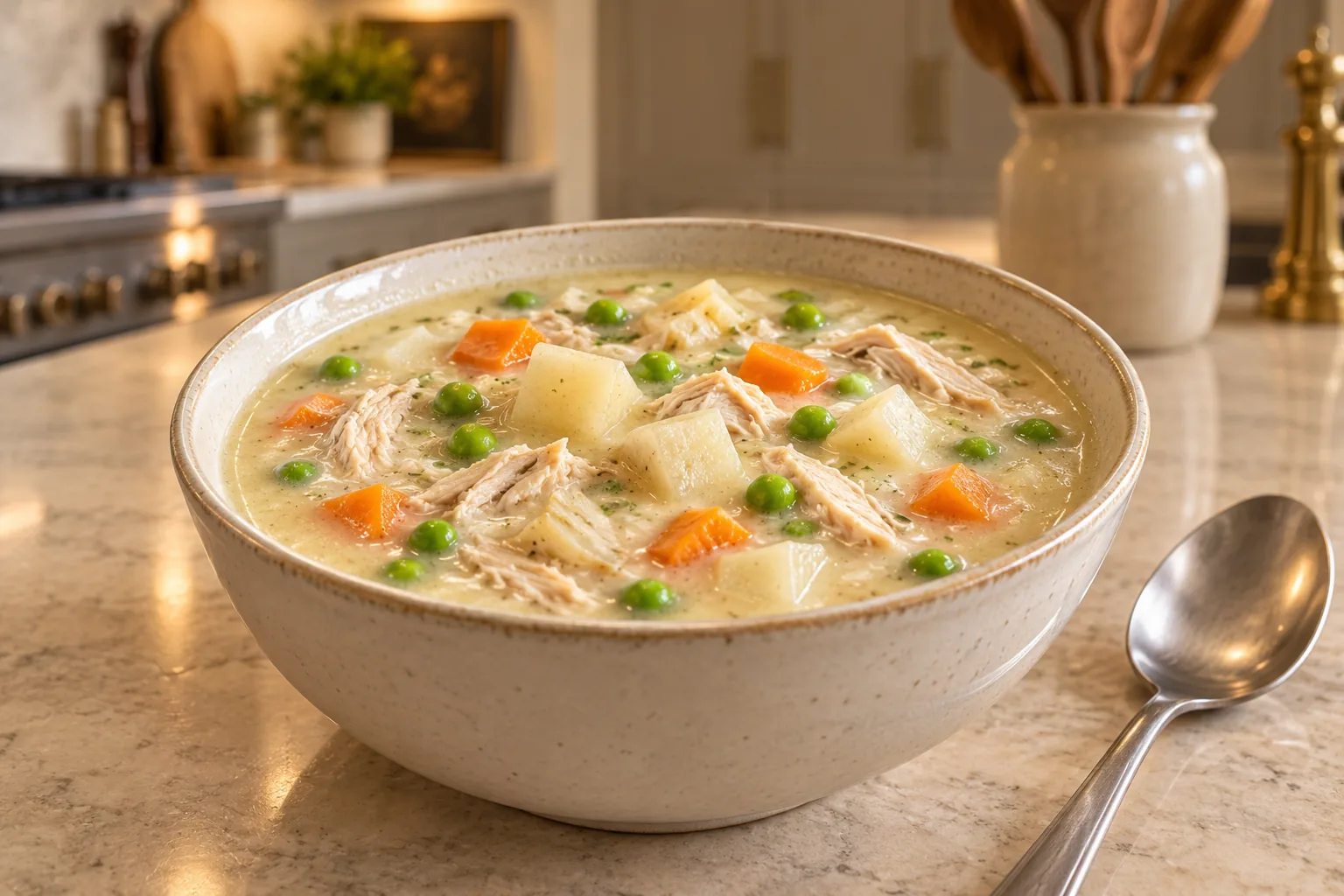
Creamy celeriac chicken soup has the cozy, homestyle feel of chicken pot pie filling without flour, starch, or a pastry lid. The creaminess comes from one portion of celery root blended with homemade coconut milk, while a second portion stays in half-inch cubes so the finished bowl still has vegetables you can see and bite.
Carrots, English peas, cooked chicken, thyme, rosemary, onion, and homemade raw-meaty chicken stock keep the soup familiar. The herbs sit in the background, the coconut milk rounds the celeriac instead of making the soup taste tropical, and the purée thickens the broth without turning the whole pot smooth.
With six children, I appreciate a soup that uses the same root vegetable in two useful ways. The roughly chopped half builds the creamy base; the neat cubes make the bowl feel like dinner. Keeping those jobs separate takes only one blender step and gives the soup far more texture than blending everything together.
Why Celeriac Makes The Soup Creamy
Celeriac, also called celery root, is a knobby root with pale firm flesh and a mild celery-like aroma. It is not the same as celery stalks. Once peeled and simmered in chicken meat stock, its rough pieces soften enough to blend into a naturally thick purée.
The recipe uses two separate half-pound portions. Roughly chop the first half-pound because it will be removed and blended. Cut the second half-pound into fairly even half-inch squares because those pieces stay in the final soup. Combining the cuts would make it harder to remove the correct portion and would erase the intended mix of creamy broth and tender cubes.
Peel the root thoroughly. Any remaining brown, deeply grooved skin stays fibrous after simmering. The finished flesh should be ivory with occasional natural speckles, never woody or spongy.
Where This Soup Fits On Full GAPS
This is a Full GAPS soup after peas, homemade coconut milk, onion, cooked chicken, celeriac, carrots, ghee, black pepper, thyme, and rosemary are established. It is not an Introduction Diet Stage 3 soup.
Use four cups of homemade raw-meaty chicken stock, made with meaty joints rather than repeatedly reused bare bones. It gives the soup a fresh chicken flavor and the gelatin-rich body needed for the creamy base.
Use one-half cup of homemade noncanned coconut milk. That is the measured primary cream branch. After cultured dairy has been introduced and is working well, the source-supported cultured-cream option can replace the coconut milk in the same measured amount.
Prepare The Two Celeriac Cuts First
Weigh two separate half-pound portions after peeling. Roughly chop the first portion into pieces that will cook evenly but do not need to be attractive. Cut the second portion into half-inch squares, keeping them close enough in size to become tender at the same time.
Chop the onion, measure one cup chopped carrots, and have the cooked chicken ready before the pot starts. Shredded chicken catches the creamy broth in its fibers; cubes give a more defined bite. Either shape is part of the source formula, but choose one consistent shape for the pot.
Soften The Onion Without Browning It
Melt two tablespoons homemade ghee in a large stainless-steel saucepan over medium heat. Add the chopped yellow onion and cook for five to seven minutes, stirring often.
The onion is ready when it looks translucent, smells sweet and savory, and bends easily against the spoon. Keep the heat below the point where the edges turn dark brown. Browning would push the soup toward a roasted flavor and muddy the pale creamy color.
Simmer The Rough Celeriac Until Fork-Tender
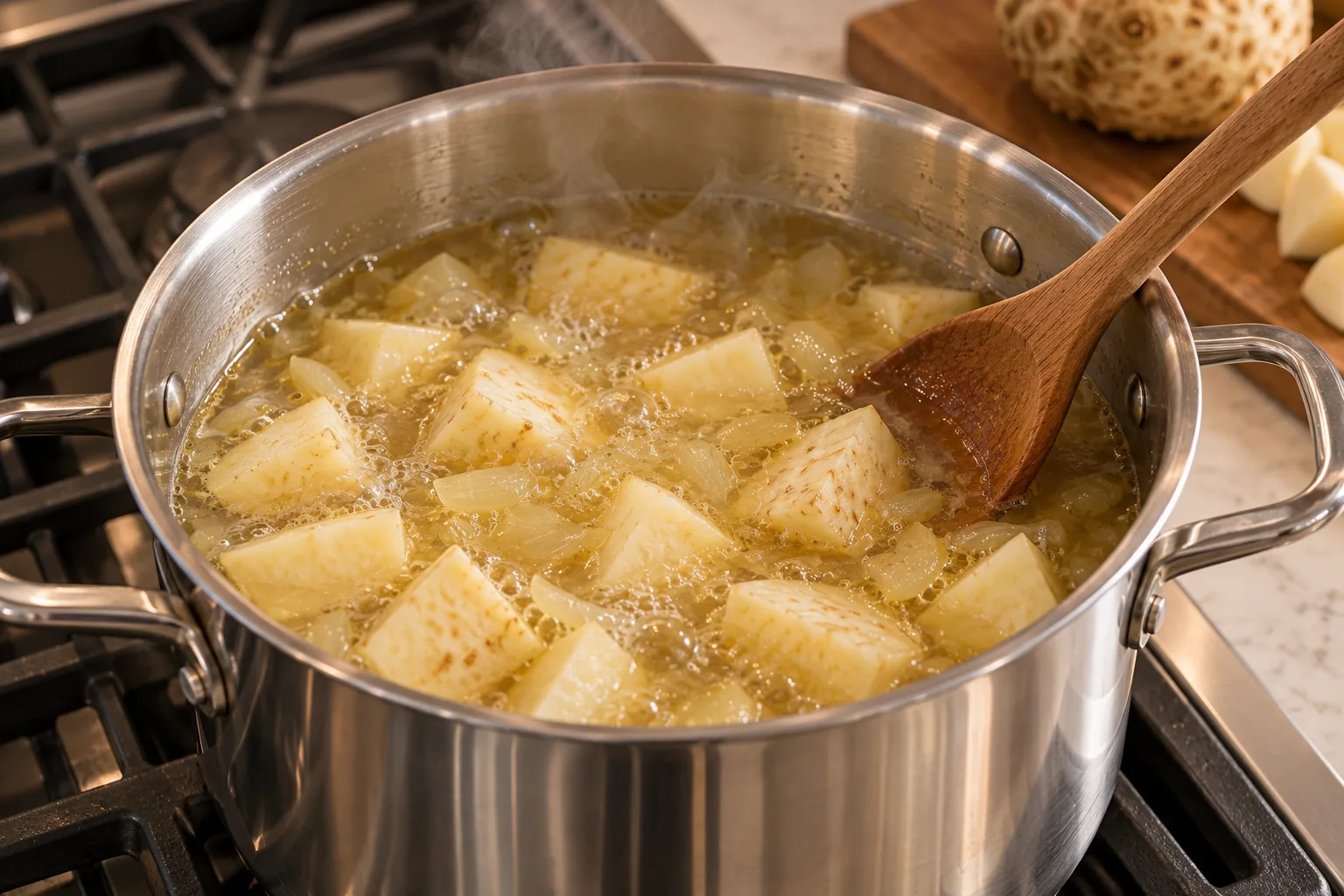
Add the roughly chopped half-pound of celeriac and four cups homemade chicken meat stock. Bring the liquid to a boil, lower the heat, and simmer for about ten minutes.
Test the thickest piece with a fork. The tines should slide through without a hard center, but the pieces should still be solid enough to lift with a slotted spoon. If the fork stops in the middle, simmer a little longer and test again.
Blend The Celeriac With Coconut Milk
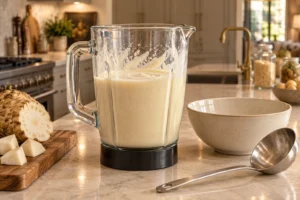
Use a slotted spoon to lift only the tender celeriac pieces from the saucepan, leaving the stock and onion in the pot. Transfer the celeriac to a sturdy glass blender pitcher and add one-half cup homemade coconut milk.
Blend until completely smooth. Stop and scrape down the pitcher if a pale lump clings above the blades. The finished purée should be thick enough to coat the pitcher walls, pour slowly, and show no grainy pieces.
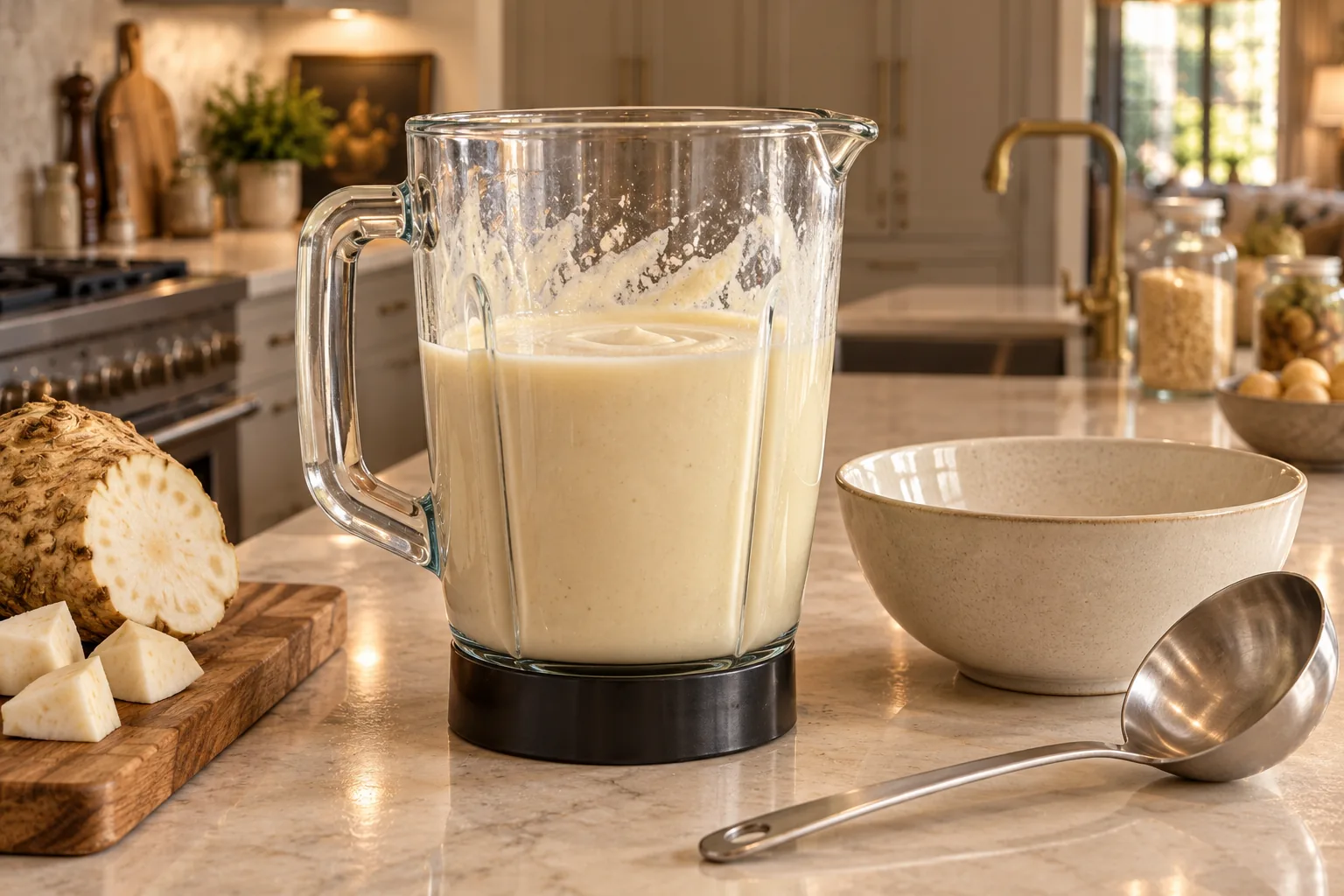
Set the purée aside while the vegetables cook. Do not add extra coconut milk to make the blender run. The half-cup measure controls the finished body, and the hot stock will loosen the purée when it returns to the saucepan.
Cook The Carrots And Celeriac Cubes
Add the carrots, the half-inch celeriac squares, sea salt, black pepper, dried thyme, and dried rosemary to the stock. Simmer for about ten minutes.
The carrots should be tender at the edges but still hold their orange shape. A celeriac cube should yield cleanly to the side of a spoon without collapsing into mash. Stir from the bottom so the herbs distribute through the stock rather than collecting at the surface.
Finish With Chicken, Peas, And The Purée
Stir the celeriac-coconut purée back into the saucepan, scraping the pitcher clean. Add one pound cooked chicken and two-thirds cup frozen English peas.
Simmer for a few minutes, just until the peas are hot and bright green, the chicken is steaming throughout, and the vegetables are fully tender. The broth should look pale and creamy and should cling lightly to the chicken rather than running away like plain stock.
Taste after everything is hot. The sea salt should make the chicken and celeriac taste clear, while the rosemary and thyme remain gentle. If the soup tastes flat, stir through the pot before deciding it needs more salt; seasoning often settles in the thick base.
What The Finished Soup Should Be Like
The spoon should bring up creamy broth, tender chicken, orange carrot, bright peas, and pale celeriac cubes in the same serving. The soup is thicker than chicken stock but looser than mashed vegetables. It should settle back into the bowl after stirring rather than standing in a mound.
The aroma is onion, chicken, thyme, and rosemary. Celeriac adds an earthy celery note, and the coconut milk softens the broth without becoming the dominant smell. The chicken should remain moist, and the peas should retain a gentle pop instead of turning gray and wrinkled.
Serving And Storage
Serve the soup hot in warmed bowls. Because the soup already contains chicken, meat stock, vegetables, and fat, it can stand as a complete simple meal. A spoonful of cultured cream can be added at the table only after cultured dairy has been introduced.
Cool leftovers promptly in a shallow covered container and refrigerate. Reheat gently over medium-low heat, stirring from the bottom. A hard boil can tighten the chicken and make the coconut-milk base look separated, so stop when the soup is steaming and evenly hot.
For another meat-stock chicken soup with an unblended vegetable broth, see Chicken Cabbage Vegetable Soup for Full GAPS. For a creamy mushroom variation with spaghetti squash, see Chicken Tetrazzini Soup. The Zucchini Ginger Bisque uses a separate blended vegetable formula.
Build More Full GAPS Meals Around One Pot
The upcoming First 30 Days on Full GAPS guide is the most useful WFLI companion for this soup because it organizes practical meals, preparation rhythms, and familiar Full GAPS ingredients into a workable first month. It will be available through the WFLI shop.
Recommended Equipment
Use a sturdy cutting board, chef’s knife, kitchen scale, liquid and dry measuring cups, measuring spoons, large stainless-steel saucepan, wooden spoon, stainless-steel slotted spoon, sturdy glass blender pitcher, and a shallow covered glass container for leftovers.
The slotted spoon matters because it lifts the first celeriac portion without removing the measured stock. A glass blender pitcher keeps the hot purée visible; never seal dangerously hot food in a blender that is not designed for warm ingredients.
Frequently Asked Questions
Is Celeriac The Same As Celery?
No. Celeriac is celery root. It has dense pale flesh that softens and blends into the creamy base, while ordinary celery stalks would produce a different texture.
Why Is The Celeriac Divided?
The roughly chopped half is blended with coconut milk. The half-inch cubes remain in the soup. The two cuts create both the creamy body and the tender vegetable pieces.
Can I Use Bone Broth?
Use homemade raw-meaty chicken stock for this Full GAPS formula. Bone broth has a different GAPS role and timing and should not quietly replace the measured chicken stock here.
Why Does The Recipe Use One-Half Cup Coconut Milk?
One-half cup is the controlling ingredient measure. It gives the celeriac enough liquid to blend while keeping the finished soup thick rather than coconut-heavy.
Can I Use Cultured Cream?
Yes, after cultured dairy has been introduced and is tolerated. Use the same measured amount in place of the coconut milk; keep the primary card on the homemade coconut-milk route.
When Do The Peas Go In?
Add them with the cooked chicken and purée near the end. They need only a few minutes to become hot and bright green.
Can I Blend The Whole Soup?
No. Blending the whole pot would erase the second celeriac cut, carrots, peas, and chicken. This formula deliberately keeps those pieces visible in the creamy broth.
Creamy Celeriac Chicken Soup Recipe
Creamy Celeriac Chicken Soup for Full GAPS
Ingredients
Equipment
Method
- Melt the ghee in a large stainless-steel saucepan over medium heat. Add the onion and cook for 5 to 7 minutes, stirring often, until translucent, fragrant, and soft without browning.
- Add the roughly chopped 1/2 pound celeriac and the chicken meat stock. Bring to a boil, reduce to a simmer, and cook for about 10 minutes until a fork passes through the thickest celeriac piece without resistance.
- Lift the tender celeriac out with a slotted spoon, leaving the stock and onion in the pan. Blend the celeriac with 1/2 cup homemade coconut milk until completely smooth, pale, and thick enough to coat the pitcher.
- Add the carrots, the half-inch celeriac squares, sea salt, black pepper, thyme, and rosemary to the saucepan. Simmer for about 10 minutes, until the carrots and celeriac cubes yield to the side of a spoon but retain their shape.
- Stir in the celeriac-coconut puree, cooked chicken, and frozen peas. Simmer for a few minutes, stirring from the bottom, until the peas are bright green, the chicken is steaming throughout, and the creamy broth clings lightly to the solids.
- Taste after stirring through the whole pot. Serve hot once the vegetables are tender and every bowl contains creamy broth, chicken, carrots, peas, and celeriac cubes.
Notes
Tried this recipe?
Let us know how it was!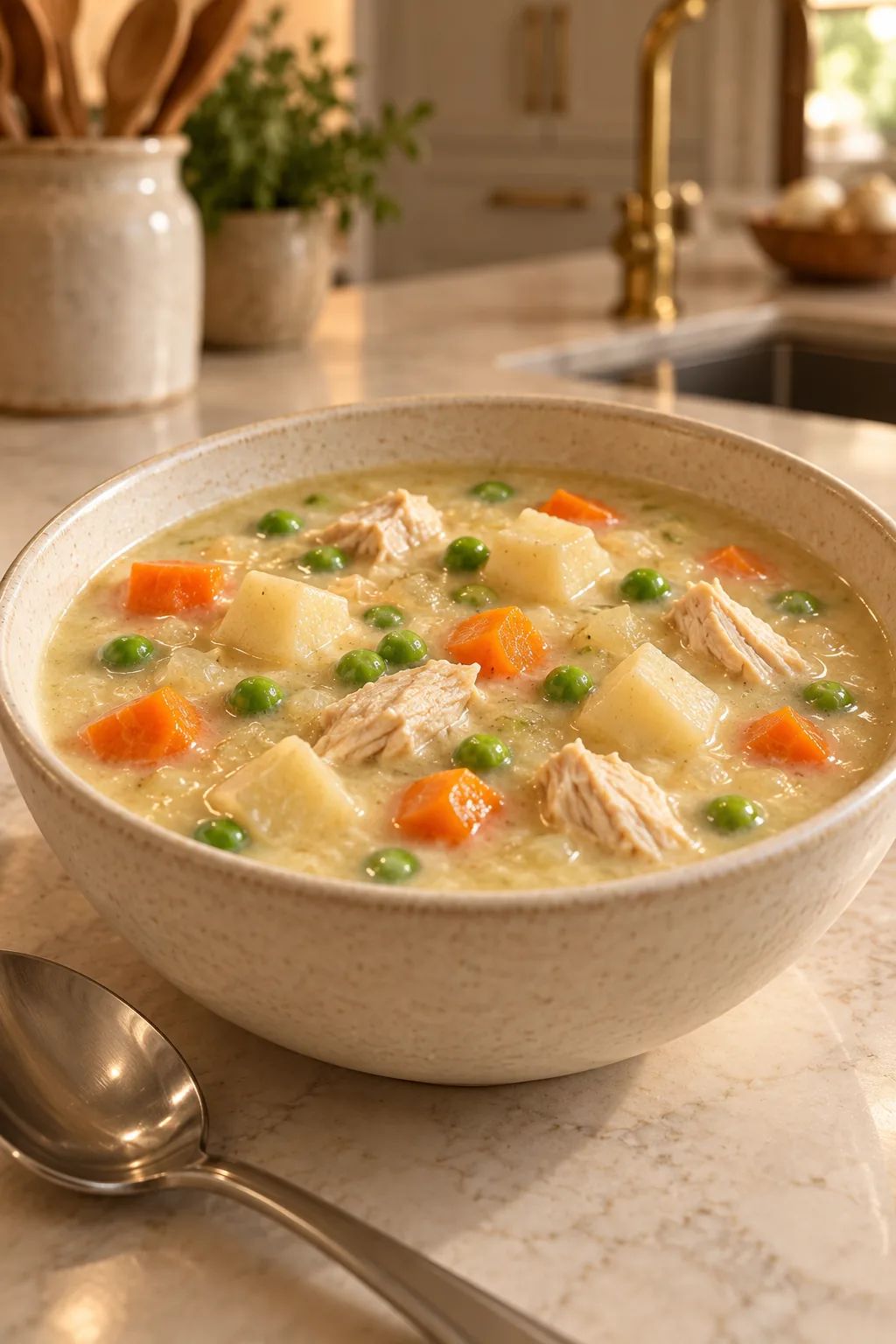

Leave a comment