

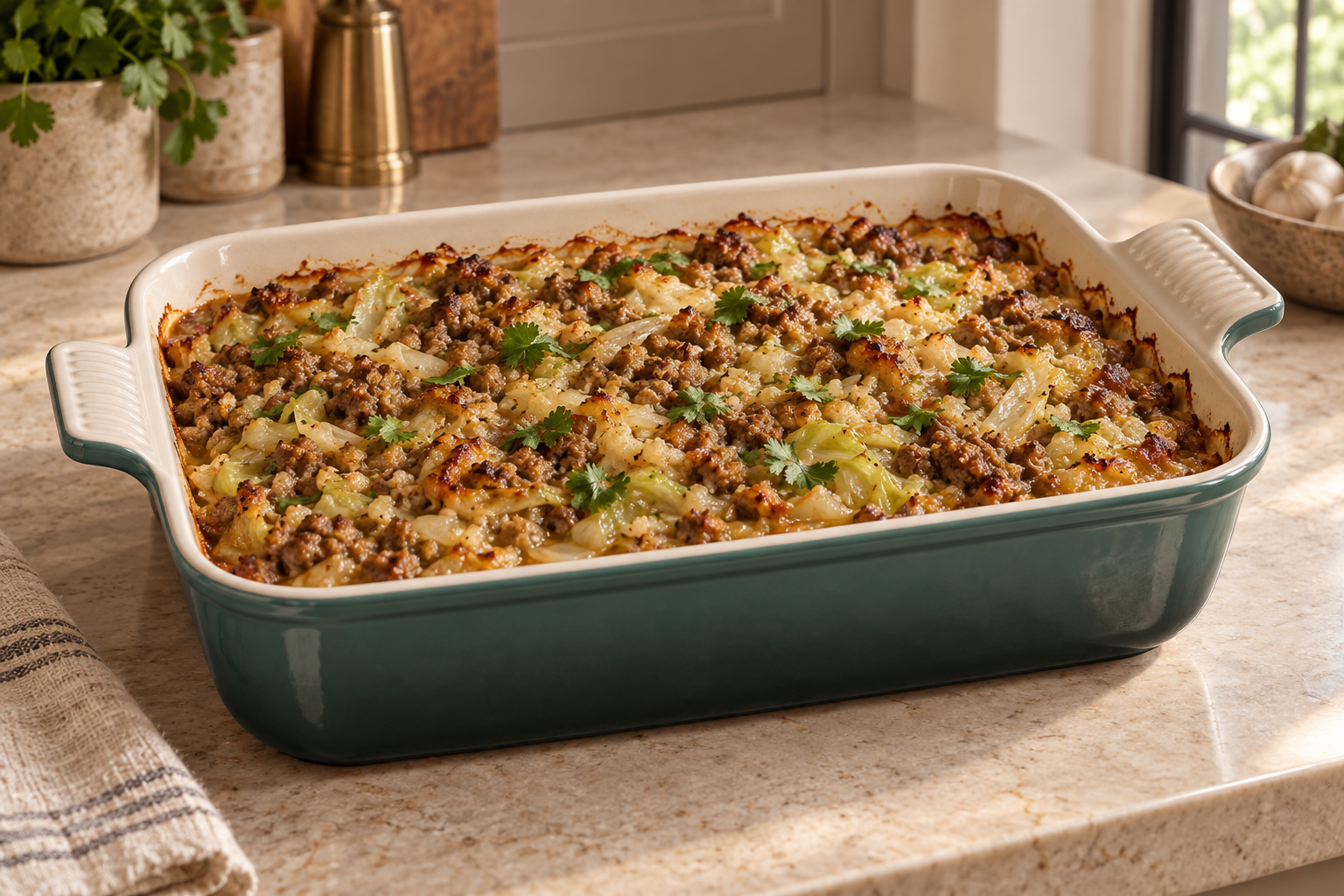
This Chinese-style lazy cabbage roll casserole gives you the beef, cabbage, onion, ginger, and savory sauce of cabbage rolls without boiling leaves or wrapping individual portions. Everything is cooked in practical stages, tossed together, and baked in one 9-by-13-inch dish until the center bubbles and the top picks up a little color.
The Full GAPS version uses cauliflower rice, homemade meat stock, coconut aminos, and a permitted cooking fat. It contains no rice, soy sauce, tamari, heated seed oil, cheese, or tomato sauce. The finished casserole is moist rather than soupy, with tender cabbage ribbons, browned beef crumbles, and fine cauliflower throughout.
Why the Lazy Cabbage Roll Method Works
Traditional cabbage rolls require separated leaves and individually wrapped filling. This recipe keeps the same useful ingredients but changes the assembly. Six cups of thin-sliced raw cabbage go straight into the mixture. The oven softens those ribbons while the pre-cooked beef, cauliflower, onions, and blended sauce heat together around them.
The stages matter. Onions soften first. Cauliflower rice cooks separately so excess water can evaporate. Beef browns before the spices go in. The sauce is blended smooth. If everything is put in the baking dish raw, the casserole will release too much water and the flavor will not be distributed as evenly.
For our family, a large casserole is useful because it portions easily and can be assembled ahead. With six children, homeschooling, and second shift, I would rather do a few clear preparation steps than spend the same time rolling individual cabbage leaves. The physical cues below keep the shortcuts from turning into a watery pan of vegetables.
Soften the Onions Without Browning Them
Heat two tablespoons of ghee, natural non-hydrogenated coconut oil, or rendered animal fat in a large wide pan over medium-high heat. Add three chopped medium onions and cook for about eight minutes. Stir often enough that the edges do not scorch.
The onions are ready when they look translucent and feel soft, with only a pale-gold tint. If they begin browning quickly, lower the heat to medium. Scoop them into a bowl and keep them separate. Two cups will go into the blender; the remaining onions stay whole in the casserole.
Reduce the Moisture in the Cauliflower Rice
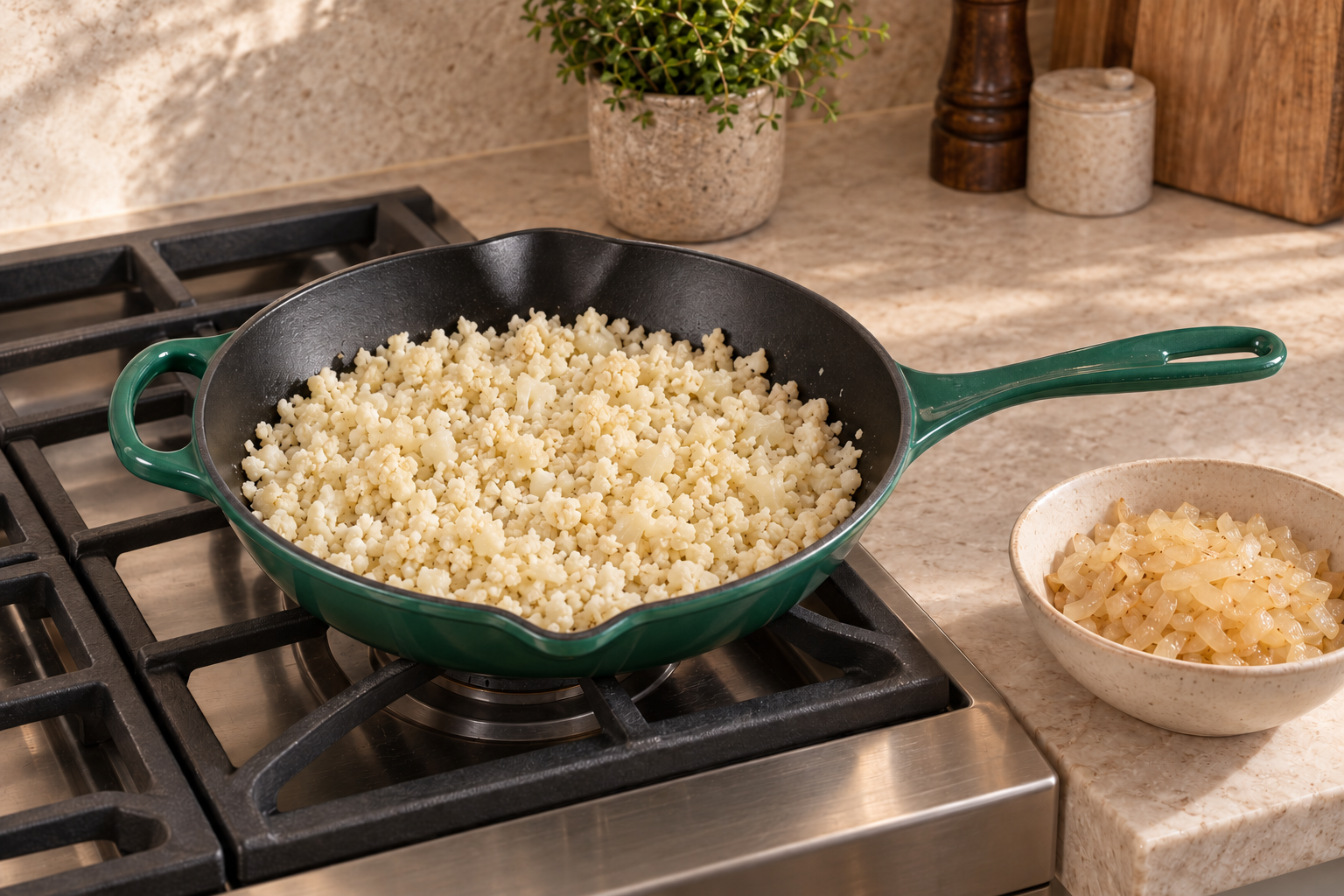
Add the remaining tablespoon of cooking fat to the same pan. Cook twelve ounces of plain cauliflower rice over medium heat for eight minutes. Frozen cauliflower is fine when nothing has been added to it.
At first the pan may hiss and steam as the cauliflower releases water. Continue until the visible steam slows, the pan no longer has loose water across the bottom, and the cauliflower crumbs remain pale rather than browned. Lower the heat near the end if they begin sticking.
Brown the Beef and Wake Up the Spices
Remove the cauliflower to a bowl, then add one and one-half pounds ground beef and one and one-half teaspoons natural sea salt to the pan. Cook over medium-high heat for about five minutes, breaking the meat into small crumbles, until most of the pink is gone.
Return the cauliflower rice. Add one teaspoon ground ginger and one teaspoon ground cumin. You may also add the measured garlic powder and white or black pepper options from the card. Cook for another two to three minutes. The meat should lose its remaining pink, and the pan should smell clearly of ginger and cumin before it comes off the heat.
Blend the Ginger and Coconut Aminos Sauce
Put two-thirds cup additive-free coconut aminos, one-quarter cup homemade GAPS meat stock, one-third cup finely chopped fresh ginger, and two cups of the cooked onions in a blender. Blend on medium for thirty seconds.
The finished sauce should look completely smooth and about as thick as applesauce. There should be no onion chunks or dense ginger pile at the bottom. If the mixture is still visibly uneven, scrape the sides and blend just until smooth.
Coconut aminos is product-specific. Check the complete label each time. The current Coconut Secret/Nutiva Organic Original label I verified lists organic coconut tree sap and sea salt. Use an equally simple product and leave soy sauce, tamari, flavored aminos, added starches, preservatives, and opaque flavors out.
Assemble the Casserole
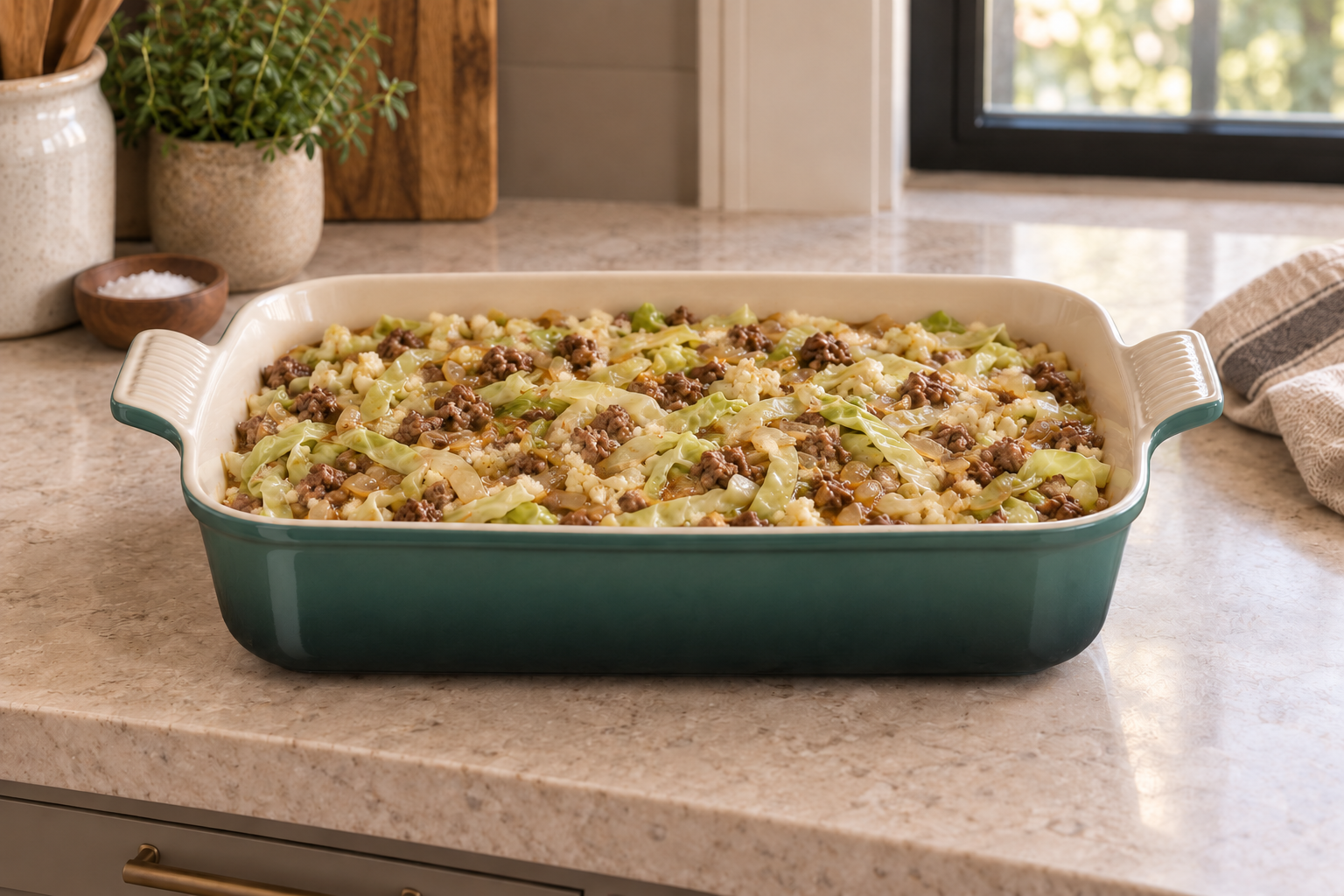
Add six cups thin-sliced cabbage, the remaining cooked onions, and the blended sauce to the pan with the beef and cauliflower. If the pan is too small to toss without spilling, move everything to a large mixing bowl.
Turn the mixture until every cabbage ribbon is lightly coated and the beef and cauliflower are distributed throughout. Spread it in a lightly greased 9-by-13-inch baking dish. Smooth the surface gently without packing it down. The cabbage goes in raw and still looks firm at this point.
Bake Until the Center Bubbles
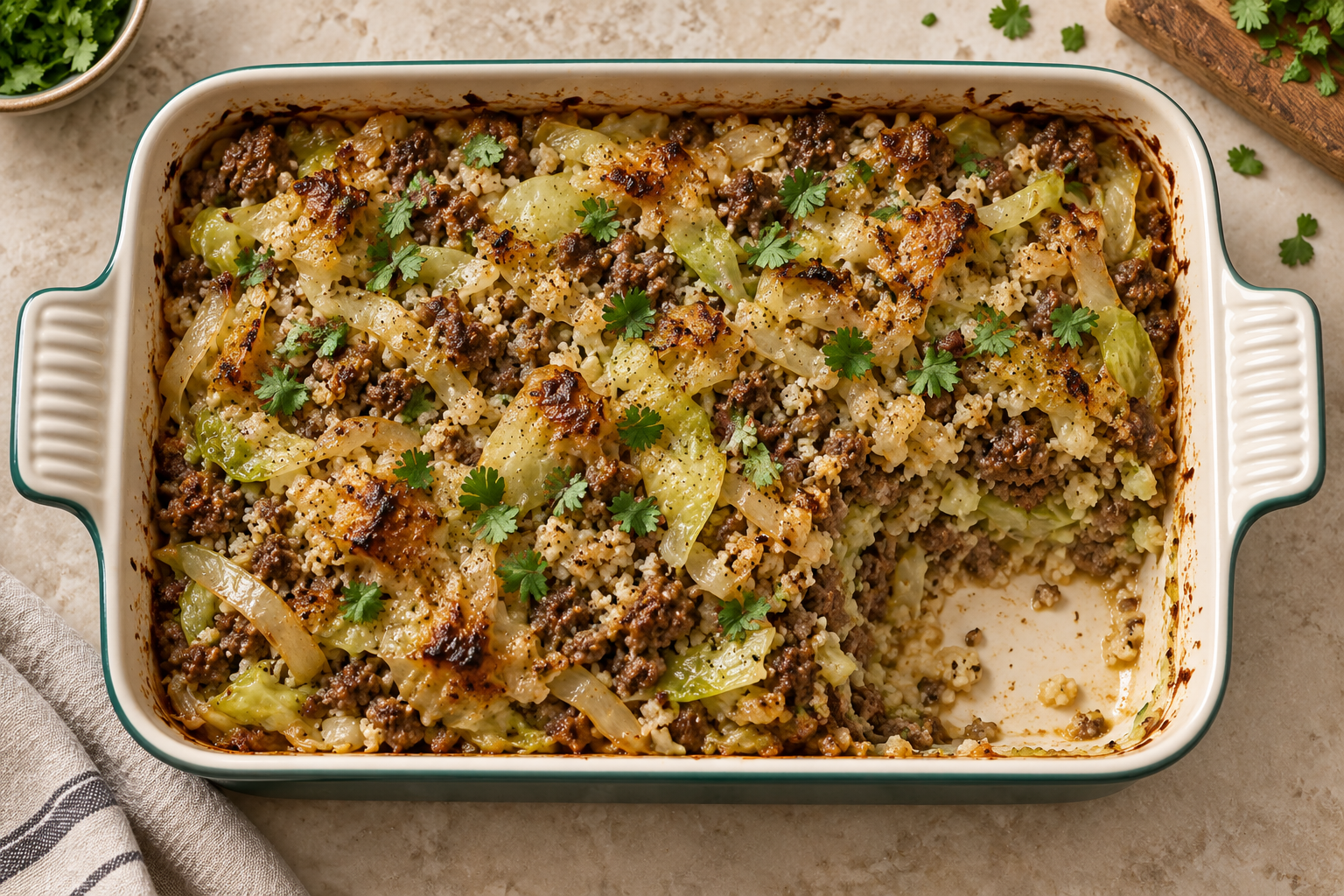
Bake at 350°F for about forty-five minutes. Look beyond the clock: the edges and center should bubble, the cabbage should be tender, and the uneven top should be lightly browned. Check the center with a food thermometer and continue baking until it reaches 165°F.
Rest the casserole for about ten minutes before serving. The pause lets bubbling settle and makes the portions easier to lift. Finish with chopped fresh cilantro if you use it. The cilantro is a measured serving choice, not a substitute for the ginger-rich sauce.
The rested casserole should still look moist between the cabbage ribbons, but liquid should not run across the plate like soup. Cauliflower crumbs stay small and tender, the beef remains in distinct crumbles, and the onions disappear into the sauce. If the center is hot but the pan still looks very wet, give the casserole its full rest before changing the recipe or returning it to the oven. The sauce continues settling as the bubbling slows.
Where This Casserole Fits on GAPS
This is a Full GAPS meal. Ground beef, cabbage, cauliflower, onions, ginger, pure single spices, homemade meat stock, and qualifying cooking fats fit the complete formula. Cauliflower rice replaces grain rice. Coconut aminos replaces the soy-based seasonings found in other versions.
This complete casserole is not an Introduction Diet recipe. The browned beef, coconut aminos, cumin, pepper option, raw cilantro, and baked mixed preparation belong later. Removing them would produce a different dish rather than a reliable earlier-stage adaptation.
Cook the onions and cauliflower in ghee, natural non-hydrogenated coconut oil, or rendered animal fat. If you need the component, use the linked homemade ghee recipe. Plant oils are not used for these heated steps.
Make the Casserole Ahead
You can prepare the components or assemble the whole casserole ahead. Cover and refrigerate promptly for up to two days before baking. Do not leave the prepared meat-and-vegetable mixture at room temperature for several hours.
A chilled casserole may need about five additional minutes, but use the bubbling center and 165°F reading rather than assuming the extra time is always exact. Let a cold glass baking dish lose its chill according to the manufacturer’s directions before putting it in a hot oven.
Serve and Store the Leftovers
Lift portions with a broad serving spoon or narrow spatula. The casserole is moist and scoopable rather than a firm layered bake. A simple cooked vegetable or green salad can sit beside it without hiding the cabbage, ginger, and beef under another sauce.
For another one-pan beef dinner with a smoother topping and no coconut aminos, try the Full GAPS Carrot and Beef Pie. It uses a mashed-carrot top, while this casserole keeps cabbage and cauliflower mixed through the beef.
Cool leftovers promptly, cover, and refrigerate. Reheat in a covered oven-safe dish until the center is hot. Covering limits moisture loss so the cabbage does not dry before the middle warms.
Equipment for Lazy Cabbage Roll Casserole
You need a large wide sauté pan or low pot, bowls for the cooked onions and cauliflower, a blender, a 9-by-13-inch baking dish, a spatula, a broad mixing spoon, measuring tools, and a food thermometer.
The photographs use the Le Creuset Heritage 4-quart rectangular dish and the 10.25-inch Signature skillet in Artichaut. Both sit fully supported in the same WFLI kitchen. Use cookware large enough for the measured ingredients without balancing a pan or crowding the mixture above the rim.
Frequently Asked Questions
Do I Cook the Cabbage First?
No. Slice it thinly, toss it thoroughly with the warm cooked ingredients and sauce, and let it soften during the forty-five-minute bake.
Why Cook the Cauliflower Rice Separately?
The separate eight-minute step drives off water. Skipping it makes the casserole more likely to turn soupy as the cabbage and sauce heat.
Can I Use Rice?
Not in this GAPS formula. All grains, including rice, are left out. The measured twelve ounces of cauliflower rice stay in the card.
Can I Use Soy Sauce or Tamari?
No. This version uses two-thirds cup qualifying coconut aminos. Soy sauce and tamari are not alternate choices on the Full GAPS card.
Can I Leave Out the Cumin?
The accepted Full GAPS formula keeps the measured teaspoon of ground cumin. Omitting it would change the sauce profile, so it is not presented as a tested variation here.
How Many People Does It Feed?
The 9-by-13-inch casserole makes seven servings. Use the card’s serving controls when scaling and choose cookware that can hold the increased volume.
Chinese Lazy Cabbage Roll Casserole Recipe
GAPS Chinese Lazy Cabbage Roll Casserole
Ingredients
Equipment
Method
- Cook the onions in 2 tablespoons of the fat in a large wide pan over medium-high heat for about 8 minutes, until soft and translucent. Lower the heat if they begin to brown. Transfer to a bowl.
- Cook the cauliflower rice in the remaining 1 tablespoon fat over medium heat for 8 minutes, until visible steam slows and no loose water remains. Lower the heat near the end if it begins sticking. Transfer to a bowl.
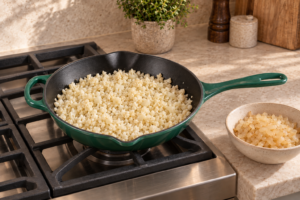
- Preheat the oven to 350°F. Lightly grease a 9-by-13-inch baking dish with a permitted cooking fat.
- Cook the ground beef and sea salt in the same pan over medium-high heat for about 5 minutes, breaking it into small crumbles, until most pink is gone.
- Return the cauliflower rice. Add the ground ginger, cumin and optional garlic and pepper. Cook 2 to 3 minutes, until the beef has no remaining pink and the spices smell fragrant. Remove from the heat.
- Blend the coconut aminos, meat stock, fresh ginger and 2 cups of the cooked onions on medium speed for 30 seconds, until completely smooth and about the thickness of applesauce.
- Add the raw cabbage, remaining onions and blended sauce to the beef and cauliflower. Toss until every cabbage ribbon is coated; use a large bowl if the pan is too small.
- Spread the mixture in the prepared baking dish and smooth the top gently without packing it down.
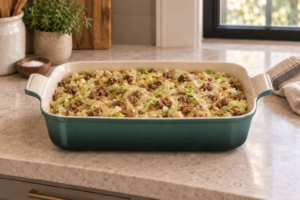
- Bake for about 45 minutes, until the edges and center bubble, the cabbage is tender, the top is lightly browned and the center reaches 165°F.
- Rest for about 10 minutes. Top with chopped fresh cilantro if using, then serve.
Notes
- Use cauliflower rice, not grain rice. Cook it separately for 8 minutes so the casserole does not become watery.
- Use coconut aminos with a checked complete label. The current Coconut Secret/Nutiva Organic Original label checked for this post lists organic coconut tree sap and sea salt.
- Soy sauce, tamari and heated seed oils are not alternatives on this Full GAPS card.
- Make ahead: cover and refrigerate the components or assembled casserole promptly for up to 2 days. A chilled casserole may need about 5 extra minutes; rely on a bubbling 165°F center.
- Cool leftovers promptly, cover and refrigerate. Reheat covered until the center is hot.
Tried this recipe?
Let us know how it was!Make the Next Batch Day Easier
This casserole is especially useful when you want tomorrow’s dinner assembled before the busy part of the day. Our upcoming Large-Family Batch Plan organizes that same kind of work into practical cooking blocks, storage decisions, and family-size portions. Find current guides and catalog updates in the WFLI shop.

Leave a comment