

This Mexican cabbage roll casserole keeps the beef, cabbage, and tomato comfort of stuffed cabbage without rolling a single leaf. Raw chopped cabbage goes straight into the baking dish with seasoned ground beef, cauliflower rice, homemade red salsa, and tomato paste. The oven softens everything together while the edges bubble and the center becomes tender.
This Full GAPS version uses beef tallow instead of heated avocado oil and homemade additive-free salsa instead of a commercial jar. Raw or properly cultured cheddar is optional. The photographed branch includes it, but the casserole bakes correctly without cheese when you need the dairy-free version.

A Casserole Sized For A Full Table
A recipe that makes eight real servings makes sense in our house. We have six children, homeschool before work, and still need dinner handled before I leave for second shift. A casserole can feed everyone once, cover lunches, or give me a second dinner without asking me to roll cabbage leaves one at a time.
The useful shortcut here is raw cabbage. You brown the beef and dry out the cauliflower rice, but the cabbage does not need a separate pot. Chop it small, mix it with the hot beef mixture and salsa, and let the baking time do the rest.
The Full GAPS Ingredient Changes
Homemade red salsa replaces jarred commercial salsa. Measure two cups of a homemade additive-free salsa whose exact ingredients already fit your household’s Full GAPS needs. Do not use a salsa with sugar, starch, corn, gums, preservatives, or a mystery seasoning blend.
Stir the homemade salsa before measuring so the chopped vegetables and liquid stay in their normal balance. A very watery scoop from the top of a separated container can loosen the casserole even when the total cup measure looks correct.
Beef tallow replaces the source’s heated avocado oil. Use two tablespoons divided between the cauliflower rice and the ground beef. Tallow handles the stovetop heat and fits naturally with the beef in the casserole.
Pure tomato paste thickens the red sauce. Check the label for tomatoes alone, or tomatoes and salt. The quarter cup keeps the casserole moist without letting the chopped cabbage sit in watery salsa.
Raw or properly cultured cheddar is optional and only belongs in the dish when dairy has already been introduced and tolerated. The photographed version uses three cups. For dairy-free casserole, leave it off and continue the second bake uncovered.
Pure herbs and spices provide the Mexican-style seasoning. Use oregano, cumin, optional chili powder, garlic powder, sea salt, and black pepper without starch, sugar, anticaking blends, or flavor additives.
Chop The Cabbage Small
Thinly slice the cabbage first, then cut across the slices so the pieces are roughly 3/4 to 1 inch. Six cups is a little less than one medium head. The pieces do not need to be perfectly square, but large ribbons take longer to soften and make each serving harder to scoop.
Keep the cabbage raw. It looks like a lot before baking, but it settles as moisture leaves the leaves. The finished cabbage should be tender while still holding broad soft pieces rather than dissolving into the sauce.
Leave the hard core and any thick dry outer leaf ribs out of the six-cup measure. Fill the cup with the chopped pieces without crushing them down. That keeps the cabbage amount consistent while leaving enough surface area for the salsa to coat.
Cook The Water Out Of The Cauliflower
Heat one tablespoon of beef tallow in a large skillet over medium heat. Add the 12 ounces of plain frozen cauliflower rice. Cook for eight minutes, stirring often enough to expose new surfaces to the pan.
At first, the cauliflower looks frosty and releases water. Keep cooking until the steam slows, the skillet no longer has a wet puddle, and the cauliflower looks like small dry crumbs. This step keeps the baked casserole from becoming soupy. Transfer the cauliflower to a bowl and keep the skillet for the beef.
Brown The Beef And Bloom The Spices
Add the remaining tablespoon of tallow, the ground beef, and sea salt to the skillet. Raise the heat to medium-high. Break the beef into small crumbles and cook for about five minutes, until most of the pink is gone.
Return the cauliflower rice. Add the oregano, cumin, optional chili powder, garlic powder, and black pepper. Cook for two to three minutes. The beef should finish browning, the spice aroma should become clear, and the mixture should look dry enough to move across the enamel without leaving liquid behind.
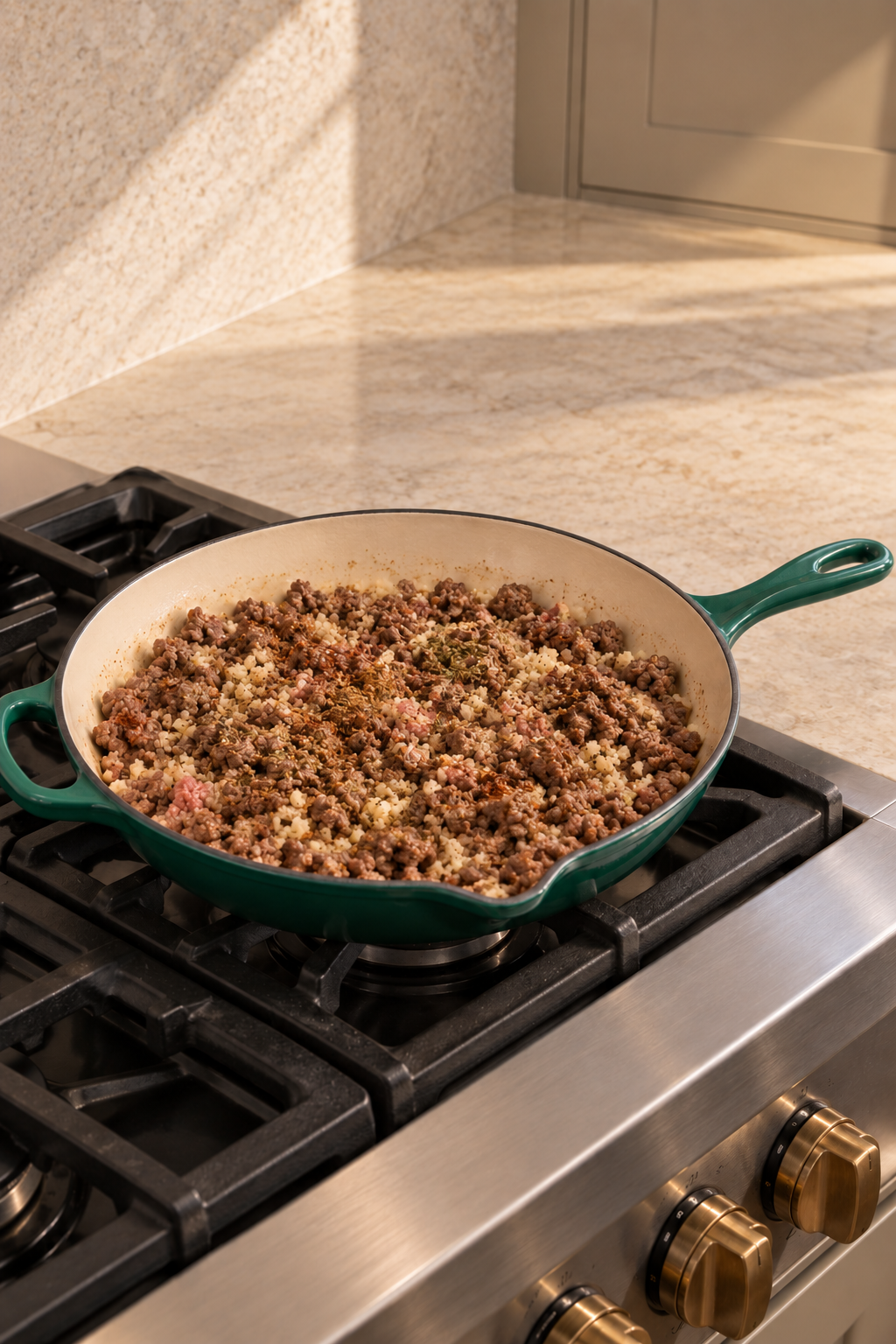
Mix In The Raw Cabbage And Salsa
Take the skillet off the heat. Add the chopped raw cabbage, homemade red salsa, and tomato paste. If the skillet is too full to fold the mixture without spilling, move everything to a large mixing bowl.
Stir until the tomato paste disappears into the salsa and every cabbage piece has a light red coating. Scrape through the bottom as you turn the mixture so no dry cauliflower or concentrated paste remains underneath.
Transfer the mixture to the Artichaut rectangular baking dish. Spread it from corner to corner and lightly smooth the top. Do not pack it down hard. The mixture needs a little room for hot sauce and steam to move around the cabbage.
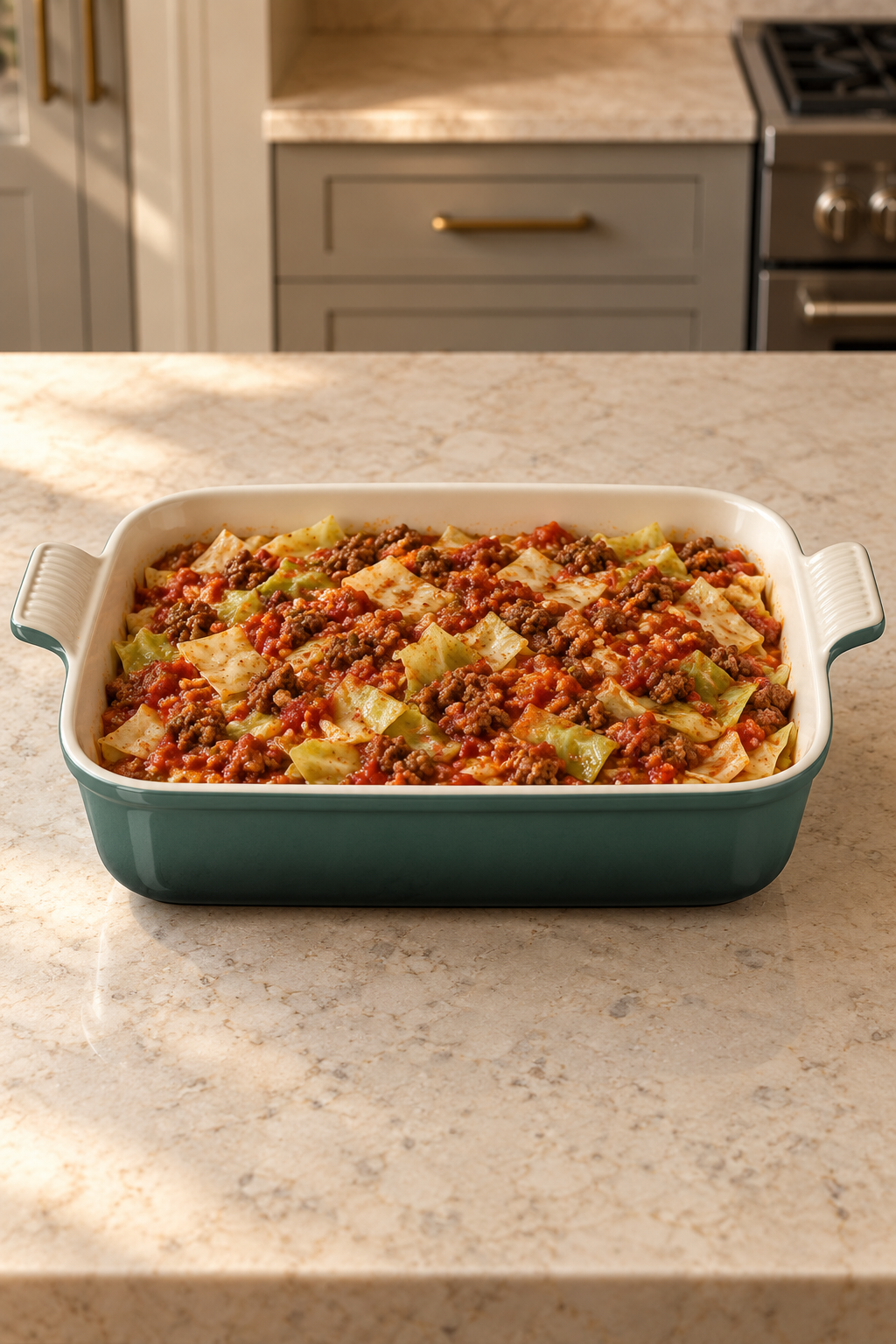
Bake Until The Center Is Tender
Bake at 350°F for 30 minutes. The cabbage begins softening during this first bake, and the tomato sauce gathers around the sides. You should see steady bubbles at the perimeter when you pull the dish forward to add the optional cheese.
For the photographed branch, scatter three cups of freshly grated raw or properly cultured cheddar across the top. Return the casserole to the oven for about 15 minutes. The cheese should melt into one even layer with a few golden spots. The red sauce should bubble around the edges, and the cabbage at the center should yield easily to the edge of a serving spoon.
For the dairy-free branch, bake the casserole uncovered for the same final period. Look for the same bubbling sides, hot center, and tender cabbage rather than waiting for a cheese cue.

A serving is soft and spoonable, not a firm lasagna square. You should see tender cabbage pieces and beef in thick red sauce. The fine cauliflower remains integrated into the filling instead of looking like a layer of rice.
Where This Casserole Fits On GAPS
This complete casserole belongs on Full GAPS. It combines cabbage, cauliflower, tomato, salsa, ground beef, tallow, herbs, spices, and optional cheddar. It is not an early Introduction Diet recipe, even though some individual ingredients appear during Intro.
The cheese branch depends on dairy tolerance. Use raw or properly cultured cheddar only after the person has completed the appropriate dairy introduction. Omitting cheese makes the same measured casserole dairy-free without changing the beef, cabbage, salsa, or baking schedule.
This Mexican red-salsa version stays separate from the GAPS Chinese lazy cabbage roll casserole. They share the cabbage-casserole idea, but the measured sauces, aromatics, seasonings, and final flavor are different.
Serving Ideas
Serve the casserole on its own for a complete dinner. Add a spoonful of homemade GAPS sour cream when dairy is tolerated, or drizzle the dairy-free branch with Full GAPS cilantro lime ranch.
Sliced avocado or homemade guacamole works beside the dairy-free version. Keep toppings at the table instead of baking them into the casserole. That way one pan can serve people with different dairy tolerance without changing the base recipe.
Storage, Freezing, And Reheating
Cover and refrigerate leftovers for up to five days. Divide the casserole into serving-size portions before freezing so you can thaw only what you need. Freeze covered portions for up to three months.
Thaw frozen portions in the refrigerator. Put the portion in an oven-safe dish, cover it, and reheat at 300°F for about 20 to 25 minutes, until the middle is hot. Covering keeps the cabbage and beef from drying before the center warms.
The casserole can also be eaten cold if that suits the meal, but the cheese is softer and the tallow blends back into the sauce when warmed gently.
Frequently Asked Questions
Do I Need To Cook The Cabbage First?
No. Chop it into small pieces and add it raw. The two-part bake softens it in the salsa and beef mixture.
Why Cook The Cauliflower Rice Separately?
Frozen cauliflower releases water as it thaws. The eight-minute skillet step cooks off that moisture before it can thin the casserole.
Can I Use Store-Bought Salsa?
Use homemade additive-free red salsa for this Full GAPS version. Commercial jars can contain sugar, starch, gums, preservatives, or seasoning blends that do not fit the recipe.
Can I Leave Off The Cheese?
Yes. Continue the second bake uncovered for about 15 minutes. Use bubbling edges, a hot middle, and tender cabbage as the doneness cues.
Why Is My Casserole Watery?
The cauliflower may still have held water, or the salsa may have been unusually thin. Cook the cauliflower until the skillet is dry, stir the salsa before measuring, and use the full quarter cup of tomato paste.
Can I Assemble It Ahead?
You can cook the beef and cauliflower mixture ahead, cool it, and refrigerate it covered. Add the raw cabbage, salsa, and tomato paste before baking so the cabbage does not sit in salt and acid longer than needed.
Recommended Equipment
Use a large skillet, a broad spatula, a large mixing bowl if the skillet is too full, measuring cups and spoons, a cutting board and knife, and a 4-quart rectangular baking dish. The photographed version uses the Le Creuset Heritage rectangular dish in Artichaut.
A deep dish matters because the raw cabbage begins bulky and settles during baking. Keep the baking dish on a heat-safe trivet when it comes out of the oven.
Mexican Cabbage Roll Casserole Recipe
Mexican Cabbage Roll Casserole for Full GAPS
Ingredients
Equipment
Method
- Cook the frozen cauliflower rice in half the measured tallow over medium heat for 8 minutes, until thawed and the released water has evaporated. Transfer to a bowl.
- Heat the oven to 350°F (175°C).
- Add the beef, the remaining tallow, and sea salt to the skillet. Cook over medium-high heat, breaking up the beef, until most pink is gone, about 5 minutes. Add the cauliflower rice, oregano, cumin, optional chili powder, garlic powder, and black pepper. Cook 2 to 3 minutes, until fragrant, then remove from heat.
- Add the raw chopped cabbage, homemade salsa, and tomato paste. Stir until the cabbage and beef mixture are evenly coated.
- Transfer to the Artichaut rectangular baking dish and smooth the top.
- Bake for 30 minutes.
- Add the optional grated cheddar, or leave the casserole uncovered without it. Bake about 15 minutes more, until the sides bubble and the middle is hot and tender. With cheese, the top should be melted with golden spots.
- Serve on its own or add only chosen compatible toppings at the table.
Notes
Tried this recipe?
Let us know how it was!Make Full GAPS Dinner Easier To Repeat
The upcoming Weekly Kitchen Rhythm Planner is built for meals like this one that can cover dinner, planned leftovers, and freezer portions without three separate cooking sessions. Browse current resources and release updates in the WFLI shop.

Leave a comment