

These skillet meatloaf burgers keep the tender, savory texture of a good meatloaf while cooking as eight individual patties. Finely chopped onion and green bell pepper season the beef, tomato puree adds moisture, and properly prepared almond flour replaces the grain-based crumbs that usually keep meatloaf from becoming rubbery.
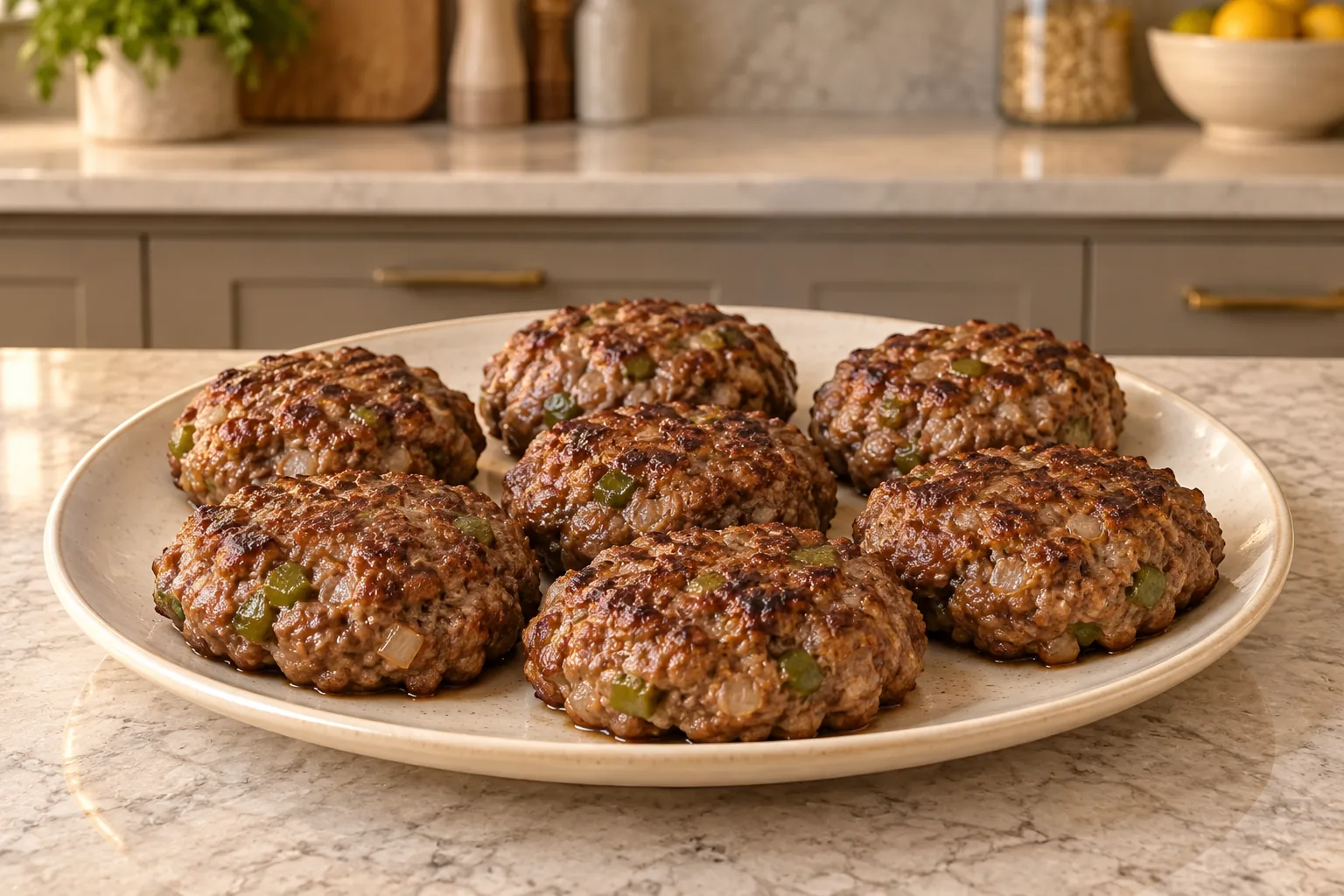
Individual patties are often easier for our family than waiting for a full loaf to bake and cool enough to slice. With six children, eight portions also make the serving count obvious. Everyone can see what belongs to the meal, and any extra patty can be packed for the next day without cutting a fragile loaf.
The source recipe calls these meat loaf burgers because the mixture tastes like meatloaf but cooks on the stovetop. That identity matters. These are not plain hamburgers with vegetables scattered on top, and they are not a mini meatloaf baked in a muffin pan.
What These Meatloaf Burgers Taste Like
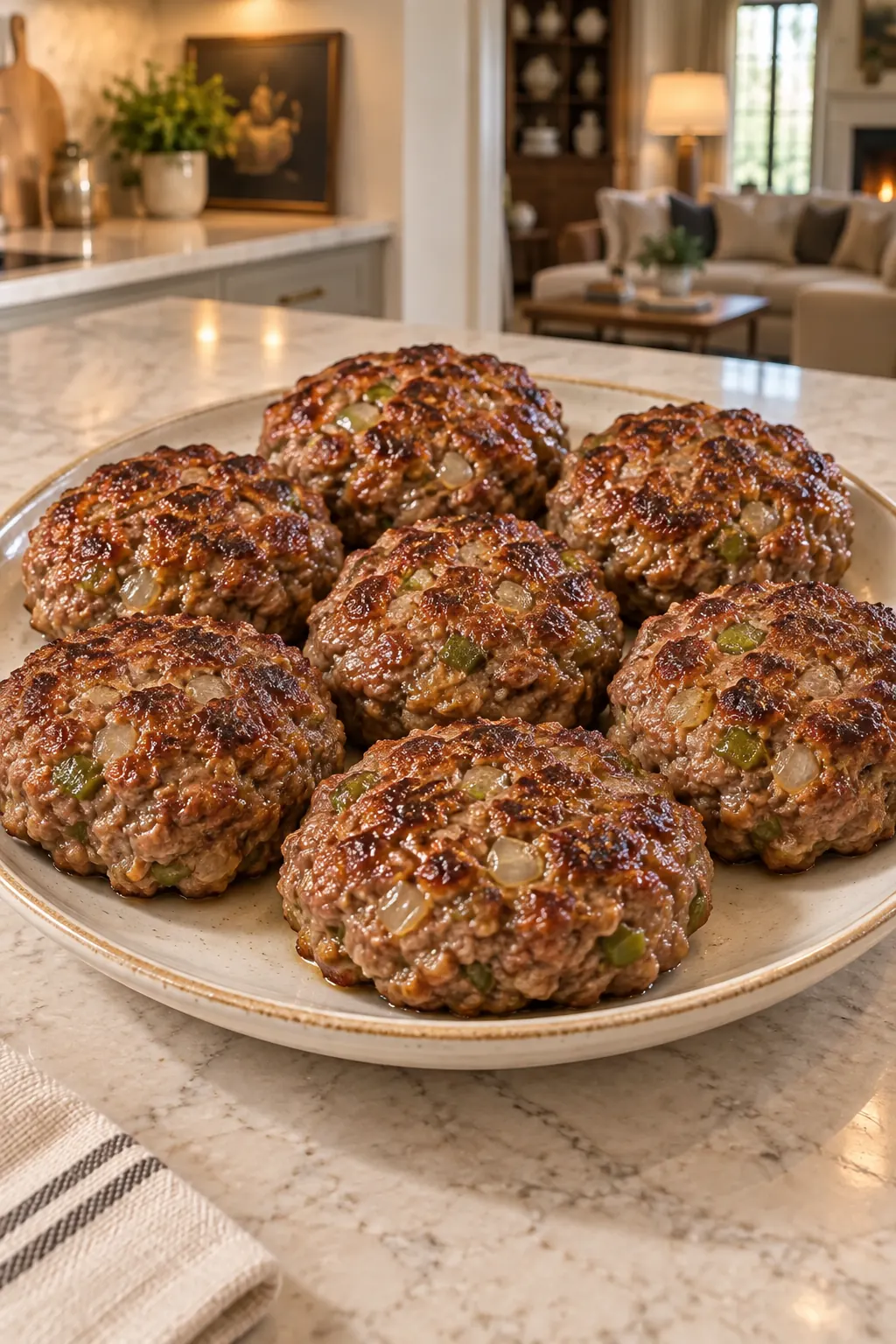
The patties are savory and gently sweet from the onion, pepper, and tomato puree. Properly prepared almond flour absorbs the egg and meat juices so the center stays tender instead of springy or rubbery. The outside develops a light skillet crust without needing dark browning.
Finely chopped vegetables should disappear into the meat rather than falling out in large pieces. You will still see small green and translucent flecks when a patty is cut, but every bite should contain beef, vegetables, and the moist tomato-almond mixture together.
The cooked center should be moist and cohesive with no raw glossy beef. A finished patty holds together when lifted with a turner, but it should yield easily to a fork rather than bouncing back like a dense sausage.
Where They Fit On GAPS
This version is for Full GAPS. Use flour ground from almonds that were properly soaked, sprouted, or fermented and then fully dried. The WFLI Homemade Fermented Almond Flour shows the separate component process.
The tomato puree must be homemade or verified additive-free. Read the ingredient list rather than relying on a front label. The puree belongs in the measured three-tablespoon amount; it is not ketchup, pasta sauce, or an unmeasured tomato topping.
Butter works as the source cooking fat. Another source-appropriate GAPS fat can be used in the same measured two-tablespoon amount when that is the fat your household uses for skillet cooking.
Chop The Vegetables Fine
Measure one-half cup onion and one-half cup green bell pepper after chopping. The pieces should be small and even, about the size that can disappear into a bite of ground beef. Large cubes create weak spots and can fall out when the patties turn.
Spread the chopped vegetables on the cutting board and look for long pepper strips or thick onion pieces. Chop those again before measuring. The bowl should receive a level one-half cup of each vegetable rather than loosely filled cups with large air gaps.
Mix Without Compressing The Beef
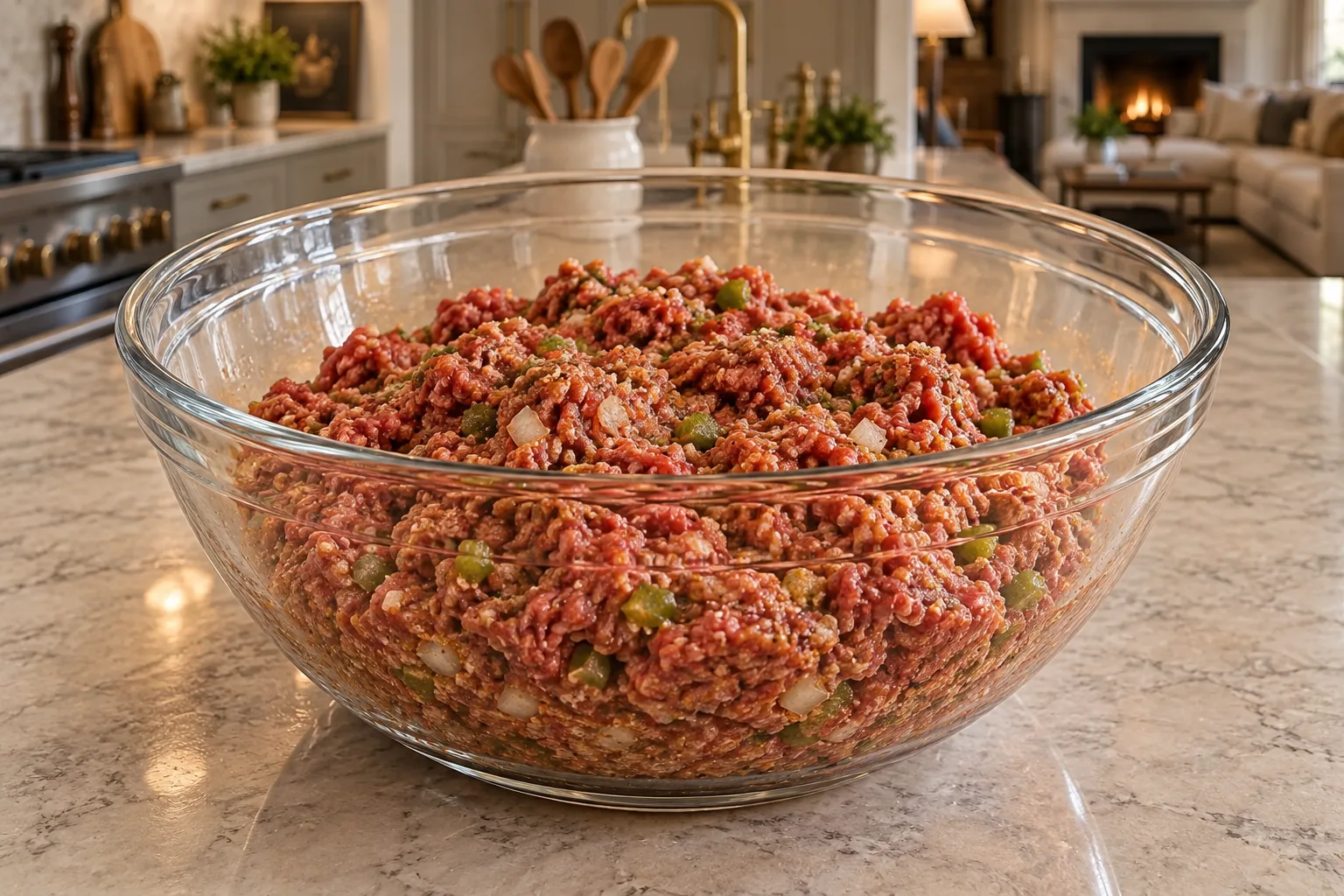
Add the beef, vegetables, whole egg, tomato puree, salt, pepper, and properly prepared almond flour to a large glass bowl. Fold and turn the mixture until the tomato color and vegetable flecks are evenly distributed.
Stop mixing as soon as no dry almond-flour pockets remain. The mixture should feel moist and slightly tacky while still showing the loose strands of ground beef. If it becomes smooth and paste-like, it has been worked too long and the cooked texture can become dense.
Divide the bowl into eight equal portions before shaping. A simple method is to press a cross through the mixture, divide each quarter in half, and then form each portion into a patty of similar width and thickness.
Heat The Skillet Gently
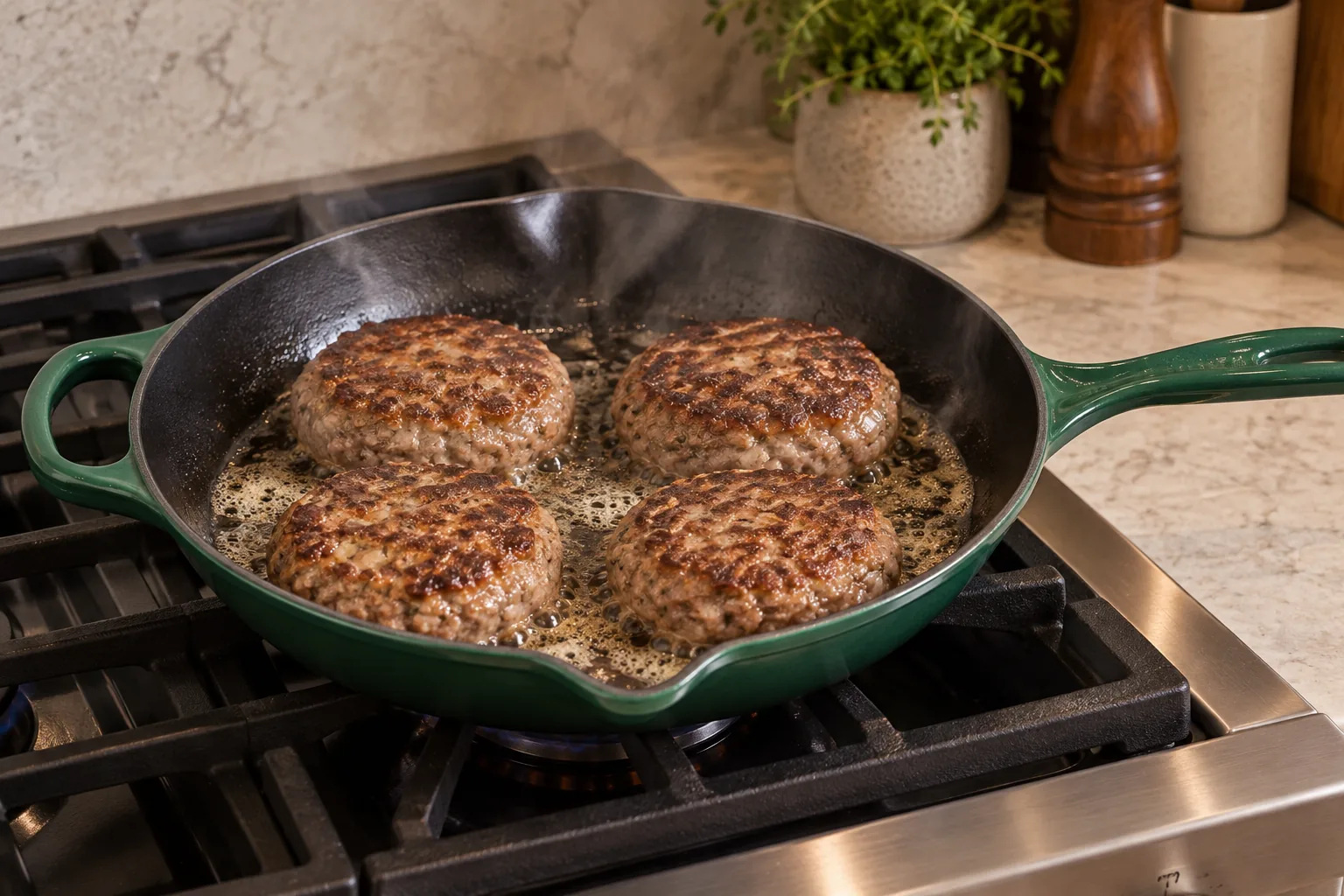
Melt two tablespoons butter or the chosen GAPS cooking fat in the exact Le Creuset Signature Artichaut skillet over medium-low heat. The fat is ready when it is hot and bubbling gently but has not browned.
Add only as many patties as fit with space between them. Crowding traps steam and makes turning harder. Cook in batches when needed, keeping the remaining raw patties cold until their turn in the skillet.
Cook Ten Minutes Before Turning
Leave the first side undisturbed for 10 minutes over medium-low heat. The bottom should become lightly browned and release from the black enamel surface when the turner slides underneath.
If the edge becomes dark before 10 minutes, lower the burner. The source specifically favors gentler heat to avoid dark browning. Do not raise the heat just to force a quicker crust.
Turn Once And Cook Until Done
Turn each patty once and cook the second side for 10 to 15 minutes. The source’s separate recipe-card total says 15 minutes, but that conflicts with the explicit staged directions. This article preserves the two stated side times instead of inventing a different shortcut.
Check the thickest patty. The center should be cooked through with no raw glossy beef, and clear meat juices may gather on the plate. The patty should stay together when lifted while remaining moist inside.
Serving Ideas
The source served these burgers with steamed cabbage and a red sauce. That combination works because the cabbage stays simple while the sauce echoes the small tomato-puree measure inside the patties.
They also fit beside roasted vegetables, a crisp green salad, or cauliflower mash. Keep the accompaniments separate on the plate so the skillet crust does not soften before serving.
Storage And Reheating
Cool leftover patties promptly and store them covered in the refrigerator. Place parchment between layers so they lift without breaking. Reheat gently in a covered skillet with a small amount of cooking fat until hot through.
For freezer preparation, freeze cooked and cooled patties in a single layer before stacking them in a covered container. Thaw in the refrigerator and reheat over low heat so the outside does not darken before the center warms.
Frequently Asked Questions
Why Use Almond Flour?
It absorbs moisture from the egg, vegetables, tomato puree, and meat. That helps the patties stay tender and cohesive without grain-based bread crumbs or oatmeal.
Can I Use Store-Bought Tomato Puree?
Use it only when the exact product is verified additive-free. Homemade puree is the straightforward component when a suitable product is unavailable.
Can I Bake This As One Meatloaf?
Not as this exact tested formula. This source defines eight skillet patties with stated side times. A loaf would need its own pan, depth, endpoint, and tested cooking time.
Why Are The Patties Browning Too Fast?
The burner is too high. Lower it and preserve the 10-minute first side plus 10-to-15-minute second side. Gentle heat gives the centers time to cook without a dark exterior.
Can I Make Meatballs Instead?
The source mentions meatballs as an idea, but it does not provide a complete measured meatball method. Keep this card as eight patties until a separately tested meatball size and cooking route are available.
Recommended Equipment
- Le Creuset Signature 10.25-inch skillet in Artichaut
- Large clear glass mixing bowl
- Flexible silicone spatula
- Measuring cups and spoons
- Wide turner
- Cutting board and knife
The black-enamel Artichaut skillet provides a stable medium-low cooking surface and enough room for a practical batch. Give the patties space and use additional rounds rather than crowding them.
Skillet Meatloaf Burgers for Full GAPS
Ingredients
Equipment
Method
- Place the ground beef, finely chopped onion, finely chopped green bell pepper, whole egg, tomato puree, mineral salt, black pepper, and properly prepared almond flour in a large bowl.
- Mix just until the vegetables, egg, puree, and flour are evenly distributed. Stop before the beef becomes compressed or paste-like.
- Divide the mixture into exactly 8 equal portions and shape each into a patty of even thickness.
- Melt the butter or chosen GAPS cooking fat in the Le Creuset Artichaut skillet over medium-low heat until hot and bubbling without browning.
- Add patties without crowding. Cook the first side for 10 minutes over medium-low heat, lowering the heat if the surface begins darkening too quickly.
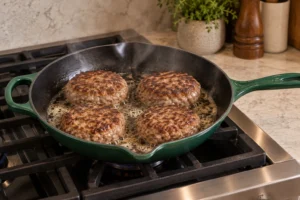
- Turn once and cook the second side for 10-15 minutes, until the centers are cooked through with no raw glossy beef. Repeat with remaining patties if cooking in batches.
Notes
Tried this recipe?
Let us know how it was!More Practical Full GAPS Dinners
The planned WFLI Weeknight Full GAPS Dinner Guide will gather repeatable family portions, preparation cues, component links, and make-ahead notes for meals like this. Watch the WFLI shop for the release.

Leave a comment