

These leftover chicken patties turn the cooked chicken, celery, and onion from a pot of meat stock into a quick Full GAPS meal. They are garlicky, lightly browned, and tender in the middle, with enough properly prepared almond flour to hold the soft mixture together. The whole batch takes about 15 minutes once the cooked ingredients are ready.
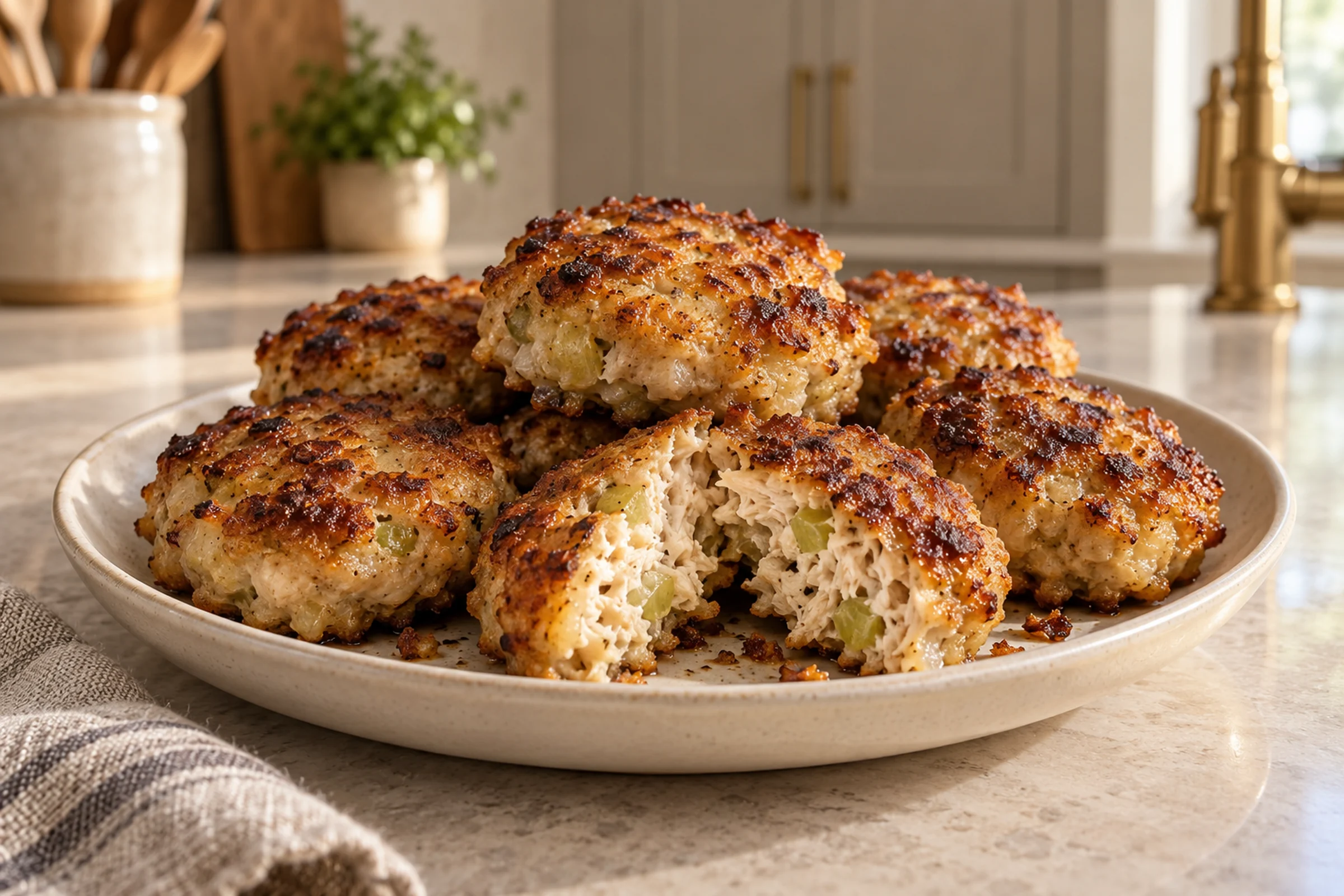
I make meat stock early because having cooked meat and vegetables ready makes the rest of the day easier. That matters in our house. I homeschool before leaving for second shift, and there is not much patience left for a complicated lunch when the morning has already filled up. These patties are a practical way to turn what is already in the refrigerator into a different meal instead of serving another bowl of chicken and stock.
What These Chicken Patties Are Like
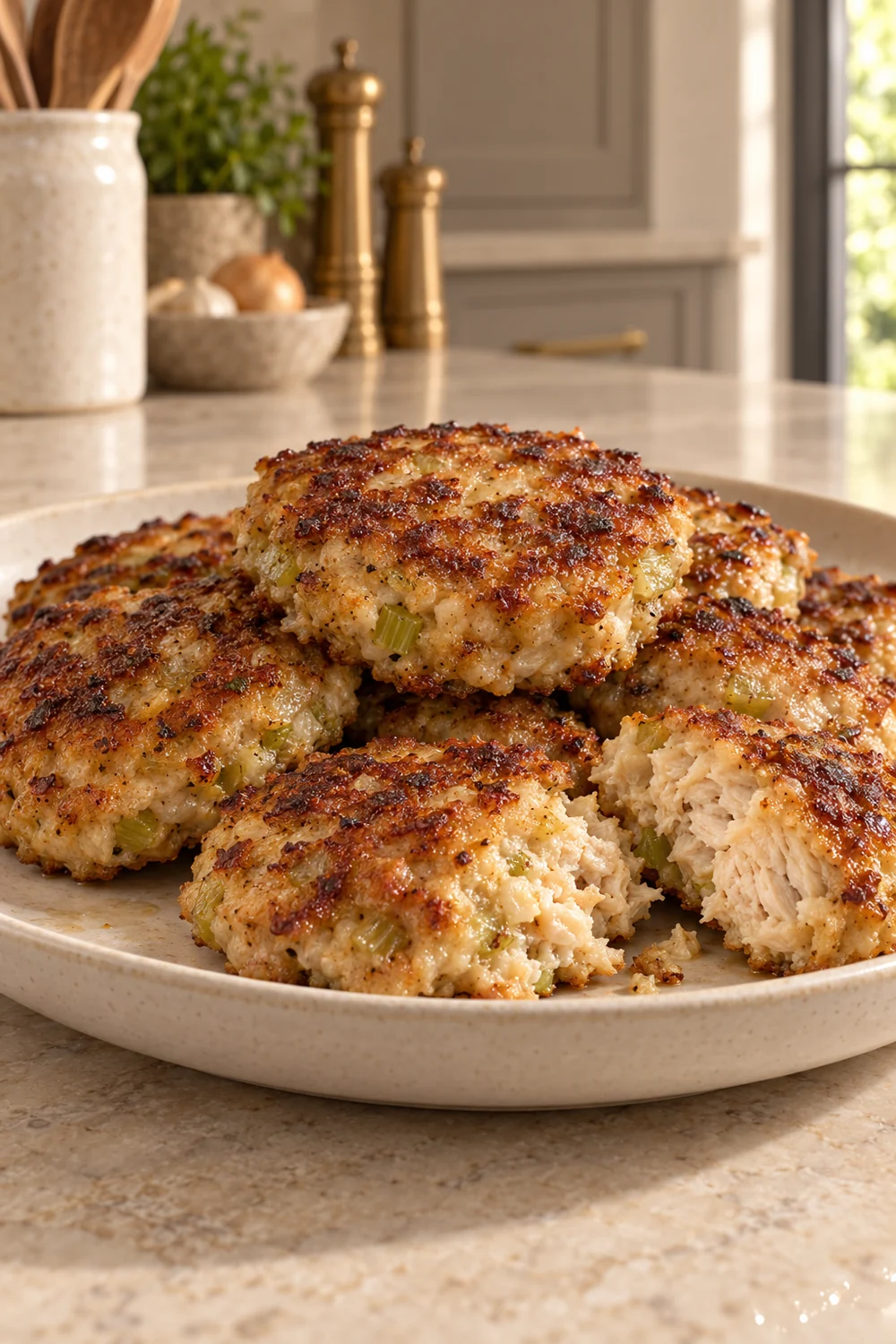
This is a soft patty, not a firm ground-chicken burger. The cooked chicken and vegetables are blended into a cohesive paste, shaped gently, and fried in a thin coating of fat. The outside becomes golden with a few deeper brown spots. The center stays moist and tender. They feel delicate when they first leave the skillet, then firm as they cool.
The garlic is noticeable without overpowering the chicken. Celery and onion give the patties a savory base, while the almond flour absorbs enough moisture to make shaping possible. If you expect the mixture to feel like raw ground meat, it will seem too soft. Look for a thick paste that holds together when pressed, even though it still needs a light hand.
Start With Cooked Chicken And Vegetables
The easiest starting point is the cooked chicken, celery, and onion from homemade chicken meat stock. Drain the vegetables well before measuring. Extra stock clinging to them can loosen the paste and make the patties harder to turn.
Use cooked chicken breast for this formula. Chop it before measuring so it settles naturally into the cup without being packed down. The recipe is especially useful when the breast meat is still good but no longer appealing on its own. Blending it with the cooked vegetables and frying it in nourishing fats gives it a new texture and a warmer, more savory finish.
Use Properly Prepared Almond Flour
For Full GAPS, use almond flour made from almonds that have been properly soaked, sprouted, or fermented and then fully dried. My homemade almond flour post walks through the component separately. This recipe uses only two tablespoons, but those two tablespoons matter. They help bind the cooked chicken paste without turning the patties dry or bread-like.
If properly prepared almonds have not been introduced and tolerated yet, save this recipe for later. Do not replace the almond flour with a random flour and assume the texture will stay the same. A different binder changes both how the patties shape and how they cook.
Blend To A Soft, Cohesive Paste
Add the cooked chicken, drained celery and onion, crushed garlic, mineral salt, and almond flour to the single-serve cup for the Ninja Professional Plus Kitchen System BN801. Pulse first so the ingredients settle. Then blend just until the mixture becomes a soft paste with no large chicken pieces left.
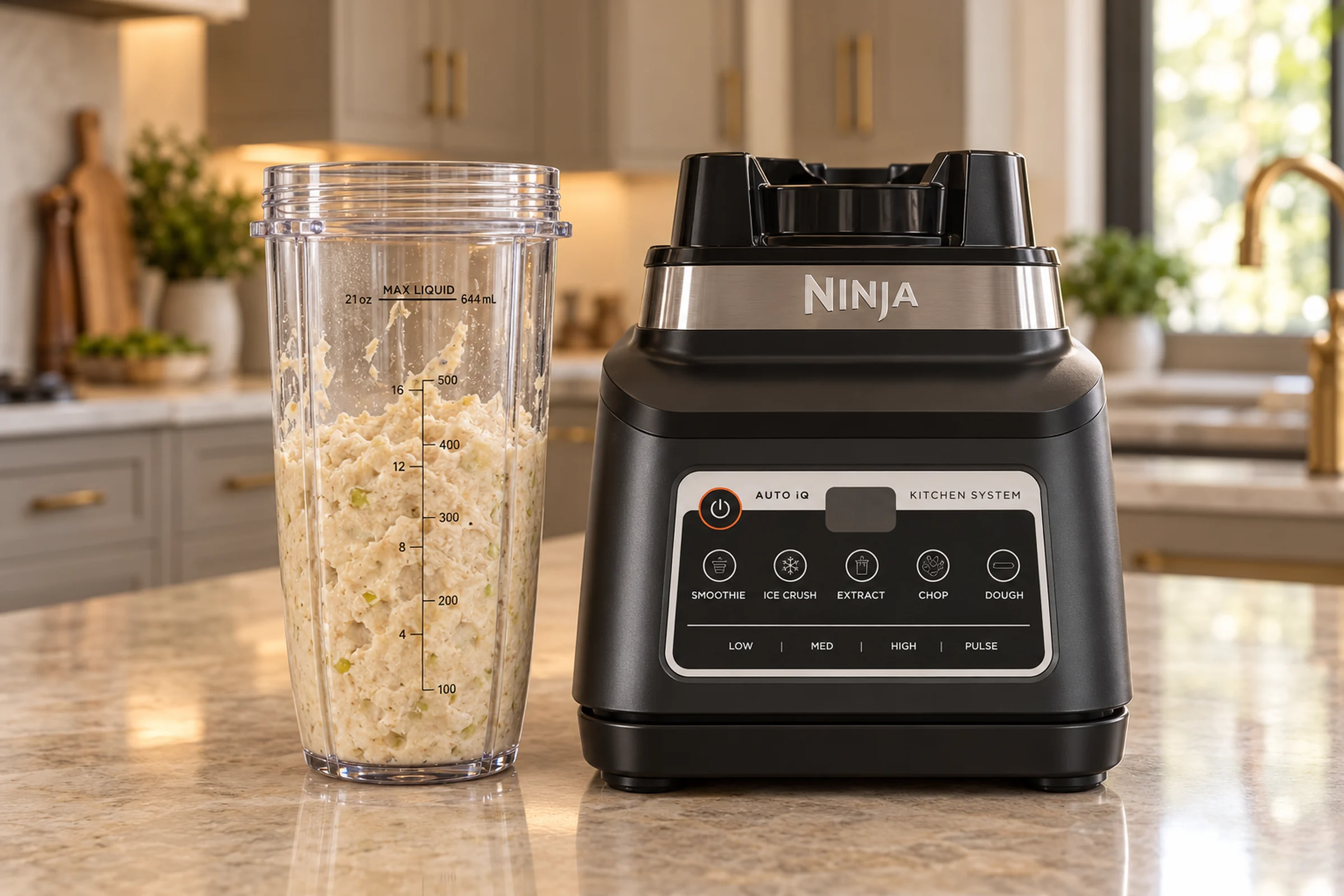
Stop and scrape the cup if a dry pocket of almond flour sits above the blades. The finished mixture should look moist and slightly textured, not glossy or liquid. Pinch a small amount between your fingers. It should stay together when pressed. If it smears like a loose purée, the vegetables were probably carrying too much stock.
Shape Them Small And Handle Them Lightly
Scrape the paste into a glass bowl. Form small balls, then press each one gently into a little patty. Small patties are easier to turn because the mixture is very soft before cooking. Do not squeeze or compact them hard. A light press is enough to flatten the center and smooth any edges that are ready to split.
The source does not give a patty count, so the recipe card keeps the honest yield as one batch. Your final count will depend on how small you shape them. Keep them close in size so they brown at roughly the same rate.
Fry Until Golden And Easy To Release
Coat the Le Creuset Signature Artichaut skillet with homemade ghee, or butter you have already introduced and tolerated according to the GAPS dairy-introduction steps, plus fat saved from properly prepared, additive-free uncured bacon. The source does not measure the frying fat, so add only enough to give the skillet an even, visible coating. If you need homemade ghee, use my stovetop ghee recipe.
Heat the skillet over medium heat. Set the patties in without crowding them, then leave them alone long enough for the first side to form a golden crust. A patty that still grips the skillet is usually not ready to turn. Slide a thin turner underneath only when the bottom releases cleanly and the edge looks set rather than wet.
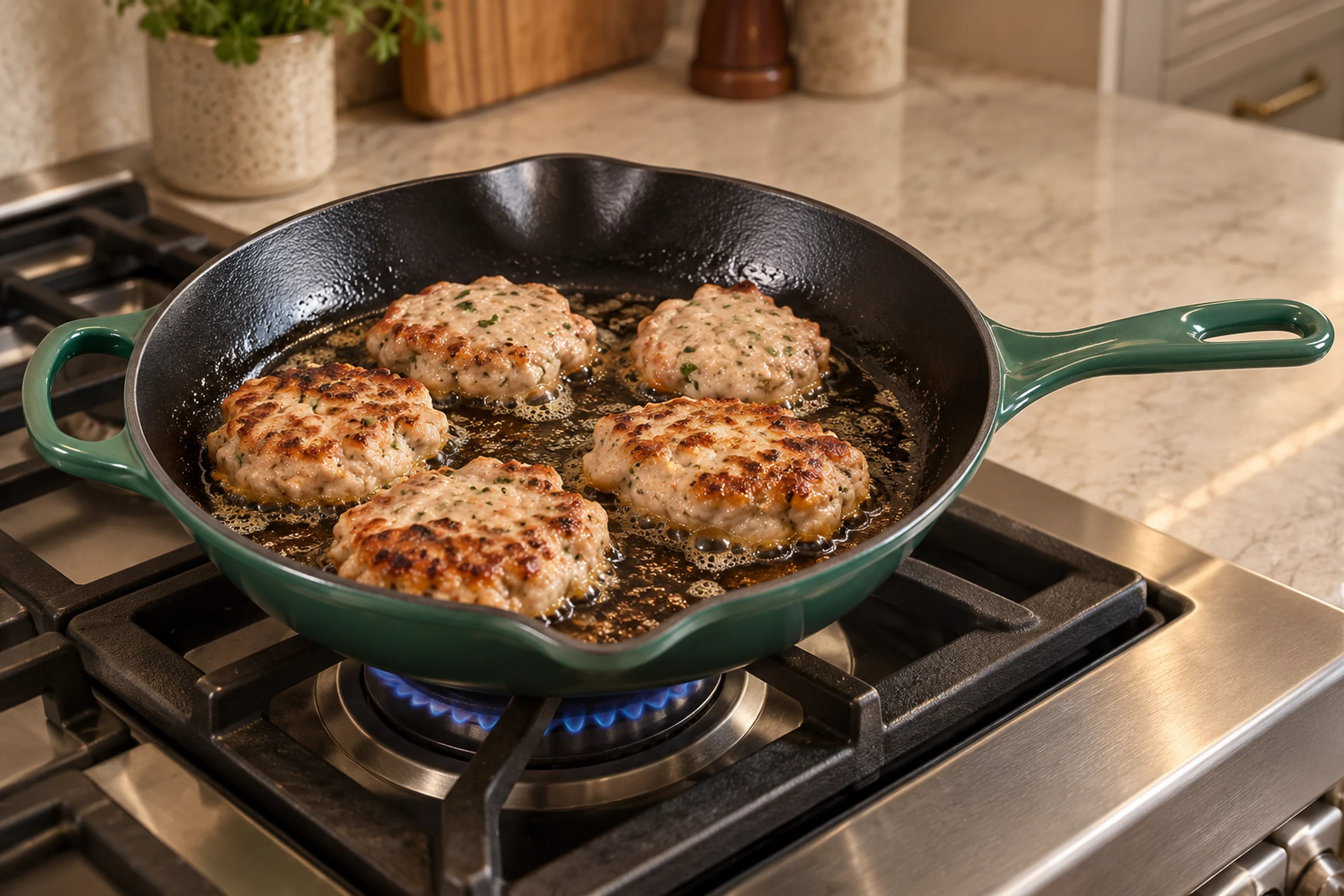
Turn each patty carefully and brown the second side. The patties should be hot through the center, with no cool spot when one is opened. Move them to a stable plate and give them a few minutes to rest. They become easier to pick up as they cool because the almond flour and cooked chicken mixture finish setting.
Serving These On Full GAPS
Serve the patties warm as a quick lunch, a small dinner protein, or a portable snack once they have firmed. They work well beside cooked vegetables or a cup of warm chicken meat stock. Because the formula uses properly prepared almond flour, it belongs on Full GAPS after almonds have been introduced and tolerated.
These are also useful when everyone is tired of seeing the same pot of chicken. The ingredients are familiar, but the browned surface and tender patty texture make the meal feel different. That small change can be enough to get another lunch from the batch without adding a complicated second cooking project.
Storage And Reheating
Cool the patties before storing them so steam does not collect in the container and soften the browned surfaces. Refrigerate them in a covered glass container. For reheating, warm them gently in a lightly greased skillet. Turn once the first side is warm and releases easily. High heat can darken the almond flour before the center is heated through.
If you pack them for later, chill them first. Their texture is firmer when cool, which makes them easier to move without breaking. They can be eaten cold if that works for your meal, or reheated until hot.
Frequently Asked Questions
Why Is My Chicken Mixture So Soft?
The formula is supposed to make a very soft paste. Drain the cooked celery and onion well, blend only until cohesive, and shape small patties. They gain more structure as the first side browns and firm further after cooling.
Can I Use Store-Bought Almond Flour?
Use it only when you can verify that the almonds were properly prepared for your GAPS kitchen. Standard almond flour does not automatically meet that preparation requirement. Homemade almond flour gives you control over the soaking or fermenting and complete drying.
Why Are The Patties Sticking?
Make sure the skillet has an even coating of fat and give the first side time to brown. Trying to turn a delicate patty while its surface is still wet can tear it. When the crust has formed, a thin turner should slide underneath more cleanly.
Can I Add Chicken Liver?
This measured formula does not include chicken liver. Keep it out of this batch so the ingredient amounts, texture, and cooking cues stay dependable.
Recommended Equipment
- Ninja Professional Plus Kitchen System BN801 single-serve cup for the small paste batch
- Le Creuset Signature Artichaut 10.25-inch skillet
- Large glass mixing bowl and flexible silicone spatula
- A thin stainless-steel or wood turner
- Measuring cups and spoons
Leftover Chicken Patties with Almond Flour for Full GAPS
Ingredients
Equipment
Method
- Add the cooked chicken, cooked celery and onion, crushed garlic, mineral salt, and almond flour to the exact Ninja BN801 single-serve cup.
- Pulse and blend until the mixture becomes a soft cohesive paste. Scrape into a glass bowl.
- Heat enough homemade ghee or tolerated butter plus additive-free uncured bacon fat to coat the Artichaut skillet over medium heat.
- Form the paste into tiny balls and gently pat each into a small soft patty. Handle lightly because the mixture remains delicate.
- Place the patties in the hot fat without crowding. Fry until the first side is golden and releases from the pan, then turn carefully.
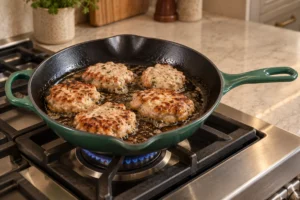
- Cook the second side until golden and the patties are hot throughout. Transfer to a stable plate and let them cool briefly; they firm further as they cool.
Notes
Tried this recipe?
Let us know how it was!Make Full GAPS Weekdays Easier
If turning one pot of meat stock into several meals is the kind of help you need, the upcoming Large-Family Batch Plan is built for that exact problem. It will map the cooked meat, vegetables, stock, and simple follow-up meals so you can use what you already prepared without serving the same bowl all week. The download link will be added here as soon as the plan opens.

Leave a comment