

This garlic-herb liver and onions recipe gives one pound of liver a clear path from lemony refrigerator marinade to a glossy, reduced skillet sauce. The liver is trimmed and cut small, the onions cook until soft and sweet, and the sauce can use pure tomato passata, beef meat stock, dry red wine, or a combination totaling one to two cups.
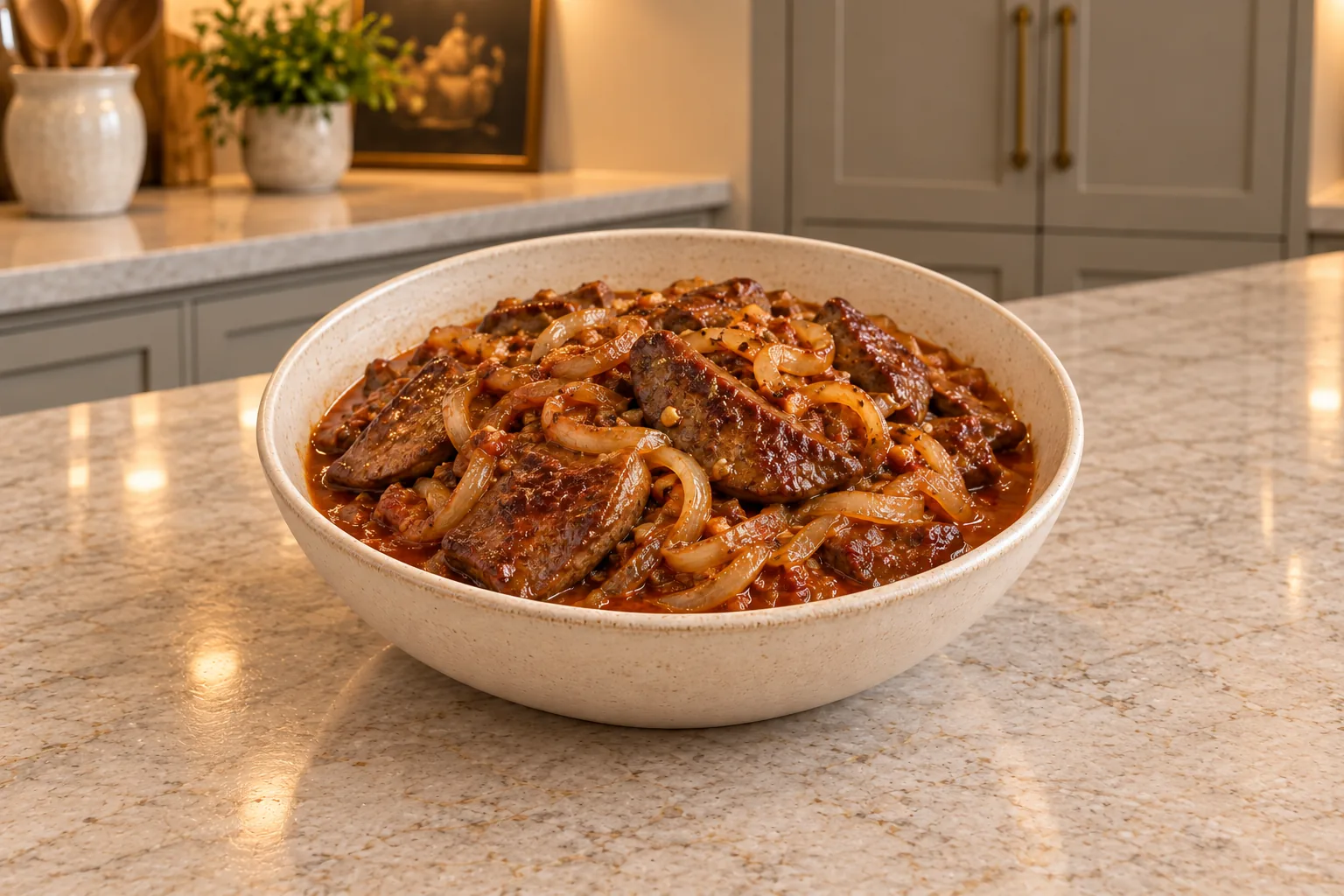
I am not going to pretend liver is an easy sell in our house. We all dislike organ meats, and hiding a little in ground-beef meals is usually the route that works for us. A direct liver recipe has to earn its place with plenty of onion, garlic, fat, and a texture that is tender rather than dry.
That is what makes the sequence here useful. The lemon, garlic, and herbs season the pieces before they reach the skillet. Soft onions provide sweetness, and the short sauté protects the center from overcooking. The final liquid becomes a sauce instead of leaving the liver sitting in thin broth.
What This Liver And Onions Tastes Like
The finished dish is savory, garlicky, and onion-forward. Lemon brightens the liver without turning the sauce sour. Thyme, sage, rosemary, or a mixture adds a warm herbal note, while the selected cooking fat rounds out the stronger mineral flavor of the liver.
Passata produces the fullest brick-red sauce. Beef meat stock keeps the color darker and the flavor more purely savory. A small amount of dry red wine gives the rare-occasion version a deeper, sharper finish. You can use one liquid or combine them, but the total stays between one and two cups.
The liver should be browned outside and smooth, moist, and medium rare in the center. It should not have the dry, crumbly texture that makes liver harder to enjoy. The onions should be fully collapsed and sweet, with no raw crunch left.
Where It Fits On GAPS
This complete skillet recipe fits Full GAPS. Liver and other organ meats are central animal foods in the protocol. Homemade ghee, lard, chicken fat, pure tomato passata, dry wine on rare occasions, and homemade meat stock all have defined places in the Full GAPS kitchen.
Use GAPS Beef Meat Stock when you choose the stock route. Do not replace it with boxed broth, bouillon, or a flavored commercial cooking liquid. If you use passata, choose pure tomato with no sugar, starch, preservatives, or other additives.
This is not an Introduction Diet recipe. Although organ meats can be introduced gradually, this formula includes onions, lemon, herbs, optional tomato, and an optional wine branch in a complete sautéed dish.
It is also not a No-Plant formula. Liver itself fits that variation, but the onions, lemon, garlic, and herbs are integral to this measured dish. A plain liver-and-fat preparation would need its own complete recipe rather than a note that strips most of this one away.
Choose And Prepare The Liver
Begin with one pound of liver that has been frozen for at least two weeks, then thawed safely before preparation. Check every surface and trim away greenish areas. Those pieces do not belong in the skillet.
Cut the remaining liver into uniform bite-size pieces. Aim for slices or pieces about one-quarter to one-half inch thick rather than large blocks. Similar thickness matters more than perfect shape because it lets the exterior brown while the centers reach the same medium-rare point.
Pat away excess thawing liquid before measuring the marinade ingredients. The surface can stay moist, but it should not carry a puddle of water into the lemon mixture.
Marinate In A Supported Sieve
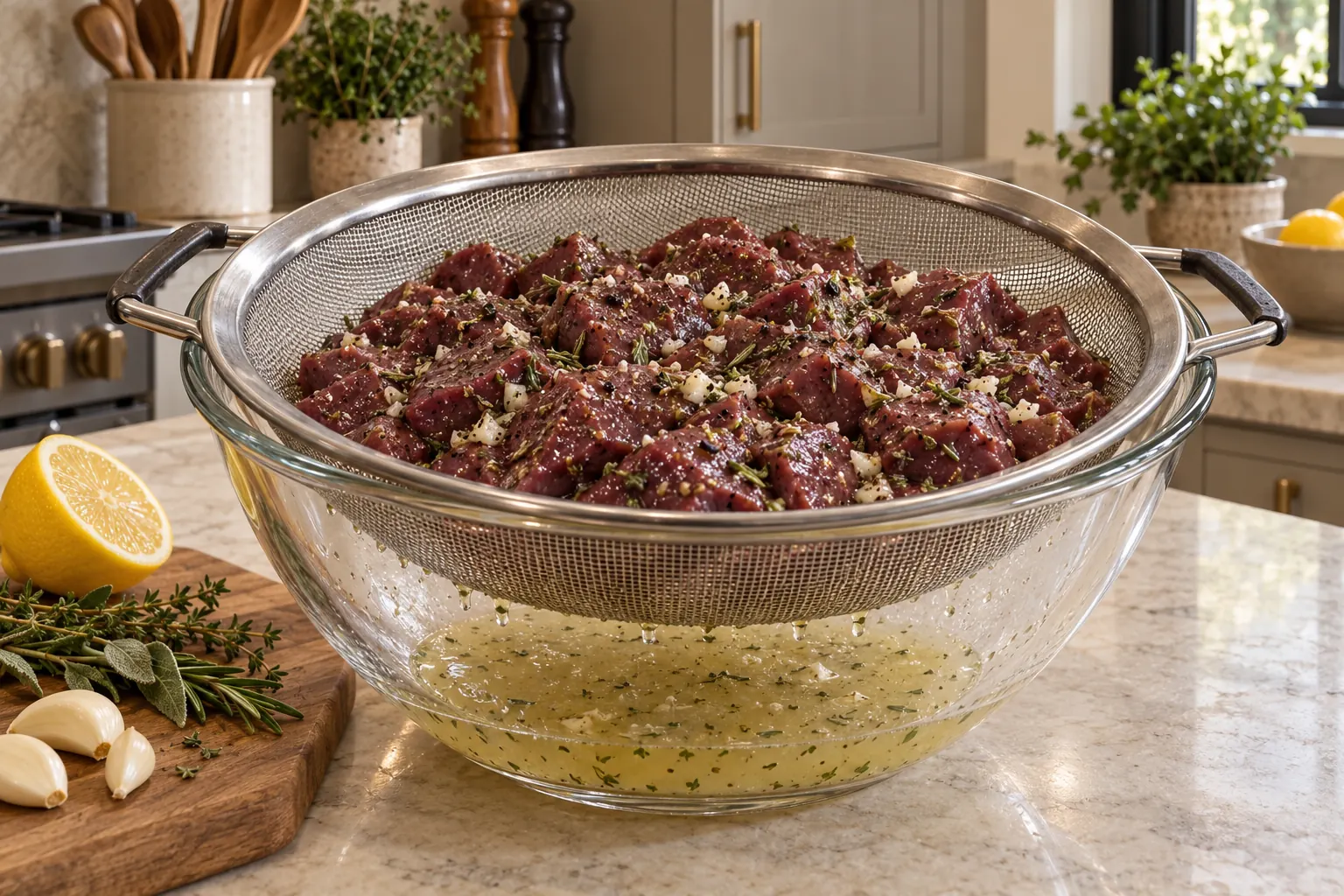
Set a stainless-steel fine-mesh sieve securely over a clear glass bowl. The rim or handles need full support so the sieve cannot tip when it is moved to the refrigerator.
Add the liver, two to four tablespoons fresh lemon juice, 1.2 teaspoons mineral salt, one-half teaspoon black pepper, three finely chopped garlic cloves, and one teaspoon thyme, sage, rosemary, or a mixture. Toss gently until the garlic and herbs cling to every piece.
Cover the setup and refrigerate for up to 12 hours. The liver should look glossy and seasoned, with a small amount of lemony liquid collecting in the bowl below. Before cooking, lift the sieve and let the liver drain. Discard the collected marinade rather than pouring it into the onions.
Cook The Onions Until Soft And Sweet
Heat two to three tablespoons homemade ghee, lard, or chicken fat in the Le Creuset Signature Artichaut skillet over medium heat. Add two to three thinly sliced large onions.
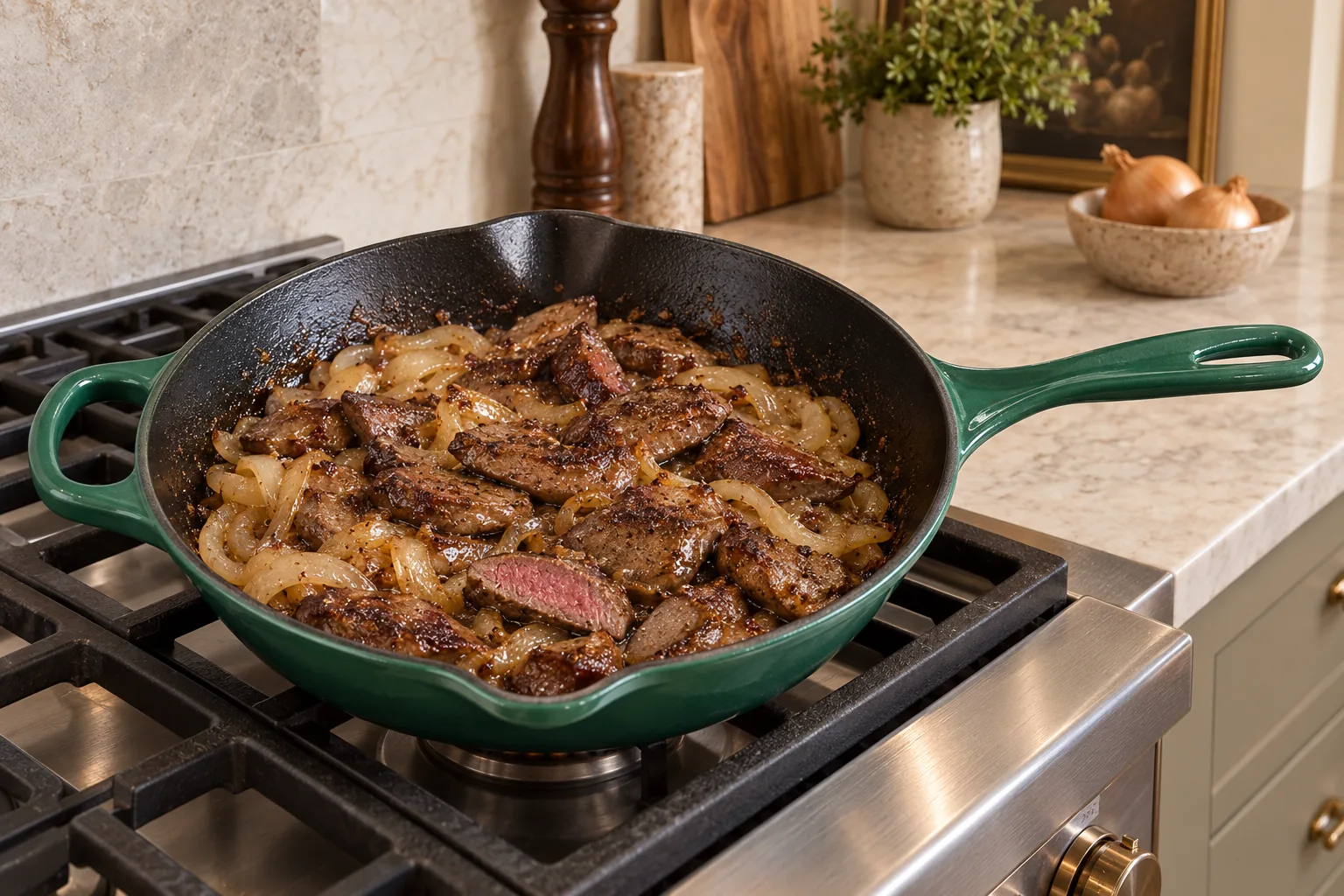
Give the onions time to collapse. At first they will look tall and opaque. They are ready for the liver when they are soft, translucent, lightly golden, and smell sweet rather than sharp. Stir often enough to prevent scorching, but let them remain against the warm skillet long enough to color.
If the skillet looks dry before the onions soften, use the upper end of the measured fat range. The onions should glisten and move easily without swimming in fat.
Brown The Liver Without Drying The Center
Drain the liver well, then spread the pieces through the soft onions in one layer. If the pan is crowded enough to trap steam, work in batches and return everything to the skillet before adding the sauce liquid.
Sauté until the visible exterior is browned and no longer pink. Check one of the thickest pieces: the center should remain medium rare and pink, with no blood coming out. That resolves the seemingly opposite cues of a browned surface and a still-pink middle.
Do not wait for every center to turn brown. Liver continues cooking as the sauce simmers, and an overcooked center becomes firm, dry, and crumbly instead of tender.
Choose The Sauce Route
Add one to two cups total pure tomato passata, dry red wine, homemade beef meat stock, or any combination of those three. The total is the controlling measurement. A combination does not mean one to two cups of each liquid.
For an everyday alcohol-free skillet, combine passata and beef meat stock or use meat stock alone. For a tomato-forward sauce, use passata as the main liquid. Dry red wine belongs only in the rare-occasion branch and can make up part of the measured total.
Bring the liquid to a gentle simmer. Avoid a hard boil, which can tighten the liver before the sauce reduces.
Reduce Until The Sauce Clings
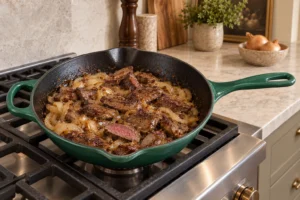
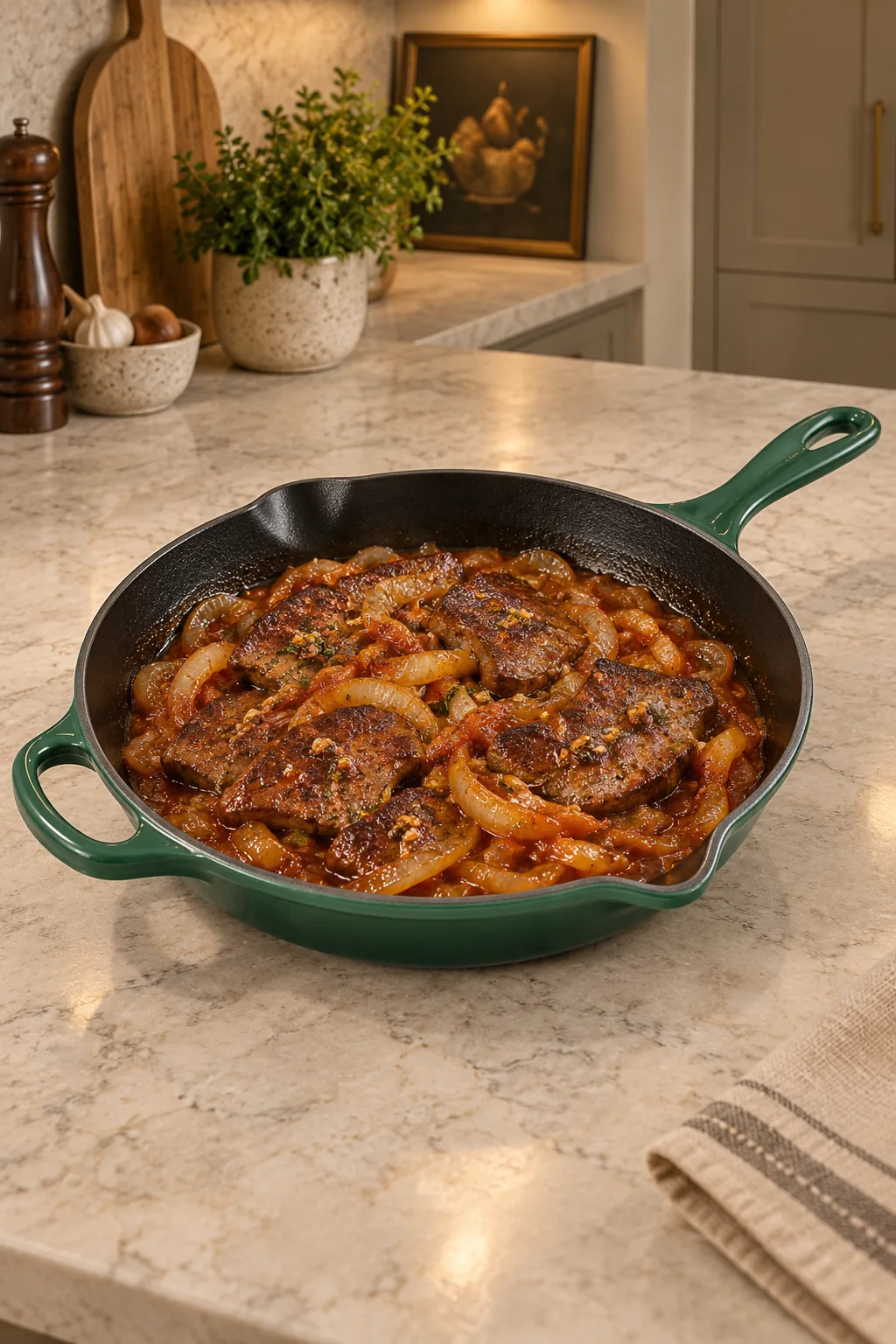
Simmer gently until the sauce coats the liver and onion ribbons and only a shallow pool remains at the bottom of the skillet. Drag a spatula through the center. The sauce should leave a path for a moment before slowly flowing back.
The aroma should shift from sharp wine or fresh tomato to cooked onion, garlic, herbs, and savory liver. Remove the skillet from the heat as soon as the sauce reaches that glossy, spoon-coating stage.
The measured card stops there. An extra raw-garlic finish is not added because the formula does not specify an amount. The result is already clearly garlicky from the three measured cloves in the marinade.
Serving Ideas
Serve the liver and onions promptly, spooning sauce from the bottom of the skillet over every portion. A simple cooked vegetable works well beside it because the liver, onions, and sauce already carry strong flavor.
For another direct organ-meat route, Chicken Liver Pâté With Roast Fat is a complete separate recipe. This post does not turn its leftovers into an unmeasured second recipe.
Storage
Cool leftovers promptly and refrigerate them in a covered glass container. Store the liver with enough sauce to keep the surface from drying out. Rewarm only the portion you need over gentle heat.
Repeated hard reheating will push the pink centers past medium rare and make the texture firmer. Use a clean spoon, keep the container covered, and discard the food if it develops an off smell, surface growth, or another ordinary spoilage sign.
Frequently Asked Questions
Why Freeze The Liver For Two Weeks?
Tier 0 recommends cooking liver that has been frozen for at least two weeks as a parasite precaution. Thaw it before trimming and marinating.
Should Liver Still Be Pink Inside?
Yes. Brown the exterior, then check the thickest piece. The center should be medium rare and pink with no blood coming out.
Is 1.2 Teaspoons Of Salt A Typo?
The measured formula specifies 1.2 teaspoons, so the card preserves 1.2 teaspoons rather than silently changing it to one-half or one and one-quarter teaspoons.
Do I Have To Use Red Wine?
No. Use pure tomato passata, homemade beef meat stock, or a combination for an alcohol-free sauce. Dry red wine is an optional rare-occasion branch.
How Much Sauce Liquid Do I Add?
Use one to two cups total. If you combine passata, wine, and stock, their combined amount still stays within that range.
How Many Servings Does This Make?
The measured formula does not assign a serving yield, so the recipe card records one batch rather than inventing a household portion count.
Recommended Equipment
- Le Creuset Signature 10.25-inch Artichaut skillet
- Stainless-steel fine-mesh sieve
- Clear glass bowl that securely supports the sieve
- Cutting board and sharp chef’s knife
- Flexible silicone or wooden spatula
- Measuring cups and spoons
The supported sieve and bowl keep the marinade draining safely in the refrigerator. The skillet’s broad cooking surface gives the onions room to soften and the liver room to brown instead of steaming.
Garlic-Herb Liver and Onions for Full GAPS
Ingredients
Equipment
Method
- Trim away every greenish bit from the thawed liver. Cut the remaining liver into uniform bite-size pieces.
- Set the sieve securely over the glass bowl. Add the liver, lemon juice, mineral salt, black pepper, chopped garlic, and herbs. Mix gently until every piece is coated.
- Cover the setup and marinate in the refrigerator for up to 12 hours. Lift the sieve and let the liver drain before cooking; discard the collected marinade.
- Heat 2 to 3 tablespoons homemade ghee, lard, or chicken fat in the Artichaut skillet over medium heat. Add the sliced onions and cook until collapsed, soft, sweet, and lightly golden.
- Add the drained liver in one layer. Sauté just until the exterior is browned and no longer pink while the center remains medium rare, pink, and free of blood.
- Add 1 to 2 cups total pure tomato passata, dry red wine, beef meat stock, or a combination. Bring to a gentle simmer.
- Simmer gently until the sauce reduces enough to cling to the liver and onions with only a shallow pool remaining. Remove from the heat and serve promptly.
Notes
Tried this recipe?
Let us know how it was!Make Organ Meats Easier To Use
The planned Organ Meats Made Easy guide will bring direct recipes, hidden-liver options, preparation cues, and family-sized ways to use organ meats into one practical place. Watch the WFLI shop for the release.

Leave a comment