

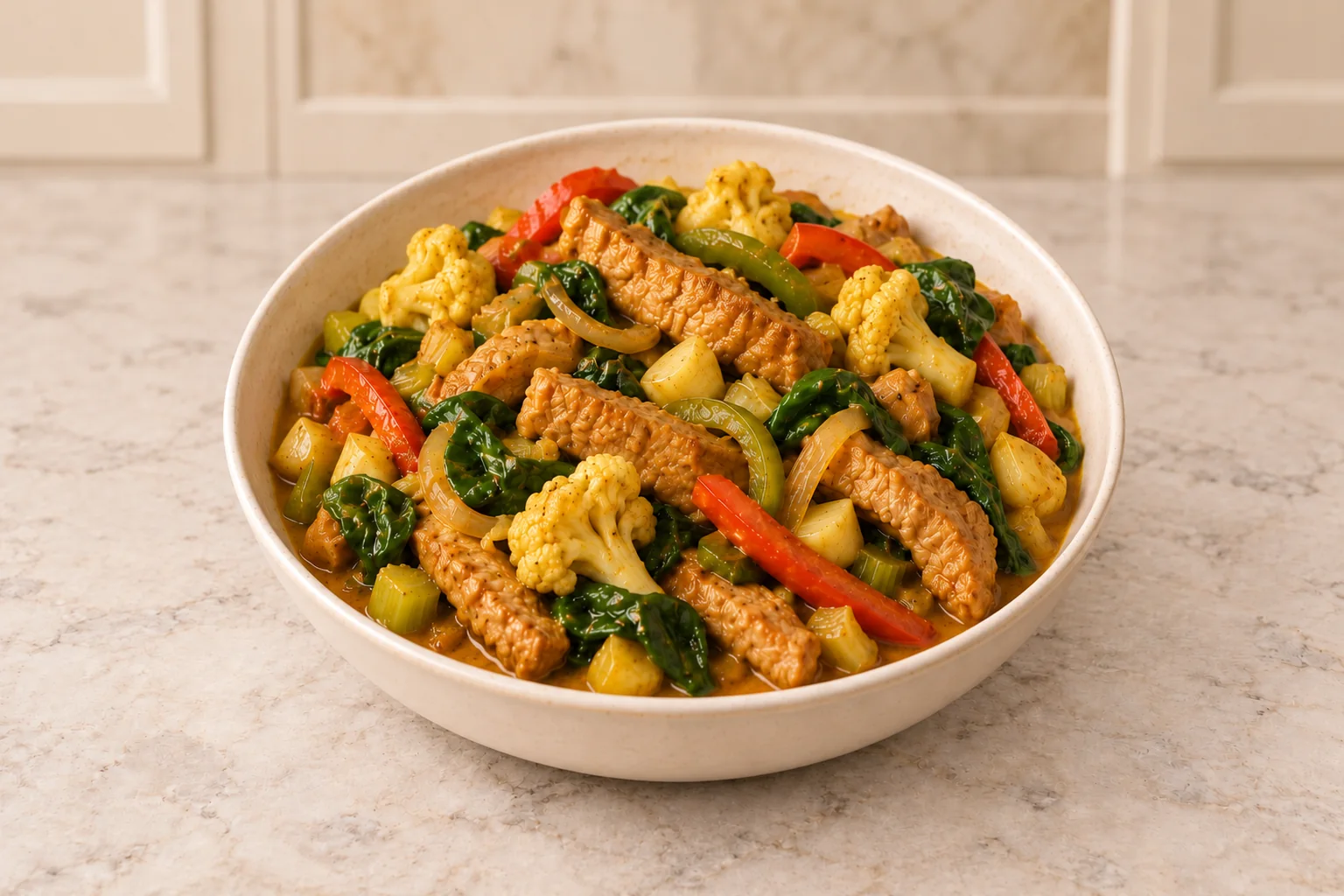
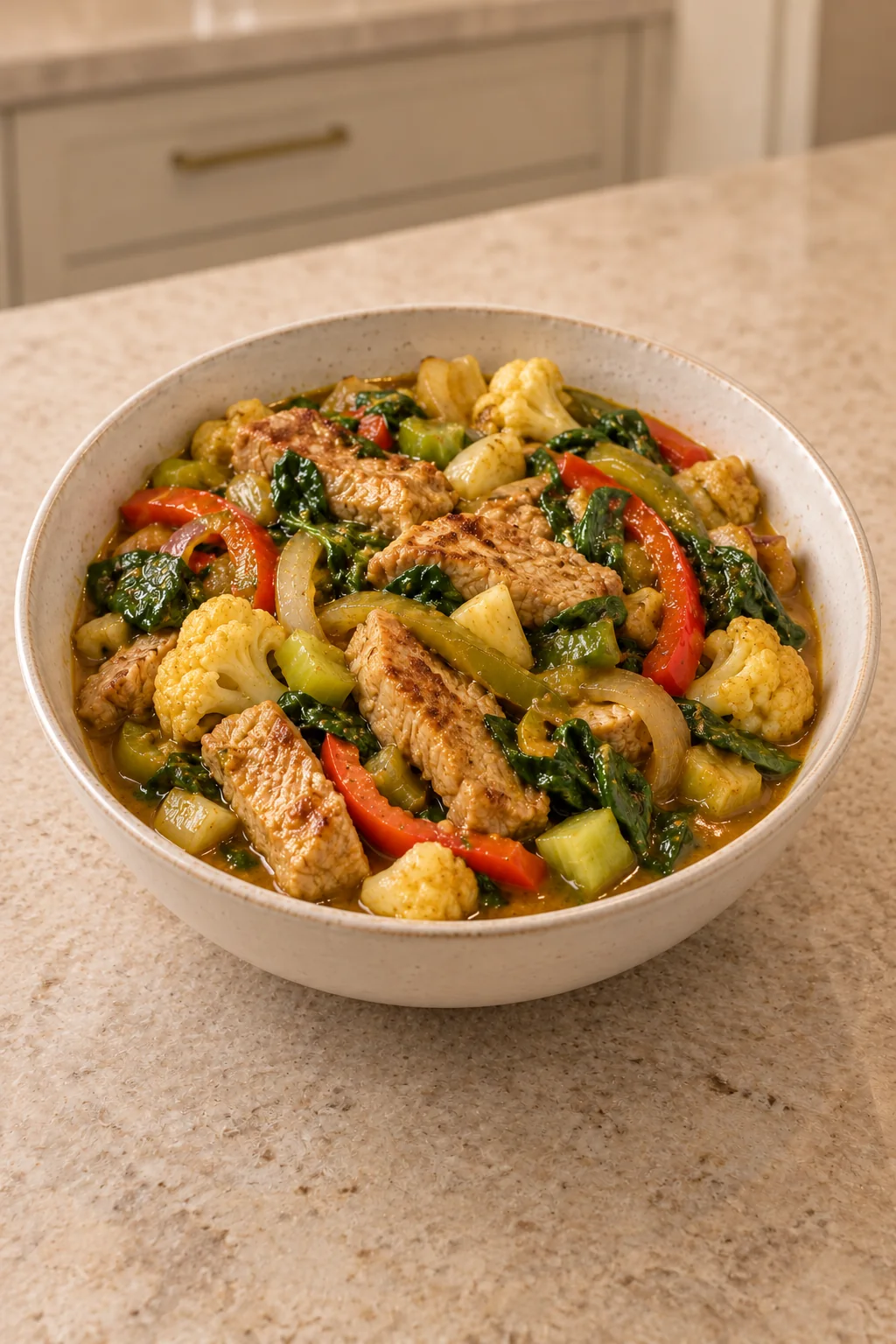
Curried Pork with Spinach, Cauliflower, and Bell Peppers is a two-skillet Full GAPS dinner with tender pork strips, soft vegetables, and a coconut curry sauce that clings to every piece. Red and green peppers keep their color, spinach folds into the sauce, and cauliflower adds a mild base without turning the meal into cauliflower rice.
The cooking order keeps each ingredient from disappearing. Pork browns in the larger skillet. Onion and peppers soften in the second. Cauliflower and spinach steam only after the pepper mixture moves to the pork pan. Coconut milk and curry go in near the end, when they can thicken around the meat instead of boiling away while the vegetables cook.
In our family kitchen, this is the kind of dinner that becomes manageable when every ingredient is cut before the first skillet heats. A whole head of garlic, twelve ounces of spinach, two peppers, cauliflower, celery, onion, and pork create too much movement for last-minute chopping.
Where This Curry Fits On GAPS
This recipe fits Full GAPS. It is not written for the Introduction Diet. The formula uses pork, permitted cooking fat, onion, spinach, cauliflower, celery, garlic, red and green bell peppers, homemade coconut milk, a pure curry blend, optional chili flakes, and homemade chicken meat stock.
Use Hot-Water Homemade Coconut Milk for Full GAPS. Measure eight fluid ounces after the milk is made and mixed. Do not replace it with canned coconut milk or a packaged product containing gums, starches, sweeteners, or preservatives.
Use GAPS Chicken Meat Stock for deglazing and for the shallow steaming liquid. The stock should come from raw meaty parts. Filtered water remains a source-supported alternative, but the linked meat stock gives the finished curry more savory depth.
Choose a curry blend only after reading its complete ingredient list. It should contain pure GAPS-compatible spices without starch, flour, sugar, seed oils, anticaking agents, flavoring, or other additives. The formula calls for two measured tablespoons; it does not invent a replacement blend from guessed ratios.
Prepare Everything Before Heating The Skillets
Cut three thick pork chops into even strips. Thinly slice one small onion, one small red bell pepper, and one large green bell pepper. Chop three celery ribs. Separate one whole head of garlic, peel the cloves, and cut them into large chunks.
Cut one small head of cauliflower into small pieces, about two cups. Wash and dry twelve ounces fresh baby spinach. Keep the spinach whole unless unusually large stems need trimming.
Measure eight ounces homemade coconut milk, two tablespoons curry blend, one teaspoon optional chili flakes, and one-quarter cup chicken meat stock for deglazing. Keep additional stock nearby for the vegetable skillet.
Choose A Stable Cooking Fat
Use homemade ghee, lard, bacon fat, or coconut oil. Homemade Stovetop Ghee is an easy linked option when ghee fits your route.
The source does not give a measured fat amount, so add only enough to coat each skillet. The fat should shimmer when hot, but it should not smoke.
Brown The Pork In The Larger Skillet
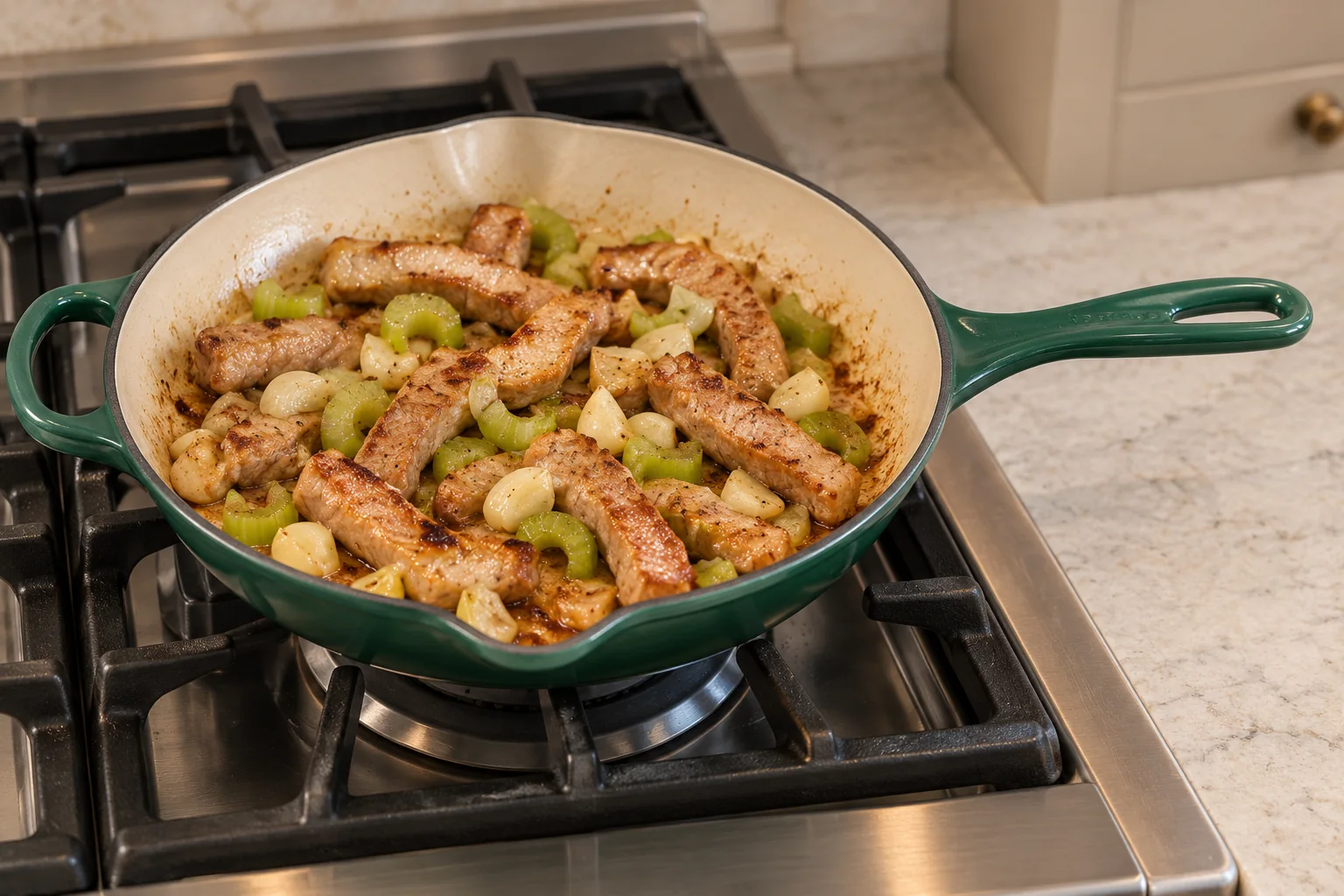
Heat the chosen fat in the 10.25-inch Le Creuset Artichaut skillet over medium heat. Add the pork strips in one layer so their broad surfaces touch the pan.
Let the first side take on a light golden edge before turning. Stir and turn occasionally rather than constantly. The pork should sound like a steady sizzle, not a wet simmer.
The source gives about twenty minutes before adding the garlic and celery. Use doneness as the deciding cue: the pork should be cooked through, with no raw center in the thickest strip.
Soften The Onion And Bell Peppers Separately
While the pork cooks, heat more fat in the 9-inch Artichaut skillet. Add the thin onion and red and green bell pepper slices.
Stir occasionally until the onion looks translucent and the pepper edges soften. Keep the strips distinct. They should bend easily but retain their red and green color.
Transfer the softened onion and peppers into the pork skillet. Reduce the pork skillet to low and continue stirring occasionally while the second skillet takes the cauliflower and spinach.
Add Garlic And Celery After The Pork Cooks
Once the pork is cooked through, add the large garlic chunks and chopped celery. Continue cooking until the celery begins to soften and the garlic smells mellow rather than raw and sharp.
If browned bits begin sticking, add about one-quarter cup chicken meat stock. Scrape the pan gently with a sturdy spatula until the flavorful browned layer releases into the liquid.
Deglaze only when needed. If the pan is already moist and nothing is sticking, hold the measured stock for the cauliflower and spinach skillet instead of making the pork mixture watery.
Steam The Cauliflower Under The Spinach
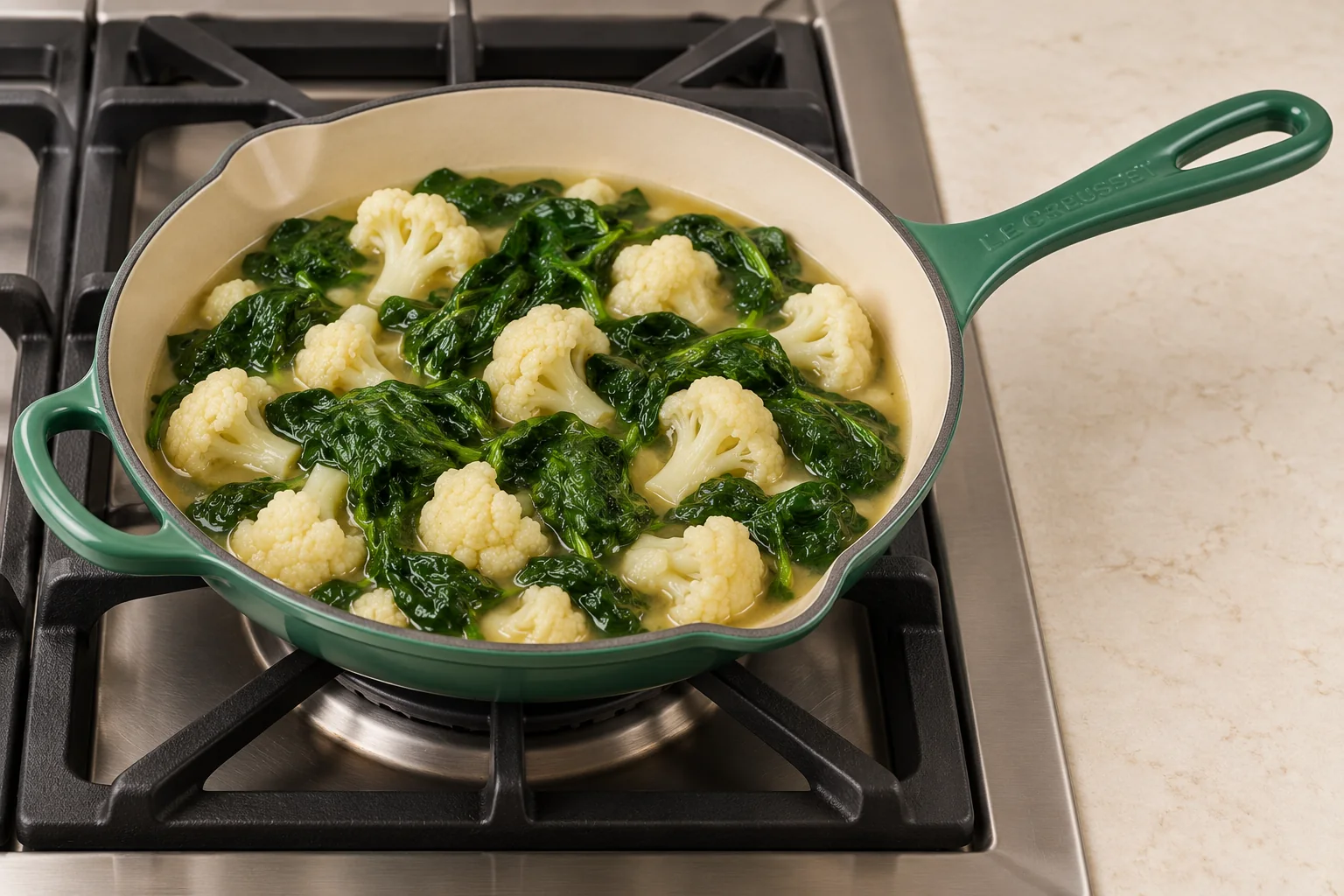
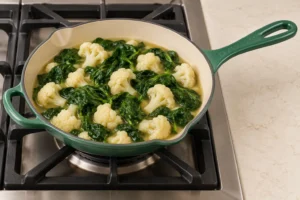
Add enough chicken meat stock to the second skillet to reach about one-half inch. Put the cauliflower pieces in first, then mound all twelve ounces of spinach over them.
Cover the skillet and cook for fifteen minutes. The spinach will collapse dramatically as it releases moisture. The cauliflower underneath should become fork-tender in the shallow stock.
Lift the lid away from your face and test a thick cauliflower stem. The fork should pass through without resistance. The spinach should be fully wilted and deep green, without dry raw leaves caught above the steam.
Build The Coconut Curry Sauce
When about five minutes remain on the cauliflower and spinach, add the eight ounces homemade coconut milk, two tablespoons curry blend, and optional teaspoon chili flakes to the pork skillet.
Bring the mixture to a brief boil and stir frequently. The pale coconut milk should take on the warm brown-gold color of the curry and thicken enough to coat the pork, garlic, celery, onions, and peppers.
Watch the bottom of the skillet. The sauce is ready when a spatula leaves a short trail before the liquid closes over it. Stop before the coconut milk reduces into an oily paste.
Combine The Two Skillets
Add the fork-tender cauliflower, wilted spinach, and any remaining steaming liquid to the pork curry. Fold everything together until every vegetable is coated and the spinach is distributed rather than sitting in one clump.
The finished skillet should look saucy but not soupy. Pork strips, cauliflower, and both pepper colors should remain recognizable. The spinach threads through the curry, and the coconut sauce settles into the vegetables without pooling deeply at the bottom.
Taste the complete dish and add mineral salt as needed. The aroma should lead with curry and garlic, followed by coconut and sweet peppers. Optional chili should add warmth without hiding the pork and vegetables.
Serve And Store The Curry
Serve the curry warm as a complete skillet meal. The source does not give a serving count, so the recipe card records one batch rather than inventing portions.
Cool leftovers promptly and refrigerate them in a covered glass container. Reheat gently in a skillet, stirring often so the coconut sauce returns to an even coating without scorching.
For a different curry with pineapple and a separate cauliflower-rice component, use Curried Chicken With Pineapple and Cauliflower Rice. This pork skillet does not include pineapple, almond butter, carrots, zucchini, green onions, or a cauliflower-rice plate.
Recommended Equipment
- Le Creuset Signature Artichaut skillet, 10.25 inch
- Le Creuset Signature Artichaut skillet, 9 inch
- Stainless-steel or wood spatulas
- Fitted skillet lid
- Cutting board and sharp chef knife
- Liquid and dry measuring cups
- Measuring spoons
- Kitchen scale
- Instant-read thermometer
Frequently Asked Questions
Can I Add Pineapple?
No. Pineapple appears only as a speculative idea after the source formula. It is not measured or tested in this curry. Use the linked curried chicken and pineapple recipe when you want that flavor.
Can I Use Canned Coconut Milk?
Use the linked homemade noncanned coconut milk. Canned products do not replace it in this Full GAPS card.
Can I Use A Commercial Curry Powder?
Use it only when the complete ingredient list is pure and additive-free. Do not use a blend containing starch, flour, sugar, seed oils, anticaking agents, or flavoring.
Why Is My Sauce Thin?
The coconut milk may need another brief minute of bubbling before the steamed vegetables are added, or too much deglazing liquid may have entered the pork skillet. Stir frequently and use the coating cue.
Why Is The Cauliflower Firm?
It needs more covered cooking. Keep shallow stock under the cauliflower and spinach and cook until a fork slides through the thickest stem without resistance.
Can I Double The Recipe?
Use the WPRM 2× control for every measured amount. Cook the pork and vegetables in batches so the skillets stay hot and the doubled ingredients do not steam in a crowded pan.
Curried Pork With Spinach And Bell Peppers Recipe
Curried Pork with Spinach, Cauliflower, and Bell Peppers for Full GAPS
Ingredients
Equipment
Method
- Heat a layer of the chosen cooking fat in the 10.25-inch Artichaut skillet over medium heat. Add the pork strips in one layer and cook, turning occasionally.
- Heat more cooking fat in the 9-inch Artichaut skillet. Add the sliced onion and red and green bell peppers. Cook, stirring occasionally, until soft and translucent at the edges.
- After about 20 minutes, verify the pork is cooked through. Add the garlic chunks and celery to the pork skillet and continue cooking. If browned bits begin to stick, add about 1/4 cup chicken meat stock and scrape them up with a sturdy spatula.
- Transfer the softened onion and bell peppers into the pork skillet and reduce that skillet to low, stirring occasionally.
- Add enough chicken meat stock to the second skillet to reach about 1/2 inch. Add the cauliflower first and the spinach on top. Cover and cook for 15 minutes, until the cauliflower is fork-tender and the spinach is completely wilted.
- When about 5 minutes remain on the vegetables, add the homemade coconut milk, curry blend, and optional chili flakes to the pork skillet. Bring to a brief boil and stir frequently until the sauce darkens slightly and thickens enough to coat the pork and vegetables.
- Add the tender cauliflower, wilted spinach, and any remaining cooking liquid to the pork skillet. Fold everything together until evenly coated and hot throughout.
- Taste the complete curry and add mineral salt as needed. Serve while the pork is tender, the peppers remain distinct, and the coconut curry sauce coats rather than pools.
Notes
Tried this recipe?
Let us know how it was!Keep Full GAPS Dinners Moving
The upcoming Full GAPS Batch-Cooking Guide helps organize meat prep, homemade coconut milk, component stock, and vegetable work for skillet meals like this one. Find current resources and upcoming releases in the WFLI shop.

Leave a comment