

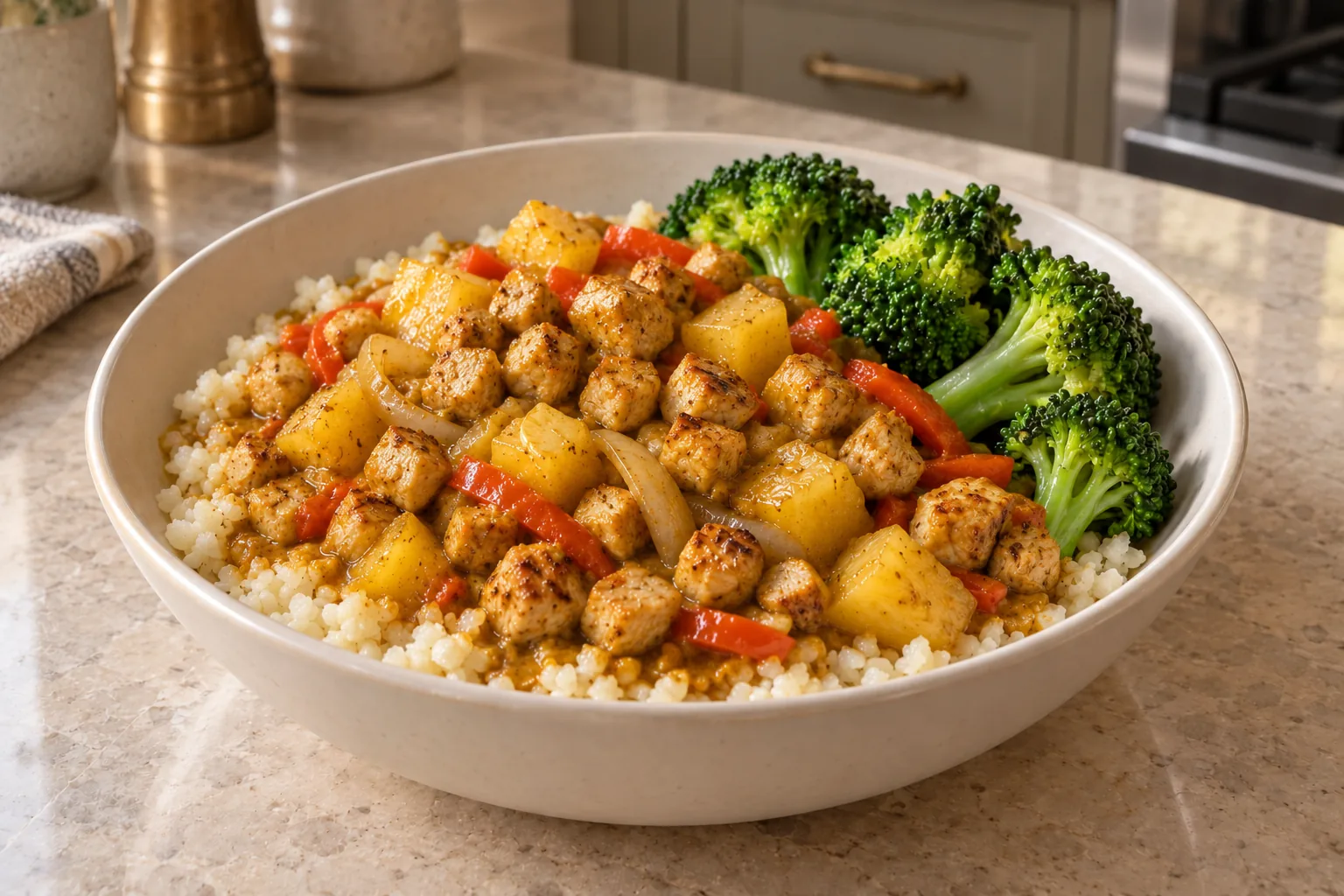
Curried chicken with pineapple is a bright, savory skillet dinner with browned chicken, soft cooked pineapple, sweet red pepper, onion, broccoli, and a coconut curry sauce served over cauliflower rice. The meal uses one skillet in clear stages, so each part gets the texture it needs before everything comes together.
For a family kitchen feeding eight, this is the kind of recipe that works well as a planned double batch once the first batch is familiar. The chicken and vegetables feel substantial, the pineapple gives the curry a gentle sweet edge, and the cauliflower rice catches the sauce without turning the plate into a heavy meal.
Where This Curry Fits on GAPS
This recipe is for later Full GAPS. Make it after digestive symptoms have settled and cooked pineapple, red pepper, chili flakes, and the exact curry blend are already tolerated. It is not an Introduction Diet recipe.
The pineapple is cooked for about five minutes after the first deglaze, then heated again in the coconut curry sauce. It is not a raw-fruit garnish. Use fresh ripe pineapple rather than canned fruit or pineapple packed in syrup.
Use homemade chicken meat stock for every deglaze and for the cauliflower rice. The linked GAPS Chicken Meat Stock gives you the component to prepare ahead. Use one cup of Hot-Water Homemade Coconut Milk without commercial gums, starches, sweeteners, or preservatives.
Choose a Pure Curry Blend
Curry powder is a blend, so the ingredient label matters more than the name on the front. Choose a blend made only from pure spices. Avoid blends containing flour, starch, sugar, seed oil, anti-caking agents, flavoring, or other additives.
The formula uses two teaspoons curry powder, one teaspoon red chili flakes, and one teaspoon black pepper. That gives the sauce a warm, peppery finish. Use the measured balance once all three are tolerated; do not quietly replace the curry blend with a commercial sauce or seasoning packet.
Prepare Everything Before the Skillet Heats
Cut one and one-half pounds chicken into true one-half-inch cubes. Thinly slice three garlic cloves. Cut one small red bell pepper lengthwise into thin slivers and slice one and one-half cups onion into narrow strips. Cube one and one-half cups fresh ripe pineapple.
Rice one head cauliflower and measure two cups broccoli florets. Keep the ingredients in separate bowls because the recipe cooks them in stages. Measure five tablespoons butter, ghee, or another introduced GAPS animal fat and keep up to two cups homemade chicken meat stock beside the stove. You will probably have stock left.
The chicken cubes should be genuinely small and close in size. Matching pieces brown and finish more evenly. The pineapple can stay larger than the chicken so it softens without disappearing into the sauce.
Brown the Chicken Without Crowding
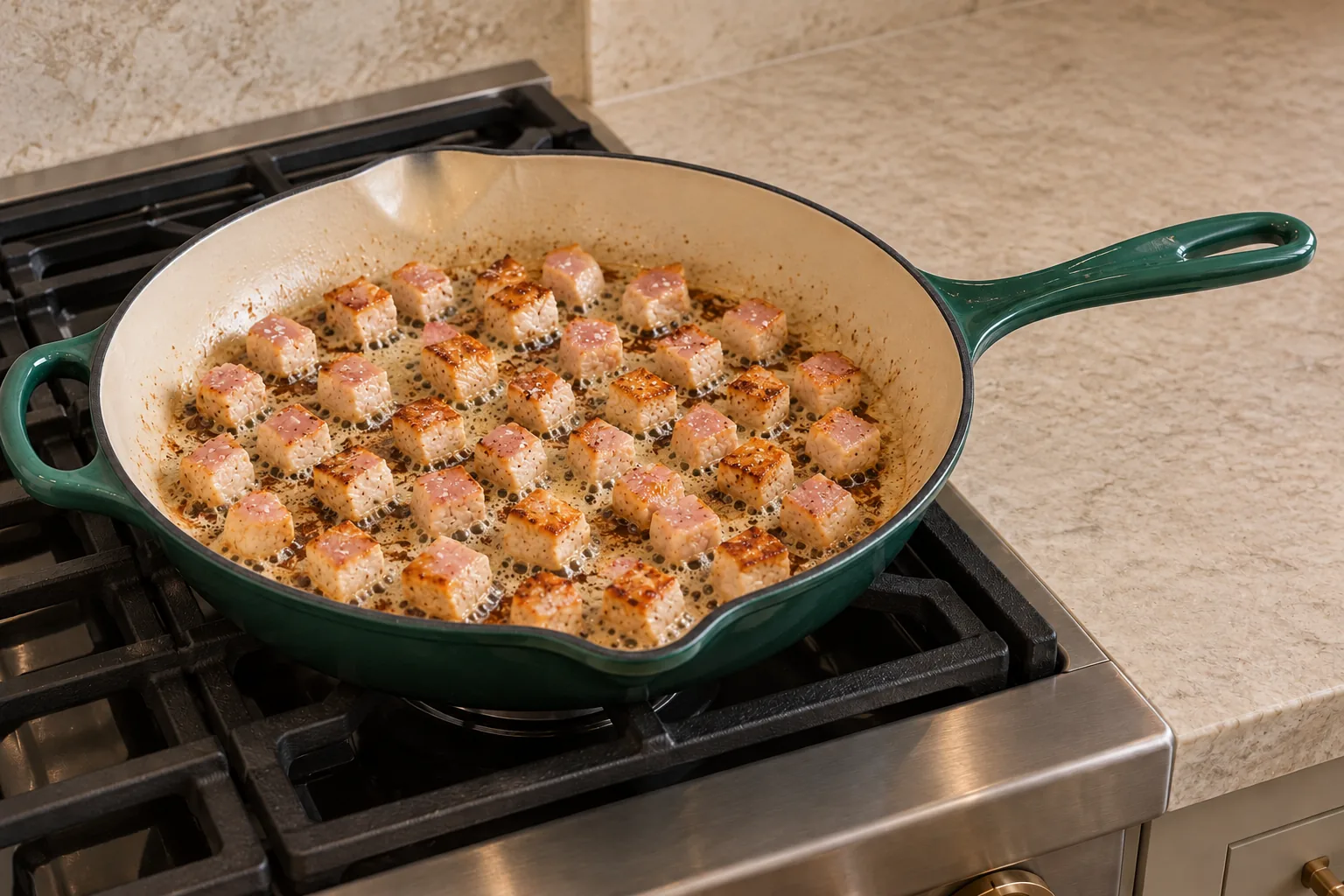
Heat two tablespoons fat in a large cast-iron skillet over medium heat. If using butter, wait until it bubbles. Arrange the chicken in one uncrowded layer and salt it lightly.
Leave the first side in contact with the skillet until the bottoms show golden-brown patches and the tops change from translucent to light pink. Turn the chicken in sections. The second side cooks faster, so watch the surfaces instead of giving both sides identical time.
Move the lightly browned chicken to a clean glass or stainless-steel bowl. It returns to the skillet later, so this first stage builds color without requiring the centers to finish here.
Cook the Pineapple in the Browned Bits
Pour two to three tablespoons from the measured meat stock into the hot skillet. It should hiss immediately. Scrape the bottom while the stock boils for a few seconds, lifting the golden-brown fond before it turns black.
Add one tablespoon fat and let it melt, then add the pineapple. Cook for about five minutes. The cubes should become glossier and slightly softer, with a cooked fruit aroma. They should still hold their shape when moved with the spatula.
Add the cooked pineapple to the bowl with the chicken. This separate cooking stage matters because it turns the pineapple into part of the cooked meal instead of leaving it as a raw topping.
Soften the Pepper, Onion, and Garlic
Deglaze the skillet again with another two to three tablespoons stock. Add one tablespoon fat, then the garlic, onion, and red pepper. Pour in one-quarter cup stock, cover, and cook over medium heat for eight minutes.
Lift the lid. The onion should look translucent, the pepper should bend easily, and the garlic should smell mellow instead of sharp. Cook uncovered for another minute or two so the loose liquid reduces.
Turn off the heat before adding the curry powder, chili flakes, and black pepper. Stir until the vegetables are evenly coated and no dry yellow pockets remain. Transfer the vegetables to the chicken and pineapple, then clean the skillet for the cauliflower rice.
Blanch the Broccoli Until Bright Green
While the onions and pepper cook, bring filtered water to a boil in a small stainless-steel saucepan. Add the broccoli florets and blanch only until they become vivid green.
Drain them promptly in a stainless-steel colander and rinse with cool filtered water to stop the cooking. The stems should be tender enough to bite but the florets should not collapse or turn olive-green.
Cook the Cauliflower Rice in Meat Stock
Pour one-half cup chicken meat stock into the clean skillet and add the final tablespoon fat. Bring the liquid to a simmer, then add the riced cauliflower.
Cook over medium heat until the cauliflower is tender and rice-like. The pieces should remain distinct and moist without sitting in a puddle. Move the cooked cauliflower rice to a warm serving dish.
Finish the Coconut Curry Sauce
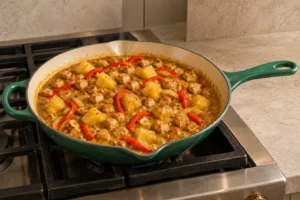
Return the chicken, cooked pineapple, and seasoned pepper-onion mixture to the skillet. Add one cup homemade coconut milk and stir until the sauce is even.
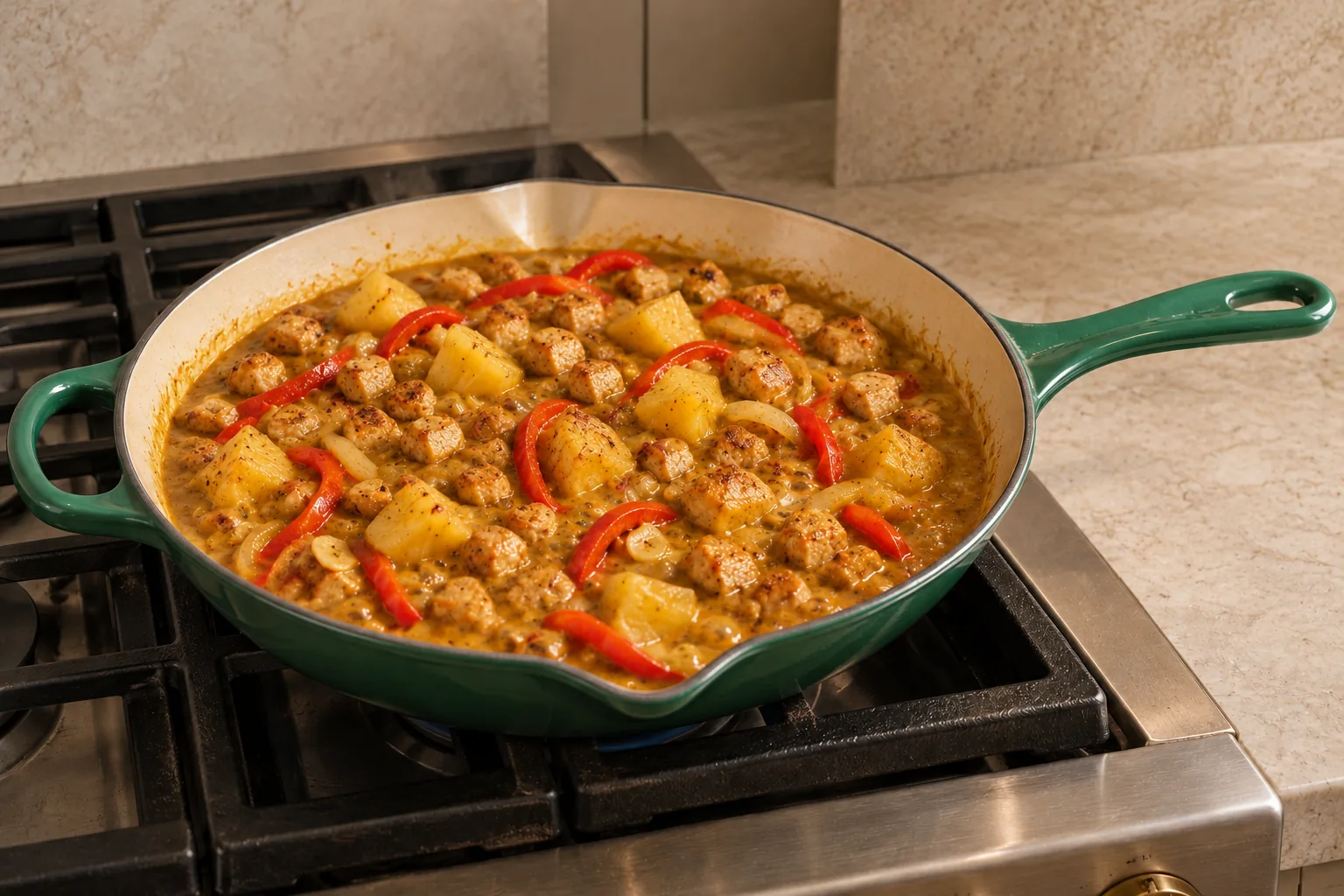
Heat over medium for about five minutes. The sauce begins bright yellow and changes to a deeper brown-yellow as the spices cook into the coconut milk. It should cling lightly to the chicken and vegetables rather than look like plain white coconut milk around them.
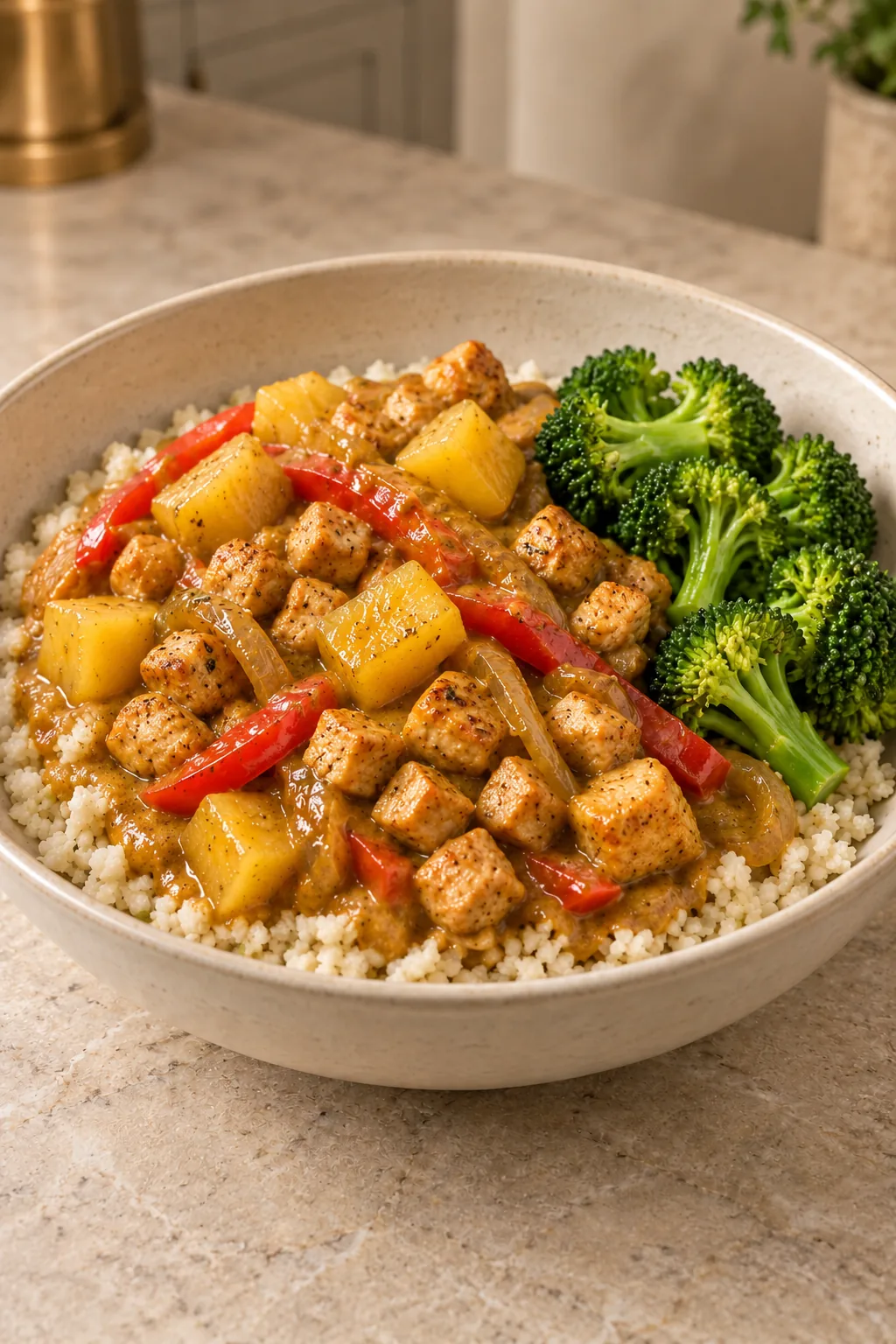
Check the center of the largest chicken cube with an instant-read thermometer. It should reach 165°F. Salt to taste, then spoon the curry over the cauliflower rice and add the bright-green broccoli beside it.
What the Finished Curry Should Look and Taste Like
The chicken should have browned edges and moist centers. The pineapple should be soft and glossy but still recognizable. Red pepper and onion should be tender, while the broccoli stays bright and lightly crisp.
The sauce should taste warm, savory, and gently sweet from the cooked pineapple, with coconut rounding the curry and chili. Cauliflower rice absorbs the sauce but should still show its own small, irregular pieces.
Storage and Reheating
The original recipe gives no tested storage window. Cool the curry, cauliflower rice, and broccoli promptly in shallow glass containers, and make what your family can use without relying on an invented timeline.
Store the components separately when possible. Reheat the curry gently in a covered skillet over low heat and add a small spoonful of meat stock only if the sauce has tightened. Warm the cauliflower rice separately so it does not absorb all the sauce during storage.
Frequently Asked Questions
Can I Use Chicken Thighs?
Yes. The recipe also works with chicken thighs. Keep the measured one-and-one-half-pound amount and cut it into one-half-inch cubes. Thigh meat gives the curry a richer texture.
Can I Use Canned or Light Coconut Milk?
Use one cup homemade coconut milk. It keeps the sauce inside the GAPS ingredient list and gives the curry the creaminess this formula needs.
Why Cook the Pineapple Separately?
The separate five-minute stage softens the fruit and collects the browned chicken flavor from the skillet. The pineapple cooks again in the final sauce, which keeps this a cooked-pineapple meal.
How Much Meat Stock Will I Actually Use?
The recipe asks you to have two cups ready, but the measured steps use two small deglazes, one-quarter cup for the pepper and onion, and one-half cup for the cauliflower rice. Keep the remainder for another meal.
Can I Skip the Cauliflower Rice?
You can serve the curry with another compatible cooked Full GAPS vegetable, but that changes the plated meal rather than the measured curry. For this version, the stock-cooked cauliflower rice is part of the complete formula.
What Other Curry Can I Make?
Try the Thai-Inspired Chicken Curry With Coconut Milk when you want a separate chicken-curry formula, or the Thai Beef and Pineapple Kabobs for another cooked-pineapple dinner. Keep their ingredient lists and recipe cards separate.
Recommended Equipment
- Le Creuset Signature 10.25-inch skillet in Artichaut
- Stainless-steel spatula
- Small Le Creuset stainless-steel saucepan
- Stainless-steel colander
- Glass or stainless-steel bowls
- Instant-read thermometer
- Measuring cups and spoons
Curried Chicken With Pineapple Recipe
Curried Chicken With Pineapple and Cauliflower Rice for Later Full GAPS
Ingredients
Equipment
Method
- Cut the chicken into true 1/2-inch cubes. Thinly slice the garlic, cut the red pepper into thin lengthwise slivers, slice the onion into thin strips, cube the pineapple, rice the cauliflower, and measure the broccoli.
- Heat 2 tablespoons fat in the skillet over medium heat. If using butter, wait until it bubbles. Arrange the chicken in one uncrowded layer and salt lightly.
- Cook until the bottoms show golden-brown patches and the tops are light pink. Turn the chicken in sections and brown the second side lightly; it will cook faster. Move the chicken to a clean bowl.
- Deglaze with 2 to 3 tablespoons meat stock, scraping up the browned bits while it boils for a few seconds. Add 1 tablespoon fat, then the pineapple. Cook about 5 minutes, until glossy and slightly softened but still holding its shape. Add it to the chicken.
- Deglaze again with 2 to 3 tablespoons stock. Add 1 tablespoon fat, then the garlic, onion, and red pepper. Add 1/4 cup stock, cover, and cook over medium heat for 8 minutes.
- Uncover and cook 1 to 2 minutes so loose liquid reduces. Turn off the heat. Stir in the curry powder, chili flakes, and black pepper until evenly coated. Transfer the vegetables to the chicken and pineapple, then clean the skillet.
- While the vegetables cook, blanch the broccoli in boiling filtered water just until bright green. Drain and rinse with cool filtered water to stop the cooking.
- Add 1/2 cup meat stock and the final 1 tablespoon fat to the clean skillet. Bring to a simmer, add the riced cauliflower, and cook over medium heat until tender and rice-like. Move it to a serving dish.
- Return the chicken, cooked pineapple, and seasoned vegetables to the skillet. Add the homemade coconut milk and stir until the sauce is even.
- Cook over medium heat for about 5 minutes, until the sauce changes from bright yellow to a deeper brown-yellow and clings lightly to the food. Verify the largest chicken cube reaches 165°F. Salt to taste.
- Serve the curry over the cauliflower rice with the blanched broccoli beside it.
Notes
Tried this recipe?
Let us know how it was!Keep Later Full GAPS Dinners Organized
The planned Dinner Cookbook will collect family-size curries, skillet meals, slow-cooker dinners, and compatible side dishes with the physical cues that make each one easier to repeat. Find current resources and upcoming releases in the WFLI shop.

Leave a comment