

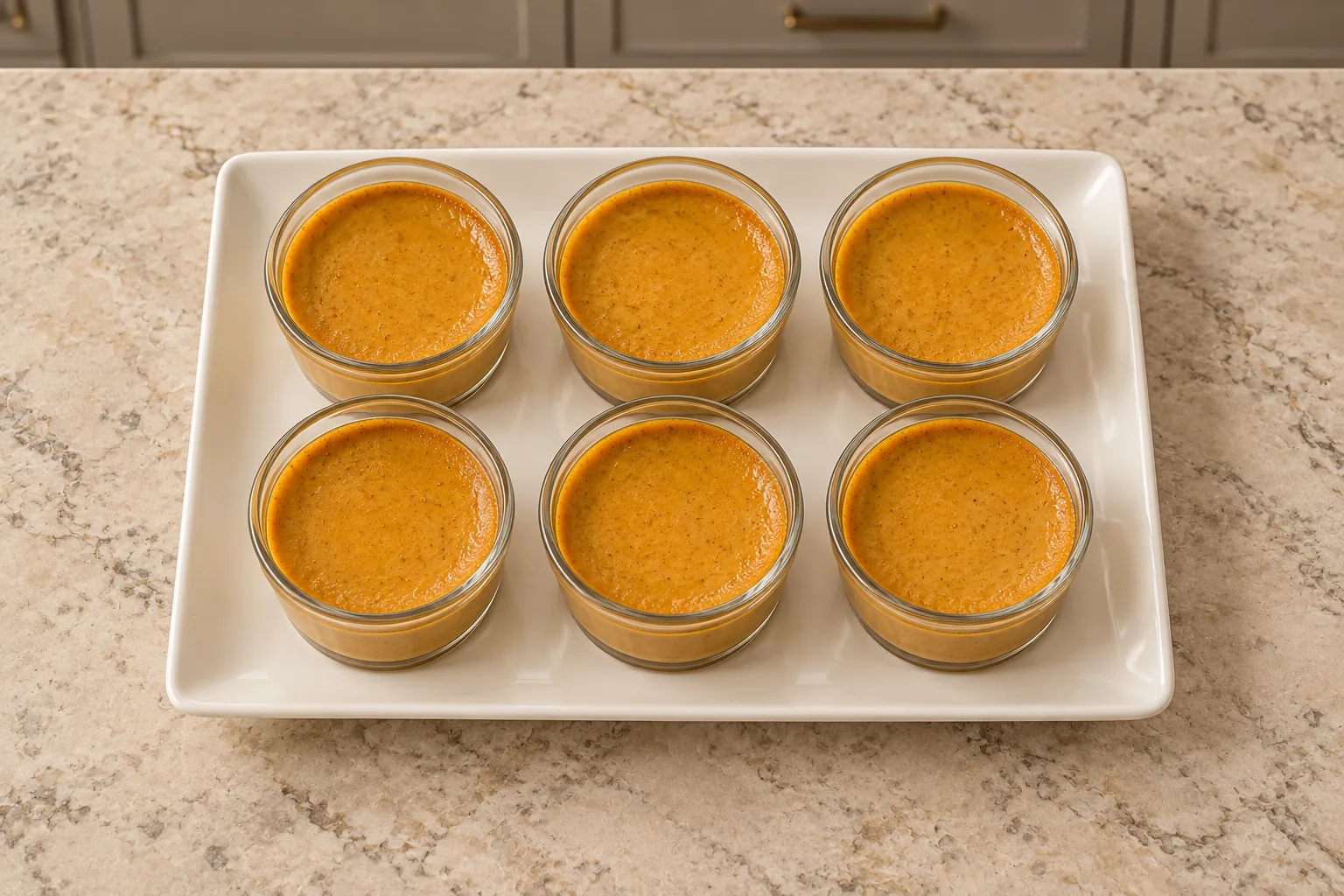
Coconut Milk Pumpkin Pie Custard has the warm cinnamon, ginger, clove, and allspice flavor of pumpkin pie without a crust. Steamed butternut squash gives the custard its orange color and soft body, while eggs and homemade coconut milk set it into six individual portions.
The method is simple, but the physical cues matter. Blend until the mixture looks evenly orange and frothy. Fill each ramekin with about 4.5 ounces. Bake them in hot water until a thin knife inserted near the center comes out clean, removing cups as they finish rather than forcing all six to stay in the oven for the same number of minutes.
Individual ramekins are useful in a busy family kitchen because each portion sets, chills, and serves in its own dish. The custard tastes mildly sweet, with the squash and spices doing as much work as the three tablespoons of raw honey.
That gentle sweetness is part of the recipe’s character. The finished custard should smell like warm pumpkin-pie spice and taste creamy rather than sugary. Cinnamon leads, ginger adds warmth, and the smaller amounts of clove and allspice stay in the background instead of turning the custard sharp or perfumed.
This is a Full GAPS dessert made with homemade coconut milk, whole eggs, cooked squash, raw honey, and pure spices. It is crustless, dairy-free, and separate from both pumpkin pie with an almond crust and two-ingredient Russian custard.
Where This Custard Fits On GAPS
This recipe belongs on Full GAPS. It is not written as an Introduction Diet custard. The complete formula combines whole eggs, butternut squash, homemade coconut milk, raw honey, vanilla, and several spices in a baked dessert.
Use one cup of Hot-Water Homemade Coconut Milk for Full GAPS. The milk should be full-fat, freshly mixed, and free from canned coconut milk, gums, starches, sugar, and other packaged additives.
Keep the original teaspoon of vanilla. Use Homemade Vanilla Extract for Full GAPS, made without added sugar or non-GAPS flavoring ingredients.
Steam The Butternut Squash First
Peel and cube the butternut squash, then steam it until a fork slides through the thickest piece with no resistance. Measure one packed cup after cooking. Let excess surface steam escape before the squash goes into the blender so the custard is not diluted by pooled water.
The squash should mash easily between the fork and the side of the bowl. Fibrous pieces or firm corners will not disappear completely during the short blend and can leave pale strands in the baked custard.
Prepare The Ramekins And Water Bath
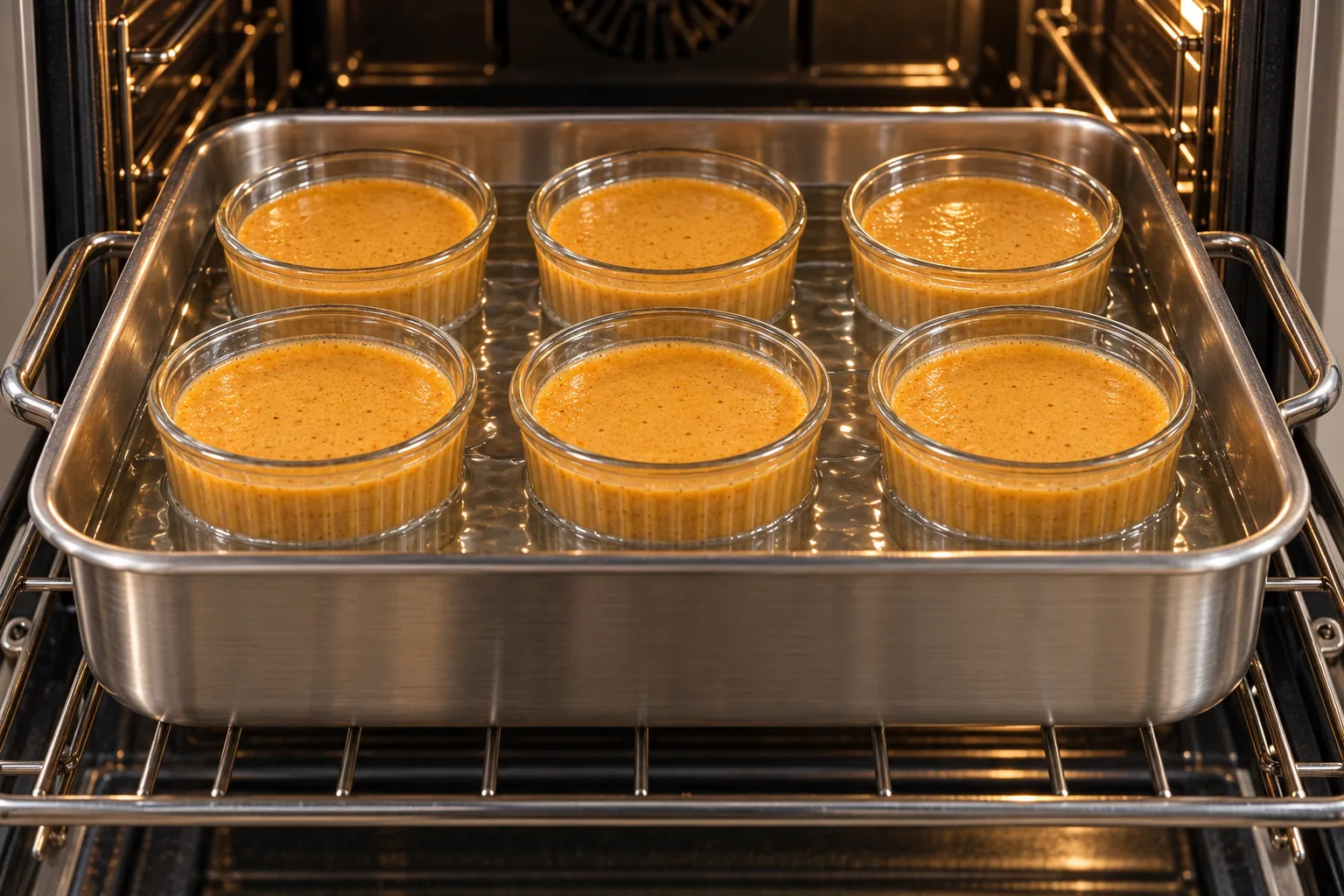
Set six half-cup oven-safe glass ramekins inside a larger stainless-steel or glass roasting dish. Leave a little room between them so hot water can circulate around every cup.
Heat enough filtered water to reach halfway up the outside of the filled ramekins. Do not pour it into the roasting dish yet. Waiting until the custard is divided makes it easier to move the dry pan near the oven without splashing water into the cups.
Blend Until Frothy And Uniform
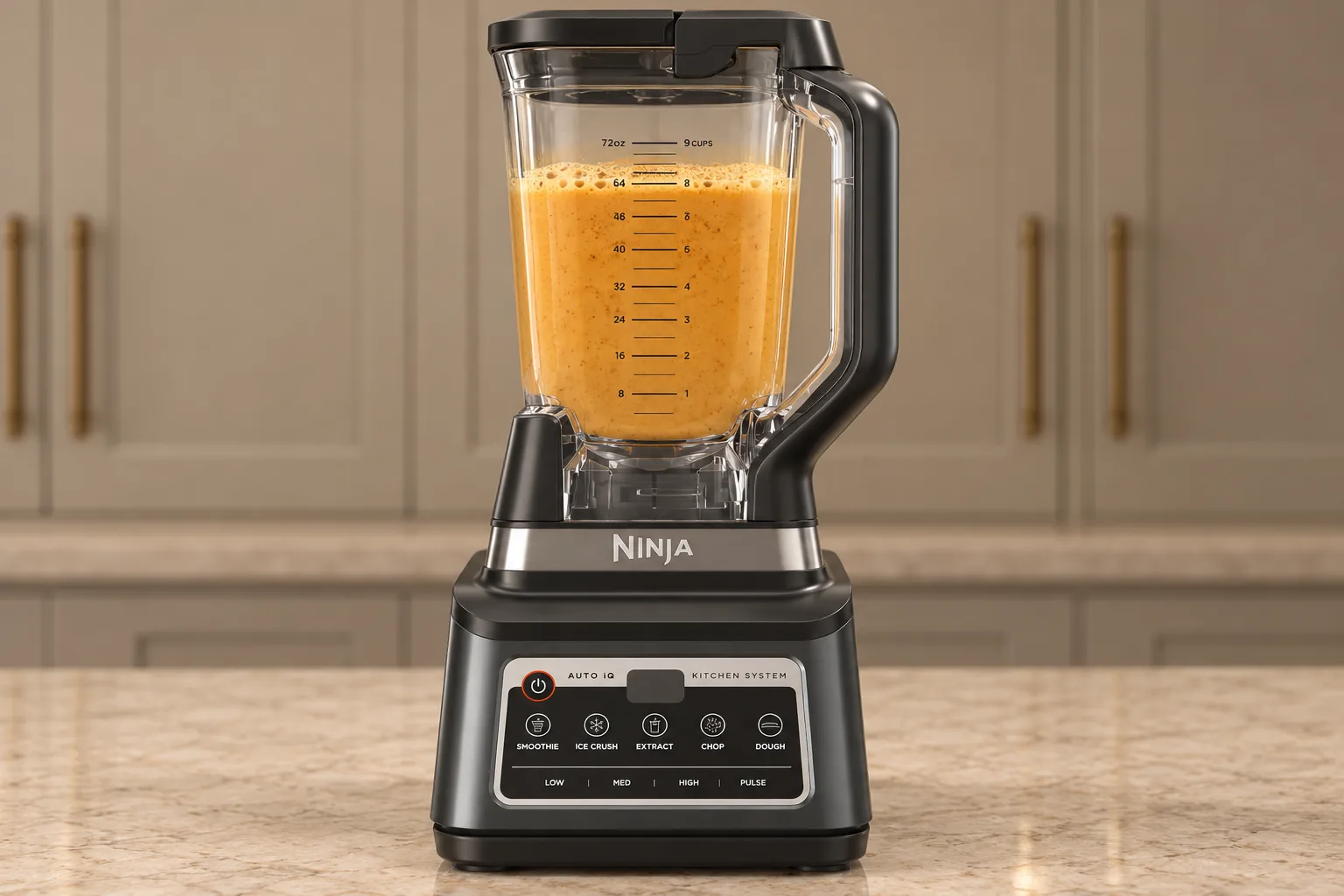
Add five large eggs, three tablespoons raw honey, one cup homemade coconut milk, one cup steamed butternut squash, one teaspoon homemade vanilla, one-half teaspoon cinnamon, and one-eighth teaspoon each cloves, ginger, and allspice to the Ninja BN801 Total Crushing Pitcher.
Lock the lid and blend only until the mixture is completely smooth and frothy. The color should be even from top to bottom, with no yellow egg streaks, white coconut-milk pockets, or visible squash fibers. Fine bubbles across the surface show that the eggs and liquid are fully combined.
Stop once the mixture is uniform. A long high-speed blend warms the custard and builds more foam than the ramekins need. Let large bubbles settle for a minute while keeping the fine froth that shows the batter is mixed.
Before pouring, scrape a spoon through the pitcher and look at the liquid on its back. It should be smooth and lightly thickened by the squash, with tiny spice speckles distributed throughout. If a soft squash piece remains, blend briefly again. If only fine bubbles remain, the mixture is ready for the ramekins.
Divide The Custard Evenly
The blended mixture makes just over three cups. Divide it among the six ramekins, about 4.5 ounces in each. A kitchen scale makes the portions especially even, but a half-cup measure works when you pour carefully and return to each cup with the remaining mixture.
Leave a little space at the top of every ramekin. Wipe any drips from the rims so baked custard does not create a rough edge that makes the cups look overfilled.
Pour close to the rim of each cup rather than from high above it. A low pour keeps the fine froth from turning into a thick foam cap. If one cup receives more bubbles, skim only the largest ones with the edge of a spoon and leave the small even bubbles alone.
Add Hot Water Halfway Up The Cups
Place the roasting dish near the oven, then pour hot filtered water into the larger dish until it reaches halfway up the outside of the ramekins. Keep the water out of the custard itself.
The water bath softens the direct oven heat around the egg custard. All six cups should sit level, with similar water depth around them. If one ramekin tilts, reposition it before the pan goes into the oven.
Bake From Forty-Five To Sixty Minutes
Bake at 325°F. Begin checking at forty-five minutes. Slide a thin knife into the custard near the center, then draw it out. The custard is done when the blade comes out clean rather than coated with liquid orange batter.
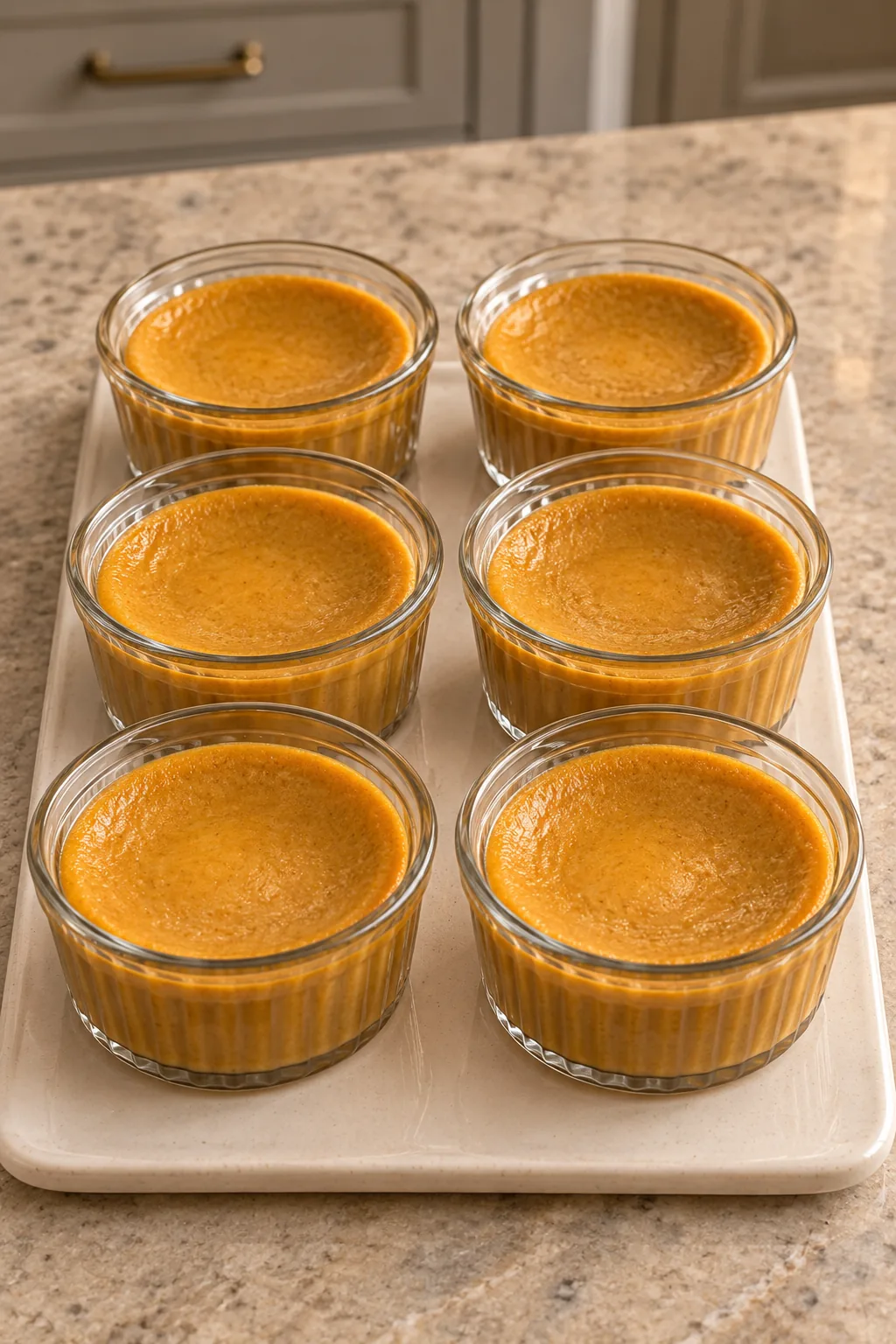
The edges should look set and the center may still give a gentle jiggle when the cup is nudged. A wet wave across the surface means it needs longer. A deeply puffed, cracked, or separated top means the custard has gone past its best stopping point.
Look at the surface as well as the knife. A finished custard changes from glossy liquid orange to a softly matte orange-gold. The spice aroma becomes rounder and warmer, and the center moves as one tender piece instead of rippling like batter. These cues are especially helpful when ramekins finish several minutes apart.
Ramekins can finish at different times. Remove each completed cup from the water bath and return the remaining cups to the oven, checking again in short intervals through the sixty-minute mark.
Cool The Ramekins Carefully
Lift each ramekin from the hot water with sturdy silicone-tipped tongs or a dry folded towel and set it on a heat-safe rack. Keep water from dripping onto the custard surface.
As the custards cool, the centers settle and become firmer. Serve them warm after they have stopped steaming, or refrigerate them in their individual dishes for a cold, denser texture.
Warm custard feels soft and delicate on the spoon. Chilled custard becomes more compact, with a clean scoop and a stronger coconut-and-spice finish. Both versions should remain creamy inside, without watery separation around the edge.
Serve And Store The Custard
Serve the custard plain so the squash, coconut, honey, and pumpkin-pie spices remain clear. It does not need whipped topping, syrup, or a sweet garnish.
A small dessert spoon lifts the custard cleanly while keeping each soft portion in its ramekin.
Cover the cooled ramekins and refrigerate them. No storage window is given, so make a fresh batch and use it promptly.
For another squash-and-egg breakfast or snack with a very different texture, try Flourless Pumpkin Egg Pancakes for Full GAPS. The pancakes cook on the stovetop; this custard bakes slowly in water and stays spoon-soft.
Recommended Equipment
- Steamer basket and stainless-steel pot
- Ninja Professional Plus Kitchen System BN801 with Total Crushing Pitcher
- Six half-cup oven-safe glass ramekins
- Large stainless-steel or glass roasting dish
- Measuring cups and spoons
- Kitchen scale, optional
- Thin stainless-steel knife
- Silicone-tipped tongs or a dry folded towel
- Heat-safe cooling rack
Frequently Asked Questions
Can I Use Canned Coconut Milk?
No. Use the linked homemade full-fat coconut milk. Canned coconut milk and products with gums, starch, sugar, or other additives do not replace it in this Full GAPS card.
Can I Use Pumpkin Instead Of Butternut Squash?
This custard uses one cup steamed butternut squash. Keep that ingredient for the same texture and moisture balance rather than treating canned pumpkin or another puree as automatically equivalent.
Why Is My Custard Watery?
The squash may have carried excess steaming water, the custard may need more oven time, or water may have splashed into a ramekin. Let the cooked squash release surface steam and keep the water bath outside the cups.
Why Did The Custard Crack?
It likely baked too long or too hot. Begin testing at forty-five minutes and remove each cup when a thin knife comes out clean. Do not wait for every center to become completely rigid.
Can I Bake It In One Dish?
Yes. The same mixture can go into one 8-inch square oven-safe glass dish set in a larger hot-water bath. Use the clean-knife cue rather than assuming the six-ramekin timing will transfer exactly.
Can I Double The Recipe?
Use the WPRM 2× control for the doubled ingredient amounts. Blend in batches if the Ninja pitcher would be crowded, use twelve ramekins, and keep the water halfway up the sides without packing the roasting dishes tightly.
Coconut Milk Pumpkin Pie Custard Recipe
Coconut Milk Pumpkin Pie Custard for Full GAPS
Ingredients
Equipment
Method
- Heat the oven to 325°F. Set six half-cup oven-safe glass ramekins inside a larger roasting dish.
- Steam the butternut squash until a fork slides through without resistance. Let surface steam escape, then measure 1 packed cup.
- Add the eggs, raw honey, homemade coconut milk, steamed squash, homemade vanilla, cinnamon, cloves, ginger, and allspice to the Ninja BN801 Total Crushing Pitcher. Blend until evenly orange, smooth, and frothy with no visible egg streaks or squash fibers.
- Divide the custard evenly among the six ramekins, about 4.5 ounces per cup.
- Pour hot filtered water into the larger roasting dish until it reaches halfway up the outside of the ramekins, keeping water out of the custard.
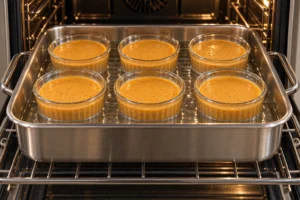
- Bake for 45 to 60 minutes. Begin testing at 45 minutes and remove each ramekin when a thin knife inserted near the center comes out clean.
- Lift the ramekins from the water bath and cool on a heat-safe rack. Serve after they stop steaming or cover and refrigerate for a firmer chilled custard.
Notes
Tried this recipe?
Let us know how it was!Keep Full GAPS Treats Organized
The upcoming Naturally Sweetened Treats Cookbook brings together honey-sweetened custards, prepared-nut desserts, fruit treats, and the physical cues that make each formula easier to repeat. Find current releases and upcoming additions in the WFLI shop.

Leave a comment