

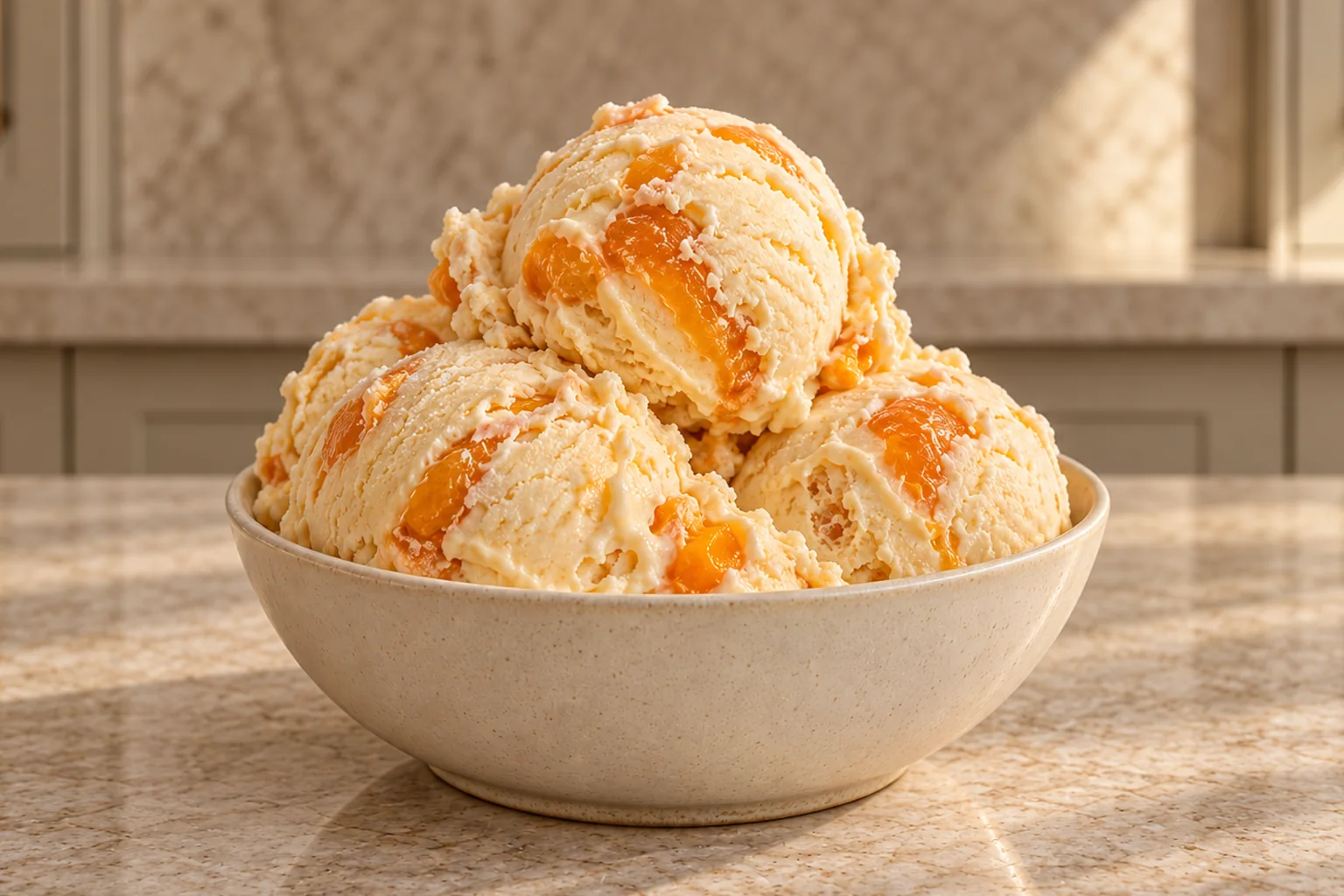
Apricot Coconut Custard Ice Cream is creamy, bright, and gently tangy, with soft fruit ribbons running through a pale coconut custard. Six egg yolks and plain gelatin give the base more body than a simple fruit-and-coconut-milk ice cream, while raw honey rounds out the ripe apricots without covering their flavor.
This is a two-day recipe, but most of that time is hands-off. On the first day, cook the yolk base to 170°F and prepare two apricot textures: raw mashed chunks and a cooked puree. Chill both overnight. On the second day, loosen the custard with the remaining coconut milk, freeze it in a bowl, and stir every ten minutes until it becomes thick enough to scoop.
In a family kitchen, an overnight recipe works best when the stopping points are unmistakable. The custard is ready to chill when it lightly coats the whisk without curdling. The cooked apricots are ready when a masher meets no resistance. The ice cream is ready for the fruit when the edges are firm but the center still folds over itself.
Where This Ice Cream Fits On GAPS
This recipe fits Full GAPS. It is not an Introduction Diet recipe. The complete formula uses egg yolks, homemade full-fat coconut milk, raw honey, plain powdered bovine gelatin, ripe apricots, and qualifying homemade vanilla extract.
Use Hot-Water Homemade Coconut Milk for Full GAPS. Measure three cups after the milk is made and mixed: one cup goes into the cooked custard, and the remaining two cups loosen the base after its overnight chill.
Use Homemade Vanilla Extract for Full GAPS without added sugar or non-GAPS flavoring ingredients. The recipe uses two tablespoons. Vanilla-bean caviar is optional and adds visible black specks as well as a rounder vanilla aroma.
Choose Fully Ripe Apricots
Ripe apricots should smell distinctly fruity near the stem and give slightly when pressed. They should not be hard and green at the shoulders. An apricot that is soft enough to eat but still holds together is ideal because half of the fruit stays raw.
Cut each apricot around the natural seam, twist the halves apart, and remove the pit. Divide the eight fruits into two groups of four. One group becomes raw chunks; the other cooks with one tablespoon of filtered water.
Taste a small piece before deciding whether the fruit needs additional raw honey. The measured one-quarter cup belongs in the custard base. Any extra honey for the apricots remains optional and should respond to the fruit you actually have.
Begin With A Cold Custard Base
Put six egg yolks into a cold Le Creuset Signature stainless-steel saucepan before turning on the heat. Whisk until the yolks are evenly yellow and fluid, with no intact yolk sacs or dense orange streaks.
Add one cup homemade coconut milk and one-quarter cup raw honey. Sprinkle two tablespoons plain powdered bovine gelatin evenly over the surface instead of dropping it in one mound. Whisk again until the mixture looks uniform.
Starting cold gives the yolks, coconut milk, honey, and gelatin time to combine before the egg proteins begin to set. The mixture will be thin at first. Do not look for a pudding texture before heating.
Whisk Constantly To 170°F
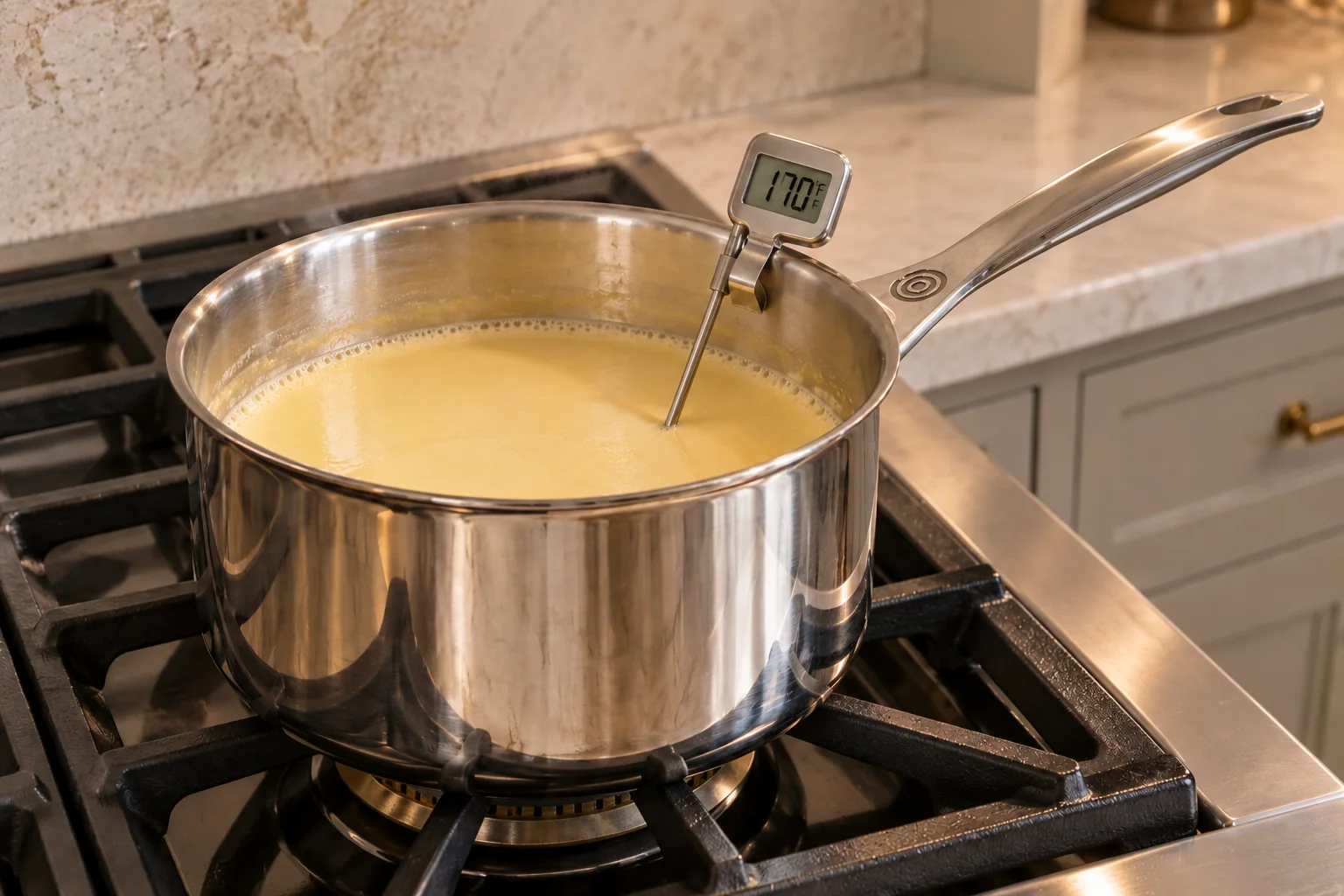
Set the saucepan over medium heat and whisk continuously, reaching the bottom and corners. The source gives about five minutes, but the thermometer is the deciding cue. Remove the pan as soon as the mixture reaches 170°F.
The finished hot base should look glossy and pale gold. It should lightly coat the wires of the whisk and fall back into the saucepan in a smooth ribbon. Small bubbles around the edge are fine. Grainy curds, oily patches, or watery separation mean it has heated too far.
Transfer the custard immediately to a heat-safe glass bowl so the hot saucepan does not keep cooking the yolks. Let it cool for twenty to thirty minutes, cover it, and refrigerate overnight.
Prepare Two Apricot Textures
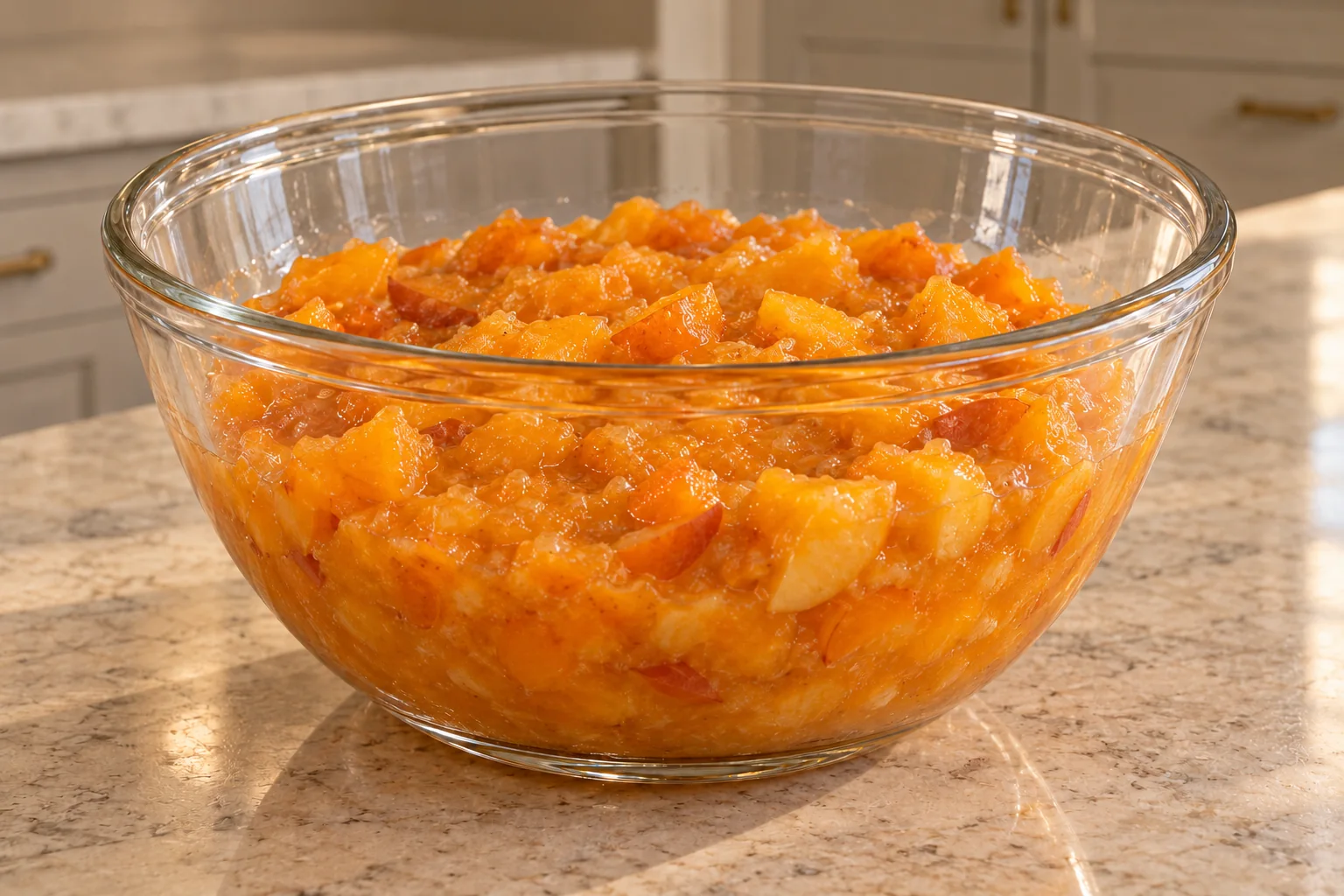
Mash four raw apricots into irregular pieces. Leave some pieces about the size of a small bean and crush the rest more finely. The variation matters: the smaller pieces disappear into the swirl, while the larger soft pieces remain visible in each scoop.
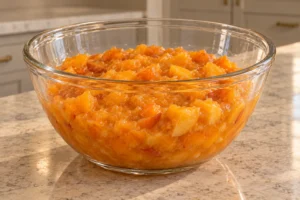
Put the remaining four apricots into a saucepan with one tablespoon filtered water. Heat gently until the flesh collapses easily under a potato masher. The puree should be thick, spoonable, and bright orange rather than watery.
Fold the raw chunks into the cooked puree. Taste it. Add a small amount of extra raw honey only if the apricots need it. Transfer the mixture to a heat-safe bowl, cool for twenty to thirty minutes, cover, and refrigerate overnight beside the custard.
Loosen The Chilled Custard
The next day, the custard may look firm or softly gelled. Whisk it until smooth before adding the remaining coconut milk. A few firm strokes should turn it from a set mass into a thick, even base.
Add the remaining two cups homemade coconut milk, two tablespoons homemade vanilla extract, and the optional caviar from one vanilla bean. Whisk thoroughly, or use the exact Ninja BN801 only if the chilled base resists hand mixing.
Stop when the base is uniformly pale cream with no translucent gelatin pockets or white coconut-milk streaks. It should pour in a thick ribbon but still level itself in the bowl.
Freeze And Stir Every Ten Minutes
Transfer the base to a wide freezer-safe glass or ceramic mixing bowl. A wider bowl exposes more surface area than a narrow jar and makes the firmer edges easier to scrape back into the center.
Freeze the bowl and stir thoroughly every ten minutes. Scrape around the wall and across the bottom, then fold the colder portions into the softer center. Early rounds will look almost unchanged. Later rounds will leave ridges behind the spatula and feel heavier to stir.
Continue until the base is thick, cold, and scoopable. It should mound on a spoon instead of flowing flat, but it should still be soft enough to accept the apricot mixture without crushing the fruit into a uniform orange paste.
The aroma should be coconut and vanilla at this stage, with a clean custard scent rather than a cooked-egg smell. Drag the spatula through the center of the bowl: the channel should stay open for a moment before the soft base slowly settles back into place.
Fold In The Apricot Swirl
Reserve a little apricot mixture for spooning over the finished ice cream if desired. Add the remainder to the cold base in several dollops. Fold only a few times with a flexible silicone spatula.
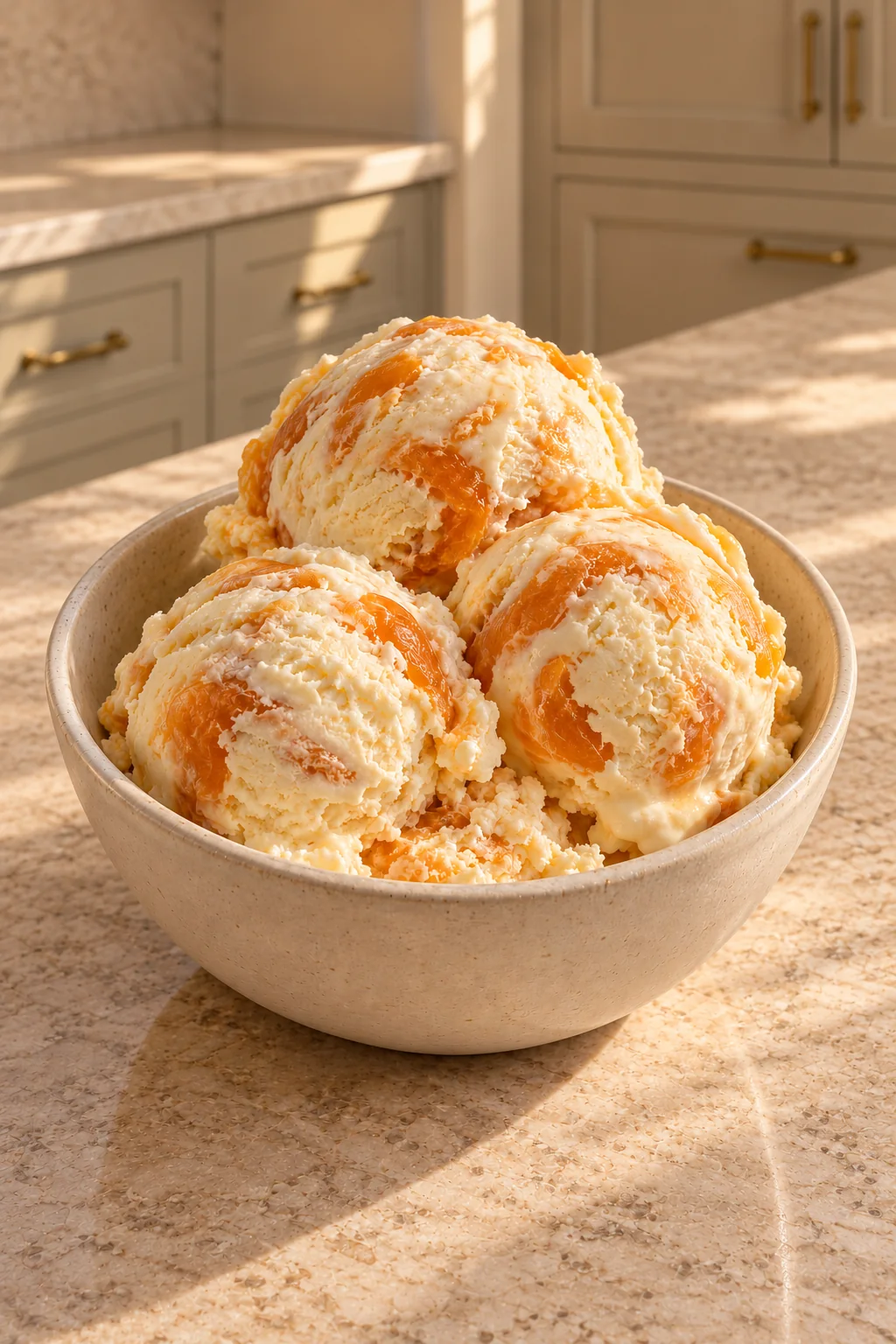
Stop while distinct orange ribbons and soft apricot pieces remain visible against the pale custard. If you keep stirring until the color is perfectly uniform, the recipe loses the contrast created by the half-raw, half-cooked fruit preparation.
Serve when the ice cream holds a rounded scoop. If you cover and freeze it longer, let it stand only until it becomes scoopable again. The source does not provide a storage window, so make a fresh batch and use it promptly.
How This Differs From The Egg-Free Apricot Ice Cream
The separate Full GAPS Apricot Ice Cream is an egg-free formula made with one and one-half pounds apricots, filtered water, raw honey, lemon juice, and thick homemade coconut milk. It simmers and blends all of its apricots, then chills before churning.
This custard version uses six yolks and gelatin, prepares only half the fruit as a cooked puree, preserves raw chunks, and chills the custard and fruit separately overnight. They share an apricot-and-coconut profile, but their formulas and finished textures are different.
Recommended Equipment
- Le Creuset Signature stainless-steel saucepan
- Stainless-steel whisk
- Instant-read thermometer
- Heat-safe glass bowls with covers
- Potato masher
- Ninja Professional Plus Kitchen System BN801, only if the chilled custard needs blending
- Wide freezer-safe glass or ceramic mixing bowl
- Flexible silicone spatula
- Measuring cups and spoons
Frequently Asked Questions
Can I Use Canned Coconut Milk?
Use the linked homemade full-fat coconut milk. The formula depends on three measured cups without the gums, starches, sweeteners, or other additives found in many packaged products.
Why Does The Custard Need To Reach 170°F?
The temperature is the source’s exact stopping point for the yolk base. Remove the saucepan immediately at 170°F so the mixture thickens without curdling or separating.
Can I Skip The Overnight Chill?
Keep the overnight chill. The custard base and apricot mixture both need to be fully cold before the final coconut milk is added and the freezer stirring begins.
Do I Need An Ice-Cream Maker?
No. This version uses the source-supported freezer-bowl route. Stir every ten minutes, scraping the firmer edges into the center, until the base becomes scoopable.
Can I Blend All Eight Apricots?
Keep the divided method. Four apricots remain raw and chunky; four become a cooked puree. That contrast defines this formula’s swirl and texture.
Can I Use The Egg-Free Version Instead?
Yes, as a separate recipe. Use the linked egg-free apricot ice cream when you want a fruit-forward base without yolks or gelatin. Do not merge its quantities with this custard formula.
Can I Double The Recipe?
Use the WPRM 2× control for the doubled ingredient amounts. Cook in a saucepan large enough for constant whisking and freeze the base in two bowls if one bowl would become too deep to stir thoroughly every ten minutes.
Apricot Coconut Custard Ice Cream Recipe
Apricot Coconut Custard Ice Cream for Full GAPS
Ingredients
Equipment
Method
- Before turning on the heat, whisk the 6 egg yolks in the cold saucepan until evenly yellow and fluid.
- Whisk in 1 cup of the homemade coconut milk and the 1/4 cup raw honey. Sprinkle the gelatin evenly over the mixture, then whisk again.
- Set the saucepan over medium heat. Whisk constantly for about 5 minutes, scraping the bottom and corners, until the mixture reaches 170°F. Remove it from the heat immediately; it should coat the whisk lightly without curds or oily separation.
- Transfer the custard base to a heat-safe bowl. Cool for 20 to 30 minutes, cover, and refrigerate overnight.
- Mash 4 of the pitted apricots into irregular raw chunks. Put the remaining 4 apricots and 1 tablespoon filtered water in a saucepan and heat gently until completely soft, then mash or puree them into a thick sauce.
- Fold the raw apricot chunks into the cooked apricot puree. Taste and add a little additional raw honey only if the ripe fruit needs it. Transfer to a heat-safe bowl, cool for 20 to 30 minutes, cover, and refrigerate overnight.
- The next day, whisk the chilled custard base until smooth. Blend or whisk in the remaining 2 cups homemade coconut milk, the homemade vanilla extract, and the optional vanilla-bean caviar until uniformly pale cream with no gelatin pockets.
- Transfer the base to a freezer-safe glass or ceramic bowl. Freeze and stir thoroughly every 10 minutes, scraping the firmer edges into the center, until the base is thick and scoopable.
- Reserve a little apricot mixture for topping if desired. Briefly fold the remainder through the ice cream so visible apricot ribbons and soft chunks remain instead of disappearing into a uniform puree. Serve when scoopable or cover and freeze.
Notes
Tried this recipe?
Let us know how it was!Keep Naturally Sweetened Treats Organized
The upcoming Naturally Sweetened Treats Cookbook brings together honey-sweetened custards, fruit desserts, frozen treats, and the exact physical cues that make each recipe easier to repeat. Find current resources and upcoming releases in the WFLI shop.

Leave a comment