

Crispy beef from stew meat uses time instead of an expensive cut. First, the beef cooks gently until its connective tissue softens. Then the drained pieces fry slowly in rendered tallow or duck fat until their edges become deeply brown and crisp while the centers stay tender.
This is a two-stage recipe, and neither stage should be rushed. The beef must yield to a fork before it reaches the frying pan. Once it is in the pan, low heat and an uncrowded layer give surface moisture time to evaporate and a crust time to form without burning.
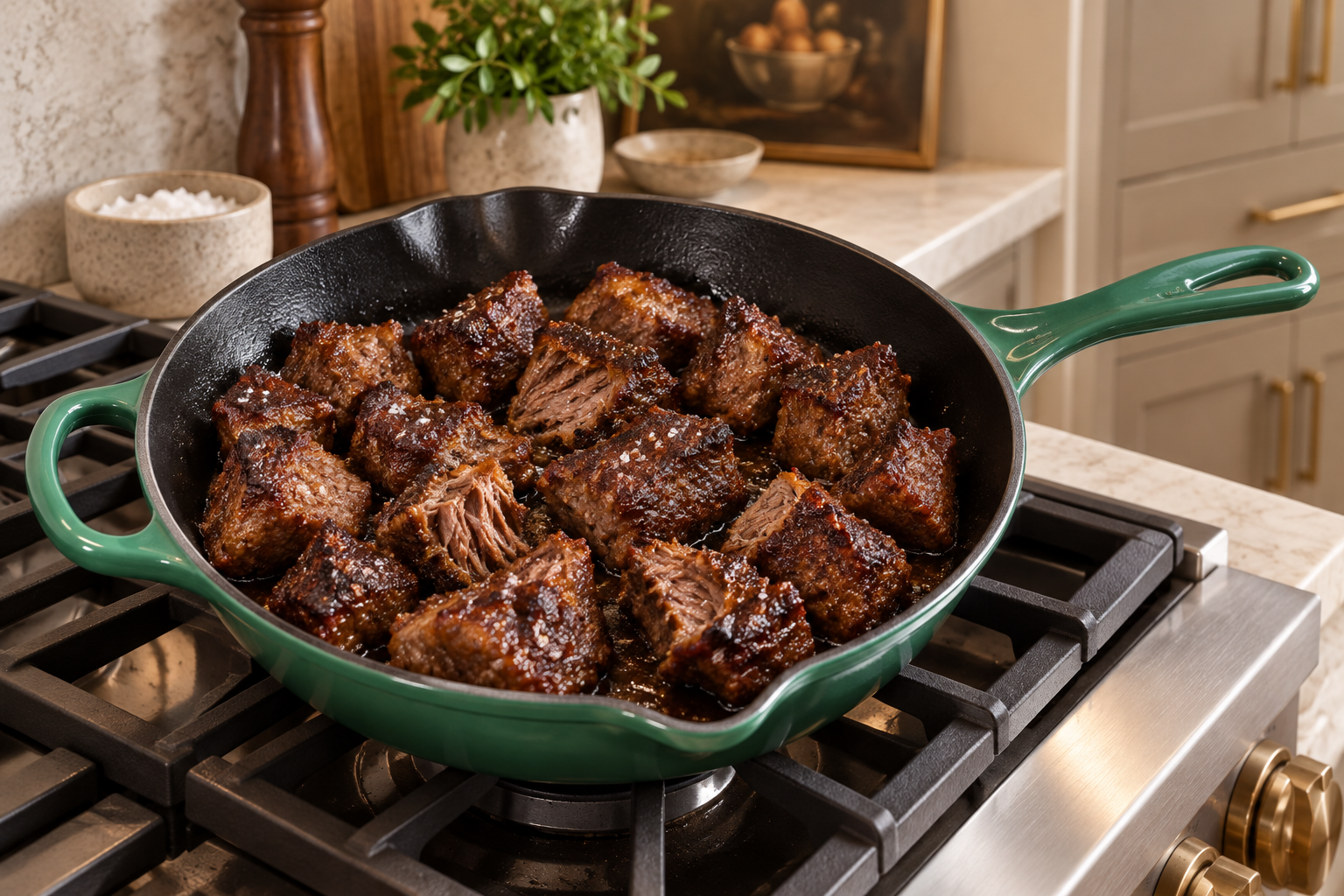
Why This Method Works for Tough Stew Beef
Stew meat is cut for slow cooking. Taking it straight from the package to a hot frying pan usually gives you brown outsides before the centers have had time to soften. This method separates tenderness from crispness so each stage can do one job well.
The first cook uses salted water and gentle heat. You may simmer the beef on the stovetop for two to three hours or pressure cook it on high for thirty-five minutes. The second cook happens after draining, when the tender pieces spend twenty-five to thirty minutes on the first side and another twenty to twenty-five minutes on the second.
With six kids, homeschooling, and second-shift work in our week, this is the kind of recipe I would divide across the day. The beef can be tenderized first, drained carefully, and finished when we are ready to eat. What matters is keeping the two endpoints clear: fork-tender before frying, then crisp enough to release cleanly before turning.
Choose the Plain or Mexican-Style Branch
The basic Full GAPS version needs beef, mineral salt, and rendered tallow or duck fat. Freshly ground black pepper or dried ginger may be added to taste on the second side. The photographs show the plain salt branch so the crust and tender center remain easy to see.
For the Mexican-style branch, combine one and one-half teaspoons ground cumin, one and one-half teaspoons dried oregano, and up to one teaspoon pure additive-free chili powder. Omit the chili powder for a nightshade-free batch. Every spice should have a complete label without sugar, starch, flour, anti-caking agents, preservatives, or fillers.
Keep the branches distinct while cooking. A pan seasoned with only mineral salt should not be described as the Mexican version, and the Mexican mixture should be measured rather than scattered from an unknown blend.
Tenderize the Beef on the Stovetop
Put two to three pounds of stew beef in a large covered stainless-steel pot. Cut unusually large pieces into generous bite-size cubes so the batch cooks evenly. Add filtered water to cover the meat by about two inches, then add the measured tenderizing salt.
Cover and maintain a gentle simmer for two to three hours. Look for small, occasional bubbles rather than a rolling boil. Check the water during the long cook and add a little more if evaporation leaves any meat exposed.
The beef is ready when a fork presses into a cube without springy resistance and the fibers begin separating when the piece is pulled. A browned outside is not the goal yet. The meat should look moist and uniformly cooked through.
Use the Pressure-Cooker Route
Put the beef, water, and tenderizing salt into an electric pressure cooker with a stainless-steel insert. Seal the cooker according to its own instructions and cook on high pressure for thirty-five minutes. Use either the natural-release or quick-release branch provided by the source, following your appliance instructions.
The recipe card’s ten-minute prep, one-hour-fifty-minute cook, and two-hour total apply to this pressure-cooker route. The stovetop route takes longer because its tenderizing stage alone is two to three hours before the separate forty-five-to-fifty-five-minute frying stage.
Drain the Tender Beef Thoroughly
Lift the cooked beef from its liquid with a stainless-steel handled strainer or slotted spoon. Let the pieces drain until cooking liquid is no longer pooling around them. Surface water must evaporate before browning can begin, so giving this step enough time shortens the wet, steaming part of the fry.
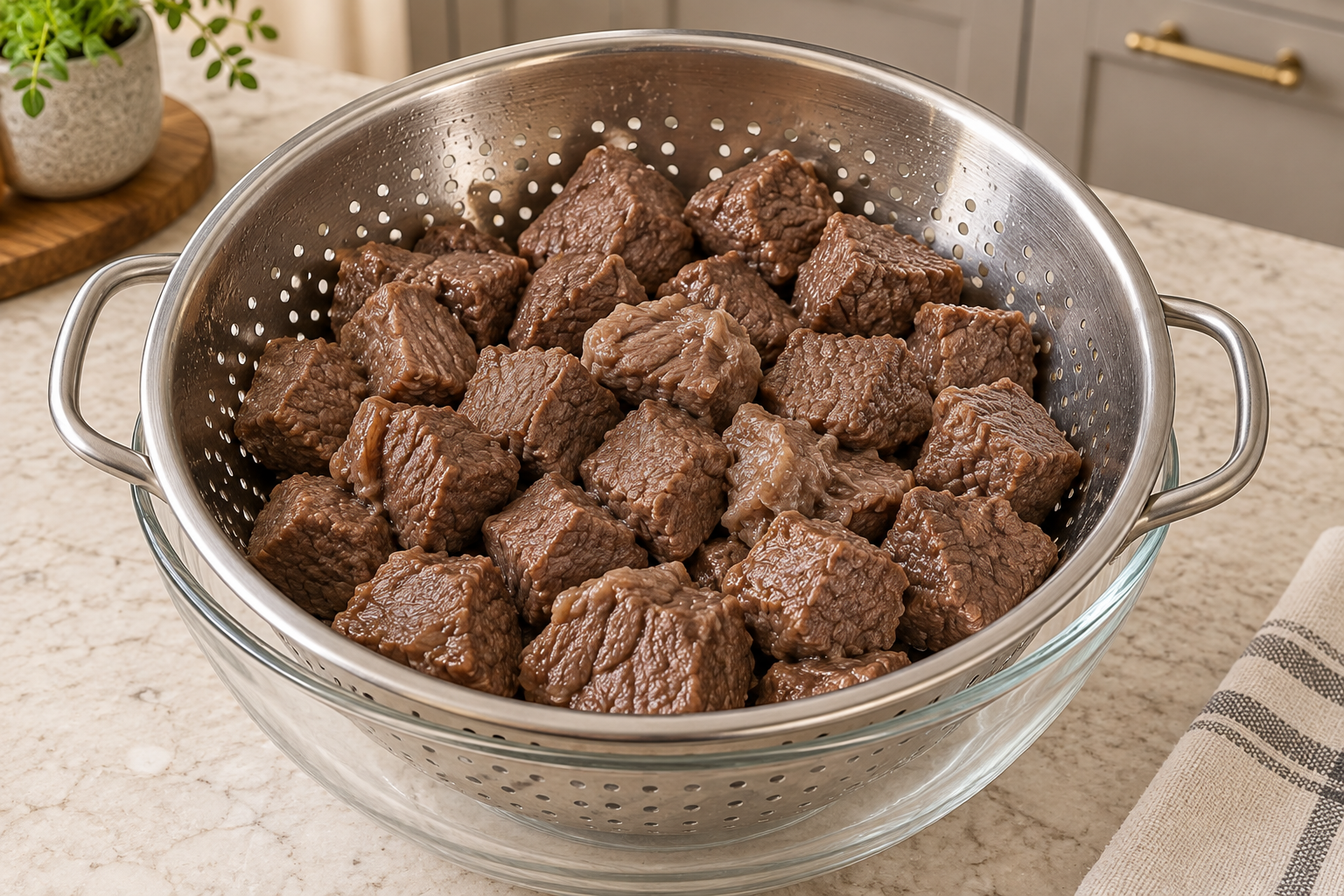
The beef should look soft and moist, with no raw pink center, but it should not have a crisp crust yet. Keep the cubes large enough to hold together as they are moved into the frying pan.
Keep the Liquid Labeled as Cooking Broth
The liquid left from boneless stew beef is cooking broth. It contains beef flavor and may provide rendered fat, but it is not the gelatinous GAPS meat stock made from raw meaty bones, joints, cartilage, and connective tissue. Keep the label accurate and do not use this liquid where a GAPS recipe specifically requires meat stock.
If you want to recover the rendered fat, let the cooking broth rest for about ten minutes so fine particles settle. Ladle it through a fine stainless-steel strainer into a clean glass container. Do not press the solids or pour the cloudy bottom sediment into the clean liquid.
Set the glass container in an ice bath and stir until the broth no longer steams. Refrigerate it overnight. The firm fat layer on top can be lifted away the next day and used for frying. Keep the liquid below labeled as cooking broth.
Fry the First Side Low and Slow
Heat a dry stainless-steel or well-seasoned cast-iron frying pan over medium heat until hot but not smoking. Add enough tallow or duck fat to coat the surface when melted, starting with about one tablespoon and using no more than two tablespoons total.
Spread the drained beef in one uncrowded layer. Use two pans or work in batches for a large three-pound batch. Press especially tall pieces a little flatter with the back of a broad spatula so more surface touches the pan. Season with half of the measured frying salt.
Any remaining moisture will hiss and steam first. Once that water cooks away, lower the heat. Fry the first side for twenty-five to thirty minutes. Do not keep scraping or turning the pieces while the crust is forming.

Wait for a Clean Release Before Turning
Test one piece near the center of the pan. A ready underside is deeply brown, crisp, and releases with a firm deep scoop from the spatula. If the meat tears and leaves its crust behind, give it more time.
Turn every piece. Use a fork with the spatula only if needed to steady a cube as it is flipped. Season with the remaining frying salt and optional pepper or dried ginger. For the Mexican branch, add the measured cumin, oregano, and optional chili powder, distributing the spices without leaving dry clumps.
Fry the second side over low heat for twenty to twenty-five minutes. The finished pieces should have crisp brown edges and moist, yielding centers. Serve promptly or hold warm.
What the Finished Crispy Beef Should Look Like
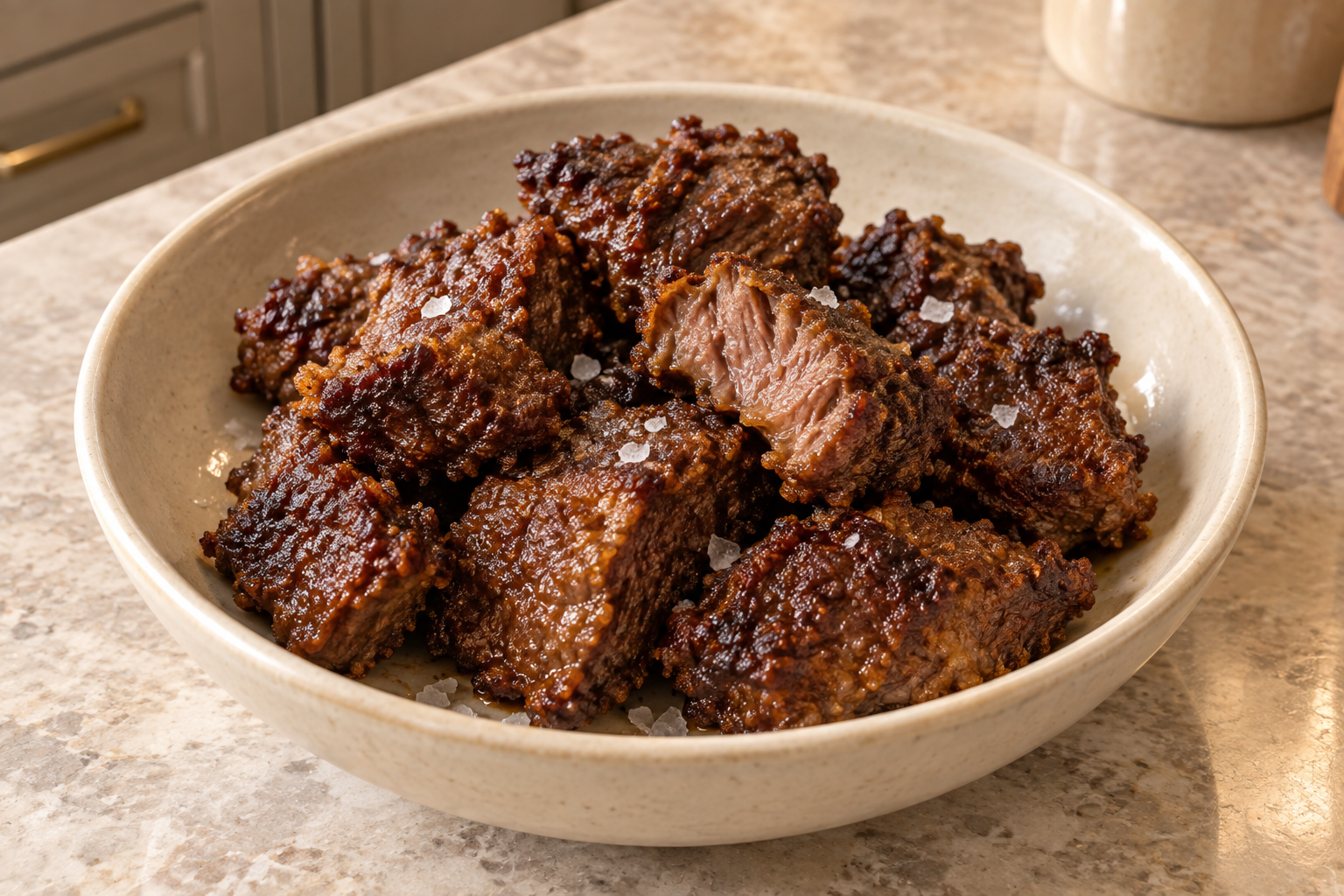
The crust is uneven and craggy rather than a smooth seared shell. Deep brown edges surround tender fibers that pull apart easily. The beef should look moist inside, not gray, dry, or crumbly. A thin sheen of rendered fat is expected, but liquid should not pool in the serving dish.
The plain version tastes beefy and well seasoned, with no sauce covering the crust. If you add the Mexican spices, they should smell warm and toasted without forming burnt patches on the pan.
Where Crispy Stew Beef Fits on GAPS
This is a Full GAPS recipe. Fresh beef, mineral salt, rendered animal fats, and pure single herbs and spices fit the formula. The cooking fat is tallow or duck fat; the heated avocado-oil alternative from the source is not used.
The complete crispy-beef preparation is not presented as an Introduction Diet recipe. Tenderizing and then long frying produces a different result from the boiled or gently cooked meats used earlier. Keep this version for Full GAPS.
For another crisp beef preparation made from a very different cut, see the Full GAPS crispy beef tongue. For a saucier, pressure-cooked beef dinner, use the Full GAPS Chinese beef short ribs. Each keeps its own times, cut, and card.
Serving and Make-Ahead Notes
Serve the plain branch with a simple cooked Full GAPS vegetable, cauliflower rice, or sautéed greens. The Mexican branch can go into a GAPS bowl or lettuce wrap with ingredients that already fit your current plan.
For make-ahead cooking, complete the tenderizing step, drain the beef, and cool it promptly before refrigeration. Keep any recovered fat separate from the labeled cooking broth. Finish the low-and-slow frying close to serving so the crust stays crisp.
The source also supports freezing leftovers for a future meal without assigning a fixed freezer duration. Cool the beef, pack it in a covered freezer-safe container, label the date, and reheat gently after thawing until the centers are hot.
Recommended Equipment
You need a large covered stainless-steel pot or electric pressure cooker with a stainless-steel insert, a stainless-steel handled strainer or slotted spoon, a stainless-steel colander, a large stainless-steel or well-seasoned cast-iron frying pan, a broad spatula, and glass containers for cooling and storage.
The frying photographs use the Le Creuset Signature 10.25-inch skillet in Artichaut. The drained-beef image uses a stainless-steel colander nested securely in a clear glass bowl. Every vessel is fully supported; nothing is balanced over an edge or held in midair.
Frequently Asked Questions
Why Is the Simmering Liquid Called Cooking Broth?
Boneless stew meat produces a flavorful meat-forward liquid, but it does not supply the raw meaty bones, joints, cartilage, and connective tissue that define GAPS meat stock.
Can I Tenderize the Beef on the Stovetop?
Yes. Cover it with water by about two inches and maintain a gentle simmer for two to three hours, adding water if evaporation exposes the meat.
Can I Use a Pressure Cooker?
Yes. Cook on high pressure for thirty-five minutes and use the source’s natural- or quick-release branch according to your appliance instructions.
Why Does the Frying Take So Long?
The low heat lets moisture leave and a crust form without scorching the outside. Expect twenty-five to thirty minutes on the first side and twenty to twenty-five on the second.
How Do I Know When to Turn the Beef?
Test a center piece. Turn it when the underside is deep brown and crisp and releases with a firm scoop instead of tearing away from its crust.
Can I Use Avocado Oil?
No. This Full GAPS version uses rendered tallow or duck fat for the heated frying step.
Crispy Beef from Stew Meat Recipe
Crispy Beef from Stew Meat for Full GAPS
Ingredients
Equipment
Method
- Put the beef in a large covered stainless-steel pot or stainless pressure-cooker insert. Add filtered water to cover the meat by about 2 inches, then add the tenderizing salt.
- Choose one tenderizing route. Stovetop: cover and maintain a gentle simmer for 2 to 3 hours, adding water if needed, until the beef yields to a fork. Pressure cooker: seal according to the appliance instructions, cook on high pressure for 35 minutes, and use either the natural- or quick-release branch from the source.
- Lift the beef from the liquid with a stainless-steel handled strainer or slotted spoon. Drain until cooking broth is no longer pooling around the pieces. Keep the liquid labeled as cooking broth, not GAPS meat stock.
- Optional fat recovery: rest the cooking broth for about 10 minutes. Ladle it through a fine stainless-steel strainer into a clean glass container without pressing solids or adding cloudy bottom sediment.
- Set the glass container in an ice bath and stir until the broth no longer steams. Refrigerate overnight, then lift off the firm fat layer for frying. Keep the remaining liquid labeled as cooking broth.
- Heat a dry stainless-steel or well-seasoned cast-iron frying pan over medium heat until hot but not smoking. Add enough tallow or duck fat to coat the pan when melted.
- Spread the drained beef in one uncrowded layer, using two pans or batches if needed. Press tall pieces slightly flatter and season with half of the frying salt.
- Let surface moisture evaporate, lower the heat, and fry the first side for 25 to 30 minutes. It is ready to turn when the underside is deeply brown and crisp and releases with a firm scoop instead of tearing.
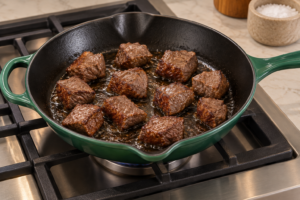
- Turn every piece. Add the remaining frying salt and optional pepper or dried ginger. For the Mexican-style branch, add the cumin, oregano and optional chili powder, distributing the spices evenly.
- Fry the second side over low heat for 20 to 25 minutes, until crisp and brown outside with moist tender centers. Serve promptly or hold warm.
Notes
- The 10-minute prep, 110-minute cook and 120-minute total apply to the pressure-cooker route. The stovetop tenderizing route takes 2 to 3 hours before the separate 45-to-55-minute frying stage.
- The boneless-beef liquid is cooking broth, not GAPS meat stock.
- Use rendered tallow or duck fat. Heated avocado oil is not used in this Full GAPS card.
- Use two pans or work in batches when the beef cannot fit in one uncrowded layer.
Tried this recipe?
Let us know how it was!Stretch the Beef Budget Further
Turning stew meat into a dinner everyone wants is exactly the kind of kitchen move that makes a food budget work harder. The upcoming Budget Meal Plan will organize lower-cost Full GAPS meals with shopping lists and practical preparation notes. Find current guides and catalog updates in the WFLI shop.

Leave a comment