

GAPS names cod liver oil directly as one of its three essential supplements, the source for vitamins A and D.[1] This post covers what GAPS actually says about it: why it matters within the protocol, how its amount guidance fits different products, what to look for on a label, and what my family uses.
What GAPS Says About Cod Liver Oil
The official GAPS supplement page lists three categories: a therapeutic-strength probiotic, essential fatty acids, and vitamins A and D in the form of cod liver oil.[1] In the 2020 book, Campbell-McBride puts diet first and describes supplementation as individual. Her FAQ also says a supplement is not essential for every person when it produces a serious reaction. The list helps explain the protocol; it is not a requirement to keep taking something that causes problems.[5][11]
Why Vitamins A and D Matter
Cod liver oil provides preformed vitamin A. Campbell-McBride favors traditionally produced cod liver oil in her discussion of vitamin A, digestion, and the gut lining.[2] Retinol and retinyl esters are both forms of preformed vitamin A; the form name alone does not establish whether a person can absorb it or whether a dose is suitable.[13]
Her nutritional explanation focuses on the conversion of plant carotenoids, the nutrients needed for that process, and the difficulty some people have digesting fats. She also describes vitamin A’s role in maintaining the gut lining. These are the reasons she gives for choosing a preformed source in the GAPS protocol.[2]
The book discusses sunlight, oily fish, and cod liver oil as vitamin D sources. Campbell-McBride places particular emphasis on cod liver oil during the colder months. That is her seasonal approach within GAPS; it does not establish an individual vitamin D level from the season alone.[3]
Campbell-McBride discusses vitamins A and D together and prefers obtaining them through food and cod liver oil rather than treating each supplement in isolation.[4] For comparing bottles, look at the amount of each vitamin in the stated serving, not just whether both appear on the front label.
How Much Cod Liver Oil GAPS Recommends
Before comparing any teaspoon amounts, check the bottle’s serving size and its vitamin A and D amounts. Include other supplements, such as a prenatal, when reviewing total intake. Preformed vitamin A can be excessive from either natural food sources or supplements; a volume of oil by itself cannot establish a safe dose.[13]
The 2020 book gives a general amount discussion and a separate set of figures for ordinary oils with natural vitamins added. My cod liver oil dosing reference keeps those two passages separate, with the adult, pregnancy, breastfeeding, child and baby wording beside the relevant product context. It also says requirements are individual and recommends consulting the manufacturer because added vitamin amounts differ between products.[5][6] A source example is not interchangeable with the same volume of every oil. Pregnancy and children need product-specific clinical advice about supplementation, particularly because excess preformed vitamin A can harm a developing baby.[13]
Keep the actual vitamin amounts beside the serving size in your notes. Do not use a fixed number of teaspoons as an overdose threshold, automatically double a dose, or assume skin application supplies a measured amount of vitamin A or D. The useful comparison is the exact product, amount, and person it is intended for.[5][13]
Campbell-McBride says she finds cod liver oil most useful in the cold season and describes many of her patients not needing it in summer. Her discussion also puts food and lifestyle ahead of supplements. Keep that as the author’s approach, rather than assuming sunshine alone settles whether someone needs supplementation.[6]
Fermented vs. Unfermented, and What to Look For on a Label
Campbell-McBride prefers traditionally produced oils and discusses refining and added vitamins as reasons to ask about manufacturing.[6] In her production discussion, Campbell-McBride describes industrial steps including heat, pressure, solvents, refining, bleaching and deodorizing. She prefers traditional methods; if that oil is unavailable, her next choice is an oil with natural vitamins A and D added. Ask the manufacturer how the particular oil is produced, what has been added, and what vitamin amounts the stated serving supplies. A preference for traditional production does not replace those product details.
Campbell-McBride explicitly says she does not recommend consuming synthetic vitamins. In her 2020 discussion, she also describes the difficulty of assessing exact vitamin A and D amounts in traditionally produced oil, because these vitamins occur in many natural forms and testing methods were still improving.[6] The product comparison linked below looks at the current documents available for the oils it covers.
For the actual bottles, labels, testing documents and cost comparison, read my cod liver oil product comparison. That guide keeps current product research separate from the book’s general guidance.
In The Complete Cooking Techniques for the GAPS Diet, Monica Corrado names Green Pasture fermented cod liver oil and Rosita cod liver oil as options. She reports that some people who do not tolerate the fermented version may do better with an unfermented oil.[7] That is practitioner guidance about possible tolerance differences, not a guarantee about a particular bottle or person.
Where Cod Liver Oil Fits in the Stages
The official supplement FAQ recommends introducing new probiotic and cod liver oil supplements in small amounts from Stage 3 when fermented foods have been established. It gives an earlier probiotic exception for the small group who cannot tolerate any fermented food, and allows gradual introduction from the beginning for people starting with Full GAPS.[9] The 2020 book discusses supplements individually and says to take a probiotic in its Intro starting routine. These passages do not support a blanket rule that everyone must stop all supplements in Stages 1 and 2.[12]
If you were already taking cod liver oil before you started GAPS, GAPS says to keep taking it. Your body has already adapted, which puts you in a stronger starting position than someone brand new to it.[9]
Shellfish Allergy, Seizures, and Cod Liver Oil
The GAPS FAQ discusses a wrist sensitivity test and whether someone already tolerates fish when answering its shellfish-allergy question.[10] Those observations do not establish that a particular supplement is safe to swallow for someone with a known allergy. Have the exact ingredients and allergen information checked against that person’s allergy plan rather than trying a home challenge.[14] The FAQ also points to animal fats, liver, meat, and egg yolks as food sources when cod liver oil is not tolerated.[10]
The FAQ warns that cod liver oil and other oil supplements can worsen seizures, tics, or other involuntary movements in some people.[11] For epilepsy, the 2020 book advises no oil supplements for at least the first year. It later discusses considering cod liver oil for someone prone to common colds during the cold season, after at least six months without seizures and after that minimum first year, beginning with a tiny amount. That is a separate, individualized discussion to have with the treating clinician, not a change to seizure medication.[12]
What Worked for Our Family
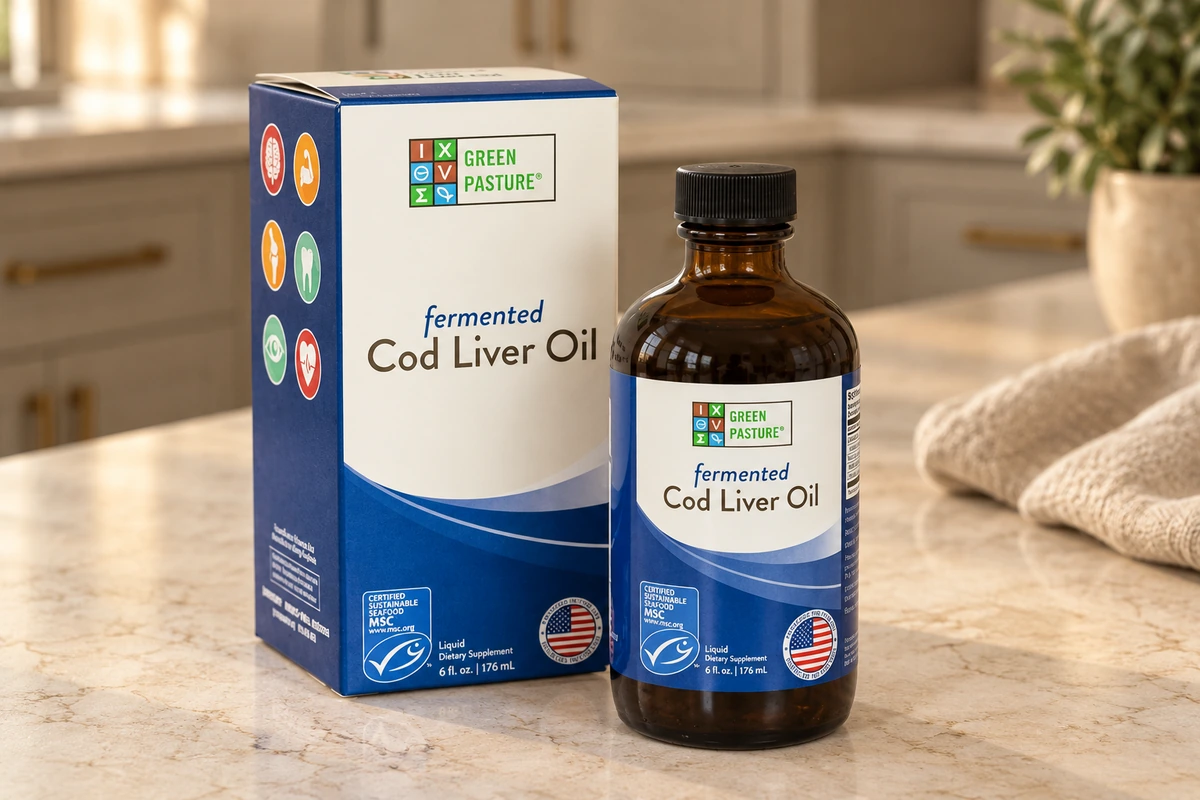
Our family uses Green Pasture fermented cod liver oil for the vitamin A and D part of the protocol, alongside Nordic Naturals Complete Omega for essential fatty acids. Those are our documented household choices, not a dose recommendation for someone else.
FAQ
Does the GAPS Diet Require Cod Liver Oil?
The official page names it as the vitamin A and D source in its essential supplement categories. The 2020 book and FAQ still make room for individual needs and tolerance, including not taking a supplement that causes a serious reaction.[1][5][11]
How Much Cod Liver Oil Does GAPS Recommend?
The separate dosing reference lays out the book’s two amount passages and its epilepsy exception. The book also discusses individual needs and differences between products. Use the actual vitamin A and D amounts on the exact product, together with dietary and other supplement sources, when reviewing a dose. Do not automatically apply another person’s teaspoon amount or increase it.[5][6][13]
What’s the Difference Between Fermented and Unfermented Cod Liver Oil?
Corrado describes fermented cod liver oil as a traditionally produced option and notes that some people with histamine-related tolerance difficulties may prefer an unfermented version. Compare the actual products and your own tolerance rather than assuming the category alone settles suitability.[7]
Can You Overdose on Vitamin A From Cod Liver Oil?
Yes. A naturally sourced oil can still provide excessive preformed vitamin A. The risk depends on its concentration and total intake, so there is no universal safe teaspoon amount or twenty-teaspoon cutoff.[13]
Is Cod Liver Oil Safe With a Shellfish Allergy?
The FAQ discusses its sensitivity test and tolerated fish, but neither establishes the safety of a specific oil for someone with an allergy. Use the product’s full ingredient and allergen information with your allergy clinician; do not use a negative wrist result as permission to swallow it.[10][14]
Your Next Step
If you already have a bottle, write down its exact name, serving size, vitamin A and D amounts, and any other supplements that supply those vitamins. Add the reason you are considering it and any previous reaction. Those details make a product-specific discussion much more useful than comparing teaspoons alone.
The Supplement Introduction Tracker is listed in my shop for recording the exact product, amount, and response. You can use those same headings in a notebook now.
For the wider supplement plan, read food first, supplement timing and individual needs. The companion guides explain vitamin A, vitamin D, the iodine method in the GAPS book, testing and targeted vitamin or mineral use, mineral balance and bone nourishment.
References
- Campbell-McBride, Natasha. Supplements for GAPS. Essential supplement categories.
- Campbell-McBride, Natasha. Gut and Physiology Syndrome. 2020. Vitamin A discussion.
- Campbell-McBride, Natasha. Gut and Physiology Syndrome. 2020. Vitamin D discussion.
- Campbell-McBride, Natasha. Gut and Physiology Syndrome. 2020. Vitamins A and D together.
- Campbell-McBride, Natasha. Gut and Physiology Syndrome. 2020. “How much cod liver oil should we supplement?” Individual requirements and dose examples.
- Campbell-McBride, Natasha. Gut and Physiology Syndrome. 2020. Cod liver oil: production, manufacturer information, and seasonal use.
- Corrado, Monica. The Complete Cooking Techniques for the GAPS Diet. Cod liver oil and fish oil discussion.
- Campbell-McBride, Natasha. Gut and Physiology Syndrome. 2020. GAPS Introduction Diet.
- Campbell-McBride, Natasha. Official GAPS FAQs. “Supplements,” questions 2 and 28.
- Campbell-McBride, Natasha. Official GAPS FAQs. “Supplements,” question 21, shellfish allergy and cod liver oil.
- Campbell-McBride, Natasha. Official GAPS FAQs. “Supplements,” question 7, individual reactions and involuntary movements.
- Campbell-McBride, Natasha. Gut and Physiology Syndrome. 2020. GAPS Introduction Diet starting routine; essential fatty acids and the epilepsy exception.
- NIH Office of Dietary Supplements. Vitamin A and Carotenoids: Health Professional Fact Sheet. Forms, intake, and excess preformed vitamin A.
- NIAID-Sponsored Expert Panel. Guidelines for the Diagnosis and Management of Food Allergy in the United States. Diagnosis, patch testing, and medically supervised food challenges.

Leave a comment