

This beef pot roast cooks until a fork slips into the meat easily, then gets a glossy gravy made from its own cooking liquid and homemade ghee. You need four ingredients. There is no flour, starch, packet of seasoning, or onion soup mix hiding in the sauce.
The oven does most of the work after a quick sear. If your day calls for a different schedule, the same roast can cook under pressure or slowly in the Ninja Foodi. The ingredients stay the same; the lid setting and cooking time change. Below, I explain all three choices so you can choose before you start heating the pot.
With six children, homeschooling before work, and second shift outside the home, I care about what dinner asks of me after the morning preparation. A roast needs a little attention at the beginning and again when it is ready. That is worth knowing before planning it for a busy day. Pressure cooking shortens the cooking cycle, but it still needs time to build and release pressure. Slow cooking leaves a longer window, but you still finish the gravy just before serving.
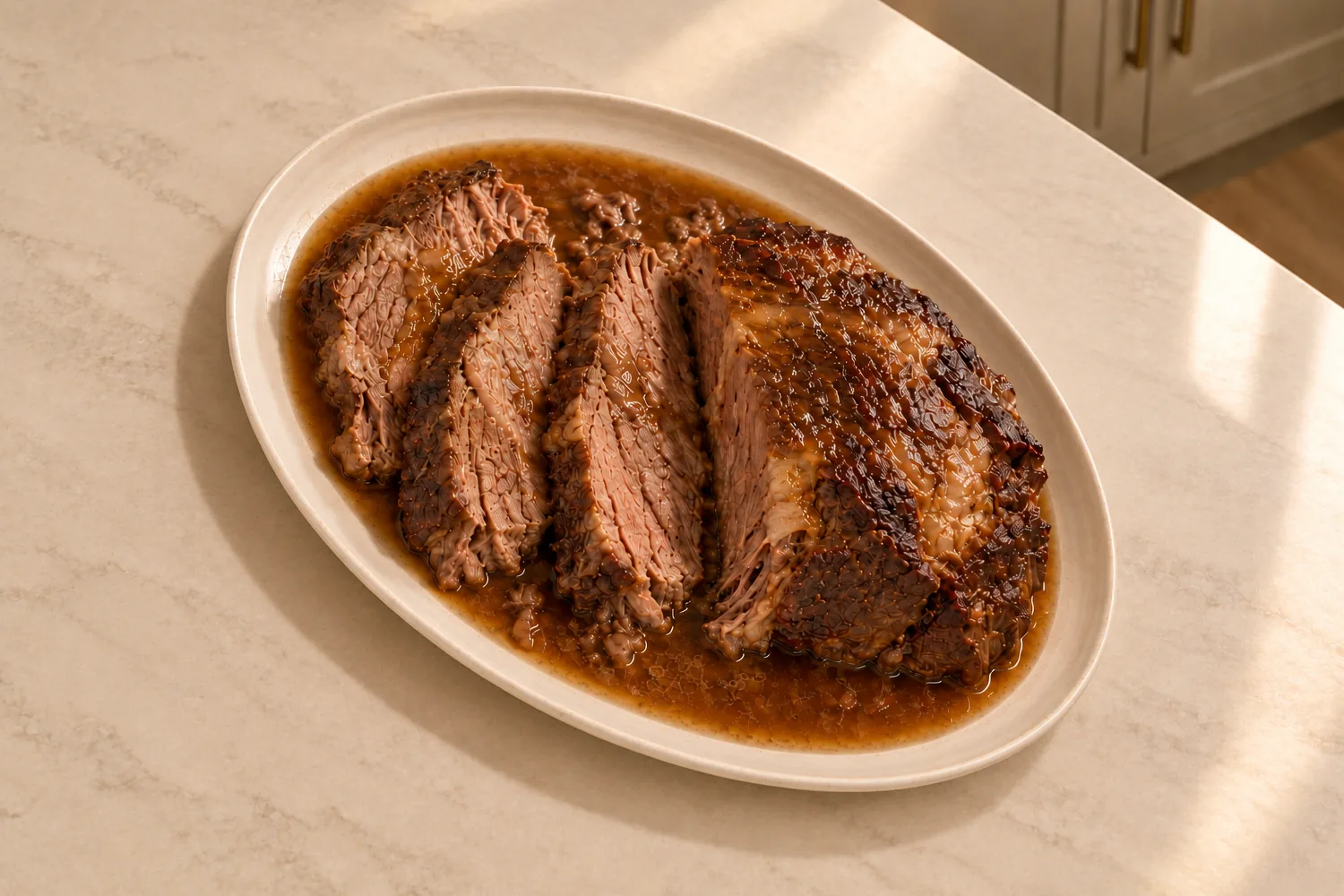
Ingredients
- 4 tablespoons homemade ghee, divided. Use 2 tablespoons for the sear and save 2 for the gravy. Butter is the other option if it is already introduced and tolerated.
- One 4–5-pound beef pot roast. A chuck roast has connective tissue and seams of fat that suit a covered braise. Its weight is the starting weight, before cooking.
- 2 teaspoons sea salt. This seasons the roast. Taste the cooking liquid before reducing it, especially if your stock was already salted.
- 3–6 cups homemade beef meat stock. The pot and shape of the roast determine how much you need to cover the meat. For the pressure method, the combined roast and liquid must also stay below the pressure fill line.
Have the stock and ghee ready before starting. The linked stock recipe begins with raw, meaty beef short ribs. A carton labeled “beef broth” is not the homemade meat stock used here. The gravy uses 1½ cups of the roast’s reserved cooking liquid, not another ingredient added to the shopping list.
How to Make Beef Pot Roast
1. Choose Your Cooking Method
For the oven, heat it to 325°F and use a heavy pot with a well-fitting, oven-safe lid. Choose a pot that holds the whole roast and its covering stock without crowding the lid. For pressure or slow cooking, use the Ninja Foodi FD401’s removable 8-quart cooking pot and separate pressure lid. Its hinged crisping lid is not the lid for these methods.
2. Salt and Sear the Roast
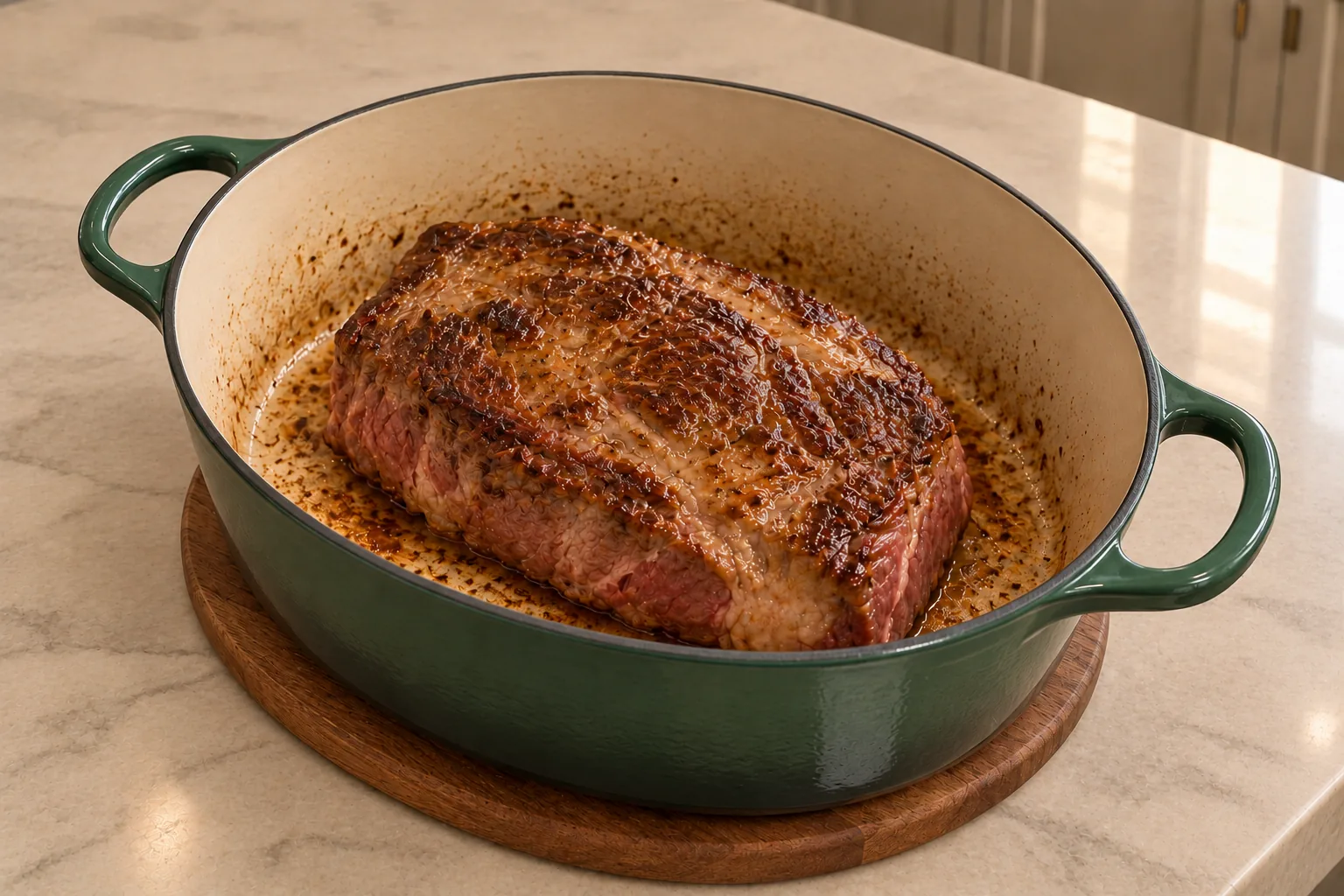
Salt the roast on all sides. Heat the oven pot over medium-high heat and melt 2 tablespoons ghee. Brown the two broad faces for about 1–2 minutes each. For the Ninja routes, use Sear/Sauté at medium-high and allow about 2 minutes per broad side. Turn with sturdy tongs; a heavy roast is awkward to balance on a fork.
Look for a browned surface and a few golden-brown marks in the pot. The middle is still raw at this point. The aroma changes from warm ghee to browned beef. Avoid black patches or fat that starts smoking hard. Browning is only the first step; it does not tell you that the roast is tender.
3. Add Stock and Cook Until Tender
Oven: Add enough of the 3–6 cups stock to cover the roast, put on the lid, and transfer the pot to the oven. Cook covered for about 2–3 hours, until fork-tender. Begin checking toward the earlier end of that window. A fork should enter easily, and the meat should yield along its fibers rather than spring back when you try to separate a piece.
Ninja pressure method: Stop Sear/Sauté. Add covering stock without passing the PRESSURE MAX line. Lock the pressure lid, set its valve to SEAL, select Pressure on HIGH, and set 90 minutes. Start cooking. Let pressure release naturally afterward; wait for the float valve to drop before opening. The 90-minute countdown begins after pressurization, so it is not the total time from switching on to serving.
Ninja slow method: Stop Sear/Sauté after browning. Add covering stock, staying below MAX. Fit the pressure lid with its valve at VENT, choose Slow Cook on HIGH, and start with 6 hours. Check for tender meat then; allow longer if needed, toward about 7 hours. The endpoint is the same easy fork test as the oven version, not merely a finished timer.
4. Reserve the Cooking Liquid
Lift the tender roast onto a serving platter. Measure 1½ cups of cooking liquid into a small saucepan. Keep the rest for moistening leftover beef. The liquid will carry beef juices and some fat. Its exact shade depends on the stock and browning, so a particular brown color is not a doneness test.
5. Reduce the Gravy
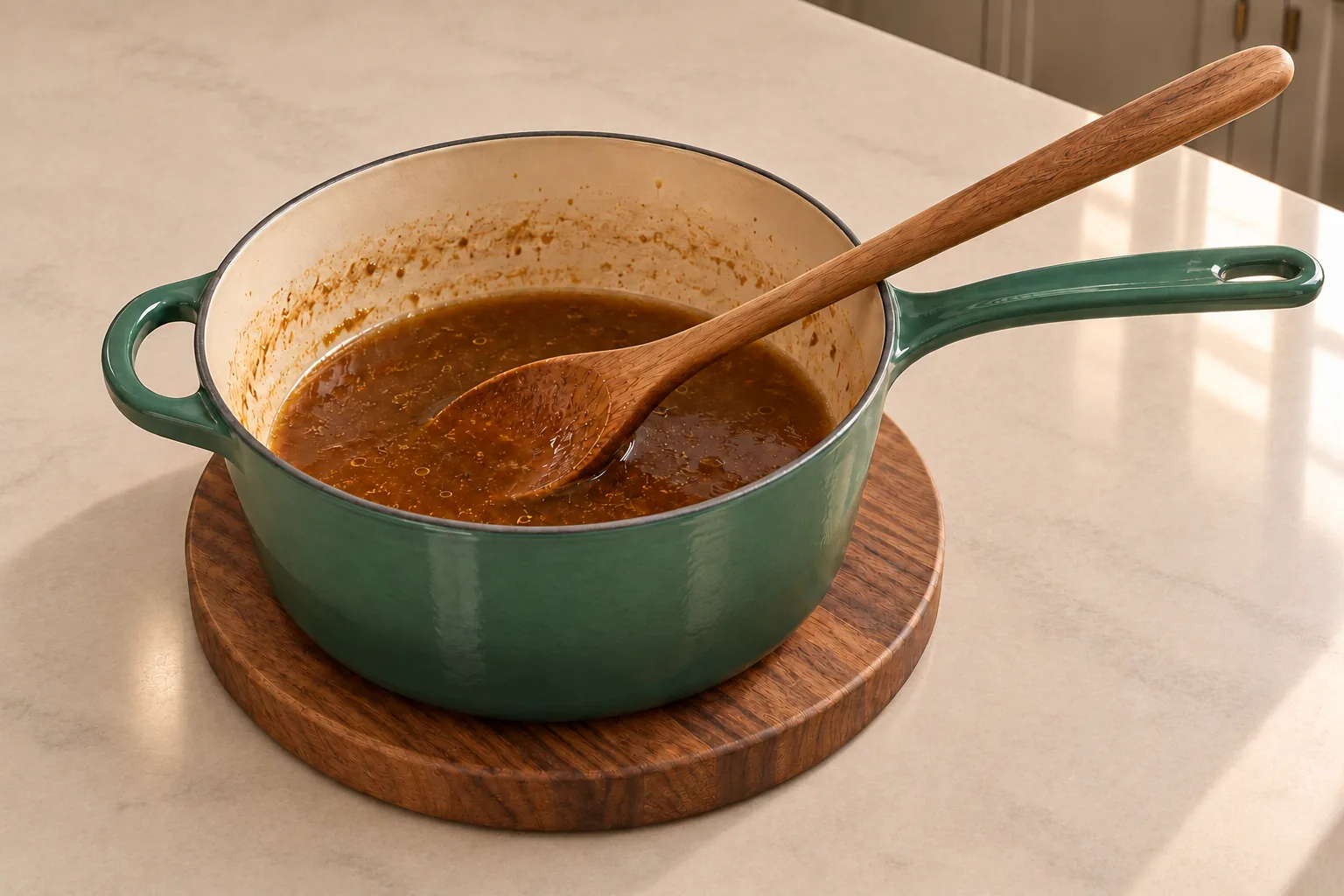
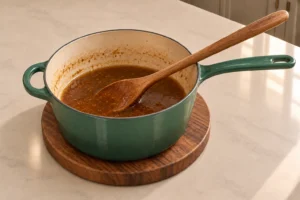
Add the remaining 2 tablespoons ghee to the measured liquid. Stir over medium heat for about 5–6 minutes for the oven or pressure version, or 3–5 minutes after slow cooking, until reduced and lightly thickened. Use a wooden spoon. As liquid evaporates, the flavor becomes stronger and the sauce leaves a light glossy coating on the spoon.
This is a stock-and-fat gravy. Expect it to flow around the meat rather than stand in a thick mound like flour gravy. The starting stock’s concentration affects the result. Small droplets of fat can remain visible. Stir before spooning it over the roast, and taste as it reduces so you do not concentrate an already salty stock too far.
6. Slice and Serve
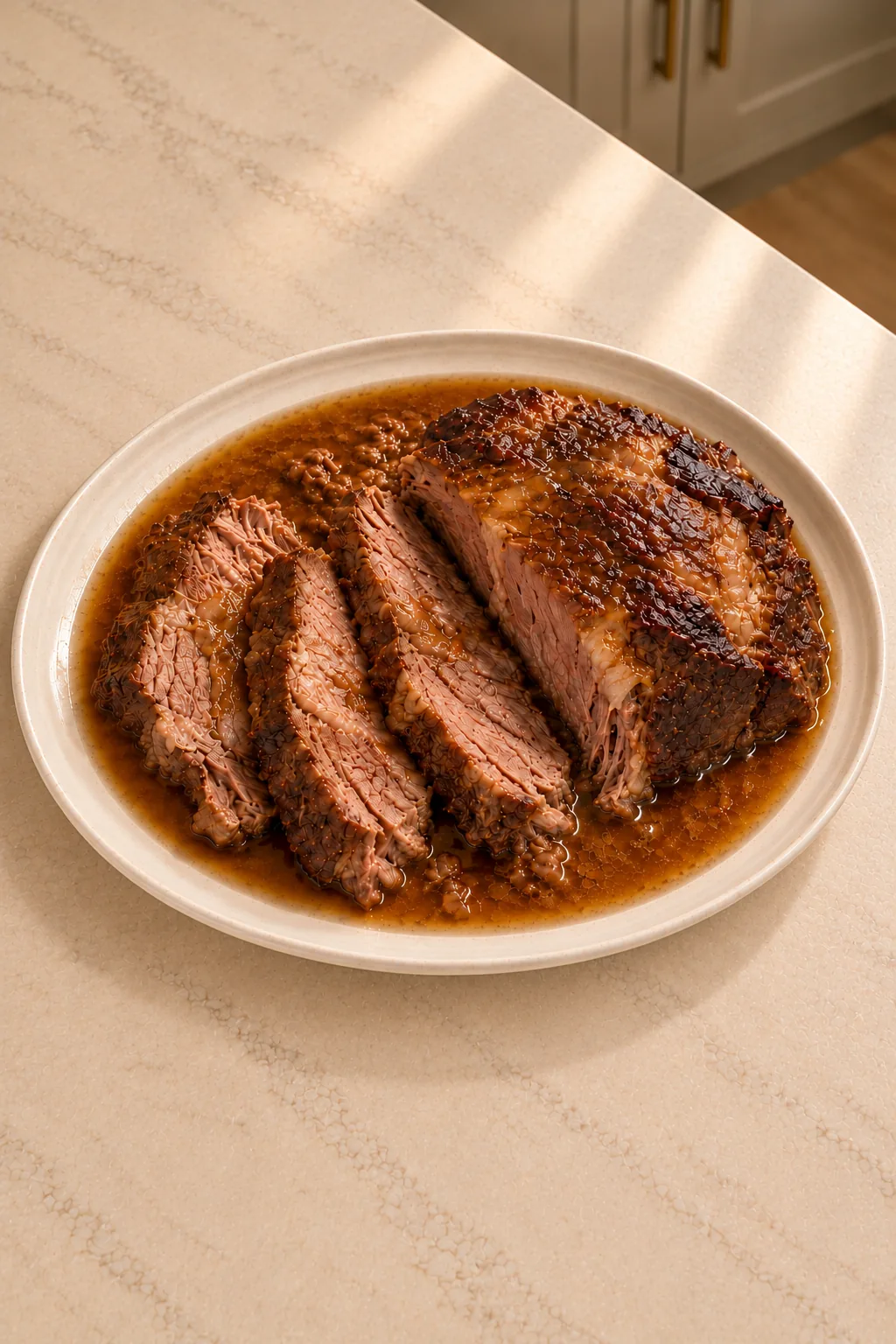
Slice crosswise, across the visible direction of the meat fibers, and spoon the warm gravy over the beef. A very tender roast may separate into irregular pieces as you cut it. That is fine. Keep the pieces moist with the sauce rather than trying to force perfectly uniform slices from soft meat.
Where This Fits in GAPS
This seared pot roast is a Full GAPS meal made with homemade meat stock and an introduced cooking fat. The meat stock remains useful alongside dinner as well as in the cooking pot. Bone broth follows a different introduction timetable in GAPS; using it is not required to make this gravy.
For earlier Intro stages, the change is more than swapping a side dish. Stage 2 introduces slowly cooked stews and casseroles, with at least 2½ hours of cooking. Stage 4 adds roasted and grilled meat while still excluding fried meat. I save this seared version for Full GAPS. For an earlier Intro meal, skip the browning step and use the slowly cooked, unseared preparation for that stage, with foods and fats you have already introduced.
No-Plant GAPS has its own order too. Dr. Natasha recommends introducing beef later in that variation. The linked beef stock includes bay leaves and peppercorns, which are strained out. An animal-only version would need stock prepared without those plant seasonings, plus beef and the chosen fat already introduced. Keep those changes together when adapting this meal for No-Plant GAPS.
Serving and Saving the Roast
Serve the beef with cooked vegetables that fit the foods you have introduced. For a more substantial pot that cooks its vegetables with the meat, see the separate slow-cooker pot roast with turnips and carrots. That recipe has its own ingredients and timing. Here, vegetables are a side, leaving the four-ingredient roast and stock gravy unchanged.
Portion leftovers into shallow, covered glass containers and refrigerate promptly. Keep some cooking liquid with the beef so the exposed slices do not dry out. Freeze portions you are saving for later. To reheat, warm the beef gently in a covered pan with its reserved liquid. Avoid repeatedly boiling already tender slices; heat the portion you plan to serve.
Recommended Equipment
A lidded enameled cast-iron Dutch oven works for the oven route. The pictured 6.75-quart Le Creuset Signature Oval Dutch Oven in Artichaut has room for a larger cut of meat. Check the fit of your own roast before heating it. You also need sturdy tongs, a measuring jug, a small saucepan, a wooden spoon, and a heat-safe trivet.
For the two countertop methods, I use the Ninja Foodi FD401 described above. Follow its FD400-series owner guide for lid and fill-line operation. Use wooden utensils in its ceramic-coated cooking pot. Do not substitute a different appliance’s lid or pressure controls.
Frequently Asked Questions
Why Is My Roast Still Firm?
The browned outside can look ready long before the connective tissue softens. Check the thickest part with a fork. If it resists and the meat stays tightly together, it has not reached the tender endpoint. Keep the oven or slow-cooker roast covered and continue cooking, then check again. For the pressure route, check only after natural release and full depressurization.
Do I Need Flour or Gelatin for the Gravy?
No. This gravy reduces the roast’s cooking liquid with ghee. Gelatin already present in homemade stock may contribute body, but firmness varies from batch to batch. The finished sauce is deliberately lighter than flour gravy. Added gelatin is not necessary for this formula.
Can I Use Butter Instead of Ghee?
Yes, when butter is already introduced and tolerated. Keep the same four-tablespoon total and two-plus-two division. Ghee is the default here. Follow the linked homemade method if you need to prepare it before cooking.
Can I Double It in the Same Pot?
The card’s 2× control doubles the ingredients. That does not double your pot’s capacity. Two large roasts and their covering stock need separate pots or a genuinely larger vessel; the pressure fill line still applies. Do not simply double the pressure time because the ingredient amounts doubled.
Beef Pot Roast With Stock Gravy for Full GAPS
Ingredients
Equipment
Method
- Choose oven, pressure or slow cooking. For the oven, preheat to 325°F and use a heavy oven-safe pot with a fitted lid. For countertop methods use the Ninja Foodi FD401 removable 8-quart pot and separate pressure lid.
- Salt the roast on all sides. Melt half the ghee in the Dutch oven over medium-high heat; sear the two broad faces about 1–2 minutes each until browned, with no black char. For Ninja methods use Sear/Sauté at medium-high and sear about 2 minutes per broad face. The middle is still raw. Pause off heat before adding stock.
- Add stock until the roast is covered. OVEN: cover and braise at 325°F for 2–3 hours until a fork enters easily and the fibers yield. PRESSURE: stop Sear/Sauté, stay below PRESSURE MAX, lock the pressure lid at SEAL, select Pressure HIGH for 90 minutes, then allow natural release until the float drops before opening; check fork tenderness. SLOW: stop Sear/Sauté, stay below MAX, pressure lid at VENT, select Slow Cook HIGH for 6 hours; check for fork tenderness and allow longer toward 7 hours as needed.
- Lift the tender roast onto a platter. Reserve 1½ cups cooking liquid per roast for the gravy. Save the remaining liquid to moisten leftovers.
- Combine the reserved 1½ cups liquid per roast with the remaining half of the ghee in a small saucepan. Stir over medium heat 5–6 minutes for oven/pressure, or 3–5 minutes after slow cooking, until reduced and lightly thickened. The sauce remains flowing and glossy, not flour-thick. Taste as it reduces and stir the small fat droplets back through.
- Slice crosswise across the fibers and spoon warm gravy over the beef. Very tender meat may separate into irregular pieces. Refrigerate portions promptly in shallow covered glass containers with some reserved liquid; freeze portions for later. Reheat gently with liquid in a covered pan.
Notes
Tried this recipe?
Let us know how it was!Planning a roast is easier when the stock and cooking fat are already ready. My First 30 Days on Full GAPS course can help you plan GAPS meals alongside the rest of your household’s week. Find it with the other GAPS resources in the shop.

Leave a comment