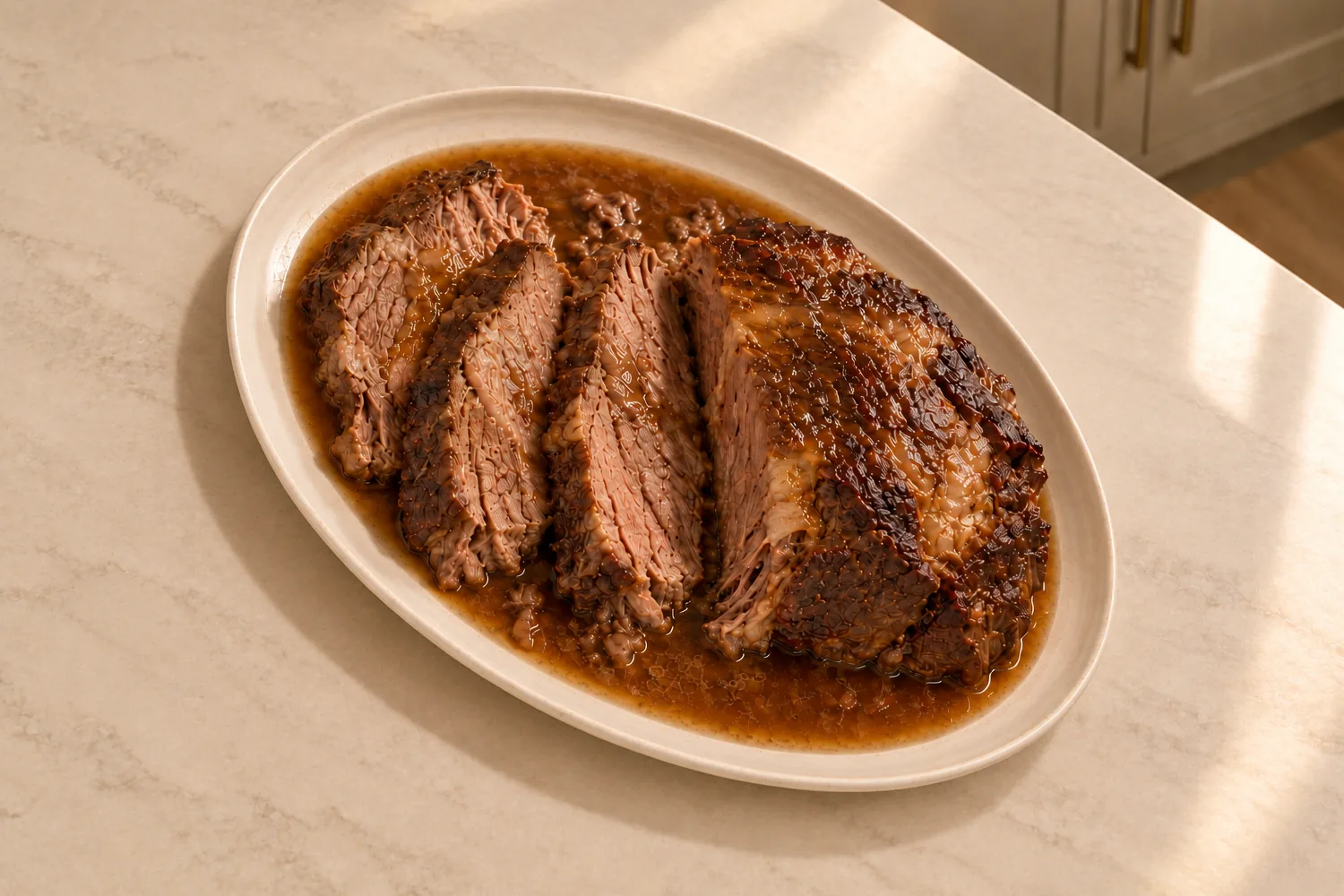
Ingredients
Equipment
Method
- Choose oven, pressure or slow cooking. For the oven, preheat to 325°F and use a heavy oven-safe pot with a fitted lid. For countertop methods use the Ninja Foodi FD401 removable 8-quart pot and separate pressure lid.
- Salt the roast on all sides. Melt half the ghee in the Dutch oven over medium-high heat; sear the two broad faces about 1–2 minutes each until browned, with no black char. For Ninja methods use Sear/Sauté at medium-high and sear about 2 minutes per broad face. The middle is still raw. Pause off heat before adding stock.
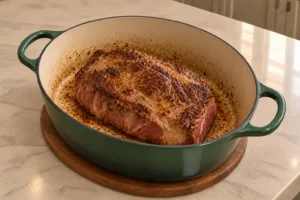
- Add stock until the roast is covered. OVEN: cover and braise at 325°F for 2–3 hours until a fork enters easily and the fibers yield. PRESSURE: stop Sear/Sauté, stay below PRESSURE MAX, lock the pressure lid at SEAL, select Pressure HIGH for 90 minutes, then allow natural release until the float drops before opening; check fork tenderness. SLOW: stop Sear/Sauté, stay below MAX, pressure lid at VENT, select Slow Cook HIGH for 6 hours; check for fork tenderness and allow longer toward 7 hours as needed.
- Lift the tender roast onto a platter. Reserve 1½ cups cooking liquid per roast for the gravy. Save the remaining liquid to moisten leftovers.
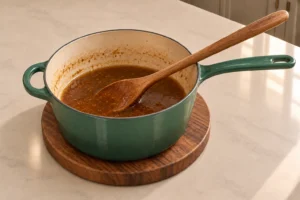
- Combine the reserved 1½ cups liquid per roast with the remaining half of the ghee in a small saucepan. Stir over medium heat 5–6 minutes for oven/pressure, or 3–5 minutes after slow cooking, until reduced and lightly thickened. The sauce remains flowing and glossy, not flour-thick. Taste as it reduces and stir the small fat droplets back through.
- Slice crosswise across the fibers and spoon warm gravy over the beef. Very tender meat may separate into irregular pieces. Refrigerate portions promptly in shallow covered glass containers with some reserved liquid; freeze portions for later. Reheat gently with liquid in a covered pan.
Notes
Oven estimate:10 minutes preparation and about 3 hours cooking (3 hours 10 minutes estimated total). The covered braise takes 2–3 hours to the fork-tender endpoint; finish the gravy afterward. Pressure: 90 minutes at full pressure plus unmeasured heat-up/natural-release time. Slow: begin checking at 6 hours on HIGH, allowing toward 7 hours as needed.
Scaling:2× doubles ingredient amounts and requires capacity for two 4–5-pound roasts and covering stock. Use separate pots or a sufficiently larger vessel; do not exceed Ninja fill lines. Gravy uses 1½ cups cooking liquid per roast and half the listed ghee. Ingredient scaling does not automatically double cooking time.
GAPS:Full GAPS with introduced ghee or butter and homemade meat stock. The high-heat seared method is not labeled Intro. No blanket early No-Plant placement: beef is introduced later there and an animal-only variation needs appropriate plant-free stock and introduced fat.