

This Asian chicken chopped salad is a real meal, not a bowl of lettuce that leaves everyone looking for something else an hour later. It has tender chicken thighs, crisp lettuce and cucumber, bright asparagus, carrots, herbs, and fresh ginger in every serving. The cold almond-butter dressing is savory, lightly tangy, and just sweet enough from one teaspoon of raw honey.
I usually make breakfast, homeschool, work on our businesses, and get lunch and dinner handled before I leave for second shift. I do not always have a polished Sunday meal-prep routine waiting to save me. Having cooked chicken in the refrigerator helps, but the full method below also works when you start with raw chicken. Chop the vegetables while the chicken and asparagus cool, whisk the dressing in one jar, and dinner still moves forward.
GAPS Placement: Full GAPS, after raw vegetables and properly prepared nuts are working well for you
Serves: 4
Prep Time: 25 minutes
Cook Time: 25 minutes when starting with raw chicken
Total Time: 50 minutes when starting with raw chicken
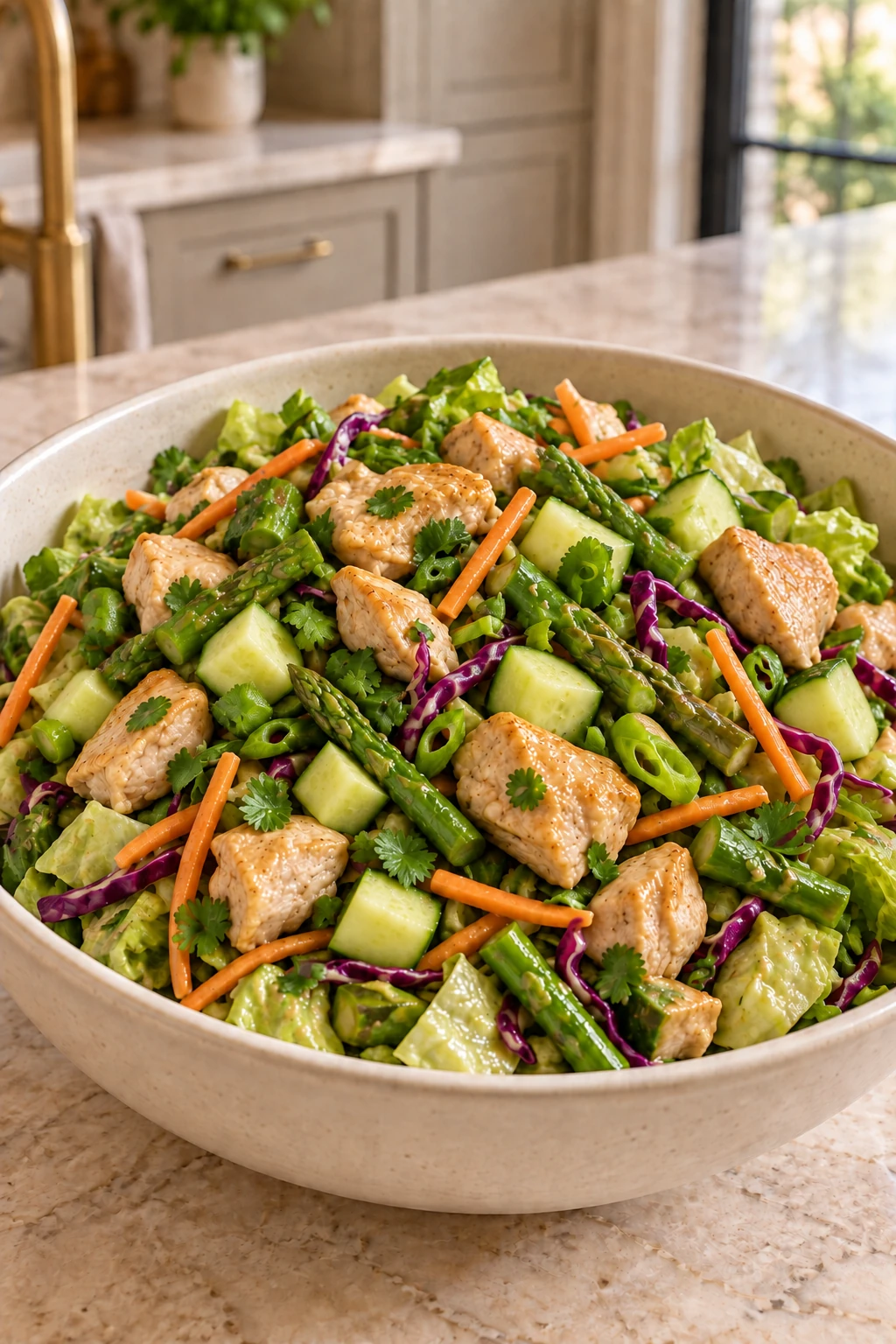
Why This Chopped Salad Works
A good chopped salad should give you several ingredients in every bite. Cut the lettuce, chicken, cucumber, asparagus, and carrots into pieces that are close in size. Long strips of chicken or oversized lettuce leaves make the bowl harder to toss and leave the dressing pooled in random places.
Temperature matters too. Let the chicken and asparagus cool before they meet the lettuce. Warm ingredients wilt the greens and create condensation in the bowl. Dry the lettuce and cucumber well, then add the dressing only when you are ready to serve. Those three details keep the salad crisp instead of watery.
The dressing is thickened with four teaspoons of homemade almond butter from properly prepared almonds. It should be creamy enough to cling to the chicken and vegetables while still pouring in a steady ribbon. Fresh ginger in the salad gives you small, bright bites. Dried ginger in the dressing spreads that flavor through the entire bowl.
Ingredients
For the Chicken Chopped Salad
- 1 head iceberg lettuce, romaine, or butter lettuce, chopped into small bite-size pieces
- 1 1/2 pounds boneless, skinless chicken thighs, weighed before cooking, then cooked, cooled, and chopped
- 1 cucumber, peeled and chopped
- 1 bunch asparagus, trimmed and cut into 1-inch pieces
- 1 to 2 carrots, peeled and cut into short matchsticks
- 1/2 bunch fresh cilantro, Thai basil, or regular basil, chopped
- Green tops from 1 bunch green onions, thinly sliced on the bias
- 1/4 small red cabbage, very thinly sliced, optional
- 1 to 2 tablespoons fresh ginger, peeled and finely grated or minced
For the Almond-Butter Dressing
- 1/3 cup cold-pressed unrefined sesame oil, extra-virgin olive oil, or cold-pressed avocado oil, kept raw
- 2 tablespoons coconut aminos made from coconut sap or nectar and sea salt, without non-GAPS additives
- 1 tablespoon apple cider vinegar
- 4 teaspoons homemade unsweetened almond butter made from properly prepared almonds
- 1 teaspoon raw honey
- 1/2 teaspoon traditional fermented fish sauce made from fish or anchovies, sea salt, and water, optional
- 1/2 teaspoon dried ginger
- 1/2 teaspoon sea salt
Iceberg gives the salad the loudest crunch. Romaine is sturdy and easy to find, while butter lettuce makes the bowl softer. Use the one your family likes, but start with one full head so the chicken-to-vegetable balance stays right.
The dressing oil is not heated. Cold-pressed sesame oil gives the strongest toasted, nutty direction even when the oil itself is unrefined and untoasted. Olive oil makes the dressing fruitier, and avocado oil is the mildest choice. Use one oil for the full one-third cup rather than mixing partial amounts and losing track of the measurement.
Check the coconut-aminos and fish-sauce labels before they go into the bowl. Coconut aminos should have a short ingredient list based on coconut sap or nectar and sea salt. Traditional fish sauce should be fermented from fish or anchovies, sea salt, and water, without sugar or flavor additives. The fish sauce is optional, but the half teaspoon adds savory depth without making the salad smell fishy.
Recommended Equipment
- Le Creuset Artichaut Heritage rectangular dish or a rimmed sheet pan for the chicken
- Instant-read thermometer
- Medium saucepan with a steamer basket, or a small pot for blanching the asparagus
- Salad spinner or clean kitchen towels
- Large supported ceramic serving bowl
- Cutting board and sharp chef’s knife
- Box grater or fine grater for the fresh ginger
- Glass jar or small bowl and whisk for the dressing
- Measuring cups and spoons
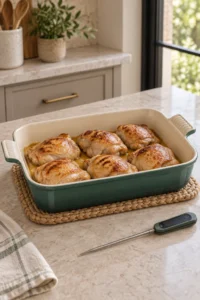
The Artichaut baking dish holds the chicken and its juices without requiring a separate pan. A wide salad bowl matters more than it seems. You need enough room to lift and turn the ingredients without throwing cucumber and cabbage onto the counter.
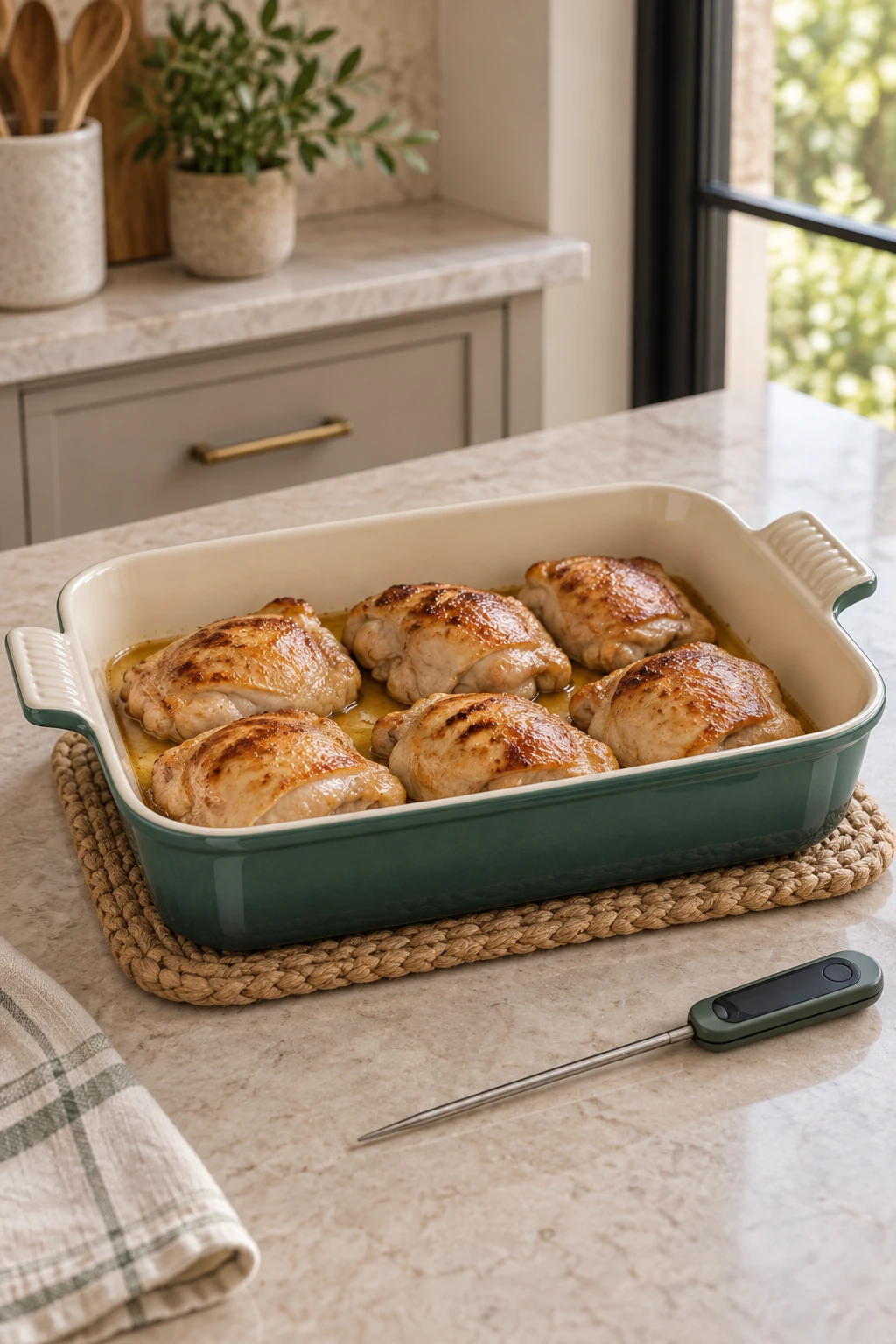
Make the Asian Chicken Chopped Salad
- Cook the chicken if needed. Heat the oven to 375°F (190°C). Arrange the boneless, skinless chicken thighs in a single layer in the Artichaut baking dish or on a rimmed sheet pan. Roast for about 25 minutes, until the thickest piece reaches 165°F (74°C). Transfer the chicken to a cutting board and let it cool for 10 minutes. Chop it into bite-size pieces. If you are using already cooked chicken, begin with 1 1/2 pounds measured before cooking and skip the oven step.
- Cook the asparagus. Steam or blanch the 1-inch asparagus pieces for 3 to 5 minutes. They should turn bright green and become tender while still holding their shape. Drain well and spread them on a plate so the steam can escape. Let them cool completely.
- Dry and chop the vegetables. Wash and thoroughly dry the lettuce. Chop it into small bite-size pieces. Peel and chop the cucumber, cut the carrots into short matchsticks, chop the herbs, slice the green-onion tops, and thinly slice the optional cabbage. Grate or mince the fresh ginger.
- Build the salad bowl. Add the lettuce, cooled chicken, cucumber, cooled asparagus, carrots, herbs, green-onion tops, optional cabbage, and fresh ginger to the large serving bowl. Lift the ingredients gently from the bottom a few times to distribute the heavier pieces.
- Start the dressing. In a glass jar or small bowl, whisk together the dried ginger and sea salt. Add the almond butter and raw honey. Whisk until they form a smooth paste with no pockets of dry ginger.
- Finish the dressing. Whisk in the coconut aminos, apple cider vinegar, and optional fish sauce. Slowly stream in the cold oil while whisking. Continue until the dressing looks glossy, evenly tan to light brown, and slightly thickened. A handheld frother or small blender also works.
- Dress the salad. Pour about three-quarters of the dressing around the bowl rather than onto one spot. Toss from the bottom until the chicken and vegetables have a thin, even coating. Add the remaining dressing if the salad still looks dry, or serve it at the table for anyone who wants more.
- Serve right away. Divide the salad among four bowls while the lettuce and cucumber are still crisp. Scrape any dressed chicken and ginger from the bottom of the serving bowl over the top of each portion.
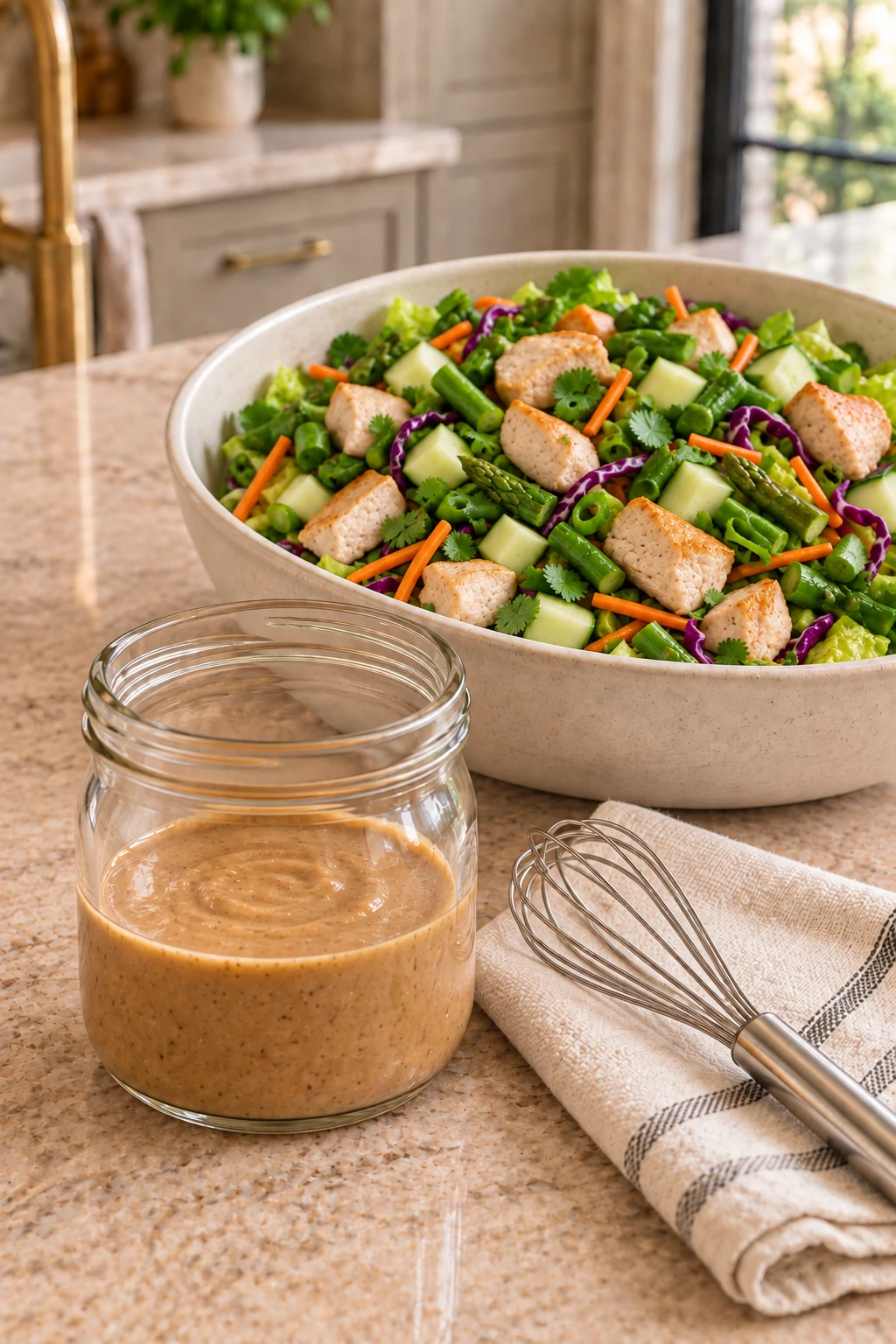
What to Look, Smell, and Taste For
The chicken should be opaque all the way through, juicy when cut, and cool enough that it does not soften the lettuce. The asparagus should be bright green. A fork should enter with light resistance instead of making the pieces collapse. If the asparagus turns olive green and mushy, it cooked too long.
Before dressing, the bowl should look dry and crisp. Water collecting beneath the cucumber or lettuce will thin the dressing. If you see moisture, blot the vegetables or spin the lettuce again before continuing.
The finished dressing should smell first of ginger and the oil you chose. Sesame oil gives the most pronounced nutty aroma. Olive oil tastes fruitier, and avocado oil lets the ginger, coconut aminos, and vinegar lead. The dressing should fall from the whisk in a smooth ribbon and leave a light coating on the side of the jar. If the almond butter has settled into a lump, keep whisking before it goes onto the salad.
Once tossed, the lettuce should stay crisp and the dressing should cling rather than pool. You should taste savory chicken, fresh ginger, a mild tang from the vinegar, and only a small background sweetness from the raw honey. The optional fish sauce should deepen the savory flavor. It should not announce itself separately.
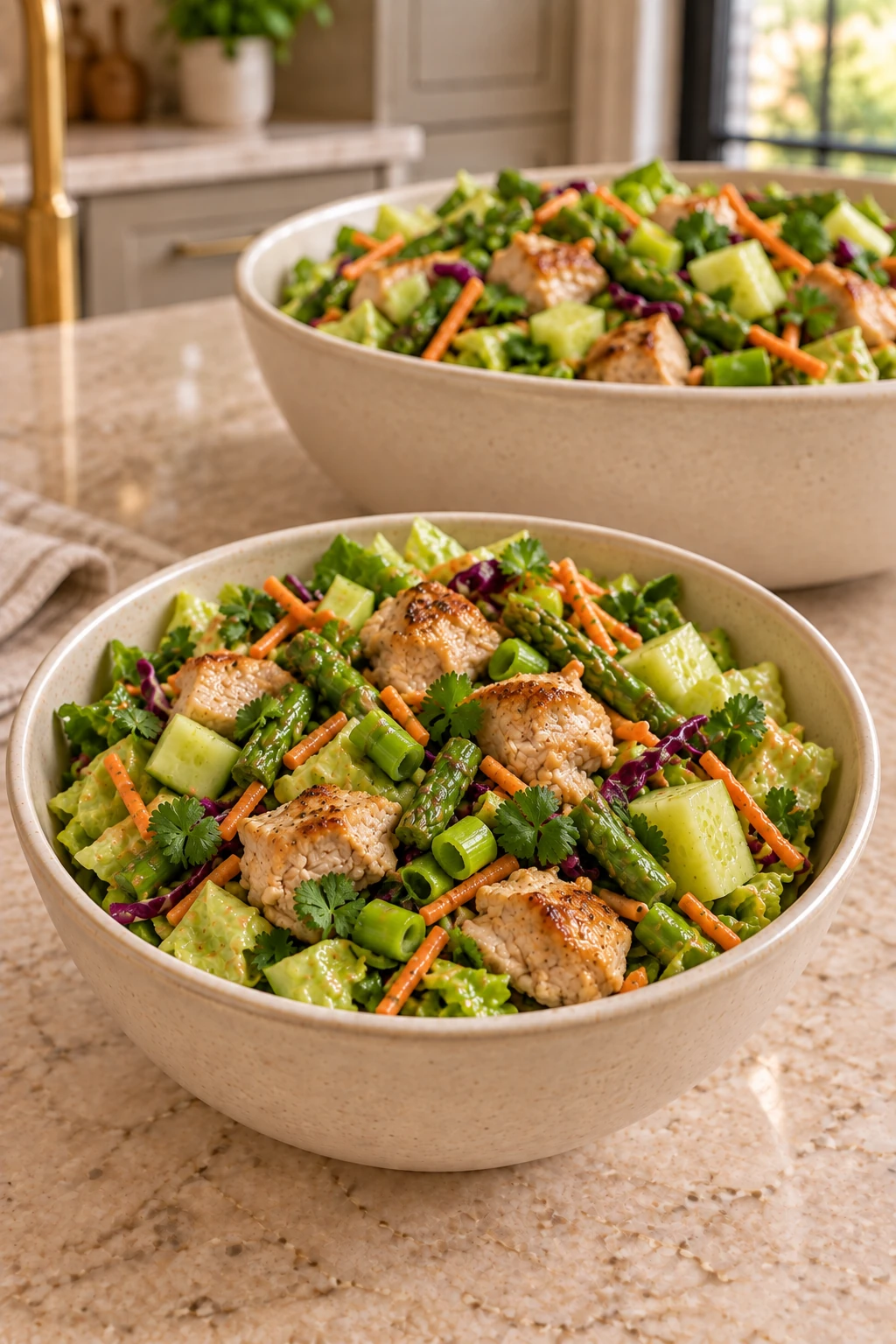
Asian Chicken Chopped Salad with Almond Dressing
Ingredients
Equipment
Method
- Heat the oven to 375°F (190°C). Arrange the boneless, skinless chicken thighs in a single layer in the Artichaut baking dish or on a rimmed sheet pan. Roast for about 25 minutes, until the thickest piece reaches 165°F (74°C). Transfer the chicken to a cutting board, cool for 10 minutes, and chop into bite-size pieces. Skip this step when using already cooked chicken.
- Steam or blanch the 1-inch asparagus pieces for 3 to 5 minutes. They should turn bright green and become tender while still holding their shape. Drain well and cool completely.
- Wash and thoroughly dry the lettuce. Chop it into small bite-size pieces. Peel and chop the cucumber, cut the carrots into short matchsticks, chop the herbs, slice the green-onion tops, thinly slice the optional cabbage, and grate or mince the fresh ginger.
- Add the lettuce, cooled chicken, cucumber, cooled asparagus, carrots, herbs, green-onion tops, optional cabbage, and fresh ginger to the large serving bowl. Lift the ingredients gently from the bottom to distribute the heavier pieces.
- In a glass jar or small bowl, whisk together the dried ginger and sea salt. Add the almond butter and raw honey. Whisk until they form a smooth paste with no pockets of dry ginger.
- Whisk in the coconut aminos, apple cider vinegar, and optional fish sauce. Slowly stream in the cold oil while whisking. Continue until the dressing looks glossy, evenly tan to light brown, and slightly thickened.
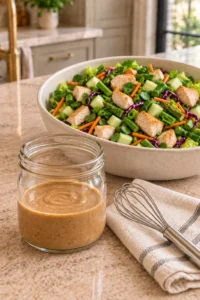
- Pour about three-quarters of the dressing around the salad bowl. Toss from the bottom until the chicken and vegetables have a thin, even coating. Add the remaining dressing if the salad still looks dry, or serve it at the table.
- Divide the salad among four bowls while the lettuce and cucumber are still crisp. Serve immediately.
Nutrition
Notes
Tried this recipe?
Let us know how it was!Full GAPS Placement and Ingredient Choices
This is a Full GAPS recipe. It is meant for the point when raw vegetables and properly prepared nuts have already been introduced and are working well for you. It is not an Introduction Diet salad. The large amount of raw lettuce, cucumber, cabbage, herbs, and green onion makes that placement clear.
Use homemade almond butter made from properly prepared almonds. The almonds need their GAPS preparation before they are ground. Commercial almond butter made from untreated nuts does not fill that role in this recipe.
Keep the plant oil raw. Sesame, olive, and avocado oil are dressing choices here, not cooking fats. If you roast the chicken specifically for this salad, let the chicken’s own juices collect in the baking dish and add a spoonful of those juices to the chopped meat after it cools if it looks dry.
The optional red cabbage is easy to remove without changing the dressing or the rest of the measured salad. The herb choices work the same way. Cilantro gives the sharpest fresh flavor, Thai basil is sweeter and more aromatic, and regular basil is the mildest substitute. Keep the measured half bunch whichever one you choose.
Make It Ahead Without Losing the Crunch
This salad is useful for meal prep as long as you keep the wet and dry pieces separate. Cook and chop the chicken, steam the asparagus, wash and dry the lettuce, and whisk the dressing ahead of time. Refrigerate the chicken and asparagus together, the crisp vegetables in a second covered container, and the dressing in its jar.
Wait to grate or mince the fresh ginger until the day you serve the salad if you want the brightest flavor. If mornings are tight, it can be prepared ahead and kept in a small covered glass container. Give the dressing a vigorous shake or whisk before using it because the almond butter and oil may separate while chilled.
Do not pour dressing over a meal-prep container and expect the lettuce to stay crisp until the next day. Absolutely not. Pack the dressing separately, then toss the portion when you are ready to eat.
Serving Ideas
This is already a complete lunch or dinner entrée, so it does not need a complicated side. Serve it with a mug of warm homemade meat stock if that is part of your family’s routine. For a larger table, put extra dressing, chopped herbs, and a bowl of fermented vegetables where everyone can reach them.
If you want a more herb-forward chicken base, make the Full GAPS Lemon-Thyme Roasted Chicken Thighs ahead of time and use the cooled meat here. The lemon and thyme will change the flavor slightly, but the chicken remains useful for a substantial chopped salad.
Storage
Store the chicken, vegetables, and dressing separately in covered containers in the refrigerator for up to three days. Keep the lettuce as dry as possible and place a clean towel in its container if it tends to collect moisture. Shake the dressing well after refrigeration and let it sit at room temperature for a few minutes if the oil has thickened.
A fully dressed salad is best the day it is made. Refrigerate leftovers promptly and use them by the next day. The flavor will still be there, but the lettuce will soften and the cucumber will release more liquid.
Frequently Asked Questions
Can I Use Leftover Chicken?
Yes. Leftover boneless chicken thighs are the easiest option. Chop the cold chicken into bite-size pieces and add it with the vegetables. You can also use leftover breast meat, though it is leaner and may need more of the dressing.
Which Lettuce Works Best?
Iceberg gives you the strongest crunch and stands up well to the thick dressing. Romaine is also sturdy. Butter lettuce works, but toss it more gently because the leaves bruise and wilt faster.
Can I Use Olive or Avocado Oil Instead of Sesame Oil?
Yes. Measure any one of the three oils at one-third cup and keep it raw. Sesame tastes nuttiest, olive tastes fruitier, and avocado is mild.
Why Is the Almond Butter Properly Prepared?
This Full GAPS version uses homemade almond butter from almonds that have been prepared before grinding. The almond butter thickens the dressing and helps it cling to the chopped chicken and vegetables.
Is the Fish Sauce Required?
No. It is an optional half teaspoon. Use a traditional additive-free fermented fish sauce if you include it, or leave it out without changing any other measurement.
Can I Leave Out the Red Cabbage?
Yes. The cabbage is optional. Leave it out if you do not have it or do not want raw cabbage, and keep the rest of the formula unchanged.
How Do I Keep the Salad From Getting Watery?
Cool the chicken and asparagus completely, dry the lettuce thoroughly, and dress the salad immediately before serving. Store the dressing separately from any portion you are packing for later.
Can I Double the Recipe?
Use the 2× control in the recipe card for the exact amounts. Toss a double batch in two bowls unless you have a very large serving bowl. Crowding makes it difficult to distribute the dressing evenly.
More Full GAPS Lunches for Busy Days
The coming-soon First 30 Days on Full GAPS guide is built for the part that gets hard in real life: knowing what to make next and getting it onto the table around everything else. Find it with the other WFLI guides in the shop.

Leave a comment