

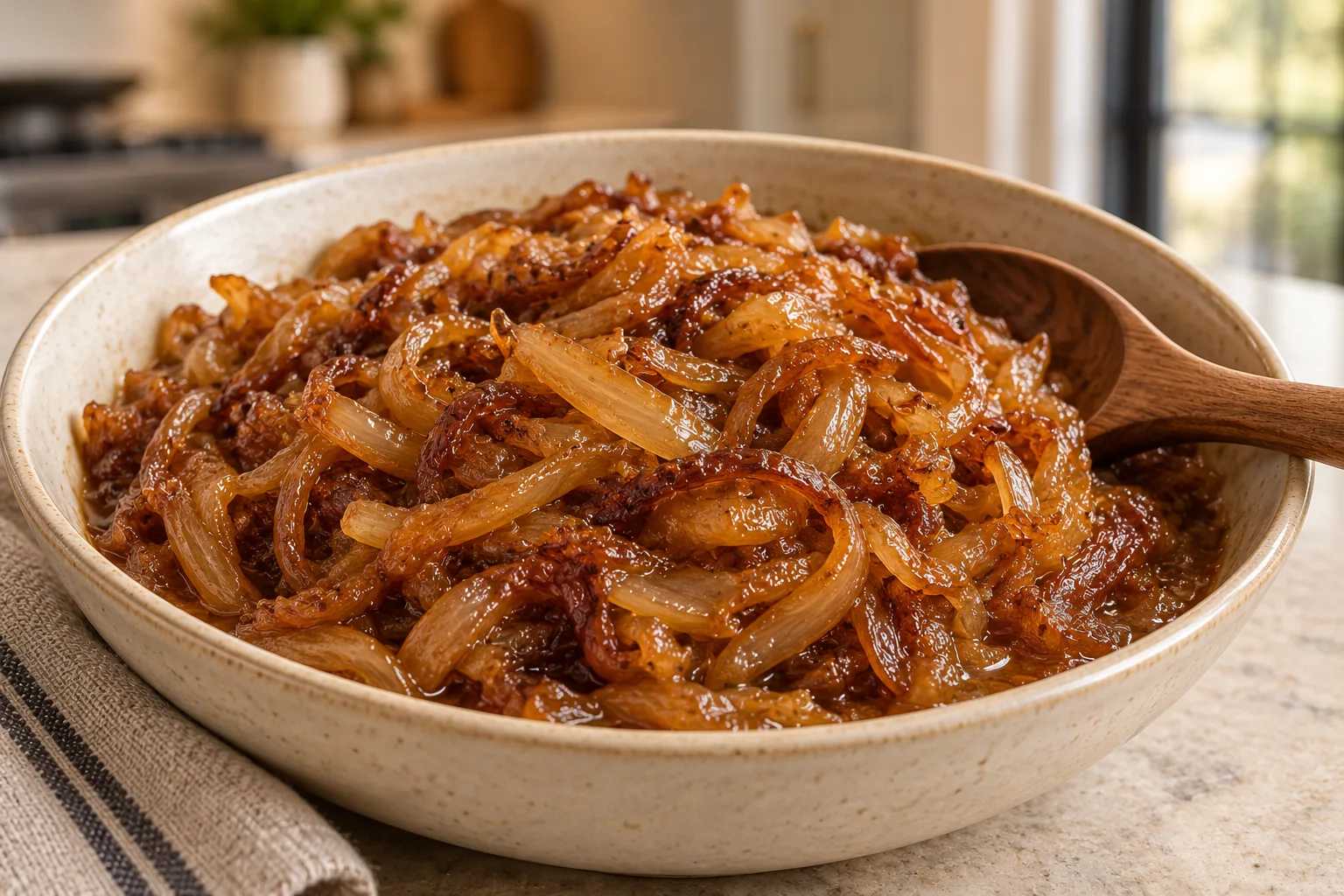
Slow cooker caramelized onions turn a large pile of sliced onions into a rich, spoonable batch for soups, stews, sauces, gravies, and skillet dinners. This Full GAPS version keeps the formula simple: 12 to 16 onions, one-half cup butter, and one cup homemade beef or chicken meat stock cooked on low for 18 to 24 hours.
In a family kitchen feeding eight, a freezer base like this can remove an entire prep step from a later meal. The onions take time, but most of that time belongs to the slow cooker. Once they are finished, one- or two-cup portions can wait in the freezer until a soup or sauce needs a deep, savory start.
Where These Caramelized Onions Fit on GAPS
This is a Full GAPS recipe once butter is introduced and well tolerated. Butter follows ghee in the GAPS dairy introduction structure. If butter is not yet tolerated, wait before making this exact formula rather than treating the large measured amount as incidental.
Use homemade beef or chicken meat stock made with raw meaty bones and joints. Stock cubes, granules, boxed broth, and bare-bone broth do not replace the measured meat stock here. Prepare either GAPS Beef Meat Stock or GAPS Chicken Meat Stock before starting the onions.
This is not an Introduction Diet recipe. On Intro, onions are cooked gently within meat-stock soups and stews. The long browned preparation and one-half cup butter belong later, when those foods and that cooking style fit your current stage.
Choose the Onions for the Batch
The source formula allows 12 to 16 onions and does not lock the recipe to one variety. The story behind it used red onions because a clearance sale produced 36 pounds at once, but yellow, white, red, or a mixture still follows the measured formula.
Use onions that feel firm and dry, without soft spots or wet layers. Twelve very large onions can fill the crock as completely as 16 medium onions. The important part is leaving enough room to close the lid securely without forcing it down.
Peel the onions, halve them through the stem end, and slice them into similar strips. They do not need to be paper-thin. Even slices soften at a similar rate, while a mix of thick wedges and wispy pieces can leave some onions firm after others have nearly dissolved.
Load the Slow Cooker Evenly
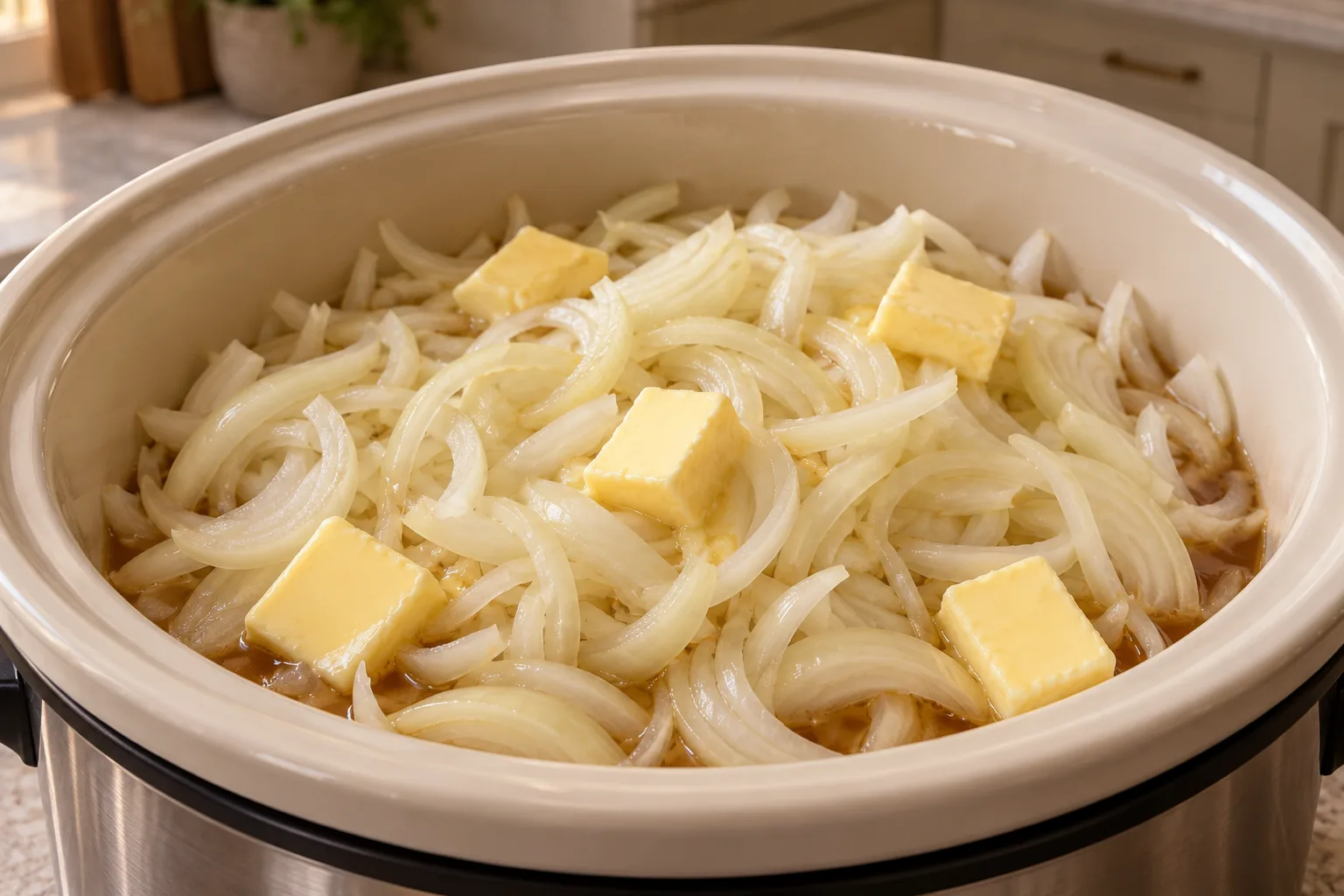
Put the sliced onions into the ceramic insert of the slow cooker. Cut one-half cup butter into several pieces and distribute them across the top instead of leaving one solid block in the center. Pour one cup homemade beef or chicken meat stock around the onions.
The crock may look very full at the beginning. That is expected. Raw onion slices hold a great deal of air between them and collapse as they release moisture. Close the lid and set the cooker to low.
There is no need to add sweetener. Long, gentle cooking develops the onions’ own sweetness. The finished flavor comes from onions, butter, and meat stock alone.
Cook Low for 18 to 24 Hours
The source gives a wide finish window because slow cookers and onion size vary. Start the batch in the evening. The onions can move through the long middle portion of the cook overnight, leaving the daytime hours available for checking their final color and consistency.
During the first several hours, the onions soften, turn glossy, and release liquid. Their sharp raw smell becomes strong and steamy before it mellows. The volume drops noticeably as the slices settle below the rim of the crock.
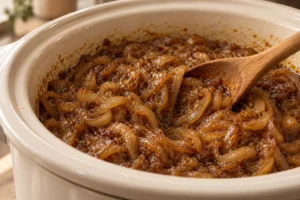
As the cook continues, the onions change from pale and translucent to golden, then deeper bronze. The liquid reduces and the slices become soft enough to fold over the spoon. Stir when you check them so darker onions around the edges move back toward the center.
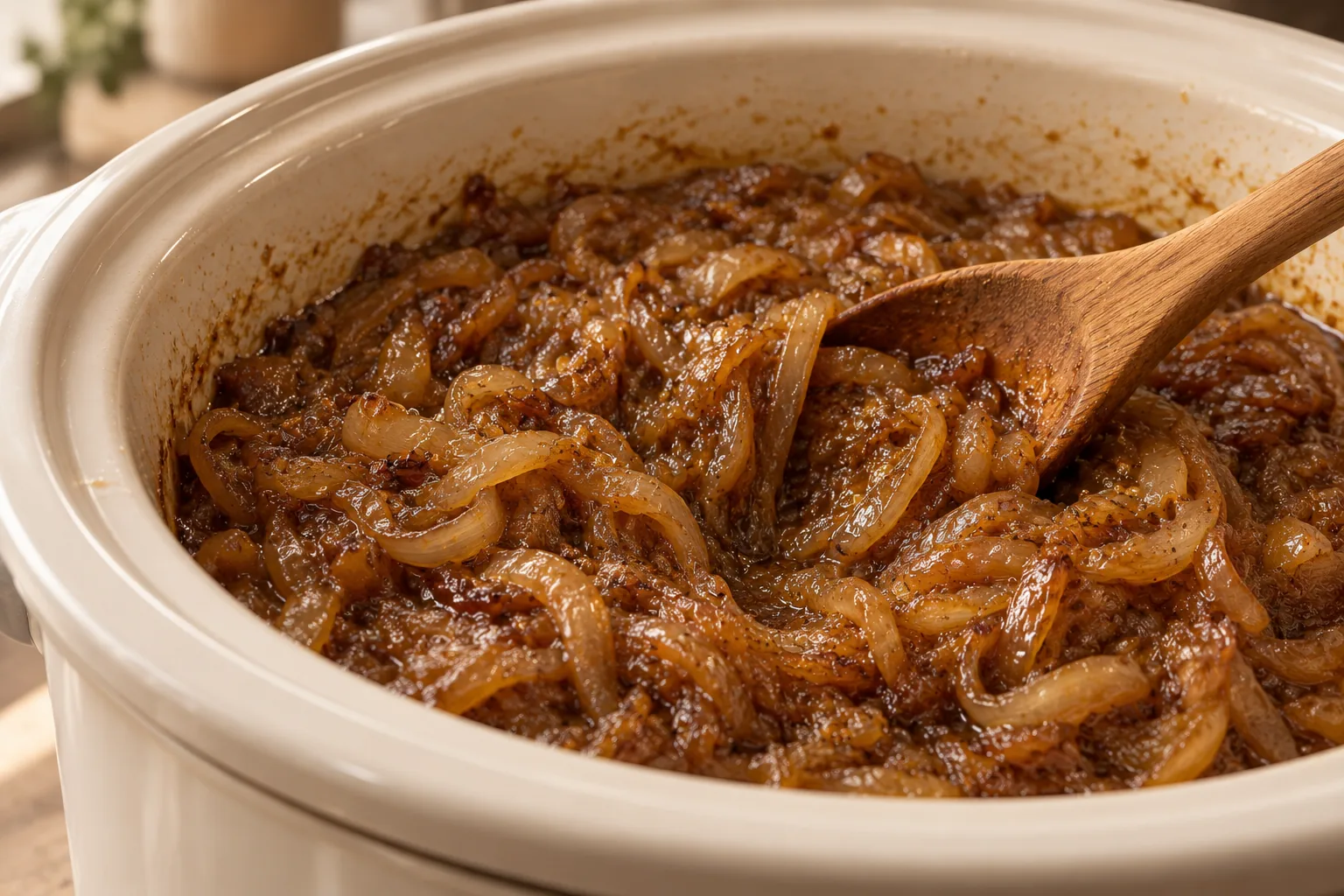
Begin checking closely at 18 hours. The onions are ready when they are deeply golden-brown, very soft, and glossy, with almost no thin liquid pooling underneath. A spoon drawn through the batch should leave a brief path before the onions slowly settle back together. If they still look pale or watery, replace the lid and continue toward 24 hours.
What the Finished Onions Should Taste Like
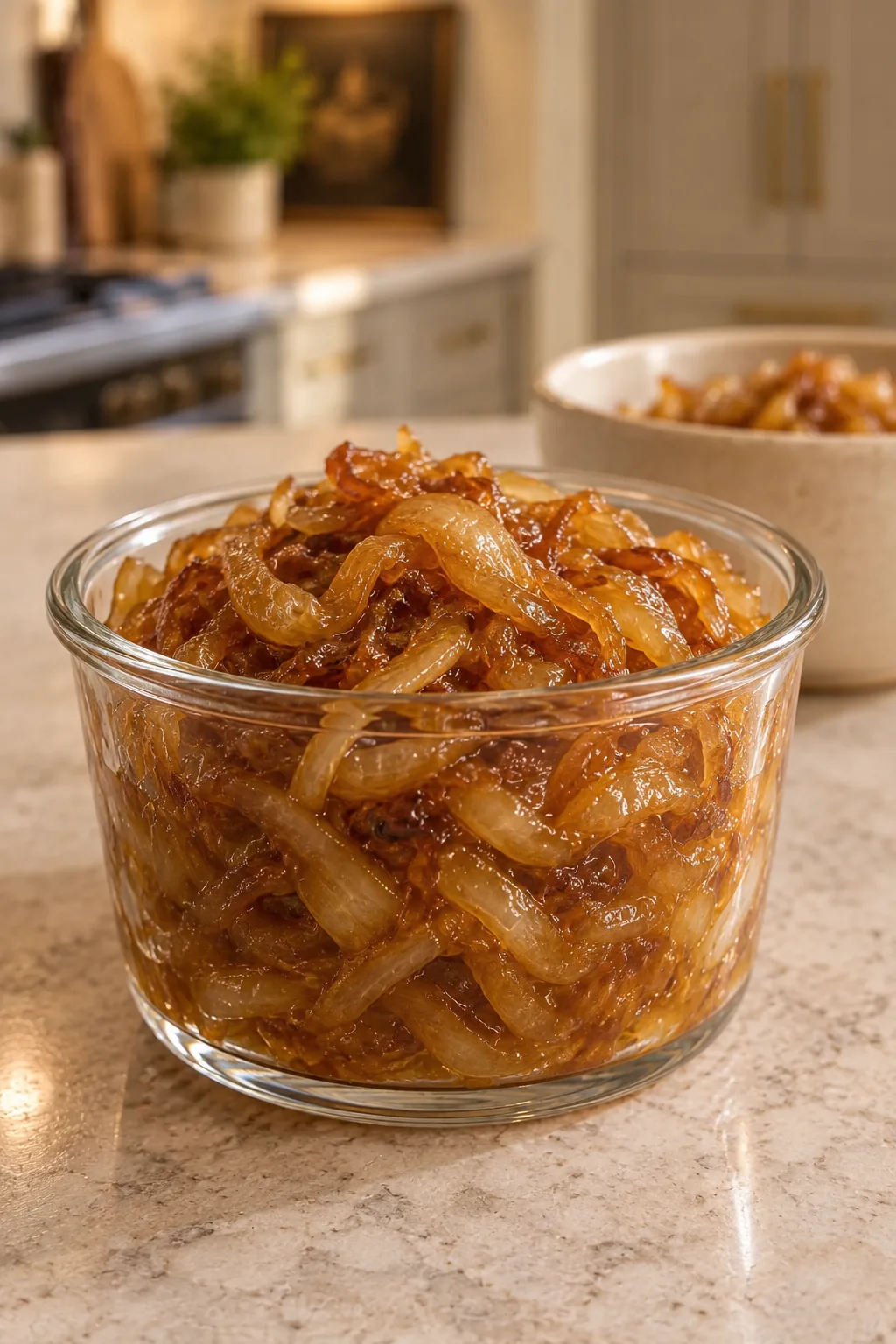
The finished onions should taste sweet, savory, buttery, and concentrated, with the meat stock adding depth rather than making them soupy. They should smell mellow and roasted, without the sharp bite of raw onion.
The texture is soft and jammy while still showing strands of onion. They should not be dry, crisp, or blackened around the edges. If the outer edge begins darkening faster than the center, stir thoroughly and check again sooner.
Cool and Portion the Batch
Turn off the slow cooker and let the onions cool. Divide them into one- or two-cup portions in freezer-safe glass containers. The smaller portion works well when a sauce or gravy needs an onion base; the larger portion suits a family-size soup, stew, or skillet meal.
The source directs freezing and does not provide a tested refrigerated or frozen storage duration. Label each container with the contents and batch date, and freeze the portions you are not using rather than inventing a storage window.
Thaw a portion before stirring it into a quick sauce, or add a frozen portion directly to a soup that has enough hot liquid to melt it evenly. The butter and stock are already built into the onions, so taste the finished dish before adding more fat or salt.
Ways to Use Slow Cooker Caramelized Onions
Stir a portion into beef or chicken soup, fold it into a pan sauce, or use it as the savory base for a gravy. It can also deepen the flavor of a slow-cooked meat dish without requiring a fresh round of slicing and browning.
For another onion-forward sauce, make Creamy Cauliflower-Onion Gravy. When you want a separate slow-cooker main dish, try the Spice-Rub Slow Cooker Pork Shoulder. Keep each complete formula and recipe card separate.
Frequently Asked Questions
Do I Have to Use Red Onions?
No. The source story used red onions, but the measured formula simply calls for onions. Use 12 to 16 firm onions that fit the slow cooker comfortably with the lid closed.
Can I Use Ghee Instead of Butter?
Ghee is a GAPS fat, but the captured source formula measures butter. If you need the dairy introduction sequence, use ghee in recipes written for it and return to this exact buttery batch once butter is tolerated.
Can I Use Store-Bought Broth?
Use one cup homemade beef or chicken meat stock. The stock links above provide the compatible components; boxed broth, bouillon, cubes, and granules are not interchangeable here.
Why Are My Onions Still Watery at 18 Hours?
Onion size, slow-cooker shape, and heat output all affect evaporation. Stir the batch, replace the lid, and continue toward the 24-hour end of the source range. The onions are finished by their deep golden color and jammy texture, not by the clock alone.
Should I Add Honey?
No. The onions become sweet during the long low cook. The recipe does not need honey or another sweetener.
How Much Does the Recipe Make?
The source does not give a tested finished yield. Portion the cooked onions by actual volume after cooling rather than promising a fixed number of cups before the batch is made.
Recommended Equipment
- Slow cooker with a removable ceramic insert and fitted lid
- Large cutting board
- Sharp chef’s knife
- Wooden or silicone spoon
- Liquid and dry measuring cups
- Freezer-safe glass containers in one- or two-cup sizes
Slow Cooker Caramelized Onions Recipe
Easy Slow Cooker Caramelized Onions for Full GAPS
Ingredients
Equipment
Method
- Put the sliced onions into the ceramic slow-cooker insert. Distribute the butter pieces over the onions and pour the homemade meat stock around them.
- Cover and cook on low for 18 to 24 hours. Start in the evening so the long middle of the cook happens overnight and the final hours can be watched during the day.
- Stir when checking the onions so darker pieces around the edge move toward the center. The onions are ready when they are deeply golden-brown, glossy, and jammy, with almost no thin liquid pooling underneath.
- Turn off the slow cooker and let the onions cool. Divide them into 1- or 2-cup portions in freezer-safe glass containers and freeze for soups, sauces, gravies, stews, or other dishes.
Notes
Tried this recipe?
Let us know how it was!Keep Full GAPS Batch Cooking Organized
The planned Dinner Cookbook will connect family-size soups, stews, sauces, and make-ahead components so one long cook can support several later meals. Find current resources and upcoming releases in the WFLI shop.

Leave a comment