

Beef pan jus is what you make when the skillet already holds the best part of dinner. After a roast comes out, the pan is left with browned drippings, clear fat, and a dark layer stuck to the bottom. Add homemade beef meat stock, loosen every good brown bit, and reduce the liquid by half. You get a glossy, pourable sauce without flour, starch, commercial broth, or a packet.
This is a jus, not a thick gravy. It should run easily from a spoon and collect around the food instead of sitting on top in a mound. The flavor becomes more concentrated as the liquid reduces, which is why the final seasoning happens at the end.
For a household of eight, using the drippings already in the skillet makes sense. The roast has done most of the flavor work. This method turns those drippings into about one cup of sauce while the meat rests, so there is no second long cooking project to manage before dinner.
Where This Beef Jus Fits On GAPS
This recipe fits Full GAPS after the ingredients are introduced and tolerated. It uses the browned drippings from a seared, oven-roasted beef recipe, so it does not follow the gentle cooking method used in the early Introduction Diet.
The liquid is homemade beef meat stock. Do not substitute boxed broth, bouillon, soup base, seasoning packets, flour, cornstarch, or a bottled gravy product. Mamane controls the stock-making technique, while the current GAPS sources control where meat stock and this finished sauce fit.
The source recipe allows stock, wine, or both. This WFLI card locks the stock-only branch so the formula is clear and the 2-cup liquid amount does not change. Optional butter, cream, and herb finishes in the source are not measured, so they are not added to this base card.
Start With Clean Brown Drippings
Make the Beef Top Round Roast in an oven-safe skillet. Move the roast to a board or platter for its 15-minute rest, then look at what remains in the pan. You want clear rendered fat, meat juices, and brown fond. Fond is the thin layer of browned proteins that sticks to the skillet during searing and roasting.
Brown is useful. Black is not. If the pan smells savory and roasted, continue. If the residue is fully black and smells sharp or burned, it will make the sauce bitter. Do not try to hide scorched drippings by adding more stock.
Keep the pan warm, but take a moment to spoon off an excessive pool of fat if your roast released much more than a thin coating. Leave the meat juices and browned fond behind. The jus needs enough fat for flavor and sheen, not a thick oily layer floating on top.
Know What To Leave In The Skillet
Tip the skillet slightly before you add stock. Clear liquid fat runs to the low side. Dark meat juices and fond stay closer to the surface or cling to the pan. If you have several tablespoons of clear fat pooling at the edge, spoon some into a heat-safe container. Do not scrape out the brown layer you are trying to use.
A small amount of fat helps the finished jus carry flavor and gives the surface a soft shine. Too much makes the sauce separate into an oily top and a watery bottom. You are looking for a thin film across the pan, not enough fat to shallow-fry another ingredient.
Do not pour hot fat down the sink. Let any excess cool in a heat-safe container. If it is clean beef fat without burned seasoning, it can be kept with other rendered cooking fat. If it smells scorched, discard it after it solidifies.
Add The Meat Stock And Loosen The Fond
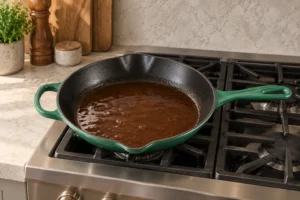
Place the skillet over medium-high heat. Add 2 cups homemade beef meat stock. The cool stock quiets the pan at first. As it heats, use a wooden spoon to scrape the bottom and edges where the brown layer is attached.
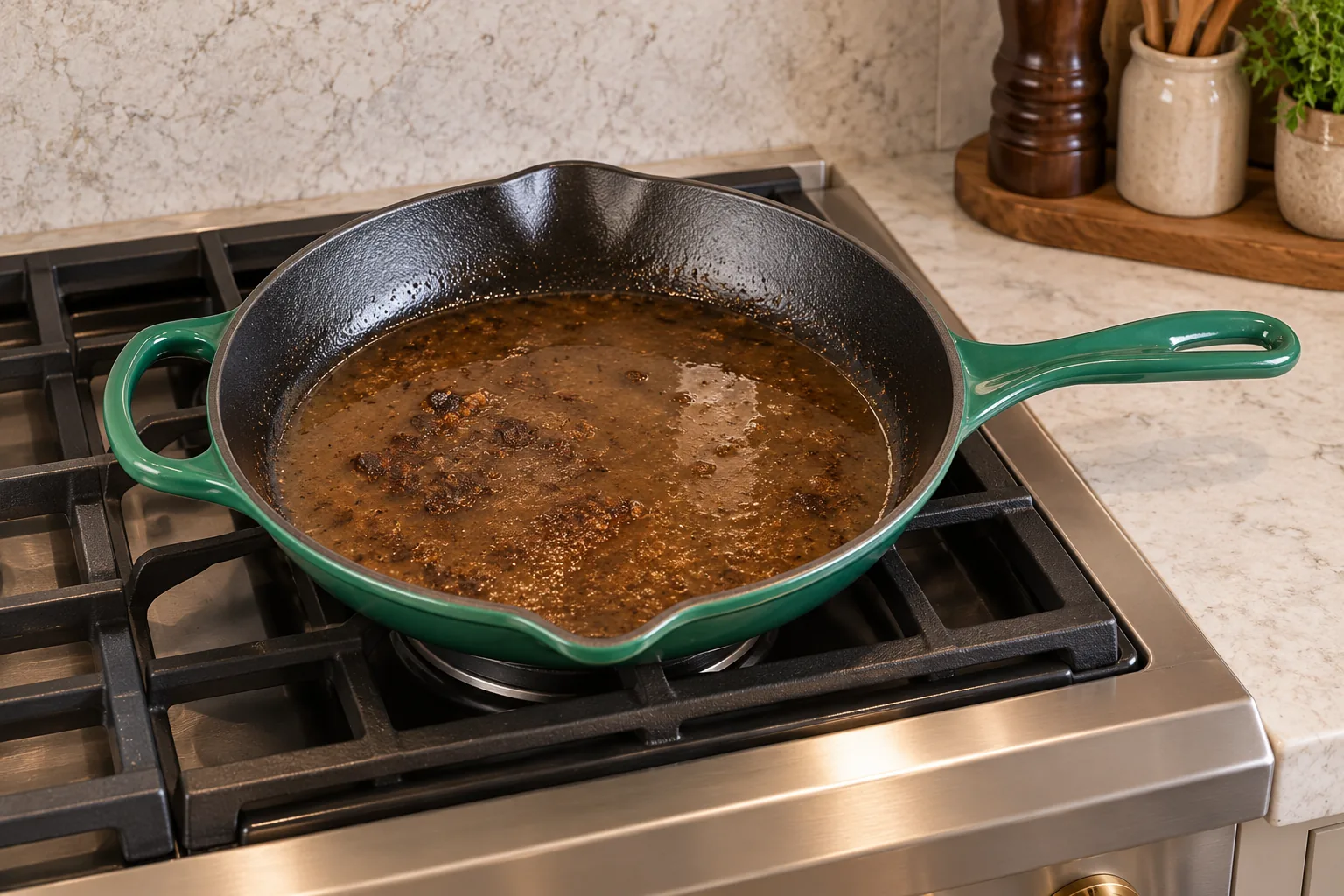
Work across the entire skillet. The liquid will deepen from plain stock brown to a darker roasted color as the fond dissolves. Small soft brown pieces in the liquid are normal. Hard black flakes or a burned smell are not.
Use a wooden spoon or a silicone utensil that is safe for the enameled skillet. Metal scraping can mark the cooking surface. Rest the utensil on a spoon rest when you stop. Do not leave it floating in the sauce or balanced across an unstable pan.
Reduce The Liquid By Half
Bring the stock to a steady simmer. Leave the skillet uncovered so water can evaporate. Stir and scrape occasionally, paying attention to the edges where liquid reduces fastest.
The starting 2 cups should become about 1 cup. A wide skillet can reduce faster than a narrow saucepan because more liquid is exposed to the air. Use the volume and the texture rather than promising one exact minute.
Watch the bubble pattern as the water cooks away. At first, the pan may show larger loose bubbles with plenty of liquid between them. As the volume falls, the bubbles become smaller and closer together and the surface looks more polished. Stir through the center and compare the liquid depth against the side of the skillet.
If the simmer is so hard that sauce spits onto the backsplash, lower the heat. Fast boiling does not create better flavor. It only makes the endpoint easier to miss. A controlled simmer gives you time to stop while the jus is still pourable.
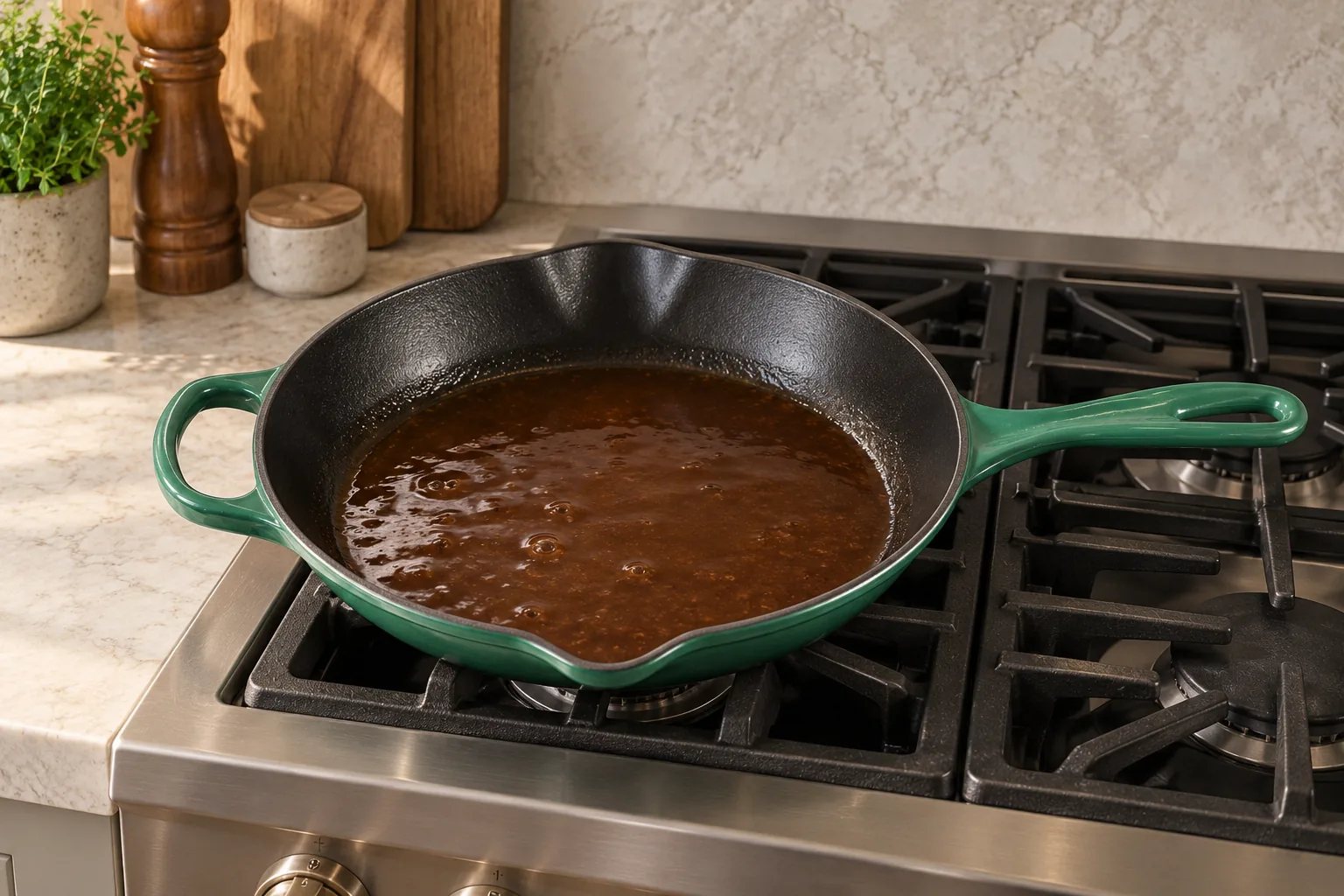
The finished jus looks glossy and deep brown. Small ripples travel across the surface, and the liquid lightly coats the back of a spoon before running off. It should still pour in a thin stream. If it sits on the spoon like gravy, it has reduced too far.
Season After Reducing
Taste only after the liquid has reduced by half. Meat stock and pan drippings both contain seasoning, and reduction concentrates it. Add natural sea salt and freshly ground black pepper only if the finished cup needs them.
If the jus tastes too intense but is not burned, stir in a tablespoon or two of additional homemade beef meat stock and warm it through. That small correction is better than adding a large amount of water, which thins the roasted flavor.
Serve It While It Is Hot
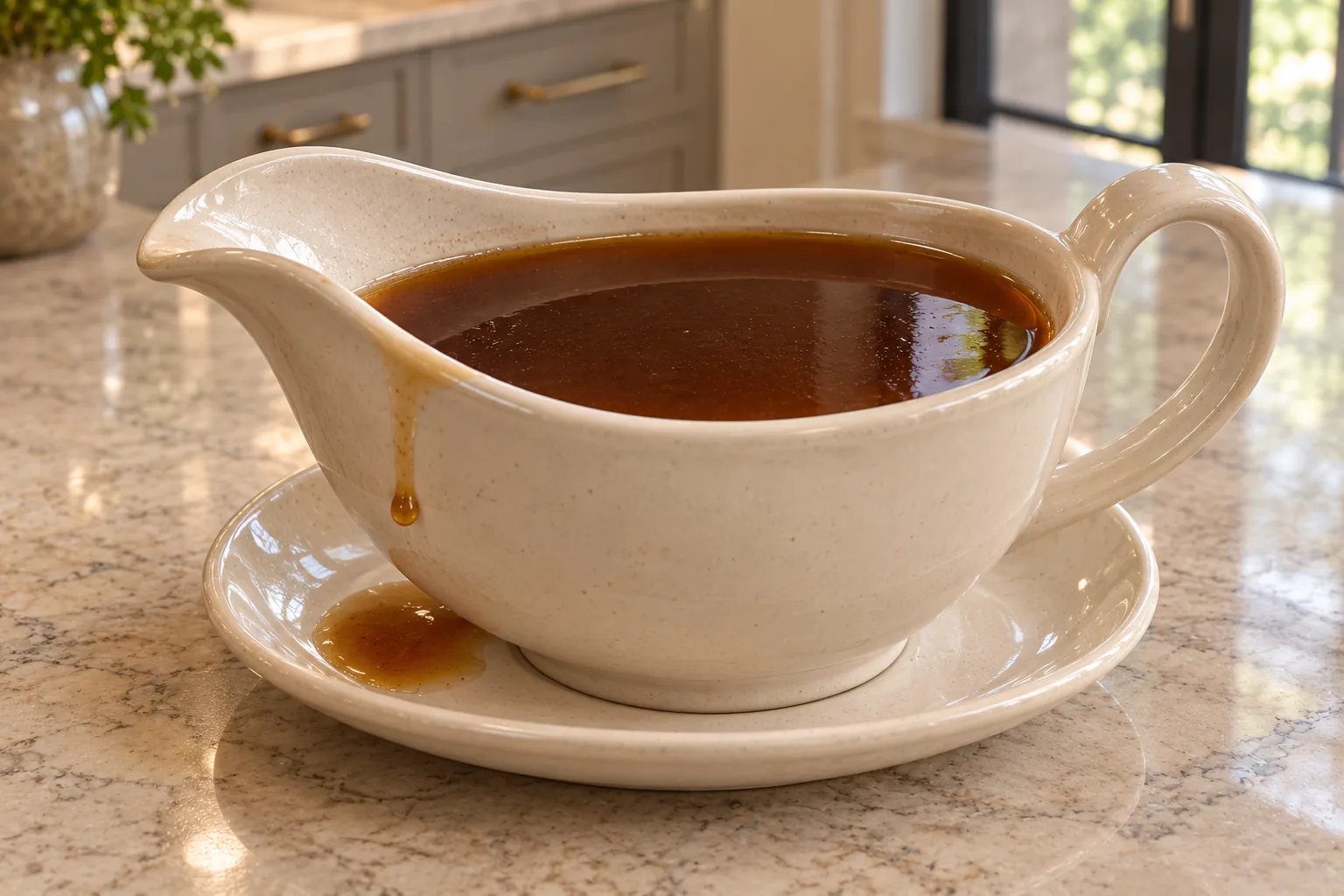
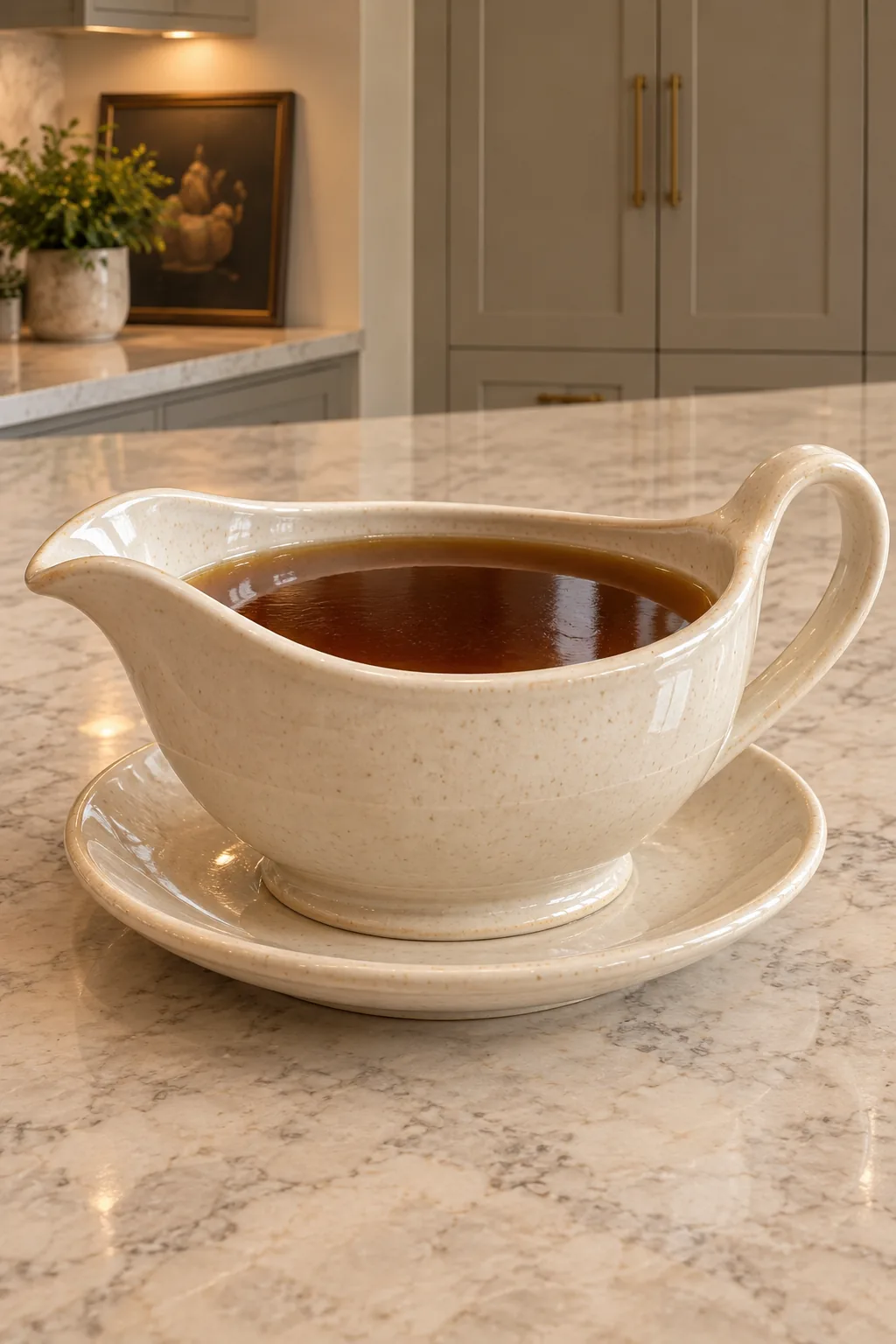
Pour the jus into a heat-safe gravy boat or small pitcher and serve it with thin slices of roast beef. Use a small amount at first. Jus is concentrated and is meant to moisten the meat, not drown the plate.
It also works with the separate Sirloin Tip Roast Beef when that roast leaves clean brown drippings. The timing and temperature for the roast stay on its own card. This sauce card begins only after the meat leaves the skillet.
Storage And Reheating
Cool leftover jus promptly and refrigerate it in a covered glass container for up to three days. The fat may firm on top when cold. That is normal. You can leave a little for flavor or lift off the firm layer before reheating.
Reheat over low heat in a small stainless saucepan, stirring until the liquid is hot and smooth. Do not boil it hard. If refrigeration made it seem too concentrated, add homemade beef meat stock one tablespoon at a time until it pours easily again.
Recommended Equipment
- The same 10- to 12-inch oven-safe skillet used for the roast, such as the Le Creuset Signature Artichaut skillet
- Wooden spoon or enamel-safe silicone utensil
- Heat-safe spoon rest
- Liquid measuring cup
- Small heat-safe gravy boat or pitcher
- Covered glass container for leftovers
Frequently Asked Questions
What Is The Difference Between Jus And Gravy?
Jus is a reduced meat liquid that stays thin and pourable. Gravy is usually thickened with flour, starch, gelatin, vegetables, dairy, or another thickener. This card uses only pan drippings, homemade beef meat stock, and final seasoning.
Can I Make This Without Pan Drippings?
No. The browned drippings and fond are the defining base of this formula. Reducing plain meat stock makes concentrated stock, which is useful but is not the same pan jus.
Can I Use Bone Broth?
Use the linked homemade beef meat stock for this Full GAPS card. Do not quietly swap in a commercial broth or treat meat stock and bone broth as interchangeable ingredients.
Does The Jus Need Gelatin Or A Thickener?
No. This formula gets its body from the roast drippings and reduction. Beef meat stock may contain natural gelatin, but you do not add powdered gelatin, flour, starch, or another thickener to this card. The finished texture remains thin.
Can I Make The Jus In A Saucepan?
Start in the roast skillet so the stock can loosen the fond. If you need to free the skillet or hold the sauce, transfer the fully deglazed liquid to a small heavy saucepan and finish reducing there. Scrape every brown bit into the saucepan with it.
Why Is My Jus Greasy?
The skillet may have held more rendered fat than the sauce needed. Before adding stock, spoon off an excessive pool while leaving the meat juices and fond. A slight sheen is right. A separate oil layer across the whole surface is too much.
Why Is My Jus Bitter?
The fond may have burned, or the liquid may have reduced too far. Clean brown drippings taste roasted. Black residue tastes bitter. If the sauce is simply too concentrated, loosen it with a small amount of homemade beef meat stock.
Can I Double The Recipe?
Use the WPRM 2× control for 4 cups meat stock, then reduce to about 2 cups. A very full skillet can splash and reduce unevenly, so move the liquid and drippings to a wider heavy saucepan if your skillet cannot hold the doubled amount safely.
Beef Pan Jus Recipe
Beef Pan Jus for Full GAPS
Ingredients
Equipment
Method
- Move the roast to a plate or cutting board to rest. Place the skillet with the clean brown drippings over medium-high heat. Add 2 cups homemade beef meat stock and scrape the bottom and edges with a wooden spoon until the browned fond loosens into the liquid.
- Bring the liquid to a steady uncovered simmer and reduce it by half, stirring and scraping occasionally. Stop at about 1 cup, when the jus is glossy, lightly coats a spoon, and still pours in a thin stream.
- Taste the reduced jus. Add natural sea salt and freshly ground black pepper only if needed. Pour into a heat-safe gravy boat and serve hot.
Notes
Stock: Use homemade beef meat stock. Do not treat commercial broth or bone broth as the same ingredient.
Fond: Use clean brown fond only. Black, scorched residue makes the jus bitter.
Reduction: Reduce 2 cups liquid to about 1 cup. The finished jus stays thin and pourable rather than thick like gravy.
Seasoning: Season after reducing because the pan drippings and meat stock become more concentrated.
Tried this recipe?
Let us know how it was!Use The Roast, Bones, And Drippings
The upcoming Whole-Animal Buying & Cut Sheet Guide helps you plan how roasts, bones, trim, drippings, and cooking fat fit into ordinary meals. Find current releases and upcoming additions in the WFLI shop.

Leave a comment