

This seed-free Middle Eastern herb blend gives a pot of beef stew the warm, savory flavor it needs without sesame or sumac. Marjoram, thyme, oregano, dried ginger, and mineral salt make the base blend; cumin is an optional later addition when it has already been introduced and tolerated.
The batch takes about five minutes to mix. Measure one-quarter cup for the matching seed-free beef stew, then seal the rest in a small glass jar for another meal.

A Separate Blend for the Seed-Free Stew
This blend is its own recipe because it is not za’atar with one ingredient removed. Traditional za’atar gets its tartness and texture from sumac and sesame. The seed-free stew needs a different balance, so dried ginger gives the herbs a warm finish and fresh lemon is added to the finished stew instead of being stored in this dry jar.
If prepared sesame is already part of your Full GAPS routine, use the separate homemade za’atar recipe. If you are keeping the meal seed-free, make this blend and use the matching seed-free stew formula when it is served.
I like keeping component recipes separate because it makes the weekday decision simple. Before homeschool and second-shift work take over the day, I can see exactly which jar belongs with dinner instead of trying to rebuild a seasoning blend over a simmering pot.
Where This Herb Blend Fits on GAPS
This dry seasoning blend fits Full GAPS when every herb and spice in your batch has already been introduced and tolerated. Use pure single-ingredient dried herbs, dried ginger, cumin, and mineral salt without starch, flour, sugar, flavor enhancers, anti-caking blends, or seed oils.
The base formula is seed-free. Cumin is listed as an optional measured addition because it is a seed spice. Leave it out when you need the seed-free route; add it only after cumin has been introduced separately and is working for your household.
This blend is not an Introduction Diet seasoning packet. Keep stage placement tied to the individual ingredients you have already introduced rather than treating the jar as one new food.
Measure the Herbs Before Mixing
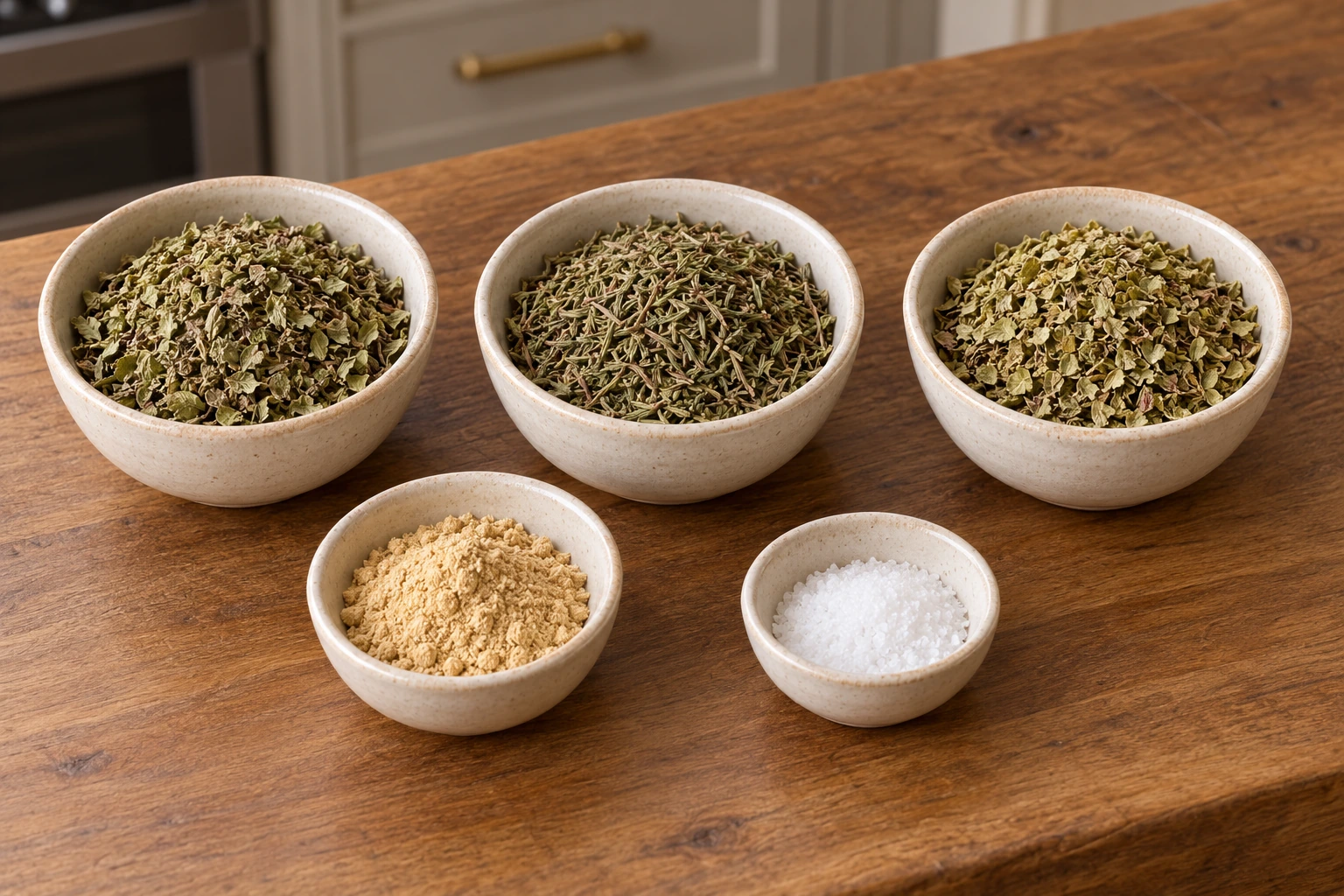
Measure three tablespoons each dried marjoram, dried thyme, and dried oregano. Add one tablespoon dried ginger and two teaspoons mineral salt.
The three herb portions should look roughly equal in volume. The ginger portion is smaller and powdery, and the salt portion is smaller again. Measuring into separate bowls first makes a missed ingredient obvious before everything looks alike.
Mix Until the Ginger and Salt Disappear Into the Herbs
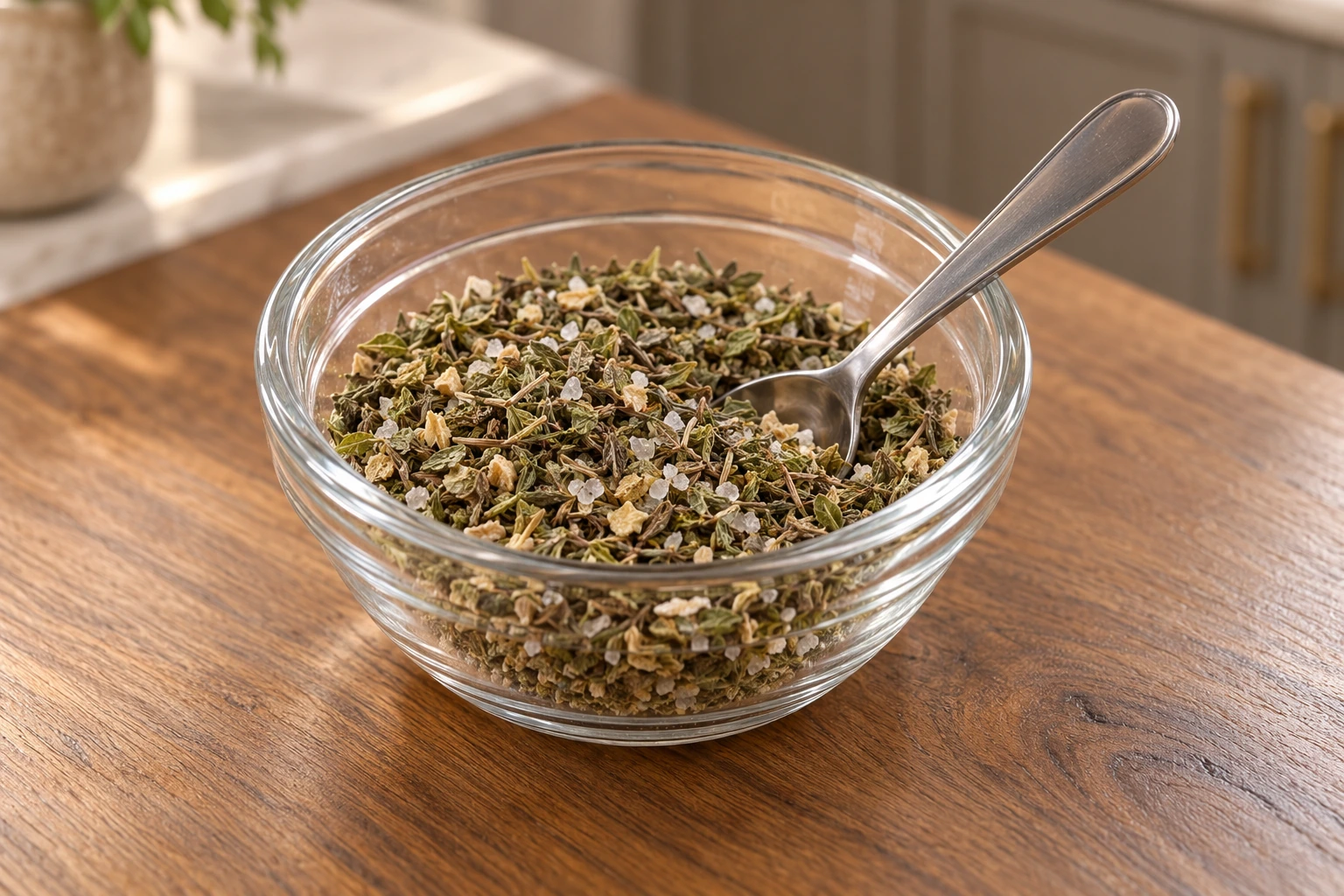
Tip the measured ingredients into a small, completely dry glass bowl. Stir from the bottom and around the sides so the fine ginger and salt do not stay underneath the lighter herbs.
The blend is ready when the pale ginger and salt are distributed throughout and every spoonful carries all three herbs. It should remain loose and dry. Break apart any soft herb clumps with the back of the spoon.
If you are using the optional two tablespoons cumin, stir it in only after the base is evenly mixed. Cumin makes the blend warmer and earthier, but the seed-free version is complete without it.
Measure the Stew Portion First
Measure one-quarter cup for the seed-free Middle Eastern beef stew before transferring the rest to storage. This keeps the stew amount exact and prevents a damp measuring spoon from reaching the storage jar later.
This recipe makes about two-thirds cup. Adding the optional cumin brings the total closer to three-quarters cup. The recipe card scales the measured ingredients by batch, so a 2x batch doubles every amount instead of guessing at the jar size.
How It Should Smell and Taste
Before cooking, the blend should smell strongly herbal, with thyme and oregano first and the softer marjoram close behind. Dried ginger should register as warmth rather than sweetness.
Without cumin, the flavor is clean, savory, and herb-forward. With cumin, it becomes deeper and earthier. The finished seed-free stew gets its brightness from fresh lemon added after cooking, so do not add lemon juice to this storage jar.
Storage
Transfer the blend to an airtight glass jar and keep it in a cool, dark pantry. A small jar with little empty space protects the aroma better than a large container.
Use a clean, dry spoon every time. Discard the blend if moisture, mold, or an unpleasant stale smell develops. Label the jar seed-free herb blend so it is not confused with the prepared-sesame za’atar.
For the best flavor, mix only as much as your household will use while the herbs still smell fresh and distinct.
Ways to Use the Blend
The measured one-quarter cup belongs in the seed-free Middle Eastern beef stew. Smaller amounts can season beef, lamb, eggs, roasted turnips, radishes, carrots, or cauliflower after those foods and the individual seasonings fit your current Full GAPS routine.
Because the blend contains mineral salt, account for it when seasoning another recipe. The matching stew provides its own separate salt amount, so follow that formula rather than seasoning by sight.
For a cold use, stir a small amount into homemade 24-hour sour cream after every ingredient is tolerated. Start with a little, taste, and add more only if needed.
Recommended Equipment
Use stainless measuring spoons, five small prep bowls if you want to verify every measure before mixing, one small dry glass mixing bowl, a short stainless spoon, a one-quarter-cup measure for the stew portion, and an airtight glass storage jar.
No grinder or blender is needed. Leaving the dried herbs in their ordinary texture keeps the blend easy to distribute without turning it into powder.
Frequently Asked Questions
Is This the Same as Za’atar Without Sesame?
No. It is a separate measured blend with dried ginger and no sumac. Use the prepared-sesame za’atar when you want that formula.
Is Cumin Required?
No. The seed-free base is complete without it. Add two tablespoons only after cumin has been introduced separately and tolerated.
Why Is Lemon Not Mixed Into the Jar?
This is a dry storage blend. Fresh lemon is added to the finished seed-free stew so the jar stays dry and the final dish gets a fresh, bright finish.
Can I Use Fresh Herbs?
Not in this stored dry blend. Fresh herbs change the moisture and volume. Use the measured dried herbs for the formula shown here.
Can I Substitute Ground Ginger?
Use pure dried ground ginger. Check the label for a single ingredient and measure one tablespoon.
How Much Goes Into the Stew?
Measure one-quarter cup of this blend for the matching seed-free Middle Eastern beef stew.
Seed-Free Middle Eastern Herb Blend Recipe
Seed-Free Middle Eastern Herb Blend for Full GAPS
Ingredients
Equipment
Method
- Measure the marjoram, thyme, oregano, dried ginger, and sea salt into separate small bowls so each amount is visible before mixing.
- Tip the measured ingredients into a small, completely dry glass bowl. Stir from the bottom and around the sides until the pale ginger and salt are evenly distributed and the blend remains loose and dry.
- If using the optional cumin, add it only after the base is evenly mixed and stir again until no concentrated patches remain.
- Measure 1/4 cup for the seed-free Middle Eastern beef stew.
- Transfer the remaining blend to an airtight glass jar. Label it seed-free herb blend and store it in a cool, dark pantry with a clean, dry spoon.
Notes
- Full GAPS: Use after each herb and spice in the batch has been introduced and tolerated.
- Seed-free base: Omit cumin. The five base ingredients make about 2/3 cup.
- Optional cumin: Add 2 tablespoons only after it has been introduced separately and tolerated; the yield becomes closer to 3/4 cup.
- Stew portion: Measure 1/4 cup for the matching seed-free beef stew, which receives fresh lemon after cooking.
- Scaling: At 2x, double every measured ingredient and prepare two batches.
Tried this recipe?
Let us know how it was!Build a More Useful Dinner Pantry
The planned One-Pot & Sheet Pan collection will pair family dinners with their exact component recipes, prep order, and physical cooking cues. Find current guides and catalog updates in the WFLI shop.


Leave a comment