

Quick skillet-fried sage turns one fresh bunch into a crisp, salty Full GAPS garnish in small batches. Each group of about five leaves sizzles briefly in a quarter cup of ghee, coconut oil, or an allowed rendered animal fat, gets one careful flip, and comes out of the skillet in 30 to 60 seconds.
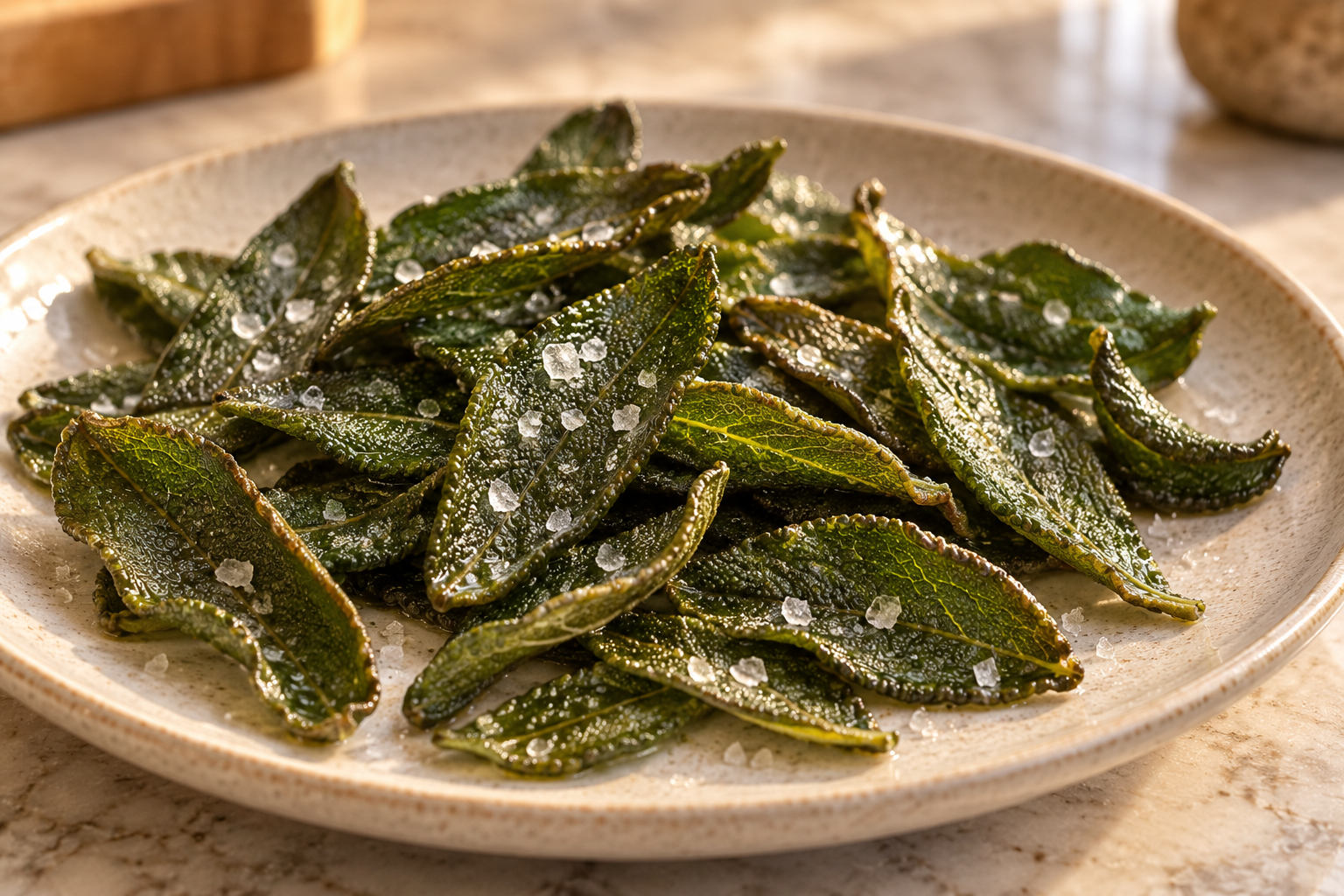
A handful of crisp sage can make a familiar soup, casserole, or holiday plate feel finished without adding a complicated sauce. The leaves taste concentrated and herbaceous, with fragile curled edges and just enough fat to carry the sage aroma. They are also good straight from the platter while they are still crisp.
This post contains the one-bunch, flip-once formula. The separate fast cast-iron formula uses 30 to 40 counted leaves, less fat, and a 5-to-7-second fry. Those measurements and endpoints are different enough to require their own post and recipe card.
Why Fry Sage in Small Batches
Fresh sage leaves carry moisture. When they meet hot fat, that moisture creates a quick sizzle and may cause brief popping. Adding about five leaves at a time keeps the skillet uncrowded, makes each leaf easy to flip, and gives you time to lift the batch out before the edges turn brown.
The source formula gives 30 to 60 seconds total and calls for one flip. This is a short window, so the draining towel, stainless-steel tongs or forks, and mineral salt should be ready before the first leaf enters the pan.
Choose the Cooking Fat
Use one-quarter cup ghee, coconut oil, or another allowed rendered animal fat. These are the Full GAPS cooking-fat forms for this heated recipe. Melted ghee gives a buttery aroma, coconut oil is neutral when refined according to your chosen product, and rendered animal fat brings its own savory character.
Do not heat olive oil in this formula. If you want its flavor, add only a small drizzle of raw cold-pressed extra-virgin olive oil after every leaf has finished frying and left the skillet. That optional finishing drizzle stays outside the measured frying fat.
Prepare the Sage and Draining Area
Use one fresh bunch of sage, about one-half to one ounce. Pinch each leaf from the stem. Choose intact leaves and remove damaged portions or woody stems. If the leaves were rinsed, let them dry completely before frying because surface water can make the hot fat pop more forcefully.
Spread a clean undyed linen towel on a heat-safe plate or tray. Set stainless-steel tongs or two stainless-steel forks beside the stove, and keep the coarse mineral salt within reach. Once the leaves are crisp, the next steps happen immediately.
Heat the Fat Without Smoking
Add the quarter cup of fat to a small Le Creuset Signature skillet in Artichaut or another approved stainless-steel or enameled cast-iron skillet. Heat over medium-high. The source target is about 165°F if you choose to check it with a thermometer.
The physical cue matters more than chasing a hotter pan: the fat should be fully melted, fluid, and ready to sizzle around a leaf, but it must not smoke. Smoking fat is too hot for the intended 30-to-60-second method. Lower the heat before adding the sage if you see smoke.
Add About Five Leaves
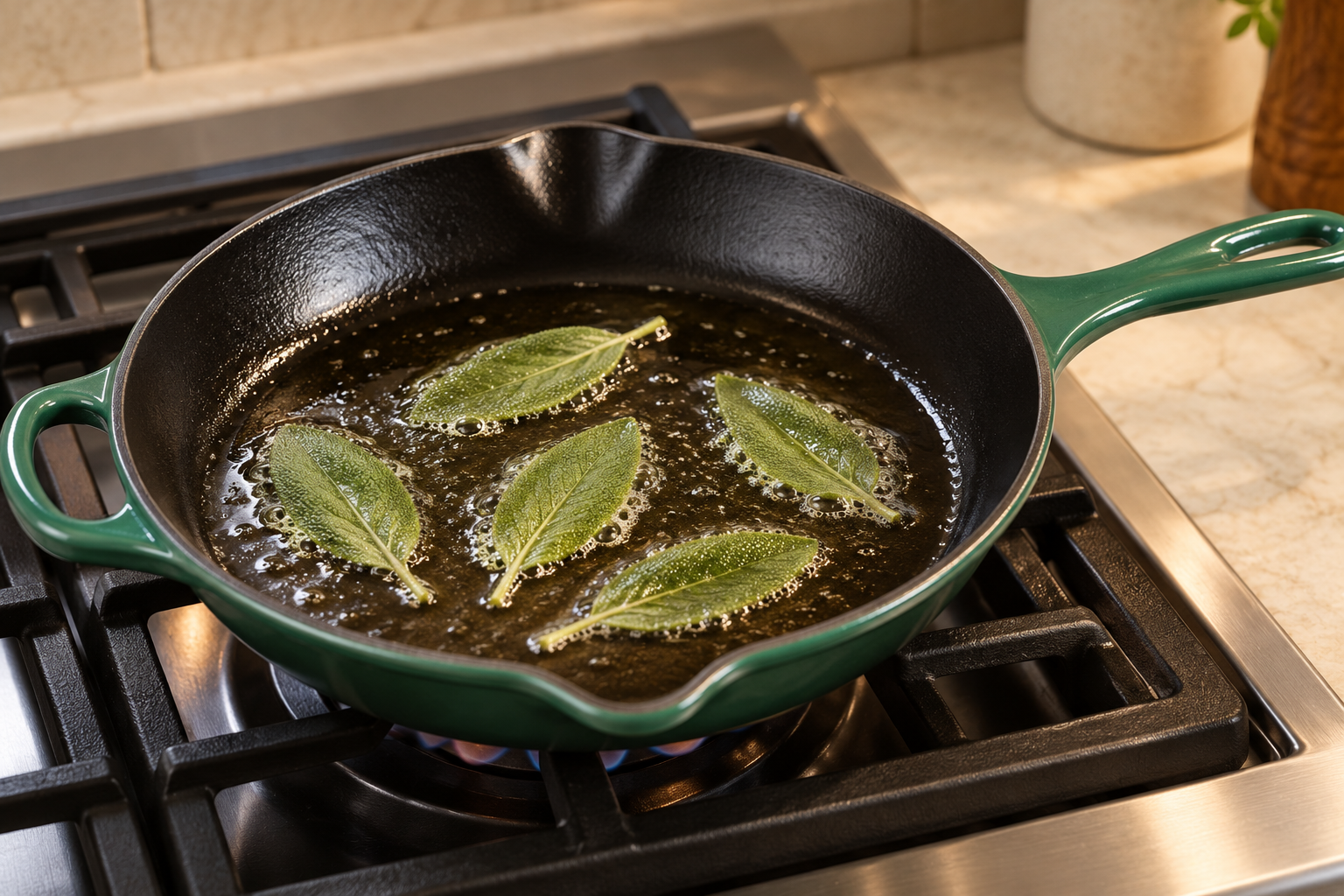
Lay about five sage leaves into the hot fat in one uncrowded layer. Expect an immediate sizzle and a few brief pops as their moisture meets the fat. Keep your face and bare skin away from the pan and stay at the stove for the entire batch.
The leaves should remain individually visible instead of stacking in a wet clump. If five large leaves crowd your particular skillet, use fewer in that batch while preserving the same single-layer cue.
Flip Once and Watch the Sizzle Slow
Turn each leaf over once with stainless-steel tongs or forks. The whole fry takes 30 to 60 seconds. The bubbling is most active when the leaves first enter the fat, then slows as they crisp.
The finished leaves look darker green and slightly blistered, with edges that begin to curl. They should feel crisp and light when lifted. Remove them before they become brown, scorched, or brittle enough to shatter in the tongs.
Lower the burner from medium-high toward medium halfway through the overall batch process if the fat is getting hotter. Successive batches should repeat the same lively-then-slowing sizzle without smoke.
Drain on Linen and Salt While Warm
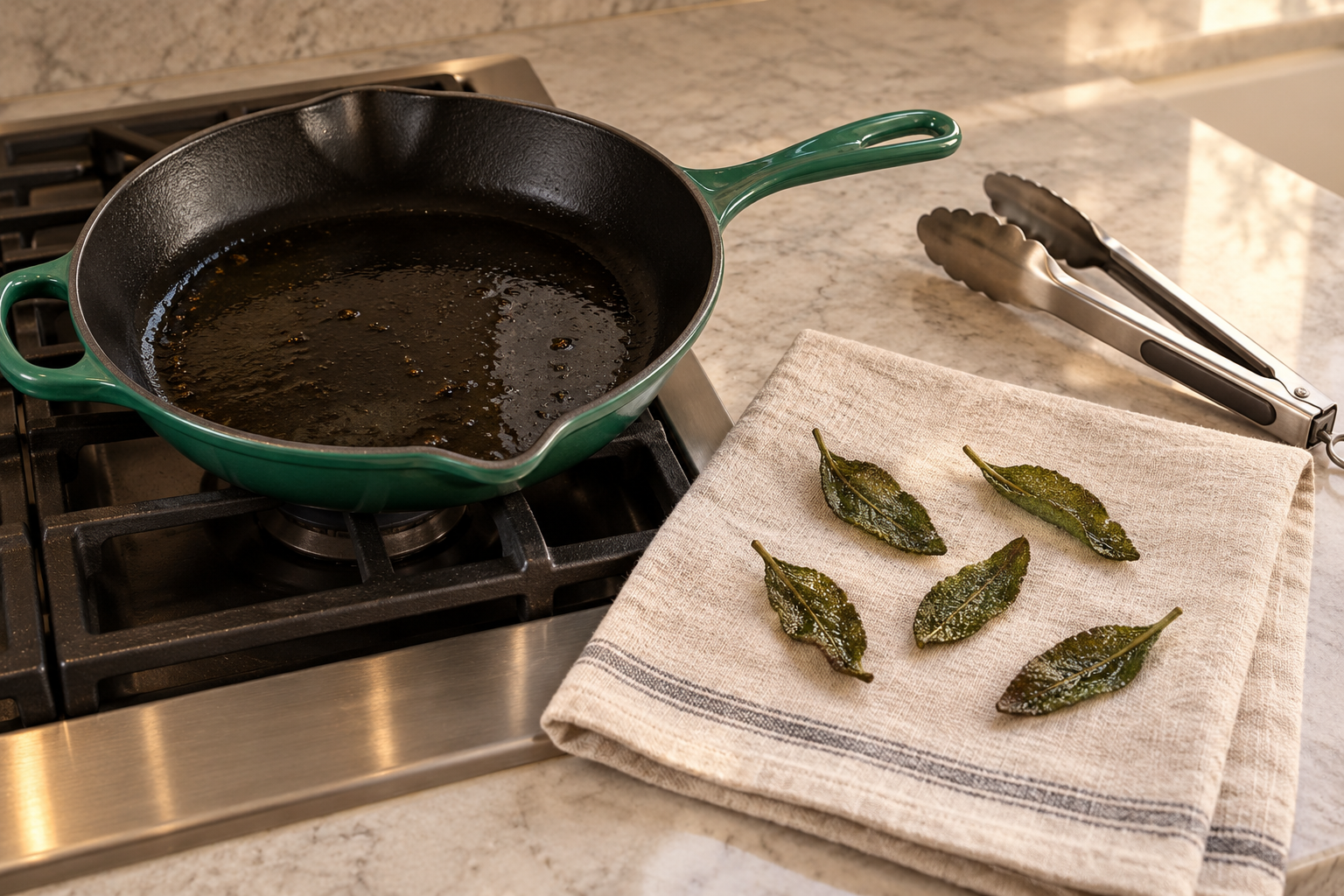
Lift the crisp leaves from the skillet and place them in a single loose layer on the clean linen towel. The linen absorbs surface fat without introducing paper or plastic food contact.
Sprinkle the leaves with coarse mineral salt while they are still warm enough for the crystals to adhere. Season to taste rather than inventing a measured salt quantity the source does not provide.
Repeat Without Letting the Fat Overheat
Continue frying about five leaves at a time until the bunch is finished. Check the heat between batches. Add the next leaves only when the fat is hot enough to sizzle but remains below smoking.
If using the optional raw olive oil, wait until all frying is complete. Move the salted leaves to their serving platter and drizzle only a small amount over the finished leaves.
What the Finished Leaves Should Be Like
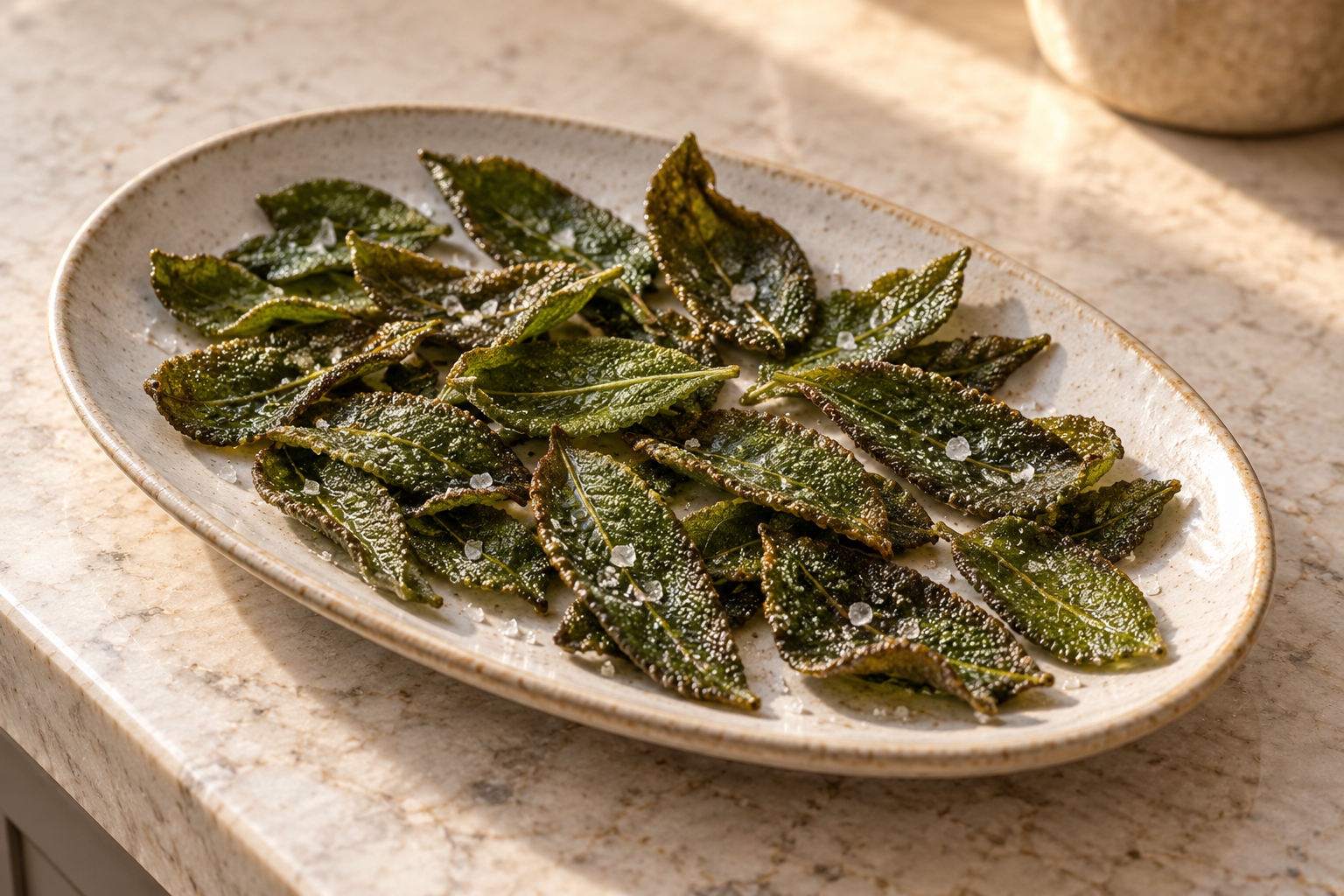
Each leaf should remain recognizable, with a crisp surface, curled edge, and concentrated sage aroma. The color becomes a deeper green, but the leaves should not look charred or uniformly brown. A light sheen is normal; a puddle of fat on the platter means they needed more time on the linen.
Salt should punctuate the herb rather than cover it. The first bite is delicate and crisp, then savory and distinctly sage-forward.
Quick Skillet-Fried Sage for Full GAPS
Ingredients
Equipment
Method
- Pinch the sage leaves from the stems. Make sure rinsed leaves are fully dry. Set a heat-safe plate lined with a clean undyed linen towel beside the stove, with stainless-steel tongs or two forks and the mineral salt ready.
- Add the ghee, coconut oil, or rendered animal fat to the skillet and heat over medium-high until fully melted, fluid, and hot enough to sizzle around a leaf but not smoking. The optional thermometer target is about 165°F.
- Add about 5 sage leaves in one uncrowded layer. Expect immediate sizzling and brief popping as the fresh leaves meet the hot fat.
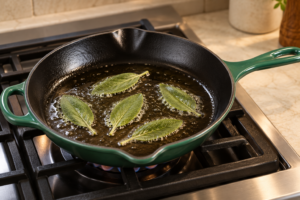
- Fry for 30 to 60 seconds total, flipping each leaf once. Remove when the sizzling slows, the leaves are darker green and crisp, and their edges begin to curl; do not let them brown.
- Transfer the batch immediately to the clean linen towel with stainless-steel tongs or forks. Sprinkle with coarse mineral salt while warm.
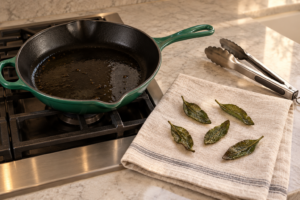
- Repeat with batches of about 5 leaves, lowering the heat from medium-high toward medium as needed to keep the fat hot but not smoking. If using optional olive oil, drizzle a small amount raw over the finished leaves just before serving.
Notes
Tried this recipe?
Let us know how it was!Troubleshooting the Frying Batches
If the leaves stay limp and pale through the full minute, the fat was probably not hot enough when that batch entered. Let the fat return to the immediate-sizzle point before adding the next five leaves. Do not solve a cool pan by crowding it with more sage.
If the edges brown before the leaves feel crisp, the fat is too hot. Move the skillet off the burner briefly, lower the heat, and wait until there is no smoke before continuing. The correct leaf becomes darker green and crisp; brown or black edges signal that the intended endpoint has passed.
If the salted leaves feel heavy instead of delicate, give the next batch more open space on the linen so surface fat can drain. Avoid piling hot leaves on one another. Steam trapped in a mound works against the crisp texture you just created.
Batch size can change slightly with leaf size. “About five” is the practical cue. Five small leaves may fit easily, while four unusually large leaves can fill the same skillet area. Preserve the uncrowded single layer, the one flip, and the 30-to-60-second total rather than forcing an exact count into overlapping fat.
Full GAPS Placement
This is a Full GAPS recipe after fresh sage, the selected cooking fat, and mineral salt are appropriate and tolerated. Ghee follows the individual dairy-introduction and tolerance sequence. Choose coconut oil or another allowed rendered animal fat when you need a dairy-free route.
The optional olive oil remains raw and is added only after frying. Do not use commercial seasoning blends or flavored fats with unverified additives.
Ways to Serve Fried Sage
Scatter a few leaves over Sausage Stuffing with Cauliflower and Pecans or Cauliflower Chicken Au Gratin with Bacon. The crisp leaves also work beside Baked Herb Meatballs or on a smooth Full GAPS soup.
Keep the portion modest when using the leaves as a garnish so their strong sage flavor supports the main dish. For a snack, serve the platter while the leaves are freshly crisp.
Storage and Reheating
The source does not provide a tested storage duration or reheating method. This recipe is designed around the immediate crisp endpoint, so make it close to serving rather than promising that a refrigerated batch will keep the same texture.
If leaves soften while waiting at room temperature, do not invent a second fry or oven method under this card. A future storage or reheating variation needs its own supported directions.
Recommended Equipment
- Le Creuset 10.25-inch Signature Skillet in Artichaut, or an approved stainless-steel or enameled cast-iron small skillet
- Stainless-steel tongs or two stainless-steel forks
- Clean undyed linen towel
- Heat-safe plate or tray
- Measuring cup
- Optional frying thermometer
Frequently Asked Questions
Can I Fry the Sage in Olive Oil?
Use ghee, coconut oil, or an allowed rendered animal fat for frying. A small amount of cold-pressed extra-virgin olive oil may be drizzled raw over the finished leaves.
Why Does the Fat Pop?
Fresh sage contains moisture, so brief popping can happen when the leaves enter hot fat. Dry the leaves well, add about five at a time, and keep the fat hot but not smoking.
How Do I Know the Leaves Are Crisp?
The sizzling slows, the leaves darken slightly, and their edges curl within the 30-to-60-second window. Lift them before they brown.
Can I Add the Whole Bunch at Once?
No. Fry in uncrowded batches of about five leaves so each leaf contacts the fat and can be flipped and removed on time.
Do I Need a Thermometer?
No. The source offers about 165°F as an optional target. Nonsmoking fat, immediate sizzling, and slowing bubbles provide the working cues.
Can I Use Dried Sage?
Both the batch size and timing are built for fresh whole sage leaves. Dried sage is not interchangeable in this card.
Plan the Rest of the Holiday Table
Fried sage is a small finishing touch that fits naturally into a larger feast plan. Visit the Well Fed & Lived In shop for the upcoming Holiday Menu & Prep Timeline and Holidays on GAPS resources.

Leave a comment