

Raspberry beet kvass starts as a simple beet ferment, then the raspberries go into the strained liquid just before refrigeration. Keeping those stages separate gives you the earthy tartness of beet kvass with a fresh berry finish, without adding sweetener or turning the primary ferment into an unmeasured fruit mixture.
This Full GAPS formula uses one large beet, four cups filtered water, one measured tablespoon of homemade whey or additive-free sauerkraut brine, and one-half cup raspberries. The ferment window is two to eight days because room temperature changes the pace. Pleasant tartness controls the endpoint.
In our family of eight, a flavored ferment is easier to repeat when the jar has one clear sequence. Beets ferment first. The solids come out. Raspberries go into the finished liquid. That order also keeps this recipe distinct from plain, strawberry, ginger-garlic, and starter-culture beet kvass.
GAPS Placement: Full GAPS; on Intro Stage 1 use only strained fermented liquid and begin gradually with 1 to 2 teaspoons
Prep Time: 10 minutes
Fermentation: 2 to 8 days, depending on room temperature, until pleasantly tart
Yield: 4 servings, about 1 quart
What Raspberry Beet Kvass Tastes Like
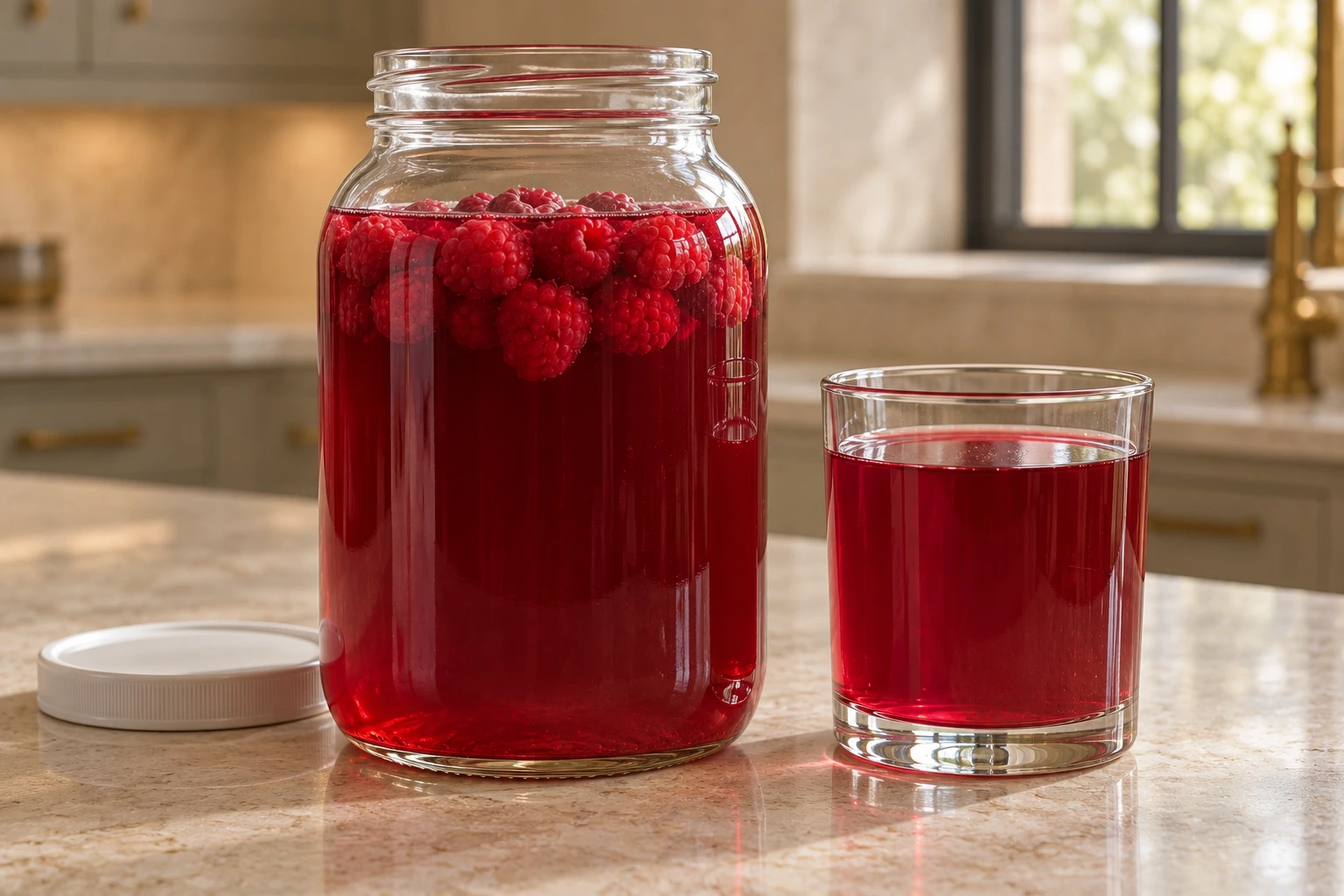
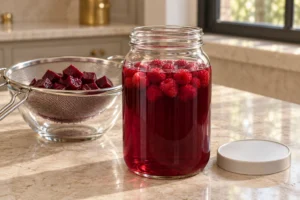
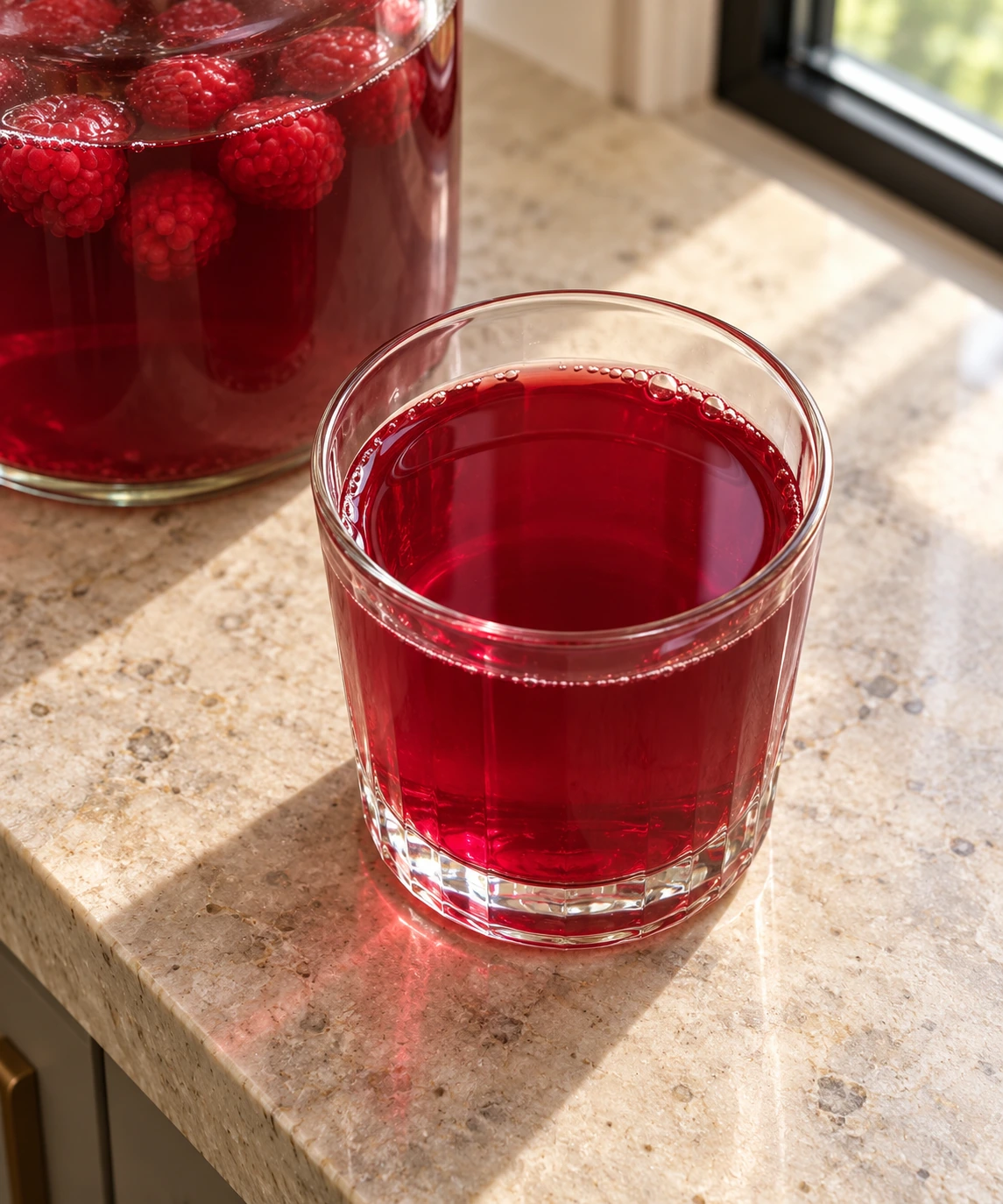
The base is earthy and sour from beet fermentation. Raspberries soften that savory edge with fresh berry aroma and a light fruit impression, but the drink is not sweetened. Its color is a clear saturated ruby, with whole berries resting in the refrigerated jar.
If you want plain savory kvass, use the separate plain beet kvass without whey. This recipe keeps its one-tablespoon starter and post-strain raspberry step.
Prepare The Beet In Large Cubes
Cut one large beet, about one and one-half to two cups, into roughly one-inch cubes. Do not grate or finely dice it. Put the cubes in a clean glass fermentation vessel large enough to hold four cups water, the beet, a fermentation weight, and headspace.
Wash the vessel, weight, closure, cutting board, and knife before starting. Rinse away residue. Choose the weight and pressure-aware closure before filling so you do not improvise with an unsupported object later.
Choose One Measured Starter
Add one tablespoon homemade whey or one tablespoon additive-free sauerkraut brine. Choose one. Do not combine both or add an extra splash. For a dairy-free batch, use sauerkraut brine with no garlic or strong seasoning that would change the raspberry flavor.
The starter belongs in the primary beet ferment. The raspberries do not. Keeping the fruit out now preserves the exact ingredient order and makes the later berry addition easy to see and repeat.
Keep The Starter Choice Exact
Homemade whey and sauerkraut brine can both supply the measured starter in this formula, but they are alternatives rather than additions. Measure one tablespoon after choosing the branch. Two tablespoons made from both starters would change the liquid balance and would not be the same recipe.
When using whey, use qualifying homemade whey from a properly prepared GAPS dairy ferment. When using sauerkraut brine, choose a finished additive-free batch whose flavor will not bring garlic, caraway, chile, or another strong seasoning into the raspberry kvass. The dairy-free label applies only to the sauerkraut-brine branch.
Add Water And Keep The Beet Submerged
Add four cups filtered water. Set a clean glass, ceramic, or uncoated stainless fermentation weight over the beet cubes. Every solid must remain below the liquid. Leave suitable headspace for the vessel and closure.
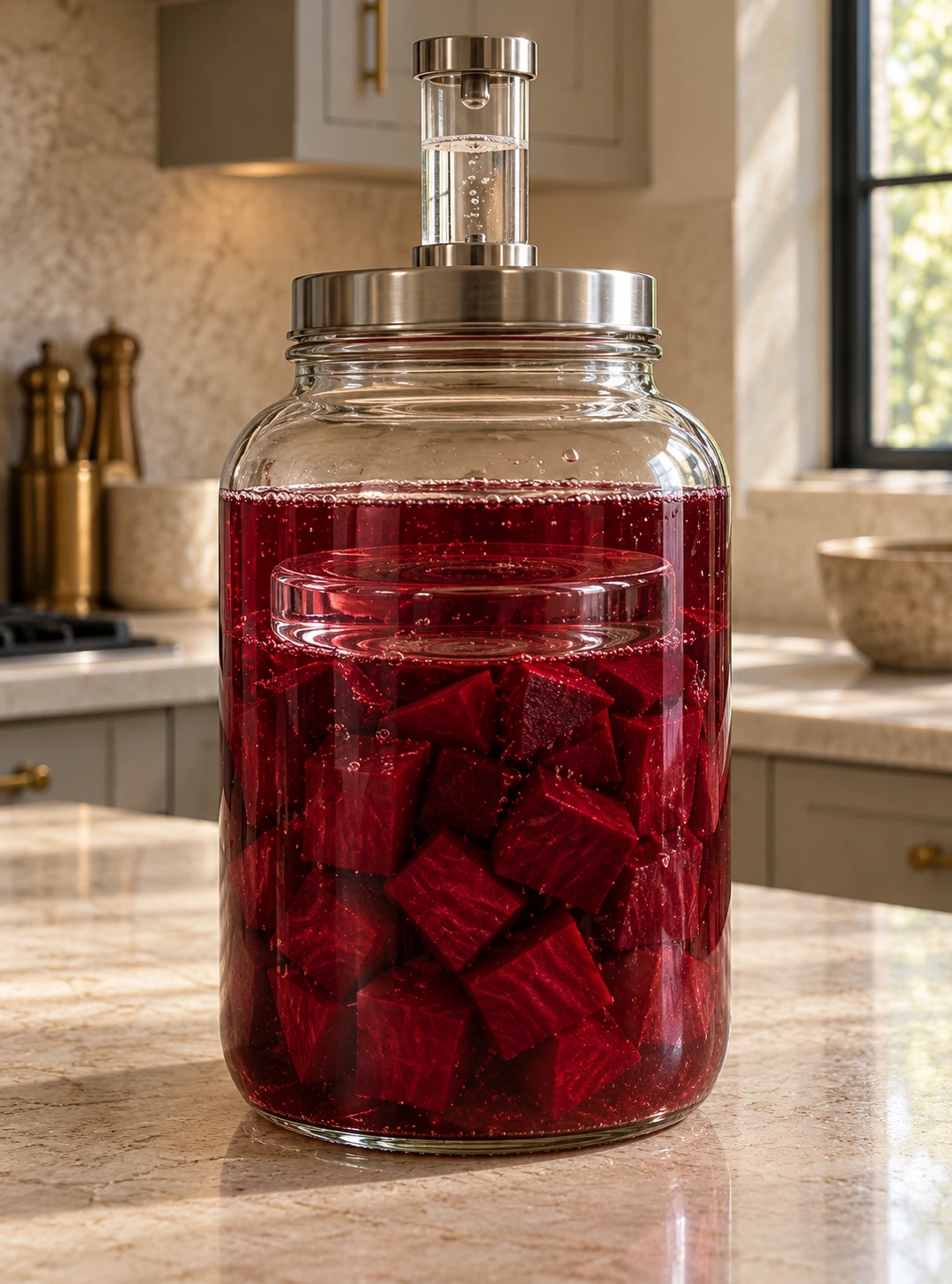
Fit an airlock or another self-venting, pressure-aware closure. Keep the jar at room temperature out of direct sunlight. Do not use a rigid sealed lid that depends on routine burping.
Ferment Until Pleasantly Tart
The source window is two to eight days. A warm room may move quickly; a cooler room may need longer. Begin observing within that range instead of treating day two or day eight as an automatic answer.
The liquid should deepen to ruby and develop a clean sour aroma. Taste with a clean utensil. The kvass is ready when it is pleasantly tart. A taut lid, stopped gas, or a fixed daily-opening schedule does not control the endpoint.
Keep the solids submerged while you wait. If a beet corner escapes, use a clean supported utensil to adjust the weight and restore the closure with as little unnecessary opening as possible.
Let Temperature Change Time, Not The Formula
Set the vessel where the temperature is reasonably steady, away from a sunny window, hot range, cold draft, or appliance that cycles sharply. A warmer room tends to move faster through the two-to-eight-day window; a cooler room tends to move more slowly. Do not compensate by changing the beet, starter, water, or raspberry measurements.
Small bubbles and a deepening color can help you notice activity, but neither replaces taste. The jar can be active before the flavor is balanced, and visible bubbling can slow while the liquid continues to sour. A clean sample that tastes pleasantly tart remains the refrigerator cue.
Fuzzy growth, putrid odor, or a clearly unrelated surface color is not the tart endpoint. Do not stir questionable growth into the drink. The combination of full submersion, clean equipment, pressure-aware closure, steady conditions, and sensory observation is what makes the method repeatable.
Strain Before Adding Raspberries
Remove the weight. Strain the kvass through a fine uncoated stainless strainer securely nested over a glass bowl, leaving the beet cubes behind. Transfer the strained liquid to a fresh clean glass jar.
Add exactly one-half cup fresh or frozen raspberries directly to the strained kvass. Do not add raw honey, maple syrup, stevia, monk fruit, or another sweetener. The measured berries are the only fruit addition in this formula.
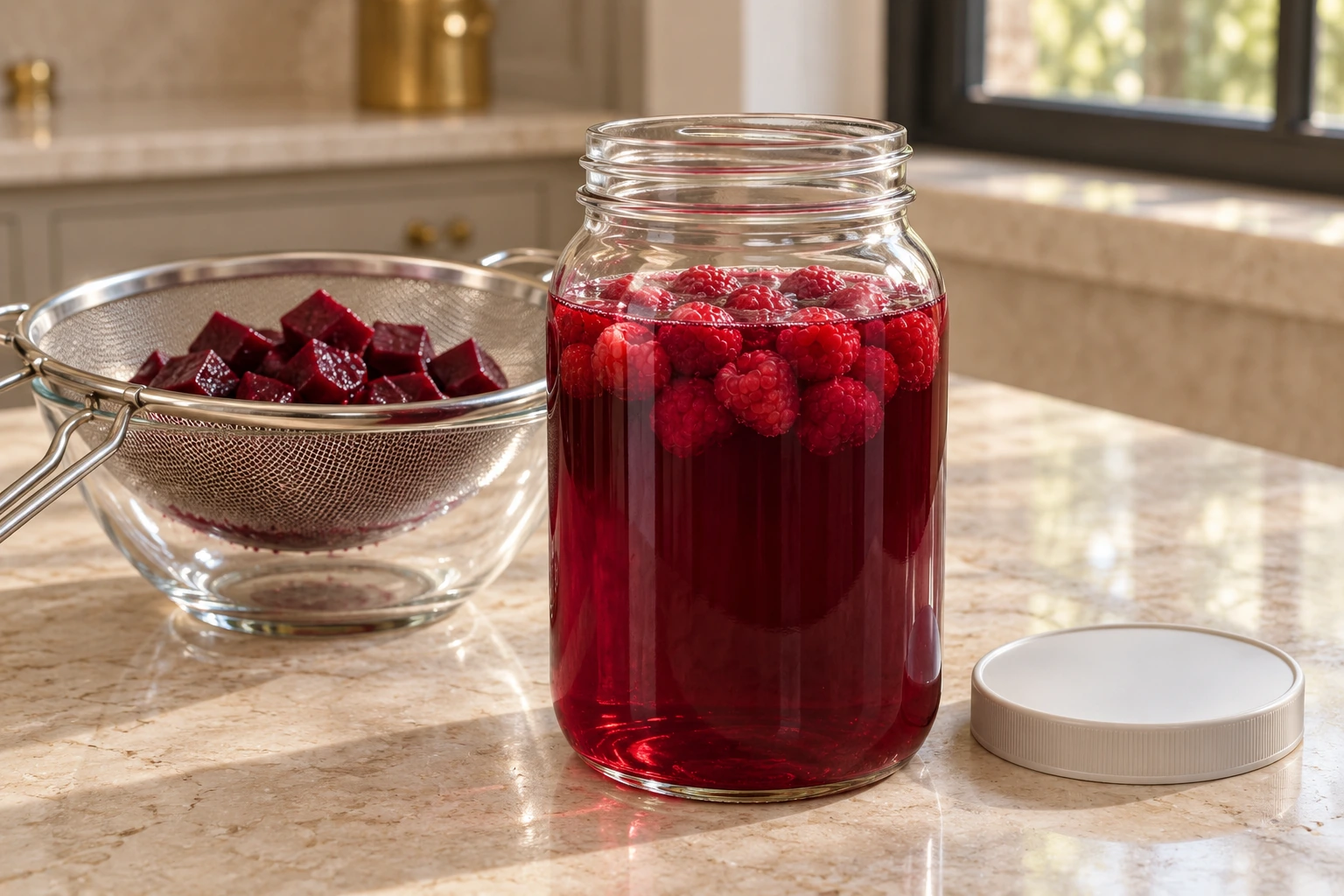
Cover the jar and refrigerate. Use within one week. Strain out the raspberries when serving if you prefer a clear glass, but do not add fresh garnish that changes the measured fruit amount.
Why The Raspberries Go In Last
The primary fermentation measurements belong to beet, water, and one tablespoon starter. Adding the raspberries after straining leaves that measured fermentation intact and gives the finished liquid its berry character in the refrigerator.
This order also creates a useful visual check. The primary jar contains beet cubes below a weight and no berries. The finished jar contains whole raspberries and no beet cubes. If both solids are present together, the recipe stages have been merged and the batch no longer matches this formula.
Raspberry Beet Kvass for Full GAPS
Ingredients
Equipment
Method
- Place the 1-inch beet cubes in a clean glass fermentation vessel sized to the batch.
- Add exactly one chosen starter: homemade whey OR additive-free sauerkraut brine.
- Add the filtered water and set a clean fermentation weight over the beet so every solid remains below the liquid.
- Fit an airlock or another self-venting, pressure-aware closure. Ferment at room temperature out of direct sunlight.
- Ferment for 2 to 8 days depending on room temperature. Refrigeration readiness is a deep ruby color and pleasantly tart flavor, not a taut lid or fixed gas schedule.
- Remove the weight and strain the kvass into a fresh glass jar, leaving the beet behind. Add the measured raspberries directly to the strained kvass.
- Cover, refrigerate, and use within 1 week. Strain out the raspberries when serving if desired.
Notes
- Full GAPS: Use after beet kvass, the chosen starter, and raspberries are introduced and tolerated.
- Intro Stage 1: Use only strained fermented liquid, beginning with 1 to 2 teaspoons; exclude raspberry and beet solids.
- Fermentation: 2 to 8 days until pleasantly tart; fermentation is not cook time.
- No sweetener: Do not add honey, maple syrup, stevia, monk fruit, or another sweetener.
- Storage: Refrigerate and use within 1 week.
- Scaling: Numeric ingredients scale. Use vessels with enough room for scaled solids, liquid, weight, and headspace.
Tried this recipe?
Let us know how it was!The Physical Cues That Matter
The beet cubes are large. Roughly one-inch pieces remain easy to submerge and strain.
No raspberries are in the primary ferment. Only beet, water, and one measured starter belong under the weight.
Every beet stays below the liquid. The clean weight keeps the solids submerged throughout the ferment.
The flavor becomes pleasantly tart. Use the two-to-eight-day window for observation and taste for the endpoint.
The berries enter after straining. The finished jar contains ruby liquid and raspberries, with no beet chunks.
Full GAPS And Intro Stage 1
The complete raspberry beet kvass belongs on Full GAPS once beet kvass, the selected starter, and raspberries are introduced and tolerated. The fruit is not permission to add an unsupported sweetener.
On Introduction Diet Stage 1, use only the strained fermented liquid and introduce it gradually at 1 to 2 teaspoons. Keep the raspberries and beet solids out of that Stage 1 portion. The introduction amount is not the four-serving Full GAPS yield.
This is food preparation, not a claim that kvass detoxifies the liver, balances electrolytes, treats inflammation, cures digestive symptoms, or provides a medical result.
Serve And Store Raspberry Kvass
Serve it chilled in a small clear glass. The berry aroma is easiest to notice when the drink is cold but not frozen. Stirring in juice, honey, herbs, or citrus would create a different beverage.
Keep the finished jar covered and refrigerated and use it within one week. Use clean utensils. If you strain berries from an individual serving, return the covered jar promptly to the refrigerator so the temperature stays steady.
Label the jar with the refrigerator date so the one-week window is visible to everyone using it. Pour from the jar or use a clean ladle rather than drinking directly from the container. Those simple habits preserve the finished batch without adding another ingredient or preservation claim.
Frequently Asked Questions
Do The Raspberries Ferment With The Beet?
No. Ferment beet, water, and starter first. Strain out the beet, then add one-half cup raspberries to the finished liquid.
Can I Use Sauerkraut Brine Instead Of Whey?
Yes. Use one tablespoon of either homemade whey or additive-free sauerkraut brine. Choose one starter.
Is This Recipe Dairy-Free?
It is dairy-free when you choose sauerkraut brine instead of whey.
How Long Does It Ferment?
Use the two-to-eight-day source window and refrigerate when the liquid tastes pleasantly tart.
Can I Add Honey?
No. This formula contains no sweetener. Its fruit addition is exactly one-half cup raspberries.
Can I Reuse The Beets?
This card covers one measured first batch. A refill changes the liquid and starter relationship and belongs in a separate formula.
How Long Does It Keep?
Keep it refrigerated and use within one week.
Recommended Equipment
Use a clean glass fermentation vessel sized for the measured batch, a glass, ceramic, or uncoated stainless weight, an airlock or other pressure-aware closure, a stainless knife and stable board, a fine stainless strainer nested over a glass bowl, a clean one-quart refrigerator jar, and a small serving glass.
Build A Reliable Fermentation Routine
The upcoming Crock & Jar: Ferments for GAPS Families course brings submersion, starter choices, pressure-aware closures, temperature, surface changes, sensory endpoints, and refrigerator transitions into one repeatable system. Check the WFLI shop for the course and current fermentation guides.

Leave a comment