

Fermented cranberry sauce keeps the sharp, bright flavor that makes cranberries useful beside a rich meal, but it tastes nothing like a cooked can-shaped sauce. Fresh berries are minced with figs, raisins, orange, lemon, raw honey and warm spices, then packed under their own ruby liquid with a measured homemade starter. After three to five days, the mixture is pleasantly tart, chunky and spoonable.
This is the cranberry sauce to make when you want the holiday condiment ready before the rest of the cooking starts. There is no stovetop simmer and no last-minute thickening. The active work is about fifteen minutes, and the closed jar handles the rest while you move on to the meal.
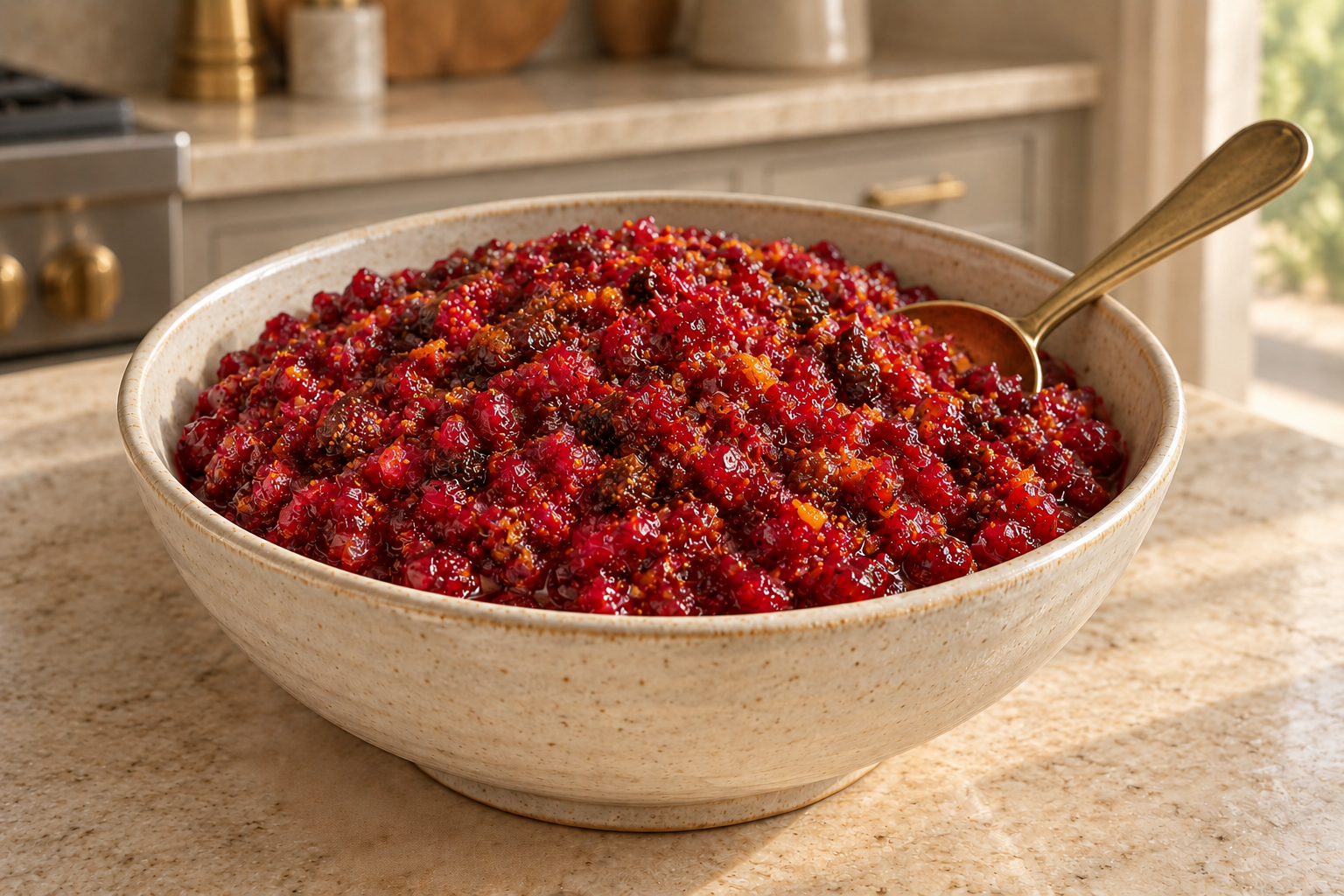
A Ferment With a Job to Do
Ferments in our house began with sauerkraut, kimchi and fermented kimchi hot sauce. I am still experimenting with where another jar earns its place, so I like a ferment that solves a real meal problem instead of becoming one more thing to manage. Cranberry sauce does exactly that: one cold, tart spoonful cuts through roast meat, stuffing and gravy without adding another hot pan to the kitchen.
Making a GAPS Thanksgiving was genuinely fun for our family. It was not a copy of the traditional table we grew up with, but nobody felt as if the holiday had been stripped down. Recipes like this are why. The familiar role stays intact, while every ingredient and method fits the way we are cooking now.
Choose One Completed Starter
The formula uses exactly one-quarter cup of starter. Choose either brine from a completed homemade vegetable ferment or homemade cultured whey drained from GAPS yogurt or kefir fermented for at least twenty-four hours. The amount does not change between the two choices, and there is no reason to combine them.
For a dairy-free batch, use vegetable-ferment brine. The brine must come from a completed homemade ferment made without sugar, vinegar or additives. The brine from fermented cauliflower pickles is one compatible example when that batch is finished and tastes properly tart.
If cultured dairy is established in your Full GAPS routine, homemade yogurt or kefir whey works in the same measured amount. Drain the whey from a properly fermented batch; do not substitute the cloudy liquid from an ordinary commercial yogurt. The starter provides the culture for this closed fruit ferment, while raw honey keeps the batch Full GAPS.
Pulse the Cranberries, Don’t Purée Them
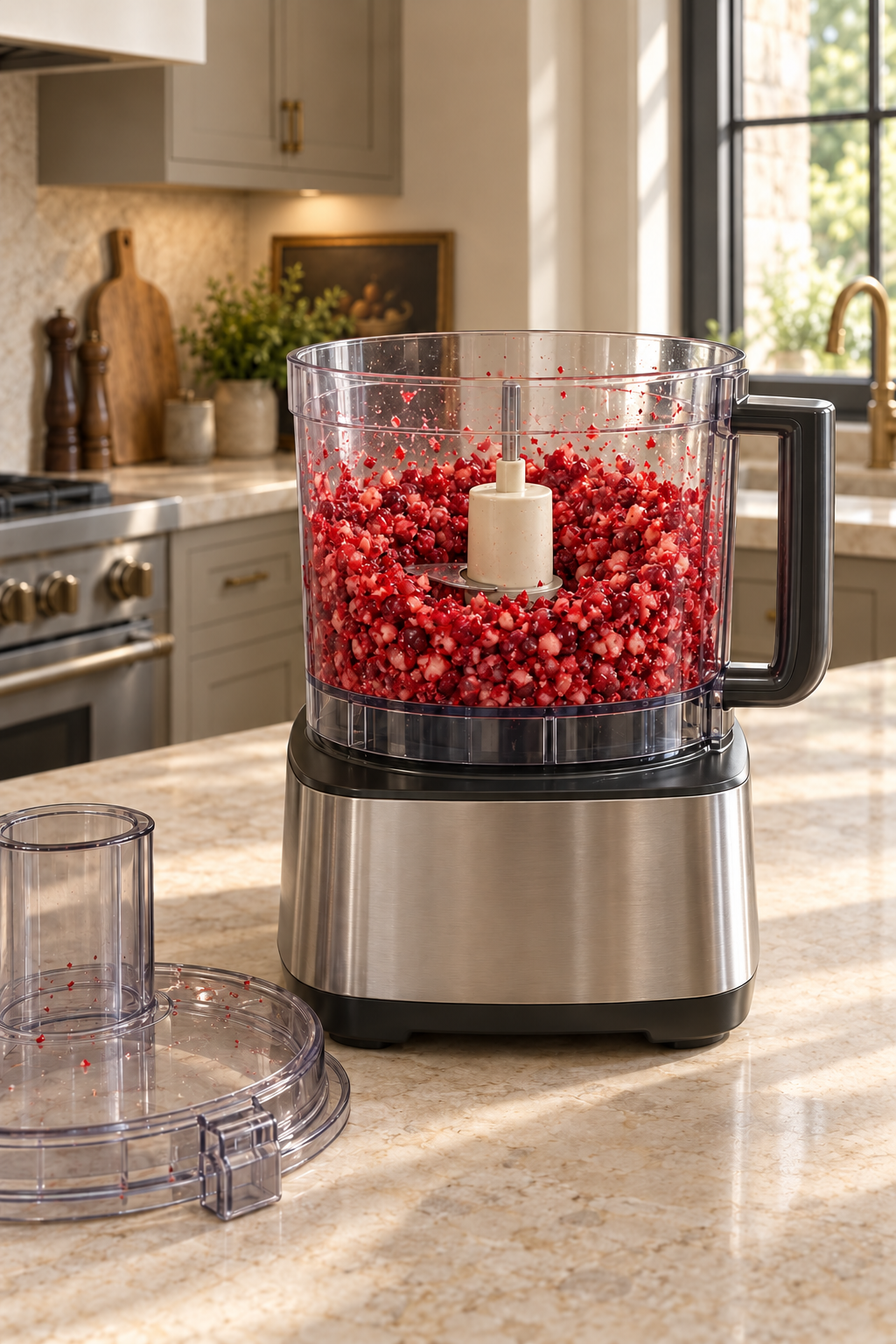
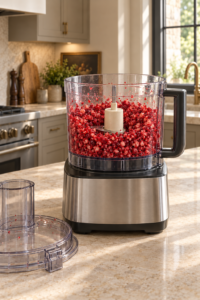
Put all five cups of cranberries into the food processor first and pulse in short bursts. Stop when no whole berries remain and the pieces are small and even. The work bowl should hold loose ruby bits, not a liquid red paste. If the fruit begins smearing up the sides, stop processing and transfer it to the mixing bowl.
Texture matters here. Minced fruit packs closely enough to release liquid around the weight, but it still makes a relish you can spoon beside dinner. A purée traps fewer distinct pieces, photographs like jam and gives the finished sauce a completely different mouthfeel.
Build the Fig and Citrus Layer
Process the water, figs, raisins, raw honey, salt, cinnamon, orange juice and zest, lemon juice and zest, and cloves separately. Pulse only until the dried fruit is chopped small. The mixture will look wetter and darker than the cranberries, with tiny fig seeds and raisin pieces still visible.
Scrape that mixture over the minced cranberries and stir until the color and moisture are even. Add the chosen one-quarter cup starter last. The combined sauce should look thick and glossy, with liquid collecting when you press it firmly with the spoon. Dry pockets at the bottom of the bowl mean it needs another thorough turn before packing.
The orange and lemon belong inside the formula, not as decorative strips on top. Finely grate the measured zest so it disappears through the relish and releases its aroma without leaving tough curls. Ground cinnamon keeps this branch easy to distribute evenly; use the measured half-teaspoon rather than adding spice by eye.
Keep Every Piece Below the Brine
Choose one large wide-mouth fermentation jar or divide the batch between smaller jars. Pack firmly enough to remove large air pockets, then stop with about two inches of headspace below the lid. A glass fermentation weight should sit flat over the fruit. Press until a thin layer of reddish liquid rises above the weight and no cranberry, fig or raisin pieces float at the surface.
Wipe the rim clean and close the jar with an airlock or another self-venting, pressure-aware fermentation lid. That closure lets gas escape while the fruit stays protected inside a closed vessel. An airlocked jar does not need routine opening or burping.
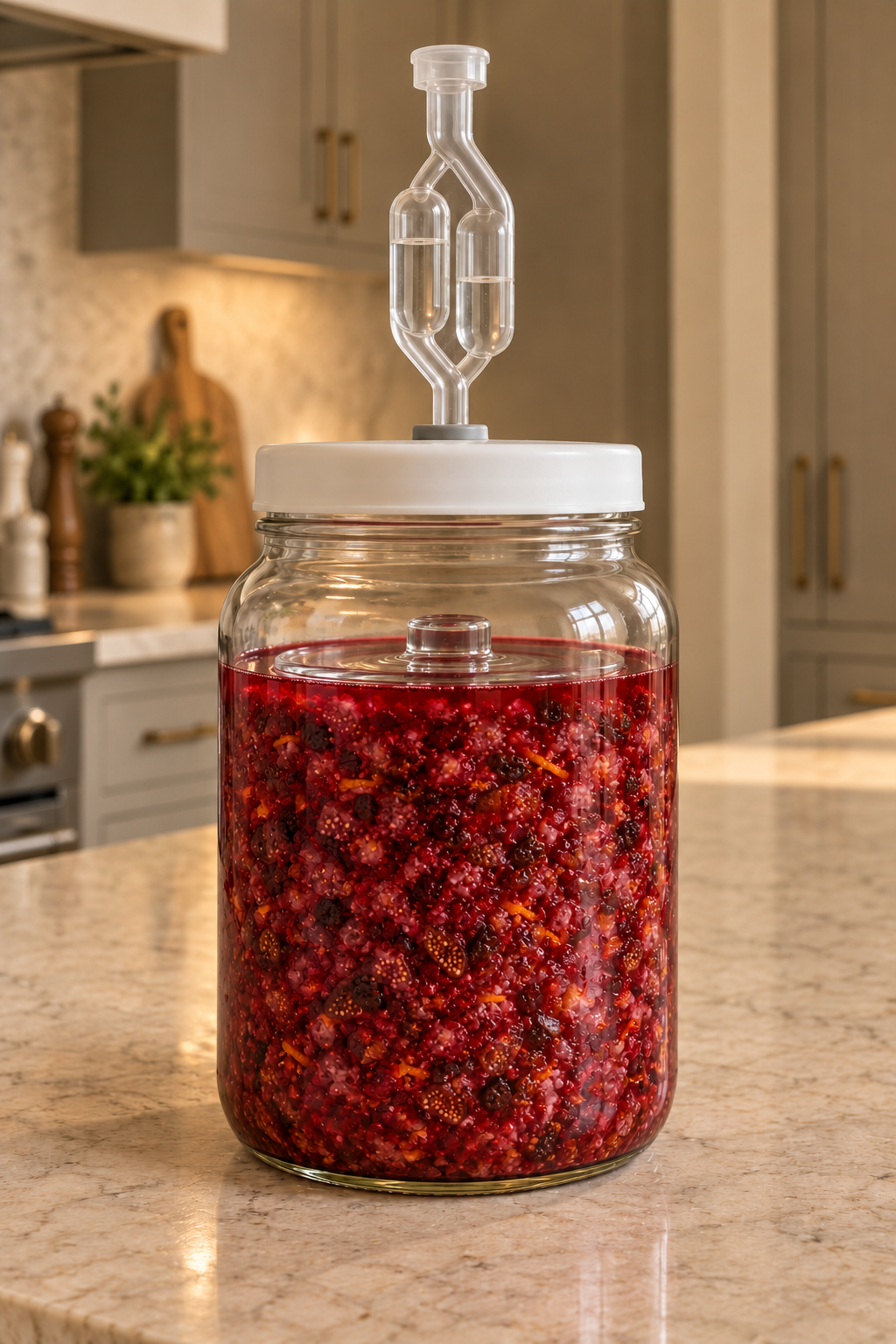
If the full batch will not fit while preserving the headspace and weight position, use a second jar. Forcing five cups into a vessel that is too small removes the gas space the method requires. At 2x, use separate correctly sized jars rather than one overfilled container.
What to Watch During Fermentation
Set the closed jar at room temperature out of direct sunlight for three to five days. Through the glass, the mixture should remain evenly moist and deep ruby. Small bubbles may appear around the fruit or weight. The fruit should stay below the liquid for the entire ferment, and the airlock should remain seated.
Begin checking within the three-to-five-day window, but use the sensory endpoint rather than assuming every kitchen moves at the same speed. When the batch has reached that endpoint, open it once. The aroma should be clean, fruity and distinctly tangy. The flavor should be pleasantly tart, with the raw-honey sweetness and warm spice still present. Replace the fermentation closure with a plain storage lid and refrigerate.
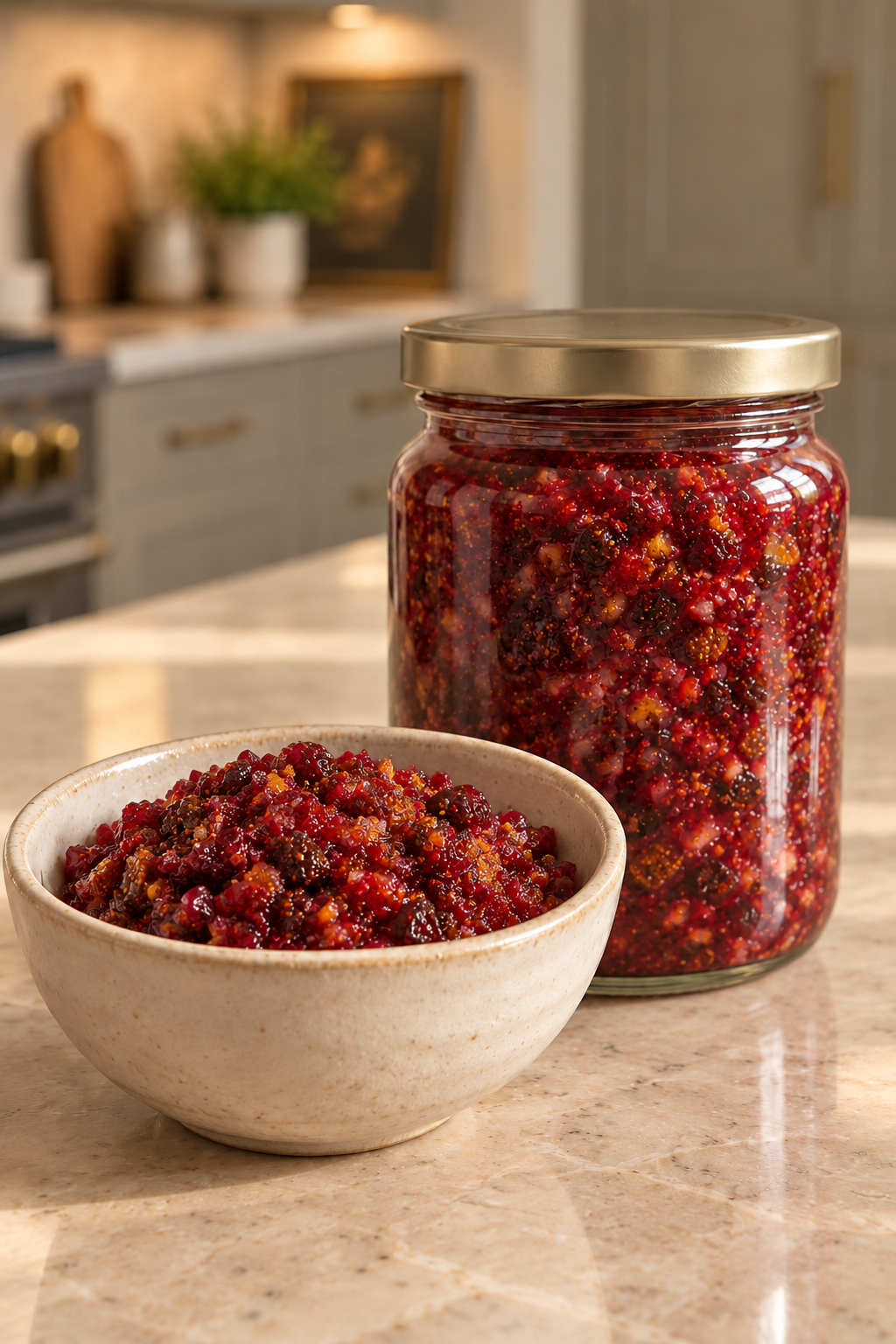
Do not expect a smooth commercial sauce. The finished relish stays textured. Cranberry pieces soften, the dried fruit becomes tender, and the liquid clings to the spoon, but the figs, raisins and minced berries remain recognizable.
How to Serve Fermented Cranberry Sauce
Serve it cold in a small bowl and let each person add a spoonful. It is especially useful with richer Full GAPS dishes, including sausage stuffing with cauliflower and pecans or butternut squash casserole with pecan crumb. It also works beside plain roast poultry, pork or beef without turning the plate into a sweet dessert.
For a non-fermented cranberry snack with a completely different method, use the cranberry gummies with raw honey and gelatin. The gummy recipe cooks and blends the fruit, then sets it with gelatin. This sauce stays raw, minced and cultured, so the two formulas remain separate.
Where This Fits on GAPS
This is a Full GAPS condiment for the point when the fruits, raw honey and fermented foods in the formula are already established and tolerated. It also fits a More-Plant GAPS approach. It is not an Introduction Diet recipe, and fruit makes it incompatible with No-Plant GAPS.
Fermented foods are introduced gradually on GAPS. Use the same amount that already works in your household rather than treating a holiday serving bowl as a reason to jump ahead. The vegetable-brine choice keeps the sauce dairy-free; the cultured-whey choice is for households already using properly fermented dairy.
Storage
Keep the finished sauce covered in the refrigerator for up to one month. Use a clean spoon each time and return the jar to the refrigerator after serving. Cold storage slows the ferment but does not change the need to keep the container closed and the sauce clean.
This recipe is written for refrigerated storage, not a room-temperature pantry. Freezing is not part of the method, so make the five-cup batch when you can use it during the month. If that is more than your household needs, share the finished sauce or serve it across several meals.
Recommended Equipment
You need a food processor, a large glass or ceramic mixing bowl, a wooden or stainless-steel spoon, a microplane or fine zester, a citrus juicer, one or more wide-mouth glass fermentation jars, a glass fermentation weight and an airlock or self-venting pressure-aware lid. Use a jar size that holds the sauce, weight, liquid coverage and two inches of headspace without crowding.
Frequently Asked Questions
Can I Use Frozen Cranberries?
This recipe is measured with fresh cranberries, so use five cups of fresh berries for this batch.
Can I Use Maple Syrup?
No. Use one-half cup raw honey. It keeps this version Full GAPS and balances the natural tartness of five cups of fresh cranberries.
Do I Need Both Brine and Whey?
No. Choose one completed starter and use exactly one-quarter cup. Vegetable-ferment brine makes the dairy-free branch; cultured whey is an equal-volume alternative when properly fermented dairy is established.
Should I Open the Jar Every Day?
No. Fit an airlock or self-venting pressure-aware closure and keep the jar closed during the three-to-five-day ferment. Check the position of the fruit and weight through the glass.
Why Is My Sauce Smooth?
The fruit was processed too long. Pulse in short bursts and stop while the berries and dried fruit remain visibly minced. This recipe should finish as a textured relish, not a purée.
How Do I Know It Is Ready?
Within the three-to-five-day window, look for slight bubbling and an evenly moistened mixture. At the endpoint, the opened jar should smell clean and tangy, and the sauce should taste pleasantly tart while retaining its cranberry, citrus and spice flavor.
Fermented Cranberry Sauce Recipe
Fermented Cranberry Sauce for Full GAPS
Ingredients
Equipment
Method
- Put the cranberries in a food processor. Pulse repeatedly until they are evenly diced and minced, with no whole berries left and no puree forming. Transfer them to a large glass or ceramic bowl.
- Add the filtered water, figs, raisins, raw honey, mineral salt, cinnamon, orange juice and zest, lemon juice and zest, and cloves to the processor. Pulse until the dried fruit is chopped small and the mixture is thick but still textured, not smooth.
- Scrape the fig-citrus mixture into the bowl with the minced cranberries. Stir in exactly 1/4 cup of either completed homemade vegetable-ferment brine or homemade cultured whey until the color and moisture are even throughout.
- Pack the sauce firmly into one or more clean wide-mouth fermentation jars. Leave about 2 inches of headspace. Press out air pockets, place a glass fermentation weight over the fruit, and make sure a thin layer of liquid sits above the weight with every solid submerged. Wipe the rim clean and fit an airlock or self-venting pressure-aware closure.
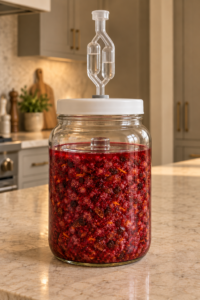
- Keep the closed jar at room temperature out of direct sunlight for 3 to 5 days. Do not routinely open or burp an airlocked jar. Look through the glass for slight bubbling and an evenly moistened ruby mixture; use the fermentation window rather than a fixed clock alone.
- At the chosen endpoint within the 3-to-5-day window, remove the airlock once, check for a clean bright-tart fruit aroma and pleasantly tart flavor, replace it with a plain storage lid, and refrigerate. Keep chilled and use within 1 month.
Notes
Tried this recipe?
Let us know how it was!Build a Ferment Routine You Can Keep
The upcoming Crock & Jar: Ferments for GAPS Families is designed to make starter choices, jar setup and weekly ferment timing easier to manage in a full household. Find current guides and catalog updates in the WFLI shop.

Leave a comment