

These fermented cauliflower pickles turn two heads of cauliflower into a crisp, tart Full GAPS condiment with turmeric, black pepper, and an optional small amount of pure curry powder. The florets stay under a measured salt brine for seven to fourteen days, then move to the refrigerator when their flavor is distinctly sour and pickled.
This is a true fermented pickle rather than a quick vinegar pickle. The brine, submersion, headspace, and venting path all matter. Once those pieces are set up correctly, the jar mostly needs time and a short daily look through the glass.
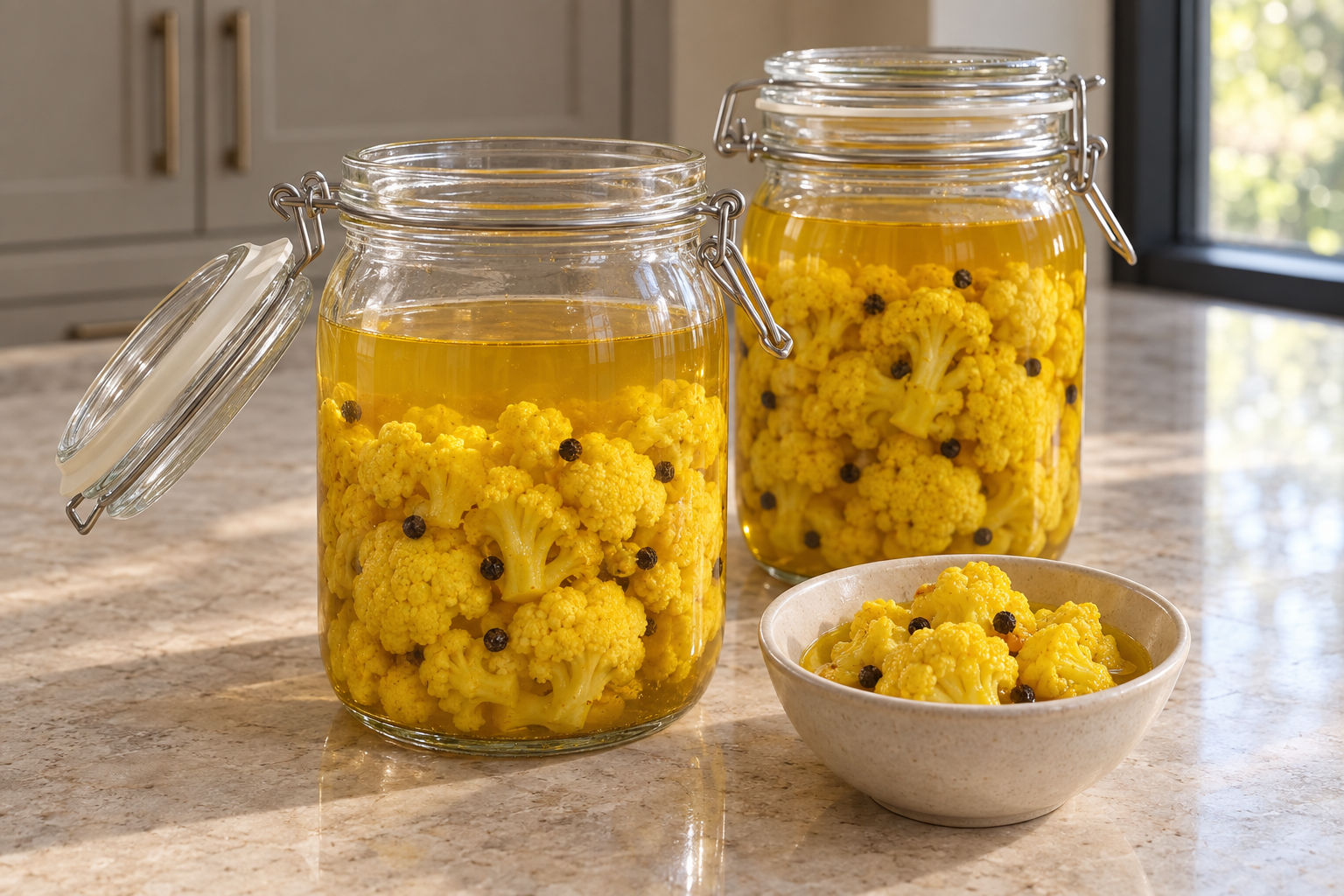
A Ferment That Does Not Need Daily Kitchen Work
I cook in the morning before work, with homeschooling happening in the same part of the day. A ferment fits that schedule differently from a soup or casserole. The hands-on work happens at the beginning, then the jar stays on the counter while the brine does its work.
The useful part is having clear checkpoints. You need the correct salt weight, clean glass jars, enough brine to cover every floret, a weight that stays in place, and a lid that can release pressure. After that, you are looking for submersion, bubbles, and eventually a tart flavor. You are not opening the jar every few hours or guessing from a decorative calendar label.
Label the jar with the recipe name and the date you packed it. In a busy kitchen, that one small step keeps the seven-day tasting point from becoming another thing you have to remember.
What Goes Into The Jar
Use two heads of fresh cauliflower and cut them into small, fairly even florets. Very large pieces take longer to sour through the center, while loose crumbs can float around the weight. Aim for pieces that are easy to pack but still large enough to serve as a pickle.
The brine begins with four cups of filtered, unchlorinated water. Warm water helps the salt dissolve, but it should not be hot enough to cook the cauliflower. If your tap water is chlorinated, use filtered water rather than hoping the chlorine will disappear during the ferment.
Weigh 47 to 50 grams of fine natural mineral salt. That makes a five percent brine with four cups of water. The rough spoon measure is three level tablespoons, but the scale is the reliable measurement because fine and coarse salts fill a spoon differently.
One teaspoon ground turmeric gives the brine its deep yellow color. Add one-half teaspoon whole black peppercorns. One-half teaspoon pure curry powder is optional. Use it only when every listed ingredient is a plain GAPS-compatible herb or spice, with no starch, flour, sugar, anti-caking agent, preservative, or undisclosed flavor blend.
Why This Recipe Uses 47 To 50 Grams Of Salt
This recipe uses a five percent vegetable brine, calculated from the weight of the water. Four cups of water weighs about 946 grams, and five percent is about 47 grams of salt. A four-tablespoon scoop can overshoot that target because different salts fill a spoon differently.
That is why the card gives a 47-to-50-gram range and treats the tablespoon amount as an approximation. A gram measurement travels cleanly from one brand and grind of salt to another. A volume measurement does not.
Do not reduce the salt by eye because the brine tastes strong before the cauliflower has been added. The vegetables absorb salt and release their own water, which changes the concentration in the jar.
Mix The Turmeric Brine Without Dry Clumps
Put the turmeric and optional curry powder in a large glass measuring vessel with a pour spout. Add about two tablespoons of the warm filtered water and whisk until the spices form a smooth, runny paste. Scrape through the bottom and corners so no dry yellow pockets remain.
Add the remaining filtered water, then weigh in the salt. Stir until you cannot see or feel salt grit at the bottom. The liquid should be evenly yellow with fine spice suspended through it. Set the brine beside the prepared jars while you pack the cauliflower.
Pack The Cauliflower And Peppercorns
Pack the florets firmly into one or more clean wide-mouth glass jars. Add the peppercorns among the florets instead of leaving every peppercorn on the surface. Fill each jar only to the shoulder so there is room for a weight, brine, and about one inch of headspace.
Firm packing limits large empty spaces, but do not crush the cauliflower into crumbs. The florets should still look intact and feel crisp. If one jar fills before the cauliflower is used, move to another clean jar rather than forcing the lid onto an overfilled ferment.
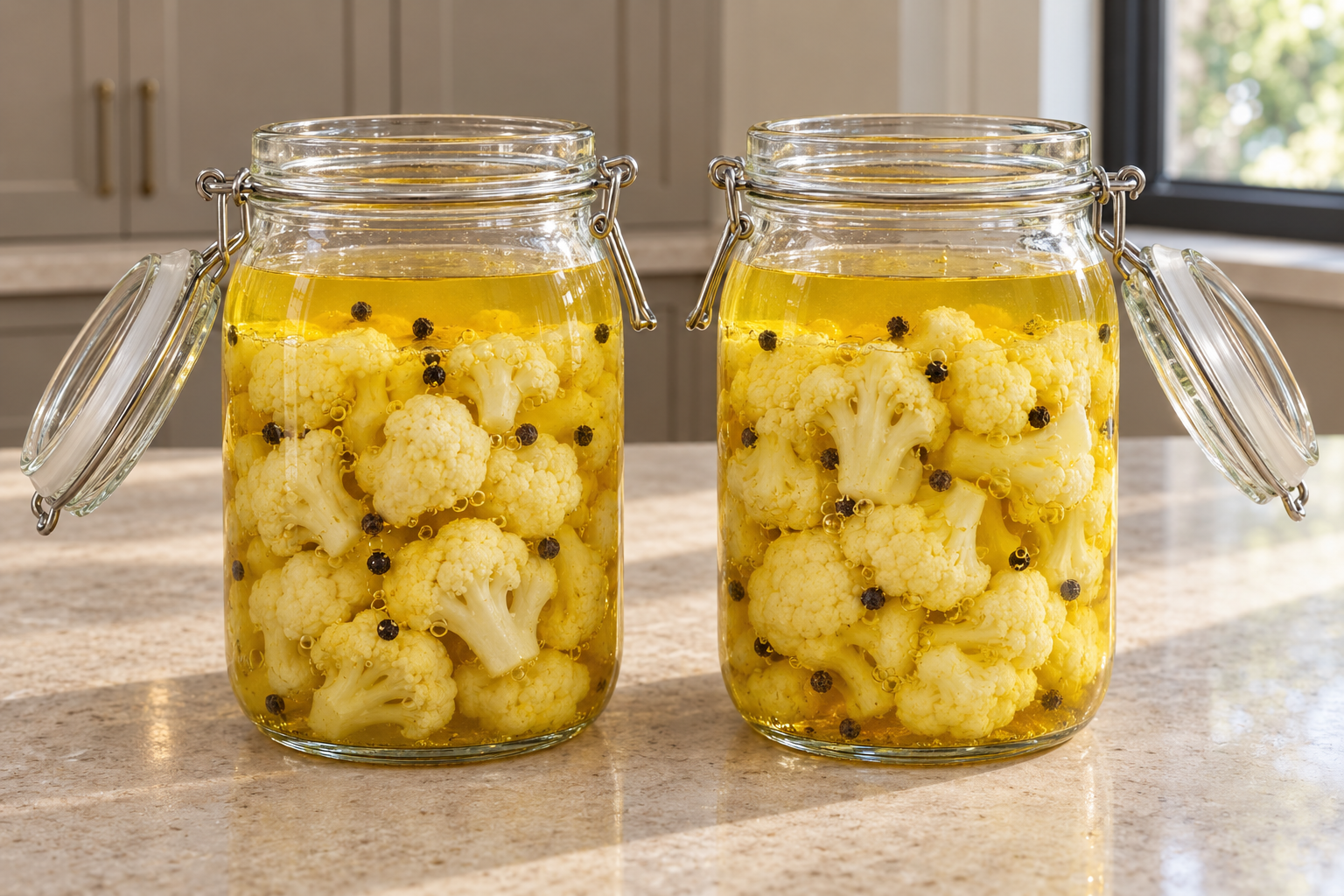
Pour The Brine And Release Trapped Air
Pour the turmeric brine over the packed cauliflower. Press gently with a clean utensil so trapped air bubbles rise through the jar. Add enough brine for the liquid to sit one-half to one inch above the florets while still leaving about one inch of headspace at the top.
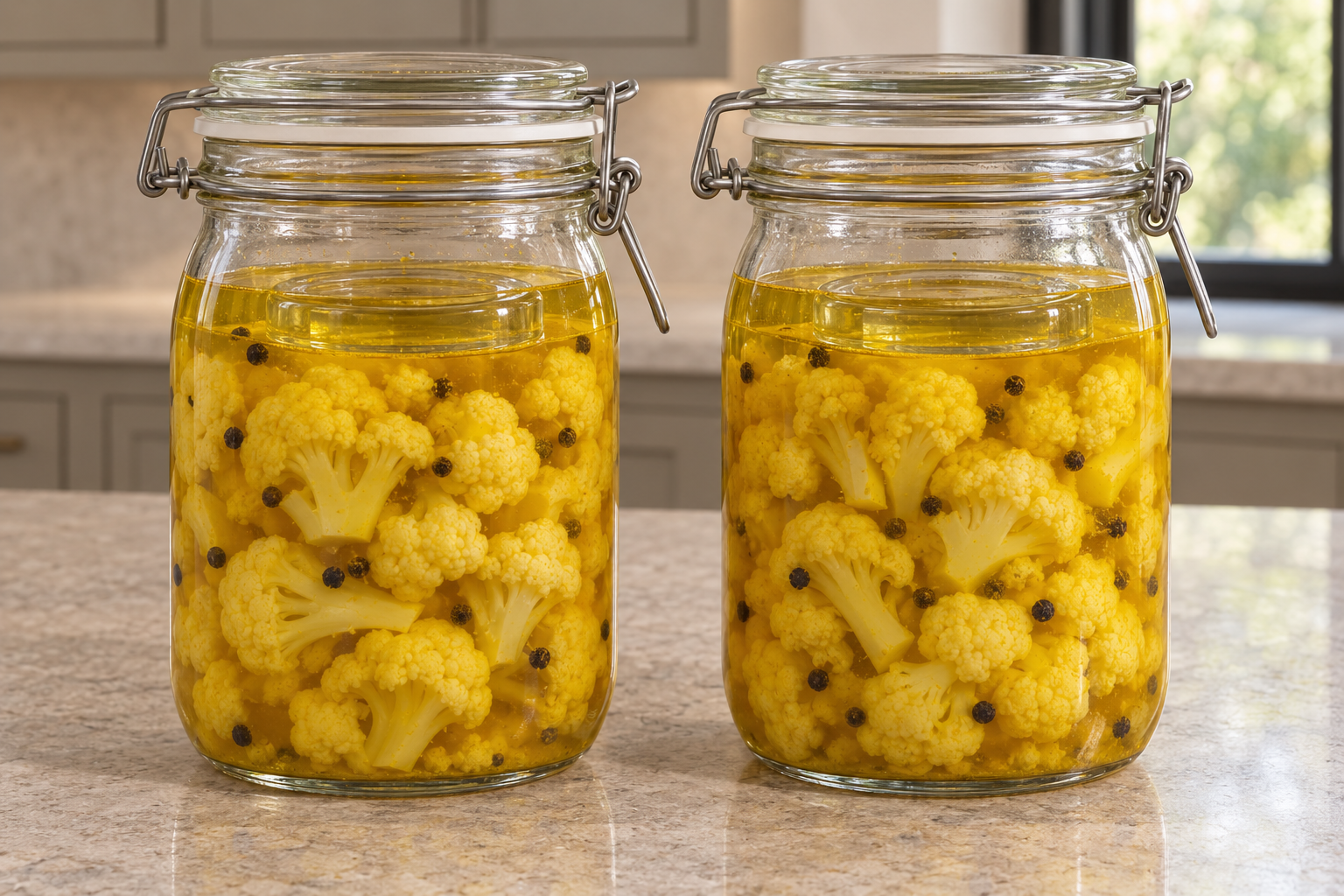
Place a clean glass or unchipped ceramic fermentation weight over the cauliflower. The weight needs to hold every floret below the brine, including small pieces that want to float around the edge. Wipe the rim before fitting the lid.
Give The Ferment A Safe Venting Path
Use a self-venting airlock or a bail-top jar with a gasket that can release outward pressure. Active vegetable fermentation produces carbon dioxide. The gas needs a path out while the setup limits a steady flow of fresh air into the jar.
If you use an ordinary screw lid without an airlock, fit it loosely enough to vent. Do not rigidly seal an active vegetable ferment in a jar that has no way to release pressure.
Keep the jar at a steady room temperature and away from direct sunlight. Warmer rooms move fermentation faster and cooler rooms slow it down, so the calendar is a starting point rather than the only test.
Follow The Florets, Brine, And Flavor
Look through the glass each day. The cauliflower should stay below the brine, and the weight should remain seated. Small bubbles may collect around the florets or travel upward. The bright raw-white cauliflower gradually takes on the turmeric color, and the brine may become less clear as fermentation develops.
If a floret escapes above the liquid, use a clean utensil to move it below the weight. Remove and discard a piece that has dried out or discolored above the brine, then restore full coverage. The submerged cauliflower is the part you are protecting.
Begin tasting with a clean utensil at seven days. The fermentation window is seven to fourteen days. Move the jars to the refrigerator when the cauliflower tastes distinctly tart and pickled. The florets should still have a firm bite rather than collapsing into soft pieces.
A fixed day cannot tell you exactly how a jar in your kitchen will taste. Temperature, piece size, packing, and the vegetables themselves all affect the pace. The tart flavor is the useful finish cue.
Where These Pickles Fit On GAPS
This is a Full GAPS recipe made from cauliflower, filtered water, natural mineral salt, turmeric, black pepper, and optional pure curry powder. It contains no vinegar, whey, starter packet, sugar, grain, starch, dairy, egg, or nut.
Fermented vegetables appear earlier in the Introduction Diet, but this spice-forward pickle should not be treated as an automatic early-stage adaptation. Use the foods and forms that belong to the person’s current stage. On Full GAPS, introduce a new fermented food gradually rather than beginning with a large bowl.
Serve fermented vegetables as a condiment with a meal. A small portion can sit beside cooked meat, eggs, or vegetables. If you serve it with a cup of warm GAPS chicken meat stock, keep the pickles on the plate rather than heating them in the stock.
Serving And Storage
Serve the cauliflower cold from the refrigerator or let a portion lose its deepest chill briefly before the meal. Use a clean fork or spoon and return the jar to the refrigerator promptly. Keep the remaining florets under the brine between servings.
There is no tested refrigerator-storage window for this formula, so use the condition of the pickles rather than an invented date. Label the jars, keep them cold after fermentation, watch the quality of the florets and brine, and make an amount your household can use while the pickles remain appealing.
Recommended Equipment
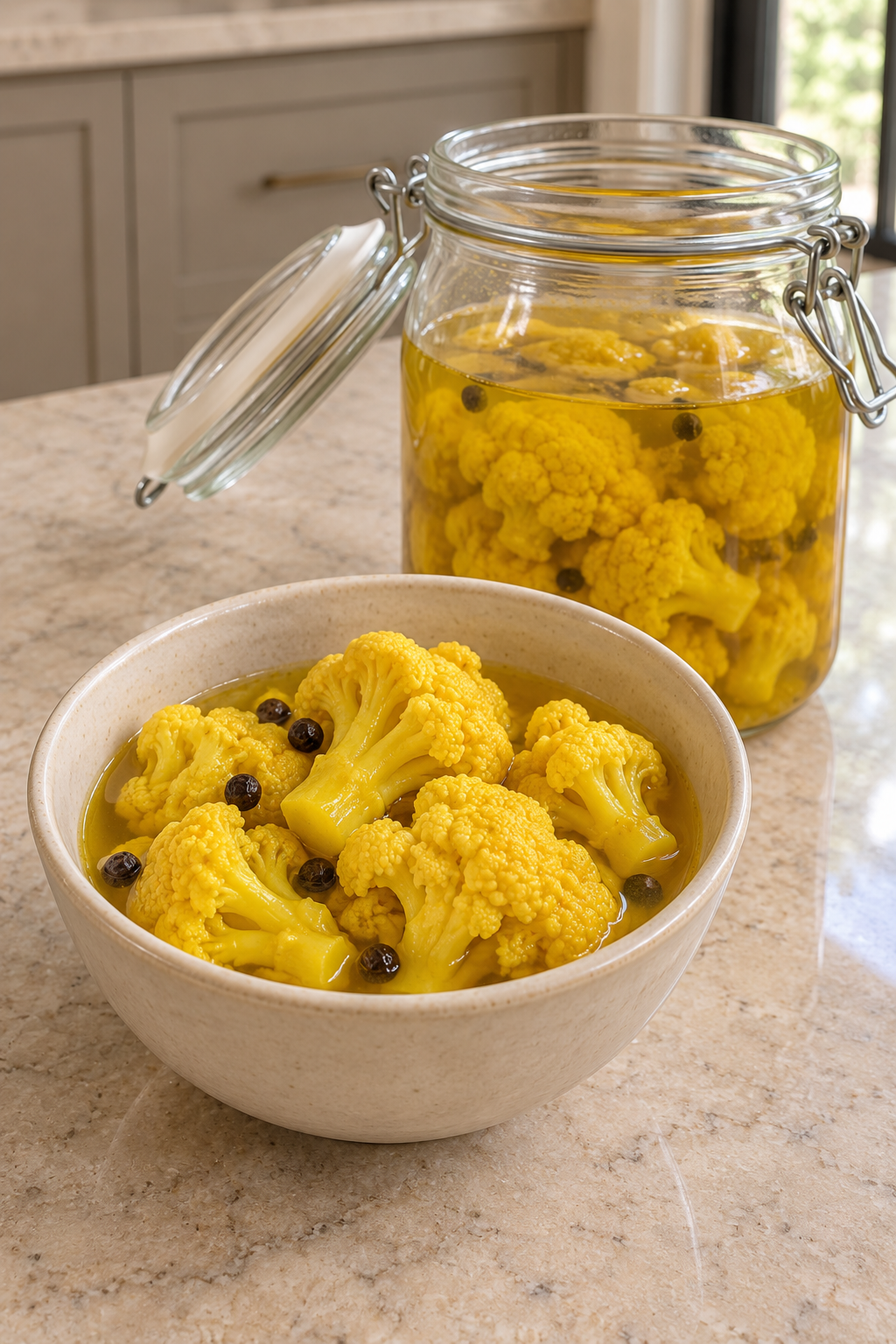
A digital kitchen scale makes the brine repeatable. You also need a large glass measuring vessel with a pour spout, a whisk, a cutting board, a knife, and one or more clean wide-mouth glass jars.
Use glass or unchipped ceramic weights that fit the jar opening. Choose an airlock or a bail-top gasket for automatic pressure release. Avoid a reactive metal fermentation vessel and do not use chipped ceramic where brine can reach the damaged surface.
Frequently Asked Questions
Do I Need Whey Or A Starter?
No. The recipe uses cauliflower, filtered water, salt, turmeric, peppercorns, and optional curry powder. It does not require homemade whey or a commercial starter packet.
Can I Measure The Salt With A Spoon?
The rough amount is three level tablespoons of fine salt, but use 47 to 50 grams when possible. Salt crystal size and density change how much fits in a tablespoon.
Why Must The Cauliflower Stay Under The Brine?
Submersion protects the florets from steady air exposure. Use a fitted weight, check through the glass, and correct any piece that moves above the brine.
How Do I Know The Pickles Are Finished?
Begin tasting at seven days. The fermentation window runs to fourteen days. Refrigerate the jars when the cauliflower tastes distinctly tart and pickled and still has a firm bite.
Can I Double The Recipe?
Yes. Use the card’s 2× control and divide the cauliflower and brine among enough jars to preserve the brine coverage and headspace. Weigh the salt rather than doubling a rounded spoonful by eye.
Fermented Cauliflower Pickles Recipe
Fermented Cauliflower Pickles With Turmeric for Full GAPS
Ingredients
Equipment
Method
- Whisk the turmeric and optional curry powder with about 2 tablespoons of the warm filtered water in a large glass measuring vessel until the spices form a smooth, runny paste with no dry clumps.
- Add the remaining filtered water. Weigh in 47 to 50 grams fine natural mineral salt and stir until no salt grit remains at the bottom. The brine should be evenly yellow.
- Pack the cauliflower florets firmly into one or more clean wide-mouth glass jars only to the shoulder. Add the peppercorns among the florets. Keep the pieces intact rather than crushing them into crumbs.
- Pour the turmeric brine over the cauliflower. Press gently with a clean utensil so trapped bubbles rise. Add enough brine for the liquid to sit 1/2 to 1 inch above the florets while leaving about 1 inch of headspace.
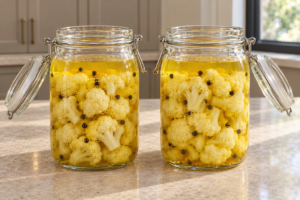
- Add clean glass or unchipped ceramic weights so every floret stays beneath the brine. Wipe the rims, then fit self-venting airlocks or bail-top lids whose gaskets can release outward pressure.
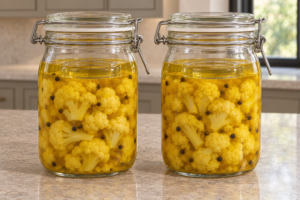
- Keep the jars at steady room temperature and out of direct sunlight. Look through the glass each day to confirm the florets remain submerged. Small bubbles and a less-clear brine can develop as fermentation proceeds.
- Begin tasting with a clean utensil at 7 days. The fermentation window is 7 to 14 days. Follow the flavor rather than the calendar alone: the cauliflower should taste distinctly tart and pickled while retaining a firm bite.
- Move the finished jars to the refrigerator. Serve the cauliflower as a condiment, use clean utensils, and keep the remaining florets beneath the brine between servings.
Notes
Tried this recipe?
Let us know how it was!Keep Your Ferment Notes In One Place
Our Ferment Tracker is designed for the details that matter after the jar is packed: start date, room conditions, brine changes, tasting notes, refrigeration date, and what your household actually used. Find current resources and catalog updates in the WFLI shop.

Leave a comment