

The GAPS book gives a particular explanation of bile stones: Dr. Natasha Campbell-McBride describes the liver coating material it cannot destroy with bile. She connects that account with gut flora, dietary fat, and the movement of bile. Understanding her model is the purpose of this guide.[1]
It also helps to keep stone composition, stone formation, and a stone causing pain separate. They are related questions, but they are not interchangeable.
The Stone Model in the GAPS Book
Campbell-McBride describes microbes, mineral crystals carrying toxins, and parasite fragments within stones. In her account, newly formed stones are small and soft, while stones remaining too long develop a harder, calcium-containing outer surface. She links a low-fat diet with reduced movement and accumulation.[1]
Those statements are the author’s explanation. They should not be turned into a finding that every person continuously forms these stones, that every reader has parasites, or that an uncomfortable meal confirms a backlog.
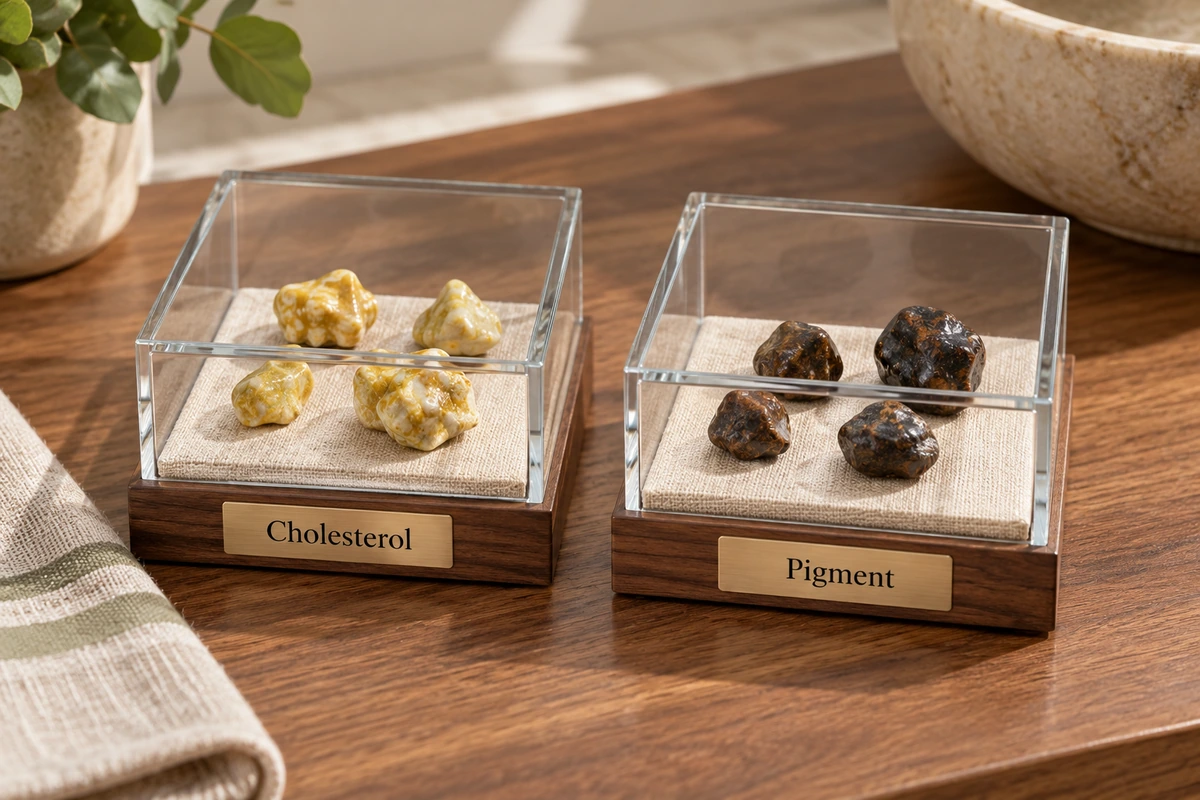
What Cholesterol and Pigment Stones Mean
Gallstones commonly contain cholesterol or bilirubin. Cholesterol stones are often yellow-green; pigment stones are darker. A person may have a mixture. The GAPS description of microbes and other material does not replace those recognized composition categories.[3]
| Question | What It Can Tell You |
|---|---|
| What is a stone made of? | Composition categories include cholesterol and pigment stones. |
| Where is it? | A stone may be in the gallbladder or a duct; location matters for obstruction. |
| Is it causing symptoms? | Many stones are silent. Symptoms and complications change the assessment. |
Why Fat Appears in the Discussion
The book recommends natural fat with meals and describes juice as softening the hard outer surface of stones. The official FAQs repeat the fat and juice approach.[1][2]
Dietary fats can stimulate gallbladder emptying. That is useful supporting physiology, but it does not establish that juice dissolves stones or that fat will clear an obstructed duct. Keep a regular food plan separate from trying to force stone passage.[4]
Symptoms Do Not Show the Stone’s Location
The FAQ discusses fat in stool, nausea after fat, and a lingering fatty taste in the mouth. These are source-described observations, not a way to confirm a stone without assessment. Greasy stool and nausea can have other causes.[2][5]
Gallstone assessment uses the history, examination, and, when appropriate, tests and imaging. A meal pattern can make that conversation more useful. It cannot tell you the number, composition, or location of stones.[5]
A Useful Record to Bring
- Write down when pain or nausea occurs and how long it lasts.
- Describe stool and urine changes plainly.
- Record any known ultrasound or other imaging findings.
- List medicines, supplements, and previous gallbladder procedures.
If symptoms are happening now, especially persistent upper-abdominal pain, vomiting, fever, jaundice, dark urine, or pale stools, use the urgent-assessment guide. Do not wait months for a dietary routine to clear a suspected obstruction.[6]
Keep Formation and Passage Separate
A stone that has not caused symptoms is different from a stone blocking a duct. The source’s formation model does not prove that a painful episode will resolve safely on its own. The stone-passage guide explains the book’s account and the distinctions that matter during an episode.
Your Next Step
Use your existing results and symptom record to clarify which question you need answered: stone composition, symptoms, or obstruction. For the wider food discussion, continue with bile and fat digestion.
For the kitchen side of the juice and shake discussion, Juices & GAPS Milkshakes is coming to the WFLI shop. Keep ordinary drink preparation separate from trying to clear a stone.
For the wider organ map and the other guides in this series, return to Liver, Bile, and Lungs.
References
- Campbell-McBride, Natasha. Gut and Physiology Syndrome (2020), “The Liver and the Lungs.”
- Campbell-McBride, Natasha. Official GAPS FAQs, “Gallbladder,” Questions 1–4; “Liver,” Questions 1 and 4.
- NIDDK. Definition & Facts for Gallstones.
- NIDDK. Eating, Diet, & Nutrition for Gallstones.
- NIDDK. Diagnosis of Gallstones.
- NIDDK. Symptoms & Causes of Gallstones.

Leave a comment