

The duodenum coordinates acid neutralization, pancreatic enzymes, bile delivery, brush-border enzymes, and nutrient digestion. The GAPS framework places low stomach acid at the beginning of many duodenal problems, then follows the effects through hormone signaling, pancreatic and biliary output, and fat digestion.[1] It also connects that chain with gut-wall enzymes[7] and, in its A-to-Z duodenum entry, source-described parasite activity.[10] This guide distinguishes each hormone’s immediate trigger and shows how the GAPS framework connects the full digestive chain.
Acid Arrives From the Stomach
Acidic chyme enters the duodenum through the pylorus. The duodenum must neutralize that acidity enough for pancreatic enzymes to work while also coordinating the arrival of bile and digestive enzymes.[2]
Gut and Physiology Syndrome describes low stomach acid as disrupting this sequence before food reaches the duodenum in the form expected by the rest of the digestive system.[1] That places low acid at the start of the GAPS digestive chain. The symptom pattern still needs to be read as a pattern; one symptom does not identify which part of that chain is involved.
Secretin and Bicarbonate
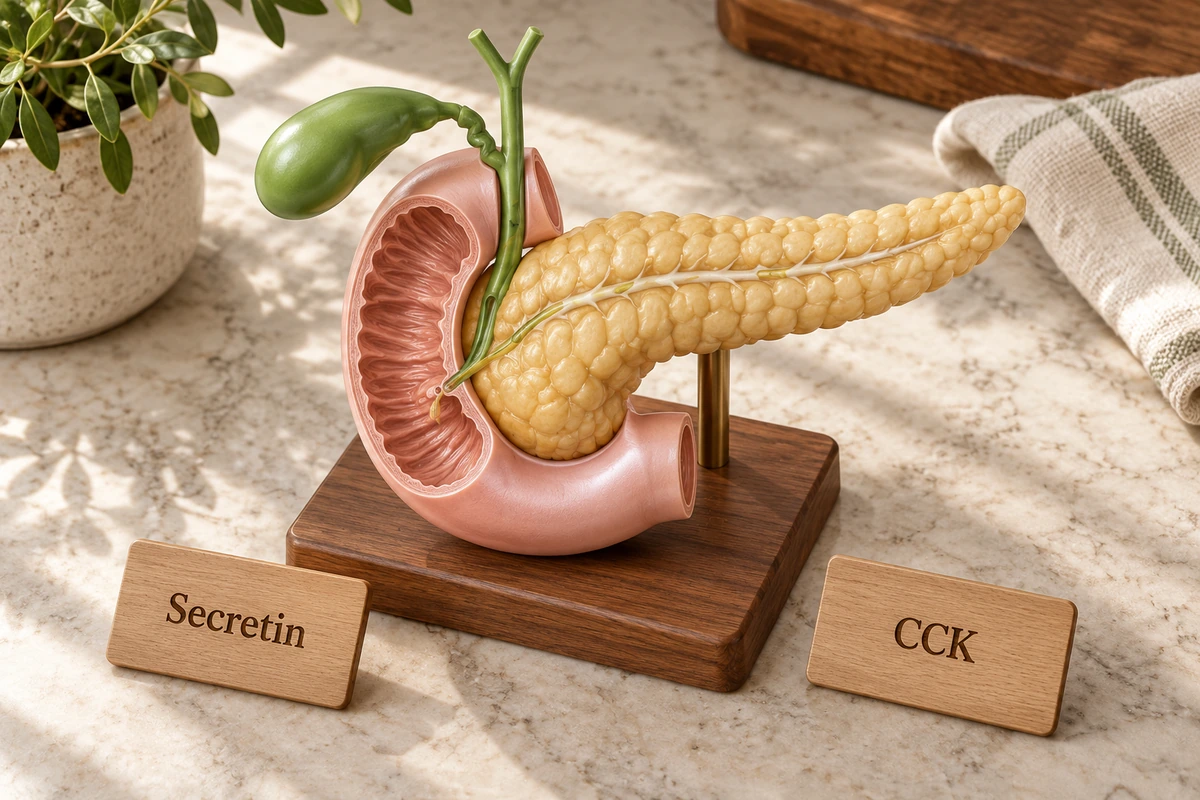
Secretin is produced by cells in the duodenal lining in response to acid. It stimulates pancreatic and biliary bicarbonate and water secretion, helping neutralize the incoming acidity and create a workable environment for digestive enzymes.[3][4]
The GAPS digestive-enzyme chapter also places secretin inside its low-acid explanation and links inadequate signaling with reduced bicarbonate delivery from the pancreas.[1]
CCK, Bile, and Pancreatic Enzymes
CCK is released in response to fats, amino acids, and protein-digestion products. It stimulates gallbladder contraction and pancreatic enzyme secretion and helps deliver bile to the duodenum.[5] Current physiology therefore assigns different immediate triggers to the two hormones: acid for secretin and fats or protein products for CCK.
The GAPS book states that too little acid arriving from the stomach prevents adequate CCK production.[1] Current physiology identifies fats, amino acids, and protein-digestion products as CCK’s immediate stimuli.[5] Both source statements matter here, so they remain separate.
The Brush-Border Enzyme Step
Pancreatic protein-digesting enzymes reach the duodenum as inactive precursors. Enteropeptidase on the duodenal brush border activates trypsinogen to trypsin, and trypsin then activates other pancreatic proteases.[6][7]
The GAPS book adds a gut-flora layer. It says abnormal flora can interfere with the intestinal lining and the brush-border enzymes produced there, leaving digestion incomplete even when pancreatic secretions arrive.[7] That source model is one reason its protocol works on the intestinal wall and flora alongside stomach acid.
Pancreas, Bile, and Fat Digestion
The pancreas supplies bicarbonate and digestive enzymes. Bile acids entering the small intestine help digest and absorb fat.[4] When pancreatic enzyme delivery or bile flow is impaired, the symptom pattern can include bloating, pain, diarrhea, weight loss, and loose greasy stool.[8]
The GAPS source connects low stomach acid with poor pancreatic and bile response.[1] It also describes bile stones as one route to impaired fat digestion and emphasizes natural fat because fat stimulates bile flow.[9] That bile-stone explanation is a source-attributed branch, not a diagnosis made from stool appearance alone.
Parasites and Nighttime Symptoms in the GAPS Source
The GAPS A-to-Z entry describes the duodenum as a common feeding location for worms and flukes and says some move there at night. It connects that source model with belching, cramps, night sweats, hot flushes, disrupted sleep, and nightmares.[10]
The official FAQ also discusses crampy abdominal pain, difficulty gaining weight, anemia in a hookworm example, and a cough during larval migration.[11] Those are source-described associations. Night sweats, pain, anemia, poor weight gain, or cough do not prove a parasite, identify a species, or establish a duodenal diagnosis.
Why GAPS Delays Direct Antiparasitic Work
The parasite section advises following the GAPS Nutritional Protocol for at least six months and preferably closer to a year before addressing chronic worms directly. Its stated reason is that a stronger gut and detoxification system can handle the added burden better and may reduce the imbalance without a separate intervention.[12]
The exact medication-versus-herbal rules, course lengths, and supervision limits belong in the duodenum food and support guide. This mechanism page does not supply an antiparasitic dose or tell a reader to infer treatment from symptoms.
How the Mechanism Shapes the GAPS Route
The source route begins with digestion:
- fresh meat stock and the Introduction Diet when deeper digestive support is needed;
- fermented cabbage foods and other source tools that stimulate stomach acid;
- temporary HCl and pepsin support inside its stated quantity, meal timing, and stopping limits;
- natural fat introduced according to tolerance;
- condition-specific pancreatic, bile, and parasite support only when the source branch actually applies.
The complete duodenum and GAPS guide gives the overview. The symptoms and gut-signs guide keeps the digestive, stool, nutrient, nighttime, and parasite-associated patterns separate from diagnosis.
The 90-Day Family Food Diary gives you one place to record meals, supplements, stool patterns, fat tolerance, sleep, stress, and nighttime symptoms.
Frequently Asked Questions
Does Low Stomach Acid Directly Trigger CCK?
Current physiology says acid directly stimulates secretin, while fats and protein-digestion products stimulate CCK.[3][5] The GAPS book explicitly states that too little acid arriving from the stomach prevents adequate CCK production.[1] The sources describe the relationship differently, and this guide keeps both statements intact.
Does Greasy Stool Prove a Duodenal Problem?
No. Poor fat digestion can produce loose greasy stool, but that finding can have different causes and does not identify one mechanism by itself.[8]
Do Nighttime Symptoms Prove Parasites?
No. They are part of the GAPS source’s parasite discussion, but the pattern alone does not prove a parasite or justify a treatment schedule.
References
- Campbell-McBride, N. Gut and Physiology Syndrome (2020), “Digestive Enzymes,” pp. 338–340.
- Omole, A. E., S. Gogna, and A. Khorasani-Zadeh. “Anatomy, Abdomen and Pelvis: Duodenum.” StatPearls, updated January 31, 2026.
- DiGregorio, N., and S. Sharma. “Physiology, Secretin.” StatPearls, 2023.
- Dave, H. D., K. R. Shumway, and N. M. Al Obaidi. “Physiology, Biliary.” StatPearls.
- Okonkwo, O., D. Zezoff, and A. Adeyinka. “Biochemistry, Cholecystokinin.” StatPearls, updated May 1, 2023.
- Gurina, T. S., and S. S. Mohiuddin. “Biochemistry, Protein Catabolism.” StatPearls, updated December 11, 2022.
- Campbell-McBride, N. Gut and Physiology Syndrome (2020), pp. 123–126; “Pancreatic problems,” p. 442.
- National Institute of Diabetes and Digestive and Kidney Diseases. “Symptoms and Causes for Exocrine Pancreatic Insufficiency.” Accessed October 7, 2026.
- Campbell-McBride, N. Gut and Physiology Syndrome (2020), “Liver and Lungs,” pp. 78–80.
- Campbell-McBride, N. Gut and Physiology Syndrome (2020), “Duodenum problems,” pp. 419–420.
- Campbell-McBride, N. “Worms and parasites,” Q1, GAPS FAQs.
- Campbell-McBride, N. Gut and Physiology Syndrome (2020), “Parasites and worms,” pp. 447–448.

Leave a comment