

The GAPS sources describe three overlapping symptom patterns around the duodenum: nighttime symptoms in the A-to-Z duodenum entry, digestive and fat-absorption signs in the low-acid and bile sections, and a broader group of worm- and parasite-associated signs.[1][2][3] The same symptom can appear in more than one branch, so the useful question is how the signs cluster and when they occur.
This page organizes those source-defined patterns. It does not turn one sign into a parasite finding or one duodenal diagnosis. Use the linked mechanism and food-support guides to understand what the GAPS source connects with each group.
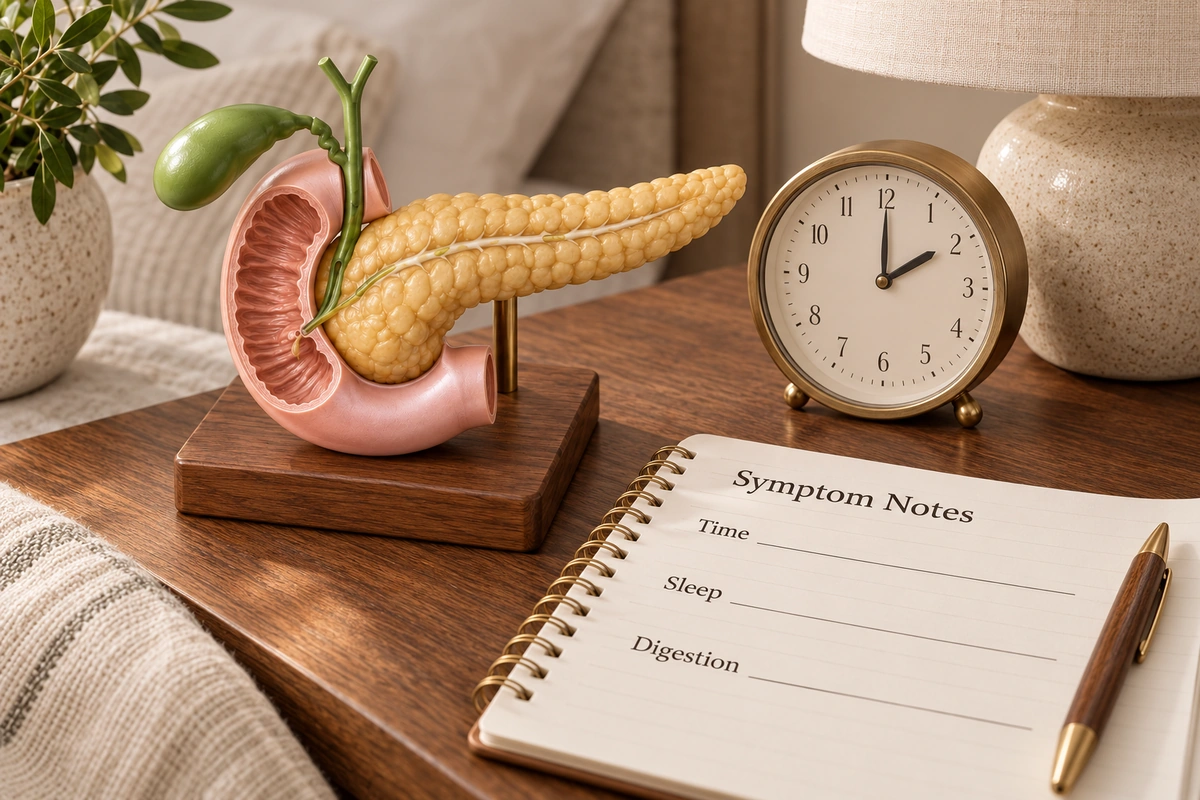
The Nighttime Duodenum Pattern
In the A-to-Z entry, Campbell-McBride describes some worms and flukes living outside the intestines during the day and moving into the duodenum in the middle of the night to feed. She connects that source model with disrupted sleep and five specific signs:[1]
- belching during the night;
- hot flushes;
- night sweats;
- abdominal cramps; and
- nightmares.
The longer parasite section adds upper-gut abdominal pain that is particularly noticeable at night. It says abdominal pain, diarrhea, gas, nausea, vomiting, and sometimes constipation may worsen around the full moon.[2]
The Digestive and Stool Pattern
The digestive-enzyme chapter begins with low stomach acid. In the GAPS framework, too little acid disrupts secretin and CCK production, pancreatic bicarbonate and enzymes, bile delivery, and the digestion of protein, carbohydrate, and fat. The source connects that chain with maldigestion, malabsorption, nutrient deficiencies, pale floating stool, and diarrhea.[3]
The related digestive signs to record are:
- bloating and excessive gas;
- upper- or mid-abdominal pain or cramping;
- diarrhea or, sometimes, constipation;
- nausea or periodic vomiting;
- pale, floating, loose, or greasy stool;
- reflux or regurgitation; and
- feeling bilious, nauseated, or unwell after a fatty meal.
The liver-and-bile chapter supplies the fat-meal detail. It describes difficulty digesting fat as feeling bilious, nauseated, or unwell after a meal and connects impaired bile flow with poor fat digestion.[5] The low-acid chapter separately connects pathogen growth in a low-acid stomach with reflux.[3]
Supporting pancreatic-digestion guidance from NIDDK also lists bloating, abdominal pain, diarrhea, weight loss, and loose, greasy, bad-smelling stool among the symptom pattern of exocrine pancreatic insufficiency.[6] That supports the digestion pattern; it does not make those signs specific to one condition.
The Nutrient and Weight Pattern
When the digestive chain is not completing its work, the GAPS book connects the result with poor absorption of amino acids, minerals, essential fatty acids, and the fat-soluble vitamins A, D, E, and K.[3] The signs worth tracking alongside the digestive pattern include:
- difficulty gaining weight or maintaining weight;
- persistent anemia in the source’s hookworm example;
- a pattern of fat-soluble vitamin deficiency; and
- food reactions or intolerances that continue as the gut wall remains damaged.[2]
The official parasite FAQ names crampy pain after food, especially in the morning, difficulty putting on weight, persistent anemia associated with hookworms, and bouts of irritating dry cough during larval migration.[4]
The Broader Parasite-Associated Pattern
The book’s longer parasite list is broader than the duodenum-only entry. It associates parasite overgrowth with:
- headaches or periodic fever;
- joint aches or skin rash;
- teeth grinding during sleep;
- recurrent vomiting;
- a dry cough or sore, bumpy throat during larval migration;
- continued food allergies or intolerances while larvae keep the gut wall damaged; and
- low body weight or difficulty gaining weight.
Those are the author’s stated associations in the parasite section.[2] They belong in this checklist because the duodenum entry routes readers to that longer section, but they should not be relabeled as symptoms that occur only in the duodenum.
The Blastocystis Branch
The official FAQ treats Blastocystis hominis as a separate protozoan branch. In people with weakened immunity and abnormal gut flora, it names diarrhea, bloating, nausea, abdominal pain, and anal itching. It also says many people carry it without symptoms.[7]
Anal itching therefore belongs with this specific source branch, not as a universal sign of every duodenal or parasite problem.
How to Read the Pattern
A single symptom does not tell you which branch is involved. Night sweats appear in the source’s nighttime account, while nausea also appears in poor fat digestion and the Blastocystis FAQ. Weight difficulty appears in the common-worm FAQ and in broader maldigestion. Record the combinations rather than treating one box as a verdict.
The duodenum mechanism guide explains the acid, hormone, enzyme, bile, fat, and source-described parasite pathways. The duodenum food and support guide keeps food, stages, dairy, digestive support, and parasite timing in their source order.
What to Record
- the time each symptom begins and whether it wakes you;
- what was eaten and how much fat was in the meal;
- stool color, form, buoyancy, oiliness, and frequency;
- reflux, belching, gas, nausea, or pain after meals;
- food, stage, ferment, dairy, or supplement changes;
- sleep disruption, nightmares, hot flushes, or night sweats; and
- weight trend and any recurring cough, rash, joint ache, or headache pattern.
The 90-Day Family Food Diary keeps those observations together without asking you to reconstruct the pattern from memory.
Frequently Asked Questions
Do Night Sweats Prove Parasites?
No. The GAPS duodenum entry associates night sweats with its nighttime parasite model, but that single symptom does not establish a parasite finding.[1]
Does Greasy Stool Prove a Duodenal Problem?
No. The GAPS source connects pale floating stool and diarrhea with poor fat digestion in its low-acid chain, and NIDDK lists loose greasy stool in pancreatic enzyme insufficiency. The sign supports a fat-digestion pattern but does not identify one cause by itself.[3][6]
Does a Full-Moon Pattern Prove Worms?
No. The parasite section says some symptoms may worsen around the full moon, but it does not turn that timing into proof of a species or infestation.[2]
Where Does Treatment Belong?
The checklist records patterns. The food and support guide holds the source’s gut-first timing, stage, dairy, digestive-support, and medication-versus-herbal branches so a symptom list does not become an improvised treatment plan.
References
- Campbell-McBride, N. Gut and Physiology Syndrome (2020), “Duodenum problems,” pp. 419–420.
- Campbell-McBride, N. Gut and Physiology Syndrome (2020), “Parasites and worms,” pp. 447–448.
- Campbell-McBride, N. Gut and Physiology Syndrome (2020), “Digestive Enzymes,” pp. 338–341.
- Campbell-McBride, N. “Worms and parasites,” Q1, GAPS FAQs.
- Campbell-McBride, N. Gut and Physiology Syndrome (2020), “Liver and Lungs,” pp. 78–80.
- National Institute of Diabetes and Digestive and Kidney Diseases. “Symptoms and Causes for Exocrine Pancreatic Insufficiency.” Accessed October 7, 2026.
- Campbell-McBride, N. “Worms and parasites,” Q5, GAPS FAQs.

Leave a comment